















Mestia and Svaneti: trekking, glaciers and how to get there in 2026
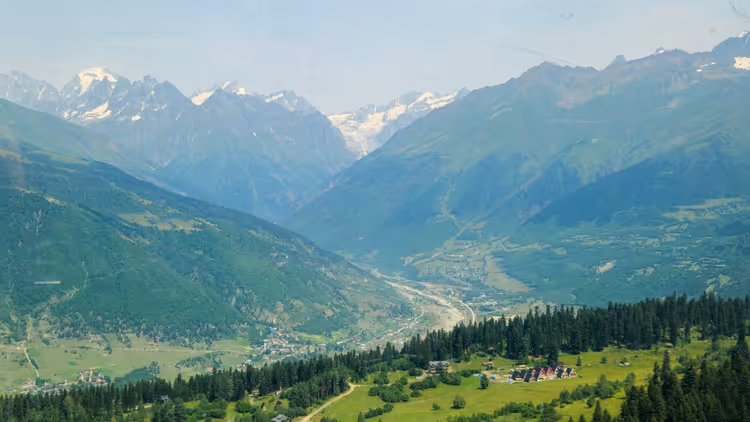
Mestia is small, but the mountains around it are enormous. You can walk around the town itself in a day. Then you'll stay another week: nearby there are glaciers, ancient Svan towers, and one of the best treks in Georgia. This corner in the northwest of the country takes time to reach, but it pays you back generously. Below you'll find routes, viewpoints, food, and ways to get there, with prices and schedules for 2026.
Ad: this article contains affiliate links. We earn a commission if you book through them, at no extra cost to you.
Mestia and Svaneti: the essentials before you go
💡 In short:
- Where it is: northwestern Georgia, Upper Svaneti. Mestia is its administrative center.
- How much time to allow: at least 3 days, ideally a week. The drive from Tbilisi takes 8-9 hours.
- When to go to the mountains: from late June to early September, high-altitude trails are usually snow-free.
- Skiing: the season at Tetnuldi runs roughly from late December to early April.
- How to get there: plane, direct marshrutka, train to Zugdidi plus marshrutka, or rental car.
- Prices and schedules: as of 09/2026, check transport fares on the Georgian Railway website and with carriers.
Mestia lies in the Samegrelo and Upper Svaneti region and serves as the center of Upper Svaneti itself. From Tbilisi it's about 450 km and 8-9 hours of travel. From Batumi it's closer: roughly 270 km and 4-5 hours. The region borders Russia and runs up against the highest peaks of the Caucasus. This is not a transit point but a dead end at the glaciers, and that's exactly why it's so quiet here.
Svaneti itself is made for trekking. Georgia's highest peaks are literally a stone's throw away. Several multi-day routes to mountain villages start here, where you'll see not only the landscape but also Svan culture and hospitality. You can catch the panorama without hiking boots, though. Ushguli sits at about 2,100 m and is reachable by car in a couple of hours.
The best time for trekking is late June and all of July-August. During these weeks the snow melts even from high passes, and the choice of trails is unrestricted. It's also the sunniest and warmest period, convenient for camping. Late spring, from mid-May to mid-June, has its own charm. The mountains around Mestia are still white then, and the contrast with the flowering slopes is especially striking. For skiing, pick January and February.
 © David Guruli · CC BY-SAPhoto: David Guruli, CC BY-SA (https://creativecommons.org/licenses/by-sa/2.0), Wikimedia Commons
Trekking in Mestia: the Caucasus mountains up close
For Mestia, be sure to bring hiking clothes and trekking boots. All of Upper Svaneti, with its peaks and glaciers, is made for long routes. Below are several of the best trails around the town, from a four-day classic to an easy half-day walk. The range is wide, so there's a route for both beginners and experienced hikers.
The Mestia-Ushguli trek: a Svaneti classic for 3-4 days
The route from Mestia to Ushguli is the main trekking classic of Svaneti, and for good reason. The trail leads through mountain valleys, past glaciers and small settlements with Svan towers, all the way to Ushguli.
Along the way you stay overnight either in family guesthouses with hearty Georgian cuisine or in a tent under a clear starry sky. Many people don't do the whole trek: they skip the first stage and get a ride or taxi to the village of Zhabeshi, then continue on foot. This saves a day without losing the best views.
The trail is beautiful but tough in places, and basic fitness definitely helps. You don't have to carry food: guesthouses feed you generously. It's easier to purify drinking water yourself along the way, so a lightweight filter is worth bringing. The route is popular, and in summer beds in mountain villages fill up fast, so book your accommodation in advance.
Pack out your trash: there are no bins in the mountains, and the trail passes through living villages where people live year-round. Also, the weather in the Caucasus changes quickly, so early in the season check the condition of high sections with locals or at guesthouses.
 © Jelger Groeneveld · CC BYPhoto: Jelger Groeneveld, CC BY (https://creativecommons.org/licenses/by/2.0), Wikimedia Commons
The trek's numbers are as follows (as of 09/2026, caucasus-trekking.com): length 56.9 km, highest point 2,737 m, total ascent 3,106 m, descent 2,102 m, duration 3-4 days. It's better to take all four days, so the load is gentler and you have time for the views. Organized jeep and hiking tours on this route are easy to compare on GetYourGuide if you don't want to handle logistics yourself.
Over the Guli Pass: Mazeri-Mestia in a day
This route is considered one of the most spectacular and at the same time one of the hardest around Mestia. The Guli Pass lies at about 2,950 m (as of 09/2026, georgia.travel), and in one day you gain almost 1,500 m. This trail requires fitness. But from the top you get a view of Ushba, which rises to 4,710 m right in front of you.
It makes sense to spend one or two nights in Mazeri. Several other beautiful trails start from here, such as the climb to the Ushba glacier. Note: marshrutkas don't go to Mazeri. You can reach the village by ride or taxi. Alternatively, start the tour in Mestia (more elevation gain) and stay overnight in Mazeri, or try to return the same day.
Trail parameters (as of 09/2026, caucasus-trekking.com): about 23 km, ascent 1,424 m, descent 1,693 m, highest point around 2,950 m, 8-10 hours of walking. Start early: in the afternoon the weather in the Caucasus mountains deteriorates quickly.
To the Chalaadi glacier: a short half-day route
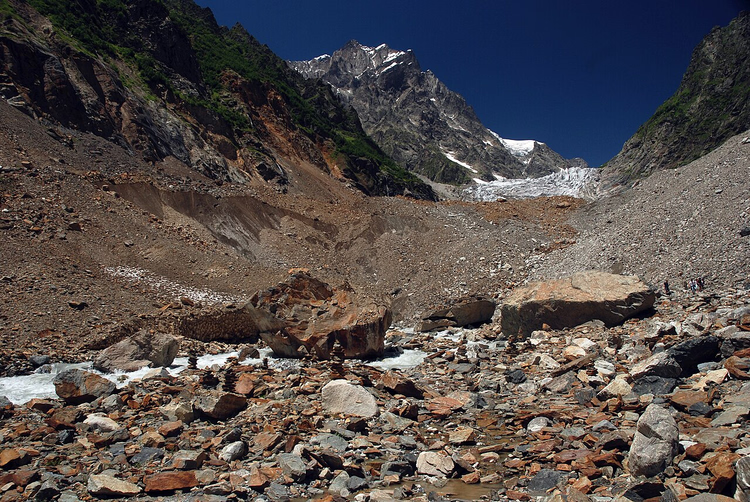
The trail to the Chalaadi glacier is another Mestia classic and one of the easiest options if you don't want to walk far but still want scenery. In theory you can start right from Mestia, but the first kilometers run along the road. It's easier to take a taxi to the start of the scenic section or hitch a ride.
 © Jelger Groeneveld · CC BYPhoto: Jelger Groeneveld, CC BY (https://creativecommons.org/licenses/by/2.0), Wikimedia Commons
A scenic section starts at the suspension bridge at the end of the road. From there the trail leads through a pine forest for 45 minutes to the foot of the glacier at about 2,000 m. At that point it's time to just look and take photos. On a sunny day, blue ice crevasses stare back at you from the glacier's body. The walk from the bridge is short: about 5-6 km round trip, roughly 300 m of elevation gain, one and a half to two hours (as of 09/2026, caucasus-trekking.com). A taxi to the trailhead is inexpensive by local standards, while a car with waiting time for the return trip costs several times more than a simple drop-off. Drivers quote the price on the spot, so agree before you get in.
Other routes around Mestia
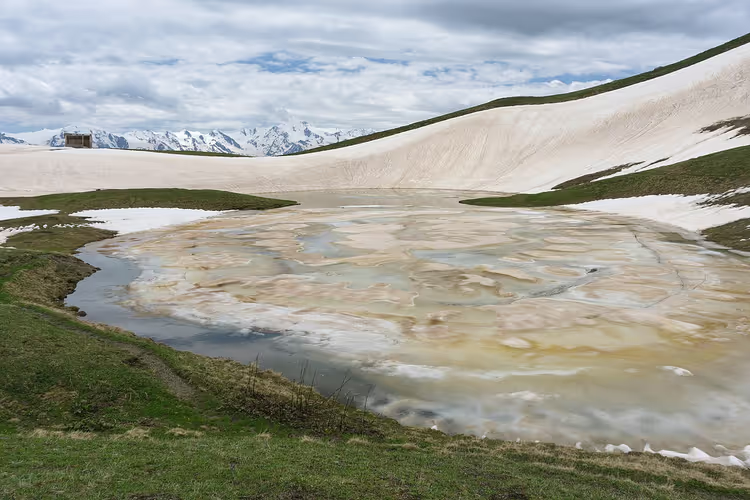
There are far more trails around Mestia. Among them are the climb to Koruldi Lakes, the trail to the Ushba Glacier, and the Chkhuti Ridge. Each one takes a full day, and it's best to check the elevation profile in advance to gauge your effort.
Koruldi Lakes is a popular day trip right above Mestia. The elevation gain is substantial, but the ridge rewards you with views of Ushba and neighboring peaks. The trail to the Ushba Glacier starts from the Mazeri side and requires good fitness. The Chkhuti Ridge suits those who want a long day with panoramic views but no overnight stay. These routes are less well marked than the main ones, so bring an offline map and don't head out alone in bad weather.
 © Alexey Komarov · CC BY-SAPhoto: Alexey Komarov, CC BY-SA (https://creativecommons.org/licenses/by-sa/4.0), Wikimedia Commons
Good sources for routes, with elevations and alternative itineraries, are caucasus-trekking.com and Georgia's tourism portal georgia.travel. They make it easy to put together an itinerary that matches your fitness level and number of days. Now let's move on to other Mestia experiences that don't require hiking boots.
Tours and tickets in Mestia
Guided tours, skip-the-line tickets and activities — most offers can be cancelled free of charge.
See offers on GetYourGuideThe widget loads once you give your consent.
Other experiences in Mestia and nearby
The mountains are not everything. In and around Mestia there are plenty of places you can reach without a strenuous climb: a UNESCO-protected museum village, medieval towers, a cable car viewpoint, and very hearty local food.
Ushguli: one of the highest villages in Europe
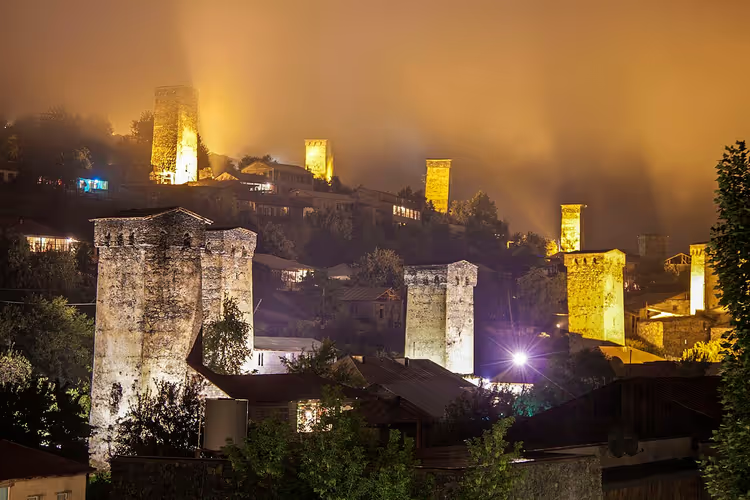
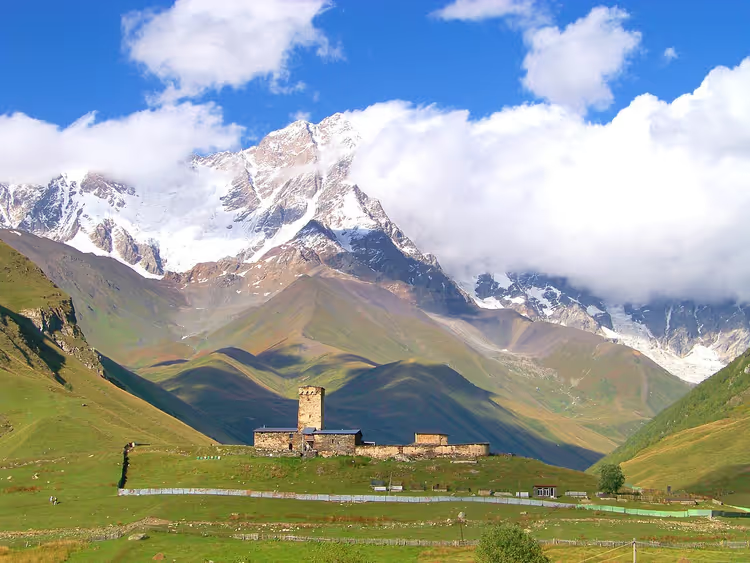
Houses in Ushguli sit at about 2,100 m, making it one of the highest permanently inhabited villages in Europe. Besides the altitude, Ushguli, like all of Svaneti, is famous for its stone towers. The towers of Upper Svaneti were added to the UNESCO World Heritage list back in 1996.
The mountain panorama from here is spectacular, and even if you are not a big trekking fan, this village is worth seeing. From Mestia to Ushguli you can get there by marshrutka or taxi: the road is 45 km and takes about 2 hours. Drivers keep the per-seat price in the double-digit lari range and change it by season, so confirm the amount at the parking area on the day you leave.
 © Jaba1977, improvements by Giorgi Balakhadze · CC BY-SAPhoto: Jaba1977, improvements by Giorgi Balakhadze, CC BY-SA (https://creativecommons.org/licenses/by-sa/4.0), Wikimedia Commons
The area around Ushguli also invites you to walk and explore, so it is easy to stay in the village for two or three days. Local options include the hike to the Shkhara glacier (about 6 hours), the old stone towers and Svan houses, and an ethnographic museum. For simple but pleasant lodging in Ushguli, you can search by name, for example Guesthouse Angelina on Trip.com. Prices swing a lot by season, so check your dates in advance.
Svan towers: why they were built
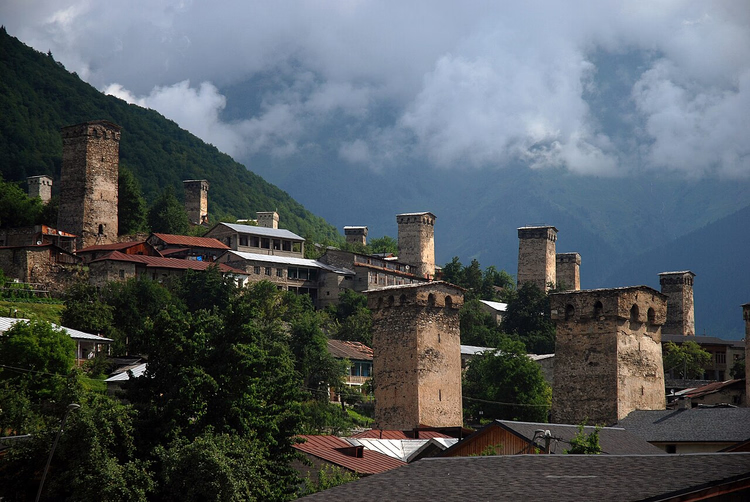
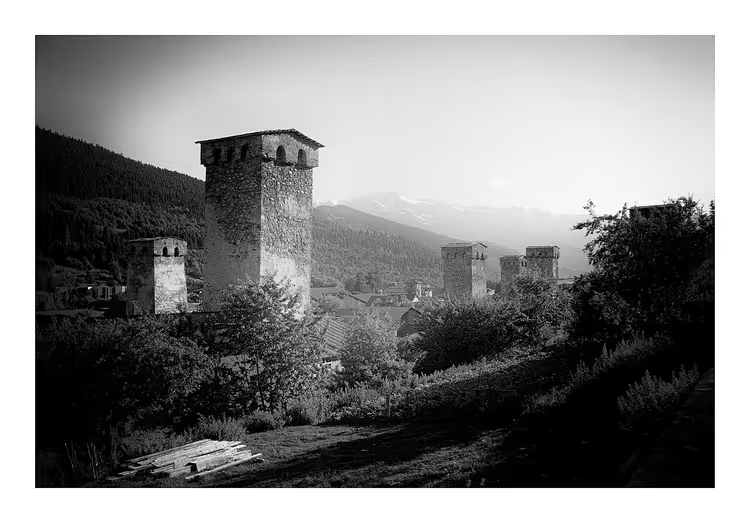
One detail will catch your eye immediately: the small stone towers scattered across the region's mountain villages. They used to be defensive towers that protected residents and individual families. Today they still shape the look of Svaneti, not only in Mestia but in dozens of neighboring villages.
In Mestia itself, you can climb one of the old towers for a small fee. From the top there is a great view of the town and the mountains behind it. Bring water: it is hot inside and the stairs are steep.
 © madras91 · CC BYPhoto: madras91, CC BY (https://creativecommons.org/licenses/by/2.0), Wikimedia Commons
Zuruldi viewpoint: a panorama without hiking
The easiest way to catch a view of the Caucasus giants is the cable car up Mount Zuruldi in Hatsvali, about 8 km from Mestia. At the top, the region's highest restaurant and hotel operate at about 2,340 m. Here you can sit calmly with a cup of coffee and take in the panorama without breaking a sweat.
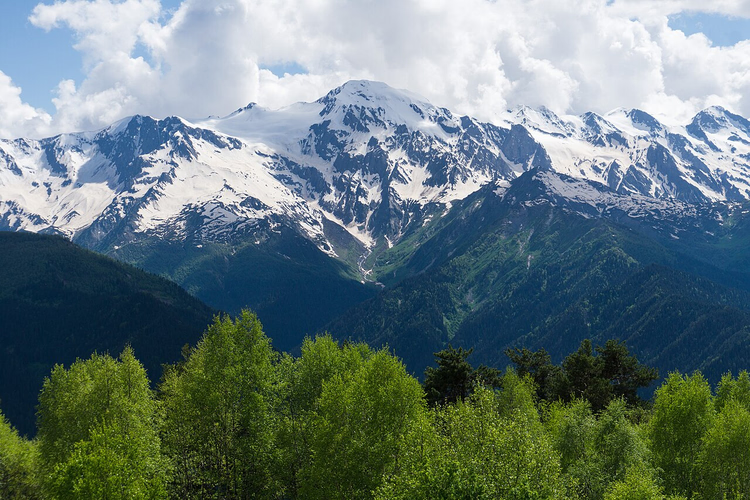 © Alexey Komarov · CC BY-SAPhoto: Alexey Komarov, CC BY-SA (https://creativecommons.org/licenses/by-sa/4.0), Wikimedia Commons
Since 2018, you can start the ascent right from Mestia. A round-trip ticket costs a small double-digit amount in lari, and the cable car runs roughly from 11:00 to 16:00 and does not operate in rain or fog (as of 09/2026, caucasus-trekking.com). The exact schedule depends on the weather, so confirm it locally in the morning.
Svan cuisine: kubdari and khachapuri
As everywhere in Georgia, Svaneti has very tasty food waiting for you. Mountain cooking is hearty, and Mestia and the surrounding villages are no exception. In Mestia and Ushguli the restaurant selection is decent, while in small villages you more often eat in family guesthouses, where they feed you with all their heart.
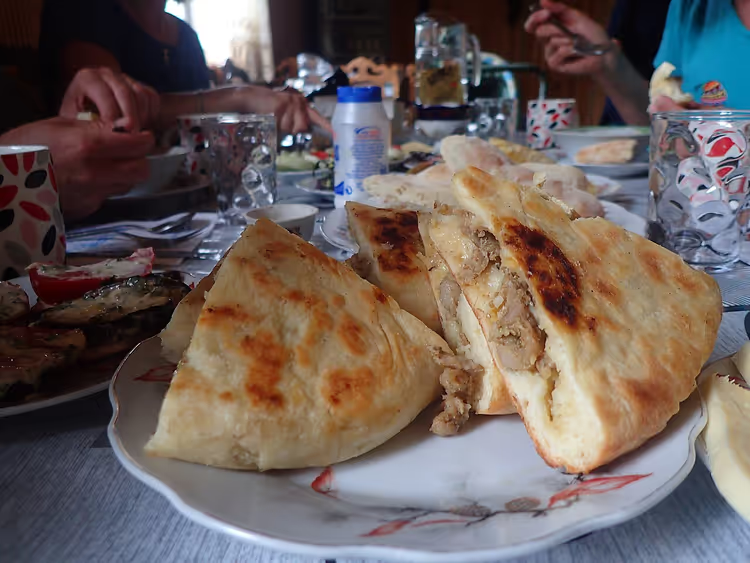 © Peyman Zehtab Fard · CC BYPhoto: Peyman Zehtab Fard, CC BY (https://creativecommons.org/licenses/by/2.0), Wikimedia Commons
Be sure to try kubdari, a flatbread filled with meat and a special Svan spice mix (Svan salt). And of course the Georgian classic, khachapuri, an incredibly filling cheese bread. After a long trail, it goes down especially well.
Skiing at Tetnuldi
Skiing in Georgia is not only cheap but also snowy: the proximity to the Black Sea means reliable snow. The Tetnuldi resort near Mestia is exactly that. A day ski pass here is several times cheaper than at Alpine resorts, but the rate is revised every season, so check it before you go. There are 5 lifts and 9 runs with a total length of about 30 km, with a vertical drop from 2,265 to 3,160 m (as of 09/2026, skiresort.com).
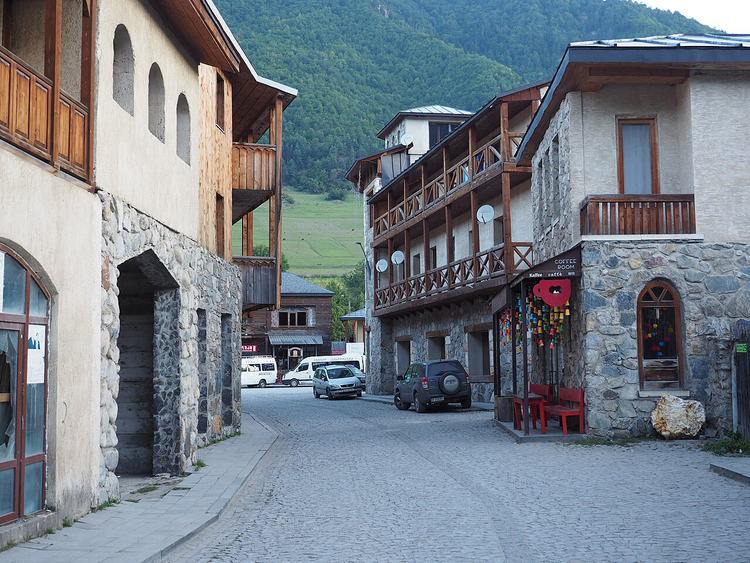 © tomasz przechlewski · CC BYPhoto: tomasz przechlewski, CC BY (https://creativecommons.org/licenses/by/2.0), Wikimedia Commons
The season at Tetnuldi usually starts toward the end of December and lasts until early April, but the dates shift depending on the weather. Beyond the regular runs, the area around Tetnuldi and the entire snow-covered Caucasus of Georgia attracts freeriders and heli-skiing enthusiasts. If you ride confidently, you will have plenty of room to roam here.
Where to stay in Mestia
From small hotels to hostels and family-run guesthouses, Mestia has the full range of lodging, and it is generally inexpensive by European standards. Exact prices depend heavily on the season, so check dates in advance.
- Budget option: the Mushkudiani Manor on Trip.com guesthouse with a quiet riverside location and double rooms with breakfast.
- Guesthouse: the cozy and clean Guesthouse Dali on Trip.com with consistently high guest ratings.
- Booking tip: in high season, places in the mountain villages along the Mestia-Ushguli trek sell out quickly, so book ahead.
How to get to Mestia
Let's be upfront: the road to Mestia can be long, but it's worth it. There are four options: train with a transfer, direct marshrutka, car rental, and plane. The choice depends on your budget, time, and how much shaking you're willing to put up with.
In short, here's the logic. The plane saves a whole day, but it's at the mercy of the weather, and tickets sell out in advance. The marshrutka is the cheapest and most frequent option, but it's long and cramped. Renting a car gives you freedom and stops for photos. The train with a transfer in Zugdidi is a compromise between price and comfort.
By train to Zugdidi and marshrutka
One way to get there is to take the train to Zugdidi, then switch to a marshrutka to Mestia. The daytime train from Tbilisi leaves in the morning and arrives in Zugdidi in the afternoon, and a seat costs in the low double digits in lari. On weekdays there's also a faster regional train, about 4 hours 20 minutes. Check exact fares and departure times on the Georgian Railway website before buying.
There may not be a separate night train from Tbilisi to Zugdidi right now: the schedule has changed in recent seasons. Check the current timetable and tickets on the official Georgian Railway website, and Trip.com is also handy for searching trains in the region. In Zugdidi you get on a marshrutka (3-3.5 hours, the driver names the price on the spot) or a taxi. Marshrutkas leave regularly, but only when they're packed full. There's not much comfort, but that's part of the adventure.
As an alternative to the marshrutka, you can take a shared taxi from Zugdidi to Mestia: a seat costs more than the marshrutka, and drivers quote the exact amount when you board. It's faster and noticeably easier with luggage, especially if you're traveling with a trekking backpack.
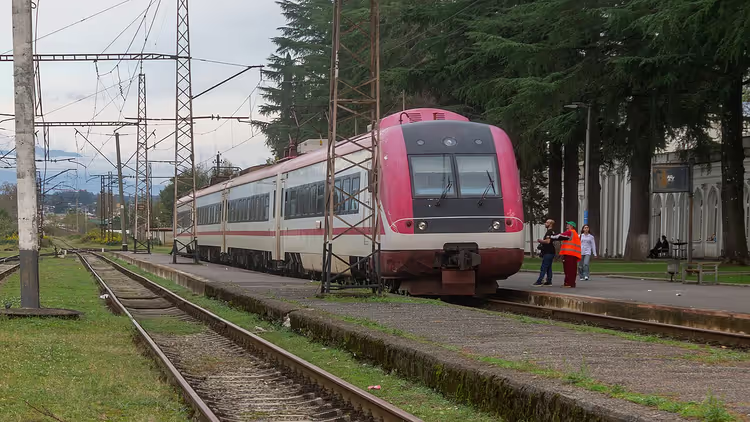 © Nikolai Bulykin · CC BY-SAPhoto: Nikolai Bulykin, CC BY-SA (https://creativecommons.org/licenses/by-sa/4.0), Wikimedia Commons
Direct marshrutka to Mestia
Marshrutkas to Svaneti run regularly from Kutaisi, Batumi, and Tbilisi. This is the most direct overland option, with no transfer in Zugdidi.
From Tbilisi, minibuses leave every morning, usually around 7:00, from Samgori-Navtlugi station. The fare is within a double-digit amount in lari, and the trip takes 8-9 hours with stops for food. There's usually no air conditioning, so it gets hot in summer. Ask locals or a taxi driver on the spot what time the next departure leaves.
From Kutaisi, the marshrutka to Mestia also leaves in the morning, from the main station next to McDonalds, and again only once it's full. Ask in advance what time you should be at the bus station.
From Batumi on the coast, there are also morning departures to Svaneti. They're convenient if you're starting your route from the sea and don't want to go back to Tbilisi. Either way, set aside a whole day for the journey and don't plan anything important for the evening you arrive: mountain roads are slow.
By rental car
For comfort, freedom, and flexibility, renting a car is probably the best way to get to Svaneti. You can stop at scenic spots, take as many photos as you want, and you'll likely get there faster than by train or marshrutka. From experience driving in Georgia, we'll add: traffic here is chaotic, and mountain switchbacks demand attention, so allow extra time.
Gasoline in Georgia is cheaper than in Western Europe, and it makes a difference on long stretches. DiscoverCars is a convenient way to compare cars and prices by date. Get four-wheel drive if you're planning dirt roads to Ushguli or mountain villages.
By plane
Mestia is also accessible by air, and it's a very scenic flight from Kutaisi or Tbilisi. Tickets sell out in advance, so plan and book ahead. Flights are operated by the local airline Vanilla Sky.
The flight costs a fixed 90 GEL for an adult and 63 GEL for a child aged three to twelve, and children under three fly free. The fare is the same for flights from Tbilisi and Kutaisi, and from Tbilisi the price includes a free transfer from a meeting point in the city to Natakhtari airfield (as of 09/2026, ticket.vanillasky.ge). The exact schedule shifts by season and day of the week, so check departures on the official website before buying. Vanilla Sky sells tickets online and at its office in Tbilisi, and card payments come with a small fee. The planes are small, with only a few seats, so book well in advance in season.
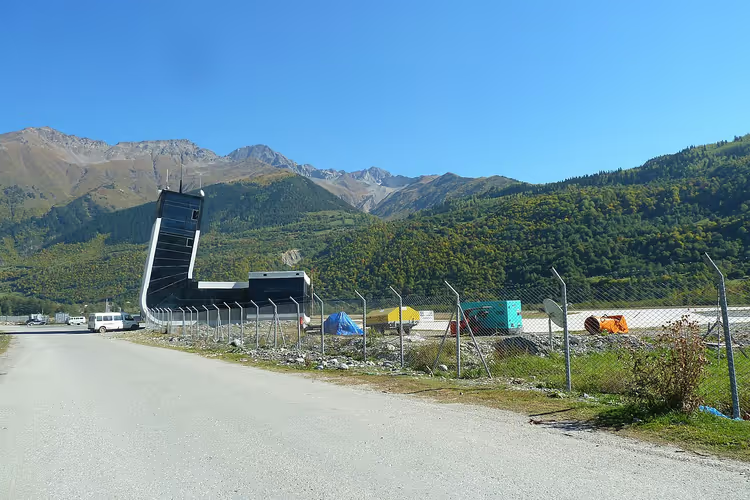 © TheFlyingDutchman · CC BYPhoto: TheFlyingDutchman, CC BY (https://creativecommons.org/licenses/by/3.0), Wikimedia Commons
One important note: due to unpredictable weather in the Caucasus, flights to Mestia are often canceled at the last minute. If you have a connection home after Mestia, leave a buffer of one to two days so you can get to Tbilisi or Kutaisi by other transport if your flight is canceled.
⁉️🤔 Frequently asked questions
How many days should I set aside for Mestia?
At least three days to make the long journey worthwhile. In that time you can cover Mestia itself, the Chalaadi glacier, and a day trip to Ushguli. If you want to hike the full Mestia-Ushguli trail, add another three to four days. A week in Svaneti definitely won't be boring.
When is the best time for trekking?
From late June to early September: snow melts even from the high passes, and almost all trails are accessible. It's the warmest and sunniest period, good for camping. Late spring, from mid-May to mid-June, is beautiful with the contrast of snow and flowering slopes, but the high passes may still be closed.
Do I need experience for the Mestia-Ushguli trek?
Technically the trek isn't difficult, but physically it's tough in places: 56.9 km, with about 3,100 m of total ascent over 3-4 days. Basic endurance is essential. You can stay overnight in family guesthouses or camp, and you'll find food along the way at those same guesthouses, so you don't need to carry supplies.
Is it worth going to Ushguli if I'm not hiking?
Yes. Ushguli is reachable from Mestia by taxi or marshrutka in a couple of hours. There you'll find stone towers under UNESCO protection, mountain panoramas, and an ethnographic museum. Many people stay for a couple of days to hike toward the Shkhara glacier.
What's the cheapest way to get to Mestia?
The cheapest way is overland. A direct marshrutka from Tbilisi takes 8-9 hours and costs within a double-digit amount in lari. The train to Zugdidi plus marshrutka combination works out comparable, but with a transfer. The plane is noticeably more expensive than overland options, but it saves a whole day of travel.
In short: what to book
Mestia has long stopped being a secret among travelers to Georgia, but that doesn't diminish its charm or its trekking opportunities. The Caucasus is right here, the villages are alive, and the food is hearty. Whether you're interested in Svan culture, high-altitude Ushguli with its towers, or multi-day trails, Mestia has plenty of options.
- If you have 3 days: base yourself in Mestia, visit the Chalaadi glacier, and take a taxi day trip to Ushguli.
- If you have a week: the Mestia-Ushguli trek plus a couple of relaxed days in Mestia itself.
- If you're going in winter: skiing at Tetnuldi and the Zuuruldi cable car for the panorama.
Book one thing in advance: accommodation in Mestia on Trip.com, especially if you're going in summer, when places fill up fast. Organized tours in Svaneti are easy to compare on GetYourGuide for your specific dates, and you can figure out the rest on the spot.

A small editorial team writing guides for independent travel. We travel ourselves, but we haven’t been everywhere, so we check prices, opening hours and how to get there against official sources.