
















In Singapore it rains 171 days a year: how to choose your travel dates
Planning a trip to Singapore is tricky because of the rain. Downpours occur here on an average of 171 days a year, so the month you choose matters a lot (as of 09/2026, Meteorological Service Singapore). Some visitors arrive in the dry season and swim at Sentosa, while others hit the northeast monsoon and spend their vacation under an umbrella.
Below is how to pick dates based on your travel style: city sightseeing, beaches, temples, or New Year celebrations. You will see which months are dry, when Singapore has its high season, and where prices and lines are higher.
Ad: this article contains affiliate links, we earn a commission if you book through them, at no extra cost to you.
When to go to Singapore: season overview
💡 In short:
- For the city: March to September, the southwest monsoon in June to September is noticeably weaker.
- Rainy and humid: November to January. February is drier, although the northeast monsoon is still active.
- Climate and monsoon months: 09/2026, verified on the official website of the Meteorological Service Singapore.
Singapore lies almost on the equator, so the year is divided not into four seasons but into two monsoons. The northeast monsoon brings rain from December to early March, while the southwest monsoon runs from June to September and is noticeably weaker (as of 09/2026, Meteorological Service Singapore). Between them are short inter-monsoon periods, when daytime temperatures rise above 32 °C.
The island receives about 2,100 mm of rain per year, and there are almost no completely dry months (as of 09/2026, Meteorological Service Singapore). February has about 12 rainy days, while November and December can have up to 23 per month.
What matters to you | Best time |
|---|---|
City sightseeing, family, beaches | March to September |
Fewest rainy days | February |
Heat above 32 °C, better to walk in the morning | April to May, October |
Maximum rainfall | November to January |
High season in Singapore
High tourist demand falls on Chinese New Year, more on that below. For city walks, the months from March to September are more convenient. The average temperature during these months stays around 30 °C, and downpours are short: the southwest monsoon is weaker than the northeast monsoon (as of 09/2026, Meteorological Service Singapore). You can easily cover the city between two downpours.
The heat in the inter-monsoon periods deserves special attention. In April, May, and October, temperatures rise above 32 °C, and such days are better planned for the morning (as of 09/2026, Meteorological Service Singapore). In the afternoon, head to museums or shopping malls.
Keep humidity in mind. Even in the dry season it is high, so bring light clothing and water. For walks, choose the start of the day: by two o'clock the heat intensifies, and you tire quickly.
Beach vacation on Sentosa
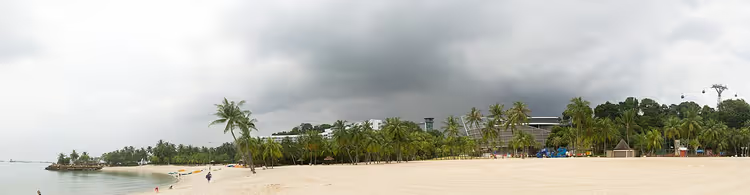
Sentosa's beaches lie south of the city and are suitable for calm swimming. Beach access is free, so you only pay for transport and loungers (as of 09/2026, Sentosa Development Corporation). The sand here is fine, and the bottom slopes gently into the water, which is convenient with children.
 © Maksym Kozlenko · CC BY-SAPhoto: Maksym Kozlenko, CC BY-SA (https://creativecommons.org/licenses/by-sa/4.0), Wikimedia Commons
You can swim comfortably year-round: the water in the South China Sea is warm, with no sharp temperature swings. The best time for the beach coincides with the dry months, from March through September, when downpours are short. From November to February it drizzles more often on the coast, and you risk spending the day under a canopy.
For a family with kids, head to Sentosa in the morning. By midday the sun is strong, and by evening the water stays warm. If you want to combine the beach and the city, take the cable car: that way you will see the whole island.
Temples, skyscrapers and Gardens by the Bay
Singapore brings together old quarters and glass towers. In Little India, vendors offer spices in front of the decorated facades of Hindu temples, with mosques and churches standing nearby. You will not find that kind of contrast in a European city.
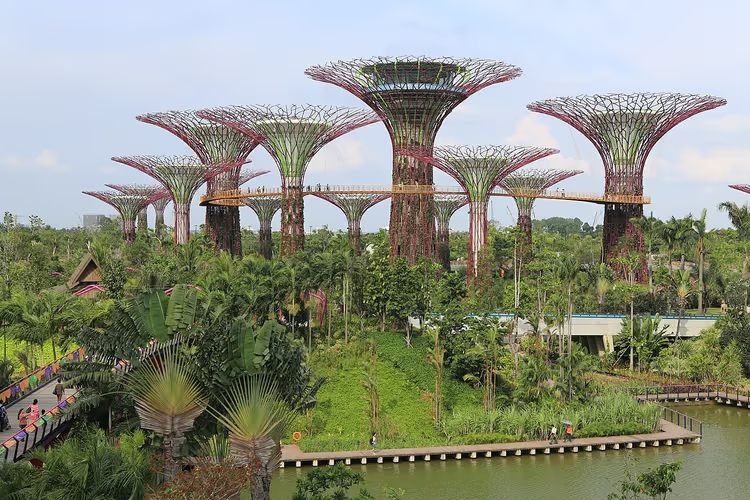
The city's main green landmark, Gardens by the Bay, is open from morning to evening, and tickets are divided into categories: Flower Dome, Cloud Forest, OCBC Skyway and Supertree Observatory (as of 09/2026, official Gardens by the Bay website). Twelve Supertrees rise upward like vertical gardens, and the OCBC Skyway walkway stretches for 128 meters and hangs at a height of 22 meters.
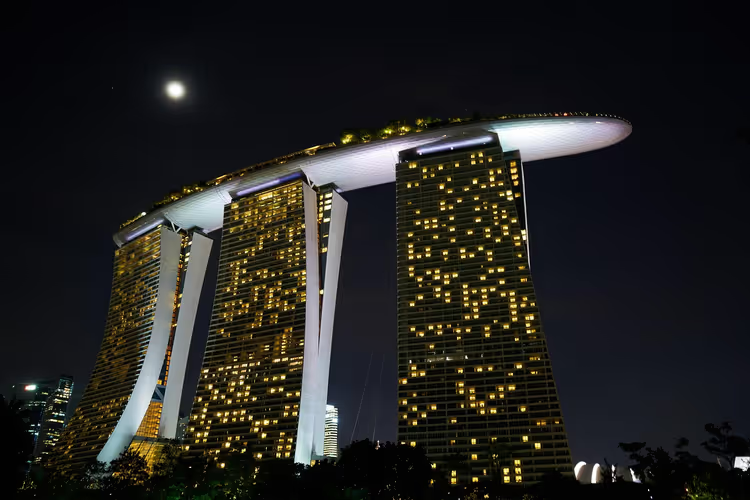
On the Singapore map you will also find Marina Bay Sands with its rooftop observation deck. It is open to everyone with a ticket, while the infinity pool is available only to hotel guests. That means you can swim above the city only as a guest.
Seeing the city with a guide is easier in the dry season: compare Singapore tours on GetYourGuide. In a single morning you can cover both the gardens and the waterfront.
 © Shiny Things . · CC BYPhoto: Shiny Things ., CC BY (https://creativecommons.org/licenses/by/2.0), Wikimedia Commons
New Year and Chinese New Year
On December 31, Marina Bay turns into an open-air venue. Nighttime temperatures stay around 23 °C, and in December it rains on roughly 22 days out of 31 (as of 09/2026, Meteorological Service Singapore). Bring an umbrella: a downpour on New Year's Eve is common here.
 © Aaaatu · CC BY-SAPhoto: Aaaatu, CC BY-SA (https://creativecommons.org/licenses/by-sa/4.0), Wikimedia Commons
In the evening, the waterfront hosts stages with live music, food stalls from around the world, and rides. Closer to midnight, fireworks burst over Marina Bay. To get a spot with a view, arrive early, several hours in advance.
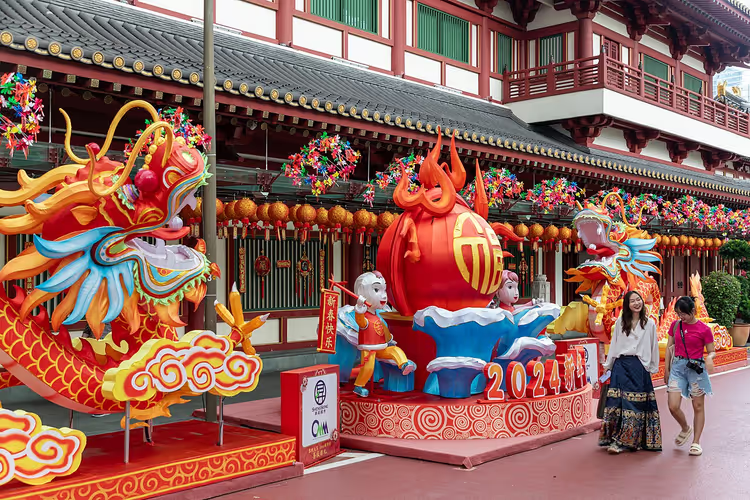
The second big holiday, Chinese New Year, falls in late January or February (as of 09/2026, Ministry of Manpower Singapore). It is celebrated in Chinatown: the streets turn into a bazaar, with parades and performances by artists. This is a high-demand period, so book your hotel in advance.
⁉️🤔 Frequently asked questions
When is the rainy season in Singapore?
Rains intensify from November to February, when the northeast monsoon blows. The most rainy days are in November and December; in February there are noticeably fewer (as of 09/2026, Meteorological Service Singapore).
Which month is the driest?
Singapore has no completely dry months; it rains all year round (as of 09/2026, Meteorological Service Singapore). The fewest rainy days are usually in February, but it still falls within the monsoon. In April and May, heat above 32 °C is added, so March and June through September are more comfortable for walking around.
Can you swim all year round?
Yes, the water in the South China Sea is warm at any time of year, so you can swim without a wetsuit. It is not temperatures that get in the way, but frequent downpours. For Sentosa beaches, it is better to choose March through September, when rains are short and the sea is calm.
What to do in Singapore in December?
December is humid, downpours occur almost every day, and nighttime temperatures stay around 23 °C (as of 09/2026, Meteorological Service Singapore). There is enough time for the city: museums, shopping malls, Gardens by the Bay. In the evening, come to Marina Bay for the light show and festive illumination.
Is it worth going for Chinese New Year?
If you want to see Chinatown in the middle of the celebration, yes. The holiday falls at the end of January or in February; the streets fill with bazaars, parades, and performances by artists. Keep in mind the high demand: hotels get more expensive, and lines at cafes and museums get longer.
In short: what is worth booking
Your travel dates depend on your goal. If your vacation is for beaches and the city: choose March through September. If you want New Year fireworks: choose late December. If you want the celebration in Chinatown: choose late January or February.
In high season, it is better to book your hotel in advance: compare hotel prices in Singapore on Trip.com.

A small editorial team writing guides for independent travel. We travel ourselves, but we haven’t been everywhere, so we check prices, opening hours and how to get there against official sources.