
















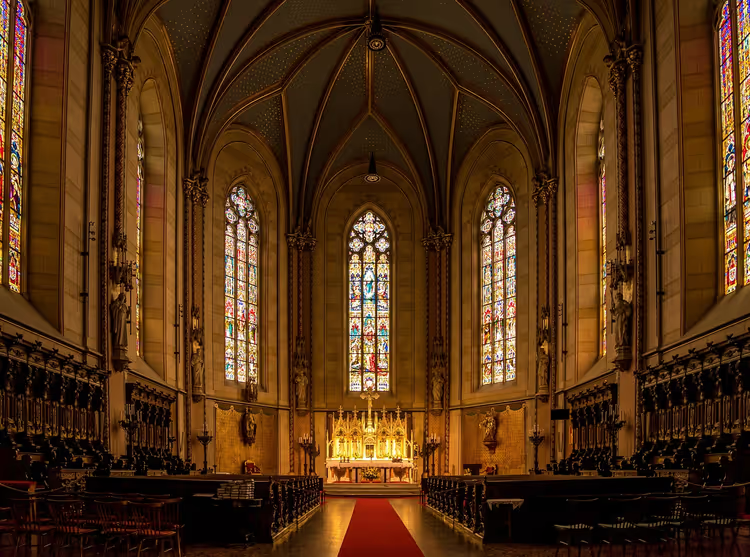
Why Czechia surprises: records, beer and a town with a handful of residents
Czechia knows how to surprise. It is home to the largest ancient castle on the planet and a small town that has nearly emptied out. The country's records are not only about architecture. Beer, unusual laws, and historical "firsts" are also part of Czechia's story. We gathered verified facts and checked the numbers against open sources. No myths from outdated guidebooks.
Prague Castle is listed in the Guinness World Records as the largest ancient castle complex in the world (as of 09/2026, verified via Guinness World Records). Czechia also leads the world in beer consumption per capita. Below are twelve facts that will come in handy before your trip.
Why Czechia is called a country of records
💡 In short:
- Prague Castle: an official world record as the largest ancient castle.
- Beer: Czechia is first in the world in per capita consumption (as of 09/2026, Kirin data).
- Bohemia, Charles University, and the radon spas of Jáchymov: brief historical context below.
Bohemia and the Celtic Boii tribe
The western part of Czechia was called Bohemia for centuries. The name came from the Celtic Boii tribe, which lived here even before the arrival of the Slavs. The Romans fixed the word in Latin, and from there it passed into other languages (as of: Wikipedia). The name "Czechia" appeared later and is connected with the Czech tribe. Today the word lives on in place names, wines, and beer styles. You will see it on maps and on the menus of local restaurants.
The smallest town in Europe
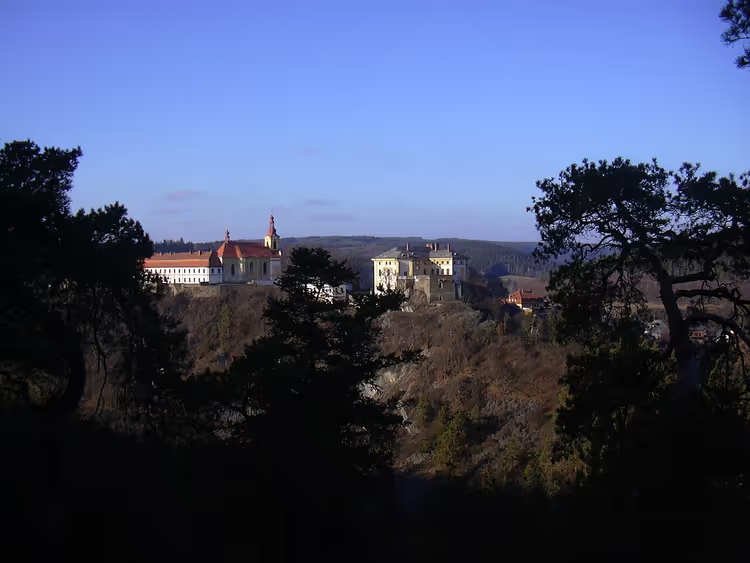
Rabštejn nad Střelou in the Plzeň Region is called the smallest town in Europe. It has about fifteen permanent residents, and most of the houses have long since become weekend cottages (as of: Rabštejn nad Střelou). It has kept its town status, although by size it is more like a village. You will see cliffs above the river, the remains of a monastery, and complete silence. People come here not for entertainment, but for the atmosphere.
A record number of castles
In the number of castles, fortresses, and manor houses, Czechia ranks among the leaders in Europe. State-protected sites alone number in the hundreds, and together with manor houses the count runs into the thousands (as of: Wikipedia). The density is such that in a single day you will pass several dozen. Some castles are open as museums, others operate as hotels. If you love history, plan a route by region in advance.
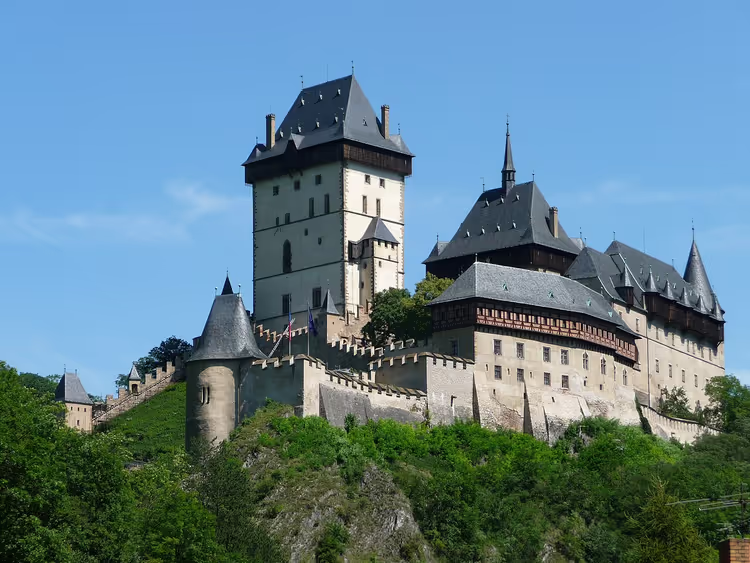 © Jürgen Regel, Marian… · CC BYPhoto: Jürgen Regel, Marian…, CC BY (https://creativecommons.org/licenses/by/3.0), Wikimedia Commons
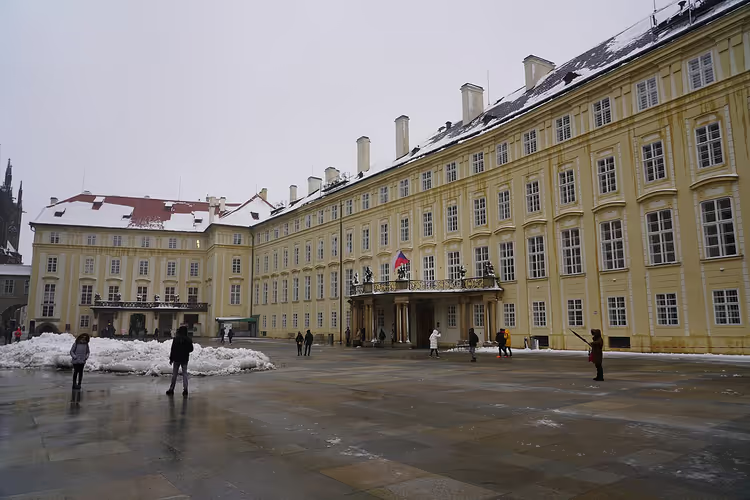
Prague Castle, the largest castle in the world
The area of Prague Castle is almost 70,000 m², and this is a confirmed world record (as of 09/2026, Guinness World Records entry). The complex includes St. Vitus Cathedral, palaces, gardens, and Golden Lane. Entry to the grounds is free, while individual sites require a ticket. Allow at least a couple of hours for your visit, otherwise you will have to rush. The catch: in summer it gets very crowded, mornings are the quietest time.
 © Ray Swi-hymn from Sijhih-Taipei, Taiwan · CC BY-SAPhoto: Ray Swi-hymn from Sijhih-Taipei, Taiwan, CC BY-SA (https://creativecommons.org/licenses/by-sa/2.0), Wikimedia Commons
An economy without sharp contrasts
Czechia is one of the most prosperous countries in Central Europe. The standard of living here is higher than in its eastern neighbors, and the economy is growing steadily. Healthcare and public transport are accessible, and unemployment has long remained low. For you, this means well-kept cities and predictable prices. The country cannot boast of being the absolute leader in income, but it holds a place in the European top tier.
Legal "prohibited" substances
Czech laws take a lenient view of small amounts of drugs for personal use. Possessing a dose intended for yourself is not considered a crime. This is the result of a medical reform, not a license to deal. Selling and large quantities remain criminal offenses. For you, the rule changes almost nothing: bringing drugs in and buying them are still risky.
 © Diliff · CC BY-SAPhoto: Diliff, CC BY-SA (https://creativecommons.org/licenses/by-sa/3.0), Wikimedia Commons
Prostitution as a type of service
Prostitution in Czechia is not prohibited, although it is not formalized as a separate profession (as of Wikipedia). Cities regulate it at the local level, and there is no single national law. It is not advertised to tourists and remains a gray area. We mention this fact as a legal peculiarity, not as a recommendation. Respect local rules and do not seek out questionable offers.
 © Jiří Bernard · CC BY-SAPhoto: Jiří Bernard, CC BY-SA (https://creativecommons.org/licenses/by-sa/3.0), Wikimedia Commons
Bare-knuckle fights with no rules
In Prague, tourists hear stories about underground clubs with no-rules fights. There is no confirmed data about such events, and they have no official status. According to the stories, there were no referees at these fights, and a bout ended when a participant could not get up. Today this is more of an urban legend than a regular attraction. For thrills, it is better to go to legal boxing tournaments.
The ban on plastic windows
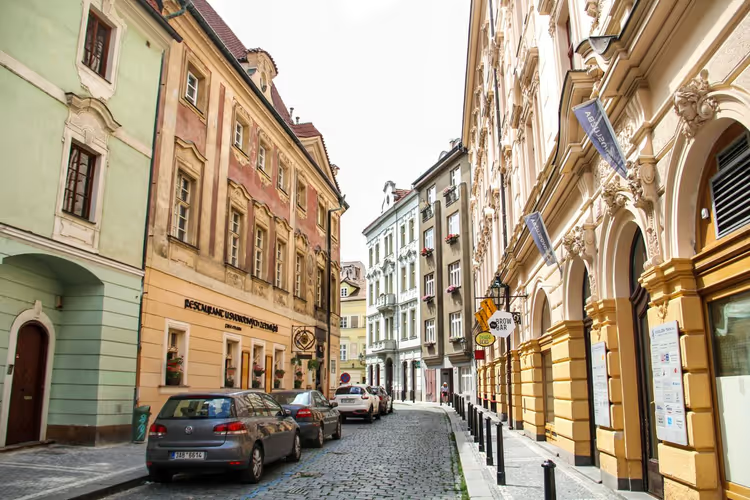
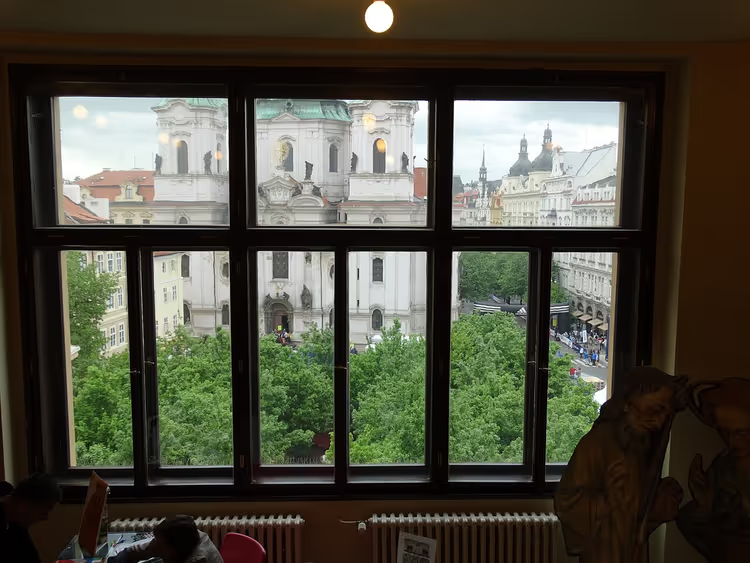
In the historic center of Prague, you cannot replace wooden frames with plastic windows. Satellite dishes on facades are also prohibited. The rule exists to preserve the look of the old streets. It applies to buildings in the protected zone, so replacements must be approved in advance. You will see the result: facades look almost the same as they did decades ago.
 © kikiwis · CC BYPhoto: kikiwis, CC BY (https://creativecommons.org/licenses/by/3.0), Wikimedia Commons
Beer and meat delicacies
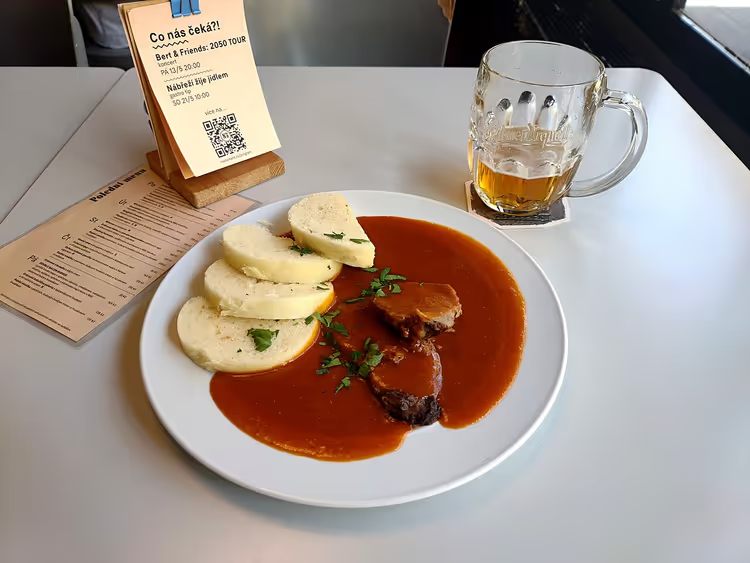
Czechia holds first place in the world for beer consumption per person. On average, people here drink about 130 liters a year (as of 09/2026, Kirin report). Germans, known for their beer festivals, lag behind the Czechs. Besides classic lagers, local breweries make banana, coffee, and cherry varieties. With your beer, you will be served pork, dumplings, and duck.
 © Ladislav Boháč · CC BY-SAPhoto: Ladislav Boháč, CC BY-SA (https://creativecommons.org/licenses/by-sa/4.0), Wikimedia Commons
Yogurt, fairs, and radon springs
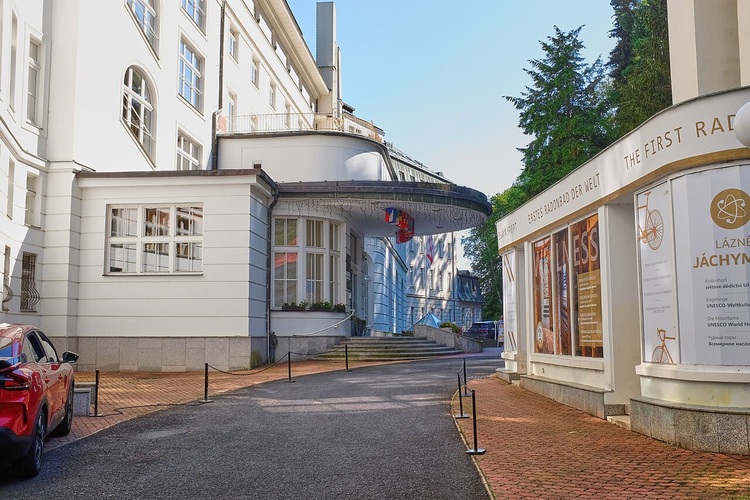
Czechia holds several historic "firsts." Industrial yogurt production was established here earlier than in many European countries. In 1791, Prague hosted the first industrial exhibition. In 1906, the first radon spa opened in Jáchymov. Radon baths are still used in local sanatoriums today. For the history of medicine, this is an important point on the map.
 © Lubor Ferenc · CC BY-SAPhoto: Lubor Ferenc, CC BY-SA (https://creativecommons.org/licenses/by-sa/4.0), Wikimedia Commons
The oldest university in Central Europe
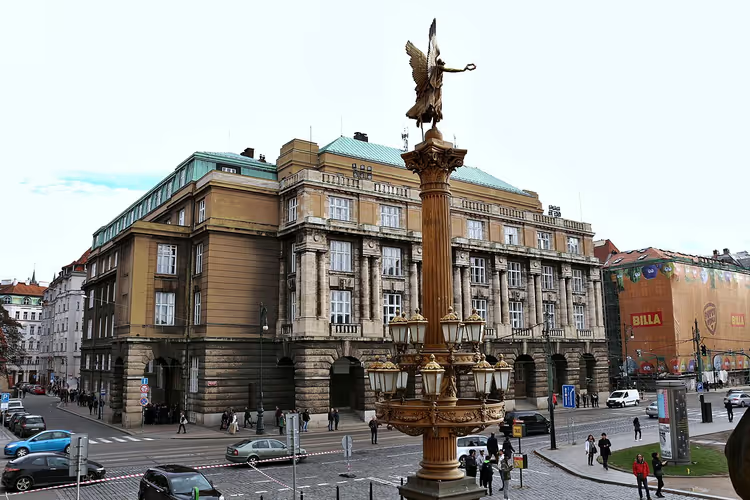
Charles University in Prague was founded in 1348 (as of: Charles University). It is the oldest university in Central Europe and one of the oldest in the world. The university bears the name of King Charles IV, who signed the founding decree. Today it is the largest university in the country. Take a walk through the historic campus center if you want to see its core.
 © VitVit · CC BY-SAPhoto: VitVit, CC BY-SA (https://creativecommons.org/licenses/by-sa/4.0), Wikimedia Commons
⁉️🤔 Frequently asked questions
Is it true that you can legally possess drugs in Czechia?
The law does not treat possession of a small amount for personal use as a crime. For tourists, bringing drugs in and buying them is still risky.
What is the smallest town in Czechia?
It is Rabštejn nad Střelou in the Plzeň Region. You can get there by car from Plzeň; public transport is infrequent here.
How much beer do Czechs drink?
Czechia has held first place in the world for beer consumption per capita for many years (as of: consumption statistics). Local breweries also make unusual varieties with banana or cherry.
Is Prague Castle really the largest castle in the world?
According to Guinness World Records, Prague Castle is recognized as the largest ancient castle complex in the world (as of: Guinness record). The castle occupies a site about 570 meters long along the ridge. The exact dimensions are listed in the official record entry.
Do I need to buy a ticket to Prague Castle?
Entry to the castle grounds is free. You pay to visit individual sites: the cathedral, palaces, and exhibitions. Tickets are sold at ticket offices and online; lines are long in summer, so it is better to arrive at opening time.
In short: what to book
If these facts caught your interest, plan your trip time in advance. First, set aside a day for Prague and Prague Castle, and buy cathedral tickets online. For beer and dinner, look for local pubs away from the tourist streets. Accommodation in the center gets booked fastest in spring and autumn. Go to Czechia for castles, beer, and the quiet of small towns.

A small editorial team writing guides for independent travel. We travel ourselves, but we haven’t been everywhere, so we check prices, opening hours and how to get there against official sources.