
















Argentina: 6 facts that change the perception of the country
Argentina has long drawn travelers with football, tango, and beef. But the real country is far more interesting than those three postcards.
Latin America seems distant and mysterious, and Argentina stretches across nearly the entire south of the continent. Here, the presidential oath once required Catholic faith, and the lowest point in South America lies in the Patagonian steppe.
Argentina connects tropical waterfalls in the north with glaciers in the south. Below we have gathered six big topics about the country, its nature, and the habits of its people.
Planning the trip yourself? A step-by-step breakdown of transport, hotels, and routes is in our Argentina travel guide.
Argentina in six facts
💡 In short:
- The country's nature holds two continental records: it has both the highest peak and the deepest depression in South America.
- Football in Argentina affects the entire country's schedule, down to the work of schools and offices.
- The statistics are surprising: the country leads in the number of psychologists per capita. For plastic surgery, it is second only to South Korea.
- As of 09/2026, verified via the UNESCO website and psychologist statistics.
1. The Catholic oath was only abolished in 1994
Until 1994, Argentina's constitution explicitly required the president and vice president to be Catholic. The reform of that same year removed this condition (as of 09/2026, source).
In 2007, Cristina Fernández de Kirchner became the first woman elected president of the country in a direct election. She won more than 45% of the vote and won in the first round (as of 09/2026, source). Before her, the post was held by Isabel Perón, but she came to power after the death of her husband, Juan Perón, not through a vote.
The Catholic tradition has not disappeared, however: you will see it in the holiday calendar and in the architecture of the cities.

2. Big families, plastic surgery, and psychologists
Family in Argentina carries more weight than in most European countries. People here tend to live in large clans, and relatives gather around one table even on an ordinary Tuesday. If you are invited over, be ready for a long meal.
By the number of cosmetic surgeries per capita, Argentina ranks near the top globally, second only to South Korea. In 2021, the country performed almost 400,000 surgical procedures (as of 09/2026, source).
Psychotherapy is also part of everyday life here. According to WHO statistics, there are 223 practicing psychologists per 100,000 residents, the highest figure in the world (as of 09/2026, source).
 © Robertaleotta2020 · CC BY-SAPhoto: Robertaleotta2020, CC BY-SA (https://creativecommons.org/licenses/by-sa/4.0), Wikimedia Commons
3. Iguazú: 275 falls and a front 2.7 km wide
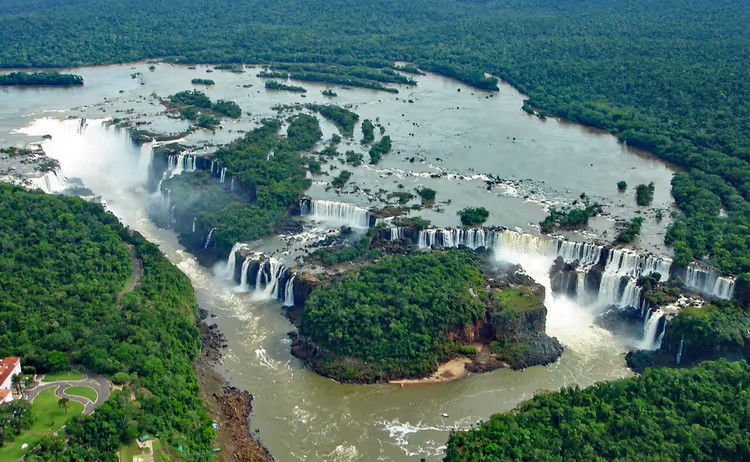
Iguazu Falls on the border with Brazil consists of 275 separate streams, and the drop reaches 80 meters. The width of the cascading wall extends to 2,700 meters (as of 09/2026, source).
Arrive at the park in the morning: by midday the trails to the main viewpoints fill up with tour groups, and you will have to wait in line for photos.
 © Mariordo (Mario Roberto Durán Ortiz) · CC BY-SAPhoto: Mariordo (Mario Roberto Durán Ortiz), CC BY-SA (https://creativecommons.org/licenses/by-sa/4.0), Wikimedia Commons
4. Patagonia and dinosaurs
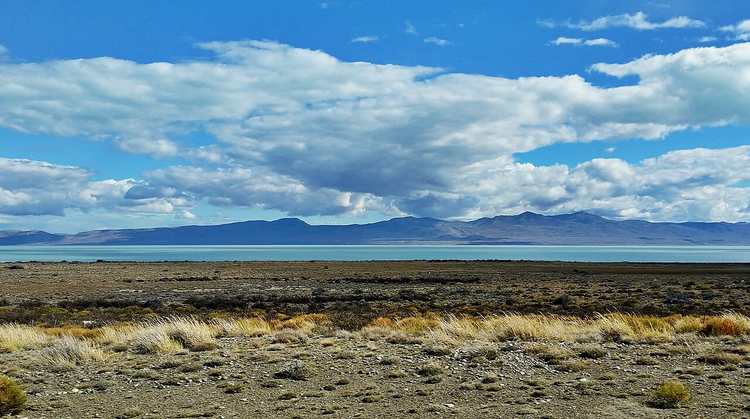
Patagonia occupies the cold south of the country and is known for more than just glaciers. This is where some of the largest dinosaur skeletons in the history of paleontology were found.
Argentinosaurus and Patagotitan, two of the largest known dinosaurs, come from here. You can see the Patagonian giants at the Egidio Feruglio Museum in Trelew. Distances between points are measured in hundreds of kilometers, so allow extra time and bring warm clothing.
 © Justraveling.com · CC BY-SAPhoto: Justraveling.com, CC BY-SA (https://creativecommons.org/licenses/by-sa/4.0), Wikimedia Commons
5. The highest and lowest points on the continent
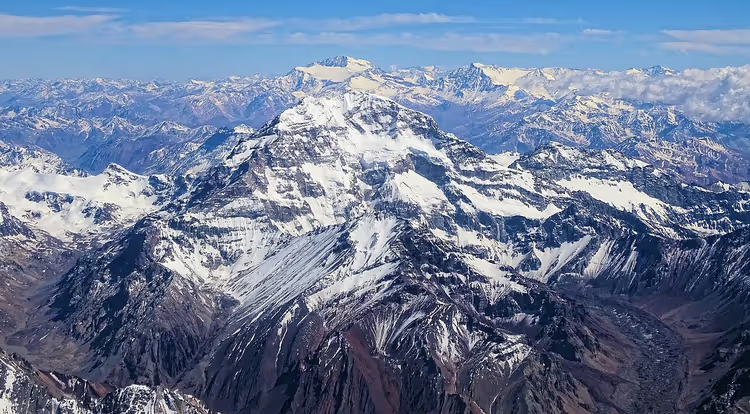
Aconcagua in the Andes rises to nearly 6,960 meters and remains the highest peak on the planet outside Asia (as of 09/2026, source). At the other extreme of the continent lies the Laguna del Carbon salt flat, which drops to 105 meters below sea level (as of 09/2026, source).
Both records belong to one country, which is rare for such a large region. If you love mountains, Aconcagua is worth seeing at least from a distance.
 © Bjørn Christian Tørrissen · CC BY-SAPhoto: Bjørn Christian Tørrissen, CC BY-SA (https://creativecommons.org/licenses/by-sa/4.0), Wikimedia Commons
6. Soccer as the country's main theme
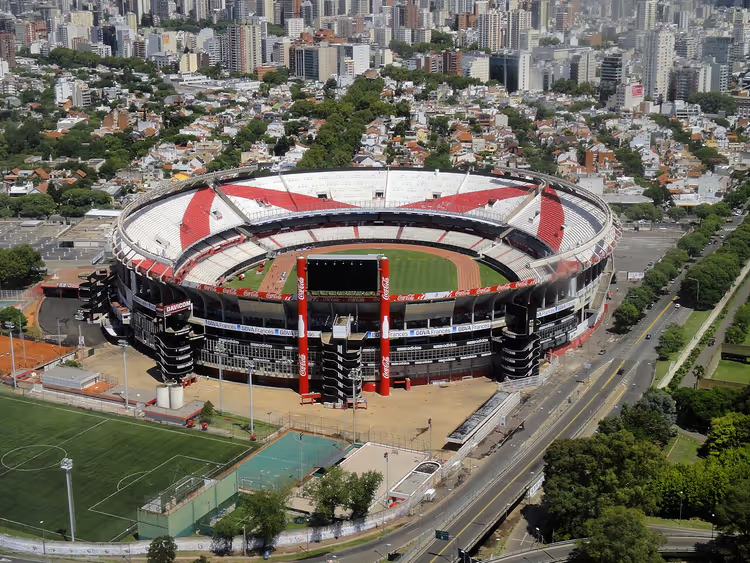
Soccer in Argentina long ago stopped being just a sport. The national team has won the World Cup and the Copa America many times, and Lionel Messi is considered the best player of his generation. National team matches are watched even by people who are indifferent to club soccer.
During decisive games, life in the country noticeably slows down. Broadcasts gather the entire country in front of screens, and schools and offices adjust their schedules around the start of the match.
 © Fulviusbsas · CC BY-SAPhoto: Fulviusbsas, CC BY-SA (https://creativecommons.org/licenses/by-sa/4.0), Wikimedia Commons
Frequently asked questions
When is the best time to go to Argentina?
The seasons here are mirrored: while it is winter in Europe, Patagonia is in the middle of summer. For Iguazu Falls, choose April to June or September to November, when there is less rain. For the south with its glaciers, the period from November to March works well, but it is almost always windy there.
Is a week enough for the whole country?
No. Distances in Argentina are enormous, and a single flight between the north and the south takes half a day. For a proper trip covering Buenos Aires, Iguazu, and a piece of Patagonia, allow at least two weeks. With seven days, pick one region and do not spread yourself thin.
What should I see first?
The classic set is this: Iguazu Falls, Buenos Aires, and Patagonia with its glaciers. Add Aconcagua if you are interested in mountains. All of it together requires two to three weeks and domestic flights, so plan your route in advance.
Why are there so many psychologists in Argentina?
Psychotherapy here is woven into the everyday culture of the cities. That is why Argentines openly talk about feelings, including with visitors.
Is it safe to travel around the country on your own?
The main tourist routes are manageable for independent travel. Stick to well-lit areas of major cities and do not leave your belongings unattended. In Patagonia, the main risk is not crime but the weather and the distances between points.
In short: what to book
The matrix is simple. For culture: Buenos Aires. For nature on a continental scale: Iguazu. For mountains and glaciers: Patagonia and Aconcagua. Each of these regions deserves its own trip, and it's up to you where to start.
For how to build an itinerary on your own, see our Argentina travel guide.

A small editorial team writing guides for independent travel. We travel ourselves, but we haven’t been everywhere, so we check prices, opening hours and how to get there against official sources.