













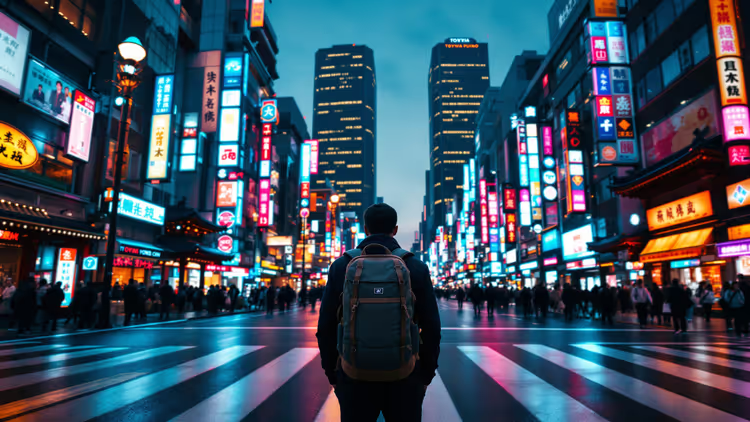
 AIIllustrative image: AI-generated
Japan itinerary for 2 weeks: Tokyo, Kyoto, Osaka and Hiroshima without rushing
2 weeks in Japan offer a rare balance: four cities and four transfers. In 14 days you cover the route Tokyo, Kyoto, Osaka, Hiroshima and return to Tokyo for your flight home.
First-timers often try to cover half the country in one trip. Distances are long, central hotels are expensive, and train travel costs money: a 7-day adult Japan Rail Pass costs 50,000 ¥ (as of 09/2026, official website).
Below is a day-by-day itinerary, a breakdown of nights by city, transport, and tips that will save you time on your first trip.
Ad: this article contains affiliate links, we earn a commission if you book through them, at no extra cost to you.
Two-week Japan itinerary: the essentials
💡 In short:
- A linear route without unnecessary transfers: Tokyo, Kyoto, Osaka, Hiroshima and back to Tokyo.
- Nights: Tokyo 4, Kyoto 3, Osaka 3, Hiroshima 2, Tokyo 2.
- Main transport: shinkansen, the JR high-speed train.
- A 7-day adult Japan Rail Pass costs 50,000 ¥, from October 1, 2026 it will be 53,000 ¥ (checked 09/2026 on the official JR Pass website).
Why this route works
The route is built as a single line: Tokyo, Kyoto, Osaka, Hiroshima and back to Tokyo. You are not rushing around the country, but moving west step by step.
Every transfer here is short. Between Kyoto and Osaka the shinkansen takes only minutes, and you can reach Nara from Osaka in about half an hour. That is exactly why four bases do not turn into four transfers with suitcases.
For a first trip, you will not find a better compromise. You see a metropolis, old quarters, street food and history, but you do not spend half your vacation on the road.
How many nights in each city
City | Nights | Why |
|---|---|---|
Tokyo | 4 | start, metro and shinkansen at hand |
Kyoto | 3 | temples, Gion and the old town |
Osaka | 3 | base for Nara and Himeji, food scene |
Hiroshima | 2 | Peace Park and Miyajima Island |
Tokyo | 2 | shopping and flight home |
Book Tokyo and Kyoto first. In high season, central hotels in these cities quickly get more expensive or sell out entirely. Osaka is usually calmer, and a night in Hiroshima costs noticeably less than in the capital. If your budget is tight, add a night in Osaka and drop one in Tokyo: you win on both price and convenience for day trips.
Day-by-day itinerary
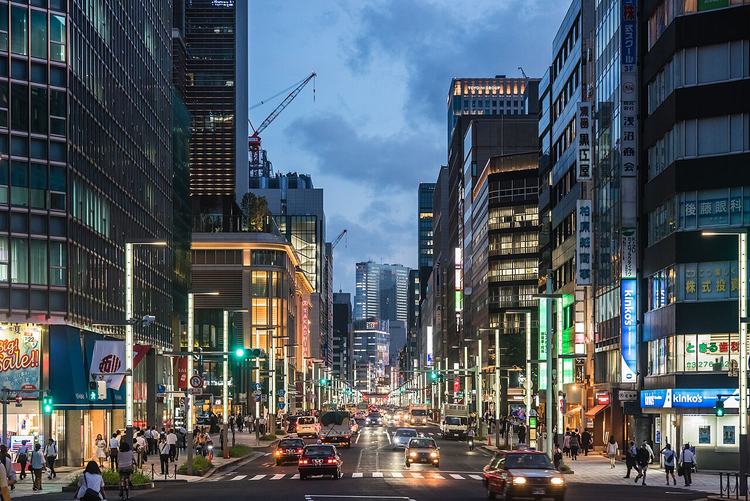 © Sitao Xiang · CC BY-SAPhoto: Sitao Xiang, CC BY-SA (https://creativecommons.org/licenses/by-sa/4.0), Wikimedia Commons
Days 1-4: Tokyo
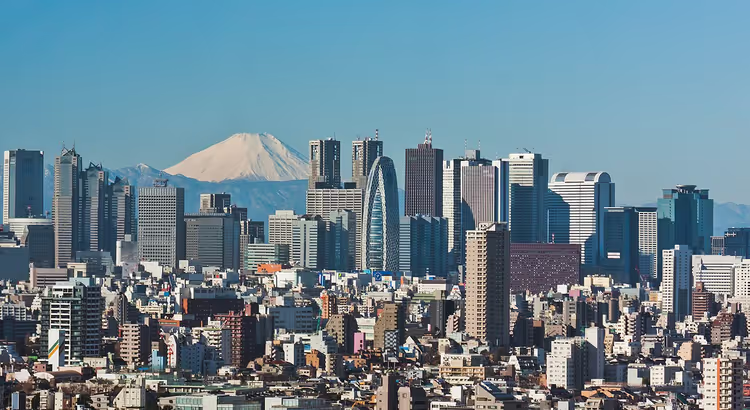 © Morio · CC BY-SAPhoto: Morio, CC BY-SA (https://creativecommons.org/licenses/by-sa/3.0), Wikimedia Commons
Tokyo is a great place to start. The city is huge, loud and at times exhausting, but that is exactly what makes it compelling. In the morning you stand in a temple in Asakusa, in the afternoon you walk through Shibuya, and in the evening you have dinner amid the neon of Shinjuku.
What to fit in in Tokyo:
Shibuya Crossing.
Neon and observation decks in Shinjuku.
Senso-ji Temple in Asakusa.
Street food and evening neighborhoods.
Tokyo's districts are connected by metro and JR lines, so getting around the city takes less time than the map suggests. Stick to one line per day so you do not waste hours on transfers. Senso-ji Temple in Asakusa is best seen early in the morning: by day the street in front of the gates is completely packed.
If the capital starts to feel overwhelming, take a day trip. From Tokyo you can easily reach Kamakura with its temples or Kawaguchiko at the foot of Mount Fuji. Tokyo sightseeing tours on GetYourGuide will help you cover the first day without overthinking.
Next you head to Kyoto. The shinkansen saves time; the night bus is cheaper but eats up a whole night. Choose based on your budget and energy reserves.
Days 5-7: Kyoto
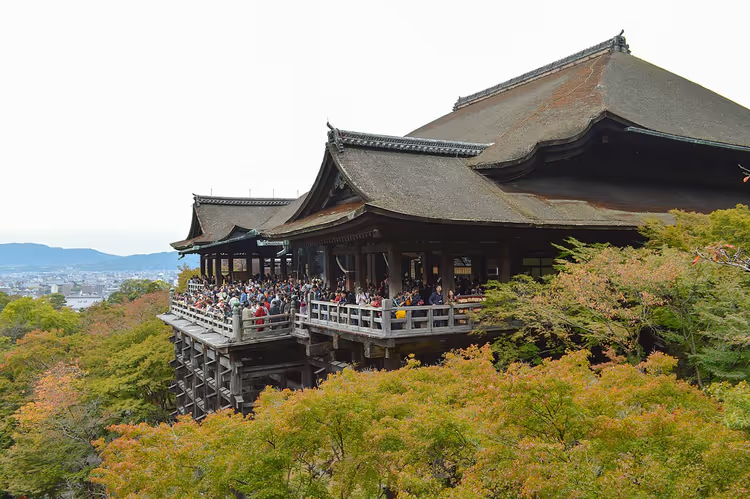 © Francisco Anzola · CC BYPhoto: Francisco Anzola, CC BY (https://creativecommons.org/licenses/by/3.0), Wikimedia Commons
Kyoto shows you classic Japan: temples, Shinto shrines, old lanes and quiet gardens. Here you slow down after Tokyo's pace and take in the city without rushing.
What to fit in in Kyoto:
Fushimi Inari Shrine with thousands of vermilion gates.
Kiyomizu-dera on the hillside.
Gion and Higashiyama with wooden houses.
The Arashiyama bamboo grove.
Kinkaku-ji, the Golden Pavilion.
Nishiki Market.
The Philosopher's Path.
Transport in Kyoto works differently than in Tokyo. There is little metro, and buses move slowly because of narrow streets, so part of the route is easier to walk. Gion, Higashiyama, Kiyomizu-dera and Nishiki Market are close to each other, and one relaxed day covers them all.
It is better to give one day in Kyoto to one strong experience rather than a dozen temples in a row. Kyoto tours and tickets on GetYourGuide solve this task in advance.
Days 8-10: Osaka as a base
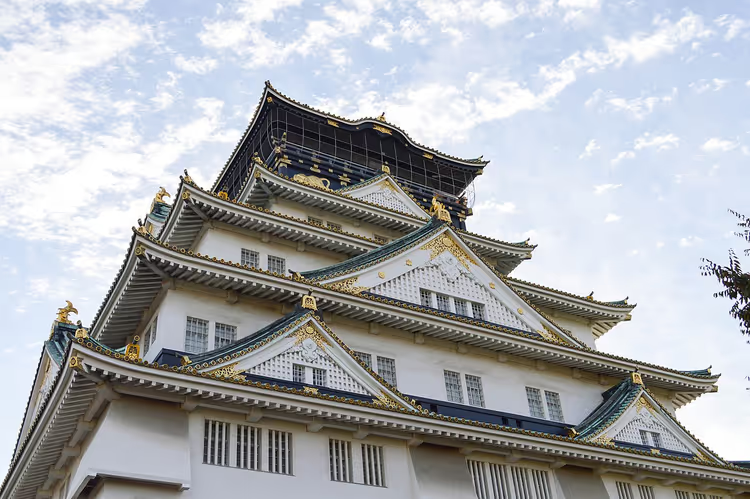 © Francisco Anzola · CC BYPhoto: Francisco Anzola, CC BY (https://creativecommons.org/licenses/by/3.0), Wikimedia Commons
Osaka has a livelier character than the other cities on the route. Here you eat on the go, stay out late and pay less per night than in Tokyo or Kyoto.
Osaka is a convenient base for day trips. Nara is half an hour away, and the white Himeji Castle deserves a full day of its own.
It is better not to combine Nara, with its deer and Todai-ji Temple, with Himeji: each day trip takes a full day. Himeji Castle, shaped like a white heron, lies farther from Osaka than Nara, so plan it as a separate trip.
What to fit in in Osaka:
Dotonbori with its signs above the canal.
Namba.
Shinsekai.
Osaka Castle.
Umeda Sky Building.
Kuromon Market.
America-mura.
Days 11-12: Hiroshima and Miyajima
 © DXR · CC BY-SAPhoto: DXR, CC BY-SA (https://creativecommons.org/licenses/by-sa/4.0), Wikimedia Commons
Hiroshima is often cut from a two-week itinerary, and that is a mistake. The city is calmer than Tokyo, Kyoto and Osaka, but in historical significance it ranks among the country's most important places.
What to fit in in Hiroshima:
Peace Memorial Park.
Peace Memorial Museum.
Hiroshima Castle.
Miyajima Island.
To reach Miyajima, take a JR train or tram from central Hiroshima to Miyajimaguchi Station, then a ferry. The trip to the station takes about 25 minutes and costs 420 ¥ one way, free with the Japan Rail Pass (as of 09/2026, Japan Guide). The ferry itself takes about 10 minutes.
Peace Memorial Park and the museum are next to each other, within walking distance. Allow several hours for the museum and leave time for the Atomic Bomb Dome by the river: the evening illumination is visible from the embankment.
Days 13-14: back to Tokyo
For the last two days you are back in Tokyo. Your return flight leaves from here, so you can catch up on what you missed, buy souvenirs and eat well.
Ideas for the finale:
Shopping in Shibuya and Shinjuku.
Ueno and Ameyoko.
Asakusa in the evening.
TeamLab or a museum.
One last look at the city panorama.
For the finale, do not book a hotel outside the city. A convenient airport connection matters more than the view from the window.
How to get around Japan
Between cities you travel by shinkansen, the JR high-speed train. It is fast and comfortable, but expensive.
The most common question about train travel concerns the Japan Rail Pass. From October 1, 2026 the pass gets more expensive: 7 days for an adult cost 50,000 ¥ until the end of September and 53,000 ¥ after (as of 09/2026, official JR Pass website). Do the math before buying: on this route the pass does not always pay off.
Alternatives to the shinkansen: regional trains, night buses and domestic flights. A flight from Tokyo to Hiroshima is sometimes cheaper than the train. Train schedules and prices on Trip.com are worth checking in advance.
Within cities you pay with an IC card, not paper tickets. You buy a Suica or ICOCA card from a machine at the station and top it up as you go. The card works the same way in Tokyo, Kyoto, Osaka and Hiroshima.
If you are bringing a large suitcase, look into luggage forwarding between hotels, because on the Tokyo, Kyoto, Osaka and Hiroshima route it saves you energy and stress in station transfers.
How much two weeks in Japan cost
Japan is not as cheap as Southeast Asia, but it is not a bottomless pit either. Most of your money goes to hotels, transport and food.
Without the international flight, two weeks fit into a four-figure sum per person. The difference comes almost entirely from accommodation: a night in central Tokyo costs noticeably more than a quiet night in Hiroshima. On this route the difference is especially visible.
Count transport between cities and the flight home separately.
Where to stay on the route
The right base saves you time every day. A location near a metro or JR station matters more than the name of the district itself.
In Tokyo, take the center with fast metro access and be prepared for high prices.
In Kyoto, stay closer to the center: buses move slowly here.
In Osaka, you get the best balance of price and convenience for day trips.
In Hiroshima, it is calmer and cheaper than in the first two cities.
Find hotels in Tokyo
Compare prices across booking sites and filter for rooms with free cancellation.
Compare prices on Trip.comThe widget loads once you give your consent.
When to go
The best time for this route: spring and autumn.
Spring. From late March through May, cherry blossoms bloom. Beautiful, but expensive and crowded; hotels need to be booked in advance.
Autumn. October and November are almost ideal. The weather is mild, the leaves are red, and the trip goes more smoothly than during blossom season.
Summer. From June through August it is hot and humid. If you do not handle stuffy heat well, summer is not the best season for walking around cities.
Winter. From December through February it is cool, but cheaper and less crowded. For Tokyo, Kyoto, Osaka and Hiroshima, winter works fine.
Tips for two weeks in Japan
Do not pack in too many cities.
Stay in the center so you do not lose time on transfers.
Keep cash on hand: cards are not accepted everywhere.
Sort out mobile internet before the trip.
⁉️🤔 Frequently asked questions
Is two weeks enough for Japan?
Yes, two weeks is enough for a first trip. Do not stretch the route across ten cities: Tokyo, Kyoto, Osaka and Hiroshima give you a good balance. You see the classics, street food and history, but stay at a relaxed pace.
What is the best Japan itinerary for 2 weeks?
For a first time, the best option is the linear route Tokyo, Kyoto, Osaka, Hiroshima and back to Tokyo. You cover the main cities and do not sit on trains all day. A return flight from Tokyo closes the loop without extra transfers.
Should I include Hiroshima in two weeks in Japan?
Yes, if you are interested in World War II history and Miyajima Island. Hiroshima is calmer than the big cities, and Miyajima offers one of the country's most striking views. If you want a slower pace, drop Hiroshima and add days in Kyoto or Osaka.
Which is better as a base: Kyoto or Osaka?
Kyoto is more convenient for temples, Gion and the classic atmosphere. Osaka is more practical and often cheaper, with faster access to Nara and Himeji. Many people split nights between the two cities to get both.
When should I book hotels in Japan?
As early as possible, especially for Tokyo and Kyoto. During cherry blossom season, in autumn and around holidays, prices rise quickly and central options disappear months ahead. Book in advance even with free cancellation to lock in the price.
Can I do without the Japan Rail Pass?
Yes, on this route the pass does not always pay off. You can buy individual shinkansen and regional train tickets. Add up the cost of your trips in advance: if the total is lower than the pass price, buy single tickets and do not overpay.
In short: what to book
Two weeks in Japan go smoothly if you choose a linear route and do not change hotels every day. Start with Tokyo and Kyoto: good areas there get expensive first. Osaka will serve as a convenient base for Nara and Himeji, and Hiroshima will add history and Miyajima Island.
If this is your first trip, take the Tokyo, Kyoto, Osaka, Hiroshima route as is. If you want a slower pace, drop Hiroshima and add a day in Kyoto.

A small editorial team writing guides for independent travel. We travel ourselves, but we haven’t been everywhere, so we check prices, opening hours and how to get there against official sources.