







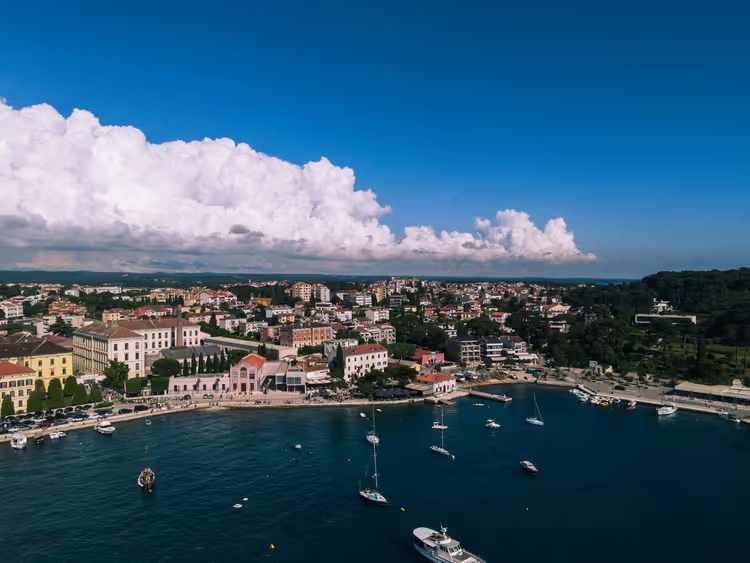
Istria in spring: weather, asparagus and cities without crowds
In April and May, Istria is already warm, and the beaches are almost empty. In spring, you walk into the Roman arena in Pula without waiting in line.
The shoulder season here runs from late March to mid-June. Hotels are cheaper, streets are less crowded, and nature blooms more vividly than in July, but some beach bars and boat tours are still closed. So you build your itinerary around towns, parks, and food, and save swimming for the second half of the trip.
Ad: this article contains affiliate links. We earn a commission if you book through them, at no extra cost to you.
Weather and blooming: what spring looks like
💡 In short:
- April gives you warm days and cool evenings, with rain coming in short bursts.
- Swimming is comfortable from late May; in April, the water is bracing even for the hardy.
- May and the first half of June offer the best balance of weather, prices, and freedom.
- Prices and opening hours: as of 09/2026, verified on the arena visitor page.
Spring arrives on the peninsula earlier than in Central Europe. During the day you walk around in a light jacket, and by evening you reach for a sweater: the difference between noon and sunset is noticeable. The weather is changeable, so dress in layers and bring a compact rain jacket.
In spring, the sun acts as an accelerator. The shrubland known here as maquis covers the slopes with a green carpet within a couple of weeks. Rosemary and thyme bloom alongside it, and the air on the trails smells of spices. Broom is the first to flower: from March it floods the hills with yellow. From May, white and pink rockrose flowers join in, along with the first roses in gardens.
The main spring spectacle awaits you in the south of the peninsula, at Cape Kamenjak. Wild orchids bloom on the rocky plateau near Premantura, and there is a dedicated trail for them. Bring a camera and water: there is little shade on the route.
Spring rains are short but frequent. A downpour can hit you after lunch and end within half an hour, so plan longer outings for the morning. March has less rain than April and May, but the air is colder, and the first tourists only appear toward the end of the month.
The vineyards are just waking up at this time. The vines put out their first leaves, and the owners head out to work the plots. Driving through inland Istria gives you rare views: green hills, empty roads, and not a single tour bus.
The sea in April and May
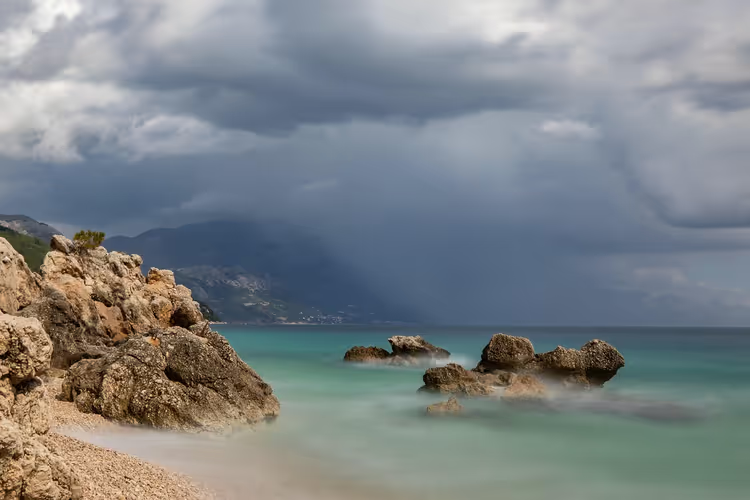
The water in the Adriatic warms up more slowly than the air. The clear surface is deceptive: in April, only a handful of people swim, usually locals. By late May, the sea becomes suitable for a short dip, and the beaches are still empty.
Checking whether the sea is ready is simple. Look at the beach from the pier: if locals are standing in the water without shoes, you will have enough courage too. For the first few days, limit yourself to wading in up to your knees and don't blame yourself for being cautious.
Istrian beaches are rocky and pebbly. Water shoes solve two problems at once: sharp rocks and sea urchins. A windbreaker is also useful, because a breeze picks up from the sea in the afternoon.
If swimming is not your priority, the shoulder season offers another advantage. The water is clearer than in August, and snorkeling near the rocks is peaceful. In the evening, the shore is empty, and you watch the sunset without beach neighbors.
When to go: comparing seasons
Your choice of month changes the trip more than the route does. Look at three factors: water temperature, crowds, and accommodation prices.
Season | Weather | Crowds | Swimming | Prices |
|---|---|---|---|---|
April | warm by day, cool by evening | few | for the hardy | low |
May | warm, less rain | moderate | short dips | medium |
June | hot, warm water | many | comfortable | high |
July-August | heat, dry | very many | best | highest |
September | warm, warm sea | fewer | comfortable | falling |
May and September give you the best compromise: the sea is already or still suitable for swimming, and there are almost no lines. Choose July and August if the goal is beach and water without compromise. April suits those who come for towns, nature, and food rather than swimming.
Poreč: mosaics and a Venetian facade
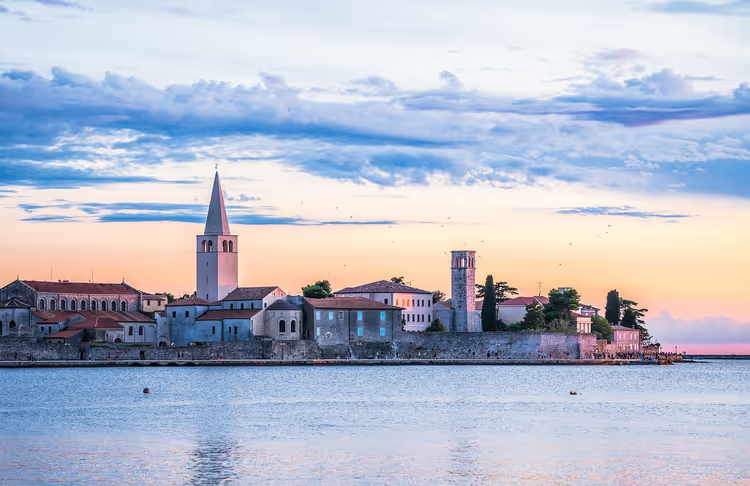
Poreč sits on a small peninsula, and the old town here is almost entirely closed to cars. Walking is easy: the narrow streets lead you straight to the sea. The Venetian past is visible in every other wall, and the pentagonal tower with the lion of St. Mark serves as a landmark for anyone who gets lost.
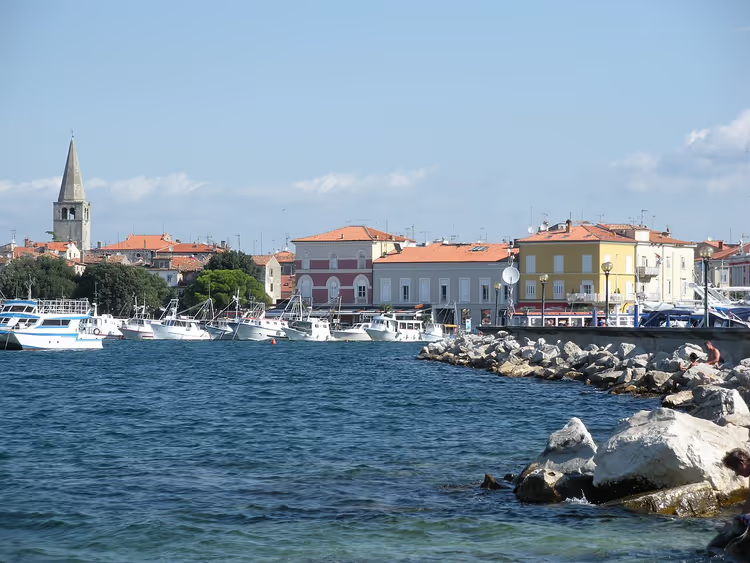
The main reason to come here is the Euphrasian Basilica. The sixth-century complex is a UNESCO site, and an hour is enough to see it. You view the golden mosaics in the apse with your head tilted back, and the early Christian floors in the baptistery are right under your feet. Climbing the bell tower gives you a panorama of the town and the bay.
- Opening hours: Monday through Saturday, except church holidays; from April to June the complex is open from 9 to 18 (as of 09/2026, Istria tourist board).
- Getting there: by bus from Pula or Rovinj, or by car along the coastal road.
- The catch: the basilica is closed on Sundays, and parking by the gate fills up early on holidays.
After the cultural program, head to the waterfront. Boats leave from the port for the island of Sveti Nikola and for neighboring towns, Rovinj and Vrsar. Poreč has plenty of restaurants and cafes, and you can eat well here without a big bill. Look for parking in the large lot in front of the old town gate: you will find a spot on the first try, and the half-day price remains reasonable.
Vrsar: ice cream and a view from the hill
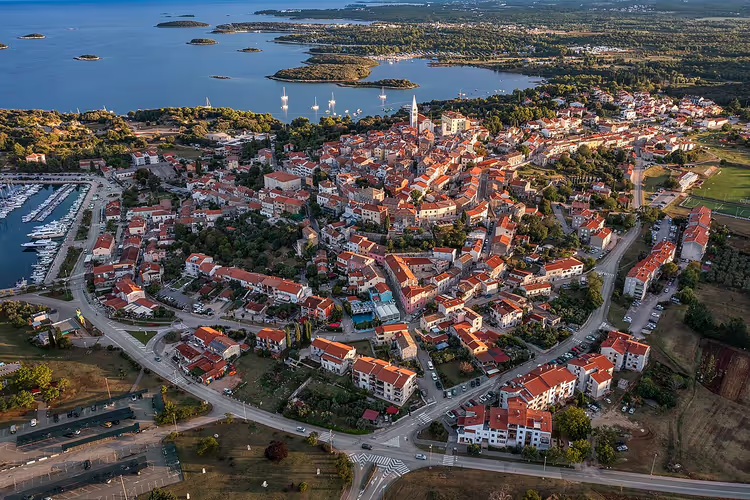
Vrsar is a few kilometers south of Poreč, and at first glance it seems unremarkable. The impression is misleading. The main goal here is specific: the Laguna ice cream cafe at the end of the waterfront. A vendor named Ali Baba is known for tossing scoops of ice cream straight into customers' hands, and even without the show, the ice cream is worth the price.
Before dessert, climb up to the Church of St. Martin. The climb is short and works as a warm-up, and from the top you get a view of the town and the port. The port itself is well kept, with restaurants right by the water, and walking along it is pleasant.
- Where to eat: away from the port, Buffet Grill Danijela serves large wood-fired pizzas at a reasonable price.
- Parking: free spots are available outside the center.
- The catch: the town is tiny; two hours is enough for a stroll.
 © Ekaterina Polischuk · CC BY-SAPhoto: Ekaterina Polischuk, CC BY-SA (https://creativecommons.org/licenses/by-sa/4.0), Wikimedia Commons
Pula: the arena and Roman heritage
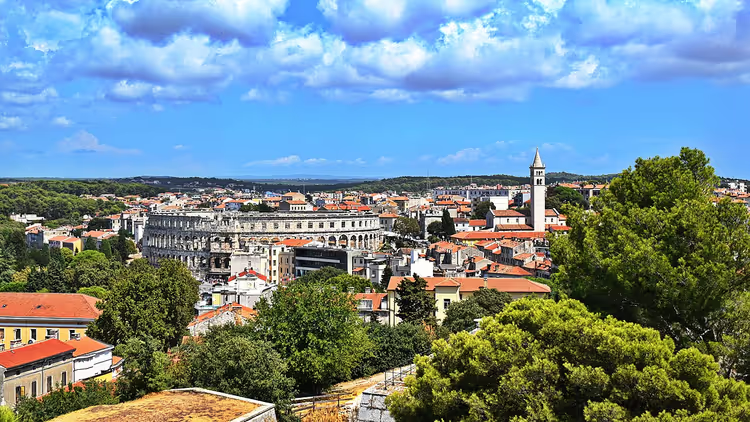
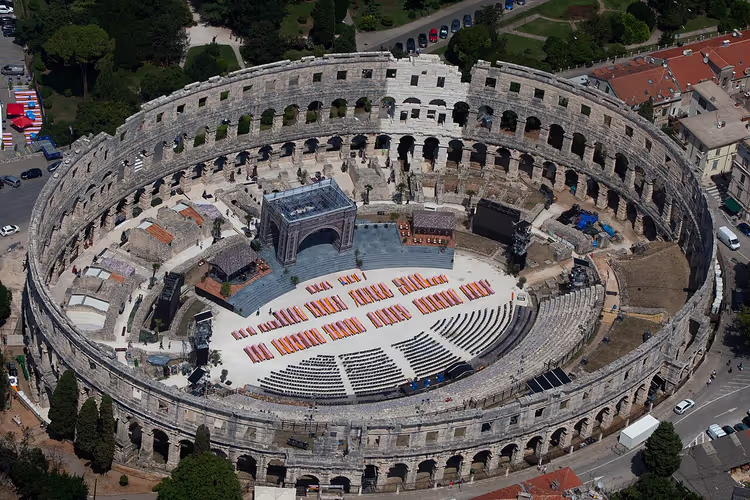
Pula is the largest city in Istria, and the Roman past has not been hidden away here. The amphitheater stands a stone's throw from the port, and you see it as soon as you enter the center. The arena is almost two thousand years old and is among the best preserved in the world. By size, it ranks among the six largest Roman amphitheaters.
 © Miroslav.vajdic · CC BY-SAPhoto: Miroslav.vajdic, CC BY-SA (https://creativecommons.org/licenses/by-sa/4.0), Wikimedia Commons
You can go inside, and it is worth the money. The ticket office closes an hour before the end of the day, and concerts sometimes interfere in the evening, so check the schedule in advance.
Period | Opening hours |
|---|---|
April | 8:00-20:00 |
May | 8:00-21:00 |
June-August | 8:00-22:00 |
September | 8:00-21:00 |
October | 8:00-19:00 |
November-March | 9:00-17:00 |
- Tickets: adults 10 €, children and students 5 €, children under five free, groups of ten or more get a 15% discount, free audio guide via QR code (as of 09/2026, amphitheater official website).
- Parking: there is a convenient lot near the city hospital, about a 15-minute walk to the center (according to the map).
- The catch: evening concerts sometimes close the amphitheater to visitors.
Next you walk through the old town. The triumphal arch, the Temple of Augustus in the forum, the cathedral with its separate bell tower: some streets are closed to cars, so the walk feels relaxed. The Venetian fortress Kastel sits on a hill, admission costs a few euros, and from the tower you can see the city, the port, and the arena in full. A military museum operates inside.
In the evening the crowd disperses, and you can calmly explore the arena tier by tier. From inside you can see how the stands and service galleries are built, and from the upper rows there is a view of the port with ships.
For groceries, stop by the market hall next to the farmers market: honey, jam, and olive oil are sold here by local farms. The market is open in the morning, and by lunchtime the selection is already thinner.
 © Jeroen Komen from Utrecht, Netherlands · CC BY-SAPhoto: Jeroen Komen from Utrecht, Netherlands, CC BY-SA (https://creativecommons.org/licenses/by-sa/2.0), Wikimedia Commons
Rovinj: backstreets and the Church of St. Euphemia
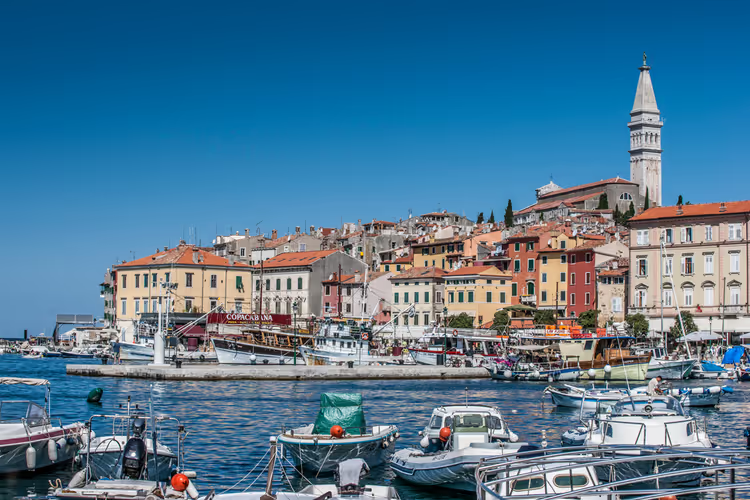
Rovinj's old town grew up on a peninsula, and the sea comes right up to the houses. The streets are narrow and polished by foot traffic, so you quickly lose your route and find it again. The main street, Ulica Grisia, is packed on weekends, but the side alleys are quiet and dotted with artists' workshops.
 © Florian Hirzinger - http://www.fh-ap.com · CC BY-SAPhoto: Florian Hirzinger - http://www.fh-ap.com, CC BY-SA (https://creativecommons.org/licenses/by-sa/4.0), Wikimedia Commons
All roads eventually lead uphill to the Church of St. Euphemia. Its bell tower is visible from anywhere in town, and the climb rewards you with a panorama. Breathing on the upper steps is hard, but the view opens up over the entire archipelago.
Your pause in Rovinj looks like this: coffee by the harbor, fishing boats on the water, a glass of wine at Mediterraneo Bar right by the sea. For a walk among the pines, head to Zlatni Rt forest park: the trails are shady and entry is free. In late April the town turns into the Rovinj Blume flower market, where local products are sold alongside plants.
- Who it's for: those who love a city stroll and photography more than the beach.
- The catch: there are almost no parking spots inside the old town, so you leave your car at the entrance to the city.
Fažana and Brijuni: Tito's islands
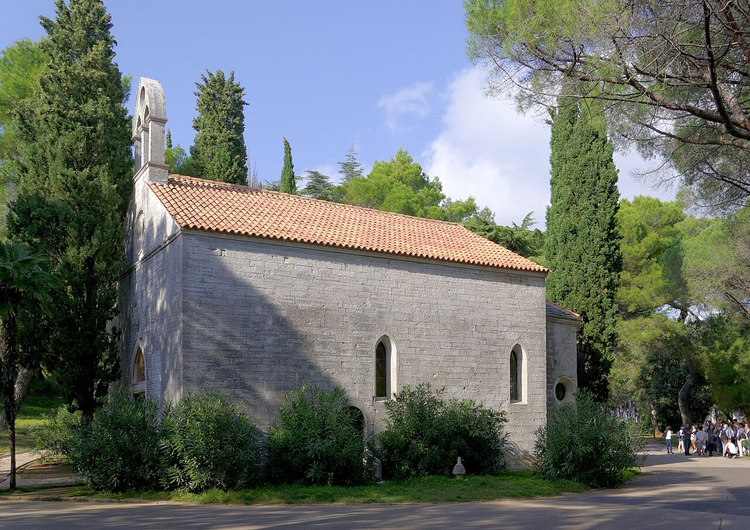
Fažana sits north of Pula and serves as the gateway to Brijuni National Park. The houses are painted in bright colors, boats bob in the small fishing harbor, and the atmosphere is relaxed. This is where boats depart for the group of fourteen islands.
 © Berthold Werner · CC BY-SAPhoto: Berthold Werner, CC BY-SA (https://creativecommons.org/licenses/by-sa/3.0), Wikimedia Commons
On the main island, Veliki Brijun, you get around without a car. There are four options: on foot, by bike rented on site, by electric cart, or on a small tourist train. The route runs through the park area, past Roman ruins including the villa in Verige Bay, and through a safari park with zebras, llamas, and elephants. These animals came to the island as gifts from state guests and have lived here ever since alongside deer, mouflons, and peacocks that roam freely.
The crossing from Fažana takes about 15-20 minutes, and the ticket includes both the ride and park entry (as of 09/2026, Rovinj tourist office). You're asked to be at the port at least 30 minutes before departure.
- Who it's for: those who want to combine nature, history, and a bit of oddity in one day.
- The catch: dogs are not allowed on the ferry without a muzzle.
Motovun: truffles and the town wall
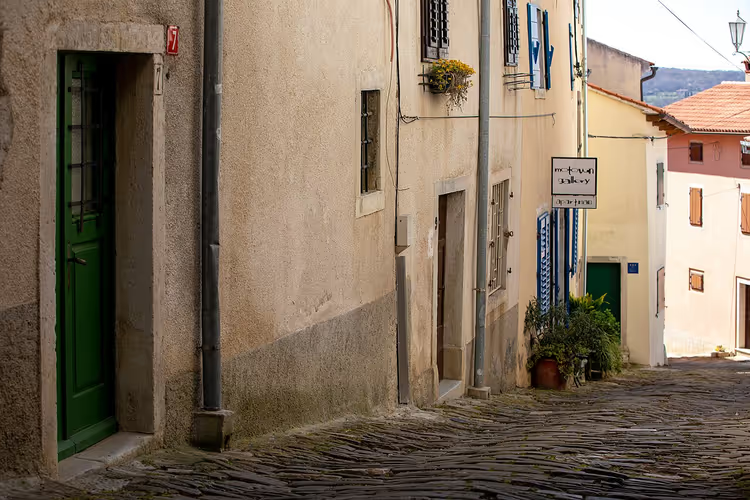
Motovun is visible from afar: the town stands on a steep hill above the Mirna River valley. The surrounding slopes are covered with vineyards and forests, which are considered one of the main places for harvesting white truffles. In spring, however, it's black truffle season, and that's worth remembering when ordering food.
 © Jernej Furman from Slovenia · CC BYPhoto: Jernej Furman from Slovenia, CC BY (https://creativecommons.org/licenses/by/2.0), Wikimedia Commons
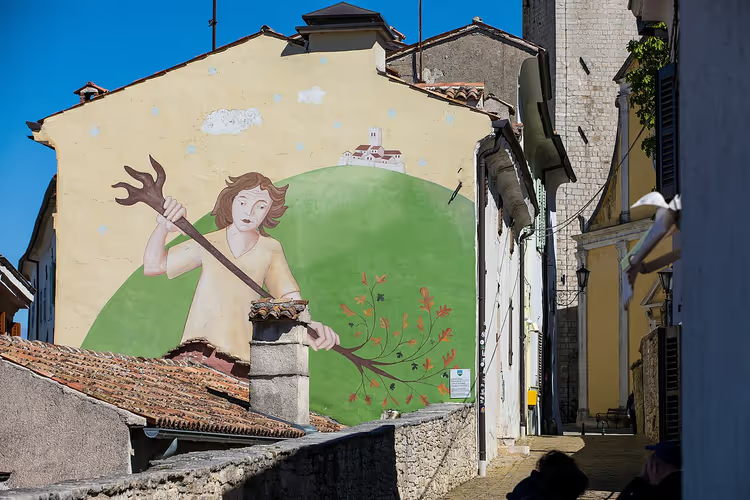
The climb up the cobbled alleys isn't for everyone. But at the top, a whole medieval ensemble awaits you, with Venetian palaces and the Church of Sveti Stjepan. The freestanding bell tower is open for climbing. Motovun's main route runs along the town wall: from there you see the valley, hills, and vineyards all around.
Once you descend, stop by the shops selling truffle products, olive oil, and wine. Konoba Mondo cooks well, but the place has long been no secret: it's best to book a table in advance. Motovun is a convenient base for hiking and cycling days.
- The catch: the climb is tiring, and in the heat it's especially stuffy here, so spring is preferable.
 © Jernej Furman from Slovenia · CC BYPhoto: Jernej Furman from Slovenia, CC BY (https://creativecommons.org/licenses/by/2.0), Wikimedia Commons
Grožnjan: the artists' village
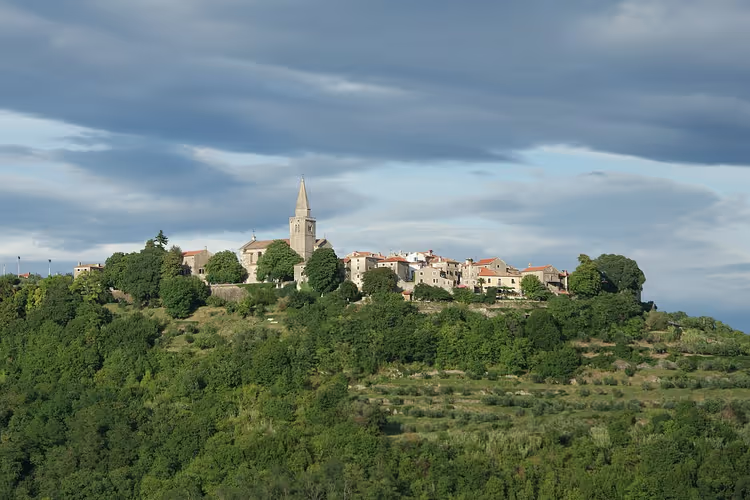
Grožnjan is a short drive from Motovun, and it's called the artists' village. The name is honest: galleries, studios, and workshops line the alleys one after another. In summer, music festivals and workshops take place here, while in spring you walk through empty streets.
 © Aconcagua ( talk ) · CC BY-SAPhoto: Aconcagua ( talk ), CC BY-SA (https://creativecommons.org/licenses/by-sa/3.0), Wikimedia Commons
Grožnjan is smaller and quieter than Motovun. Stone houses with flowers on balconies, a sixteenth-century town loggia, and views of the hills. There's nowhere you need to go: pick an alley and follow it. The village often appears on cycling routes through inland Istria, so there are more cyclists here than cars.
- Tip: come in the morning, before the sun climbs high and the light on the stones is still soft.
Hum, Bale, and Vodnjan: small towns
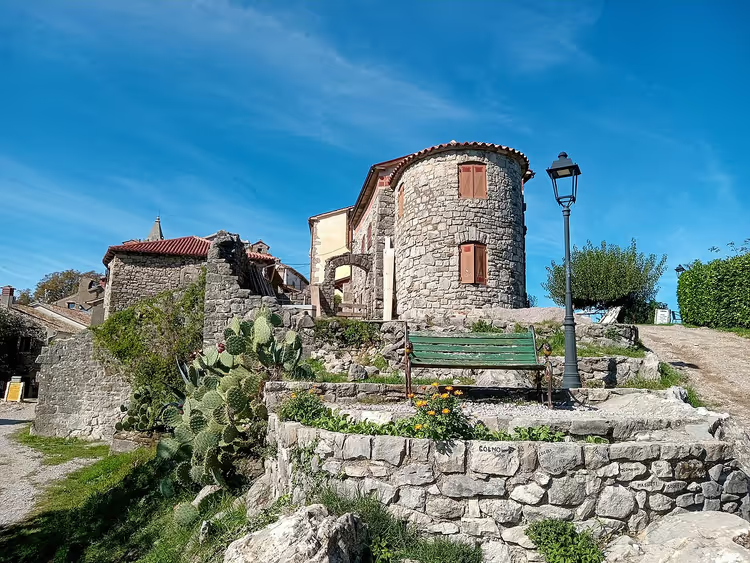
Inland Istria holds places that tour buses don't reach. Hum calls itself the smallest town in the world: a couple dozen stone houses, a church, and one konoba. A walk through it takes half an hour, but the sense of time here is special. You walk along the only street and understand why photographers love this place so much.
 © Schreckgespenst · CC BY-SAPhoto: Schreckgespenst, CC BY-SA (https://creativecommons.org/licenses/by-sa/4.0), Wikimedia Commons
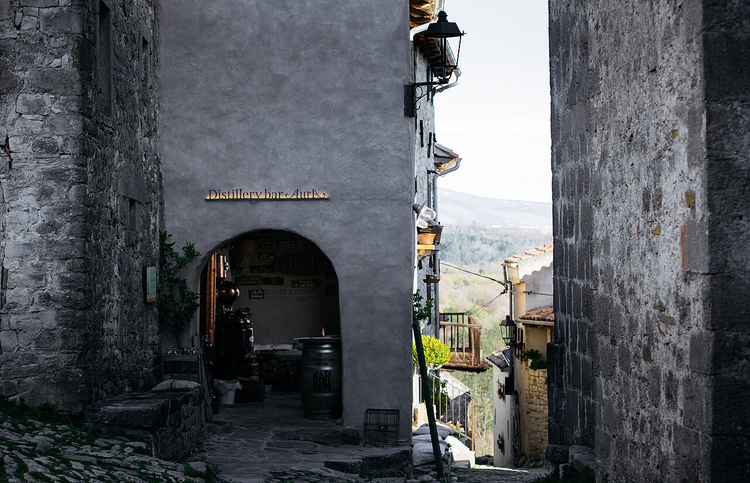
Bale is another medieval ensemble. Narrow winding alleys, silence, and a couple of restaurants at the entrance. Here you can have lunch of freshly made ćevapi and continue on your way: the food is simple, portions are large, and the bill stays moderate.
 © Jernej Furman from Slovenia · CC BYPhoto: Jernej Furman from Slovenia, CC BY (https://creativecommons.org/licenses/by/2.0), Wikimedia Commons
Vodnjan lies further south and is known for the Church of St. Blaise. Inside is a collection of relics considered one of the largest in Europe, along with mummies. The second reason to come here is olive oil: plantations start right outside town, and you buy the product directly from the producer. A bottle of local oil will survive the trip home and remind you of your journey.
The three towns are easy to cover in one day by car. The route turns out unhurried, the stops are short, and the impressions last all evening.
Hiking routes: Kap Kamenjak and Učka
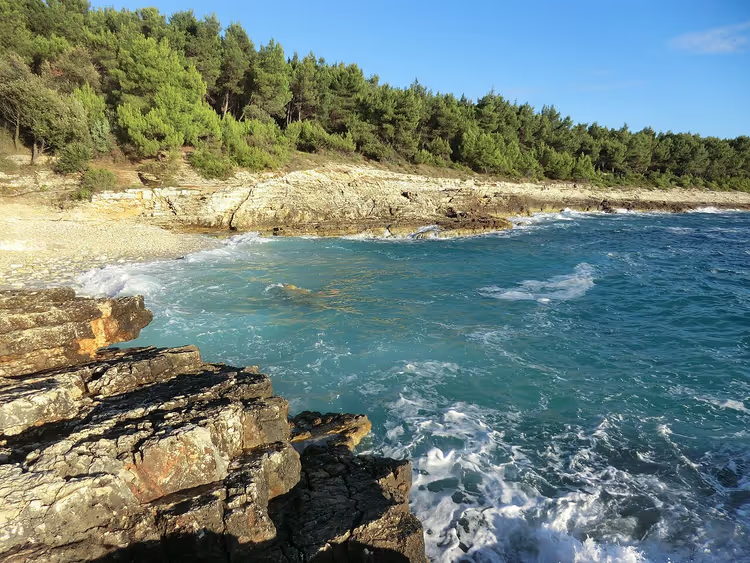
A hiking weekend in Istria depends on your level. In the south, Kap Kamenjak park near Premantura awaits: a plateau with trails through maquis, hidden coves, and striking rock formations. In spring, everything blooms at once here, including wild orchids, and you can walk for hours, discovering new sea views.
 © Einaz80 · CC BY-SAPhoto: Einaz80, CC BY-SA (https://creativecommons.org/licenses/by-sa/4.0), Wikimedia Commons
For families, the park has a dinosaur route: life-size models and real footprints. Kids find it engaging, and you don't have to coax them to keep going.
Bring snacks with you, because there are few food outlets in the park, and among the cult spots, Safari Bar in the south is open. The rules are simple: pedestrians and cyclists enter free, cars pay for entry, and an online ticket costs less. Keep your dog on a leash; open fires and littering are prohibited.
The beaches inside the park are rocks and small coves that you descend to over stones. Water shoes solve the issue of sea urchins and sharp edges. Sunset here is watched right at the water's edge: the trail south leads you to the open sea, and the sun sinks below the horizon with not a single building in front of you.
If you want elevation, head to Učka Nature Park above Kvarner Bay. Its highest point, Vojak, rises to 1,401 m, and on a clear day you can see all of Istria, the Kvarner islands, and sometimes the Alps and Italy from there (official park website). The trails here are more demanding than those by the sea, and for an easier option the Vela Draga canyon works well.
- The catch: car entry is paid, the rocks on the park's beaches require proper footwear, and in April the water is still cold.
Biking: the Parenzana route and others
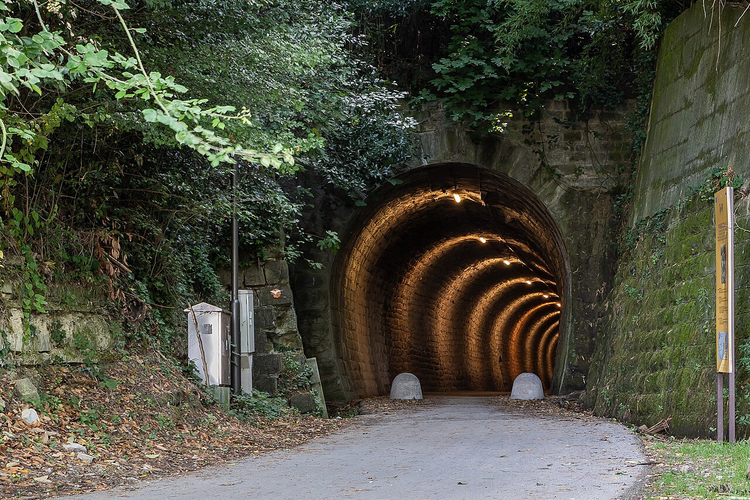
Biking in Istria is not a sport, it's a way of getting around. The most famous route is called Parenzana: a former narrow-gauge railway that once connected Trieste and Poreč. Today it's a route of about 120 km, roughly 80 km of which runs through Croatia (as of 09/2026, Parenzana Trail).
 © Isiwal · CC BY-SAPhoto: Isiwal, CC BY-SA (https://creativecommons.org/licenses/by-sa/4.0), Wikimedia Commons
The surface is mostly gravel, so bring a mountain bike or a sturdy touring bike. The terrain is gentle for most of the way, but some sections are bumpy. Ahead of you are vineyards, olive groves, stone villages like Grožnjan and Motovun, viaducts, and tunnels. Lighting in the tunnels is not available everywhere, so bring a headlight.
It's convenient to stop at wineries and konobas right along the route. Besides Parenzana, there are marked trails for every level, from easy rides along the sea to challenging sections in the Učka mountains. Bike rentals are often offered by hotels and private shops, and you can rent a bike for the day without a reservation.
Wineries and olive oil
In spring, winemakers have more time than in August. That works in your favor: tastings are relaxed, without groups, and the owner is happy to talk about the cellar. Istria is known for two varieties: white Malvasia Istriana and red Teran. The first is fresh and fruity, the second is full-bodied and pairs well with meat.
Olive oil here is produced at a world-competition level. Many farms offer tastings where you compare oils from different varieties and understand the difference. A bottle of local oil is a great gift from the trip, and you can buy it directly from the producer, without middlemen or store markups.
A tasting at a farm takes less than an hour and costs little, and sometimes it's credited toward your purchase. Ask about young oil and the age of the trees: the flavors differ, and you can taste the difference immediately.
It's best to arrange a visit by phone or email, because in spring some farms operate on their own schedule. Also ask whether they speak English: larger wineries are easier in this regard, while at family farms a translator app on your phone can save the day.
Buy wine where you tasted it. At a roadside shop, a bottle of Malvasia is predictably priced, but you don't know exactly what you're getting. Family farms often sell wine in bulk, and that's the best option if you're traveling by car.
Look for Vinoteka and Degustacija signs along the roads: that's how you find places guidebooks don't mention.
Truffles in spring: black truffle season
Autumn in Istria is white truffle season, and in spring you get the black truffle. It's hunted with dogs and a hunter, called a tartufajo here. A walk through the forest lasts a couple of hours: you follow the dog and listen to it work the scent.
You won't find a trophy without preparation, so book a tour. It usually continues with a tasting of truffle products or lunch at a konoba. The cost depends on the farm, and you'll get the exact price when booking. The mushroom goes into pasta, meat dishes, and even omelets.
Spring cuisine: asparagus, fritaja, pršut
The main product of Istrian spring is wild asparagus, or šparoge. Thin dark-green stalks grow in the maquis and are sold everywhere from April to May. Their flavor is intense and slightly bitter, not like garden asparagus.
The classic local dish is called fritaja: an omelet with pieces of asparagus, often with pršut or young cheese. Asparagus is added to risotto, to homemade fuži and pljukanci pasta, to soups, and to meat fillings. Look for šparogada: asparagus festivals where huge fritajas are fried in the squares.
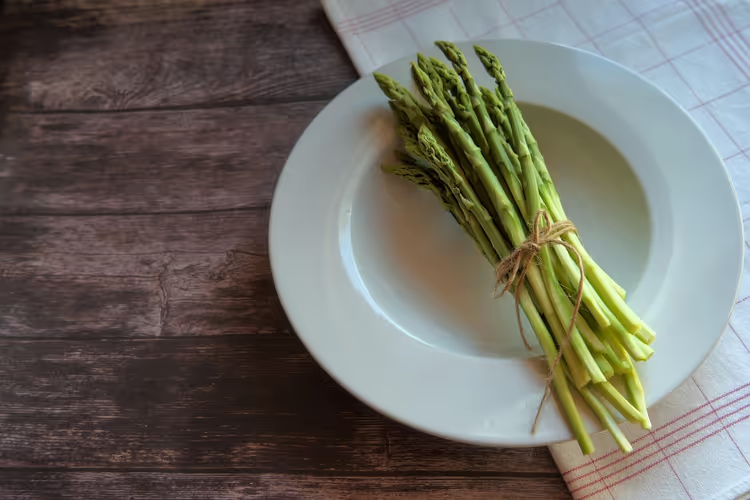
Besides asparagus, in spring you should try young lamb baked under a clay bell, fresh fish and seafood from the Adriatic, pršut, and local cheeses. All of this is served in konobas, family taverns with a homey atmosphere. With asparagus and fish, order Malvasia; with pršut, cheese, and meat, Teran is the better match.
What to order at a konoba
A konoba is a family tavern, and the menu is short. Order what's made from local ingredients, not generic tourist dishes.
Start with pršut and cheese with olive oil: it's a standard appetizer, and it immediately shows the level of the kitchen. Then get maneštra, a hearty bean and corn soup that's inexpensive. The main course is almost always fish, seafood, or meat.
Meat is often baked under a clay bell, called čripnja or peka here. You order it for a group in advance and wait quite a while, but the meat comes out tender and not dry. For a quick lunch, grilled ćevapčići work well: they're served almost everywhere, and portions are large.
For pasta, look for fuži and pljukanci, handmade noodles. In spring they're served with asparagus, and in autumn with truffle. With fish and asparagus, order Malvasia; with meat and pršut, Teran.
The bill at a konoba is usually more modest than at a restaurant on the waterfront. On weekends, book dinner in advance, because locals come here with their families.
Spring events: wine, asparagus, flowers
Istria's spring calendar is packed. The main wine event is Vinistra in Poreč: from May 8 to 10, 2026, the exhibition takes place at the Žatika hall, and more than a hundred participants attend, most of them winemakers (as of 09/2026, Vinistra). Here you taste wines directly from the people who make them.
Asparagus festivals take place in various towns, including around Buzet. Some are outside the peninsula, in Lovran on the Kvarner Gulf, but getting there is easy. In late April, Rovinj hosts the "Rovinj Blume" flower market, and the old town turns into a flower garden.
If your trip falls on Easter, you'll see church processions and holiday services. On the table these days are pinca, a sweet Easter bread, lamb dishes, and dyed eggs. Sports enthusiasts will enjoy the Istrian Spring Trophy cycling race and the Istrian marathon: the cool spring weather is ideal for them.
How to get there and get around
From Germany and Austria, the most convenient way to reach Istria is by car. The roads are good, but there are toll sections in Austria, Slovenia, and Croatia, so plan your costs in advance. A plane takes you to Pula Airport, which has flights to several German cities. There's also a train to Pazin or Rijeka, as well as intercity buses.
On the ground, your own or a rental car gives you the most freedom: you can combine the coast and inland Istria without schedules. Car rental on DiscoverCars helps you compare options in advance and avoid overpaying on the spot. Parking in old towns is scarce and expensive, so you leave your car at the entrance. A bicycle is a good alternative, especially on marked routes. Buses connect the major towns, but in the off-season they run less frequently than in summer.
Supermarkets stay open late and are often open on Sundays, which is convenient if you cook for yourself. Book your airport transfer in advance, otherwise you'll face the highest price of the day at the counter.
Tours and tickets in Pula
Guided tours, skip-the-line tickets and activities — most offers can be cancelled free of charge.
See offers on KiwitaxiThe widget loads once you give your consent.
Accommodation in the off-season: prices and options
The choice of accommodation in Istria is huge: hotels of all categories, apartments, private rooms, villas with pools, and campsites. In April and May, demand is lower than in July, so prices are softer and there are more available options. Sometimes hotels offer special spring deals, and it's worth checking them directly.
Towns and villages inland are cheaper than the coast, but then a car becomes essential. In Rovinj's old town there's a boutique hotel called The Melegran, and it's a good example of how a hotel fits into the historic fabric. You can browse options and compare prices on Trip.com.
Book well in advance for trips around Easter, Ascension, and Pentecost, as well as any dates in May. In April outside holidays, accommodation is easy to find a couple of days before the trip.
What to pack
The main rule in spring is layers. Bring T-shirts and light pants for warm days, a sweater or fleece for the evening, and a wind- and rainproof jacket. A raincoat takes up little space and saves you in a short downpour.
You need comfortable shoes: you'll walk a lot on cobblestone towns and trails. The sun is already strong in spring, so sunscreen, sunglasses, and a cap are essential. Pack a swimsuit too, as well as water shoes: the beaches are rocky, and sea urchins are common here.
Opening hours and tickets in spring
Major attractions operate on their regular schedule in spring.
Small museums, remote restaurants, and some boat tours may still run on reduced hours in spring. Make a habit of checking hours the day before your visit.
Istria with a dog: where dogs are welcome
Istria is generally welcoming to dogs. In Kap Kamenjak Park, your pet can go with you, but on a leash: sheep graze nearby, and guard dogs react to strangers. For the ferry to Veliki Brijun, a muzzle is required; without one, you won't be allowed on board.
Hotels and apartments increasingly accept animals, but you should confirm the policy when booking. Beach rules vary, and where people swim, it's best to keep your dog near the water.
A three-day route along the coast
If you're visiting for the first time and have three days, don't try to cover everything. Pick one base and move in a loop.
Give the first day to Pula and Kamenjak. In the morning you see the arena and the old town, in the afternoon you drive south to Kap Kamenjak park, and in the evening you come back to town for dinner. Buy your arena ticket online so the ticket office doesn't slow you down.
Dedicate the second day to Poreč and Vrsar. In the morning the Euphrasian Basilica and the waterfront are waiting for you, after lunch it's a short drive to Vrsar for ice cream and the view from the hill. In the evening climb the bell tower while there's still enough light for photos.
Spend the third day in Rovinj and on Brijuni. You have two options: either take the ferry from Fažana to Veliki Brijun with a walk through the park, or spend the whole day in Rovinj with the Zlatni Rt forest park. Choose based on the weather, because in the park you're outside almost the entire time.
If you have four or five days, add a day for inland Istria. Motovun, Grožnjan, Hum, and Bale form a loop, and the roads between them don't take much time.
Istria without a car and with kids
Without a car Istria is still doable, you just build your route along the bus lines. Buses connect Pula, Poreč, Rovinj, and Umag, but in the off-season there are fewer runs than in summer. Between neighboring towns it's easy to get around by bike: distances are short and the roads along the coast are calm.
With kids, plan days without long walks. Three reliable options work well: the dinosaur route in Kap Kamenjak park, the ferry to Veliki Brijun with the train around the island, and the small coves in the south where the water warms up faster. Water shoes are needed here too, because the bottom is rocky.
Inland Istria gives you a break from the beaches. Motovun, Grožnjan, and Bale can be covered in a couple of hours, and kids enjoy the drive through the hills itself. Parking near the fortress walls is limited, so in high season arrive in the morning.
In the evening pick a konoba with homemade pasta: kids here eat fuži and pljukanci more willingly than fish. A warm sweater comes in handy after sunset even in May.
⁉️🤔 Frequently asked questions
What's the weather like in Istria in April?
April is a changeable month. During the day it's already warm, sometimes almost summer-like, but in the evening it's noticeably cool, and rain comes in short bursts. There are more hours of sunshine than in winter, but you still need a jacket and a raincoat on the road. Plan walks for the first half of the day, and keep a backup indoor option for the afternoon.
When does the season start in Istria?
The peak season starts in June and lasts until mid-September. The milder version starts around mid-May: the weather is already pleasant and there are noticeably fewer people. A trip in April also makes sense, but then you're choosing quiet towns, nature, and food, and putting swimming aside.
When is the best time to go to Rovinj?
If your goal is the beach and warm sea, go in July or August. For walking around the old town without crowds and heat, May, June, and September are better. In spring you also get the flower market in late April, empty lanes, and a table at a waterfront bar without a reservation.
Is it already possible to swim in May?
The water in May is still brisk, but you can manage a short dip, and kids and hardy adults swim exactly at this time. Bring water shoes: the bottom is rocky and sea urchins are common. If you get cold easily, choose a hotel with a pool and leave the sea for June.
Is it expensive to vacation in Istria?
Istria usually works out cheaper than Western European destinations, especially for hotels and restaurants. That said, prices have risen in recent years, and Croatia's switch to the euro accelerated the process. The off-season helps you save: the same apartments cost less in May than in July.
What local food should you definitely try?
Start with wild asparagus, served as a fritaja omelet. Then come truffle dishes, homemade fuži and pljukanci pasta, pršut, olive oil, and fresh fish. Meat is often cooked under a clay bell, and dinner is paired with Malvasia or Teran. Order these in konobas, not in places with menus in five languages.
In short: what's worth booking
If you have four or five days and you're visiting for the first time, take a base in Poreč, Pula, or Rovinj and add one day in inland Istria. If you're traveling for food, put Motovun at the center of your route and keep one evening for a konoba with truffles. If you have kids with you, plan Kap Kamenjak with the dinosaur route and the ferry to Brijuni. If you want quiet, choose small towns like Bale and Grožnjan.
Accommodation in May gets booked up faster than in April, so it's better to lock in your dates early. Tours and tickets are also easier to book online: tours and tickets on GetYourGuide. Come in the off-season, and Istria will give you what summer doesn't: empty towns, green hills, and a calm evening by the water.

A small editorial team writing guides for independent travel. We travel ourselves, but we haven’t been everywhere, so we check prices, opening hours and how to get there against official sources.