
















Medellin without fear: metrocable, Comuna 13 and the best views
Medellin was called one of the most dangerous cities in the world just twenty years ago. Pablo Escobar's cartel ruled here, and shootouts on the streets surprised no one. Today the Metrocable runs above the rooftops, museums are opening downtown, and tourists come here for coffee, graffiti, and green mountains. A single metro ride costs 4,400 COP with a Cívica card (as of 01/2026, Metro de Medellín fares). You can use the same card to pay for rides on the cable cars of lines J and K.
Below are ten places in the city and its surroundings, plus food, nightlife, and safety tips. For each spot you'll find the price, travel time, or an official source so you can plan your trip without guesswork.
Ad: this article contains affiliate links. We earn a commission if you book through them, at no extra cost to you.
How to see the city
💡 In short:
- Comuna 13 and the Metrocable: line J takes you up to the viewpoints.
- Downtown: Plaza Botero, the Palace of Culture, and Museo de Antioquia are right next to each other.
- Metro fares verified on Metro de Medellín (as of 01/2026), admission tickets on Parque Explora (as of 09/2026).
Walking tour
Downtown Medellin is best explored with a guide. Real City Tours runs free tours of the old town, and the route takes about 3.5 hours (as of 09/2026, Real City Tours). Book your spot a few days ahead: groups fill up fast in summer. The guide works for tips, and you decide how much to give.
The route includes Plaza Botero, the Palace of Culture, and the backstreets of the old center that tourists usually skip. You'll hear about the city's past and how it has changed in recent years.
Bike tour
 © Luis90f · CC BY-SAPhoto: Luis90f, CC BY-SA (https://creativecommons.org/licenses/by-sa/4.0), Wikimedia Commons
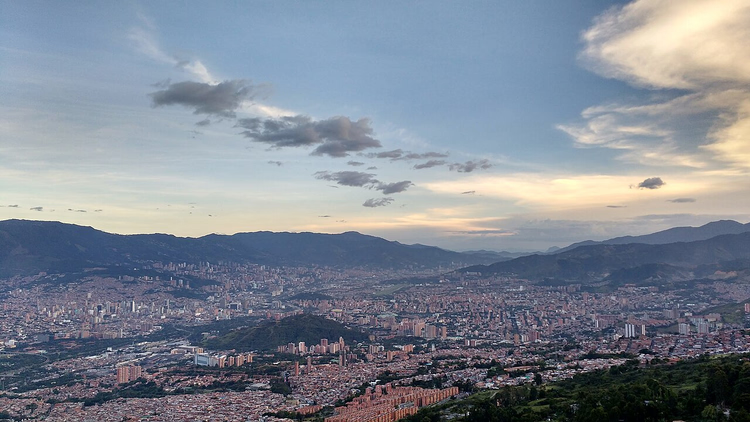
Another way to see several neighborhoods at once is to get on a bike. Electric models help on the climbs, so you'll barely have to pedal. Half a day in the saddle covers Plaza Botero, the Memory Museum, the Palace of Culture, and a nearby city park.
From the upscale neighborhoods the group heads into areas full of graffiti and street food stalls. Rent a bike or join a ride with an English-speaking guide. Book ahead: in the morning there are fewer cars on the road, and you'll make it back before the heat sets in.
What to see in Medellin
The city's main sights are scattered across the valley. Some are downtown, some sit on the slopes, and you'll head out of town for the rock and the village of Guatape.
El Poblado
 © Felipe Restrepo Acosta · CC BY-SAPhoto: Felipe Restrepo Acosta, CC BY-SA (https://creativecommons.org/licenses/by-sa/4.0), Wikimedia Commons
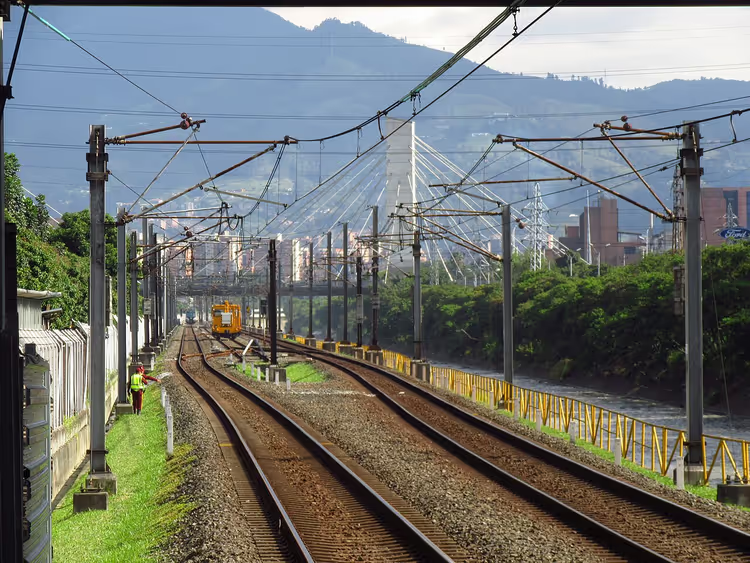
El Poblado is considered the most well-kept neighborhood in Medellin: parks, a river, and former factories covered in plants. Expats live here, and the city's best restaurants are here too. The neighborhood is compact, and you can walk across it in twenty minutes.
There's almost no authenticity left here, but it's safe and convenient. For local life, head downtown or to Comuna 13.
Plaza Botero
 © Staticshakedown · CC BY-SAPhoto: Staticshakedown, CC BY-SA (https://creativecommons.org/licenses/by-sa/3.0), Wikimedia Commons
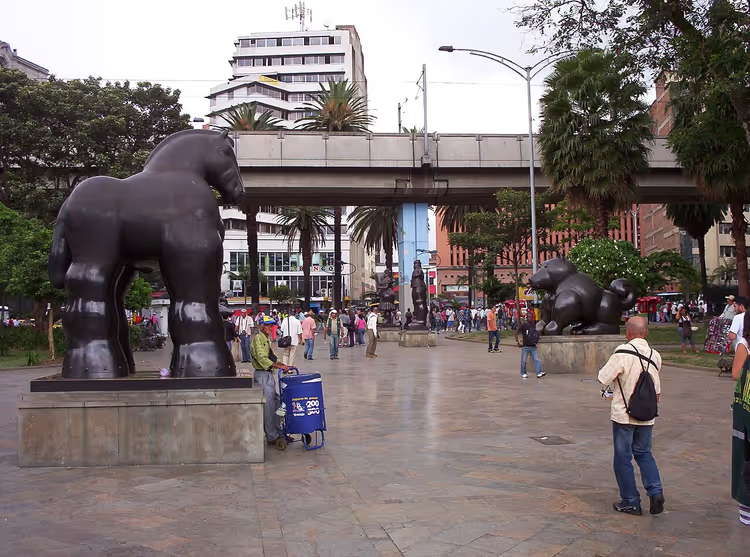
Plaza Botero sits right in the center. Twenty-three bronze works by Fernando Botero are on display outdoors: the sculptor gave them to his hometown. You'll recognize the exaggerated proportions of the figures from a distance.
Right next door is Museo de Antioquia, which houses paintings by Botero and Pedro Nel Gómez. It takes about two hours to see the galleries.
Rafael Uribe Palace of Culture
 © Kamilokardona · CC BY-SAPhoto: Kamilokardona, CC BY-SA (https://creativecommons.org/licenses/by-sa/3.0), Wikimedia Commons
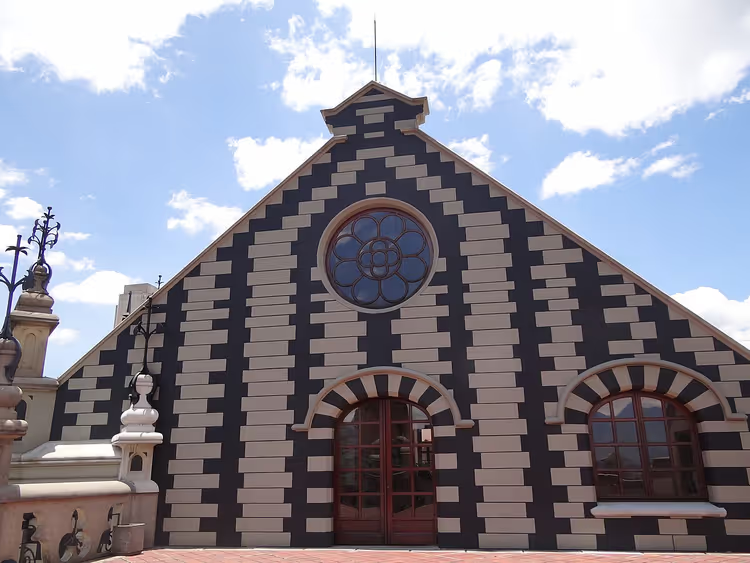
The Rafael Uribe Palace of Culture (Palacio de la Cultura Rafael Uribe Uribe) stands downtown, not far from Plaza Botero. Step into the inner garden: it's quiet there, and the street noise doesn't reach you. The halls and rooms are open for free, and the building itself is listed as a national monument.
Comuna 13
 © Xemenendura · CC BY-SAPhoto: Xemenendura, CC BY-SA (https://creativecommons.org/licenses/by-sa/4.0), Wikimedia Commons
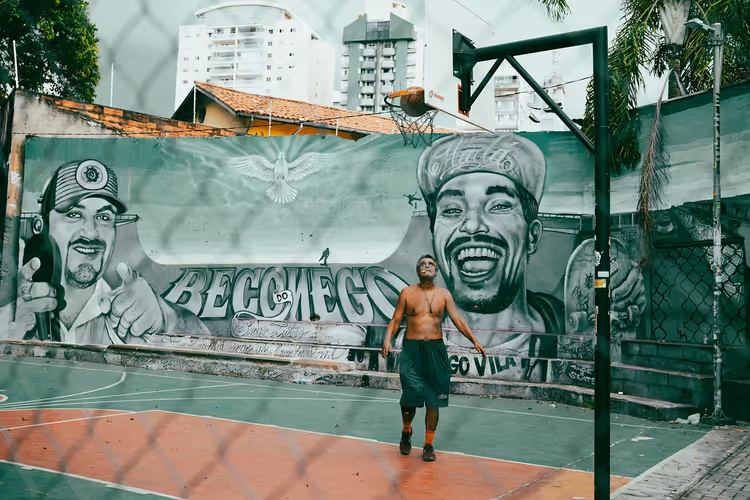
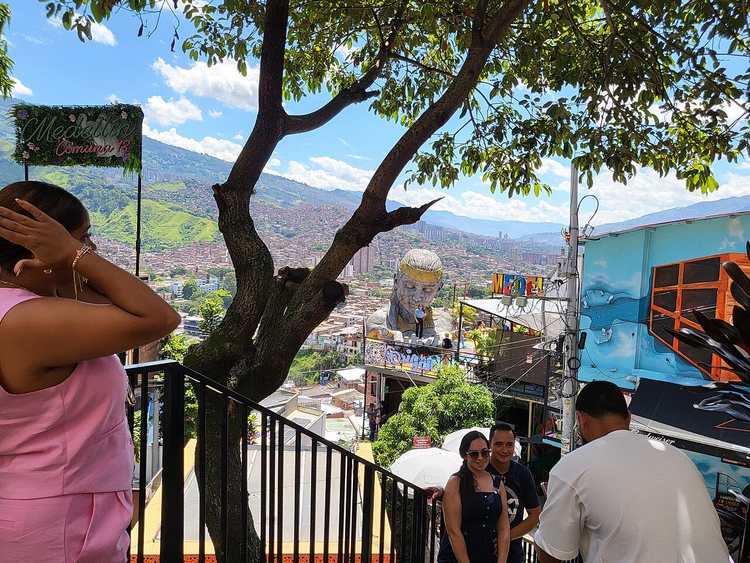
Not long ago, Comuna 13 was considered the most dangerous neighborhood in the city. Now people come here for the graffiti, the valley views, and the atmosphere created by artists, rappers, and dancers. You can get to the top in just a few minutes: escalators and the Line J cable car are in operation (as of 09/2026, Metro de Medellín).
A curious detail for your walk: many houses here are unpainted. In Colombia, a building is not considered finished until the facade is painted, so the owner does not pay tax on it.
Medellín Botanical Garden
 © Jorge Láscar · CC BY-SAPhoto: Jorge Láscar, CC BY-SA (https://creativecommons.org/licenses/by-sa/3.0), Wikimedia Commons
The Medellín Botanical Garden (Jardín Botánico Joaquín Antonio Uribe) covers more than ten hectares in a busy part of the city. Admission is free for all visitors (as of 09/2026, Horarios de visita).
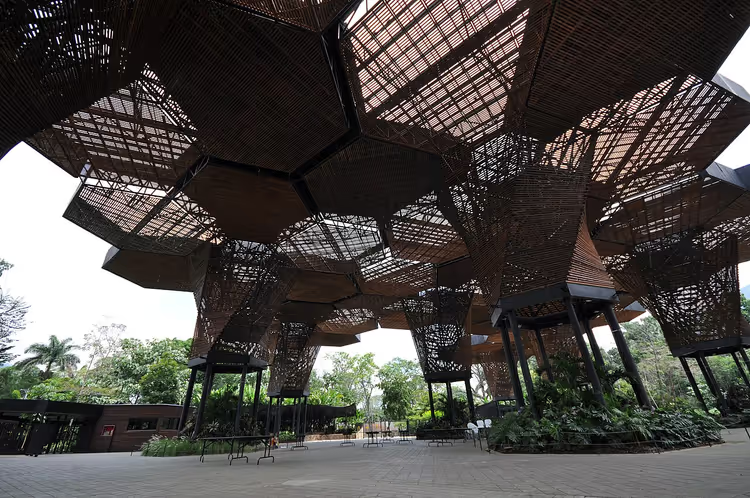
The collection includes thousands of plant species, and in the butterfly garden you can see wings up close. A large wooden structure in the middle of the garden provides shade, so you can rest right under it after your walk.
Museums in Medellín
 © José Luiz · CC BY-SAPhoto: José Luiz, CC BY-SA (https://creativecommons.org/licenses/by-sa/4.0), Wikimedia Commons
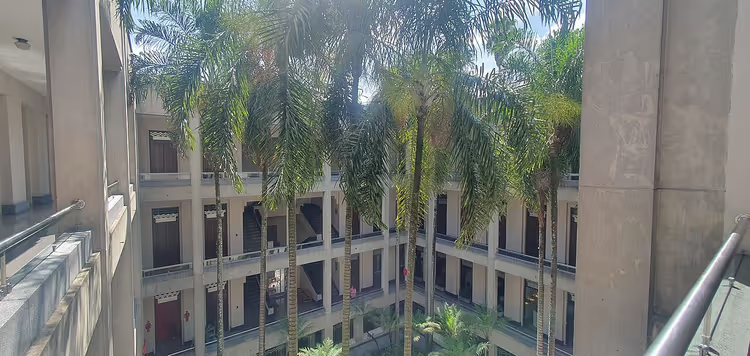
The easiest way to understand how Colombia lives and why Medellín has changed is through its museums. Here are four worth adding to your itinerary:
- Museo de Antioquia: a large collection of Botero's works in a building on the square. museodeantioquia.co
- Museo Casa de la Memoria: exhibits about the wars and conflicts of past decades.
- Parque Explora: an interactive science museum with the largest freshwater aquarium in South America. parqueexplora.org
- Museo de Arte Moderno: contemporary art in a former factory building.
Museum tickets cost in the range of several tens of thousands of pesos; check the exact price on their websites. Almost everywhere is closed on Mondays. It is best to check museum tickets in Medellín in advance.
Arví Park
 © Alejandro Rojas (SajoR) · CC BY-SAPhoto: Alejandro Rojas (SajoR), CC BY-SA (https://creativecommons.org/licenses/by-sa/4.0), Wikimedia Commons
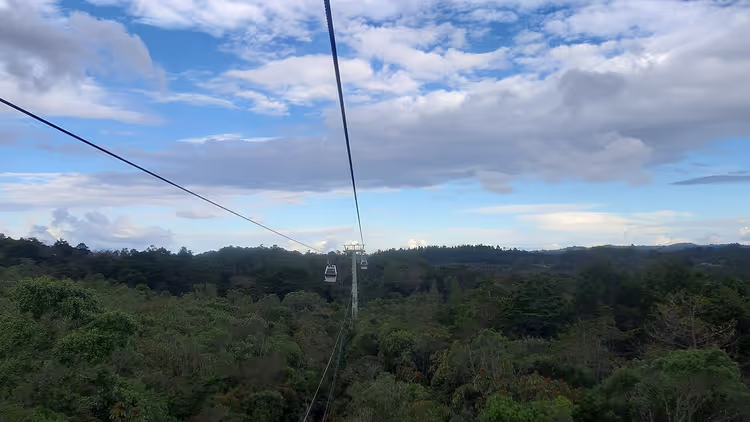
Arví Park covers the slope of a mountain ridge on the outskirts of the city. The most convenient way up is the Line L cable car: it passes over the rooftops of poorer neighborhoods and drops you right in the forest. Inside, you will find hiking trails, waterfalls, and archaeological sites.
On weekends, a farmers market, Mercado Arví, sets up at the entrance. Park admission is free, and the ride up on Line L is paid separately (metro fares).
San Alejo craft market
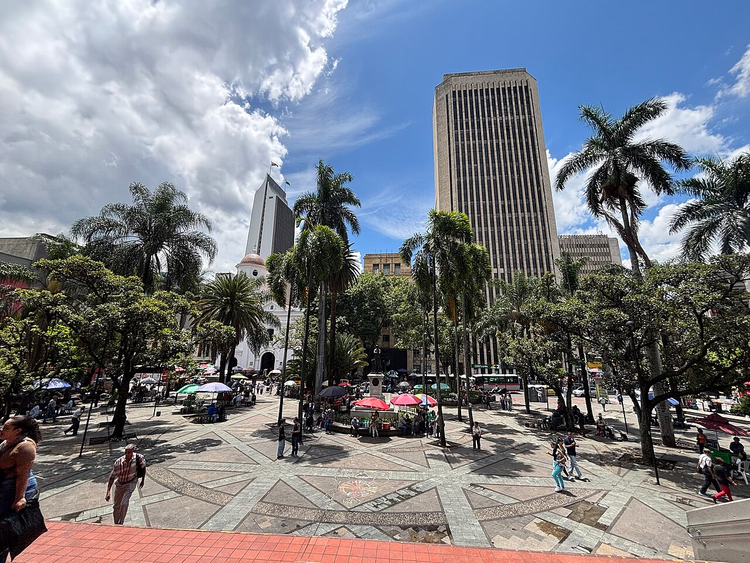
On the first Saturday of every month, hundreds of artisans take over Parque Bolívar. They bring jewelry, textiles, and crafts made from materials you would not expect to see. Circus performers entertain between the stalls, and kids love that most of all.
 © Robot8A · CC BY-SAPhoto: Robot8A, CC BY-SA (https://creativecommons.org/licenses/by-sa/4.0), Wikimedia Commons
Come in the morning: by midday, the best pieces are gone.
Guatapé and the Piedra del Peñol rock
 © Juan Gómez · CC BYPhoto: Juan Gómez, CC BY (https://creativecommons.org/licenses/by/2.0), Wikimedia Commons
The village of Guatapé is less than two hours from Medellín. The houses here are painted in bright colors and decorated with ornaments, and elderly Colombians in traditional hats sit in the square. Take your time walking the narrow streets: you will feel the warmth of the locals right away.
The main nearby landmark: the Piedra del Peñol rock rises above the reservoir. Stair access costs 35,000 COP as of January 2026 (as of 01/2026, La FM). There are 740 steps to the top, and the climb takes about twenty minutes (as of 2026, visitaguatape).
Patience pays off: from the top you get a view of lakes dotted with islands. Come early on a weekday morning, when the steps are not crowded. For time on the water, you can rent a kayak or boat at the dock.
Tours and tickets in Medellin
Guided tours, skip-the-line tickets and activities — most offers can be cancelled free of charge.
See offers on GetYourGuideThe widget loads once you give your consent.
Where to eat in Medellín
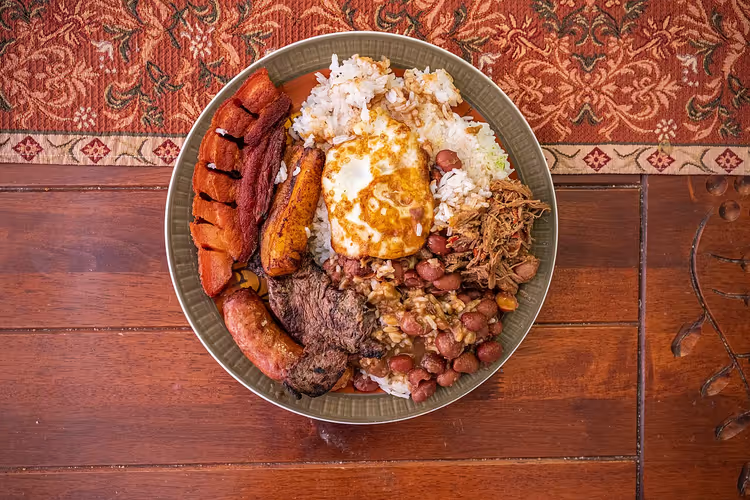
Colombian cuisine starts with simple things. Arepas are made from corn flour and eaten with cheese. Bandeja paisa brings together meat, beans, rice, plantain, avocado, and a fried egg on one plate. Portions are sized for a hungry person, and one plate will keep you going until evening.
Tables at popular spots get booked up in advance, so here are six places worth checking out:
- Cafe Zorba: vegetarian pizzas, big cocktails, and live music on weekends. cafezorba.com.co
- Pergamino: some of the best coffee in the country and a comfortable spot for remote work. instagram.com/pergaminocafe
- Betty's Bowls: smoothies and salads, tables are almost always full, come at opening time.
- The Greek Connection: Greek menu and a large open-air terrace.
- Toscano Trattoria & Pizzeria: a family-run spot with Italian cuisine and fresh ingredients. toscano.restaurantwebexperts.com
- Alambique: a cafe on a quiet side street, antiques and bookshelves inside, a rooftop terrace. alambiquemedellin.com
Medellin nightlife
 © José Luiz · CC BY-SAPhoto: José Luiz, CC BY-SA (https://creativecommons.org/licenses/by-sa/4.0), Wikimedia Commons
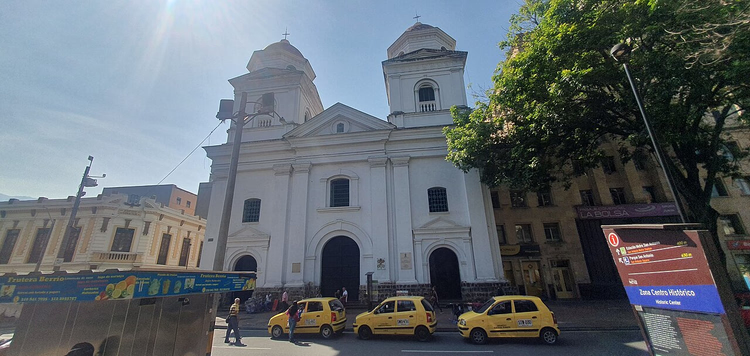
The city doesn't wind down in the evening: bars stay open until morning, and lines at the door start forming after eleven. In El Poblado, around Parque Lleras, you'll find bars and nightclubs, including Woka Lounge. For views of the city at night, head to the rooftops: the Los Patios hostel and Envy Rooftop bar open up a panorama of the entire valley.
There's also a more laid-back option: Berlin Bar or La Octava Bar with a pool. If you want a party on wheels, look for the Chivas bus: music blasting inside, lights flashing outside, with stops at bars.
The easiest place to start your evening is El Poblado: from there you can easily get to the clubs downtown.
How to get to Medellin
You can reach the city by bus or plane. The bus from Bogota takes about nine hours and remains the cheapest option: a ticket costs a few tens of thousands of pesos, and overnight departures save you a day of travel.
Flying cuts the journey short: the flight from Bogota takes about an hour. Jose Maria Cordova Airport (Aeropuerto José María Córdova) is outside the city, so from the terminal you'll head downtown by bus or taxi.
If you're planning trips to the rock and Guatape, renting a car in Medellin will come in handy.
When to visit Medellin
Medellin is called the city of eternal spring, and that's no exaggeration. The climate is tropical, but the altitude takes the edge off the heat, so walking around is comfortable year-round. The rainiest months are in spring and fall; winter is usually drier and hotter.
If you want to catch Feria de las Flores, plan your trip for late summer. Set up an eSIM for Colombia ahead of time so you don't spend your first day hunting for a connection.
Safety in Medellin
 © Steffen Schmitz ( more photos ) · CC BY-SAPhoto: Steffen Schmitz ( more photos ), CC BY-SA (https://creativecommons.org/licenses/by-sa/4.0), Wikimedia Commons
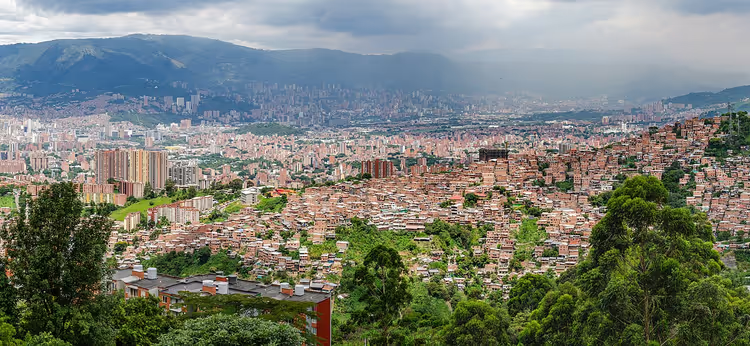
Medellin is no longer the city you read about in 1990s crime reports. Tourist areas are patrolled, but theft does happen, and caution won't hurt.
Keep your phone and wallet in a closed bag, don't carry expensive gear in plain sight, and don't turn into empty side streets after midnight. That's enough to safely see all the places on the list above.
⁉️🤔 Frequently asked questions
How many days do you need in Medellin?
Two days is enough for the city itself: downtown, Botero Plaza, Comuna 13, and the botanical garden. Give the third day to Parque Arvi. Save the fourth day for a trip to Guatape and the Piedra del Penol rock.
How do you get up to Comuna 13?
Escalators and the Line J cable car take you up; the ride takes just a few minutes. Cable car rides are paid for with the same Civica card as the metro.
Is Medellin safe?
Tourist areas are patrolled, but theft does happen. Keep your phone and wallet in a closed bag, don't carry expensive gear in plain sight, and don't turn into empty side streets after midnight.
In short: what to book
If you have two days, cover downtown, Botero Plaza, Comuna 13, and the botanical garden. With three days, add Parque Arvi. With four days or more, plan a trip to Guatape and the rock.
Take the free walking tour of downtown, and book the bike ride in advance. Save museums for the morning: most are closed on Mondays.
Guided tours cover Comuna 13, Guatape, and the rock: Medellin tours on GetYourGuide.

A small editorial team writing guides for independent travel. We travel ourselves, but we haven’t been everywhere, so we check prices, opening hours and how to get there against official sources.