
















 AIIllustrative image: AI-generated
Car rental in Northern Europe: age, tires and hidden fees
Northern Europe without a car loses half its appeal. Trains connect the major cities, but the fjords, waterfalls, and quiet roads stay out of reach. A rental car solves this, but only if you understand the local rules in advance. Norway, Sweden, Denmark, Finland, and Iceland differ in driver age requirements, alcohol limits, winter tire rules, and road tolls. A mistake costs money: in Iceland, using studded tires out of season carries a fine of roughly 20,000 krónur per wheel (Icelandic rules on tires and studs) (as of 09/2026, Traffic fine calculator, Ísland.is). Below, we walk through how to rent a car without overpaying.
Ad: this article contains affiliate links, we earn a commission if you book through them, at no extra cost to you.
 AIIllustrative image: AI-generated
What you need to rent a car
💡 In short:
- The minimum driver age is usually 19-21, and drivers under 25 pay a surcharge.
- Your license must be in the Latin alphabet, otherwise you need an international driving permit.
- In winter, get a car with winter tires: in Sweden they are mandatory from December 1 to March 31 (Swedish winter tire rules).
- Tire and driver requirements: 09/2026, verified on the official website of the Swedish Transport Agency.
Age and license are checked first, before you even pick a car class. Rental is available from age 19-21, and each company sets its own threshold. Drivers under 25 are almost everywhere classified as young drivers and charged a daily surcharge on top of the base rate.
Your license must be in the Latin alphabet. If your license uses a different alphabet, get an international driving permit (IDP) along with your national license. Some companies require the license to have been issued at least one year ago.
At the counter, they will ask for your passport and a credit card in the driver's name. Debit cards are rarely accepted because the deposit is blocked on a credit card. Check the hold amount in advance, otherwise your money will be frozen for the entire trip.
Bring your booking confirmation and hotel address. These details are often written into the contract, and without them the paperwork takes longer.
Which car to choose for your trip
The type of car depends on your route and the season, not on your habits. In cities, a compact is enough, while outside the city and in winter you need all-wheel drive.
A compact is cheaper and easier on the narrow streets of Copenhagen, Stockholm, and Helsinki. In city centers it also saves on parking and fuel.
A crossover or SUV is needed for Norway, Iceland, and northern Finland. All-wheel drive and high ground clearance help on gravel, ice, and mountain switchbacks. In Iceland, some F-roads are open only in summer and require 4WD.
A camper van suits a long trip through Norway and Iceland. It replaces both transport and accommodation, but uses more fuel and requires a campsite spot.
In summer, a small car is enough for cities and coastal roads. In winter, get a car with winter tires: without them, you lack grip on ice.
When car rental is cheaper
Rental prices depend heavily on the season. In high season, cars get booked earlier, and rates rise with demand.
The peak is in June, July, and August. During these months, roads are busy, hotels are full, and available cars are scarce. December is also expensive because of the holidays and the rush to Lapland.
The shoulder season is more affordable. In May and September, the weather is still mild, and rates are lower because there are fewer tourists.
Booking early gives you choice and flexibility. Free cancellation lets you reserve a car in advance and then revisit the price closer to the date. You won't have to change your plan because of a price increase.
Where to find a good rental deal
Major international rental companies such as Enterprise, Hertz, and Avis operate in all five countries and maintain large fleets. They make it easy to compare car classes and insurance terms.
It's better to search through an aggregator that collects offers from all companies on one page. That way you see the final price with fees, not just the base rate. You can compare options across the whole region on DiscoverCars.
Look at the total, not the base rate. A cheap rate often comes without insurance and with limited mileage. Hidden fees surface at the counter, when the car is already booked.
Read the cancellation terms and fuel policy before paying. These two lines most often change the final amount.
 AIIllustrative image: AI-generated
Driving rules in the Nordic countries
In Northern Europe, you drive on the right side of the road and keep your headlights on around the clock. This is also mandatory in summer: your car must be visible in twilight and fog.
The alcohol limit is very strict. In Norway, Sweden, and Iceland it is 0.2 per mille, while in Denmark and Finland it is 0.5 per mille. In practice, this means zero behind the wheel, because even a glass of wine exceeds the threshold.
Winter tires are required wherever winter conditions exist. In Sweden they are fitted from December 1 to March 31 (Swedish Transport Administration), in Finland they are required based on weather from November to March (Finnish Police), and in Norway the tread depth must be at least 3 mm (Statens vegvesen).
At many intersections the right-hand rule applies. Yield to vehicles coming from the right unless signs say otherwise. In Denmark also yield to cyclists, they have priority.
Low-emission zones are appearing in cities. Older diesel cars are not allowed in, and entering the city center is often paid.
Country | Alcohol, ‰ | Winter tires | Highway, km/h | Source |
|---|---|---|---|---|
Denmark | 0.5 | based on weather | 110-130 | |
Finland | 0.5 | Nov-Mar | 120 | |
Iceland | 0.2 | Nov-Apr | 90 | |
Norway | 0.2 | 3 mm tread depth | 110 | |
Sweden | 0.2 | Dec 1-Mar 31 | 120 |
Renting and driving in Denmark
Denmark is compact, the roads are smooth, and distances are short. In Copenhagen you will have to deal with cyclists and paid parking in the center.
The rental age is usually 20-21, and drivers under 25 pay a daily surcharge. Your license must have a photo and be in Latin script, otherwise get an IDP. At the counter they ask for a passport and a credit card.
Traffic drives on the right, and low beams are on around the clock. The alcohol limit is 0.5 per mille, and roadside checks are frequent (traffic rules in Denmark). Children under 135 cm must ride in a child seat.
The speed limit is 50 km/h in cities, 80-90 km/h outside cities, and 110-130 km/h on highways. Cameras are installed across the country, and fines are high.
In winter the law does not require winter tires, but in freezing weather you need them. Rent a car with winter tires and check that it has a warning triangle. A first aid kit, reflective vest, and fire extinguisher are useful in the trunk.
In central Copenhagen parking is tracked with a parking disc: set your arrival time and keep an eye on it. Spaces in the center are scarce, so look for parking on the outskirts.
It is better not to drive into central Copenhagen: parking is expensive, and getting across the city by bike is faster.
 © Pudelek · CC BY-SAPhoto: Pudelek, CC BY-SA (https://creativecommons.org/licenses/by-sa/4.0), Wikimedia Commons
Renting and driving in Finland
Finland offers long straight highways and few gas stations outside the city. In summer it is light almost all night, in winter the roads are covered with ice.
The rental age is usually 20-21, and drivers under 25 pay a surcharge. Your license must be in Latin script, otherwise you need an IDP. Book your car in advance before ski season in Lapland.
Traffic drives on the right, low beams are mandatory at all times. The alcohol limit is 0.5 promille, and speeding fines are calculated based on the driver's income. So a violation can cost you a very large sum.
Speed limits: 50 km/h in the city, 80-100 km/h outside the city, 120 km/h on the highway. In winter, signs change by season, so watch for them on slippery sections.
Winter tires are required by weather conditions from November to March (winter tires in Finland). From December to February they are effectively mandatory on icy roads.
Keep a warning triangle, reflective vest, and first aid kit in the car. Police check for these items and issue an on-the-spot fine.
Watch out for animals. Reindeer and moose often appear on the roads, especially at dawn and dusk. Slow down and keep an eye on the roadsides.
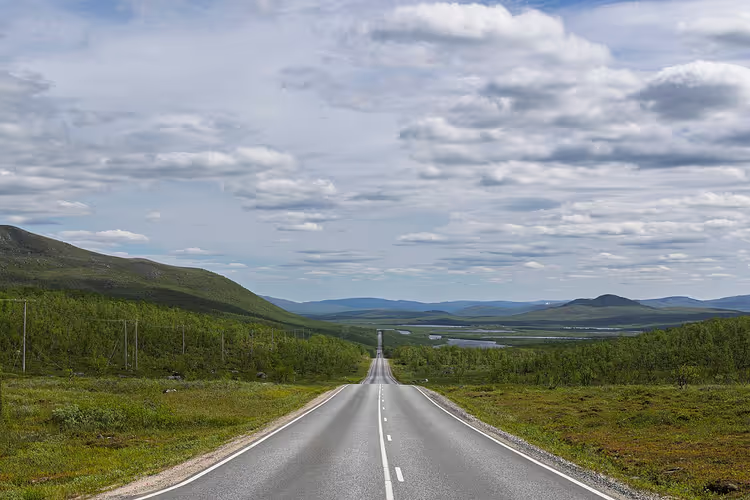 © Thomas Heins from Friesenheim, Deutschland · CC BYPhoto: Thomas Heins from Friesenheim, Deutschland, CC BY (https://creativecommons.org/licenses/by/4.0), Wikimedia Commons
Renting and driving in Iceland
Iceland is impressive, but the roads here are treacherous: gravel, single-lane bridges, and sudden weather changes.
The minimum rental age is usually 20, but it depends on the vehicle class. A credit card is required for the deposit, and your driver's license must be in Latin script.
Traffic drives on the right, and low beams are always on. Speed limits here are lower: around 90 km/h on paved roads and 80 km/h on gravel, even lower in towns.
Front-wheel drive is enough for the Golden Circle and the Ring Road. For F-roads and the Highlands you need 4WD, and these roads are only open in summer. Driving there without preparation is dangerous.
In winter, get gravel, sand, and ash insurance: the volcanic landscape takes a toll on the bodywork and windows. These risks are usually not included in basic coverage.
Gas stations are few and far between, so keep an eye on fuel and bring a jerry can. Keep the tank at least half full if you're heading into the interior.
Winter tires and studs are allowed from November 1 to April 14, and the minimum tread depth during this period is 3 mm (winter tires in Iceland). Studs are prohibited outside the season.
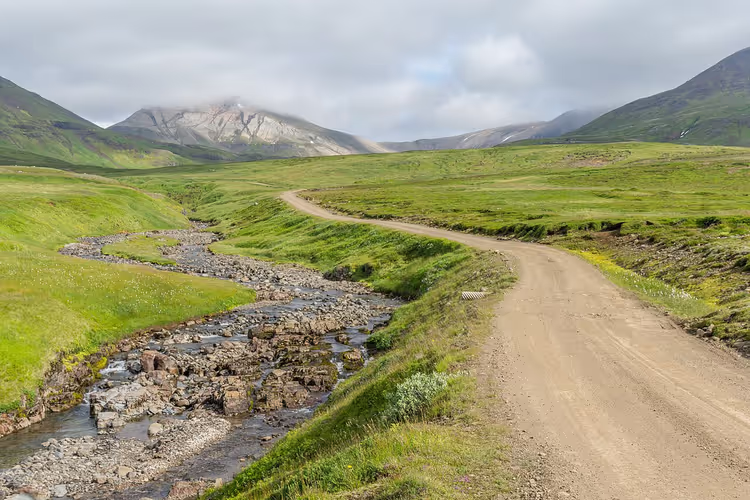 © Michal Klajban · CC BY-SAPhoto: Michal Klajban, CC BY-SA (https://creativecommons.org/licenses/by-sa/4.0), Wikimedia Commons
Renting and driving in Norway
Norway offers the best views, but also the most challenging roads: tunnels, hairpin turns, ferries, and toll sections.
The minimum rental age is usually 19-21, and your license must have been issued at least a year ago. In winter, get a car with winter tires and confirm the surcharge for them in advance.
Traffic drives on the right, and low beams are mandatory at all times. The alcohol limit is only 0.02% BAC, and speeding fines are steep.
Speed limits: 50 km/h in cities, 80-90 km/h outside cities, up to 110 km/h on highways. In tunnels, keep your distance and keep your lights on.
Winter tires with at least 3 mm of tread are required depending on weather conditions, and mountain passes are sometimes closed (tire rules in Norway). Bring a reflective vest and warning triangle, they are required on the roads.
Bridges and tunnels here are often tolled. We cover AutoPASS payment in the toll roads section.
In rural areas, watch for reindeer and moose, and in the north sheep wander onto the road. Slow down when you see an animal warning sign.
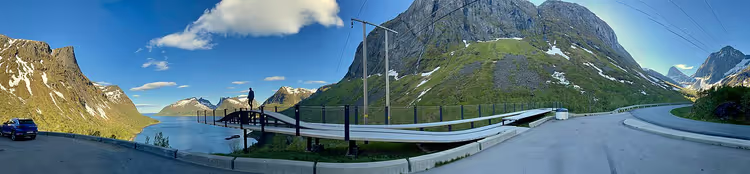 © Wolfmann · CC BY-SAPhoto: Wolfmann, CC BY-SA (https://creativecommons.org/licenses/by-sa/4.0), Wikimedia Commons
Renting and driving in Sweden
Sweden is convenient for driving: good highways, clear markings, and straightforward rules.
The minimum rental age is usually 20, and many companies require at least two years of driving experience. Your license must be in Latin script, otherwise get an IDP.
Traffic drives on the right, and low beams are mandatory day and night. The alcohol limit is one of the strictest in Europe, only 0.02% BAC.
Speed limits: 30-50 km/h in built-up areas and up to 120 km/h on motorways. Speed cameras are common, and fines are hefty.
Winter tires are mandatory from December 1 to March 31 in winter conditions (tire law in Sweden). A warning triangle is required in the trunk, and a reflective vest and first aid kit are useful.
In rural areas, watch for moose and deer at dawn and dusk. Stockholm and Gothenburg have congestion charges for driving into the city center.
In cities, look for park-and-ride lots near stations. Leave your car outside the city and take public transport into the center, it's cheaper than parking downtown.
Driving in winter and summer
In winter, the Nordic countries have little daylight, and roads are covered in snow and ice. Prepare your car and yourself in advance, and the road won't catch you off guard.
Winter tires maintain grip on snow and ice, and studded tires perform better on icy roads. Dates and requirements by country are listed in the table above (Swedish winter tire rules).
Check the antifreeze, battery, and windshield wipers. In freezing temperatures, the battery drains faster, and frozen wiper blades don't clean the windshield. Start the car early to warm up the windows.
Keep a larger following distance. On ice, braking distance increases several times over, and overtaking on a snowy shoulder easily ends in a skid.
Keep a scraper, brush, and windshield de-icer in the car. In case of a traffic jam, bring a warm blanket, water, and a thermos with a hot drink.
Fuel consumption is higher in winter. Warming up the car and winter tires add liters, so refuel more often and don't wait for an empty tank.
In summer, rain and low sun are the main issues. Keep the windshield clean and top up the washer fluid, and sunglasses help with glare. Forests have plenty of midges, so bring repellent.
Long bright evenings are deceptive, you get tired without noticing. Plan your driving legs with extra time and take breaks. In the north, the sun shines almost around the clock, and your sleep schedule can easily get thrown off.
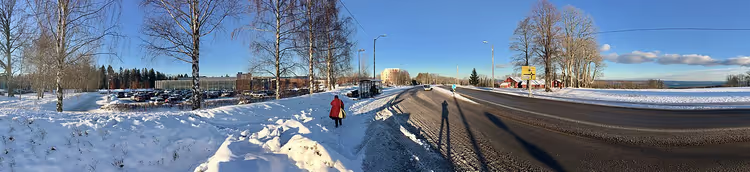 © Wolfmann · CC BY-SAPhoto: Wolfmann, CC BY-SA (https://creativecommons.org/licenses/by-sa/4.0), Wikimedia Commons
What insurance you need for a rental
Basic insurance is usually included in the rate, but coverage is limited. Understand the types before your trip so you don't end up arguing at the counter.
CDW and LDW remove your liability for damage and theft, but with caveats. Towing, loss of value, and tire damage are often not covered. Read what exactly is excluded.
Liability covers damage to other vehicles and injury to other people. It is almost always included in the base rate.
PAI covers medical expenses for the driver and passengers. SLI extends protection against third-party claims. PEC protects personal belongings in the car, and roadside assistance handles flat tires or breakdowns.
Full coverage through an aggregator works simply. The rental company pays first, then you get reimbursed based on the claim. Check your own insurance terms and credit card benefits, sometimes they already cover rentals.
You can check full coverage and the deductible for a specific car on DiscoverCars. Get zero-deductible coverage if you're driving on gravel or in winter.
How much a rental costs and what fees to expect
The final price consists of the base rate plus many add-ons. Calculate everything in advance, or you'll lose out at the counter.
Economy class is cheaper, premium and SUVs are more expensive. Airport rentals cost more than city rentals because the airport adds its own fee.
An additional driver usually comes with a daily rate surcharge. Sometimes a spouse or partner is added for free, which is worth confirming when booking.
A child seat and GPS are also paid extras. Bring your own seat if you're flying with a child, and you'll save on the rental.
The young driver surcharge for drivers under 25 is the most significant one. Almost all companies charge it, so budget for it in advance.
Return the car on time and with a full tank. Late returns and unfilled tanks incur penalty fees, sometimes with a service markup. Also check the mileage limit, excess mileage is charged separately.
One-way rentals cost more than regular ones. If you pick up the car in one city and drop it off in another, confirm the fee in advance. You can see prices including add-ons on DiscoverCars.
How to book a car step by step
Booking takes a few minutes if you go in order. First, determine your travel dates and pickup and drop-off locations. Returning in a different city makes the rental more expensive, so compare both options in advance.
Open an aggregator and compare offers from several companies on one page. This way you see the final price with fees, not just the advertised rate. Choose a rate with free cancellation: it lets you rebook at a lower price closer to your trip if rates drop.
Choose the car class based on your route and season. In winter and in northern areas you need all-wheel drive, in summer a compact is enough in cities. Check whether winter tires are included in the price and whether they come standard on the car.
Check the insurance and deductible before paying. Rates without full coverage are cheaper, but the risk of damage falls on you. Make sure the coverage is valid across borders if your route goes through several countries.
Add a second driver and a child seat right when booking. The same services cost more at the counter, and the right size seat may run out.
Save the confirmation and print the contract. The rental company will send a voucher, booking number, and the counter's phone number. Keep a credit card in the driver's name handy, without it the deposit can't be blocked and the car won't be released.
Check the email with details the day before departure. Sometimes the rental company changes the counter address or hours, and they notify you in advance.
What to check in the rental agreement
The agreement is short, but the important terms are hidden in the notes. Go through the points before signing, not in a rush at pickup.
Check the car class and its number. Make sure the agreement lists the same car that is standing in the lot. If the model is different, ask about a replacement before you drive off.
Check the fuel policy and the fuel level. Usually the car is returned with a full tank, and this is written as a separate line. Take a photo of the fuel gauge at pickup.
Find the line about mileage. Some rates have limited kilometers, and excess mileage is paid separately. For a long route, look for a rate with no limit.
Review the insurance and the deductible amount. Write down the amount that will be blocked on your card at pickup. Ask what exactly is covered and what is excluded from coverage.
Look at the return time and the drop-off address. Returning outside the agreed time is charged as an extra day, so leave yourself a buffer.
Check the rules for crossing borders and using toll roads. These points are often put in a separate footnote. If anything is unclear, ask at the counter before signing; after you drive off, you cannot change the terms.
Deductible, deposit, and prepayment
Three amounts matter more than the base rate: the deposit, the deductible, and the prepayment.
The deposit is blocked on your credit card at pickup. The money is not charged, but frozen until you return the car. Keep enough available credit on your card, otherwise you will not have enough for fuel and hotels.
The deductible is the amount withheld in case of damage. The lower the deductible, the more expensive the rate. Full coverage removes the deductible almost entirely, and in an accident you pay less.
Prepayment can be full or partial. When paying at the counter, your card will be checked for the required amount, and some rates accept only a credit card strictly in the driver's name.
Check how long it takes for the deposit to be released. Sometimes the money is returned several weeks after you return the car. If the deposit was taken in cash, clarify the refund procedure in advance.
Fuel, gas stations, and ferries
Gas stations in the North are mostly automated, and in remote areas they are rare. Plan your route around refueling points, especially in northern Norway, Lapland, and the Icelandic Highlands.
Fill up the car yourself and keep the receipt. The receipt proves that the tank was full at return and settles any dispute about refueling. Without a receipt, the rental company will bill you at their own price.
In Iceland, there can be long stretches between gas stations. Take a fuel canister with extra fuel if you are driving into the interior of the island or to the far north.
Fuel on a ferry is more expensive than on shore. Fill the tank before boarding if your route crosses a fjord, and you will save on the price difference.
Diesel and gasoline are labeled on the pump, but it is easy to mix them up in a hurry. A fuel mistake leads to expensive repairs that insurance usually does not cover. Confirm the fuel type when you pick up the car.
Some rental companies give a discount card for a gas station network. Ask for it at the counter; sometimes it pays for several fill-ups on the road.
Keep the tank at least a quarter full. In sparsely populated areas, the next gas station may be tens of kilometers away, and at night even large stations are closed.
Children and a second driver behind the wheel
Children must be transported only in an appropriate car seat. In Denmark, a seat is mandatory for children under 135 cm, and in the other Nordic countries the thresholds are similar.
Book the seat together with the car. The right size may not be available on site, especially in high season and at family resorts.
Add the second driver to the agreement in advance. There is often a surcharge on the daily rate for them. Also check the driving experience: a driver with little experience may have their own insurance fee.
Bring the licenses of all drivers and the children's documents. Without them, you cannot add a second driver, and only one person will be able to drive.
Check the seat installation before driving off. It should sit firmly, and the belt should pass through the guides. If you are unsure, ask them to show you the installation at the counter.
Keep water and snacks in the car for children. The stretches in the North are long, and stops are rare. A child gets tired of a long drive faster than an adult.
How to get from the airport
You can pick up the car right at the airport or in the city. Counters in the terminal are convenient, but you pay extra for them.
Getting to the airport is easier by train or bus. In Oslo, Stockholm, and Copenhagen, public transport goes directly to the terminal, and in Reykjavik the bus takes you to the city center.
If your arrival is late, pick up the car in the city and stay overnight near the station. That way you avoid paying extra for a nighttime pickup and do not drive while tired.
You can book an airport transfer in advance: airport transfer. This is convenient if you do not want to drive right after a flight.
Check whether airport drop-off is available. Some rates allow you to return the car at a different terminal, and this saves time.
Check the counter's opening hours. Nighttime pickup is sometimes more expensive than daytime, and early return is charged separately.
Toll roads and toll payment
Toll roads and city charges exist in almost every country in the region. Each country calculates them differently, and this affects the trip budget.
Norway uses the AutoPASS system. Tolls on bridges, tunnels, and urban sections are charged automatically, and the bill goes to the owner. Make sure the car is registered in the system, otherwise you will receive a bill with a surcharge.
In Sweden, you pay to enter the center of Stockholm and Gothenburg. The charge depends on the time of day, and cameras record the passage automatically (Swedish Transport Agency). The maximum amount per day and per car is capped.
In Denmark, there is a toll for the Øresund Bridge between Denmark and Sweden and for the Great Belt Bridge. These are key routes, and it is hard to avoid them.
In Finland, there are almost no toll roads. Charges apply to heavy transport, while passenger cars pay mainly through taxes.
In Iceland, there are almost no toll roads. The Hvalfjörður tunnel has been free since 2018, and the toll for the Vaðlaheiðargöng tunnel is paid online.
Tell the rental company in advance that you plan to use toll sections. Sometimes the car already has a transponder installed; otherwise the bill will arrive weeks later and with a surcharge.
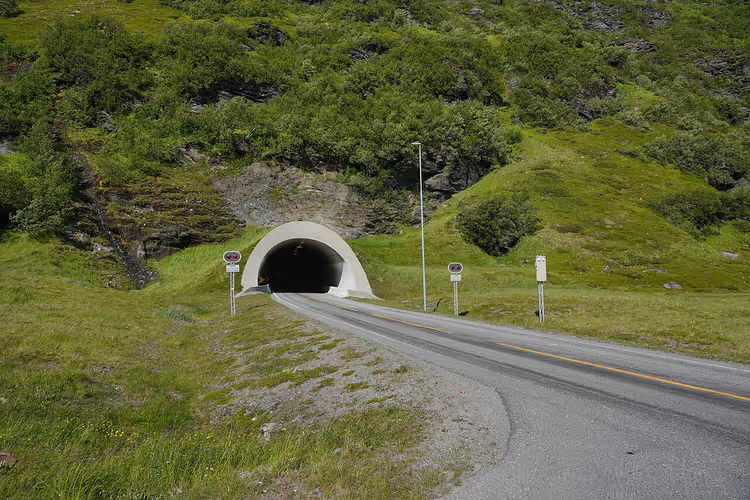 © Lukas Beck · CC BYPhoto: Lukas Beck, CC BY (https://creativecommons.org/licenses/by/4.0), Wikimedia Commons
Do you need a car in northern cities
In big cities, a car often gets in the way. In Stockholm, Copenhagen, Oslo, Helsinki, and Reykjavik, public transport is faster and cheaper.
Metro, trams, buses, and ferries cover even the suburbs. In the center, parking is expensive and spaces are scarce, and travel time by car is hard to predict.
City centers have low-emission zones and entry charges. An old diesel will not be allowed in, and the fine for an unpaid charge will arrive later.
A car is worthwhile for trips out of town. Take a car if your route leads to fjords, waterfalls, or national parks.
Taxis in the Nordic countries are expensive. For late trips, public transport or a car rented for one day is better.
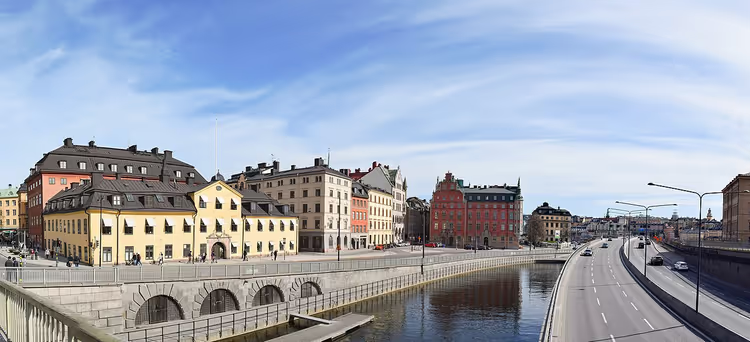 © Liridon · CC BY-SAPhoto: Liridon, CC BY-SA (https://creativecommons.org/licenses/by-sa/4.0), Wikimedia Commons
Parking: apps, P+R, and rules
Parking in the center is expensive and time-limited. Rules vary by zone and day, so read the signs first.
Use an app to pay. EasyPark and ParkMan work in Scandinavia, and you can extend your time right from your phone. It is convenient that you do not need to go back to the car.
Look for P+R lots. On the outskirts near transit stations, you can leave your car for free or for a small fee and get to the center by train. It is cheaper and faster for you.
In Helsinki, the rules depend on the zone, so figure them out before you park. The fine for incorrect payment is issued quickly.
Streets are cleaned on a schedule. Pay attention to the no-parking hours during cleaning, otherwise your car will be towed and you will pay for the impound lot.
Ask about parking at your hotel. Sometimes a space is available, but for an extra charge, and it is better to book it in advance.
Inspecting the car before departure
Inspect the car before you leave. This protects you from disputes when returning it.
Take photos of the body from all sides and record a short video. Document scratches, dents, and chips on the glass.
Check the lights, turn signals, and tires, including the spare. Make sure the wipers work and the windows are intact and free of cracks.
Compare the fuel level with the contract and check the oil. Make sure the car has the documents, insurance, and roadside assistance contacts.
Get the assistance number and the drop-off address. If something goes wrong, you will know who to call.
Keep copies of the photos for yourself. Show them at return if the rental company finds new damage.
The 3PMSF symbol: how to choose winter tires
Winter tires differ from summer tires in rubber compound and tread pattern. In freezing temperatures, summer rubber hardens and grip disappears.
Look for the snowflake-in-a-three-peak-mountain symbol on the sidewall, marked as 3PMSF. This marking confirms the tire has passed winter tests. Without the symbol, a tire is not considered a winter tire.
Check the tread depth; country-specific standards are in the table above (Norwegian tread requirements). A worn tire does not hold on ice even with the correct marking.
Winter tires last longer if you change them seasonally. On a car with one set year-round, the tread wears faster and grip drops by mid-winter.
Make sure the tires are on all four wheels. Mixing summer and winter tires is not allowed: the car behaves unpredictably in corners and under braking.
Ask the rental company what tires are on the car. Sometimes a summer-equipped car is given out in winter, and then it is safer to choose a different rate with a winter set.
Check tire pressure at pickup. In freezing weather it drops, and low pressure worsens handling and increases braking distance.
The best time for a road trip
Each season changes both the price and the road conditions. Choose based on what you want to see.
May and September are best for forests, lakes, and coastal roads.
From December to February, snow stays on the ground and the Northern Lights are visible. Daylight is scarce, so plan short legs and take the winter package.
October and November are a transitional season. Some mountain roads may close due to snow, and ferries depend on the weather. Check the forecast every day.
In high season, book the car months before the trip. In the shoulder season, the selection is wider and you can catch a low price closer to the date.
Common car rental mistakes
Many mistakes cost the same: extra money and a ruined route. Here is what ruins a trip most often.
Summer tires in winter. On ice, grip is lost in seconds, and the fine and repairs fall on you.
Not adding a second driver. In an accident, the insurance will refuse to pay because the wrong person was behind the wheel.
A rate without insurance. A cheap rate turns into a deductible you pay out of your own pocket.
Driving at night after a flight. Reaction time drops, and northern roads do not forgive fatigue. Spend the first night in the city and leave in the morning.
Ignoring toll roads. The bill for AutoPASS or paid city entry arrives later and with a surcharge.
Returning with a partial tank. Refueling at the rental company's price is noticeably more expensive than local rates, and the dispute is not resolved in your favor.
Check the contract before departure, not on the way back. Then mistakes can still be fixed.
What to do in case of a breakdown or accident
First, make sure everyone is safe and turn on the hazard lights. Then set up the warning triangle, and put on the reflective vest before getting out of the car.
Call the rental company's assistance line. The number should be in the contract and on a sticker in the cabin. Do not repair the car yourself: expenses without prior approval will not be reimbursed.
Photograph the damage and the accident scene. The photos will be useful for both the report and the insurance. Write down the other party's details if there is one.
In the Nordic countries, the police file a report for accidents with damage. Get a copy; you will need it for the claim.
Ask whether to continue the route in this car or wait for a replacement. Sometimes the rental company sends a substitute vehicle.
Keep all receipts: taxi, overnight stay, tow truck. Part of the expenses is covered by insurance, but only with documentation.
Returning the car without disputes
Return the car in daylight if possible. The inspection will go more calmly and quickly.
Return the tank to the agreed level and keep the receipt. Refuel closer to the drop-off point so the level is exactly right.
Show the photos and video from pickup if new damage is found. Time-stamped recordings protect you from someone else's scratches.
Get a copy of the return inspection report. It should note the car's condition and fuel level. Without a copy, proving your case is difficult.
Ask when the deposit will be released. It is usually unfrozen after the inspection, but sometimes later. If the amount was charged incorrectly, contact support immediately.
Remember the 24-hour cycle. Return the car at the same time of day, otherwise the rental company will count an extra day.
What to take in the car in winter
In winter, the road takes more time than in summer, so a cold-weather kit is worth preparing in advance.
- Ice scraper and snow brush.
- Windshield and lock de-icer.
- Warm blanket, gloves, and a hat.
- Thermos with a hot drink and light snacks.
- Charged phone and a power bank.
- Reflective vest, warning triangle, and a flashlight.
Check the phone charge and the spare battery before departure. In remote areas, signal disappears, and without navigation it is easy to lose your way.
Do not leave the car with an empty tank in freezing weather. In the morning it may not start, and the nearest gas station may be far away.
If traveling with children, pack blankets and extra warm clothing. In a traffic jam, the cabin cools quickly, and the heater only works while driving.
Keep the insurance and assistance number in the glove compartment. In case of a breakdown, you can call right away without wasting time looking for contacts.
⁉️🤔 Frequently asked questions
At what age can you rent a car in the Nordic countries?
Usually from 19 to 21, but each company sets its own threshold, and it is higher for large SUVs and campers. Drivers under 25 are charged a daily surcharge almost everywhere. Your license must be in Latin script; otherwise, get an international driving permit and carry your passport.
Are winter tires necessary if the trip falls in winter?
In Sweden they are mandatory from December 1 to March 31, in Finland they are required by weather conditions from November to March, and in Norway the tread depth must be at least 3 mm (Statens vegvesen on tires). Book a car with winter tires in advance; summer tires will not help on ice.
What should I do if the car does not have winter tires?
Report it at the counter immediately and ask for a replacement or a different car. Driving on summer tires on ice is dangerous, and the insurer may refuse to pay in an accident. If the rental company cannot replace the car, cancel the rental before departure.
Can I return the car in another city?
Yes, but a one-way rental fee applies, and the amount depends on the distance between cities. Check this point when booking and compare it with the price of a train back. Sometimes driving the car back costs more than returning by public transport.
Do I need separate insurance for toll roads?
No, separate insurance is not needed. Make sure the rental company has registered the car in the payment system and clarify who pays the fees. Sometimes they are included in the rate, sometimes they are charged separately after the trip.
How do I pay toll roads in Norway?
Norway uses the AutoPASS system, and fees are charged automatically on bridges, in tunnels, and on urban sections. Make sure the rental car is registered in the system; otherwise the bill will arrive later and with a surcharge.
Can I cross borders between countries in a rental car?
Often yes, but you need to notify the rental company in advance so the insurance is valid abroad. Some companies charge a fee for taking the car to another country, and one-way rentals add a separate charge. Clarify both points when booking.
How much does a rental cost and what is already included in the price?
The base rate covers the car itself and limited insurance. You pay extra for a second driver, a child seat, a navigator, and the young driver surcharge. The final amount with all fees is visible at booking, not just in the rate ad.
Find hotels
Compare prices across booking sites and filter for rooms with free cancellation.
Compare prices on Discover CarsThe widget loads once you give your consent.
In short: what to book
Rental in the Nordic countries comes down to three things: season, car type, and coverage. In summer a compact is enough; in winter and in the north you need all-wheel drive with winter tires.
- If you are going to Lapland or Norway in winter: get an SUV with winter tires and full coverage.
- If you are going to Iceland: get 4WD for F-roads and gravel, sand, and ash insurance.
- If you are driving around cities in Denmark and Sweden: get a compact in fall or spring and park at P+R.
- If you are driving a long route: check the mileage limit and one-way rental availability.
You can find a car with full coverage and free cancellation on DiscoverCars.

A small editorial team writing guides for independent travel. We travel ourselves, but we haven’t been everywhere, so we check prices, opening hours and how to get there against official sources.