
















Museum Island in Berlin: what is open and how to buy a combined ticket
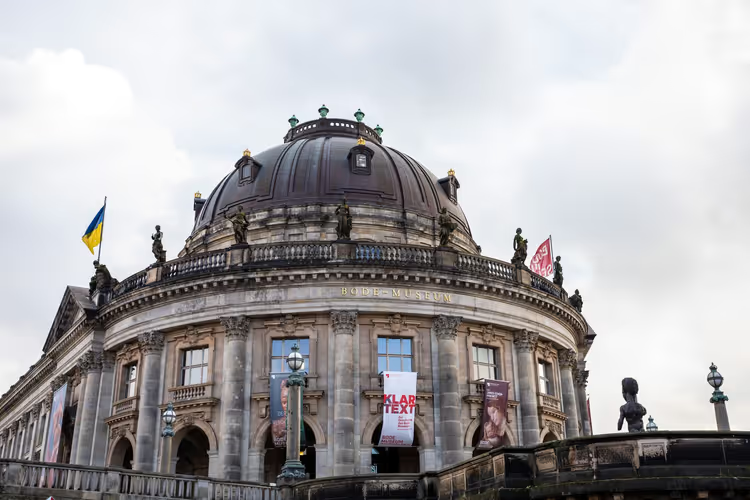
Museum Island is five museums on one island in the center of Berlin. It is home to the Pergamon Museum, the Neues Museum with the bust of Nefertiti, the Alte Nationalgalerie, the Altes Museum, and the Bode Museum. One day covers the city's main collections if you sort out tickets in advance and figure out what is currently open.
Since 1999, the complex has been a UNESCO World Heritage Site (World Heritage list). Since 2023, the Pergamon Museum has been fully closed for restoration until June 4, 2027 (closure decision). This changes the usual route, so below is the current status as of September 2026: what is open, how much a combined ticket costs, and how to get there.
Ad: this article contains affiliate links, we earn a commission if you book through them, at no extra cost to you.
History of Museum Island
💡 In short:
- Visit five buildings: the Bode Museum, the Pergamon Museum, the Neues Museum, the Alte Nationalgalerie, and the Altes Museum.
- Instead of the Pergamon Museum, Pergamonmuseum. Das Panorama is currently open.
- Buy a combined Museumsinsel-Ticket for €24.
- Prices and opening hours: 09/2026, verified on the official website with prices
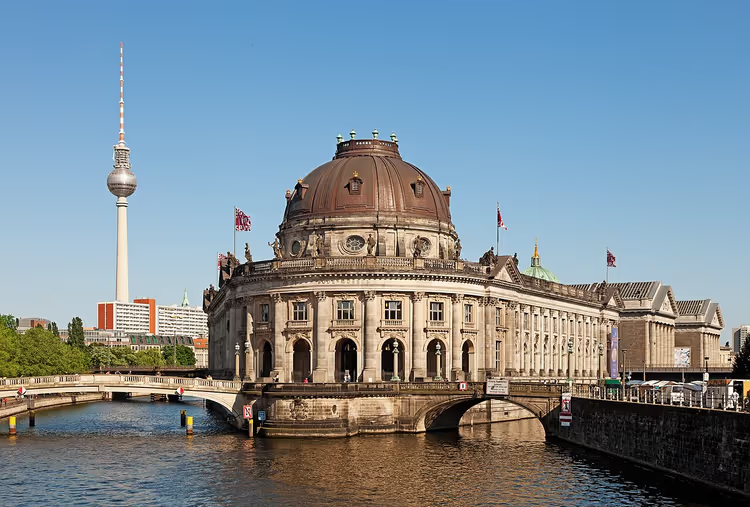
Museum Island occupies the northern tip of Spree Island. In the 13th century this was a swamp, and the canals from the Spree bend were dug two centuries later. The idea of a cultural center on this site was supported by King Frederick William III based on a plan by archaeologist Alois Hirt. The Altes Museum was the first to open in 1830 (Altes Museum).
The Neues Museum followed, and in 1876 the Alte Nationalgalerie opened its doors (complex on the Spree). In the early 20th century, the Monbijou Bridge was extended to the island, and a museum named after art historian Bode was completed. In 1930, the complex marked its centennial with the opening of the Pergamon Museum. Since then, Berlin has been called the "Athens on the Spree."
 © Thomas Wolf , www.foto-tw.de · CC BY-SAPhoto: Thomas Wolf , www.foto-tw.de, CC BY-SA (https://creativecommons.org/licenses/by-sa/3.0), Wikimedia Commons
Unrealized development plans
Growing collections demanded more space, and from the 19th century onward architects proposed various redesign projects for the island (Museum Island ensemble). Some plans remained on paper. Instead, the island got the Monbijou Bridge and new wings, and the complex's unified appearance only came together by 1930.
Museum Island today
Today the banks of the Spree on the island are connected by pedestrian bridges. The Monbijou Bridge leads to the Bode Museum, whose building with its massive dome resembles a triangle. Parallel to its southern facade stands the Pergamon Museum, linked to the city by a separate bridge across the canal. Nearby you will see the Alte Nationalgalerie: its facade echoes the forms of an ancient Roman temple (Museumsinsel Berlin).
In front of the gallery entrance stands an equestrian monument to Friedrich Wilhelm IV. The lawn in front of it is decorated with shrubs, a fountain and benches, and on summer evenings orchestras play and films are shown here. The western section near Lustgarten park is occupied by the Altes Museum. Opposite it rises the Berlin Cathedral.
Five museums and what to see in them
Five museums from the UNESCO list operate on the island. They are joined by the James-Simon-Galerie, where you buy tickets and leave your belongings. Hours and tickets for September 2026 are collected in the table.
Museum | What to see | Hours | Closed |
|---|---|---|---|
Bode Museum | Byzantine art, sculptures, coins | Tue-Fri 10-17, Sat-Sun 10-18 | Monday |
Pergamon Museum | Closed for restoration until 04.06.2027 | closed | closed |
Neues Museum | Bust of Nefertiti, Egyptian Museum | Tue-Sun 10-18 | Monday |
Alte Nationalgalerie | Monet, Manet, Menzel, 19th-century painting | Tue-Sun 10-18 | Monday |
Altes Museum | Collection of Classical Antiquities, Etruscans, rotunda | Tue-Fri 10-17, Sat-Sun 10-18 | Monday |
Hours and tickets: 09/2026, museum opening hours.
Bode Museum
 © Antonio castello · CC BY-SAPhoto: Antonio castello, CC BY-SA (https://creativecommons.org/licenses/by-sa/4.0), Wikimedia Commons
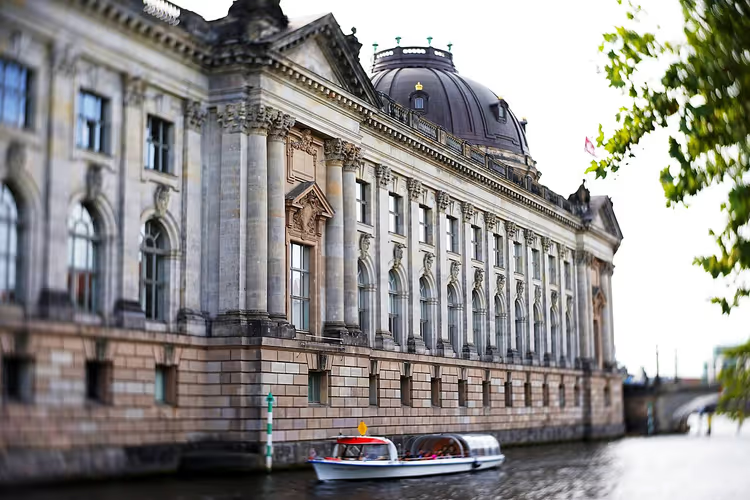
From the city bank, the Bode Museum looks like a castle floating on the river. The neo-baroque building was completed by 1904, and from the base of the dome two wings extend like the sides of a triangle (Bode-Museum). The facade is decorated with Doric columns and allegorical statues of the arts.
The core of the collection came from gifts of the Brandenburg electors. Today the halls display Byzantine art, medieval coins and sculptures. Under the vaults of the Great Domed Hall stands an equestrian sculpture of the Great Elector of Brandenburg. On the ground floor, look for the wooden composition "Triumph of the Cross" from the early 13th century.
The Kamecke Hall houses works by Italian sculptors from the Middle Ages to the 18th century. The Basilica displays multicolored glazed statues, and the museum's main treasure: a 17th-century Florentine altar. The Byzantine art halls show objects from the Roman and Byzantine empires from the 3rd to the 15th century.
A separate hall is devoted to ritual objects from Egypt. The museum's calling card: the Coin Cabinet with more than 4,000 coins in four halls (Bode Museum on the SMB website). Here the history of money is shown from coins of Athens in the 6th century BC to coins of the 20th century.
Pergamon Museum: closed until 2027
 © David Merrett from Daventry, England · CC BYPhoto: David Merrett from Daventry, England, CC BY (https://creativecommons.org/licenses/by/2.0), Wikimedia Commons
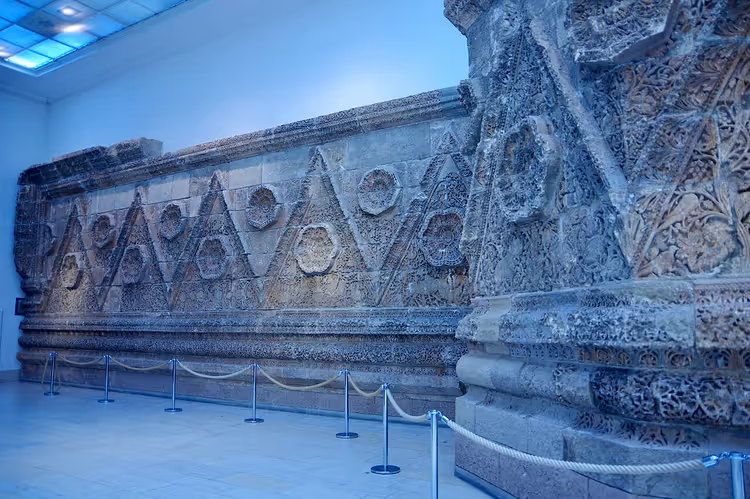
The two-story Pergamon Museum building in neoclassical style opened in 1930. It is named after the Pergamon Altar of Zeus, which engineer Carl Humann found at the site of ancient Pergamon in Turkey (Pergamonmuseum on the SMB website). The altar is dated to 180-160 BC, and its 120-meter-long frieze was considered a wonder of the world in antiquity.
Important: since 2023 the museum has been fully closed for restoration until June 4, 2027 (official SMB website). The altar, the Market Gate of Miletus, and most of the collection are inaccessible. Tickets for this building are not sold, so do not plan a blind visit.
Instead of the closed building, the exhibition venue Pergamonmuseum. Das Panorama on Kupfergraben is open. It shows part of the Pergamon exhibits and a panorama of the ancient city that opened in 2011. Hours: Tue-Sun 10-18, closed on Mondays (as of 09/2026, Das Panorama schedule). The catch: you will not see the main altar before 2027.
Neues Museum and the bust of Nefertiti
 © Laurens R. Krol · CC BYPhoto: Laurens R. Krol, CC BY (https://creativecommons.org/licenses/by/4.0), Wikimedia Commons
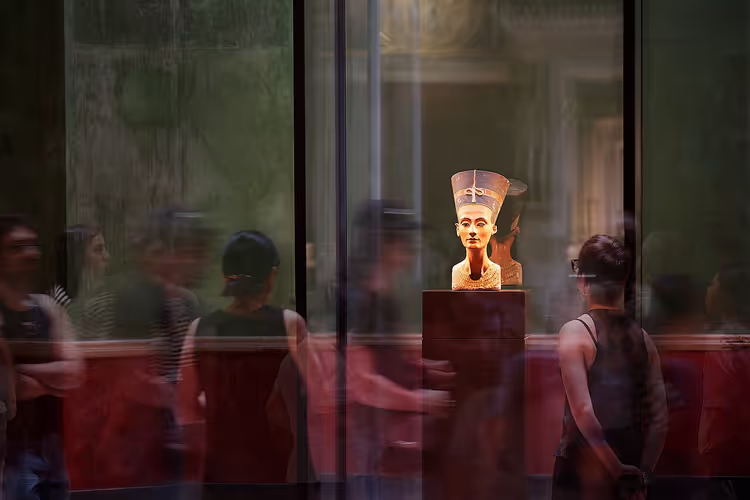
The Neues Museum opened in the mid-19th century and was heavily damaged by bombing during World War II (Neues Museum). The building was restored and reopened in 2009 in a form close to the original design. The hall vault structure, mosaic floors, and murals were brought back inside.
The halls house the Egyptian Museum and the Museum of Prehistory and Early History. The Egyptian collection spans 1500-500 BCE: hundreds of sculptures and busts of pharaohs, tombs, and mummies. The figurines of ordinary people, masks, and priestly clothing give a sense of the daily life and beliefs of the ancient Egyptians.
The museum's main exhibit: the bust of Nefertiti from the 14th century BCE, found during excavations at Tell el-Amarna (Nefertiti collection). The Egyptian Courtyard features a gallery of portraits of the family of Pharaoh Akhenaten. Fragments of walls with hieroglyphs and wooden boats from the pharaonic era are also on display here.
The Museum of Prehistory has assembled more than 6,000 exhibits from the Paleolithic to the Middle Ages from Europe and Asia. The halls recreate the daily life of Neanderthals and Cro-Magnons, and there is a hall of Germanic and Scandinavian mythology. A separate display case is devoted to the Berlin Gold Hat made of sheet gold, dated to 1000-800 BCE. Scholars debate whether it was a headdress of priests or a Celtic calendar (Neues Museum Berlin).
The antiquities collection displays a bust of Socrates, busts of Roman philosophers, vases, and objects made of glass and ivory. Admission here is included in the combined Museumsinsel-Ticket, and you can walk through the longest hall in half an hour.
Old National Gallery
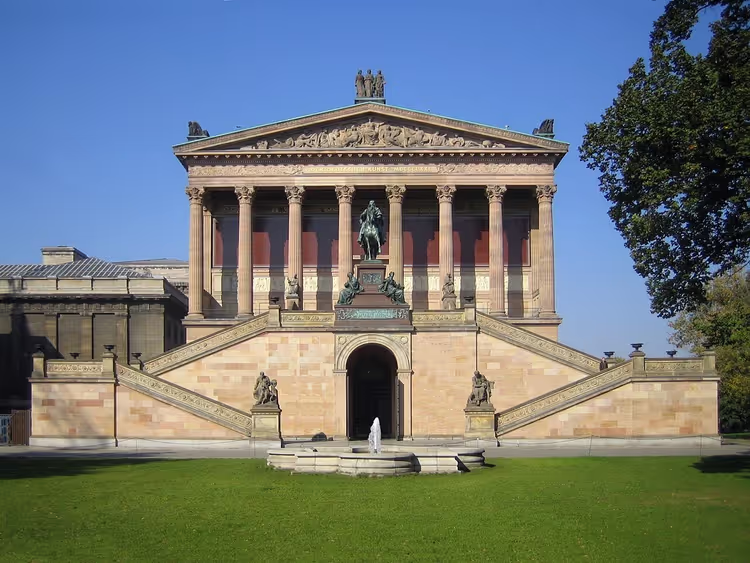
The Old National Gallery was built from sketches by King Frederick William IV, and its facade resembles an ancient Roman temple. It opened in 1876 with an exhibition of 262 paintings donated by the German bourgeoisie (Alte Nationalgalerie).
Today the halls display paintings by 19th-century European masters: Romanticism, Classicism, Impressionism, and Biedermeier. The Impressionists are represented by Claude Monet and Edouard Manet. Modernism and Realism are shown through Lovis Corinth, Max Liebermann, and Adolph Menzel. Nearby hang works by Cezanne, Degas, Delacroix, and Van Gogh. The interiors are complemented by Nazarene murals and sculptural figures.
Hours: Tue-Sun 10-6, closed Mondays (as of 09/2026, Old National Gallery hours). The catch: you cannot cover the halls in an hour, allow at least two hours.
Old museum and the collection of classical antiquities
 © VitVit · CC BY-SAPhoto: VitVit, CC BY-SA (https://creativecommons.org/licenses/by-sa/4.0), Wikimedia Commons
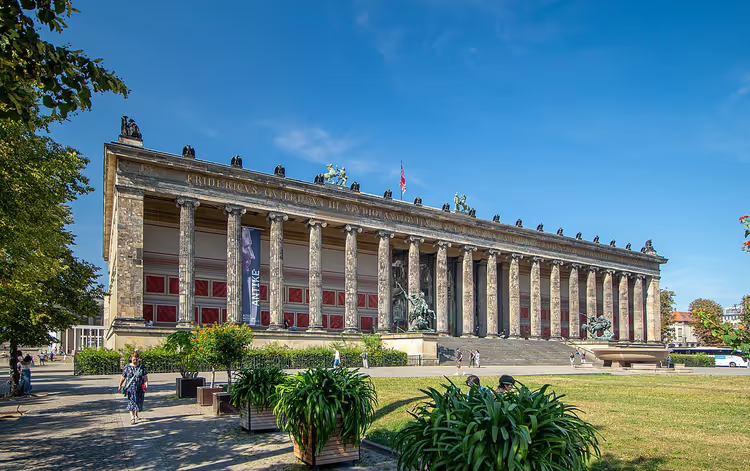
The Old Museum stands next to Berlin Cathedral. The building with Ionic columns and a round dome opened in 1830 and became Prussia's first public museum (Altes Museum Berlin). In front of the entrance stand equestrian sculptures and a granite bowl 7 meters in diameter and weighing 76 tons.
The exhibition spans two floors. The first floor houses the Collection of Classical Antiquities: vases, friezes, weapons, gold and silver jewelry, bronze and clay figures. In the round domed hall, Greek sculptures are arranged on pedestals between the columns.
The second floor is dedicated to the art of Ancient Rome and the Etruscans. Here you will find portraits of Cleopatra and Caesar, a sculpture of Emperor Claudius, sarcophagi, frescoes, and the "Battle of the Centaurs" mosaic. Separate display cases introduce the Fayum mummy portraits on wooden panels. Admission here is also included in the combined Museumsinsel-Ticket.
Archaeological Center: a building for researchers
 © ThTsmb · CC BY-SAPhoto: ThTsmb, CC BY-SA (https://creativecommons.org/licenses/by-sa/3.0), Wikimedia Commons
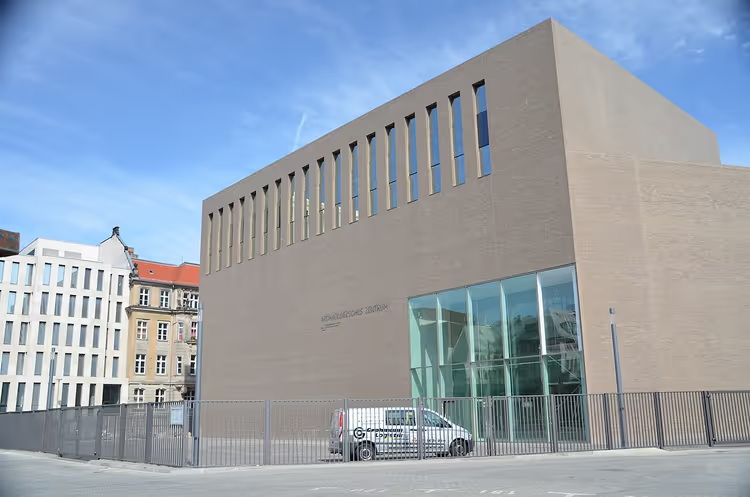
A gray building, the Archaeological Center (Archaeologisches Zentrum), was added to the former 19th-century barracks (official museum website). The exterior cladding in a soil-like color emphasizes its massiveness, while inside white dominates the walls, floors, and staircases.
The exhibits are spread across almost 11,700 square meters. This is not a public museum but a research building: finds from the collections are studied here and new exhibitions are prepared. Inside there are a library, an archive, restoration workshops, and scholars' offices. You do not need to go inside; you will see the building on your way from the Bode Museum.
Opening hours and ticket prices
The combined Museumsinsel-Ticket costs 24 euros and is valid for one day (SMB prices and tickets). It covers all open buildings on the island: the Old National Gallery, the Old Museum, the Bode Museum, the New Museum, Friedrichswerdersche Kirche, and Pergamonmuseum. Das Panorama. The ticket pays for itself with just two museums.
Children and teenagers under 18 enter free. Students and people with disabilities get a 50% discount (SMB discount terms). Tickets are sold online and at ticket counters, with advance sales opening four weeks before the visit date.
Opening hours vary by museum (as of 09/2026, museum opening hours). Monday is closed at all museums, and the Altes Museum and Bode Museum close at 5 pm on weekdays.
Important: major exhibitions sometimes introduce timed entry slots. In that case you need a ticket in advance, so check this on the specific exhibition page.
Tours and tickets in Berlin
Guided tours, skip-the-line tickets and activities — most offers can be cancelled free of charge.
See offers on TiqetsThe widget loads once you give your consent.
How to get to Museum Island
Museum Island is in the center of Berlin and is easy to reach. The fastest way is the U5 subway to the U Museumsinsel station: the exit leads directly to the museum complex (BVG).
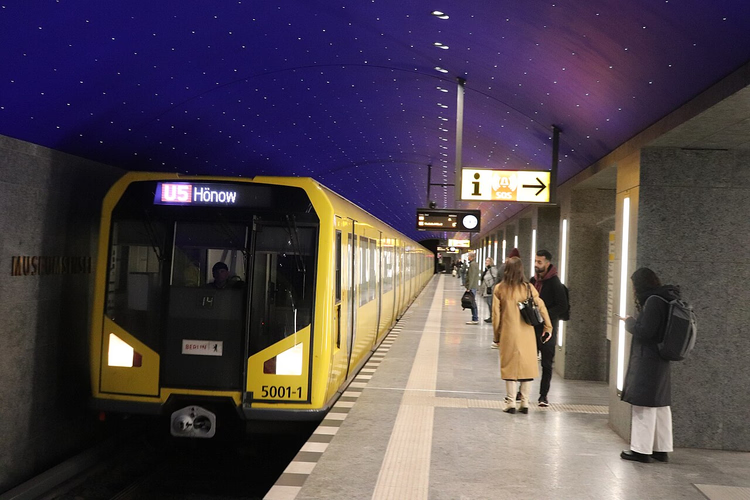 © Andrzej Otrębski · CC BY-SAPhoto: Andrzej Otrębski, CC BY-SA (https://creativecommons.org/licenses/by-sa/4.0), Wikimedia Commons
From the Hackescher Markt S-Bahn station it's about a 10-minute walk across the bridge. For your navigation app, use Bodestraße. In the evening the Spree riverbank is illuminated, and walking around the island takes about half an hour.
Museum Island on the map
Below is an interactive map with the island's museums. The buildings stand close together, so use it to avoid mixing up the entrances.
⁉️🤔 Frequently asked questions
Is the Pergamon Museum closed permanently?
No, this is a temporary restoration. The museum has been closed since 2023 and will only partially reopen on June 4, 2027 (restoration page). The Zeus Altar and the Market Gate of Miletus are inaccessible until then. Some Pergamon exhibits and the panorama of the ancient city are shown in the neighboring building, Pergamonmuseum. Das Panorama on Kupfergraben.
How much does admission to Museum Island cost?
The combined Museumsinsel-Ticket costs €24 and is valid for one day (fares and discounts). It gives you entry to all open museums on the island. Children and teenagers under 18 get in free, and students get a 50% discount.
When are the island's museums open and when are they closed?
Most museums are open Tuesday through Sunday, and Monday is a day off at all of them (current hours). The Alte Nationalgalerie and Neues Museum are open 10 am to 6 pm, the Altes Museum and Bode Museum until 5 pm on weekdays and until 6 pm on weekends. Hours are worth checking before your trip, as they sometimes change.
Do I need to buy tickets in advance?
Yes, in summer and on weekends it saves time. Tickets are sold online and at the ticket offices, with advance sales opening four weeks ahead (ticket purchase process). Major exhibitions introduce timed slots, and without a reservation it's easy to miss a convenient time. An online ticket does not need to be exchanged at the ticket office.
How do I get there and what should I see nearby?
The fastest way is the U5 subway to the U Museumsinsel station, which comes out right at the museums (U Museumsinsel stop). From Hackescher Markt S-Bahn it's about a 10-minute walk. Berlin Cathedral and Lustgarten park are nearby, so the walk is easy to combine with exploring the neighborhood.
In short: what's worth booking
Museum Island can realistically be done in one day if you get a combined ticket in advance. If you are visiting two or three museums, get the Museumsinsel-Ticket for €24 (as of 09/2026, Museumsinsel-Ticket price). If you are traveling with kids, admission is free for anyone under 18, and a morning time slot will cut down the lines. If you want to skip the planning, book a guided tour (Museum Island tours on GetYourGuide).

A small editorial team writing guides for independent travel. We travel ourselves, but we haven’t been everywhere, so we check prices, opening hours and how to get there against official sources.