
















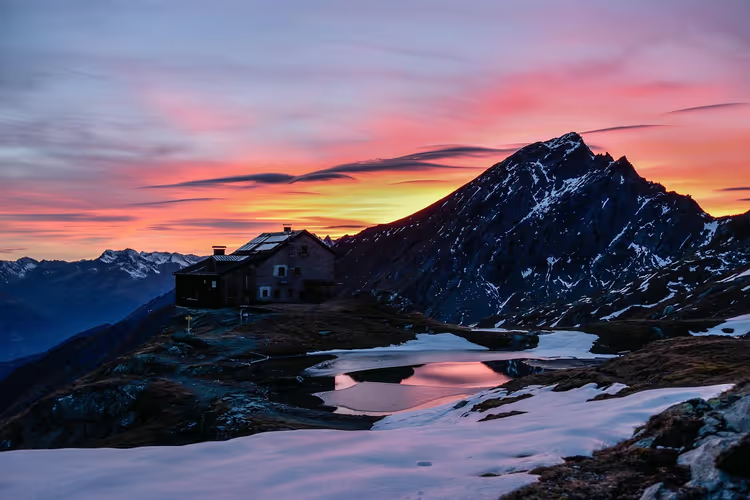
Overnight in a mountain hut in Tyrol: cash, sleeping bag and your own rules
A mountain hut in the Alps is not a hotel. A night in the shared dormitory (Matratzenlager), category I, costs Alpenverein members a maximum of €15 per person (as of 09/2026, Deutscher Alpenverein). For everyone else, a night costs at least €10 more. Cards are rarely accepted here, and there is usually no internet at all.
Some people are put off by this austerity, others are drawn to it. If you are heading to the Alps for the first time, the difference from a hotel is immediately noticeable: a different daily rhythm, a different way of paying, a different way of sleeping. Let's go through booking, money, water, food, and overnight stays in order.
A hut runs by its own rules
💡 In short:
- Bring cash: card terminals are rare at huts, and there are no ATMs in the mountains.
- Book your spot in advance by phone or email, not through Booking.com.
- In a Matratzenlager you need your own Hüttenschlafsack and earplugs.
- Prices, daily schedule, and season: checked on 12.09.2026 on the official Alpenverein website.
Season and the trail to the hut
Huts are not open all year round. Lower huts usually operate from late May or early June until early October. Higher huts open later, from late June or early July, and close as early as mid or late September (as of 09/2026, Tirol Werbung). Exact dates depend on altitude and snow, so check with the hut itself before you set out.
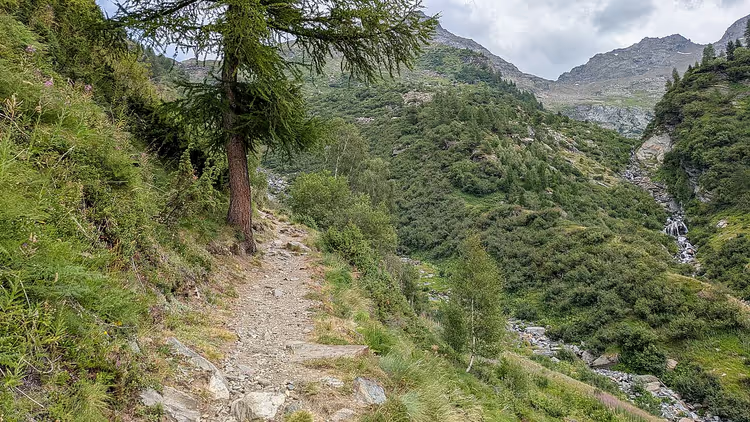
Most huts can only be reached on foot. Roads and narrow trails are not built for cars. Supplies and everything else are carried up on people's backs or by helicopter. So take only what you really need.
 © Reustli · CC BY-SAPhoto: Reustli, CC BY-SA (https://creativecommons.org/licenses/by-sa/4.0), Wikimedia Commons
What to do without internet
Mobile reception in the mountains is poor, and Wi-Fi is far from available at every hut. Instead of watching a series in the evening, people here pull out playing cards. In Tyrol they play Watten, Schnellen, and Schnapsen. The rules can be explained in a couple of minutes, and a game on a long evening is how acquaintances are made. The only opponent left at the end of the day is the fatigue after a long hike.
Booking and cash
You book a spot at a hut by phone or email. You most likely won't find these huts on Booking.com or Airbnb. A booking here is not a formality: it guarantees you a bed and dinner, and in high season spots at small huts run out quickly.
If you can't make it, let them know as early as possible. If a guest doesn't show up and doesn't give notice, they may be reported missing. Rescue teams spend time and money on such searches.
Payment is almost everywhere cash only. There is no ATM in the mountains, and card terminals at huts are rare. Bring enough money to cover the night, dinner, and drinks.
Alpenverein members pay less for a night. The overnight discount is at least €10, and selected dishes are available at the reduced Bergsteigeressen price (as of 09/2026, Österreichischer Alpenverein). All you need to do is show a valid membership card. Under the international reciprocity agreement, the discount also applies at huts in neighboring Alpine countries.
Light, water, and trash
Huts try to be self-sufficient. Electricity comes from small generators or solar panels on the roof. That's why both hosts and guests conserve energy. A request to charge a phone, a tablet, and three power banks earns only a polite smile from the hut warden.
It's the same story with water. There is running water, but there is often just one shower for the whole hut. Long showers are not the done thing here, so washing your face over the sink in the morning saves water and your time.
You'll have to carry your trash down yourself, because no garbage truck can drive up mountain trails. Leftover food is taken back down and sorted in the valley.
All Alpenverein huts have been non-smoking since 2008 (as of 09/2026, Alpenverein).
Food and overnight stays
The menu at a hut is short but hearty. Supplies are carried up on foot or by helicopter, so the choice is limited. After a long hike, you'll happily eat sausages with mustard or a sandwich with Alpine cheese. A full dinner is often offered as half board (Halbpension).
You'll sleep in a Matratzenlager, a large shared dormitory, or in a room for several people. Bed linen is not changed after every guest, so you need your own Hüttenschlafsack, a thin bag made of cotton or silk. Wool blankets are provided on site.
If you're a light sleeper, bring earplugs. Snoring in a shared dormitory is normal. A flashlight comes in handy at night on the way to the toilet so you don't wake your neighbors.
If you're bringing a dog, ask the hut warden first. Not every hut allows dogs to sleep indoors (as of 09/2026, Alpenverein, hut stay rules).
What to bring
Pack your backpack in advance so you don't have to search for things in the dark. Here's a short list for one night.
- Hüttenschlafsack.
- Flashlight or headlamp.
- Earplugs.
- Towel.
- Warm clothes: socks and a hat.
- A change of footwear, preferably slippers.
- A trash bag.
- Cash.
- Alpenverein membership card, if you have one.
What not to do:
- take a long shower;
- leave trash behind;
- make noise after lights out;
- charge devices without the host's permission.
Types of routes
Huts sit at different altitudes, and the approaches to them vary in difficulty. Beginners are well suited to hikes with an overnight stay at a lower hut, while experienced hikers choose multi-day traverses from hut to hut.
Calculate your route by elevation gain, not by kilometers. Climbing vertically is harder than covering the same distance on flat ground. Plan a time buffer: a mountain trail is always slower than it looks on the map.
Karwendel huts nearby
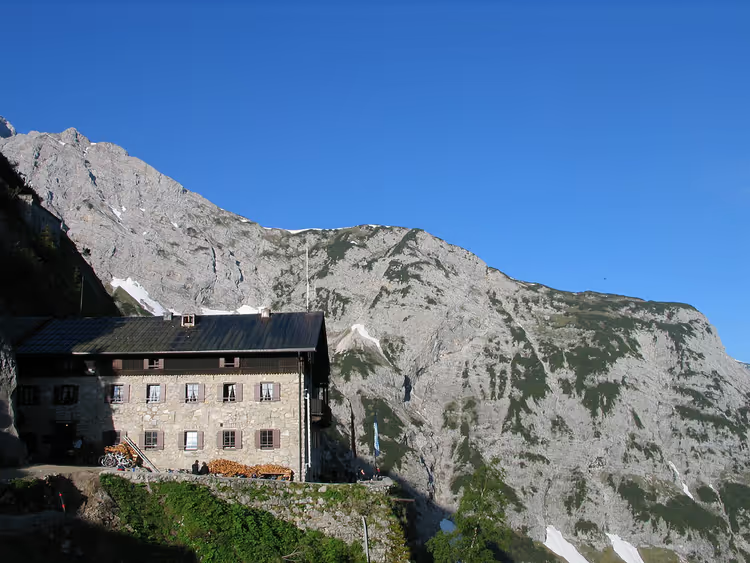
In the Karwendel mountain range north of Innsbruck there are several dozen huts and alpine pastures. Larger facilities such as Karwendelhaus, Falkenhütte, and Lamsenjochhütte take overnight guests and serve hot meals. Small alpine pastures are open only during the day (Naturpark Karwendel).
Multi-day routes run between the huts. An overnight stay at a hut lets you cross the Karwendel end to end without descending into the valley.
 © Luidger · CC BY-SAPhoto: Luidger, CC BY-SA (http://creativecommons.org/licenses/by-sa/3.0/), Wikimedia Commons
⁉️🤔 Frequently asked questions
Can I pay for the night by card?
Most often no, card terminals at huts are rare. If in doubt, ask the host about payment methods in advance.
Do I need my own sleeping bag?
Yes, your own Hüttenschlafsack made of cotton or silk is required. These bags are sold in Alpenverein shops.
How do I book a spot at a hut?
By phone or email. If your plans change, let them know as early as possible.
When are huts open?
Lower huts usually operate until early October, higher huts close in mid or late September. Check exact dates with the hut itself.
Will they let me in with a dog?
Ask the hut warden in advance. Not every hut allows dogs to sleep indoors.
In short: what's worth booking
Your first night in the mountains requires some preparation, but not much. Book a spot by phone, bring cash, a Hüttenschlafsack, and earplugs. The rest will be explained on site.
If you have one free night: choose a lower hut and a short ascent.
If you're going for several days: plan a hut-to-hut route and book each one in advance. Pack your backpack today, and book your spot right now: in high season, beds at huts are gone a couple of weeks ahead.

A small editorial team writing guides for independent travel. We travel ourselves, but we haven’t been everywhere, so we check prices, opening hours and how to get there against official sources.