
















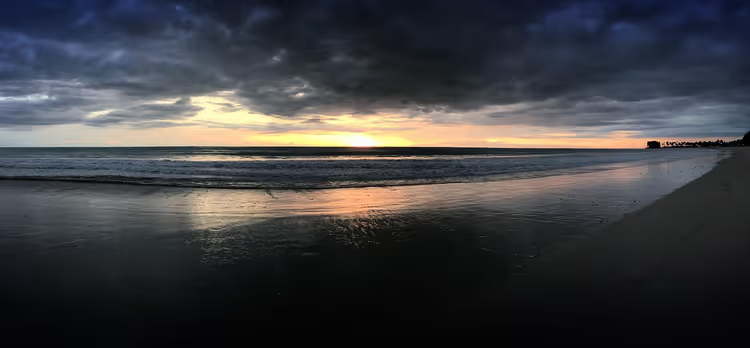
Phuket for beginners: 10 rules that will save money and nerves
A first vacation in Phuket gets spoiled by small mistakes, not the weather. A hotel in the wrong area, a scooter without a license, taxis at double the rate, and before you know it you're burning through your nerves instead of swimming. There's plenty of advice online, but half of it is hopelessly outdated, and entry rules are changing right now.
According to Phuket Express, starting September 15, 2026, visa-free entry to Thailand will be reduced from 60 to 30 days. For a two-week trip, nothing changes, but those planning a long winter stay should recalculate their plans. We've put together ten rules for a first trip that will save you money, time, and your health.
Ad: this article contains affiliate links, we earn a commission if you book through them, at no extra cost to you.
Tips for your first vacation in Phuket
Below are ten topics that come up most often for first-time visitors to Phuket. We've broken down each one without sugarcoating: where you actually save, and where you lose money and peace of mind.
💡 In short:
- Choose a hotel by the sea, but not in the heart of Patong.
- A motorcycle license and a helmet are mandatory, and a scooter without insurance costs more than it seems.
- Bargaining works at markets without price tags and is almost useless in shopping malls.
- Starting September 15, 2026, visa-free entry will be reduced from 60 to 30 days (as of 09/2026, announcement of the new visa regime).
Taxis in Phuket and how to avoid overpaying
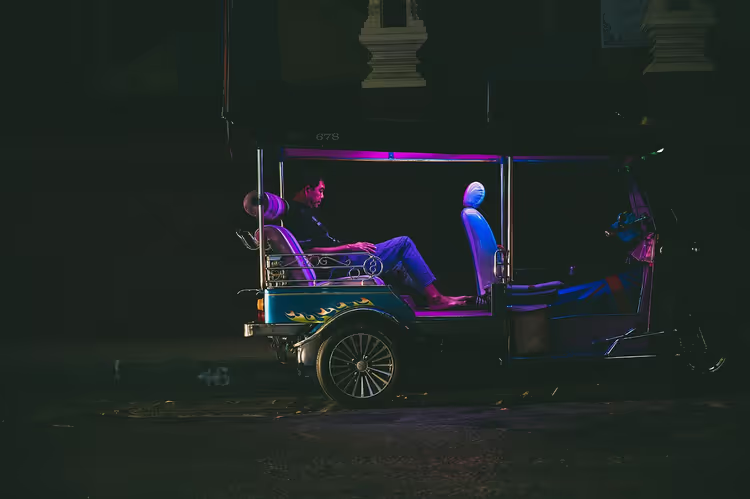
The taxi topic in Phuket is the hottest one, and it's the thing that most often ruins a first vacation. The cars do have meters, but drivers rarely turn them on, and the price is usually quoted verbally. There's no single rate from the airport to most beaches, so the final amount depends on how persistent you are.
From the airport you can get there by smart bus, minivan, taxi, or through an app, and the price range is wide. The cheapest option is the smart bus, the most expensive is the official taxi, and shared minivans and Grab fall somewhere in between (as of 09/2026, comparison of transport options).
Option | Price from the airport | Details |
|---|---|---|
Smart Bus | around 100 baht | makes stops, the cheapest option |
Shared minivan | 180-200 baht | you share the vehicle with other passengers |
Grab | 600-900 baht | price is shown in the app before you book |
Official taxi | around 800 baht | price is quoted at the counter |
For getting around the island, Grab or Bolt are more convenient because the price is known in advance. You can also negotiate on the spot, but then you should be the one to name the price first, not the driver. If the meter is "broken," open the app and compare prices: the gap will quickly put things in perspective.
- How to get there: the Grab or Bolt app with transparent pricing, or the official taxi counter at the airport.
- The catch: at the counter, prices are easily inflated, and bargaining barely works there.
Hotel: why the pool matters in the rainy season
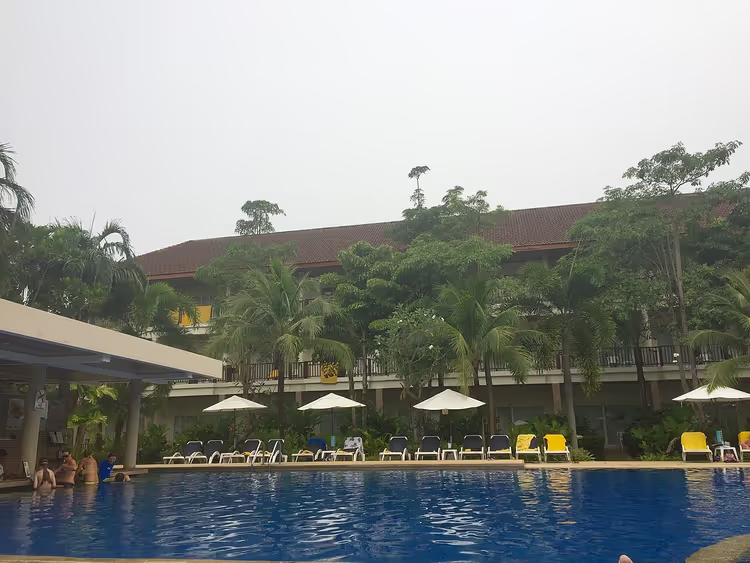 © HutheMeow · CC BY-SAPhoto: HutheMeow, CC BY-SA (https://creativecommons.org/licenses/by-sa/4.0), Wikimedia Commons
When choosing a hotel in Phuket, you're trading off between budget, location, and your own habits. Those who book solely by the lowest price are rarely satisfied, and those who pick by a big name often never get past their own lobby. The island is large, so it makes sense to book two or three hotels in different areas and price categories.
The quiet north is good for peace and quiet, while the areas around Kata, Karon, and Patong keep you close to the action and the beaches. Browse Phuket hotels on Trip.com is convenient even at the planning stage.
In the rainy season, the sea on the west coast is often rough, and swimming can be dangerous. That's why a pool here is not a luxury but insurance: on days with big waves, you can comfortably wait it out by the water. Families with children shouldn't skimp on a pool even for a cheaper room.
- Who it's for: those traveling in the low season who want to swim every day.
- Not for: those who choose accommodation solely by the lowest price.
- The catch: a hotel without a pool in the rainy season leaves you with no swimming when the sea is stormy.
Scooter: license, helmet, and insurance without illusions
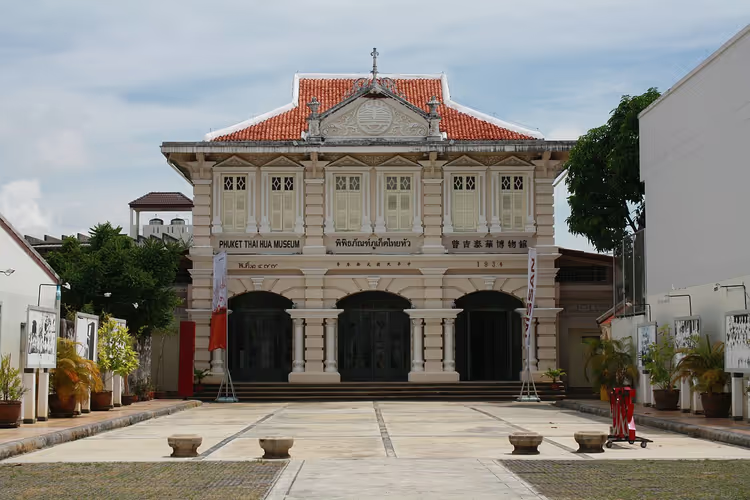 © Полина Славянская · CC BYPhoto: Полина Славянская, CC BY (https://creativecommons.org/licenses/by/3.0), Wikimedia Commons
A scooter seems like the most convenient and cheapest way to see the island, and that's the trap. To ride one, you need a motorcycle license and an international driving permit. It's only valid together with your national license, so an international permit alone isn't enough.
Police stop foreigners more readily, so document checks are routine here. Scooter rental costs from 200 to 900 baht per day depending on the model (as of 09/2026, rental price overview). Local bikes are more powerful than what Europeans are used to, and traffic is dense and fast.
Thailand has left-hand traffic, and at first you'll instinctively pull to the wrong side. Many drivers change lanes without signaling, using any gap to get ahead. This behavior is the norm here, and that's exactly what makes riding dangerous.
Insurance covers only basic first aid, not the scooter itself. You pay for damage to the bike out of pocket, and if you're unlucky, you'll also cover repairs to someone else's vehicle. A helmet is mandatory: without one, the on-the-spot fine is 200 to 500 baht, and the legal maximum goes up to 2,000 baht (as of 09/2026, Thailand traffic rules).
Before heading out, practice on quiet streets and watch local traffic for at least half an hour. Alcohol and driving are completely out of the question here.
- How to rent: get a scooter from your hotel desk or a reputable rental shop with a written contract.
- The catch: there's no insurance on the scooter itself, so any scratch comes out of your own pocket.
Beaches: why change locations every day
 AIIllustrative image: AI-generated
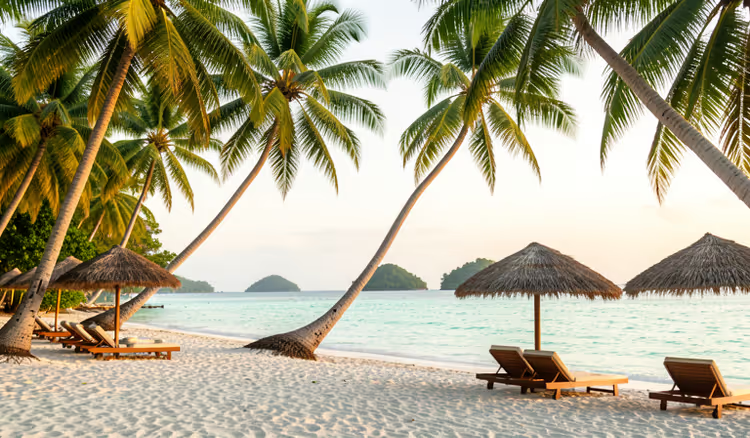
If you spend your entire vacation on one beach, you're missing out on half the experience. Every beach on the island has something different: soft sand here, calm water there, easy entry for kids somewhere else. Phuket has dozens of beaches, and three or four of them are likely to be near your hotel.
We've put beaches and restaurants on one map to make it easier to choose an area. You can open the beach and restaurant map right from your phone. Compare two or three nearby beaches in a single day and decide where you'd like to come back.
On the west coast during the rainy season, waves and currents make swimming dangerous. Watch for warning flags: red means no swimming, and it's not a formality. In the south and east, the water is usually calmer, which saves the day in the low season.
- How to get there: by scooter, taxi, or the hotel's free shuttle.
- The catch: during the rainy season, swimming on west coast beaches can be dangerous due to waves.
Food: how to ask for it not spicy
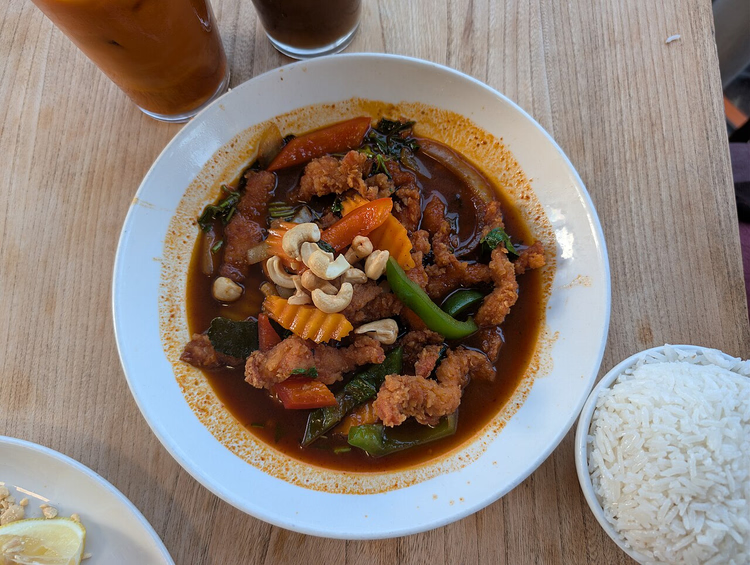
Many people call Thai cuisine the main reason to come back to Thailand. But some travelers can't handle spicy food and end up limiting themselves to two familiar dishes. That's a shame: you can easily ask the waiter to turn down the heat.
Remember three short phrases. "Ped Nit Noi" means "a little spicy," "Mai Ped" means "not spicy," and "Ped Maak Maak" is only for heat lovers. Almost any waiter understands "Mai Ped," and after that, the whole menu opens up to you.
Then you have access not just to Pad Thai and Khao Pad Gai, but to dozens of other dishes. At markets and street cafes, portions are small, so you can try several in one visit. The Rawai waterfront serves seafood, and it's worth making a separate trip there for dinner.
- How to order: say "Mai Ped" and use a hand gesture if they don't understand.
- The catch: even after you ask, the dish may still come with chili, so confirm in advance.
Ice and hygiene: what to believe
You have probably been told that in Thailand you should avoid ice, street food, and salads. This advice sounds reasonable, but in practice it offers poor protection. In a hot climate, bacteria multiply everywhere, not only at street stalls.
The fear of getting an upset stomach is familiar to anyone traveling to the tropics for the first time. Ironically, stomach issues happen more often to the most cautious travelers, not to those who try everything. There is no universal protection, but there are sensible habits.
Ice in the form of hollow tubes is safer: it is made from drinking water. Crushed ice, however, which sits in coolers for chilling, is better not added to drinks. If you have a sensitive stomach or throat, skip ice altogether: a sharp temperature change does not help.
- How to choose: drink bottled water and use tube-shaped ice.
- The catch: crushed ice from coolers is not purified, and it is added almost everywhere.
Sun: why you burn even on a cloudy day
 © Paul IJpelaar · CC BYPhoto: Paul IJpelaar, CC BY (https://creativecommons.org/licenses/by/3.0), Wikimedia Commons
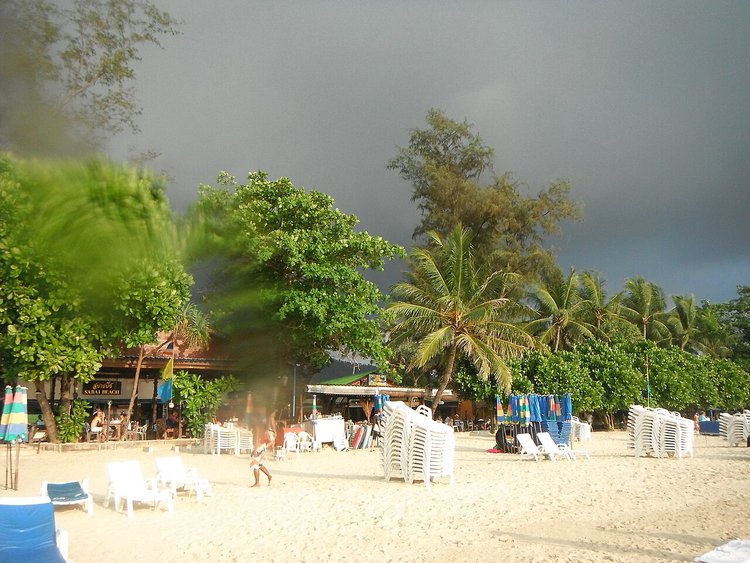
The sun in Thailand works differently than in Europe. Even under thick clouds, UV remains strong, and near the sea or while snorkeling you can burn in half an hour. That is why sunscreen here is not optional, it is always necessary.
On the beach and on a scooter, you spend a lot of time under the open sky. Apply protection in the morning and reapply every couple of hours, especially after swimming. For children this rule is even more important: their skin is more sensitive than adults', and they burn faster.
Midday is better spent in the shade or at a cafe. That way, by evening you will be watching the sunset instead of treating burned shoulders.
- How to protect yourself: high-SPF sunscreen every two hours.
- The catch: with very fair skin, even shade by the sea does not prevent burning.
Respect: what Thais do not forgive tourists
Thais are almost always calm and friendly, which is exactly why a loud scandal is so out of place here. They do not like being yelled at or having conflicts aggressively escalated. You can discuss a disputed situation, but only up to a certain limit, and crossing it is definitely not worth it.
Beyond that limit, restraint ends, and the reaction can be severe. Tragedies have already happened in Thailand because a foreigner shouted at someone. Separately, avoid offensive gestures and loud honking without reason.
Keep a calm tone and a smile even when haggling over a price. Respect is valued here more than being loudly right.
- How to behave: speak quietly and do not show irritation in public.
- The catch: a loud conflict with a local can end not with words, but with actions.
Shopping: where haggling is appropriate and where it is not
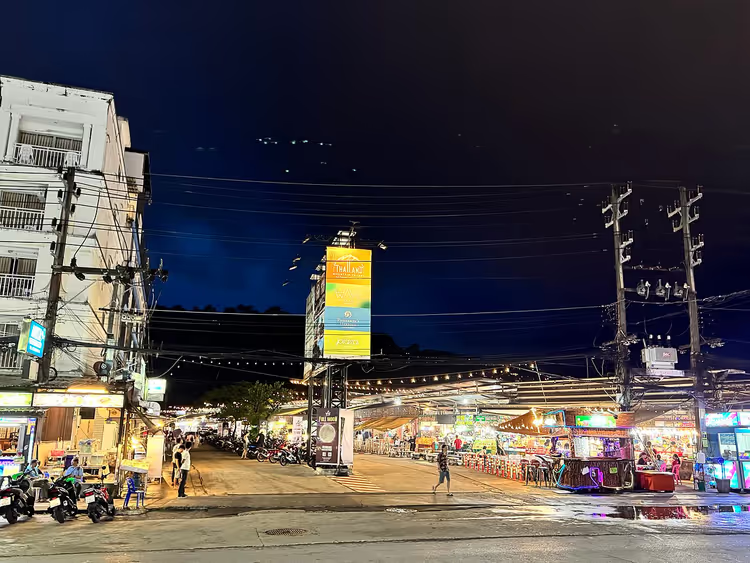 © JULIANISME · CC BY-SAPhoto: JULIANISME, CC BY-SA (https://creativecommons.org/licenses/by-sa/4.0), Wikimedia Commons
Not everything in Thailand is cheap, and not every purchase turns out to be a good deal. At markets, haggling is not just appropriate, it is expected. Those who do not haggle almost always overpay, but haggling also has its limits.
Where price tags are displayed at a market, the discount is small and stays within ten percent. But where there are no prices, the seller sets the amount with a buffer, and you can bring it down noticeably more. Do not squeeze out the maximum and stay friendly: people here respond more willingly to goodwill.
In supermarkets, shopping malls, and official stores, prices are fixed. Haggling there is pointless, as it is in large chains. At the Phuket Weekend Market, prices are already set, so haggling there is kept to a minimum.
- How to buy: haggle at street markets without price tags and keep a calm tone.
- The catch: without haggling at open markets, you are guaranteed to pay extra.
Clothing: rules for temples and the city
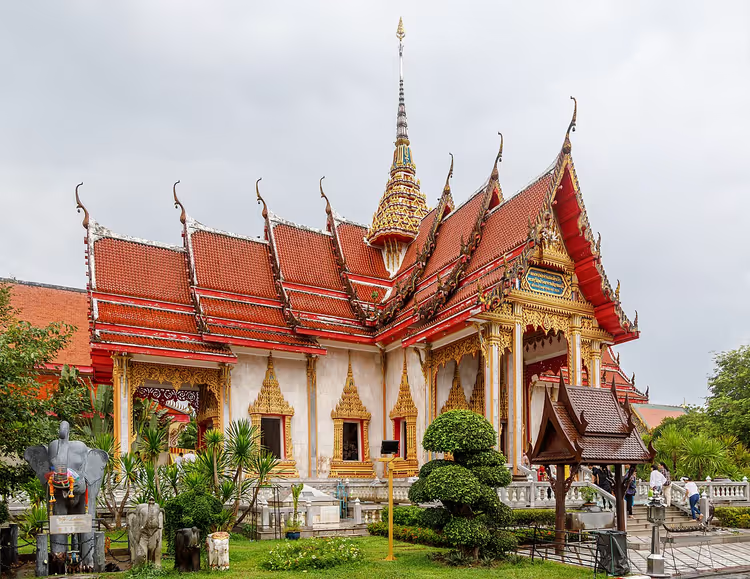 © CEphoto, Uwe Aranas · CC BY-SAPhoto: CEphoto, Uwe Aranas, CC BY-SA (https://creativecommons.org/licenses/by-sa/4.0), Wikimedia Commons
Almost everywhere in Phuket you can walk around in shorts and a tank top, but not in a temple. Before entering, take off your shoes and cover your shoulders, and women should also cover their knees. Then do not step on the threshold, do not kiss inside, and do not touch Buddha statues or their heads.
Pay special attention to this at Wat Chalong, the most famous temple on the island. The rules here are simple, but they are enforced without exception, and staff watch for this at the entrance.
Outside temples, clothing also matters. Thais tolerate tank tops, but the sight of a shirtless person in a shopping mall or bank openly irritates them. Shoes are removed not only in temples: in homes and many small shops, you are expected to go barefoot before entering.
- How to prepare: bring a light wrap for your shoulders and for the temple.
- The catch: in shorts and a tank top, you may not be allowed into a temple even in extreme heat.
⁉️🤔 Frequently asked questions
Do I need a license to rent a scooter in Phuket?
Yes, you need a national motorcycle license and an international driving permit. Without them and without a helmet, you risk a fine (as of 09/2026, traffic regulations).
When is the best time to go to Phuket to avoid rain?
The dry season lasts from November to April, when the sea is calm and the weather is stable. From May to October the monsoon arrives: rain falls more often, and the west coast gets rougher. According to Phuket.Net, swimming is best planned for winter, and in summer choose a hotel with a pool.
Is it safe to eat street food and ice?
Street food in Thailand is mostly safe, and in Phuket it is prepared right in front of you. The rule for ice is simple: tube ice is fine, crushed ice from coolers is better avoided.
How much is a taxi from the airport to Patong?
From 100 baht on the smart bus to 900 baht for Grab, because there is no single fare (as of 09/2026, transfer overview).
How should I dress for a temple in Phuket?
Cover your shoulders and knees, take off your shoes at the entrance, and stay calm inside. Shorts and tank tops are best avoided on temple grounds.
Tours and tickets in Phuket
Guided tours, skip-the-line tickets and activities — most offers can be cancelled free of charge.
See offers on KiwitaxiThe widget loads once you give your consent.
In short: what to book
A first trip to Phuket is easier to put together from straightforward decisions. Choose accommodation by area and pool, not only by price, especially in the rainy season. Plan transportation in advance: a taxi app and scooter rental with the right documents will save you money and stress.
- If it is your first trip and you have little time, book a hotel in Kata or Karon.
- If you are traveling in the rainy season, choose accommodation with a pool.
- If you are not ready for a scooter, rely on Grab and official taxis.

A small editorial team writing guides for independent travel. We travel ourselves, but we haven’t been everywhere, so we check prices, opening hours and how to get there against official sources.