
















Car rental in Cyprus: how to book cheaper and what to check upon pickup
Renting a car in Cyprus solves the island's biggest problem. Buses run with long gaps, Uber doesn't work, and Bolt on long distances costs as much as a separate excursion. With a car, you decide when to go to the beach and whether to detour into a mountain village.
We compare rates and book cars ourselves, so we've put together a step-by-step process that saves time and stress on the ground. Traffic on the island is left-hand, speed limits are strictly enforced, and a trip to the north requires additional insurance. Below is everything step by step: from choosing a car class to photographing scratches at the rental counter.
Ad: this article contains affiliate links, we earn a commission if you book through them, at no extra cost to you.
Car or bus: when renting makes sense
💡 In short:
- You need a car if you want to see more than two beaches and the Troodos mountains in one trip.
- Book in advance and choose a rate with full insurance and zero deductible.
- Fuel prices and speed limits: verified 09/12/2026 using the European Commission weekly bulletin and the traffic rules summary.
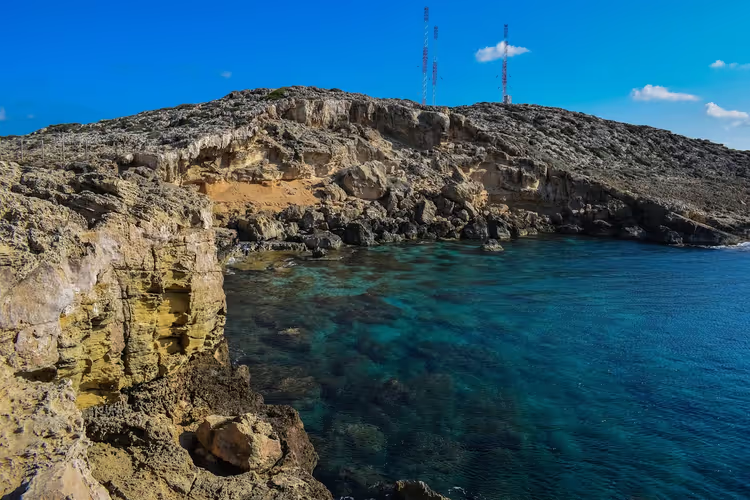
If you bought a package tour and don't leave the hotel area, you don't need a car. In all other cases, renting pays off: without it, you're tied to bus schedules and a couple of port cities. Public transport on the island works, but it simply doesn't reach some beaches and viewpoints.
There are two airports here: Larnaca and Paphos. From Larnaca it's more convenient to head east and into the center of the island, from Paphos to the west and into the mountains. If you fly into one airport and out of another, get a car with return at your departure point. That way you won't need to drive back across the entire island.
The surcharge for returning at a different airport is usually in the double digits, and the exact amount is shown by the calculator before you confirm the booking. We always look at it together with the rental price itself, otherwise a seemingly good rate turns out to be more expensive than the next one.
We recommend planning a circular route right away: Larnaca, Ayia Napa, Limassol, Paphos, then Troodos. That way you don't drive the same road twice. Short hops take twenty to forty minutes, longer ones about two hours.
How much does car rental cost in Cyprus
The price range on the island is huge, and it's not just about the car class. The same car in the off-season costs almost half as much as in July. The cheapest months are November, December, January, February, and March. In high season, the same offers get more expensive, and available cars run out weeks in advance.
Price isn't only affected by the season. A rate with full insurance and zero deductible costs more than the basic one, but you avoid a large hold on your card. Cheap offers often come with a high deposit: the money is frozen for the entire trip and only returned after the car is inspected.
Fuel prices in Cyprus are as follows: gasoline around €1.63 per liter, diesel around €1.90 per liter (as of 09/2026, European Commission weekly bulletin). There are plenty of gas stations, so you don't need to plan refueling in advance. Fill the tank before returning the car: that way you don't pay for the rental company's refueling service at an inflated rate.
Rental duration also changes the price: for a week, the daily rate is almost always lower than for two days. Basic insurance with a high deductible looks cheap exactly until the first scratch, after which you pay for the repair. That's why we budget across three items: rental, fuel, and the deposit amount on the card.
Comparing offers is easier in a single search rather than across individual rental company websites. Rates on DiscoverCars aggregate offers from Sixt, Avis, and local operators in one results page, so the difference is immediately visible. We always check at least two sources before clicking "book."
Which car class to choose
First, decide on the size: the car class determines both the price and comfort on Troodos switchbacks. For two people with carry-on luggage, a two-door mini class is enough, usually a Fiat 500 or Kia Picanto. If you have two large suitcases, go for a four-door economy class: Ford Fiesta, Toyota Yaris, Opel Astra, or VW Polo. For three to four people with luggage, you need a compact class or a station wagon.
 © Aerra Carnicom · CC BY-SAPhoto: Aerra Carnicom, CC BY-SA (https://creativecommons.org/licenses/by-sa/4.0), Wikimedia Commons
Think separately about the trunk. A closed cargo cover hides bags from prying eyes and reduces the risk of a break-in at a beach parking lot. The transmission also affects the bill: an automatic costs more than a manual, but on narrow village streets and uphill sections it saves your nerves. We usually pay extra for an automatic if the price difference is small.
The listing shows a class, not a specific model. Within a class, you may be given a different car of the same size, so don't count on the exact Fiat 500 from the photo. However, trunk space and the number of doors stay the same.
Filter the results by class right away, not after browsing twenty listings. Compare rates on DiscoverCars by car size, and it saves more time than any promo code.
How to book: a step-by-step checklist

What to enter in the search
Enter a specific airport, not a city: pickup at the terminal saves time, and the price is almost the same. Set the same pickup and return location, otherwise a one-way rental surcharge will appear. The return time should not be later than the pickup time: rental companies charge by the day, and an extra hour turns into a full day of rental.
Which filters to enable
Filters save more than hunting for promo codes. We set the class to "mini" or "economy," air conditioning, full insurance with theft protection, zero deductible, glass and tires, and a deposit limit. We choose liability insurance with the highest available limit. We also enable terminal pickup if you don't want to take a shuttle. It's better not to touch payment method and rental company type filters, so you don't narrow the results down to a couple of options.
How to read search results
Sort the list by price and review the first three to five offers. Look not at the total amount, but at the deposit and insurance terms. Open the selected options in new tabs, it makes comparing faster. Check the rental company by name: we also look it up on Google Maps and read recent reviews.
We choose not the cheapest offer, but the best one across three criteria at once: deposit, deductible, and company rating.
Which rental companies to choose
Set the rating filter to "excellent" and "very good," this immediately eliminates weak options. Everyone has bad reviews, and they're mostly about two things: aggressive upselling at the counter and long shuttle waits. Before booking, check whether the rental company operates during your arrival hours, especially if the flight lands on a Saturday evening. A rental company with a "very good" rating and a small deposit is often a better deal than the cheapest offer with a high deductible.
A separate advantage of online booking is free cancellation. Almost all rates can be canceled up to 24 hours before pickup, so you lose nothing if you find a cheaper option. Mileage is unlimited in most rates, meaning long drives across the island are already included in the price. Rental terms on DiscoverCars are visible before payment, including cancellation rules and mileage limits.
Picking up the car at Larnaca or Paphos airport
Larnaca's terminal is small: follow the "Rental Car" signs and you won't get lost. Some rental companies operate directly in the terminal or in the parking lot in front of it: Europcar, Goldcar, and Sixt. Cheap rates are often served by a shuttle, for example GreenMotion or AIDA rent a car. The exact pickup address and instructions are printed on the voucher: it may be parking lot "P4" or a request to call a number. If you want to get the car at the terminal, set the corresponding filter when searching, but this option is usually more expensive.
 © Phpeter · CC BY-SAPhoto: Phpeter, CC BY-SA (https://creativecommons.org/licenses/by-sa/4.0), Wikimedia Commons
You can check where the rental company is located before paying. In the offer card, open the details and look at the pickup point. Additionally, find the company on Google Maps and read in the reviews whether customers are taken by shuttle. Usually the drive to the lot takes only a few minutes.
If an employee walks you to the car and fills out the inspection report together with you, that's the best scenario. But often the key is simply handed over, and you're left alone at the car. Then take out your phone and film everything: every chip, dent, and scuff. We take photos and record a video walking around the car, because a dispute over old damage is only settled by a photo.
What to bring and what to check on site
- Driver's license, passport or ID card, voucher, and a real credit card: not all rental companies accept debit cards.
- Photograph the fuel level and odometer reading.
- Record all damage in the inspection report.
- Decline additional insurance at the counter: full insurance is already included in your rate.
- Adjust the seat and mirrors before leaving the parking lot.
Clarify two things while you're at the counter: who else can drive and where the car cannot be taken. The terms for a second driver and for taking the car off the island are often in the fine print. Extra photos cost nothing, while one missed chip costs the price of a repair. If you see damage that isn't in the report, ask an employee to add it or film it before leaving the parking lot. A disputed case is almost always resolved in favor of whoever has dated photos.
Roads, gas stations, and navigation
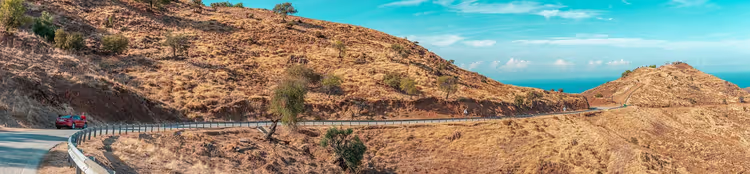
Roads in Cyprus are smooth and well-maintained, with almost no potholes or ruts on the main highways. In villages, streets are narrow, so a mini or compact class is easier to park. Traffic is left-hand, and for the first half hour you need to pay close attention. Distances are short: from Larnaca to Limassol you'll get there in about an hour, from Limassol to Paphos in just over an hour.
Navigation works reliably: Google Maps guides you around the island without surprises, but it's better to download the map in advance. If you don't have roaming, offline maps will save you. Troodos switchbacks require engine braking: keep a low gear and don't coast downhill in neutral.
Gas stations are found in almost every village. You can pay by card almost everywhere, but at small mountain stations keep some cash on hand. Speed cameras are installed both on highways and in cities, so it's better to remember the limits in advance. Signs here follow European standards, but some are only in Greek. Go by the shape and color of the sign, not the text.
Traffic rules and parking
Speed limits in Cyprus are as follows: 100 km/h on motorways, 80 km/h outside built-up areas, and 50 km/h in built-up areas (as of 2026, ffcheck.eu). Fines are issued strictly: cameras are all over the island, and there are no discounts for minor speeding. Talking on the phone while driving is prohibited. After a glass of wine, you shouldn't get behind the wheel either.
Parking is regulated by line markings, and they're easy to understand.
- White line: parking is free and permitted.
- Yellow line: parking is prohibited.
In cities and near beaches, there are often large free parking lots. Sometimes a person in a vest stands at the entrance and collects money: before paying, check the location on Google Maps and read the reviews. In winter, Troodos gets snow, so check before heading out whether chains are required. Parking tickets are issued quickly, and paying a fine abroad is almost always more expensive than the parking itself. Free lots near beaches fill up by noon, so arrive in the morning.
Is it dangerous to drive in Cyprus
Cyprus is considered a calm place: serious crime is rare here. Petty theft happens in tourist centers, so don't leave bags and electronics visible in the car. Before traveling north, check the current situation at the crossing points. The main risk on the road isn't crime, but inattention with left-hand traffic.
The border with Northern Cyprus
The island has been divided since the mid-seventies, and a trip north requires preparation. Not every rental company allows crossing the border in their car. Check this in the rental terms before booking: sometimes written permission from the company is required. Insurance purchased in the south is not valid in the north.
An additional policy for the north is sold right at the crossing point, and the price depends on the length of the trip. There are several official crossings: Agios Dometios in Nicosia, Deryneia near Famagusta, and Ledra Palace, which is open only to pedestrians. Bring your passport or ID card, driver's license, and car documents. Plan the return trip with a buffer: in high season, there can be queues at the border.
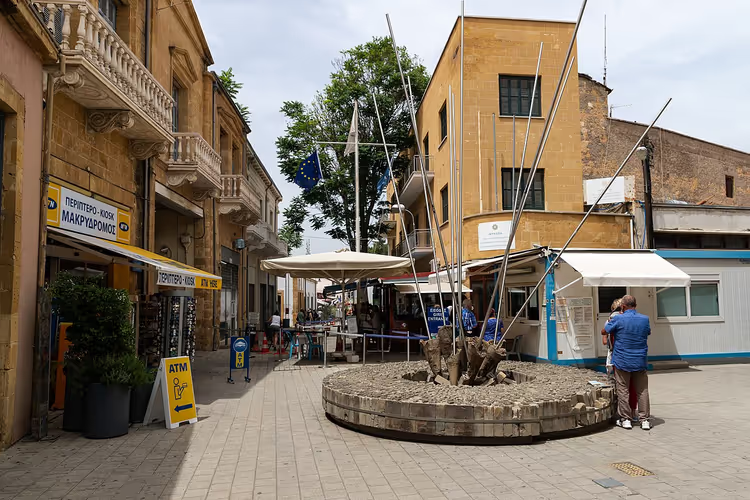 © dronepicr · CC BYPhoto: dronepicr, CC BY (https://creativecommons.org/licenses/by/2.0), Wikimedia Commons
You cannot return a rental car in the north, which is worth considering when planning your route. The border crossing terms are visible in the rate card in the DiscoverCars search. We recommend not planning a crossing on the day of departure: any delay at the border will eat into the time you need to return the car.
Find hotels
Compare prices across booking sites and filter for rooms with free cancellation.
Compare prices on Discover CarsThe widget loads once you give your consent.
⁉️🤔 Frequently asked questions
When should I book a car in Cyprus?
The earlier, the more choice and the lower the price. A couple of days before the trip in high season, only expensive options remain.
Should I get a car directly at the airport counter?
Usually not. At the counter, the selection is smaller and the price is higher than online. There you depend on one employee and don't see offers from other rental companies. Online, you compare the entire results page and book in a couple of minutes, and on site you just pick up the car with your voucher.
Can I pick up a car in Larnaca and return it in Paphos?
Yes, it's convenient when flying into different airports. A one-way rental comes with a surcharge, and the exact amount is shown before you confirm the booking. Plan the return with a time buffer: the drive between the airports takes about two hours, and in high season traffic adds to that. In the north of the island, you cannot return the car.
Is there a mileage limit?
A circular route around the island adds a lot of kilometers. If the rate card shows a daily limit, compare it with your trip plan, otherwise the excess mileage fee will eat up your savings.
Do rental companies accept debit cards?
Not always. Some operators already work with Debit Visa, but there's no guarantee. If you don't have a credit card, look for a rate without a deposit: it's more expensive, but it doesn't require a large hold on your account.
In short: what's worth booking
You almost always need a car in Cyprus: public transport only gets you to some of the beaches. Book in advance, choose a rate with zero deductible, and film the car on video at pickup.
If you have a short two- to three-day trip, get a mini class from Larnaca. If you're traveling as a family with suitcases, you need a four-door economy class. If you're planning a loop around the island, check the one-way rental terms before booking. Rates on DiscoverCars show the deposit, deductible, and rental company rating in one results page, so comparing is easier there.

A small editorial team writing guides for independent travel. We travel ourselves, but we haven’t been everywhere, so we check prices, opening hours and how to get there against official sources.