
















Geneva center on foot: 10 stops with prices and tips
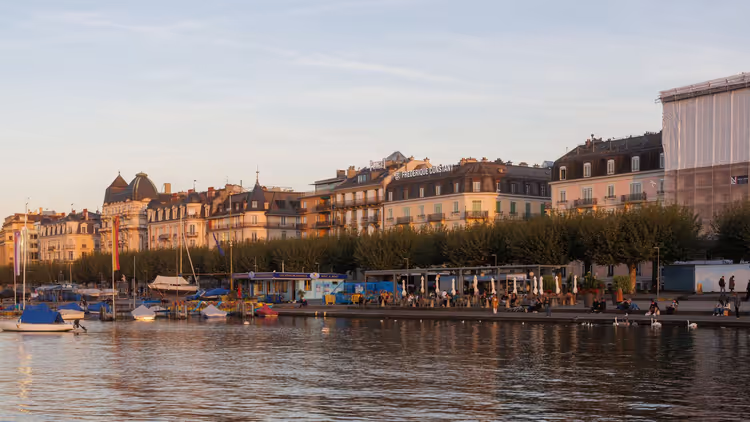
Geneva fits into a single day on foot. The historic center here is compact: from the waterfront to the cathedral is about 15 minutes of walking (on the map), and almost all the main sights sit along this short stretch.
We put together a route through the Old Town so you can walk it on your own, without a group and without booking. Below are ten stops with photos and prices where they apply.
Ad: this article contains affiliate links. We earn a commission if you book through them, at no extra cost to you.
Old town route in one day
💡 In short:
- Start at the Rhône waterfront and walk uphill toward the cathedral and the university: that way you do the climb only once.
- Allow 3-4 hours for the whole route and wear comfortable shoes: the Old Town cobblestones get slippery after rain.
- Cathedral tower ticket prices: 09/2026, verified on the official website.
1. Chocolaterie du Rhône
 © Wouter Hagens · CC BY-SAPhoto: Wouter Hagens, CC BY-SA (https://creativecommons.org/licenses/by-sa/3.0), Wikimedia Commons
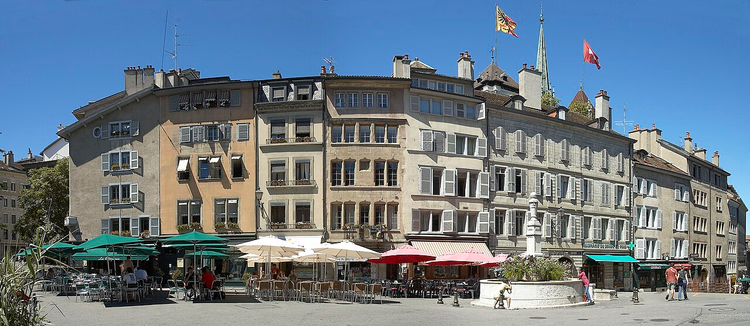
The route starts at the waterfront, where the Chocolaterie du Rhône chocolate workshop operates. Dark chocolate here is made according to old recipes, and it makes a convenient first stop: you buy souvenirs before the walk rather than carrying them across the whole city.
Swiss chocolate has long become a local symbol, and Geneva takes it seriously. You can put together a box of chocolates by weight right in the shop. Spend 15 minutes here, then the climb into the Old Town awaits.
2. Temple de la Fusterie
 © Romano1246 · CC BY-SAPhoto: Romano1246, CC BY-SA (https://creativecommons.org/licenses/by-sa/3.0), Wikimedia Commons
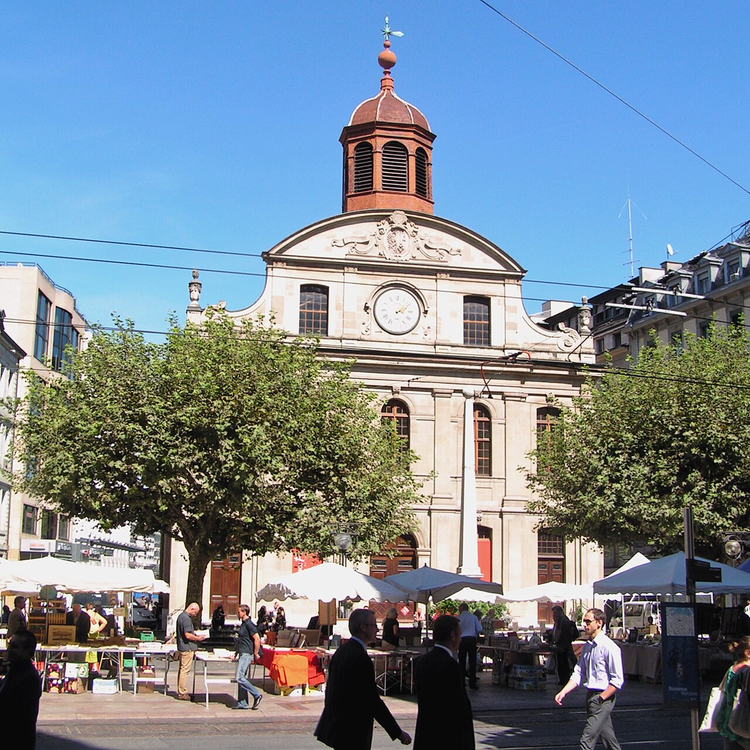
Temple de la Fusterie was built in 1713-1715 to a design by architect Jean Vennes for French Huguenot Protestants (as of 09/2026, Patrimoine architectural genevois). It was the first church built in Geneva after the Reformation of the 16th century.
Outside, you are greeted by a modest facade with the Republic's coat of arms and a metal spire. Inside there is no Catholic opulence: only galleries on columns and large windows. Today the building hosts concerts and city celebrations, so entry is often free.
3. Tour de l'Île and Place Molard
 © MHM55 · CC BY-SAPhoto: MHM55, CC BY-SA (https://creativecommons.org/licenses/by-sa/4.0), Wikimedia Commons
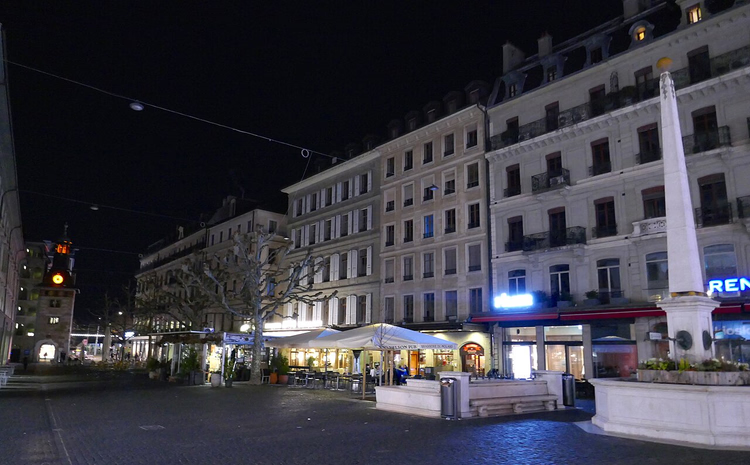
The Tour de l'Île tower survives from the old city fortifications. Once the port bustled at Place Molard, and massive walls protected the city from attacks. Now the spot is home to boutiques and restaurants overlooking the bay.
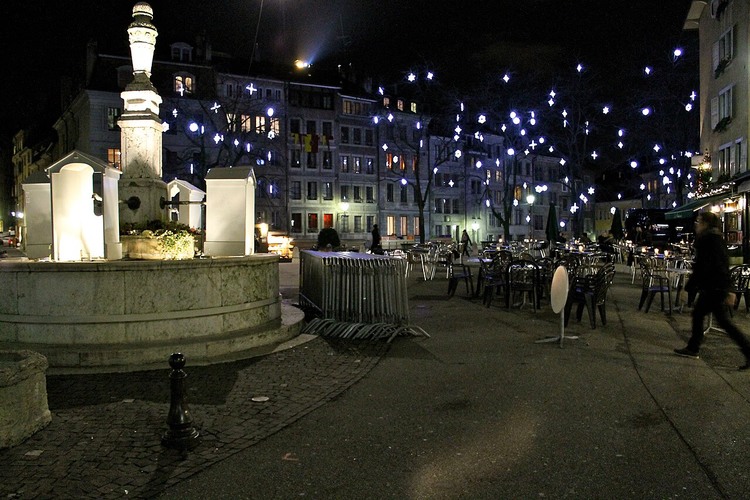
On the tower wall you will find a historic coat of arms: a woman leans over a traveler, and the inscription calls Geneva a city for exiles. Come here toward evening. At dusk, hundreds of small lanterns with greetings in different languages light up the square.
4. Musée international de la Réforme
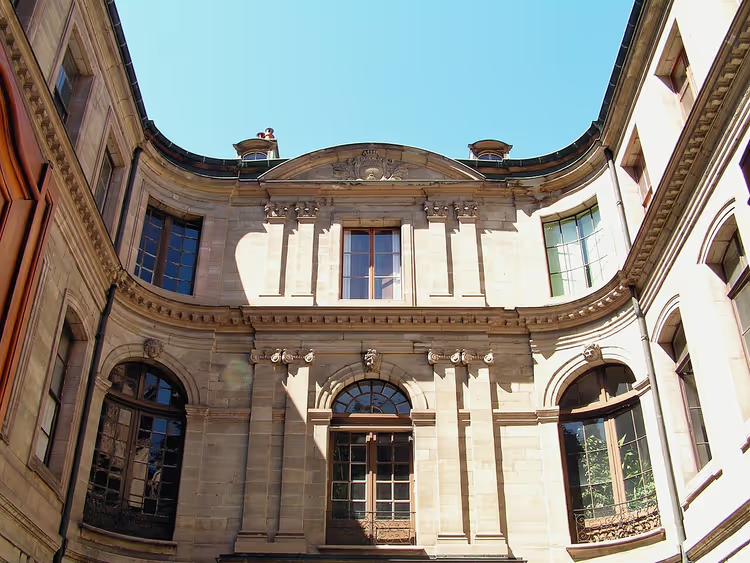 © Romano1246 · CC BY-SAPhoto: Romano1246, CC BY-SA (https://creativecommons.org/licenses/by-sa/3.0), Wikimedia Commons
The Musée international de la Réforme (MIR) occupies 12 rooms (as of 09/2026, Musées de Genève) and tells the story of Protestantism. The collection includes letters, old books, engravings, and documents about the conflict between Catholics and Protestants.
One detail matters for you: the audio guide is free and available in 14 languages (as of 09/2026, the museum's official website). The museum occupies the Maison Mallet, built on the site of the former cathedral quarter.
5. St. Peter's Cathedral
St. Peter's Cathedral crowns the Old Town. The first stone was laid back in the 12th century, and construction stretched over a century and a half, so the appearance blends Romanesque and Gothic styles. Entry inside is free.
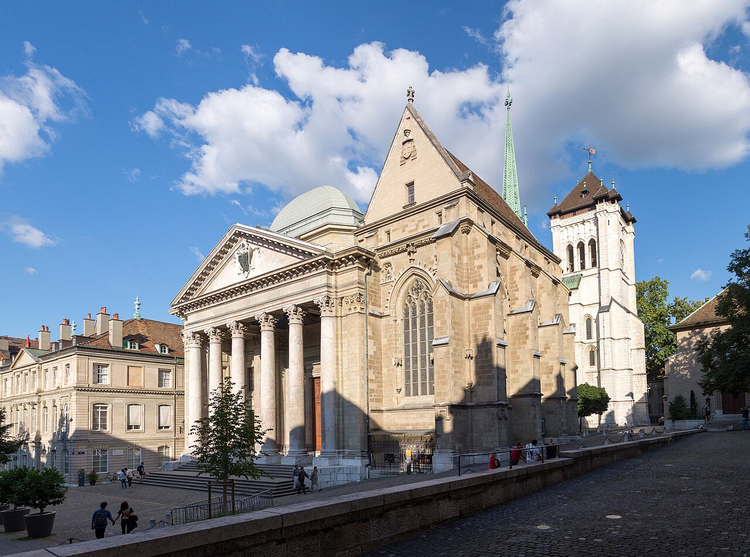 © Sergey Ashmarin · CC BY-SAPhoto: Sergey Ashmarin, CC BY-SA (https://creativecommons.org/licenses/by-sa/3.0), Wikimedia Commons
The most interesting part awaits at the top. A combined ticket for the towers and the archaeological site costs 12 CHF for adults and 7 CHF for children aged 7-16 (as of 09/2026, Fondation des Clefs de St-Pierre). From the observation deck you will see the lake and the entire Old Town.
The climb is narrow, and in summer a line builds up at the stairs. If you don't want to wait, check tickets and tours in advance.
6. Place du Bourg-de-Four
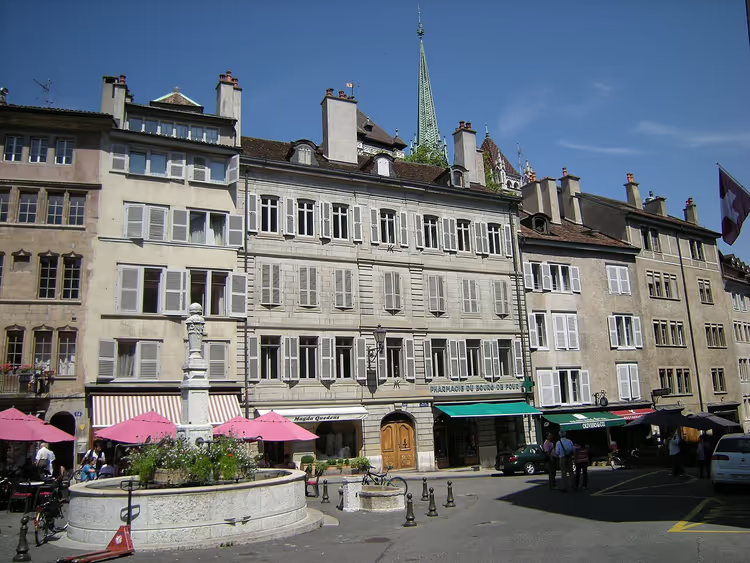 © Leandro Neumann Ciuffo · CC BYPhoto: Leandro Neumann Ciuffo, CC BY (https://creativecommons.org/licenses/by/2.0), Wikimedia Commons
Place du Bourg-de-Four is called the oldest square in Geneva. It stands on the site of a Roman forum and a medieval market (as of 09/2026, Geneve.city guide), and later postal carriages made a stop here.
Here you will find houses from the 16th-18th centuries and an old fountain. The square remains a center of social life: cafe terraces fill up by midday. From here it's a 5-minute walk to the cathedral, and about 10 more minutes to the university (according to the map).
7. The Arsenal building
 © Patrick Nouhailler's… · CC BY-SAPhoto: Patrick Nouhailler's…, CC BY-SA (https://creativecommons.org/licenses/by-sa/3.0), Wikimedia Commons
The old arsenal has changed its purpose more than once over the centuries. It has been a grain warehouse and a police station, and today the building houses the state archive.
In the courtyard you will see antique cannons from the 17th-18th centuries. The wall behind them is decorated with mosaics depicting three historical scenes: Caesar's visit, the arrival of Huguenot exiles, and a medieval fair. The courtyard is open to passersby, admission is free.
8. Maison Tavel and Rousseau's house
Maison Tavel is considered the oldest residential building in the city. It appeared back in the 14th century, and today it operates as the Museum of the History of Geneva: inside you'll find antique furniture, toys, and everyday household items of city residents.
Very close by stands the house of the Frenchman Jean-Jacques Rousseau, the author of the idea of direct democracy. This is exactly the form of government that still operates in Switzerland today. Don't miss the plaque at the entrance: it marks the spot more precisely than any guidebook.
9. Université de Genève
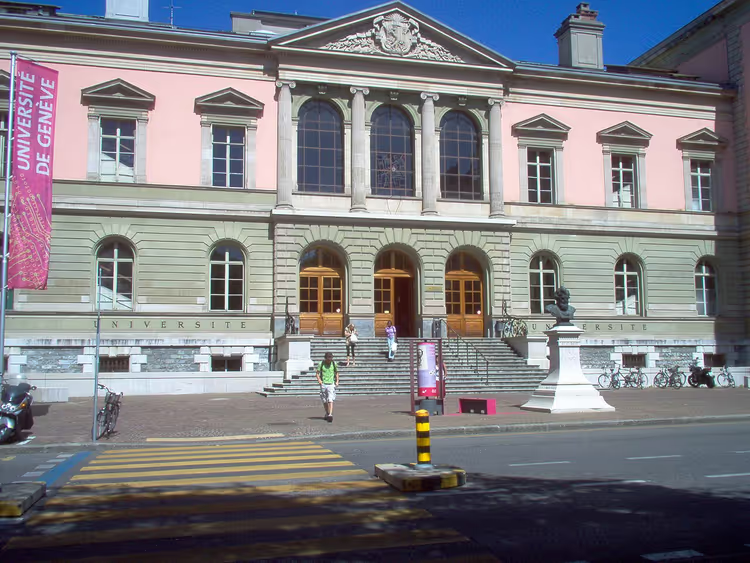
The University of Geneva grew out of a theological academy founded in the mid-16th century. Its alumni include politicians, scientists, and entrepreneurs, and the academy itself was long the main Protestant center of Europe.
Today tens of thousands of students study law, medicine, economics, and psychology here. The buildings are scattered across the Old Town, so you will see the university along the way, without a separate visit.
10. Grand Théâtre, Victoria Hall, and Musée Rath
 © Guilhem Vellut from Annecy, France · CC BYPhoto: Guilhem Vellut from Annecy, France, CC BY (https://creativecommons.org/licenses/by/2.0), Wikimedia Commons
The cultural part of the route is concentrated on Place Neuve. The Grand Théâtre de Genève opened in the late 19th century, and its interior greets you with a huge chandelier under the dome and a mirrored hall. Next to it stands the Victoria Hall concert venue, known for its strong acoustics.
The Musée Rath opened in 1826 as one of the first purpose-built exhibition halls in Europe (as of 09/2026, Musée d'art et d'histoire). It hosts temporary exhibitions, and opening hours vary, so it is best to check the schedule in advance.
Tours and tickets in Geneva
Guided tours, skip-the-line tickets and activities — most offers can be cancelled free of charge.
See offers on GetYourGuideThe widget loads once you give your consent.
⁉️🤔 Frequently asked questions
How much time do I need for the central Geneva route?
Allow 3-4 hours at a relaxed pace. The route climbs from the waterfront to the cathedral and the university, so take breaks. If you want to visit the Musée international de la Réforme and climb the cathedral towers, add another hour. Half of the stops are short: you take a photo and move on.
How much does it cost to climb the towers of St. Peter's Cathedral?
A combined ticket for the towers and the archaeological site costs 12 CHF for adults and 7 CHF for children aged 7-16 (as of 09/2026, official cathedral website). Entry to the cathedral itself is free. The staircase is narrow, and in summer a line builds up at the entrance, so arrive at opening time.
Where is the best place to start the walk?
Start at the Rhône waterfront, near Chocolaterie du Rhône. From there you walk uphill through the Temple de la Fusterie and the Tour de l'Île tower to the cathedral. That way the entire climb falls in the first half of the route, and by the time you reach Place du Bourg-de-Four you are on level ground.
Is an audio guide available at the Reformation Museum?
Yes, the audio guide is free and translated into 14 languages (as of 09/2026, official museum website). The museum has 12 rooms, and the entrance ticket includes the temporary exhibition. It is a convenient option if you do not read French.
What should I see in the center in the evening?
Return to Place du Molard: at dusk it is lit by lanterns with greetings in different languages. It is one of the most atmospheric spots on the route. In summer it stays busy until late evening; in winter it is better to come around 6:00 PM.
In short: what to book
If you have one day, follow the route in order: the waterfront, the Old Town, Place Neuve. If you want to climb the cathedral towers, plan your visit for opening time, and you will avoid the line. If you prefer the city with a guide, you can find a Geneva tour on GetYourGuide. For the evening, save Place du Molard and the terraces by the fountain at Bourg-de-Four.

A small editorial team writing guides for independent travel. We travel ourselves, but we haven’t been everywhere, so we check prices, opening hours and how to get there against official sources.