
















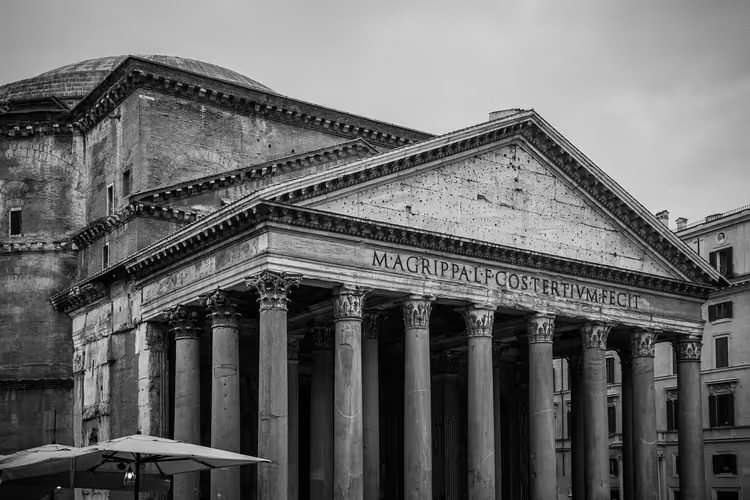
15 Roman churches with works by Michelangelo and Caravaggio
In Rome there are hundreds of active churches, and you cannot visit all of them in one trip. So you need to choose carefully.
Some churches hide works by Michelangelo, Caravaggio, and Raphael, while others grew directly out of ancient Roman buildings. There are almost no lines: tour buses park at St. Peter's Basilica, while quiet basilicas two blocks away are often empty. We picked 15 churches worth a detour and checked the addresses, entry, and hours for you. Almost all are free to enter, and only a few places require a ticket.
Ad: this article contains affiliate links, we earn a commission if you book through them, at no extra cost to you.
1. St. Peter's Basilica
💡 In short: below are all 15 churches in Rome with entry, hours, and each one's main treasure.
- 15 churches in Rome: almost all are free to enter and sit near squares and metro stations.
- Michelangelo, Caravaggio, Raphael, mosaics from the 5th to 13th centuries, and works by Bernini await you in the center.
- Prices and hours: as of 09/2026, verified on the official website of St. Peter's Basilica and the San Clemente website.
 © Alvesgaspar · CC BY-SAPhoto: Alvesgaspar, CC BY-SA (https://creativecommons.org/licenses/by-sa/4.0), Wikimedia Commons
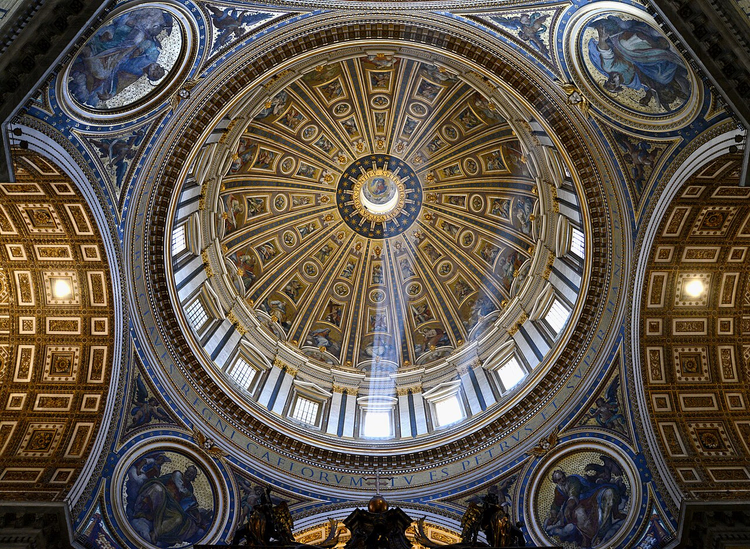
St. Peter's Basilica stands over the tomb of the Apostle Peter, and all routes in Rome converge here. The first basilica was founded back in the 4th century, while the current building was constructed in the 16th and 17th centuries with the involvement of Michelangelo and Bernini. Thousands of masters worked on its decoration, and construction stretched over decades. Inside you will see Michelangelo's Pietà, Bernini's baldachin over the altar, and the largest church in the Catholic world.
Entry is free, but you pass through security checkpoints, so allow time for the line. Climbing the dome is paid: the elevator costs more than the stairs, and the final stretch is still walked on foot through a sloped gallery. Check hours and rates on the official website: the schedule changes due to papal audiences. Your shoulders and knees must be covered, otherwise you will be asked to put on a wrap at the entrance.
2. Archbasilica of Saint John Lateran
 © NikonZ7II · CC BY-SAPhoto: NikonZ7II, CC BY-SA (https://creativecommons.org/licenses/by-sa/4.0), Wikimedia Commons
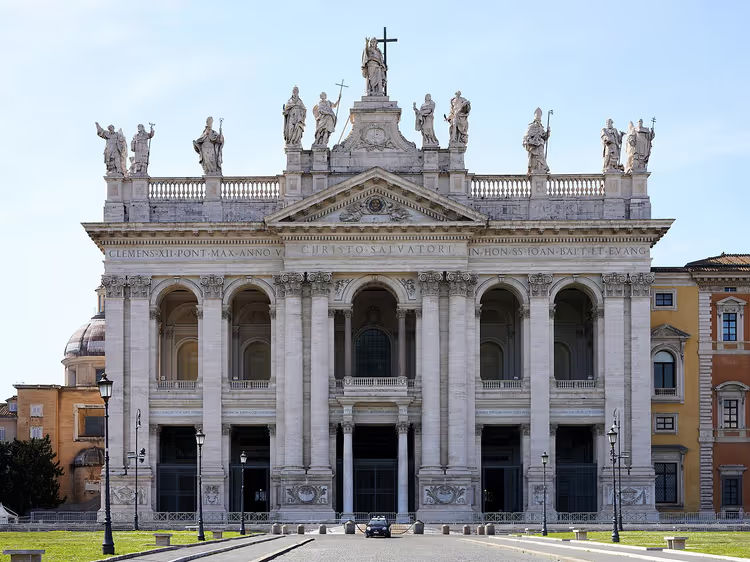
The Archbasilica of Saint John Lateran is considered the most important among Rome's Catholic churches: the pontiff's cathedra is located here, and above the entrance it is written that this is "the mother and head of all churches of the world." The first Christian church on this site was built back in the 4th century, and for a long time it remained the city's only papal church. Borromini gave it its Baroque appearance, and the naves are covered with frescoes and Byzantine-style mosaics. Pay attention to the bronze doors of the main portal: they were brought from the Roman Forum, so they are older than the basilica itself.
Entry to the church is free, while the inner courtyard with columns and ancient frescoes requires a separate small ticket. Come at opening time: you will be able to view the apse mosaics and the gilded ceiling calmly, without tour groups.
3. Santa Maria Maggiore
 © NikonZ7II · CC BY-SAPhoto: NikonZ7II, CC BY-SA (https://creativecommons.org/licenses/by-sa/4.0), Wikimedia Commons
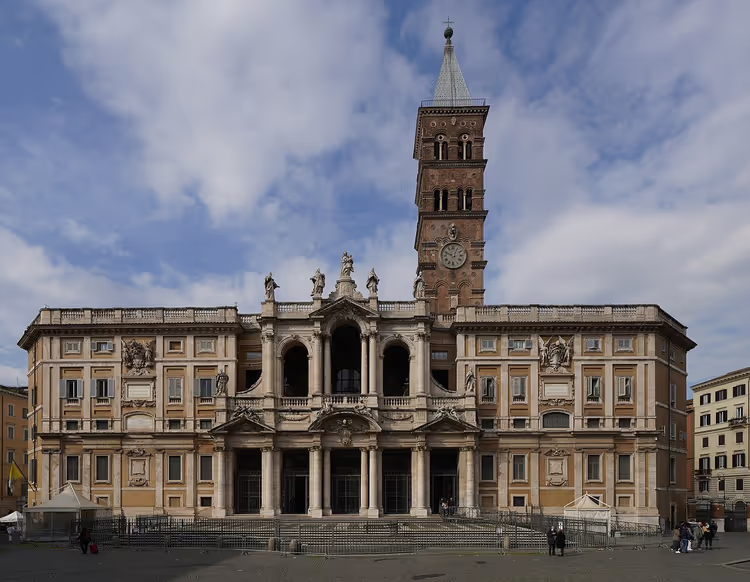
Santa Maria Maggiore is considered the largest Roman church dedicated to the Virgin Mary. The name speaks to its size: "maggiore" means "major" or "great." In front of the entrance you are greeted by a column with a bronze statue of the Madonna, and the church's founding is tied to a legend about an August snowfall. According to tradition, snow fell in the middle of summer, which is why the church was called "Our Lady of the Snows," and you will see this story in a 13th-century mosaic.
Entry is free. Under the dome, 5th-century mosaics survive, and the ceilings and chapels were painted by medieval masters. Among the church's chapels, the most famous are the Sistine and Pauline chapels. An hour is enough to walk through all three naves without getting tired.
4. San Pietro in Vincoli
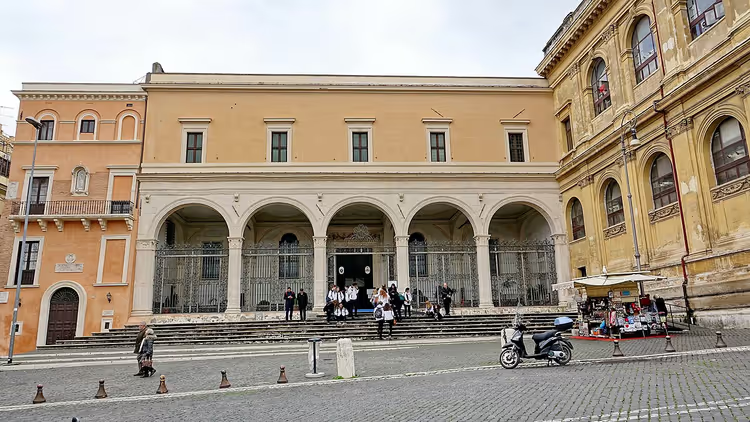 © Luciano Tronati · CC BY-SAPhoto: Luciano Tronati, CC BY-SA (https://creativecommons.org/licenses/by-sa/4.0), Wikimedia Commons
San Pietro in Vincoli is known as the Basilica of Saint Peter in Chains. It houses the chains that, according to tradition, bound the apostle, and they are the church's main relic. The chains ended up in Rome thanks to the Byzantine empress Eudoxia, who gave them to the pontiff, and she also founded the church itself. The basilica's facade is modest, typical of 4th-century buildings, but tourists come here for something else: the tomb of Julius II and Michelangelo's sculpture "Moses." The basilica is one of the seven principal pilgrimage churches of the city.
Admission is free. You climb a short staircase and almost immediately see "Moses" at the end of the nave. In the morning it is quiet here, but by midday the tour groups arrive, so pick an early hour.
5. Santa Maria sopra Minerva
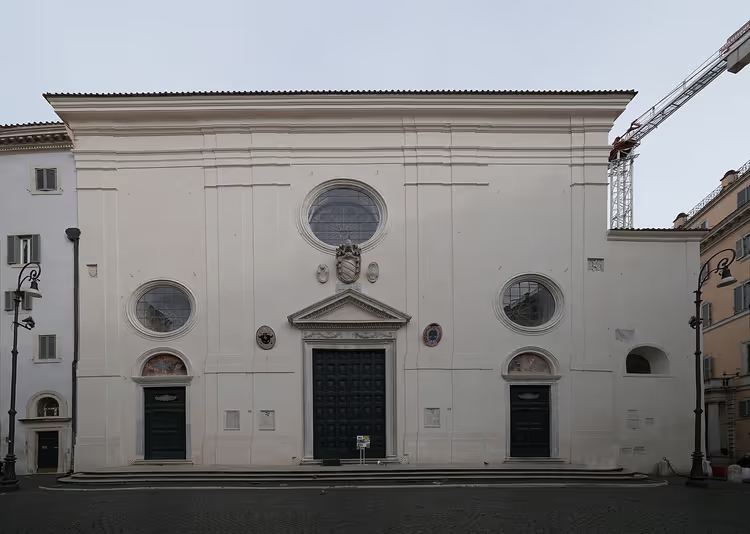 © Merulana · CC BY-SAPhoto: Merulana, CC BY-SA (https://creativecommons.org/licenses/by-sa/4.0), Wikimedia Commons
Santa Maria sopra Minerva belongs to the Dominican order and stands out among Roman basilicas. The church inherited its name from the ancient Minerva: a temple dedicated to her once stood nearby. It is almost the only Gothic church in the city: pointed arches, blue vaults painted with stars. The main treasure inside is the statue "Christ with the Cross," attributed to Michelangelo.
Admission is free. According to tradition, Galileo and Count Cagliostro renounced their views here, and today you can study the tombs and chapel frescoes. If you are coming from the Pantheon, this is an easy half-hour stop.
6. Santa Maria del Popolo
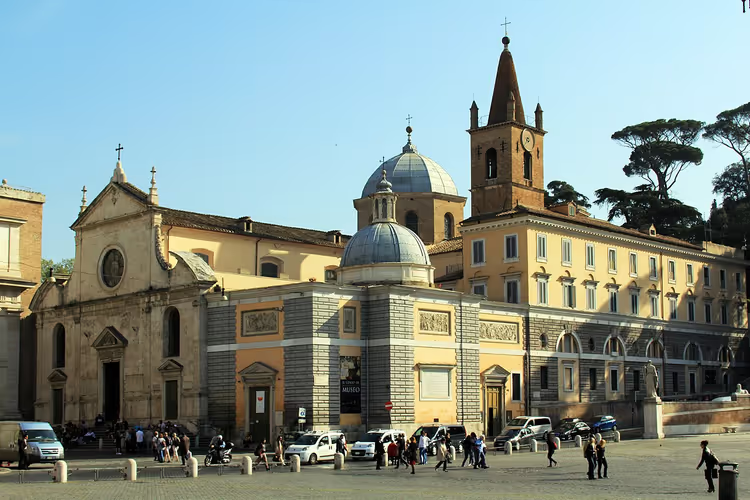
Santa Maria del Popolo opens onto Piazza del Popolo, and from the outside you are unlikely to remember it. According to tradition, Nero's tomb stood here, and a poplar tree grew over it, favored by crows. The place was considered cursed until the Pope had a dream: the Virgin Mary told him to cut down the tree and build a church. First a chapel appeared, then the basilica itself, and Raphael, Caravaggio, Bernini, and Pinturicchio all worked on its decoration.
Admission is free, and you can get almost right up to the paintings. Raphael designed the dome with the mosaic "Creation of the World," and Caravaggio painted "The Conversion of Saul" and "The Crucifixion of Saint Peter" for the Cerasi Chapel. Go in the morning: there is more light and fewer groups. The visit takes about forty minutes.
7. Basilica of San Clemente
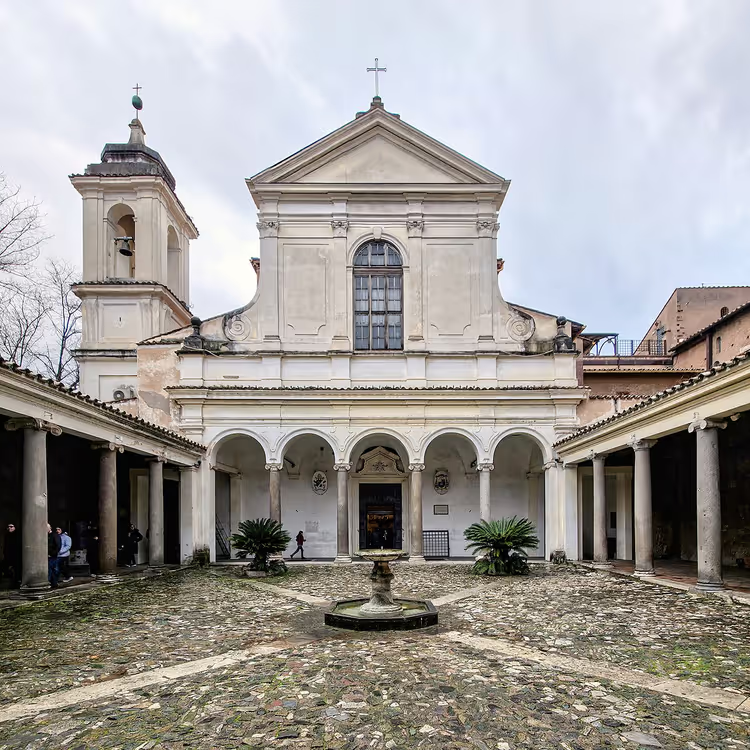 © NateBergin · CC BYPhoto: NateBergin, CC BY (https://creativecommons.org/licenses/by/4.0), Wikimedia Commons
San Clemente stands a stone's throw from the Colosseum, but it hides an entire city beneath it. The basilica has three levels: beneath the current church lie an early Christian church from the 4th century and ancient Roman buildings, including a temple of Mithras. You descend the stairs and step into several eras at once. The mosaics here resemble comics: alongside images of saints there are everyday scenes with captions. You can also venerate the relics of Cyril, creator of the Slavic alphabet.
Admission to the upper basilica is free, but the lower levels require a ticket: 10 € for adults and 5 € for students (as of 09/2026, official website). Booking the underground section is recommended. Opening hours: Monday to Saturday 9:00-12:30 and 14:00-18:00, Sundays and holidays 12:00-18:00.
If you want to cover two sights at once, tickets for the Colosseum, Roman Forum, and Palatine Hill are available online, and the arena is less than ten minutes away on foot.
8. Santa Maria in Cosmedin
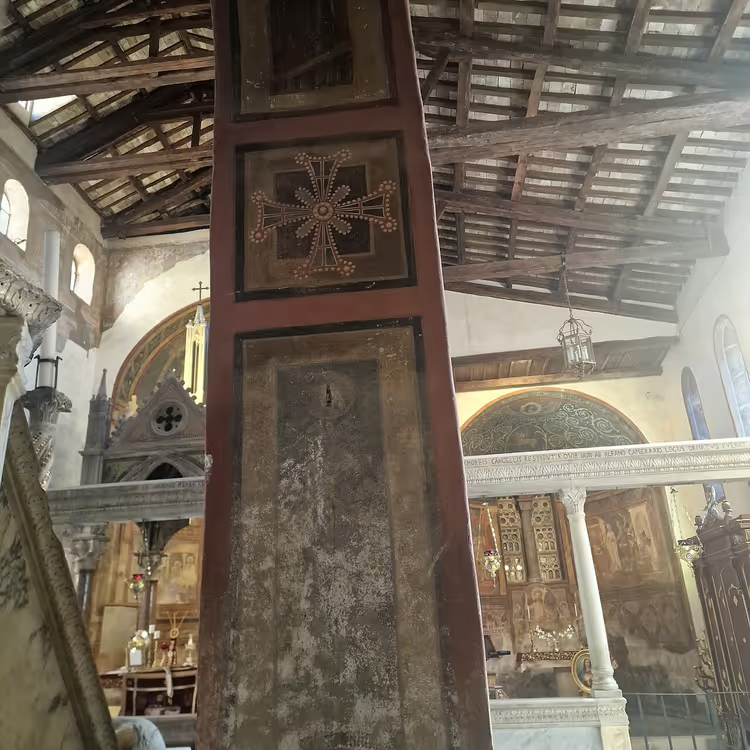 © Archaeaoris · CC BY-SAPhoto: Archaeaoris, CC BY-SA (https://creativecommons.org/licenses/by-sa/4.0), Wikimedia Commons
Santa Maria in Cosmedin stands on the left bank of the Tiber, not far from the Circus Maximus. Until the 4th century, the Forum Boarium bustled here, and even earlier a temple of Hercules stood on the spot. The building served as a food distribution point for the poor, then passed to the Greek community. The Greeks fled to Rome from iconoclasm in the 8th century. From the outside the church is austere and restrained, but inside you will find Cosmati floors, a Gothic altar of red granite, and a 13th-century paschal candlestick.
The main draw stands against the wall outside: the Mouth of Truth, a marble slab nearly two meters in diameter with a mask of Triton. Admission is free, but a line forms at the slab. Come at opening time or in the evening, and you will have time both for a photo and for the interior.
9. Santa Maria in Trastevere
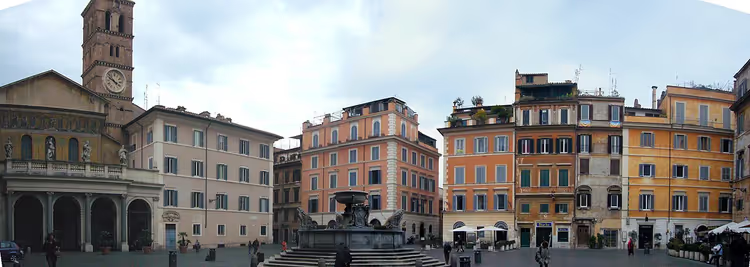 © Lalupa · CC BY-SAPhoto: Lalupa, CC BY-SA (https://creativecommons.org/licenses/by-sa/4.0), Wikimedia Commons
In Trastevere stands one of the first officially permitted Christian basilicas in Rome. The current building was erected in the 12th century, using travertine from ancient baths. Two Orthodox icons once stood by the altar, although the church itself has no connection to Orthodoxy. The facade bears a 13th-century fresco of the Virgin Mary, and the interior is framed by Cosmatesque mosaics.
Admission is free. Go in the evening, when the square in front of the basilica comes alive and the light from the windows falls on the mosaic. Half an hour is enough to take it all in.
10. Church of Santa Sabina
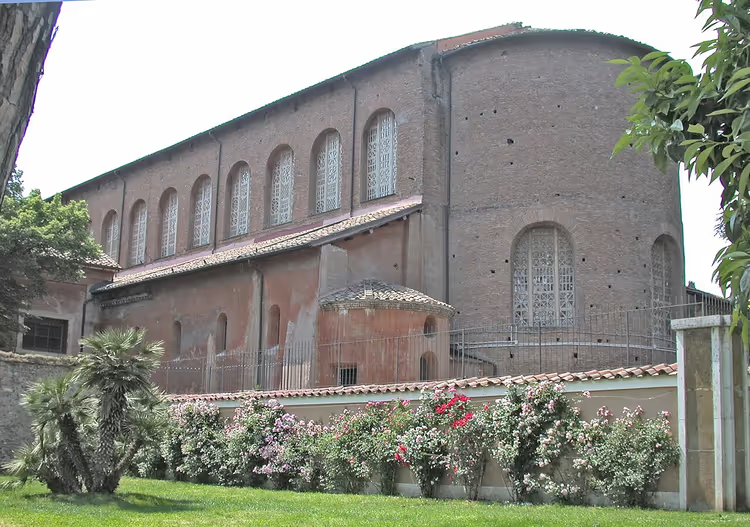
Santa Sabina on the Aventine Hill is part of a Dominican monastery complex and is considered a model of an early Christian basilica. In the 10th century it was turned into a fortress, and later it passed from one noble Roman family to another. There were almost no reconstructions here, so you see the proportions of the 5th century: a tall nave, an even row of columns, and carved wooden doors. Be sure to step into the inner courtyard, where an old orange tree grows.
Admission is free. From here you get a view of Rome, and you can walk to the Aventine viewpoint in ten minutes.
11. San Paolo fuori le Mura
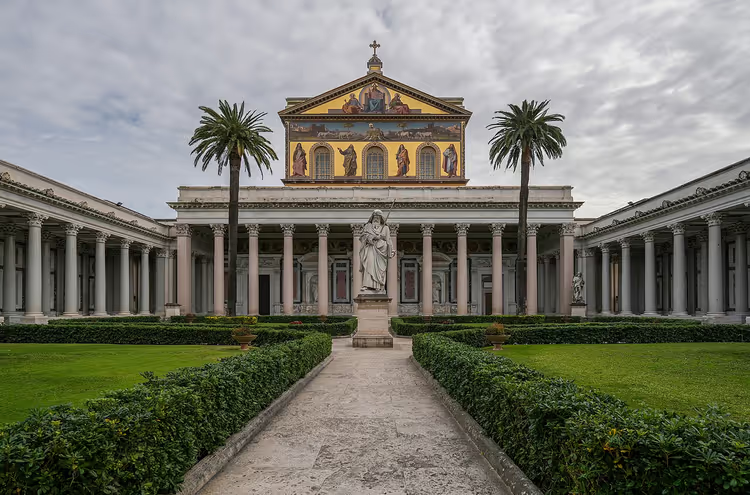 © StPaul.jpg · CC BYPhoto: StPaul.jpg, CC BY (https://creativecommons.org/licenses/by/4.0), Wikimedia Commons
San Paolo fuori le Mura stands outside the city walls, on the burial site of the Apostle Paul. It is one of the four patriarchal basilicas of Rome, and in size it is second only to St. Peter's Basilica. Theodosius I considered the first basilica not majestic enough for such a place, and a major construction project began. The facade is decorated with figures of Christ, Peter, and Paul, and inside you will find Byzantine-style mosaics, traces of Gothic architecture, and a Baroque old organ.
Admission is free. You can get there by metro to the Basilica San Paolo station, then walk. In the morning it is quiet here, and you can calmly explore the cloister.
12. Sant'Andrea al Quirinale
 © Nhartmannphotos · CC BY-SAPhoto: Nhartmannphotos, CC BY-SA (https://creativecommons.org/licenses/by-sa/4.0), Wikimedia Commons
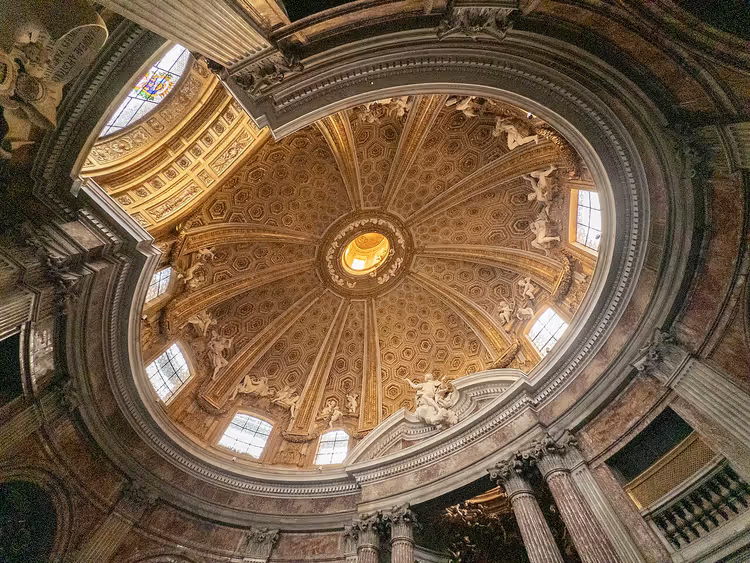
Sant'Andrea al Quirinale on the Quirinal Hill was built by Bernini for the Jesuit order. The order needed a space for the novitiate, and on the foundation of a dilapidated old church the master erected a new Baroque basilica. Bernini himself considered it one of his best works. The church has an oval plan, and the interior is built on contrast: dark side panels set off the light-flooded central section. The dominant feature inside is the painting "The Martyrdom of Saint Andrew" by Guillaume Courtois.
Admission is free. The church is small, you can see it in twenty minutes, and you will also find yourself on a quiet street away from the crowds.
13. Church of Santa Prassede
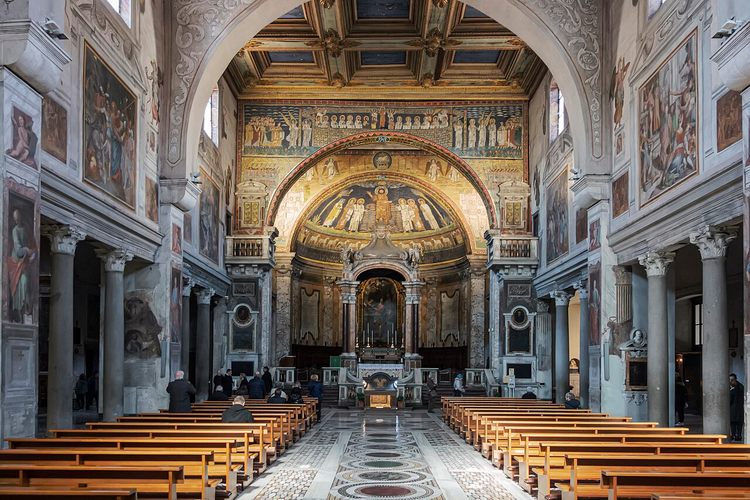
Santa Prassede dates back to the 9th century and from the outside barely stands out against the Roman streets. The bare facade sharply contrasts with the luxury of the interior. Saint Praxedes became famous for burying martyrs according to Christian rites, and the church was named in her honor. Inside you will find ancient frescoes and many relics of saints and martyrs, whose names are engraved on the marble slabs of the crypt.
 © GIUSEPPE FRANCAVILLA · CC BY-SAPhoto: GIUSEPPE FRANCAVILLA, CC BY-SA (https://creativecommons.org/licenses/by-sa/4.0), Wikimedia Commons
Admission is free. The lighting in the chapels is activated by a coin or a button, so bring some change. In the morning you can examine the paintings without rushing.
14. San Lorenzo fuori le Mura
 © Livioandronico2013 · CC BY-SAPhoto: Livioandronico2013, CC BY-SA (https://creativecommons.org/licenses/by-sa/4.0), Wikimedia Commons
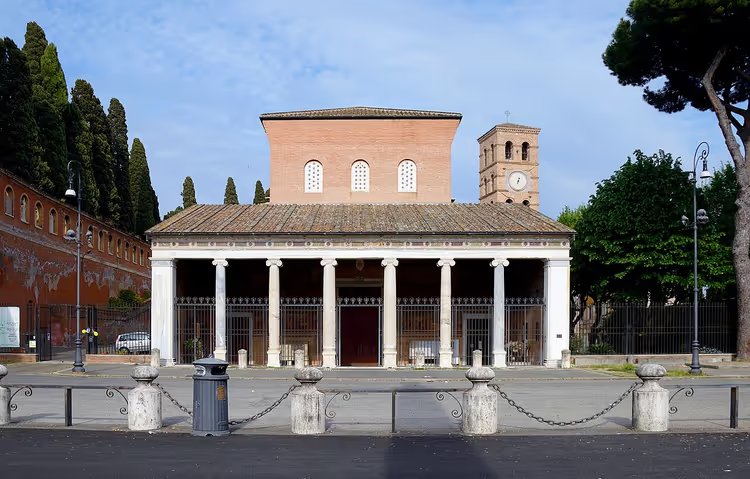
San Lorenzo fuori le Mura stands outside the city walls, as befits a church on the burial site of a martyr. Its structure is unusual: several independent churches were simply joined into one. Before World War II, the churches of Pope Pelagius and Pope Honorius could be read in its appearance, until a shell destroyed this symbiosis. Most of the valuable frescoes were lost; the marble decorations and early Christian sarcophagi survived, and the oldest part from the 6th century was almost untouched. Today you will see both mosaics and the cloister.
Admission is free. You can get there by tram from Termini station. There are almost no tourists here, so bring your camera.
15. Church of Santa Costanza
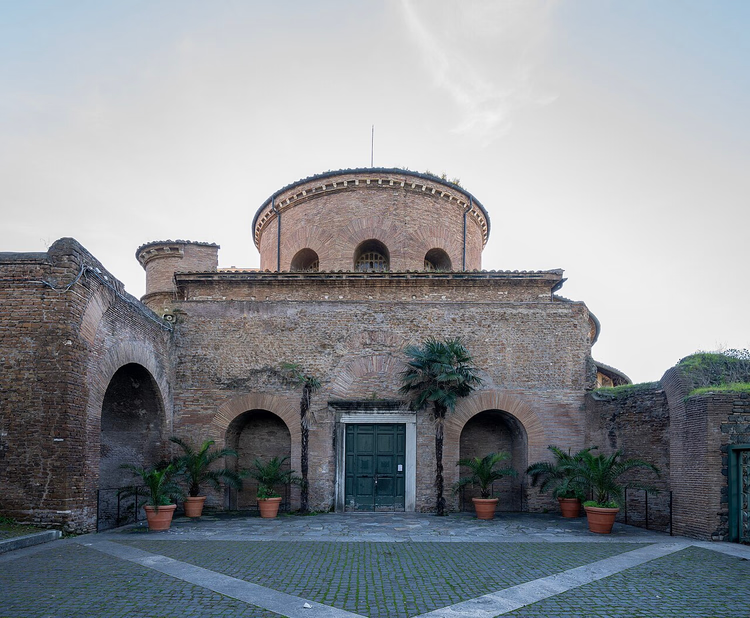
Santa Costanza on the Via Nomentana began as a mausoleum built by Constantine the Great for his daughters. The round building was decorated with ornaments, mosaics featuring Christ, and fine painting on the dome. Gradually the mausoleum turned into a basilica: first a baptismal font was added, then the other attributes of a church. Today you see a rare example of early Christian architecture away from the center.
 © Grosseto2 · CC BYPhoto: Grosseto2, CC BY (https://creativecommons.org/licenses/by/4.0), Wikimedia Commons
Admission is free. It is worth going here if you have half a day and a desire to go beyond the tourist routes.
Churches of Rome on the map
All 15 churches are located in the center and on the left bank, and it is easy to move between them on foot or by metro. Below is a map to help you plan your route for the day.
Churches of Rome
Places on the map
- 1St. Peter's Basilica The main basilica of the Vatican, Michelangelo's "Pietà" and Bernini's baldachin
- 2Lateran Basilica Rome's main Catholic church, Baroque façade by Borromini
- 3Santa Maria Maggiore The largest church dedicated to the Virgin Mary, 5th-century mosaics
- 4San Pietro in Vincoli St. Peter's chains and Michelangelo's "Moses"
- 5Santa Maria sopra Minerva Gothic Dominican church, statue of Christ attributed to Michelangelo
- 6Santa Maria del Popolo Works by Raphael, Caravaggio and Bernini near Piazza del Popolo
- 7Church of San Clemente Three-level basilica, relics of Cyril, underground temple of Mithras
- 8Santa Maria in Cosmedin The Mouth of Truth at the entrance, Cosmatesque floors
- 9Santa Maria in Trastevere One of Rome's earliest Christian basilicas, 13th-century mosaics
- 10Santa Sabina An example of a 5th-century early Christian basilica on the Aventine
- 11San Paolo fuori le Mura Patriarchal basilica on the burial site of the Apostle Paul
- 12Sant'Andrea al Quirinale Bernini's Baroque church for the Jesuit order
- 13Church of Santa Prassede 9th-century church with frescoes and relics of martyrs
- 14San Lorenzo fuori le Mura Church on a martyr's burial site, mosaics and cloister
- 15Church of Santa Costanza Former mausoleum of Constantine the Great, dome mosaics
Tickets and opening hours: what to book in advance
Most churches in Rome are free to enter, and you walk in without a reservation. You pay only for certain sections, and this is where planning ahead is worth it. Opening hours change by season and due to services, so check them on the official websites.
Church | Admission | Advance booking |
|---|---|---|
St. Peter's Basilica | free, dome is paid | not needed |
Lateran Basilica | free, cloister is paid | not required |
Santa Maria Maggiore | free entry | not needed |
San Clemente (lower levels) | €10 or €5 reduced (as of 09/2026, official website) | recommended |
St. Peter's Basilica and San Clemente keep their schedules on their websites: dome hours and rates and underground level hours. If you are going for museum tickets to the Vatican, those are also booked in advance.
Tours and tickets in Rome
Guided tours, skip-the-line tickets and activities — most offers can be cancelled free of charge.
See offers on GetYourGuideThe widget loads once you give your consent.
⁉️🤔 Frequently asked questions
How much does it cost to enter these churches in Rome?
Almost all the basilicas on the list are free to enter, and you walk in without a ticket. You pay only for certain parts: the climb to the dome of St. Peter's Basilica, the lower levels of San Clemente (10 € for an adult and 5 € reduced) and the cloister of the Lateran Basilica (as of 09/2026, official website). Check exact rates on the official websites, as they change by season.
Do I need to book in advance?
For the churches themselves no booking is needed, you enter freely. It is worth booking the lower levels of San Clemente and Vatican Museums tickets. Online entry saves time in high season, since the number of visitors to the underground levels is limited.
When should I go to avoid lines?
Go at opening time: by 9:00 there is almost no one at the entrance, and the light on the mosaics is already good. At St. Peter's Basilica the security line lasts all day, so come early in the morning. After 5:00 PM it is also calmer, but some churches close at 6:00 PM.
Which church should I choose if I am short on time?
Start with St. Peter's Basilica, then walk to Santa Maria del Popolo and Santa Maria sopra Minerva. In two hours you will see works by Michelangelo and Caravaggio without leaving the center. Add San Clemente if you are ready to go underground.
What should I wear to enter?
Your shoulders and knees must be covered, this is the rule for all basilicas. In hot weather bring a light scarf or wrap, otherwise you will be asked to cover up at the entrance. Hats are removed by both men and women, and loud music and food are left outside.
In short: what is worth booking
If you have one day, start with St. Peter's Basilica in the morning, and after lunch walk to Santa Maria Maggiore and Santa Maria del Popolo. If you are going for art, San Pietro in Vincoli, Santa Maria sopra Minerva and Santa Maria del Popolo will be enough. If you are with children, go for Santa Maria in Cosmedin with the Mouth of Truth.
In advance, it is worth arranging only Vatican Museums entry, the dome climb and city transport:

A small editorial team writing guides for independent travel. We travel ourselves, but we haven’t been everywhere, so we check prices, opening hours and how to get there against official sources.