
















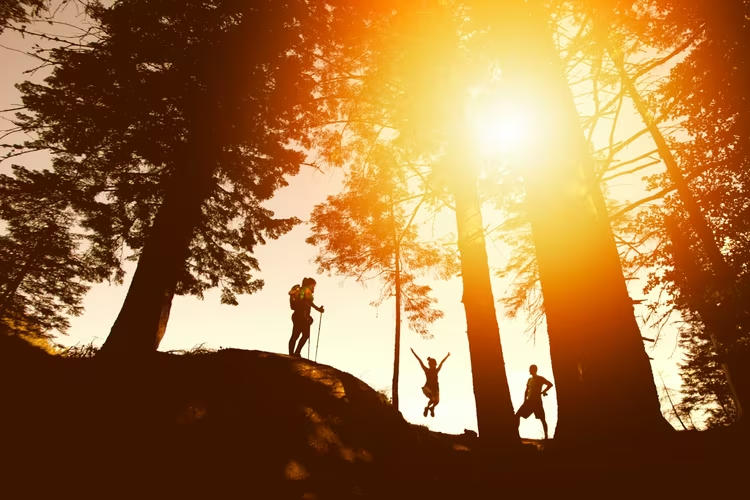
Self-restoration 2.0: movement, mindfulness and the Silva Mundi experience
The WHO recommends 150-300 minutes of moderate activity per week for adults (as of 10/2026, WHO). Movement and mindful attention to yourself remain the most accessible resources: a person applies them on their own, without intermediaries or costs.
Many people don't wait for the body to break down and want to support their health in advance, through their own efforts, not just with pills and procedures.
Below we'll look at what research says about movement and attention, why the forest matters, and how all of this works in the practice of mindful walks.
What self-recovery means
💡 In short:
- Movement and mindfulness: basic resources that a person applies on their own.
- A long walk in the forest noticeably reduces the body's stress markers (as of 10/2026, study in the PubMed database).
- The forest's effect on body and mind: as of 10/2026, according to a systematic review in the PMC database.
The word "self-recovery" is easy to misunderstand: the body doesn't heal itself on command, but it has built-in processes like healing, blood pressure regulation, and recovery during sleep, and lifestyle determines how smoothly they run.
Self-recovery is not a rejection of doctors and not a replacement for treatment, because you influence these processes every day through simple, familiar actions.
Three habits work most noticeably: regular movement, mindful attention, and contact with nature.
How movement affects the body
Muscles, heart, and blood vessels respond to load, and the more often you move, the more resilient your body becomes; many people notice this in simple things like climbing stairs easily, sleeping soundly, and having a steady mood.
Moderate activity is within reach for almost everyone: brisk walking ranks alongside swimming and cycling, and the body responds with strong blood vessels and steady blood pressure.
A calm rhythm works separately: when you walk without rushing, the parasympathetic nervous system kicks in, the one responsible for recovery, so your pulse evens out, breathing slows, and the body shifts into rest mode.
Why attention matters more than exertion
You can walk ten kilometers and not notice a single tree, and then the walk remains just exercise, losing half its benefit.
Mindfulness means being in the moment with all your senses: you notice your breathing, pace, and body signals, and it's attention that turns movement into a practice rather than an obligation.
This connection lies at the heart of approaches that combine walking, nature, and calm observation.
The forest as a therapeutic environment
A walk in the forest lowers cortisol, the stress hormone, and helps keep blood pressure down (as of 10/2026, review in a Springer journal). Part of this effect comes from phytoncides, volatile compounds released by trees. In Japan, this practice is called shinrin-yoku, "forest bathing," and the term appeared back in the 1980s.
You don't need a deep forest for this: a park or a tree-lined path will do, because what matters is the contact with a green environment and calm attention, and a short walk near home counts too.
How Genusswandern and the Silva Mundi approach work
A mindful hike combines three things: movement, nature, and the pleasure of food. In Germany, this format is called Genusswandern, and it's not about records or speed at all, but about a steady pace and attention.
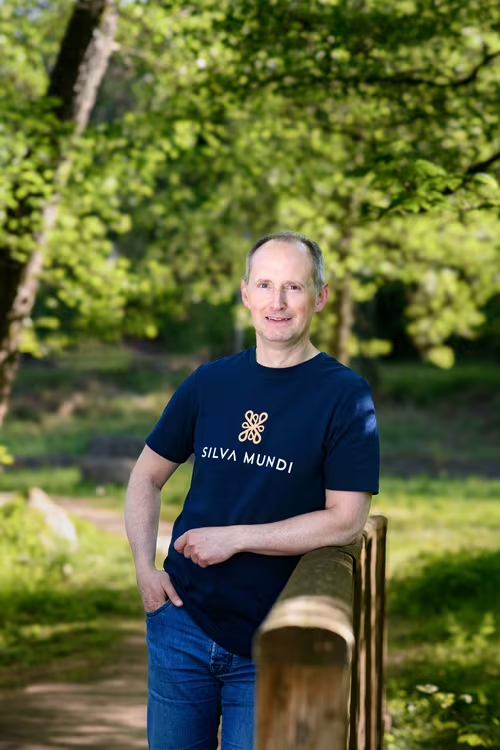
One of the projects in this format is Silva Mundi, an organizer of walking tours in small groups. The company was founded by Dirk Hector, a certified health walking guide. He previously worked for more than thirty years at the Federal Criminal Police Office (BKA). According to the company's website (checked 10/2026), groups are small, up to 12 people, and the program is built around walking, calm breathing, and regional cuisine.
Here you don't rush and don't count steps: individual stops are devoted to breathing and observing nature, and at the end of the day the group gathers around a shared table, and movement, air, and food come together into one experience.
Small groups and a sense of community
Loneliness affects health more than people tend to think: according to the WHO, roughly one in six people worldwide experiences it (as of 10/2026, WHO commission report).
A group hike provides simple contact: you walk side by side, stay silent or talk, and in a small group this happens naturally, without pressure, so an ordinary walk turns into connection.
Why this topic matters now
Chronic diseases are becoming more common, and a significant share of them is linked to lifestyle: low physical activity, long periods of sitting, lack of sleep and live social contact.
Medicine usually works with a problem that has already appeared, while movement and mindfulness act earlier, at the prevention stage, and help you avoid pushing your body to a breakdown.
Society is aging, diagnoses are increasing, and the load on the system is growing, so early, simple habits look like a sensible investment in yourself.
How to start: six steps
You can start today and at no cost: if you're just beginning, half an hour a day is enough, and below are simple guidelines for the first month.
- Start with half an hour of walking a day: a park, forest, or field.
- Leave your phone in your pocket: look, listen, feel.
- Breathe calmly: inhale for four counts, exhale for six.
- Take short pauses and notice what's around you.
- Eat mindfully: local, fresh, and simple food is best.
- Find company: sometimes walk with other people.
What you don't need: a heart rate monitor, an app, and expensive gear. What you do need: a bit of time, comfortable shoes, and the desire.
Important: this material does not replace professional advice. Movement and mindfulness support health but do not replace treatment.
⁉️🤔 Frequently asked questions
Can this replace treatment?
No. Movement and attention to yourself support health and reduce stress, but diagnoses, medications, and procedures remain in the hands of a doctor.
How much do I need to move to see an effect?
The WHO guideline for adults: at least two and a half hours of moderate activity per week. That's five walks of about thirty minutes each. You can start with less and gradually increase the load.
Do I have to go to a forest?
No. A forest amplifies the effect, but a park, a square, or a riverbank will do. The main thing: a green environment, quiet, and calm attention to yourself. Even a short walk near home counts.
What should I bring?
Comfortable shoes, water, and weather-appropriate clothing. No special gear is needed. A heart rate monitor and apps aren't necessary either: they tend to distract from attention to your body.
Is this suitable for people with chronic conditions?
Moderate walking is usually well tolerated, but with chronic conditions it's worth consulting a doctor first. A specialist will advise on an appropriate load. After that, you can find a comfortable pace yourself.
How does a mindful hike differ from a regular one?
In pace and attention. Here no one chases records: people walk slowly, breathe calmly, notice details, and take pauses. Movement, nature, and a shared meal come together into one experience.
In short: how to build movement into your day
Self-recovery starts with a simple step: a walk, calm breathing, and attention to yourself, and no special devices or large expenses are needed for this.
If you have chronic complaints, start small and consult a doctor, because after that the increase in load will come naturally.
Choose a convenient time and step outside today, because a steady pace matters more than long distances.

A small editorial team writing guides for independent travel. We travel ourselves, but we haven’t been everywhere, so we check prices, opening hours and how to get there against official sources.