
















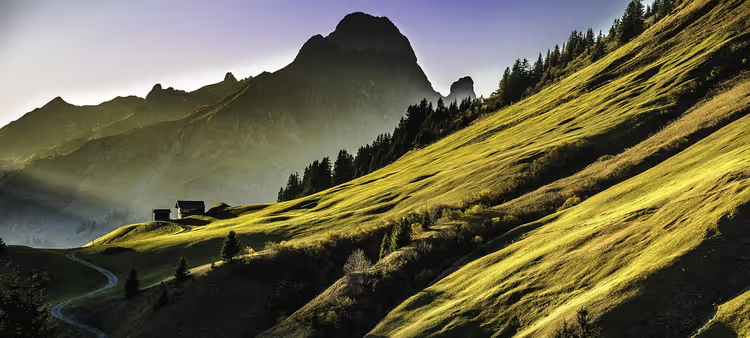
Serra da Estrela by car: 10 places from Piodao to Linhares
Serra da Estrela rises almost two thousand meters above sea level. It is the highest mountain range in mainland Portugal, and it lies right in the center of the country.
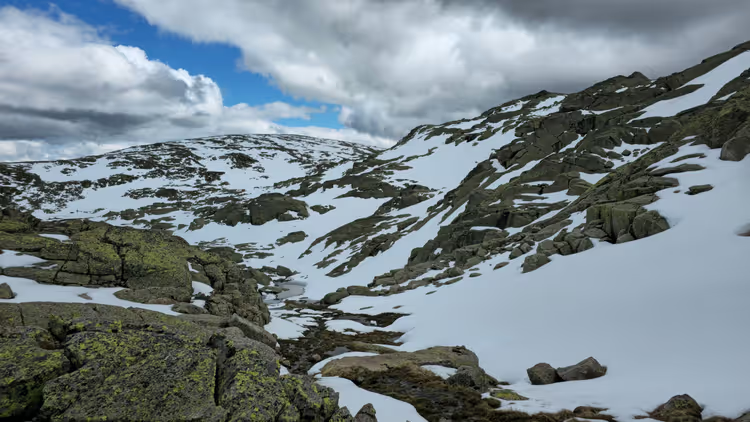
Without a plan, you will spend your weekend on turnarounds and endless switchbacks. Mountain roads take far more time than the map suggests.
Below are ten places you can realistically fit into a few days. They include schist villages, cold river beaches, a sinkhole waterfall, and a viewing tower at the highest point of mainland Portugal. We checked every place against official sources, so the figures appear next to the links.
Ad: this article contains affiliate links, we earn a commission if you book through them, at no extra cost to you.
How Serra da Estrela is laid out and how to get here
💡 In short:
- Base for overnight stays: Manteigas, Seia, or Covilhã, from there it is easy to drive out to the points in a loop.
- Prices and tickets: 09/2026, verified on the official Passadiços do Mondego website.
The entire range lies within a natural park. By elevation, the Torre plateau is second in the country only to the Pico volcano in the Azores.
The roads here are narrow, with sharp turns and few gas stations. In winter, snow falls on the upper plateau and some of the switchbacks close. In summer, a line of cars stretches toward Torre on weekends, so leave early.
Spot | What makes it interesting |
|---|---|
Piodão | schist village with blue windows |
Foz d'Égua | river beach with emerald water |
Loriga | glacial valley and cascading pools |
Marquesa da Silva | dam on the range's largest lake |
Covão dos Conchos | sinkhole waterfall in the middle of a lake |
Torre | highest point of mainland Portugal |
Our Lady of the Good Star | altar on a cliff above the road |
Covão d'Ametade | picnic area at the river source |
Caldeirão | hiking route on wooden walkways |
Linhares da Beira | medieval fortress village |
You can change the order below to suit your base. Stay in one place and drive out to the points in a loop from there, so you do not have to pack your suitcase every day.
1. The village of Piodão
Piodão climbs the slope like an amphitheater. The houses are built of dark schist, and the doors and window frames are painted blue. A white church with small towers stands in the center.
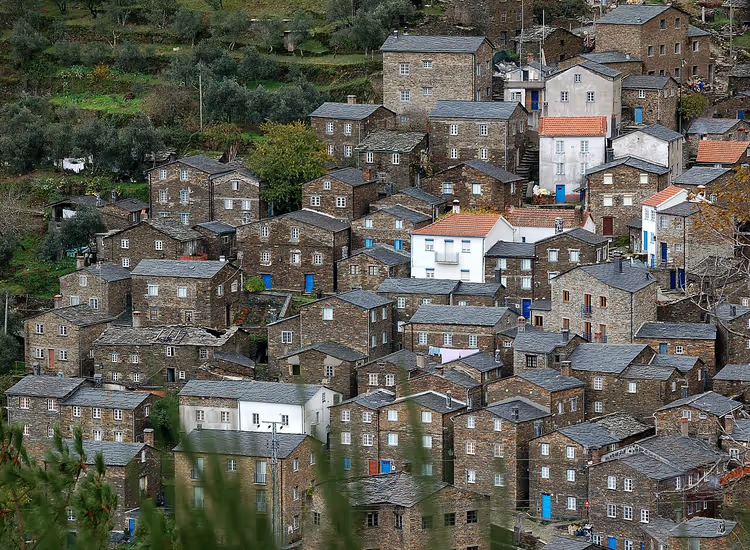 © Rui Daniel Ferreira · CC BY-SAPhoto: Rui Daniel Ferreira, CC BY-SA (https://creativecommons.org/licenses/by-sa/3.0), Wikimedia Commons
Walk along the cobbled streets, where streams run alongside. Go down to the river pool, then stop by the restaurant o Fontinha for homemade liqueurs.
By evening, the village empties out. It is dark here, very quiet, and every star is visible in the sky. Many people stay overnight in guesthouses.
- How to get here: a narrow switchback leads from Seia, with parking at the entrance.
- Overnight stay: prices at Inatel Piodão on Trip.com
- The catch: in high season, tour buses arrive during the day.
2. Foz d'Égua river beach (Praia Fluvial de Foz d'Égua)
Foz d'Égua lies a few kilometers from Piodão, and you can easily walk here. You will be greeted by emerald water, schist bridges, greenery, and old buildings.
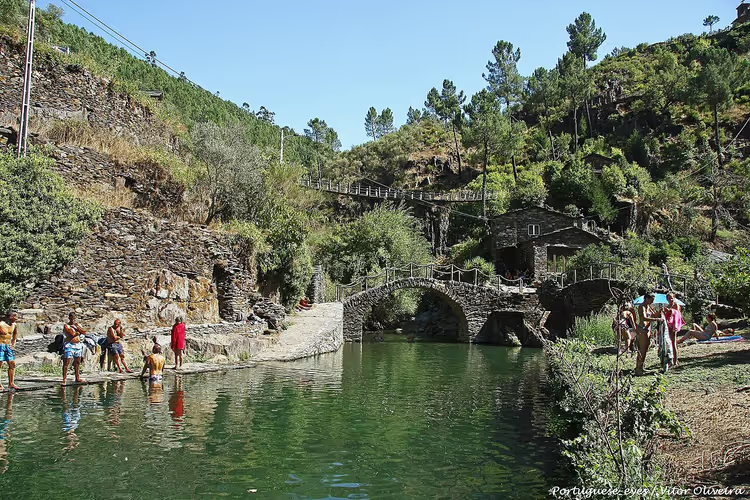 © Vitor Oliveira from Torres Vedras, PORTUGAL · CC BY-SAPhoto: Vitor Oliveira from Torres Vedras, PORTUGAL, CC BY-SA (https://creativecommons.org/licenses/by-sa/2.0), Wikimedia Commons
The pool was created by a man-made barrier: several icy streams flow into it. In the heat, this water is instantly refreshing, but it is still better to enter gradually.
From the beach, steps lead to a suspension bridge and up to an altar on the cliff. The climb is easier than it looks from below, and the view from the top is worth the effort. There is a convenient spot to rest by the wooden walkway.
- How to get here: on foot from Piodão or by car on a dirt road.
- Who it's for: those who are ready for bracing water and a short climb.
- The catch: the mountain streams stay cold even at the height of August.
3. Loriga river beach (Praia Fluvial de Loriga)
Loriga lies in a glacial valley, of which almost none remain in Portugal. The crystal-clear water here is held by a cascade of the mountain river, and a multi-level pool was built on this cascade.
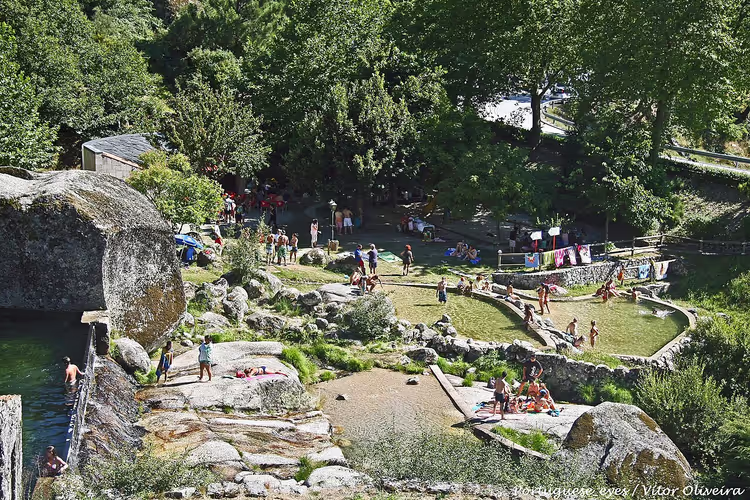 © Vitor Oliveira from Torres Vedras, PORTUGAL · CC BY-SAPhoto: Vitor Oliveira from Torres Vedras, PORTUGAL, CC BY-SA (https://creativecommons.org/licenses/by-sa/2.0), Wikimedia Commons
Nearby stands an old village with restaurants and guesthouses. Mountain trails branch out from it, and you will find signs at every fork, so you will not get lost.
In winter it is deserted here, but in July and August the beach fills to capacity. Arrive in the morning to secure a spot by the water.
- Getting there: you can reach the village of Loriga from Seia.
- Hotels: see hotels in Loriga on Trip.com
- The catch: in summer the beach area is packed with tourists.
4. Marques da Silva Dam (Barragem Marques da Silva)
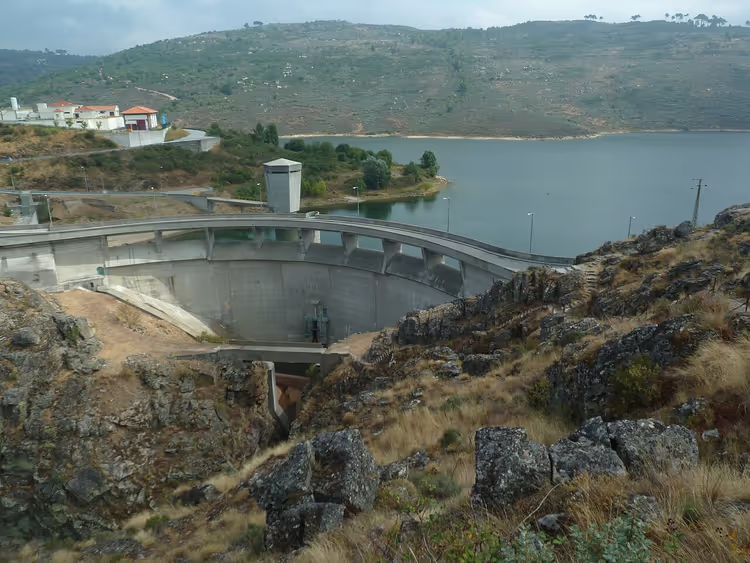
The Marques da Silva Dam holds back the waters of Lagoa Comprida, the largest lake in the entire range. The granite masonry wall rises 29 meters and stretches 1,200 meters along its crest (as of 09/2026, Barragem de Lagoa Comprida). This massive structure was built starting in the early 20th century and was raised several times after that.
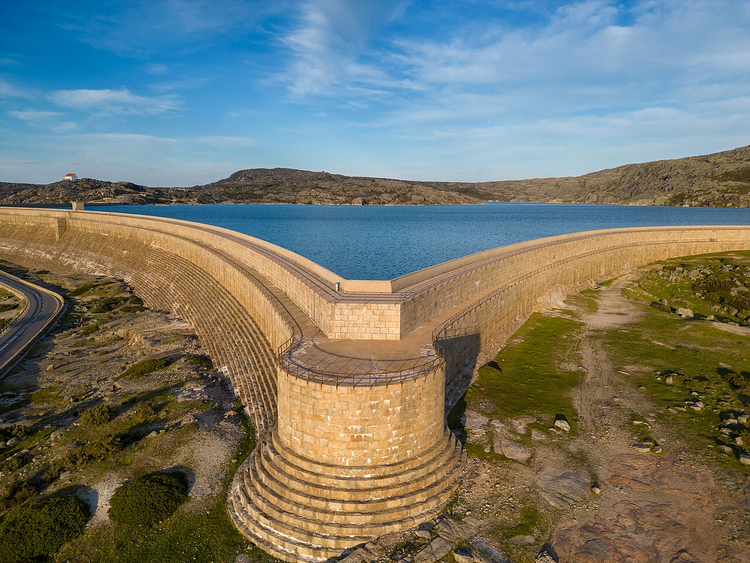 © JC Ferreira - Fotografia · CC BY-SAPhoto: JC Ferreira - Fotografia, CC BY-SA (https://creativecommons.org/licenses/by-sa/4.0), Wikimedia Commons
The dam also doubles as a hydroelectric power station. From the viewpoint by the road you can see the entire reservoir basin at once.
- Getting there: the dam stands by the upper road, with a viewing area nearby.
- Cost: free entry.
5. Covão dos Conchos
You'll walk the last stretch to this lagoon, and the trail is very scenic: from above you'll see the dam, and streams will run underfoot.
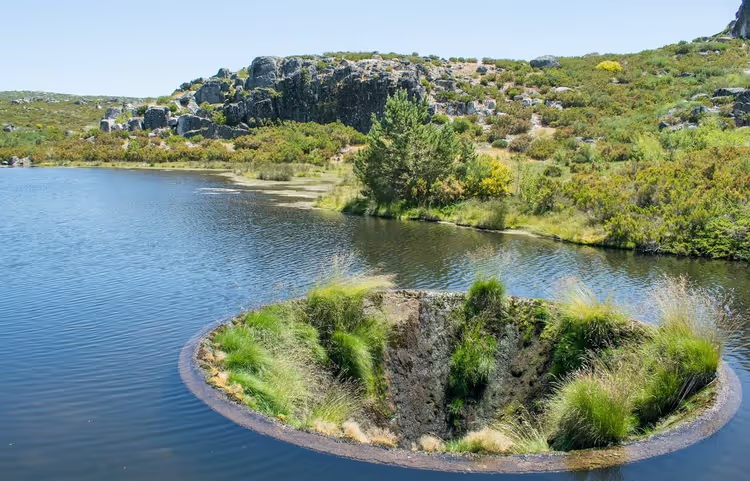
At the end of the route, that famous funnel in the middle of the lake awaits you. It was built in 1955 to divert water from a stream into Lagoa Comprida. The structure is 4.6 meters high and 48 meters in circumference (as of 09/2026, Center of Portugal).
- Getting there: on foot from the upper parking area along a dirt road.
- The catch: you can't drive right up to the funnel.
6. Serra da Estrela Tower (Torre)
The Torre plateau holds the title of the highest point in mainland Portugal, rising 1,993 meters above sea level (as of 09/2026, visitportugal.com). The tower at the very top formally adds a few more meters to the elevation.
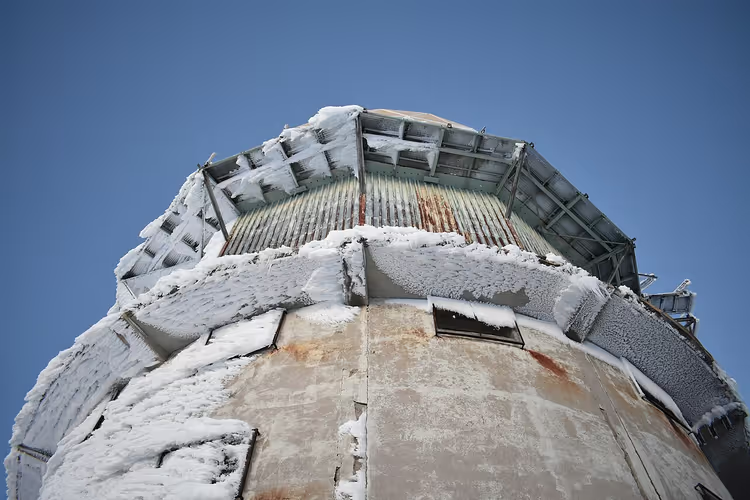 © DCSaavedra · CC BY-SAPhoto: DCSaavedra, CC BY-SA (https://creativecommons.org/licenses/by-sa/4.0), Wikimedia Commons
On a clear day you can see not only the mountain valley but also a strip of ocean on the horizon. In winter the plateau is covered in snow and the ponds freeze over.
The country's only ski resort operates here. The slopes are gentle, so they suit beginners, and the lifts only run when there is reliable snow cover.
Next to the tower stands an abandoned observatory. There are plans to restore it, but for now it looks like a set from an end-of-the-world movie.
Hungry? There's a restaurant and a mini market near the summit. Be sure to try the local cheese and smoked meat, they're famous throughout the region.
- Getting there: car rental in Portugal, the upper road is open year-round except on days of heavy snowfall.
- The catch: it's windy at the top and noticeably colder than in the valley.
7. Our Lady of the Good Star (Nossa Senhora da Boa Estrela)
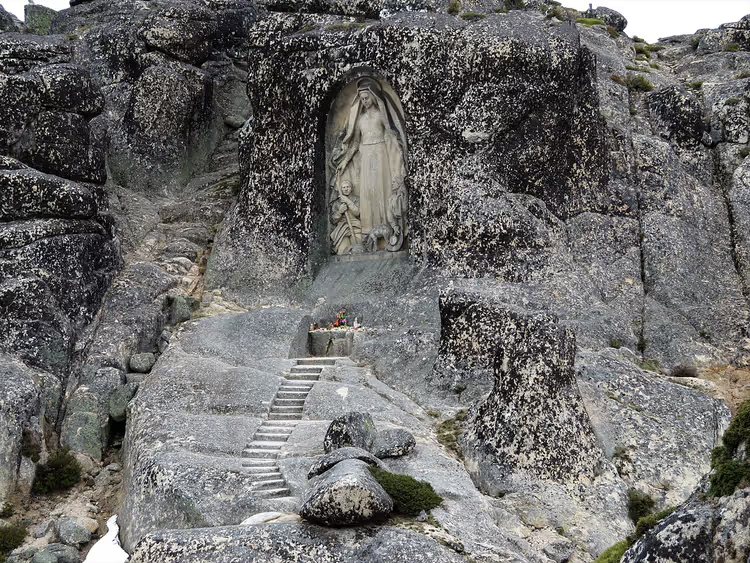
The altar of Nossa Senhora da Boa Estrela was erected by a local priest in the mid-20th century. He chose a rock near the tower so that as many people as possible would see the monument to the saint.
 © MIMICA2018 · CC BY-SAPhoto: MIMICA2018, CC BY-SA (https://creativecommons.org/licenses/by-sa/4.0), Wikimedia Commons
A legend is tied to this place: a star in the form of a woman descended from the heavens to a lonely shepherd and became his guide. Since then, Our Lady of the Good Star has been considered the patroness of Portuguese shepherds and the protector of the mountains.
- Getting there: the altar stands by the road to Torre, where you can easily stop.
- Cost: free entry.
8. Covão d'Ametade
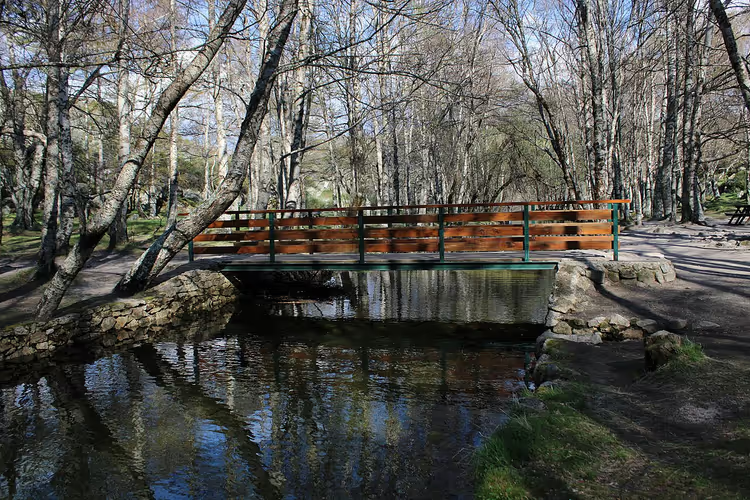
Covão d'Ametade is the best picnic spot in the entire range. A park with tables and grills has been set up in a former glacial cirque, and there's room even for a large gathering.
 © Maria João Santos · CC BY-SAPhoto: Maria João Santos, CC BY-SA (https://creativecommons.org/licenses/by-sa/4.0), Wikimedia Commons
The Zêzere River begins here, with its waterfall rushing nearby. The meadow is enclosed by towering granite peaks, so you'll find shade at any time of day.
- Getting there: turn off the upper road, you can park right by the recreation area.
- Who it's for: families and large groups coming for the whole day.
9. Caldeirão dam (Barragem do Caldeirão)
The Caldeirão dam is the starting point of the range's main hiking route, Passadiços do Mondego. It's about 12 km long (passadicosdomondego.pt, 09/2026), and the trail follows wooden walkways right above the river.
The ticket costs €1, and children under 12 go free (as of: 09/2026, tickets and opening hours). It's easier to start from the dam side: here the steps lead down, not up.
 © Sergei Gussev · CC BYPhoto: Sergei Gussev, CC BY (https://creativecommons.org/licenses/by/2.0), Wikimedia Commons
The route is not a loop. You'll get back to your car by taxi, and the phone number for the service will be given to you at the start.
Along the way you'll find mountain rivers and waterfalls, old mills and abandoned factories, suspension bridges and walkways built right into the slopes. Not far from the start there's a restaurant, and in the village of Videmonte there's a home bakery with bread from a wood-fired oven.
Allow a full day for the whole crossing, especially if you stop at every waterfall.
In places the walkways hang right above the water, so watch your step and hold the railings.
- Tickets: tours to Passadiços do Mondego
- Not for: those who aren't ready for a long hike and stairs.
- The catch: the return trip is not part of the route, so plan your transfer in advance.
10. Linhares da Beira
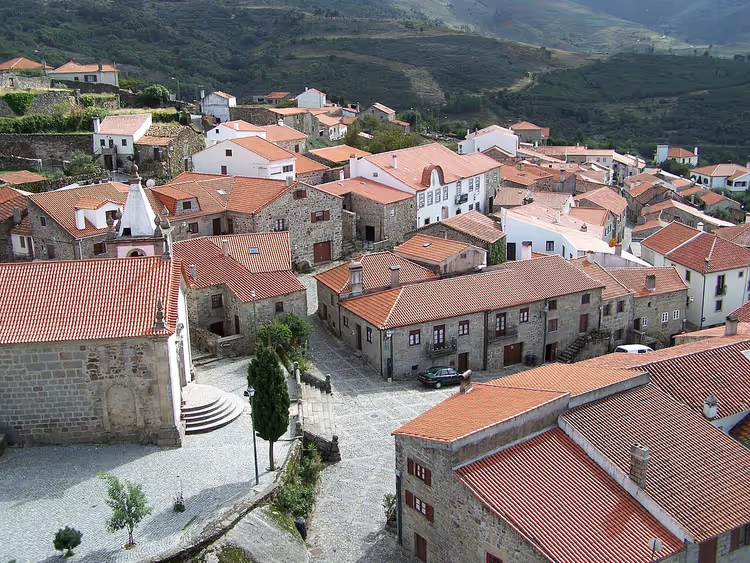
Linhares da Beira is called an open-air museum. Medieval architecture here sits side by side with buildings from later eras.
 © User:Lusitana · CC BYPhoto: User:Lusitana, CC BY (https://creativecommons.org/licenses/by/2.5), Wikimedia Commons
Climb the walls of the old fortress, and from there you'll see the whole village at a glance. The houses are built from granite, which the region is rich in, and sometimes entire boulders serve as walls. The window openings in some houses are decorated in the elegant Manueline style.
Walking along the cobbled streets, you'll come across not only old churches but also a prison with a pillory where wrongdoers were tied. Finding accommodation and restaurants in the village is easy.
- Getting there: the village lies along the road through the range and is marked with signs.
- Where to stay: hotels in Linhares on Trip.com
⁉️🤔 Frequently asked questions
How many days do you need for Serra da Estrela?
The main sights take several days. The mountains are big, the roads are slow, and the distances between points of interest are tens of kilometers. If you want to add longer trails and swimming, allow a week. You won't be able to explore the whole park in one visit.
Do you need your own car?
Yes, without a car you'll be very limited. Buses between villages run rarely, and taxis for long distances are expensive. The only route where transport isn't necessary is the short walk between Piódão and Foz d'Égua.
When is the best time to go?
The most pleasant months are May, June and September: warm, but without the crowds. In July and August it's hot and busy, especially at the river beaches. In winter there's snow at the top and some roads are closed, although skiers come here precisely for the snow.
What should you bring?
Bring warm clothes, even if it's hot down below: the plateau is always colder and windier. Comfortable shoes, water and cash for small restaurants will come in handy. Bring a towel for swimming in the mountain rivers.
Can you swim in the rivers?
Yes, people swim at the river beaches. There are developed pools with river water in Foz d'Égua and Loriga, and it's easier to get into the water there, even with children.
In short: what to book
If you're going for a weekend, stay in Seia or Manteigas and start early in the morning. If you want to see as much as possible, take a car and work through the list. If you're traveling with children, plan a picnic in Covão d'Ametade and swimming in Loriga. The mountains don't tolerate rushing: it's better to see fewer places, but without racing.
It's convenient to compare accommodation options in advance: check out hotels in Serra da Estrela on Trip.com.

A small editorial team writing guides for independent travel. We travel ourselves, but we haven’t been everywhere, so we check prices, opening hours and how to get there against official sources.