
















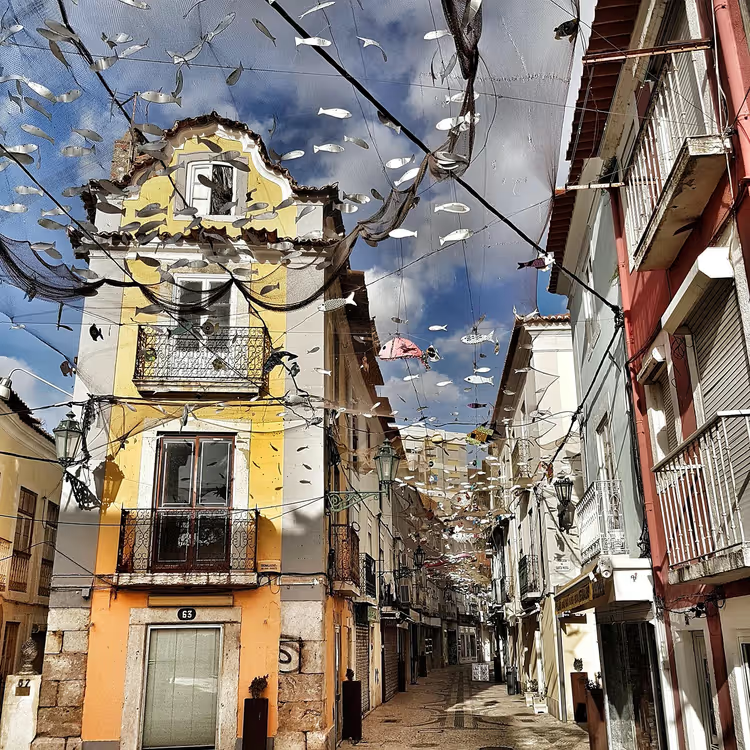
Setubal and Troia in two days: market, fort and ferry to the beaches
Setubal sits at the mouth of the Sado River, less than an hour from Lisbon. It is a port city with a working-class character and a very cozy old center. Here you will find a free fort with a panoramic view, squares covered in blue azulejo tiles, and a market with oysters.
The city waterfront also has a ferry to the Troia Peninsula. The peninsula separates the Sado River from the ocean, with a long sand spit running along it.
Ad: this article contains affiliate links, we earn a commission if you book through them, at no extra cost to you.
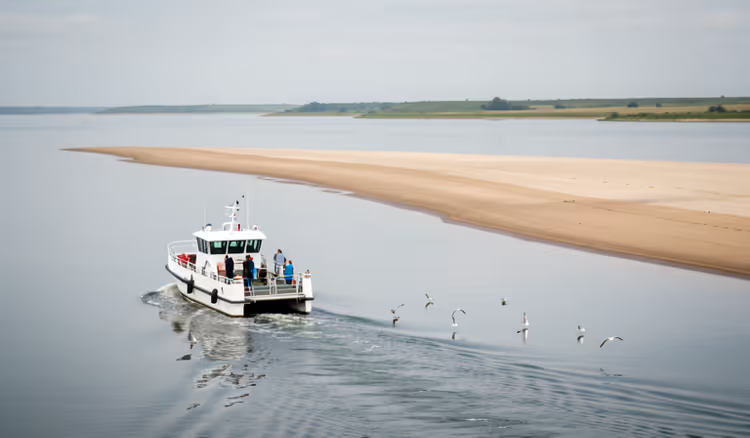 AIIllustrative image: AI-generated
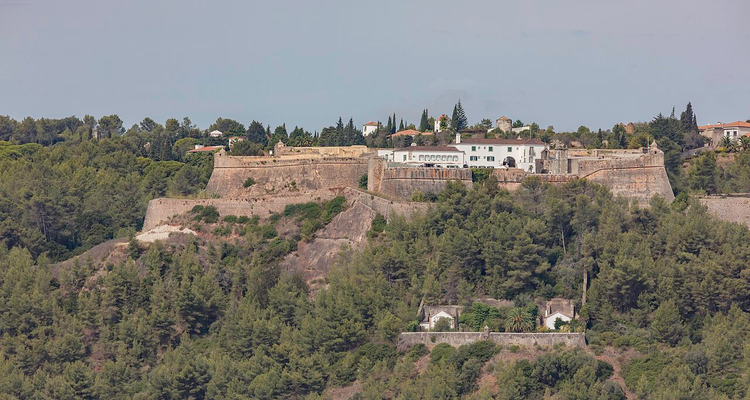
Fort of Saint Philip above the city
💡 In short:
- The Fort of Saint Philip and the Livramento market are free, start your day with them.
- The ferry and catamaran to Troia leave from the city waterfront, fares are in the table below.
- Tickets and opening hours: 09/2026, checked on the Setubal tourist office website.
 © Diego Delso · CC BY-SAPhoto: Diego Delso, CC BY-SA (https://creativecommons.org/licenses/by-sa/4.0), Wikimedia Commons
The Fort of Saint Philip was founded in 1582 by order of King Philip II (as of 09/2026, fort page on VisitSetubal). Climb up to the terraces for the panorama: you will see the city buildings, the Sado channel with the port, and the hills of the nature reserves in the valley.
The fortress is built in the shape of a five-pointed star, and the interior halls are decorated with azulejo tiles. Entry to the grounds is free. Today the fort houses a hotel with a restaurant, and the city tourist office is open in the courtyard.
In summer the office is open Tuesday through Sunday, 10:00-13:00 and 13:30-17:00 (as of 09/2026, city tourist office). Pick up a free map of the center there, it makes it easier to find the squares.
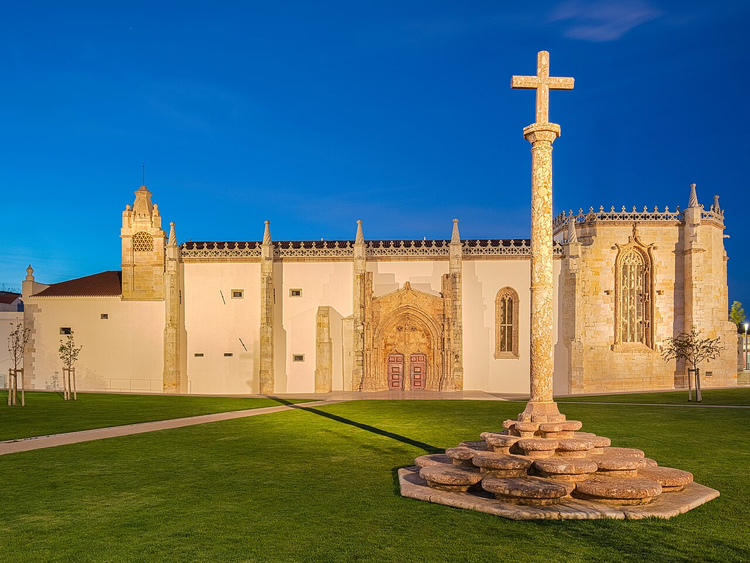
Church of Jesus in Manueline style
The Church of Jesus was built in the 15th century and is the oldest surviving building in Setubal. The church is done in Manueline style, the Portuguese version of Gothic, and the columns inside are made of pink stone.
 © Diego Delso · CC BY-SAPhoto: Diego Delso, CC BY-SA (https://creativecommons.org/licenses/by-sa/4.0), Wikimedia Commons
The church was once part of a convent that did not survive the devastating 18th-century earthquake. Today it is an active church, and entry is free (according to the city tourist office). Go inside if the door is open.
Bocage Square in the old center
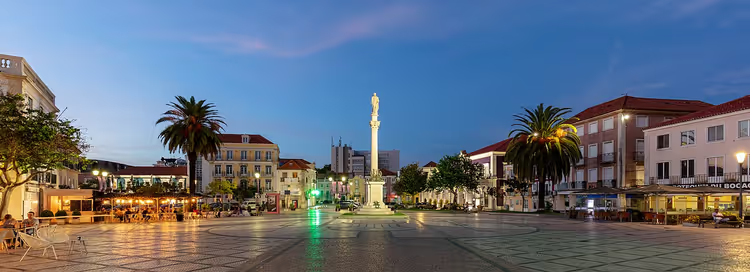
Bocage Square is named after a Portuguese poet and is the main square of the city. Look around carefully: a large black cat sits on the roof of the tourist center and has already become a local landmark.
 © Diego Delso · CC BY-SAPhoto: Diego Delso, CC BY-SA (https://creativecommons.org/licenses/by-sa/4.0), Wikimedia Commons
The city hall operates in the purple building with the arched terrace. On the ground floor there is a small museum about the region's riches: fish, meat, and wine. Stop by if it rains.
The square is decorated with colorful mansions, cobblestones, palm trees, and a fountain. The Church of St. Julian (Igreja de São Julião) also stands here, and Setúbal's fishermen supported its construction back in the 13th century (according to the church's page on VisitSetubal). The temple received its current appearance in the 18th century.
Grab a glass of Setúbal Moscatel (Moscatel de Setúbal), a sweet fortified wine, at a local café. From the terrace you'll have a view of the entire square.
Praça Doutor Soveral and the side streets
From the main square, head into the historic center: narrow streets, old houses, shops, and restaurants. Pay attention to the shutters on the storefronts. When they're lowered, bright graffiti appears on them.
On the tiny Praça Doutor Soveral stands a bronze woman with a chair. Sculptor João Duarte created a whole series of such figures for the city. Through an archway stands a traveler with a suitcase, and in the park on Avenida Luísa Todi a lady on a bicycle waits.
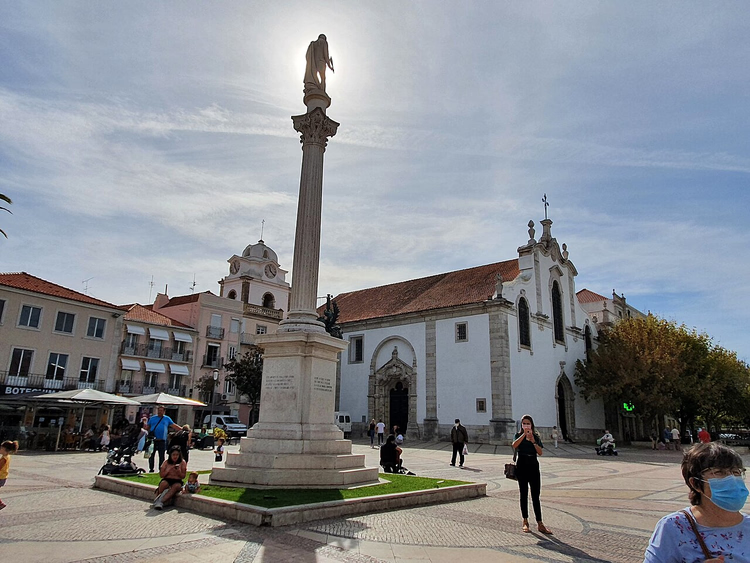
Praça da Misericórdia with a sculpture
On a bench by the fountain in Praça da Misericórdia you'll see the fourth figure in the series, a dreamy lady. The monument is called "Sweet Life."
 © GualdimG · CC BY-SAPhoto: GualdimG, CC BY-SA (https://creativecommons.org/licenses/by-sa/4.0), Wikimedia Commons
Nearby runs Travessa de Frei Gaspar. At number 10 there's a tourist center, and under its glass floor lie the excavated remains of a Roman fish-salting factory. Stop in for a quick look.
Church of Santa Maria da Graça
The Church of Santa Maria da Graça is considered Setúbal's cathedral. A church on this site has been mentioned since the 13th century, and its current appearance took shape in the 16th century (according to the city tourist office).
 © Vitor Oliveira from Torres Vedras, PORTUGAL · CC BY-SAPhoto: Vitor Oliveira from Torres Vedras, PORTUGAL, CC BY-SA (https://creativecommons.org/licenses/by-sa/2.0), Wikimedia Commons
From the outside the church looks modest, but inside you'll see hand-painted ceramic tiles and gilded wood carving.
São Domingos viewpoint
At the São Domingos viewpoint, the main find isn't so much the panorama as the pergola itself, covered in ceramic azulejo tiles. The view from here is also good.
A small restaurant operates by the pergola, where you can grab a coffee. Then turn onto Rua da Fantasia and immediately right up the steps, and you'll come out at the port.
The waterfront and the port of Setúbal
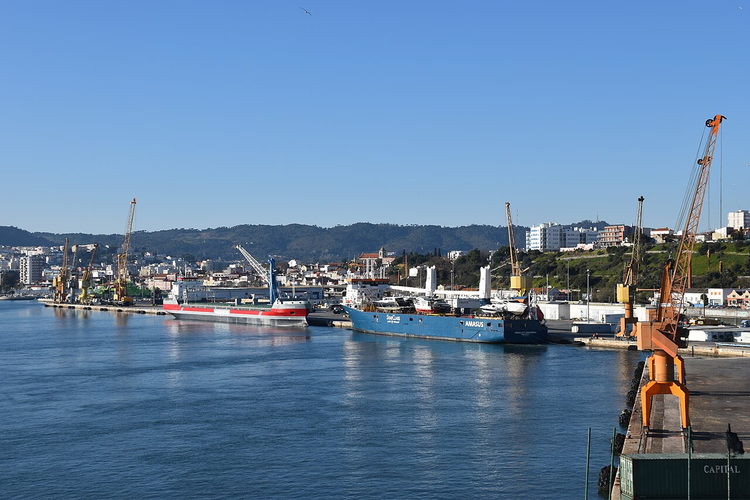
There's almost nothing to see in the port itself. But the waterfront is worth your time. Bright lime-green ferries depart from the pier for the Tróia Peninsula.
 © Niels Johannes · CC BY-SAPhoto: Niels Johannes, CC BY-SA (https://creativecommons.org/licenses/by-sa/4.0), Wikimedia Commons
The pedestrian ticket price and travel time depend on the vessel (as of 09/2026, official Atlantic Ferries website).
Getting to Tróia | Travel time | Pedestrian ticket |
|---|---|---|
Ferry | 25 minutes | €5.50 |
Catamaran | 15 minutes | €4.90 |
Children under 5 ride free (as of 09/2026, official Atlantic Ferries website). Dolphin-watching tickets are also sold here: the trip lasts about 2.5 hours and costs from €40 (as of 09/2026, operator Dolphin Bay). Dolphins enter the Sado estuary in the evening, but no one guarantees a sighting.
Walking along the fishing boats, you'll reach a composition of colorful dolphins. Nearby are restaurants serving fresh fish and seafood. You can book a boat trip in advance through boat tours on GetYourGuide.
Be sure to try fried cuttlefish (choco frito). It's a local delicacy, served at almost every restaurant on the waterfront.
Fried Cuttlefish Monument
On the waterfront you can take a photo with a cuttlefish escaping from a frying pan. The wall nearby depicts other inhabitants of these waters.
If you walk further, you'll see two more sculptures. One is dedicated to fishermen, the other to seafarers. Behind them begins the city beach Praia da Saúde.
Mercado do Livramento and oysters
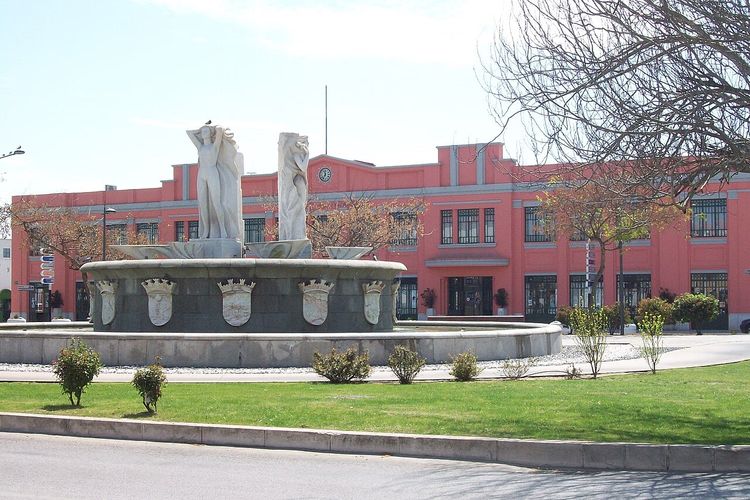
Mercado do Livramento is only open until early afternoon, so plan your visit for the morning. It's open Tuesday through Sunday, 7:00 AM to 2:00 PM, closed on Mondays (as of 09/2026, market hours).
 © Viet-hoian1 · CC BY-SAPhoto: Viet-hoian1, CC BY-SA (https://creativecommons.org/licenses/by-sa/4.0), Wikimedia Commons
The space is divided into zones, each marked by a themed sculpture. Stalls with fruit, meat, and fish stand against the backdrop of a huge azulejo panel. This panel is more than two hundred years old.
In the center of the hall, near the fish sections, find the oyster stand. They're farmed nearby, on the Sado River. You can try the shellfish right there and pair your meal with a glass of wine. It makes for an excellent start to the day.
Tróia Peninsula and its beaches
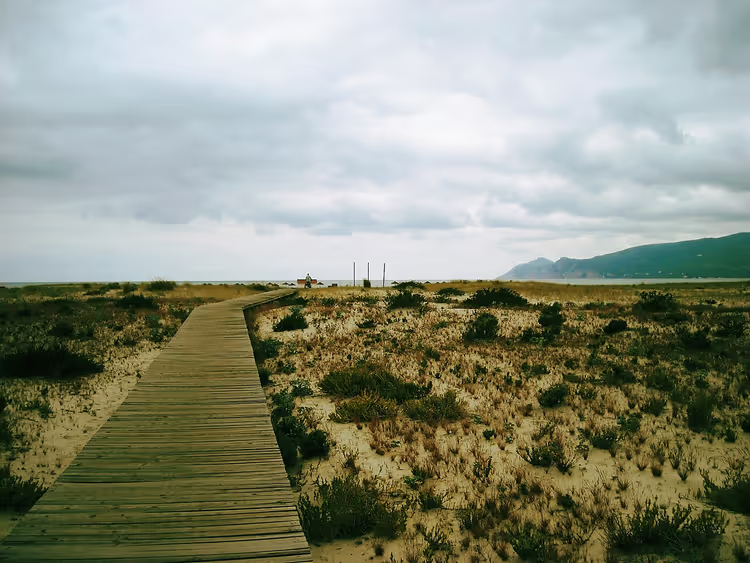
A ferry or catamaran will take you to Tróia. Cyclists and drivers have a separate pier, while pedestrians board at the city port. The crossing takes 15 to 25 minutes.
 © Libânia Pereira from Portugal · CC BYPhoto: Libânia Pereira from Portugal, CC BY (https://creativecommons.org/licenses/by/2.0), Wikimedia Commons
The peninsula separates the river from the ocean. A long sand spit runs along the Atlantic side, and the water here is cold. But if you run in and dive, a quick dip is perfectly doable.
Troia's beaches are spacious: across such a large area you won't be lying shoulder to shoulder with your neighbors. There are few spots with loungers, and the umbrellas there are small. Keep that in mind if you don't like roasting in the sun.
There are few restaurants on the spit because the beach and its surroundings are part of a protected nature reserve. But deeper into the peninsula, resort life is in full swing: green areas, sports courts, hotels with pools, street food, shops, and summer concerts.
Troia is connected to the mainland, so with a car you can continue overland toward Sines and the beaches of Alentejo. Book hotels on the peninsula in advance: Troia hotel prices on Trip.com.
Tours and tickets in Setubal
Guided tours, skip-the-line tickets and activities — most offers can be cancelled free of charge.
See offers on GetYourGuideThe widget loads once you give your consent.
⁉️🤔 Frequently asked questions
How much does the ferry to Troia cost?
A pedestrian ferry ticket costs €5.50, a catamaran ticket €4.90 one way (as of 09/2026, verified with the operator). Children under 5 travel free. Bicycles and cars are charged separately. Tickets are sold at the ticket office by the pier.
When is the best time to visit the Livramento market?
Come any day except Monday. In the morning you will catch both the fish and the oysters, and by midday some stalls close. Arrive at opening time to have a relaxed breakfast on the spot.
How much does it cost to enter the Castle of St. Philip?
Entry to the fort grounds is free. You only pay at the hotel and restaurant inside the walls.
Can you see dolphins near Setubal?
Yes, a resident colony of bottlenose dolphins lives in the Sado estuary. Boat tours last about 2.5 hours and cost from €40 (as of 09/2026, dolphin tour page). Dolphins tend to come closer in the evening, but there is no full guarantee of a sighting. Take a spot by the rail.
How much time do you need for Setubal and Troia?
One day is enough for the historic center of Setubal: the squares and churches are close to each other. For Troia, set aside the second half of the day or a full day. With travel and beach time, it is convenient to split the trip into two days.
In short: what to book
Setubal is easy to explore on foot in one day, and Troia is worth a separate trip.
- If you have one day: start with the Livramento market, then go up to the Castle of St. Philip and walk through the squares of the old center.
- If you have two days: on the second day take the ferry to Troia and explore the interior of the peninsula.
- If you are traveling with children: choose the catamaran, it is faster, and lunch on the Setubal waterfront will suit the whole family.
Book your hotel in Troia in advance: compare prices for Troia hotels.

A small editorial team writing guides for independent travel. We travel ourselves, but we haven’t been everywhere, so we check prices, opening hours and how to get there against official sources.