
















Nice: 25 places to go first
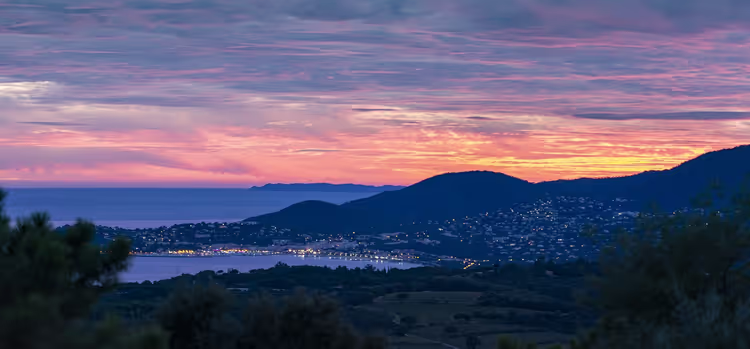
Nice fits between the Bay of Angels and low hills. You won't manage to cover all 25 places on this list in one day, but the city gives up its strongest impressions generously.
We selected the sights of Nice that are worth seeing first. For each place you'll find a photo, admission information and opening hours, and where the price changes, a link to the source.
The Promenade des Anglais runs along the sea for several kilometers. More than half of the places on the list are free to visit.
Ad: this article contains affiliate links, we earn a commission if you book through them, at no extra cost to you.
What to see in Nice
💡 In short: Nice is compact, and you can walk to most of the places on this list in one day.
- From the promenade to Castle Hill it's about 2 km, then come the museums, the port and the train station (on the map).
- Free: the promenade, Old Town, Castle Hill, Parc du Château, the Asian Arts Museum and most churches.
- Paid: the other museums of Nice, the hill elevator, the observatory and Parc Phoenix.
- Prices and opening hours: 09/2026, verified on the official website of the Nice city hall.
The table below shows where admission is free and where you need a ticket. That will make it easier to plan your route through the city.
# | Place | Admission | Closed |
|---|---|---|---|
1 | Promenade des Anglais | free | none |
2 | Hôtel Negresco | outside | none |
3 | Roman Hill | free | none |
4 | Castle Hill | free | none |
5 | Parc du Château | free | none |
6 | Old Town | free | none |
7 | Port Lympia | free | none |
8 | Place Masséna | free | none |
9 | Place Garibaldi | free | none |
10 | Marc Chagall Museum | paid | none |
11 | Matisse Museum | paid | Tuesday |
12 | Archaeological Museum | paid | Tuesday |
13 | MAMAC Museum of Modern Art | paid | Monday |
14 | Museum of Fine Arts | paid | none |
15 | Asian Arts Museum | free | Tuesday |
16 | Masséna Museum | paid | Tuesday |
17 | Palace of Justice | outside | none |
18 | Opera House | guided tour | none |
19 | St. Nicholas Cathedral | free | none |
20 | Cathedral of Saint Reparata | free | none |
21 | Notre-Dame Basilica | free | none |
22 | Nice Observatory | guided tour | none |
23 | Fort Mont-Alban | free | none |
24 | War Memorial | free | none |
25 | Parc Phoenix | paid | none |
Below we'll go through each place in order, with photos, admission and hours.
1. Promenade des Anglais
 © Patafisik · CC BY-SAPhoto: Patafisik, CC BY-SA (https://creativecommons.org/licenses/by-sa/4.0), Wikimedia Commons
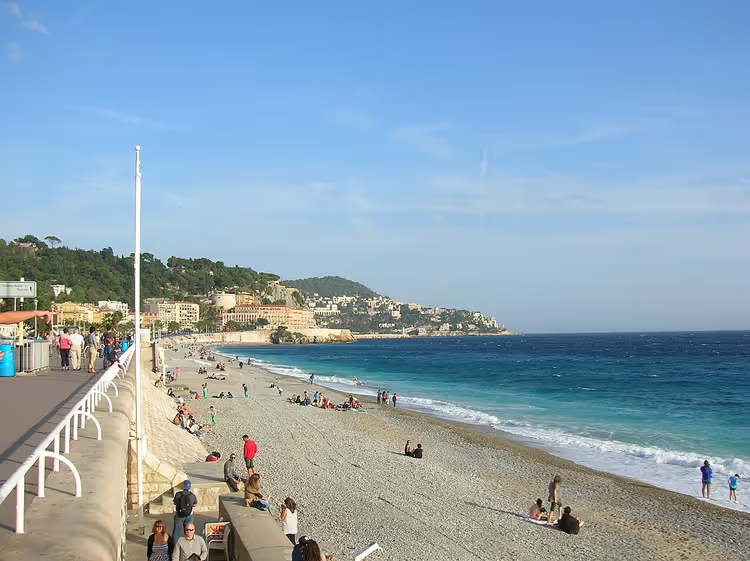
The street along the coast was claimed by the English back in the 19th century. They built villas with sea views and strolled along the shore in the evenings, which is why the boulevard got the name Promenade des Anglais.
The promenade stretches along the Bay of Angels for several kilometers (according to the Nice city portal). The boulevard is about 8 m wide, and there's enough room for pedestrians, runners and cyclists.
You'll pass the "Mediterranean Palace" with its theater, casino and hotel. The beaches along the promenade are open to everyone, but loungers and umbrellas are paid.
- Cost: the walk is free, a beach lounger is paid separately.
- Who it's for: those who want to see the city and the sea on their first walk.
2. Hôtel Negresco
 © Anna M. Stevenson · CC BY-SAPhoto: Anna M. Stevenson, CC BY-SA (https://creativecommons.org/licenses/by-sa/3.0), Wikimedia Commons
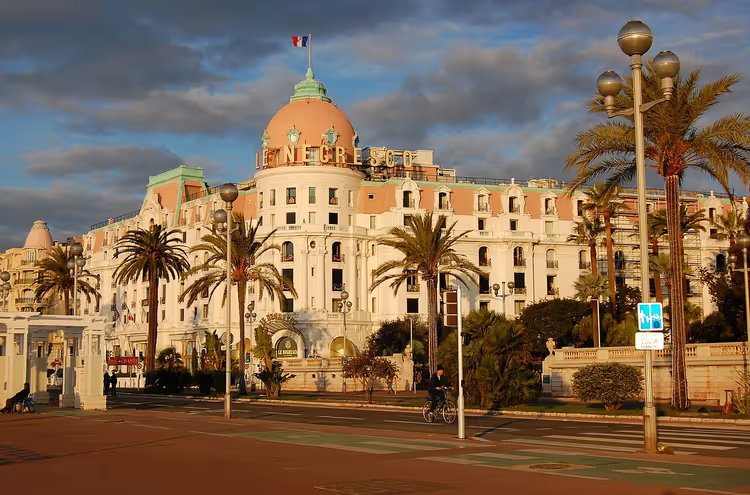
The pink dome of Hôtel Negresco has adorned the Promenade des Anglais for over a hundred years. The building was commissioned by a Romanian magnate and named after him, and the style references the Renaissance.
Inside you're greeted by a crystal chandelier nearly two meters in diameter and historic interiors. Jean Cocteau, Ernest Hemingway, Salvador Dalí, Marlene Dietrich and members of The Beatles have stayed here.
The hotel still operates today. You can admire the dome and facade from the promenade at any time, and rooms are booked in advance.
- Cost: viewing from outside is free, accommodation by reservation.
3. Roman Hill
 © François de Dijon · CC BY-SAPhoto: François de Dijon, CC BY-SA (https://creativecommons.org/licenses/by-sa/4.0), Wikimedia Commons
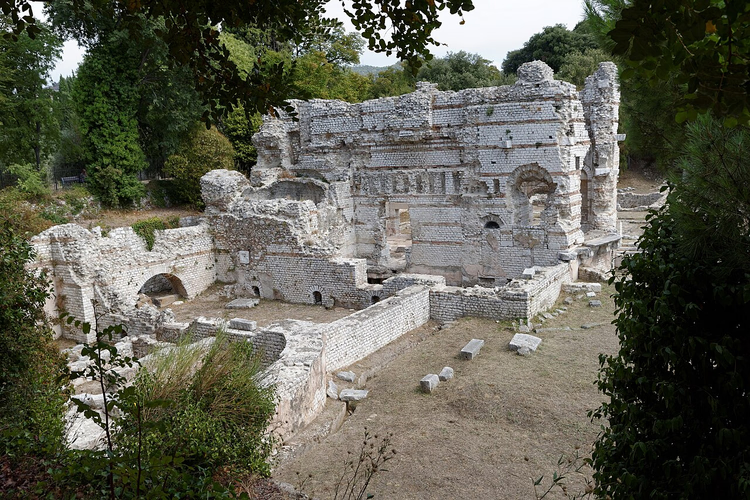
On the site of modern Nice in ancient times stood the Roman settlement of Cemenelum. It was founded by settlers from the Apennine Peninsula in the 1st century BC and became the main Roman stronghold on the Riviera.
By the 5th century the settlement was abandoned, but archaeologists excavated residential buildings, an amphitheater and baths. Today it's an open-air site in the Cimiez district, where you come for ancient history.
Finds from the excavations were transferred to the Archaeological Museum. Some research is ongoing, so access to certain areas is sometimes restricted, check on site.
- Cost: viewing the open-air ruins is free.
4. Castle Hill
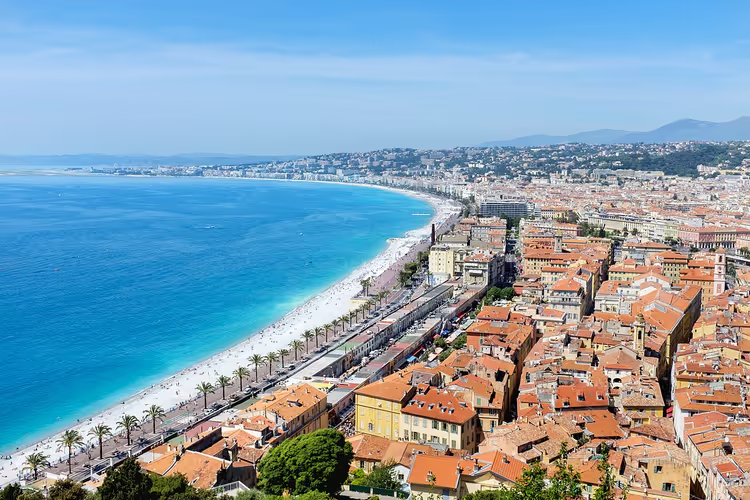 © Kristoffer Trolle from Copenhagen, Denmark · CC BYPhoto: Kristoffer Trolle from Copenhagen, Denmark, CC BY (https://creativecommons.org/licenses/by/2.0), Wikimedia Commons
Castle Hill offers the best view of Nice and the sea. In the Middle Ages a feudal castle stood here, controlling the coast, but only fragments of the citadel have survived.
Near the summit stand the Bellanda Tower and the Basilica of St. Mary. The tower was long used as a hotel and later turned into a maritime museum.
Every day at noon a cannon fires on the hill, and the boom is heard across the whole bay. Climb up and keep your camera ready: the panorama is worth the effort.
- Cost: the climb and viewing are free, the elevator is paid separately.
5. Parc du Château
At the top of Castle Hill you'll find Parc du Château. From the viewing platforms you can see both the city and the sea, and you can get up here by stairs or elevator.
The park was laid out in the early 19th century on the orders of the Duke of Savoy. Alleys and lawns alternate with artificial ponds, and there are playgrounds and snack bars for visitors.
The lower terrace of the hill is occupied by an old necropolis. Not only city residents are buried here, but also foreigners, among them Alexander Herzen and Eugène Jellinek.
- Cost: park admission is free, the necropolis is open during the day (as of 09/2026, schedule on the city website).
6. Old Town
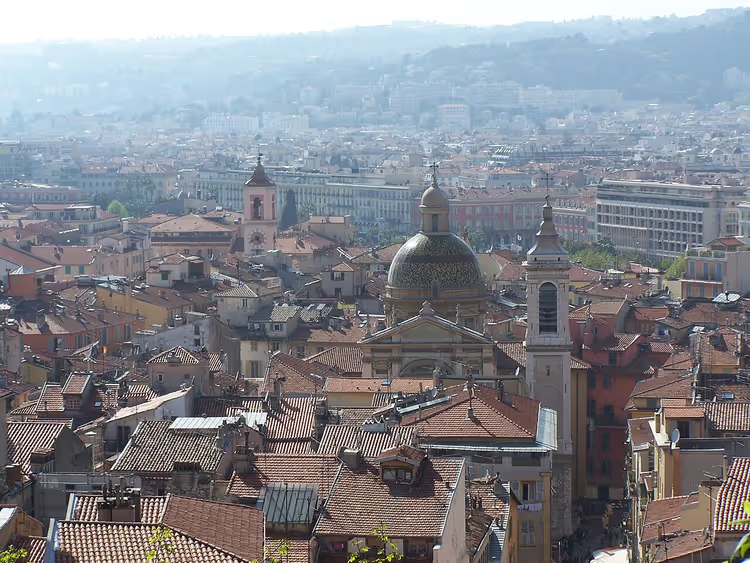
You'll recognize Old Town (Vieux Nice) by its narrow streets and warm facades. The city's development began here in the 16th to 19th centuries, and the district is under UNESCO protection.
Small shops, bistros and cafes are tucked along the sidewalks. It's easy to get lost in the alleys, but that's exactly how you end up on the main squares.
The key points of the district are the Chapel of Mercy and the Palace of Justice. The chapel was built in the mid-18th century from sketches by Bartolomeo Vittone.
- Cost: walking around the district is free.
7. Port Lympia
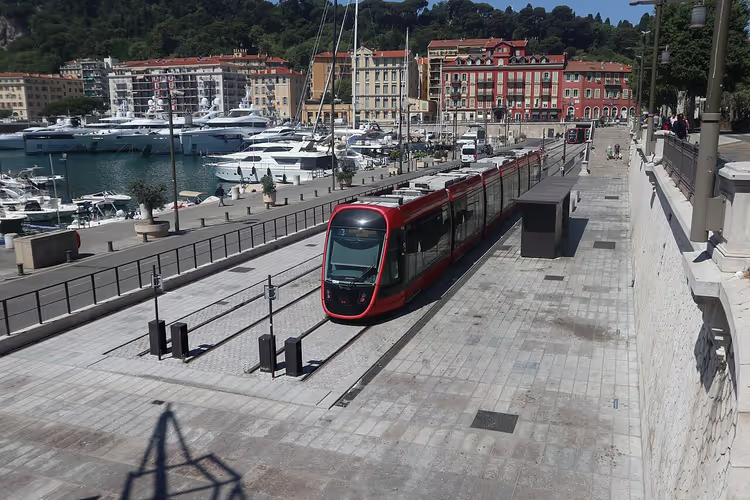 © MB-one · CC BY-SAPhoto: MB-one, CC BY-SA (https://creativecommons.org/licenses/by-sa/4.0), Wikimedia Commons
The port owes its existence to Nice's trade. King Charles Emmanuel III ordered a harbor to be built in the eastern part of the Baie des Anges, for which the seabed was deepened and the water area expanded.
In the mid-19th century, the port became fully operational. Today it welcomes both cruise ships and small yachts.
Ferries to Corsica depart from the quay daily. You will see the old lighthouse on the breakwater from afar: it was rebuilt after World War II, and its light is visible from the sea for dozens of kilometers.
- Cost: a walk along the port promenade is free.
8. Place Masséna
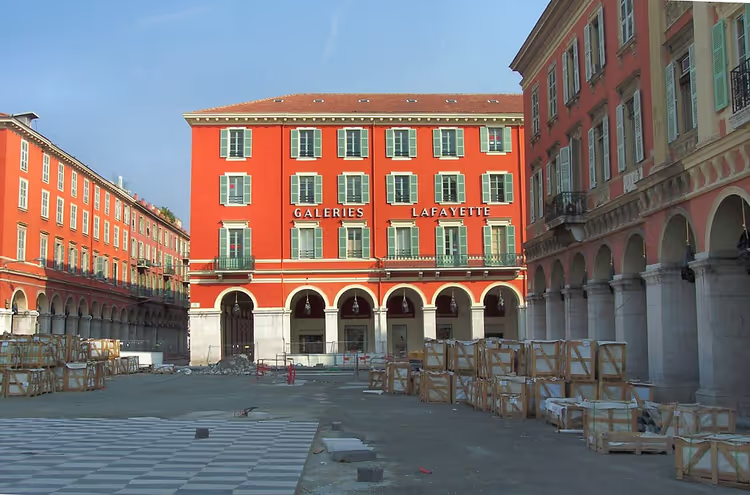
Place Masséna connects the old and new faces of Nice. Until the mid-19th century it was called Place de la Faubourg, and later it was named after the Napoleonic marshal André Masséna.
In the center, the Fontaine du Soleil, designed by Alfred Janniot in 1956, sends up its jets. The bronze figures around the basin depict ancient Greek gods, with Apollo rising above them.
The modern composition "Conversation in Nice," made up of seven seated figures, can be found on the eastern side of the square. It was created by the Catalan sculptor Jaume Plensa.
- Cost: viewing the square is free.
9. Place Garibaldi
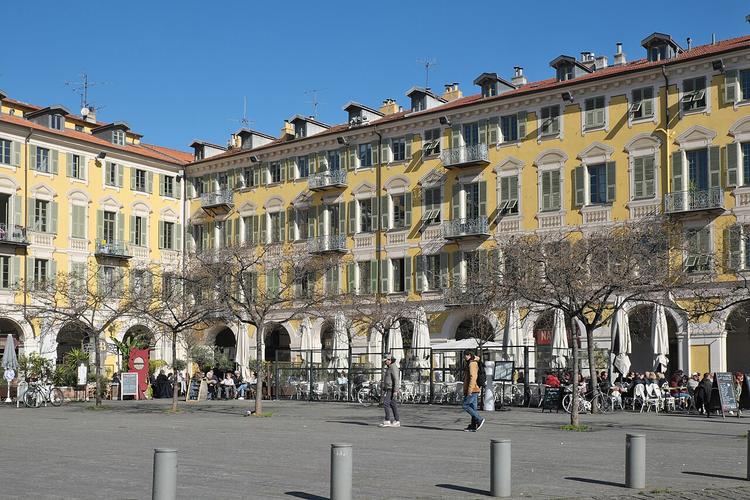 © GFreihalter · CC BY-SAPhoto: GFreihalter, CC BY-SA (https://creativecommons.org/licenses/by-sa/4.0), Wikimedia Commons
Place Garibaldi is considered the official center of the city. It lies in the northern part of the quarter, and its perimeter was built in the Italian style to a design by the architect Antoine Spinelli in the late 18th century.
On the south side stands the Chapel of the Holy Sepulchre with a balcony for distinguished guests. The square has borne the name of Giuseppe Garibaldi, a native of Nice, since the late 19th century.
On the square you will find many eateries that prepare seafood. Come here around lunchtime if you want to try the local cuisine.
- Cost: viewing is free, food in cafés is at an additional charge.
10. Marc Chagall Museum
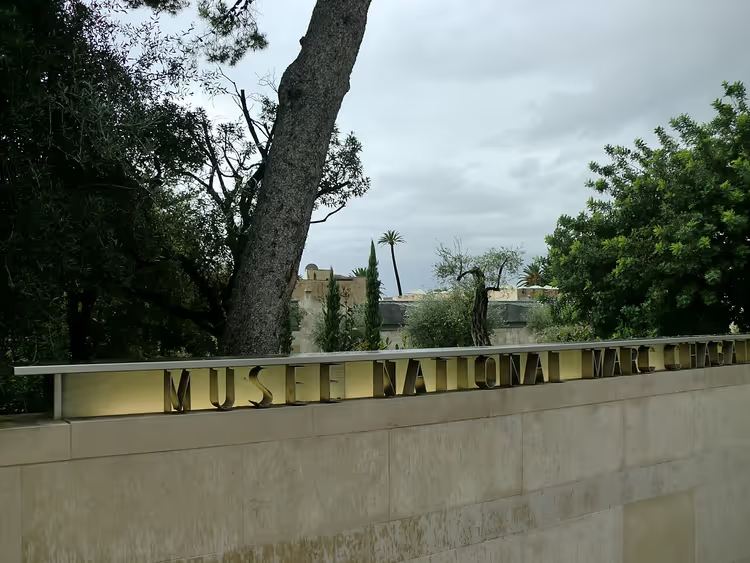 © Derbrauni · CC BY-SAPhoto: Derbrauni, CC BY-SA (https://creativecommons.org/licenses/by-sa/4.0), Wikimedia Commons
The Marc Chagall Museum grew out of a gift from the artist himself. A native of Vitebsk, he gave the city a cycle of 17 paintings on biblical themes inspired by the Old Testament.
These canvases became the core of the collection, which was later expanded with mosaics, tapestries, stained glass, and sculptures. Today it holds one of the most complete collections of Chagall's legacy, more than 700 works.
The museum has its own concert hall where music is performed regularly. You can check opening hours and tickets on the official website of the museums of Nice.
- Cost: paid admission, discounted tickets available.
11. Matisse Museum
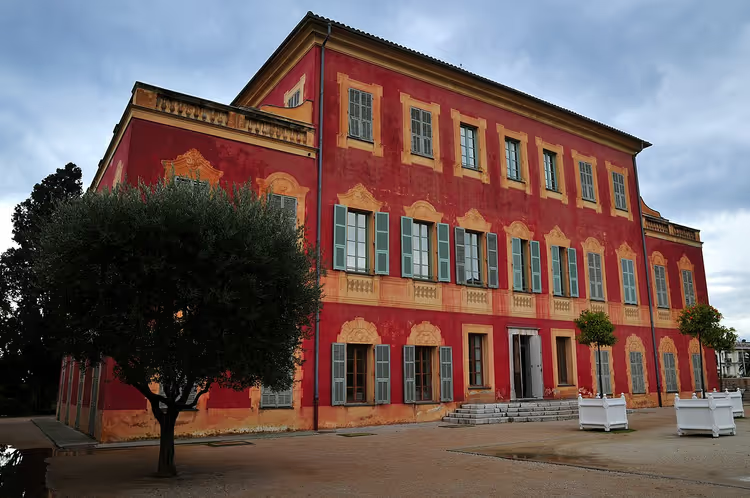 © takato marui · CC BY-SAPhoto: takato marui, CC BY-SA (https://creativecommons.org/licenses/by-sa/2.0), Wikimedia Commons
His time in Nice left a noticeable mark on the work of Henri Matisse. In his home on the French Riviera, he created costumes and sets for Igor Stravinsky's ballet "The Nightingale."
The "Odalisques" cycle, featuring women in an oriental style, dates from the same period. The city honored the artist's memory with a museum housed in an 18th-century villa.
The museum has 18 rooms, one of which is dedicated to paper cutouts, Matisse's hobby. You can check works and opening hours on the official Matisse Museum website.
- Cost: paid admission, a combined museum ticket is valid.
12. Archaeological Museum
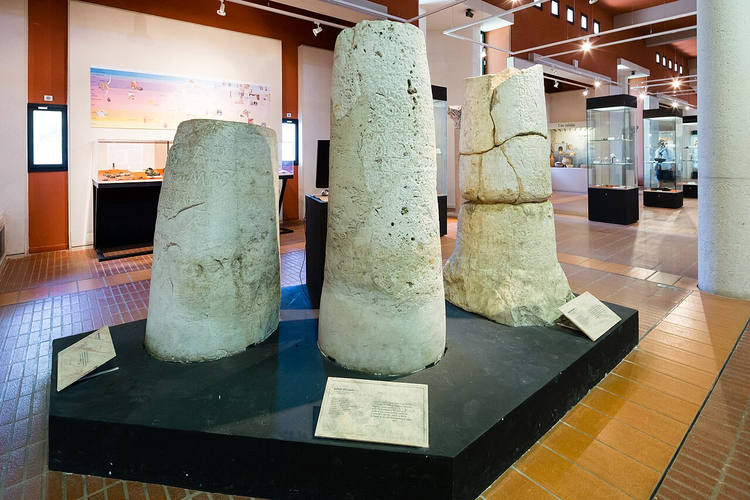 © Édouard Hue ( User:EdouardHue ) · CC BY-SAPhoto: Édouard Hue ( User:EdouardHue ), CC BY-SA (https://creativecommons.org/licenses/by-sa/3.0), Wikimedia Commons
The Archaeological Museum brings together artifacts from the region's ancient history. Excavations on the hill of Cimiez showed that Nice was preceded by the Roman settlement of Cemenelum with a population of about 10,000.
The finds became the basis of the exhibition, which opened in 1960, and the museum later moved to a separate building. Today it occupies two wings dedicated to ancient history, and the core of the collection consists of tools, pottery, jewelry, and coins from the excavations.
The museum has a shop selling replicas of exhibits. If you plan to visit several museums in one day, check Nice museum tickets on Tiqets in advance.
- Cost: paid admission, closed on Tuesdays.
13. MAMAC Museum of Modern Art
 © Emanuela Meme Giudic… · CC BYPhoto: Emanuela Meme Giudic…, CC BY (https://creativecommons.org/licenses/by/3.0), Wikimedia Commons
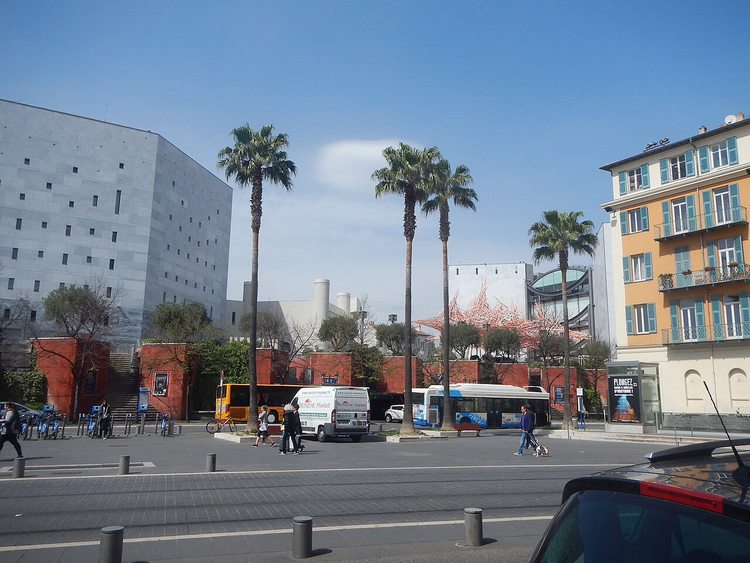
The MAMAC Museum of Modern Art opened in the city center in 1990. It consists of two glass towers connected by walkways, designed by French architects Bayard and Vidal.
The interior space is divided into three levels. Two are devoted to the permanent collection, the third to temporary exhibitions, and a garden is laid out on the glass roof.
The collection places Warhol and Lichtenstein alongside local artists, more than 400 works in total. The core of the collection is European and American avant-garde, with works by Nice-based artists hanging nearby. You can find opening hours on the official MAMAC website.
- Cost: paid admission, closed on Mondays.
14. Museum of Fine Arts
 © Miniwark · CC BY-SAPhoto: Miniwark, CC BY-SA (https://creativecommons.org/licenses/by-sa/3.0), Wikimedia Commons
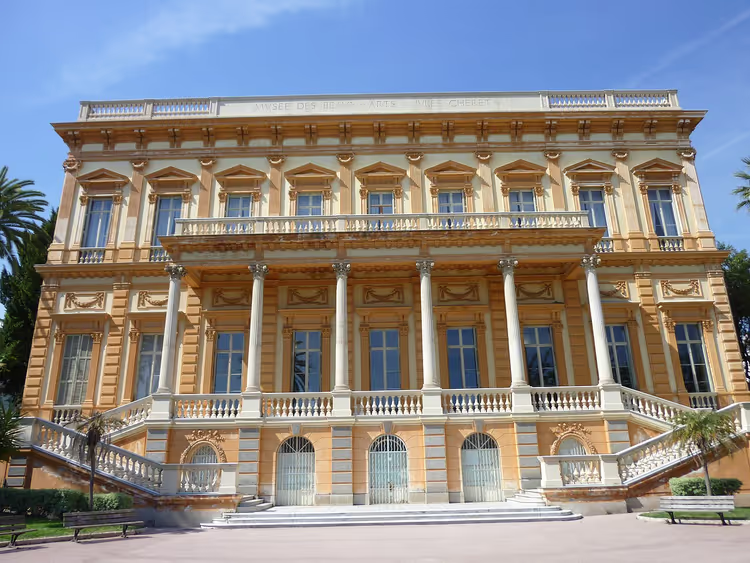
The Museum of Fine Arts occupies the former villa of Prince Kochubey. The palace belonged to a Russian prince, and in the 1920s it passed to the city and was converted into a museum under the direction of the artist Jules Chéret.
The collection was assembled with great care: in terms of masterpieces per square foot, the museum is compared to the Louvre. It features primitivism, classicism, and impressionism, as well as artists connected with Nice.
In the halls you will see paintings by the Van Loo dynasty, Jean Fragonard, Claude Monet, and François Rude. Check tickets and opening hours on the Nice city hall website.
- Cost: paid entry, discounted tickets available.
15. Museum of Asian Art
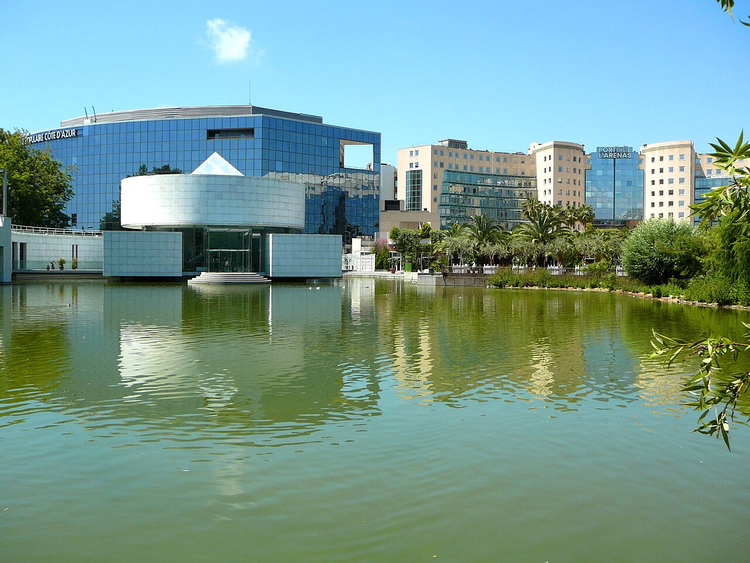
The Museum of Asian Art is dedicated to the cultural heritage of the peoples of Asia. The complex of four cubic buildings stands in Phoenix Park, and the project was created by Japanese architect Kenzō Tange.
According to the architect's vision, the building is maximally open to light: huge glass panels are set into walls of white marble. Natural lighting reveals the beauty of the exhibits.
The exhibition is divided into Japanese, Chinese, Indian, and Cambodian sections, with more than 200 artifacts in total. Staff run seminars and workshops on ikebana and calligraphy, so it is engaging for both adults and children.
- Cost: free entry, closed on Tuesdays.
16. Masséna Museum
 © Zairon · CC BY-SAPhoto: Zairon, CC BY-SA (https://creativecommons.org/licenses/by-sa/4.0), Wikimedia Commons
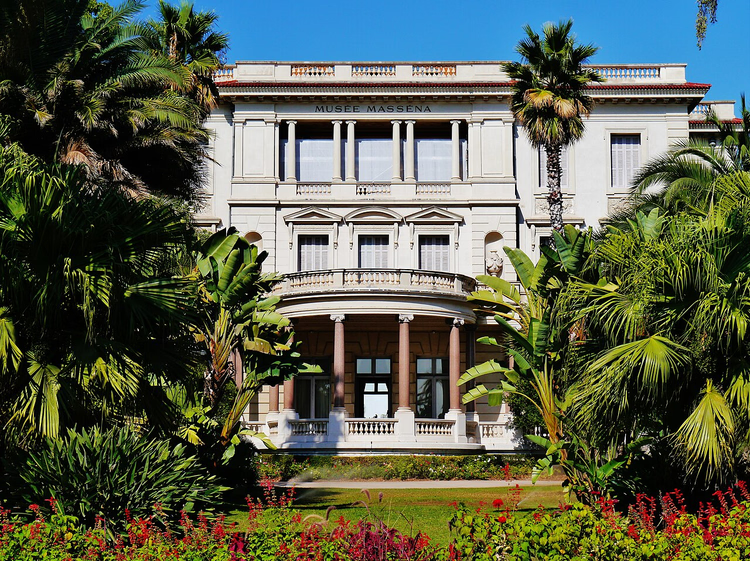
The Masséna Museum occupies the former residence of Marshal André Masséna. In the 20th century it was turned into a museum of the city's history, and the core of the exhibition came from the personal collection of patron Victor Masséna.
The holdings include items belonging to Emperor Napoleon, porcelain from the 9th to 12th centuries, art nouveau posters, and old photographs. You will trace the development of Nice from antiquity to the middle of the last century and see how a port city turned into a Riviera resort.
The museum is open daily except Tuesday. Check the exact schedule on the city museums calendar.
- Cost: paid entry, combined ticket available.
17. Palace of Justice
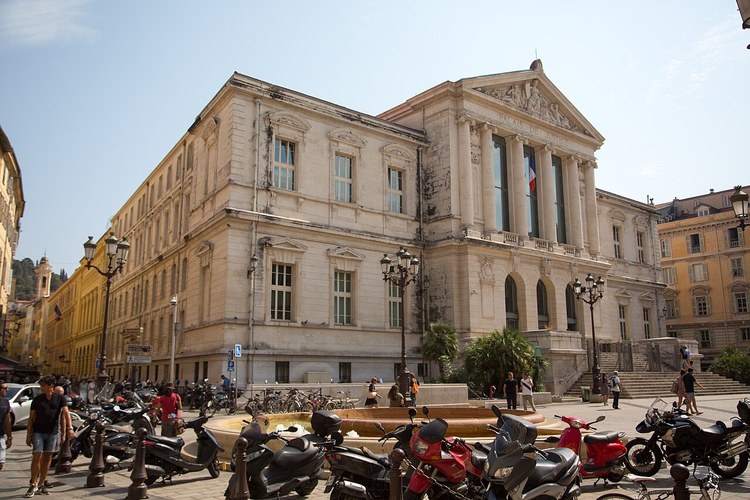 © Victor Grigas · CC BY-SAPhoto: Victor Grigas, CC BY-SA (https://creativecommons.org/licenses/by-sa/4.0), Wikimedia Commons
The Palace of Justice draws attention with its strict classical architecture. The building stands in the city center, and the square in front of the facade is often taken over by street performers and musicians.
The palace was built in the late 19th century on the site of a monastery destroyed during the French Revolution. The work took only two years, from 1883 to 1885, and an imposing building was erected for lawyers and jurists.
The mirror counterpart of the Palace of Justice is the building opposite, the Rusca Palace, which houses the court of higher instance. On Saturdays, book and postcard collectors gather in the square, and there are plenty of snack bars and bistros nearby.
- Cost: free to view from outside.
18. Opera House
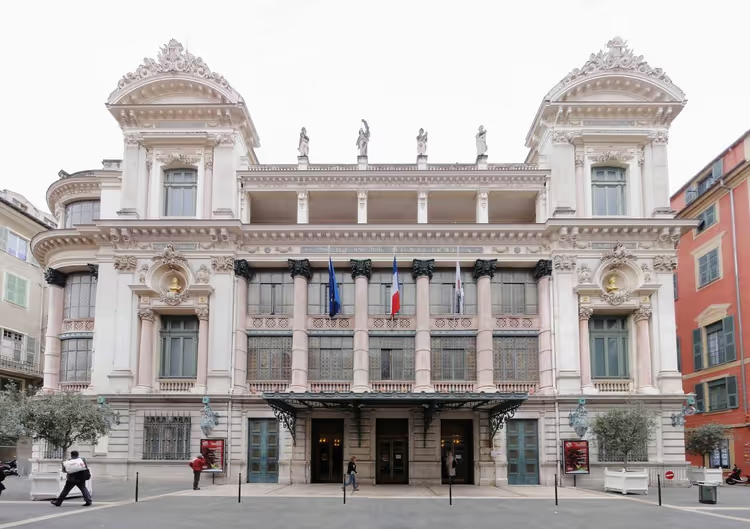 © Qjafcc · CC BY-SAPhoto: Qjafcc, CC BY-SA (https://creativecommons.org/licenses/by-sa/3.0), Wikimedia Commons
The first opera house appeared in Nice in the late 18th century. It was built in the Italian style, successfully combining a luxurious auditorium with good stage acoustics.
In 1881 the theater burned down in a fire, and the new project was entrusted to architect Aune, a student of Garnier. He gave the building a classical look and reinforced it with a metal frame.
Frescoes on themes from ancient mythology were painted by artist Costa. Stars of classical music have performed on this stage, and the concert tradition is still alive today. Tours are usually held on Monday afternoons; check the schedule at the box office.
- Cost: tours are paid, performance tickets sold separately.
19. St. Nicholas Cathedral
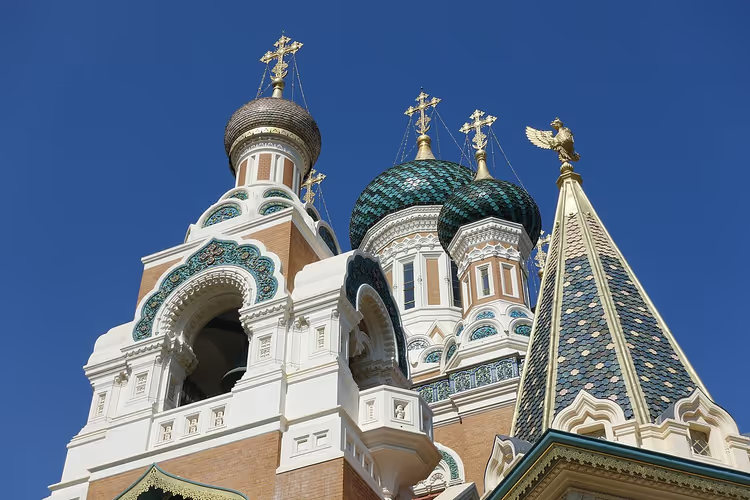 © Joseolgon · CC BY-SAPhoto: Joseolgon, CC BY-SA (https://creativecommons.org/licenses/by-sa/4.0), Wikimedia Commons
St. Nicholas Cathedral remains the largest Orthodox church outside Russia. Its gilded domes are visible from afar, and its history is tied to the mourning of the imperial family.
In 1865, the heir of the Romanov dynasty, the son of Alexander II, died in Nice. It was decided to build a church on the site of his death; it was laid in 1902 and built over ten years using the highest quality materials.
Some of the icons for the interior were donated by the imperial family. For almost a hundred years the church belonged to an Orthodox association, and since 2011 it has been transferred to Russia. The cathedral is open daily, but there is a midday break.
- Cost: free entry.
20. Cathedral of Saint Reparata
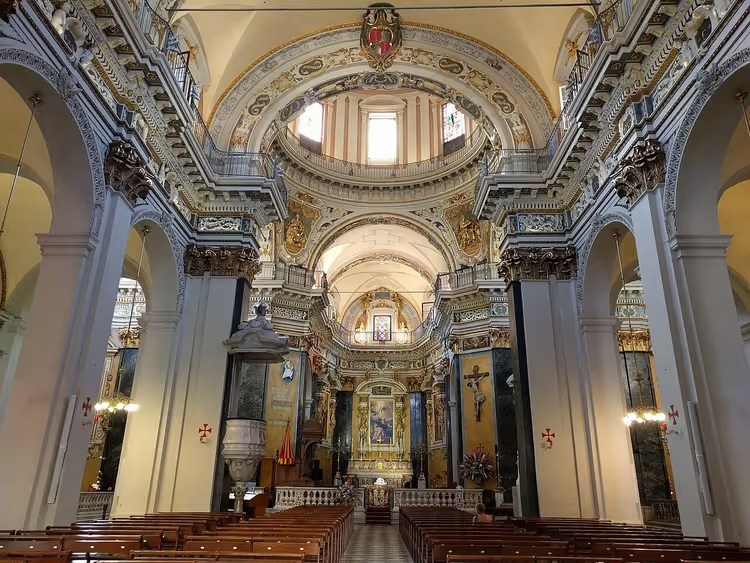 © Jesmar · CC BY-SAPhoto: Jesmar, CC BY-SA (https://creativecommons.org/licenses/by-sa/4.0), Wikimedia Commons
The Cathedral of Saint Reparata is one of the oldest religious buildings in the city. Its cross-shaped plan and tile-covered dome make it resemble the Church of Santa Susanna in Rome.
The facade is in the Baroque style, and inside the space is divided into ten chapels. The 17th-century altar is surrounded by frescoes with the faces of the first bishops of Nice, so the church is also interesting for history lovers.
Above the altar hangs a painting of the city's patron saint. According to legend, angels carried the body of Saint Reparata to the Riviera shore in a boat, and every year on the first Sunday of October a solemn procession takes place here.
- Cost: free entry.
21. Basilica of Notre-Dame
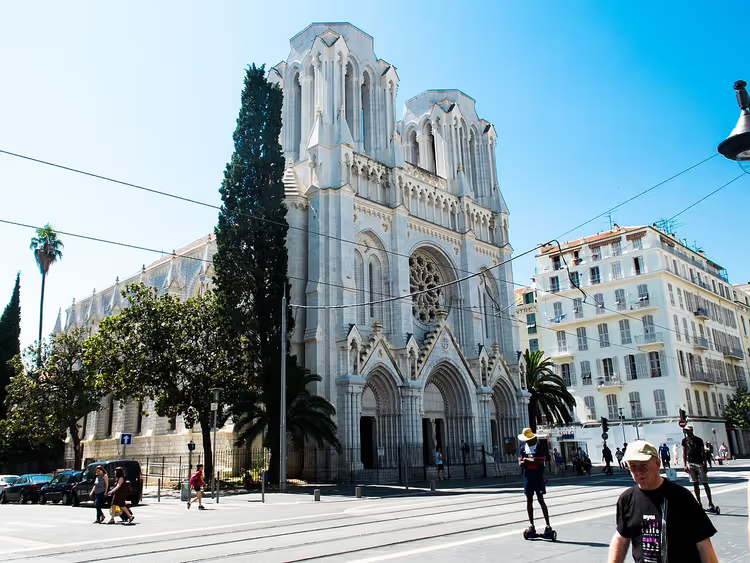 © Romain Sartorio · CC BYPhoto: Romain Sartorio, CC BY (https://creativecommons.org/licenses/by/3.0), Wikimedia Commons
The two towers of the Basilica of Notre-Dame are visible from any part of the city. The largest church on the coast is consecrated in memory of the Virgin Mary, and its height reaches 65 meters.
Notre-Dame was built in the 1860s in the Gothic style, which makes it partly resemble the capital's cathedral. The center of the facade is decorated with a glass rose window, whose stained glass depicts the story of the Assumption of the Virgin.
Inside you will see a copy of Murillo's painting "The Holy Family," 19th-century stained glass, and wooden statues of the Virgin Mary. The basilica is considered the most beautiful Catholic church on the French Riviera, and classical music concerts are often held here.
- Cost: free entry.
22. Nice Observatory
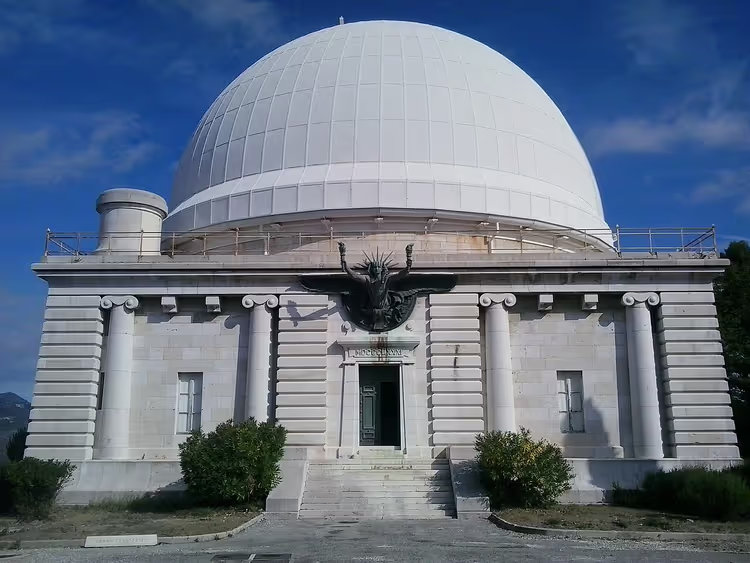 © ClaireL28 · CC BY-SAPhoto: ClaireL28, CC BY-SA (https://creativecommons.org/licenses/by-sa/3.0), Wikimedia Commons
The Nice Observatory has been operating for almost 150 years. It was initiated by banker Raphael Bischoffsheim, with Gustave Eiffel and Charles Garnier as co-authors of the project.
The main architectural feature is a huge rotating dome about 24 meters in diameter. Inside is a powerful telescope that astronomers have used to discover many new celestial bodies.
Over its history, the observatory changed owners several times before becoming part of the Côte d'Azur Observatory. Tours run several times a week, and on special days you'll be allowed to look at the sky through the telescope.
- Cost: admission by guided tour only, with different ticket prices for adults and children.
23. Mont Alban Fort
Mont Alban Fort was built in the Middle Ages to protect the coast from attacks by the Turkish fleet. Fortifications were placed on the heights along the shore, and this citadel has survived to the present day.
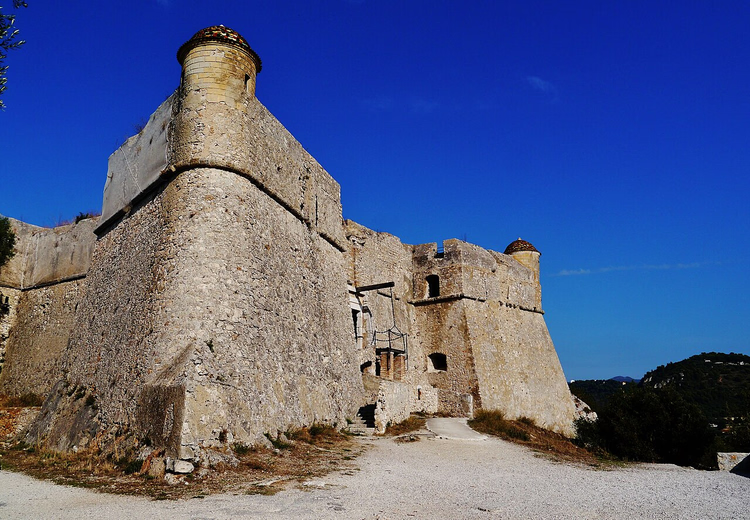 © Zairon · CC BY-SAPhoto: Zairon, CC BY-SA (https://creativecommons.org/licenses/by-sa/4.0), Wikimedia Commons
The fortress got its name from the white rock of the hill: "alba" means "white." You should walk around the fort's perimeter, then climb to the observation deck at the top.
From there you get a view of the eastern part of Nice and the seafront. The guardroom with its wall frescoes is also worth seeing, and a lift takes you from the foot of the hill to the summit.
- Cost: access to the grounds is free, guided tours are paid.
24. Monument to the Fallen of 1914-1918
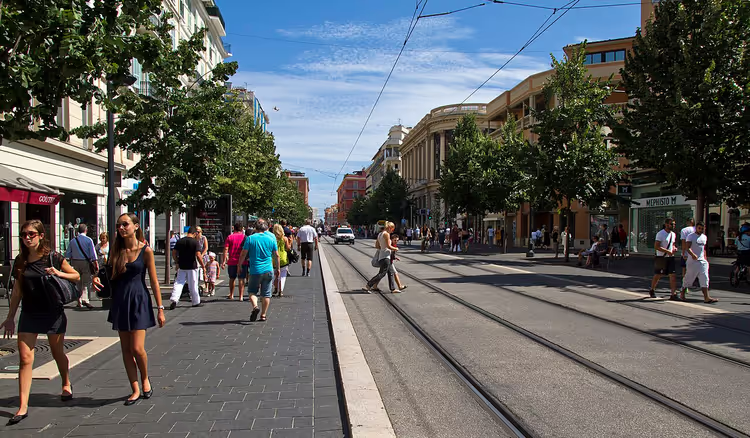 © trolvag · CC BY-SAPhoto: trolvag, CC BY-SA (https://creativecommons.org/licenses/by-sa/3.0), Wikimedia Commons
The monument in front of Castle Hill is dedicated to the people of Nice who died in World War I. This is how the city honored the memory of about four thousand people who fell on the battlefields between 1914 and 1918.
The monument's design was approved in 1918, but construction only began in 1924. Later, the names of soldiers who died in World War II and in conflicts involving France were added to the stele.
The memorial is covered with bas-reliefs of soldiers from different branches of the military: infantrymen, sailors, pilots, and engineers. The stele reaches a height of 32 meters.
- Cost: free to view.
25. Phoenix Park
 © GLOBI ۞ FUZZI · CC BY-SAPhoto: GLOBI ۞ FUZZI, CC BY-SA (https://creativecommons.org/licenses/by-sa/2.0), Wikimedia Commons
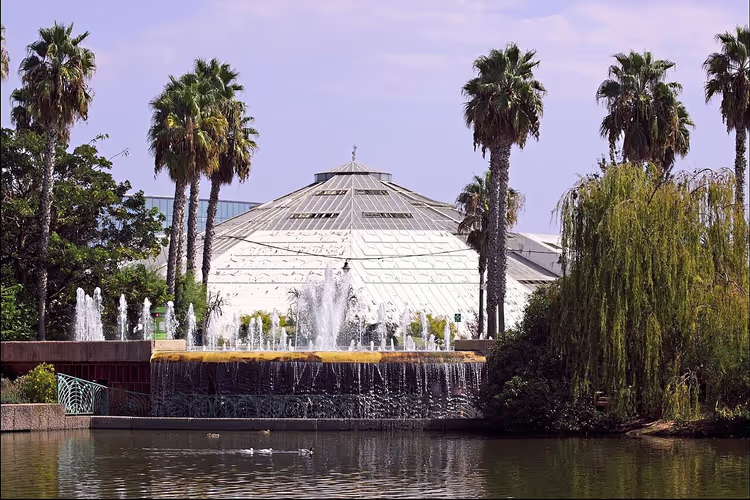
Phoenix Park was conceived as a botanical garden with a collection of rare plants. Gradually, the green space was settled by representatives of exotic fauna, and now it is home to more than 2,500 plant species.
The park is divided into 12 zones, and visitors can observe fish, amphibians, birds, and mammals from different parts of the world. The largest greenhouse in Europe and an island with prehistoric flora are especially popular.
Every hour the park runs a musical fountain whose jets change to classical music. The recreation area is in the west of the city; check the exact schedule on the official Nice city website.
- Cost: paid admission, children get a reduced rate.
Tours and tickets in Nice
Guided tours, skip-the-line tickets and activities — most offers can be cancelled free of charge.
See offers on TiqetsThe widget loads once you give your consent.
Nice attractions on the map
It's convenient to mark all the places from the list on a map before your walk. That way you can group sights by neighborhood and avoid crisscrossing the whole city. If you're flying into Nice Airport, an airport transfer will make getting into the city easier.
Open the map on your phone so you can check it as you walk and avoid backtracking.
⁉️🤔 Frequently asked questions
How many days do you need for Nice?
One packed day is enough for the main sights. In that time you can walk the promenade, climb Castle Hill, and stroll through the Old Town. Museums are better spread over a second day: Matisse, Chagall, and MAMAC are best taken in slowly, one at a time.
What can you see in Nice for free?
The Promenade des Anglais, Old Town, Castle Hill, Château Park, and most churches are free: St. Nicholas Cathedral, St. Reparata Cathedral, and the Notre-Dame Basilica. The Asian Arts Museum is also free. You'll need to pay for the other museums, the hill lift, the observatory, and Phoenix Park.
What to see in Nice with kids?
With kids, it's easiest to start with Phoenix Park: it has more than 2,500 plant species, a greenhouse, and a musical fountain. After that, the port of Lympia, where you can see yachts and ferries, and Castle Hill with its open terrace and children's areas in Château Park.
Where to eat in Nice?
Restaurants and cafés are concentrated in the Old Town and on Place Garibaldi. They serve seafood and local cuisine, and you can easily grab a bite at a bistro between walks. We recommend choosing based on the menu posted at the entrance rather than pictures online.
Do you need a ticket for Castle Hill?
No, climbing Castle Hill and visiting the viewing areas is free. You only pay for the lift if you don't want to take the stairs. Château Park at the top is also open to everyone, and the necropolis is open during the day.
In short: what to book
Nice works well as a walking route, so there's little you need to book in advance. Tickets are useful for paid museums, the observatory, the Castle Hill lift, and Phoenix Park.
- If you have one day: start with the Promenade des Anglais, climb Castle Hill, and finish in the Old Town.
- If you love art: choose the Matisse Museum, Chagall Museum, and MAMAC.
- If you're traveling with kids: choose Phoenix Park and the port of Lympia.
- If you want a panorama: choose Castle Hill and Mont Alban Fort.
A hotel in the center will save you travel time. Check out Nice sightseeing tours and a centrally located hotel on Trip.com.

A small editorial team writing guides for independent travel. We travel ourselves, but we haven’t been everywhere, so we check prices, opening hours and how to get there against official sources.