
















Portugal: 8 stops from Lisbon to the Algarve
Portugal fits into a single trip if you pick your stops in advance. Go by travel time: from Lisbon to Sintra it is about 40 minutes by train, from Porto to Aveiro just over an hour (Comboios de Portugal, 09/2026). That turns a week into a relaxed route without daily relocations.
The eight stops below cover almost the entire country and connect easily: Lisbon, Sintra, Cascais, Cabo da Roca, Lousã, Porto, Aveiro, and Lagos in the Algarve. For each stop, you will find what to see, how much entry costs, and where to look for accommodation.
Keep one rule in mind: prices and opening hours in Portugal change by season. Links to official websites sit next to the numbers, and before your trip, check the schedule with the site itself. That way your morning will not be wasted on a closed ticket office.
Ad: this article contains affiliate links, we earn a commission if you book through them, at no extra cost to you.
1. Lisbon: Belém, Alfama, and viewpoints
💡 In short:
- What to see: Belém, São Jorge Castle, viewpoints over the Tagus
- How much time to allow: two full days
- Prices and opening hours: 09/2026, verified on the official website
 © Nan Palmero from San Antonio, TX, USA · CC BYPhoto: Nan Palmero from San Antonio, TX, USA, CC BY (https://creativecommons.org/licenses/by/2.0), Wikimedia Commons
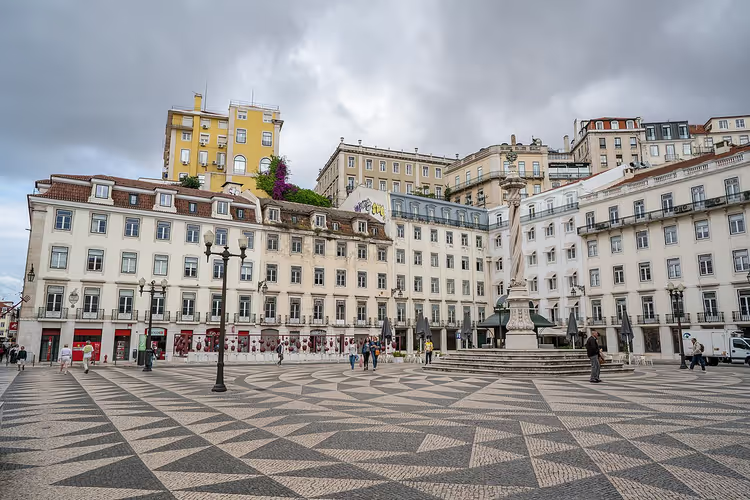
Lisbon is first on the list not out of politeness. UNESCO sites, old quarters, and viewpoints overlooking the entire western part of the city stand side by side here. Allow two days for the capital, otherwise the whole day will be spent moving between districts.
Start with Belém. Jerónimos Monastery and Belém Tower stand a few minutes apart, with a park between them. Entry to the monastery cloister costs €18 (as of 09/2026, official website), and the church attached to it is free. A ticket to Belém Tower costs €15 (as of 09/2026, official website).
Site | Admission | Closed |
|---|---|---|
Torre de Belém | 15 € (tickets) | Monday |
Mosteiro dos Jerónimos | 18 € (tickets) | Monday |
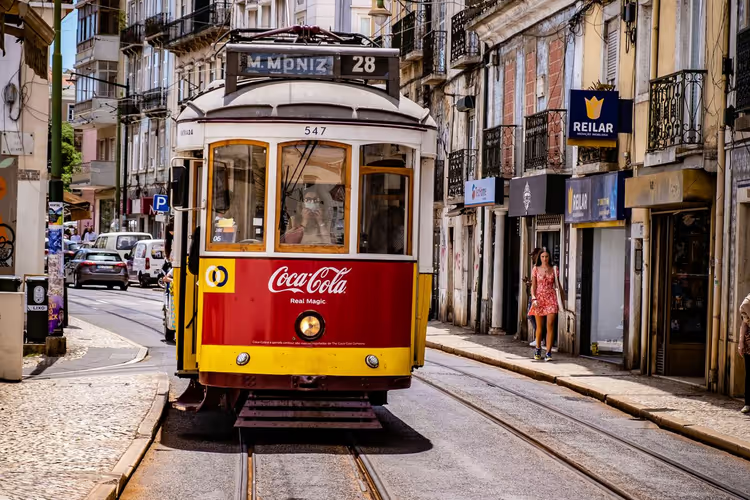
In the evening, head down to Alfama, the neighborhood below St. George's Castle. Small venues there host fado performances, entry is usually free, and you only pay for drinks. The catch of the capital is also well known: the sights are scattered across hills, and you will rack up a lot of kilometers on foot. Buy a transit pass for the tram and metro, and the climbs will stop draining your energy.
2. Sintra: palaces and parks
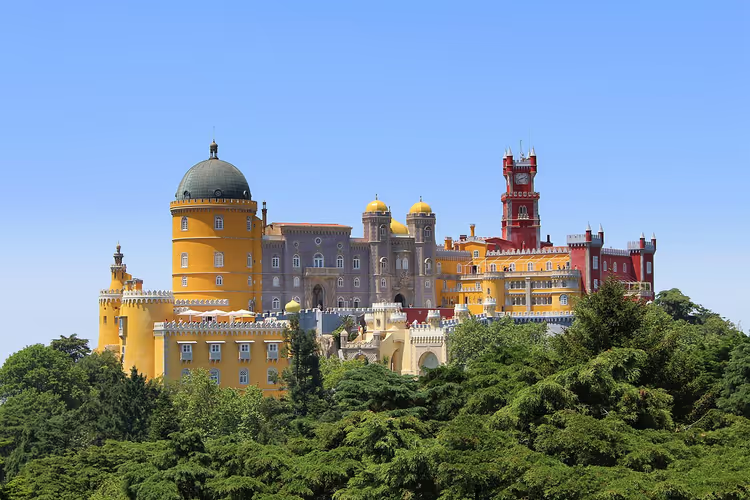
Sintra sits on a hill forty minutes from Lisbon, and the whole town is made up of palaces and parks. Pena Palace climbed higher than the rest: its yellow and red walls are visible from half the town. A ticket for the palace and park costs 14 € (as of 09/2026, Parques de Sintra), and you will pay less for the park without the palace.
 © Singa Hitam · CC BYPhoto: Singa Hitam, CC BY (https://creativecommons.org/licenses/by/2.0), Wikimedia Commons
The second stop of the day: Quinta da Regaleira. The estate feels like a quest made of grottoes, towers, labyrinths, and an initiation well with nine spirals of stairs. Tickets are sold for a specific time slot, so buy them in advance on the official website. The catch with Pena: in summer there is always a crowd at the palace, and you will have to wait to get a shot without people in the frame.
Choose a hotel in Sintra closer to the station if you plan to go to Lisbon every day: Hotels in Sintra on Trip.com.
3. Cascais and Estoril: the Atlantic resort
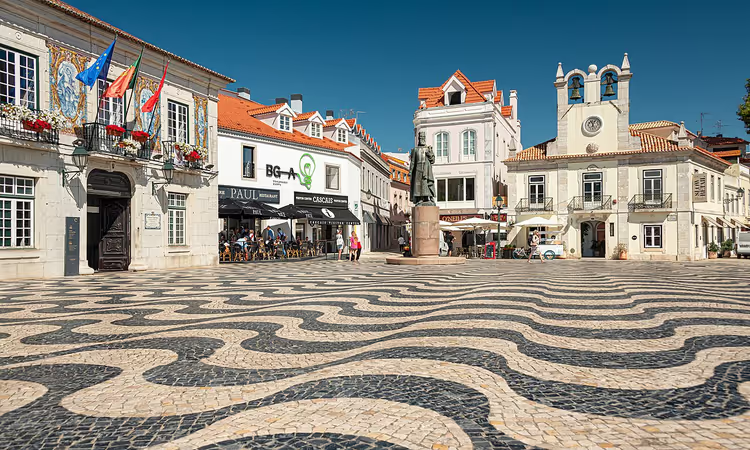
Cascais lies half an hour from Lisbon along the coastal line. It is a resort with sandy beaches and the open ocean, and the water here is cool even in August. In the morning the beaches are almost empty, and you will have time to swim before the wind and waves pick up.
Estoril is home to Casino Estoril, the country's most famous casino. Entry is allowed for adults with a passport and closed-toe shoes; shorts will not get you in. In the evening, the town comes alive around the casino and the promenade, where restaurants serving fish and seafood stay open.
 © Jorge Franganillo · CC BYPhoto: Jorge Franganillo, CC BY (https://creativecommons.org/licenses/by/2.0), Wikimedia Commons
Staying overnight in Cascais is convenient if you want to combine the sea and Lisbon in one trip: Hotels in Cascais on Trip.com.
4. Cape cabo da roca: the edge of europe
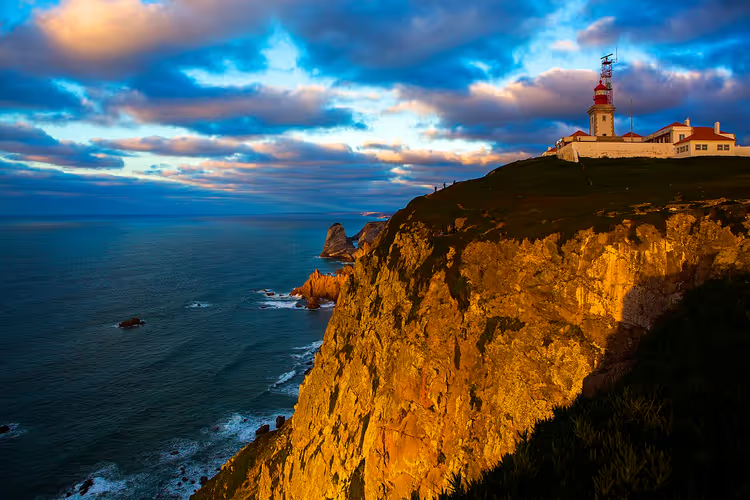
Cabo da Roca is called the edge of Europe: the westernmost point of the continent. The cliff drops straight into the Atlantic, a lighthouse stands nearby, and in a small office you can get a certificate of your visit. They don't stamp passports there. There is nothing to see here except the ocean, and that is exactly why people come.
 © Olga1969 · CC BYPhoto: Olga1969, CC BY (https://creativecommons.org/licenses/by/4.0), Wikimedia Commons
The catch: the cape almost always has strong wind, and during the day tour buses arrive. Come at opening time in the morning, and your photos will be crowd-free. The road from Sintra goes through the Sintra-Cascais Natural Park, with viewpoints along the way. If you don't have a car, book tours to Cabo da Roca.
5. Lousã: schist villages in the mountains
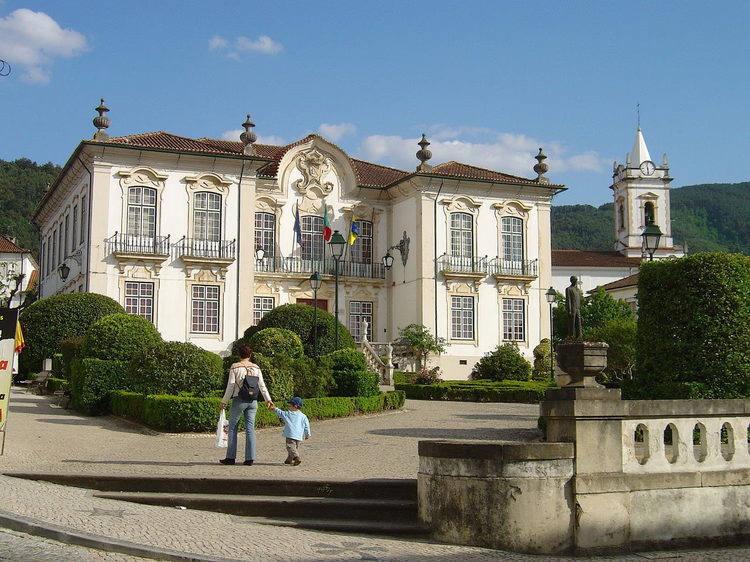
Lousã hides in the Serra da Lousã mountains, away from the main routes. A medieval castle towers above the town. The town feels almost empty, and in that silence you will experience the real Portugal without the crowds.
 © Vitor Oliveira from Torres Vedras, PORTUGAL · CC BYPhoto: Vitor Oliveira from Torres Vedras, PORTUGAL, CC BY (https://creativecommons.org/licenses/by/2.0), Wikimedia Commons
Nearby are scattered schist villages (aldeias do xisto): houses of dark stone, narrow streets, and views of the gorges. Don't confuse Lousã with Luso, the resort near the Buçaco Forest. The historic Vila Duparchy house is actually in Luso: prices at Vila Duparchy on Trip.com.
6. Porto: Ribeira and port wine
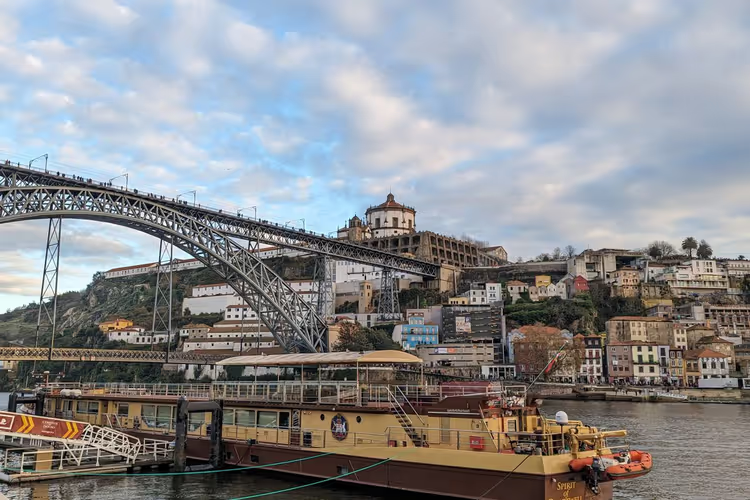
Porto, the country's second-largest city and the capital of port wine. The Douro River divides it from Vila Nova de Gaia, where wine is stored and aged in cellars. The Luís I Bridge spans the river, and you can walk across the upper deck for free, with the best view of the city from there.
In the center stands the Livraria Lello bookstore with its red staircase. Admission costs €8 (as of 09/2026, official tickets), and that amount is credited toward a book purchase. It's worth booking a time slot online: checked on 13.09.2026 on the official website, the walk-up line at the entrance can stretch down the entire lane. Where to stay: Hotels in Porto on Trip.com.
7. Aveiro: canals and striped houses
Aveiro is called the Venice of Portugal. Moliceiro boats, brightly painted vessels, travel along the canals, and art nouveau houses line the water. During the day you simply stroll along the embankment; in the evening the town becomes a quiet place for dinner.
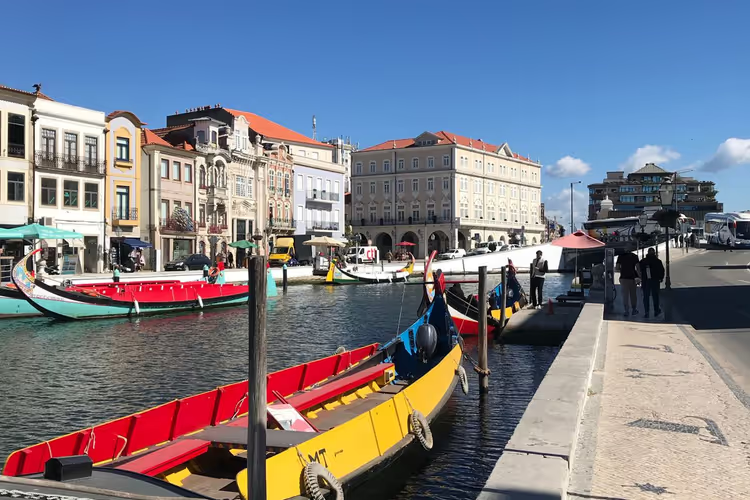
Nearby is Costa Nova with its striped houses on the dunes, and in Aveiro itself you should try ovos moles, a local dessert made from egg yolks. Stay in the center so you can walk to the canals: Hotels in Aveiro on Trip.com.
8. Lagos and the Algarve cliffs
Lagos closes out the route in the south of the country, in the Algarve. It is warmest here, and the season runs from spring to late autumn. The main highlight of the walk: the Ponta da Piedade cliffs with arches, grottoes, and turquoise water.
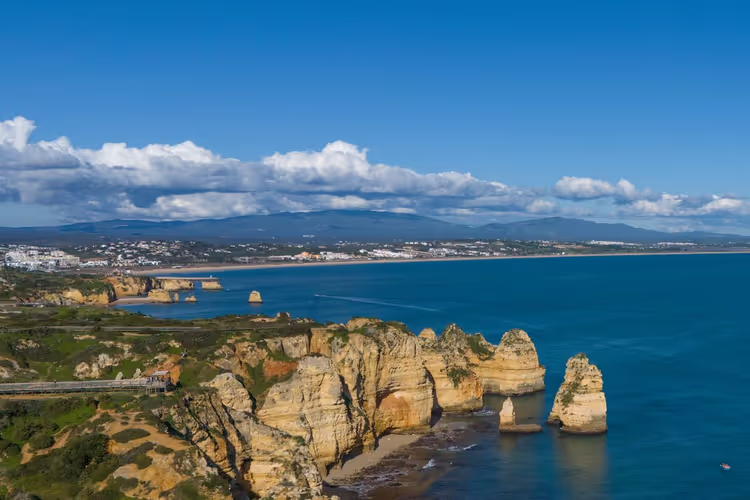
Boat tours to the grottoes leave from the pier on the waterfront, and buy tickets in the morning while the sea is calm. The catch with Lagos: in summer the town is packed with vacationers, and by midday you cannot find a spot on Praia Dona Ana beach. Staying closer to the center is cheaper than right by the cliffs: Hotels in Lagos on Trip.com.
⁉️🤔 Frequently asked questions
How many days do you need for this route?
A week is enough for the basic version. Give two days to Lisbon and Sintra, and one day to Cascais and Cabo da Roca. On the way north, allow a day for Lousã, then move on to Porto with Aveiro. The Algarve is easier to add at the end as a separate two-to-three-day stretch if you have a spare week.
Which tickets should you buy in advance?
Tickets for Pena Palace, Quinta da Regaleira, and Livraria Lello are sold by time slot, and in high season slots sell out days ahead. Jerónimos Monastery and Belém Tower are also easier to book online so you don't stand in line at the ticket office. The rest of the sights can be visited on the spot.
Where should you stay between Lisbon and Porto?
Three bases work well for this route: Lisbon, Porto, and Lagos. Between Lisbon and Porto, stop in Lousã; from there you can reach the schist villages. From Lisbon you cover Sintra, Cascais, and the cape; from Porto you can get to Aveiro in an hour. Lagos handles the entire Algarve, but it's at the other end of the country, so it's easier to fly there.
What if you're traveling without a car?
Trains run between Lisbon, Sintra, Porto, and Aveiro, so you don't need a car. You can reach Cabo da Roca and the schist villages around Lousã by bus, but the schedule is sparse. Plan that day in advance and don't leave the return trip for the evening.
When is the best time to visit Portugal?
Mild weather lasts from April through June and in September: warm, but without the August heat and crowds. The north, including Porto and Aveiro, is rainier; the best time there is from May through September. The Algarve is comfortable almost year-round, but in summer the cliffs around Lagos are packed with tours.
Tours and tickets in Lisbon
Guided tours, skip-the-line tickets and activities — most offers can be cancelled free of charge.
See offers on TiqetsThe widget loads once you give your consent.
In short: what's worth booking
Portugal comes together nicely as a single route if you book along the chain of Lisbon, Sintra, Porto, and the Algarve. The selection matrix is simple. If you want cities and museums, base yourself in Lisbon. If you want the ocean and surfing, choose Cascais or Lagos. If wine and bookshops interest you, Porto is the place to go.
What to book in advance: timed tickets for Pena, Regaleira, and Lello, trains between cities, and accommodation in Sintra on weekends. Tours and tickets are easy to arrange ahead of time: tours and tickets in Portugal on GetYourGuide.

A small editorial team writing guides for independent travel. We travel ourselves, but we haven’t been everywhere, so we check prices, opening hours and how to get there against official sources.