
















What to see in Beijing: 25 attractions by district
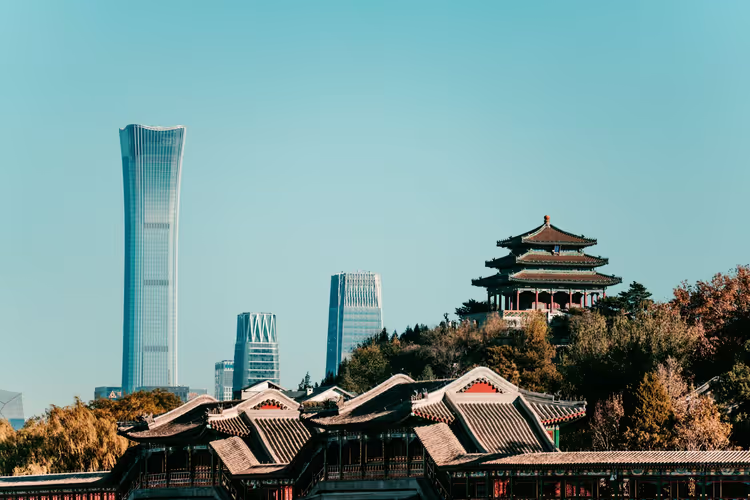
Beijing is huge, and you won’t see everything you want in one trip. The main challenge here is distance: the imperial center, the northwestern parks, and the futuristic east are spread across different parts of the city.
We’ve put together 25 of Beijing’s top sights and grouped them by theme, from palaces to amusement parks. That way you build your route on the map instead of guessing, and you don’t lose half a day traveling across the whole city.
Half the places on this list are temples, parks, and waterfronts where admission costs very little or is free. Museums and observation decks, on the other hand, take time and require your passport, so plan those in advance.
Ad: this article contains affiliate links, we earn a commission if you book through them, at no extra cost to you.
What to see in Beijing: the plan
💡 In short:
- Split the list by area: the imperial center, the parks in the northwest, and the modern sites in the east.
- For a first trip, pick five or six major sights and add the rest along the way.
- Tickets and opening hours: 09/2026, checked on the official Palace Museum page
1. The Forbidden City
 © N509FZ · CC BY-SAPhoto: N509FZ, CC BY-SA (https://creativecommons.org/licenses/by-sa/4.0), Wikimedia Commons
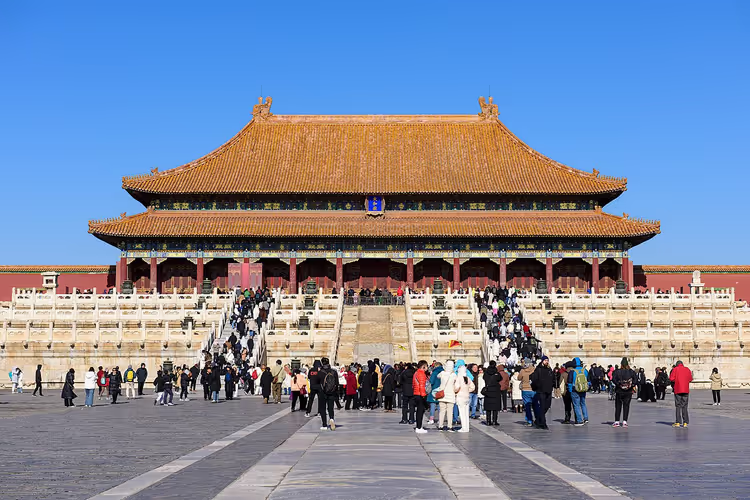
The Forbidden City (Gugong) was built for the emperors of the Ming dynasty in the early fifteenth century. Behind its blank walls are palaces, pavilions, and service buildings, nearly ten thousand of them in total. A day in this labyrinth flies by unnoticed.
Inside you’ll find the country’s largest carved marble slab with dragons, bronze lions at the gates, and a cast-iron turtle, a symbol of longevity. The tour starts along the imperial axis, which runs north from the Gate of Heavenly Peace.
Tickets are sold only in advance; you can’t buy them on the day of your visit, and the museum is closed on Mondays (as of 09/2026, official Palace Museum page). Gates open at eight thirty in the morning.
- How to get there: take the metro to Tian'anmen East station, then walk across the square.
- The catch: you can’t cover the whole complex in one day, so allow at least half a day for it.
2. Tiananmen square and the gate of heavenly peace
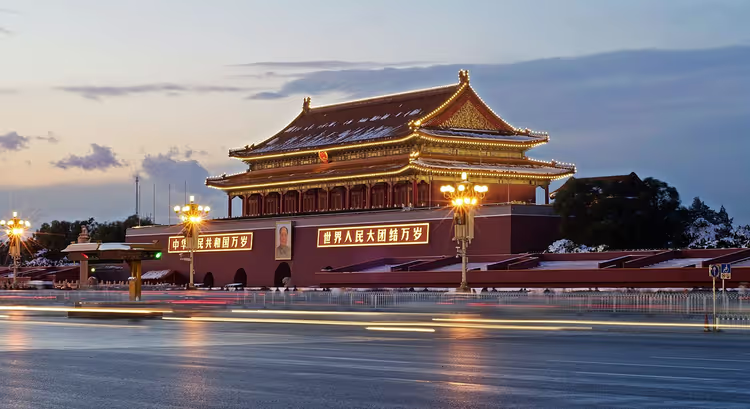
The Gate of Heavenly Peace gave its name to the country’s main square. In Chinese it’s called Tiananmen, and it’s one of the most revered places in Beijing. This is where the route to the Forbidden City begins.
Imperial ceremonies were held on the square, and in the mid-twentieth century the founding of the People’s Republic of China was announced here. Along its edges stand the Great Hall of the People and the National Centre for the Performing Arts, both in a recognizable modern style.
The square covers more than forty hectares, so there’s little shade in the heat. Enter from the south side and allow at least an hour for a look around.
- How to get there: Tian'anmen East or Tian'anmen West metro station.
- The catch: the square is open and enormous, so on a sunny day you’ll need water and a hat.
3. Chairman Mao memorial hall
The Chairman Mao Memorial Hall stands in the southern part of Tiananmen Square. The leader’s body was embalmed and placed in a sarcophagus a year after his death. People start lining up here at dawn.
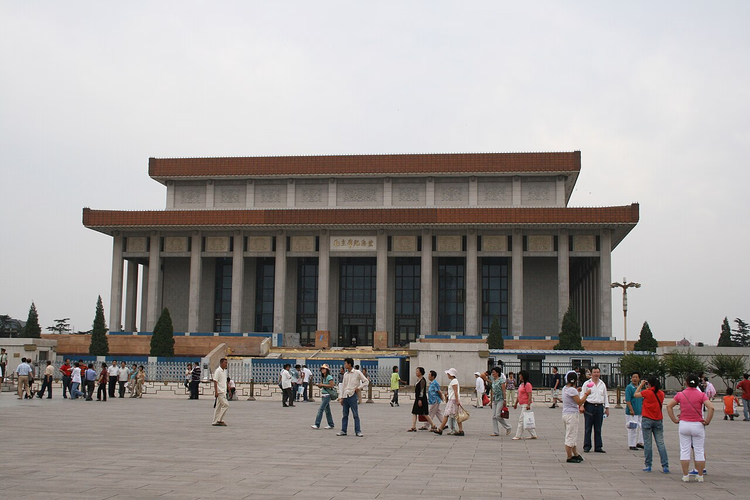
At the entrance, visitors are greeted by a multi-meter marble statue of Mao seated in a chair. Bags, liquids, cameras, and phones are not allowed inside; everything goes to a storage room. Bring only money and your passport.
People come with flowers and walk quickly past the sarcophagus. Check the schedule in advance: visiting hours are limited to the morning.
- How to get there: from Qianmen metro station, then walk north.
- The catch: photography inside is prohibited, and the line drags on for a long time in summer.
4. Monument to the People's Heroes
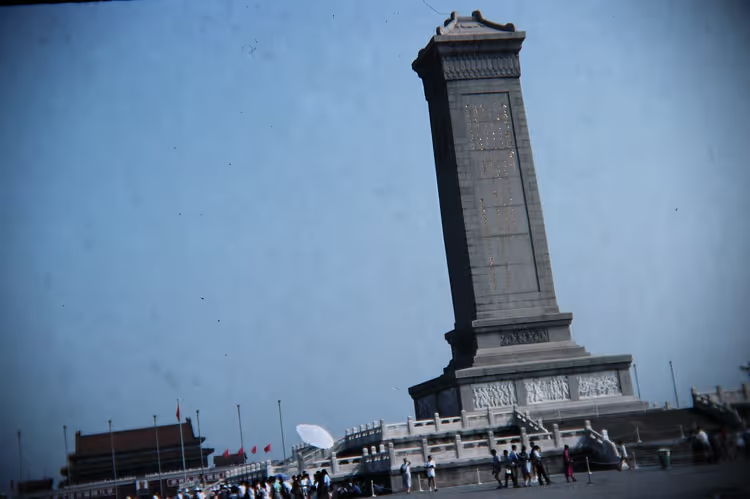
The forty-meter-high monument stands in the center of Tiananmen Square. The pedestal is decorated with eight bas-reliefs depicting episodes from China’s revolutionary history. The scenes run from the destruction of opium to the crossing of the Yangtze.
The monument took seventeen thousand marble and granite blocks, joined so that it should stand for centuries. It draws both people whose ancestors took part in the revolution and simply curious tourists.
A visit takes about ten minutes, and the site is open around the clock and free. Put it in the same block as the Memorial Hall and the Gate; they’re close together.
- How to get there: center of the square, nearest station Tian'anmen East.
- The catch: it’s always crowded, so a calm photo is easier to get in the morning.
5. Temple of Heaven
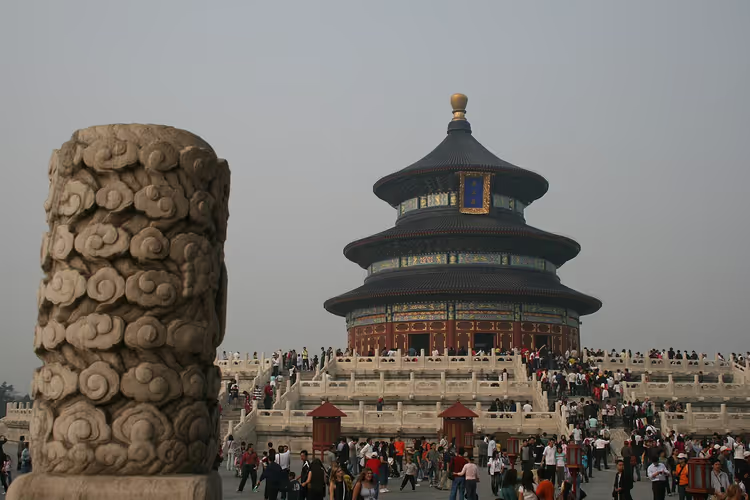
The Temple of Heaven, together with its large park, symbolizes the connection between heaven and earth. Emperors came here to pray for good weather and a good harvest. Today it’s a peaceful park in the middle of the city, where Beijingers come to exercise.
The architecture is built on numbers. The altar is paved with marble slabs in multiples of nine, and the columns of the Hall of Prayer for Good Harvests are divided into four groups according to the seasons. The complex is a UNESCO site.
The park and the paid pavilions have different hours. The park is open from early morning until late evening, while the pavilions welcome you from Tuesday to Sunday and are closed on Mondays (as of 09/2026, Beijing city portal). Go in the morning: you’ll have time both to go inside and to take a walk.
- How to get there: Tiantan Dongmen metro station, at the east gate.
- The catch: on Mondays you can’t get inside the pavilions; only the park and the paths are open.
6. Yonghe Temple
 © Bjoertvedt · CC BY-SAPhoto: Bjoertvedt, CC BY-SA (https://creativecommons.org/licenses/by-sa/4.0), Wikimedia Commons
Yonghegong is called the Temple of Harmony. It is an active lamaist monastery where monks live and ceremonies are held. The imperial residence was turned into a monastery in the early eighteenth century.
Stone lions guard the gates leading to the entrance. Inside, you will pass through several courtyards, see the richly decorated exterior and interior, and the main shrine, a sandalwood Buddha statue.
The statue's base goes deep underground, and its height is measured in meters. The temple is active, so respect the rules and do not disturb the services.
- How to get there: Yonghegong metro station, exit toward the temple.
- The catch: it is crowded and noisy during services; early morning is the quietest time.
7. Confucius Temple
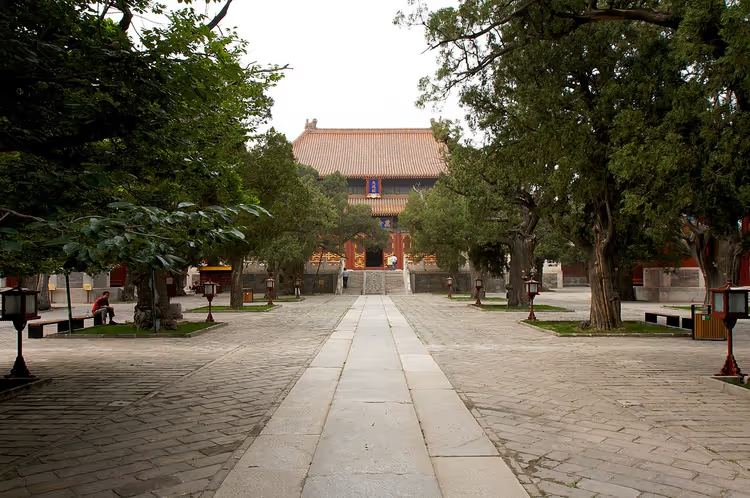 © LuxTonnerre · CC BYPhoto: LuxTonnerre, CC BY (https://creativecommons.org/licenses/by/2.0), Wikimedia Commons
The Confucius Temple was built in honor of the great philosopher in the early fourteenth century. The building has undergone renovations, but a significant part of the structures has survived in their original form.
The decoration here celebrates scholarship. At the entrance you will read inscriptions on stones, and the walls of the Pavilion of Scholarship are covered with a pattern of hieroglyphs. The Imperial Academy is located nearby.
Quiet courtyards and old cypress trees make this place a calm pause between noisy squares. A visit takes about an hour.
- How to get there: Yonghegong metro station, next to Yonghegong.
- The catch: the exhibition is more modest than in the city's main museums, and some buildings are closed to visitors.
8. Great Bell Temple
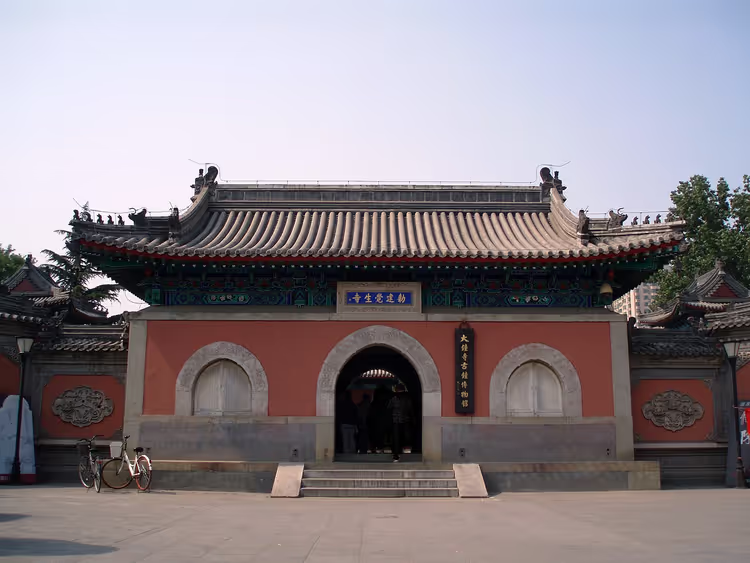 © User:Clithering · CC BY-SAPhoto: User:Clithering, CC BY-SA (https://creativecommons.org/licenses/by-sa/2.5), Wikimedia Commons
The great bell was cast under the emperor who began the Forbidden City. Its height exceeds five meters, and its weight is measured in tens of tons. In winter, the bell was rolled into the tower on an ice track.
The ringing could be heard for tens of kilometers, and the sound ranged from a gentle chime to loud peals. The site houses a museum of bells collected from different provinces of China and other countries.
The temple is open to visitors, and a visit takes no more than an hour. Come in the first half of the day so you have time for the museum as well.
- How to get there: Dazhongsi metro station, then walk following the signs.
- The catch: part of the exhibition is labeled only in Chinese, with no English signs.
9. CCTV Headquarters
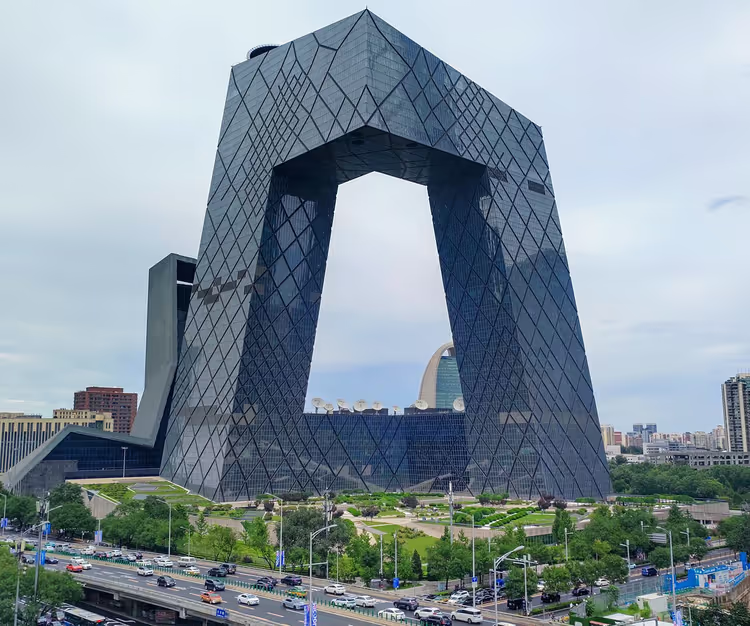 © HoweyYuan · CC BY-SAPhoto: HoweyYuan, CC BY-SA (https://creativecommons.org/licenses/by-sa/4.0), Wikimedia Commons
Modern Beijing begins with the CCTV headquarters. Two leaning towers are connected at the top and form a loop that locals jokingly call "the pants." The project was designed by Dutch architect Rem Koolhaas.
The structure is designed to withstand earthquakes: the towers lean toward each other and serve as supports. The base is assembled from connected cells, and separate evacuation routes were planned for people.
You cannot go inside, but the building itself is worth seeing from the outside. The best shots come from the opposite side of the boulevard in the evening, when the lighting is turned on.
- How to get there: Guomao business district, Guomao metro station.
- The catch: there are no official tours inside; viewing is only possible from the street.
10. Wangjing SOHO complex
In the Wangjing district stands a complex of three high-rises without a single right angle. They were designed by Zaha Hadid, who is called the "queen of curves." The buildings were built for offices of international companies.
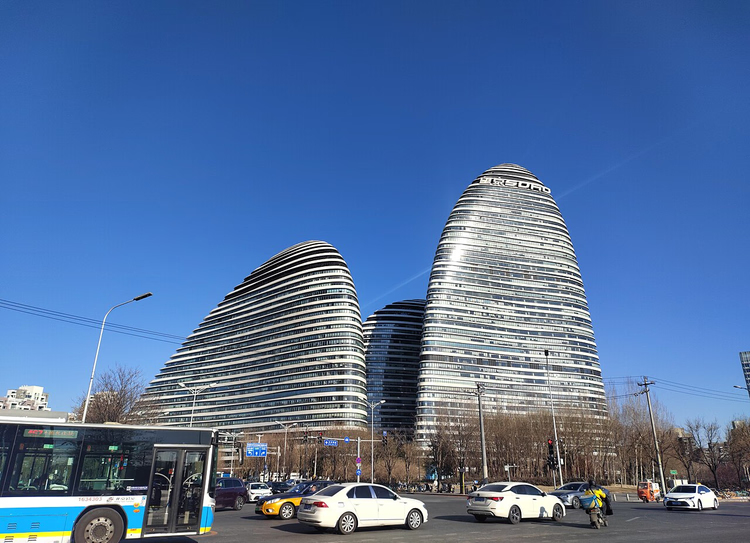
Aluminum panels of varying widths regulate lighting, and all utilities are controlled by a single management system. As a result, the complex saves electricity, water, and heat.
The Chinese compare the silhouettes to pond carp, which symbolize wealth in their culture. You won't be allowed inside, but the facades are worth seeing at sunset.
- How to get there: Wangjing district, take the subway to Wangjing station.
- The catch: it's an office property, there's no observation deck or museum here.
11. National Museum of China
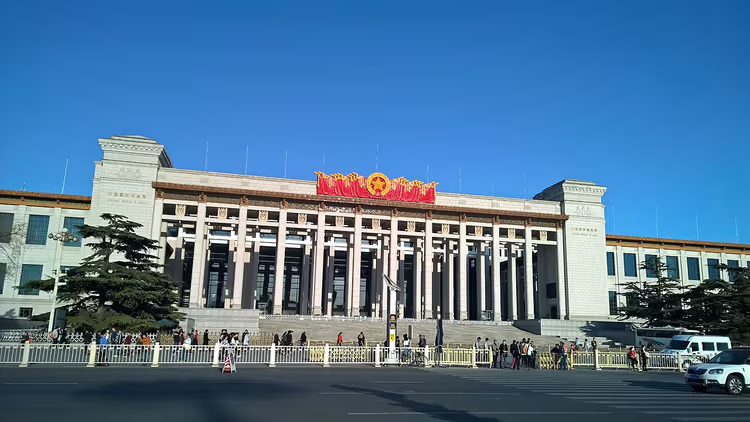
The National Museum of China occupies a large building on the east side of Tiananmen Square. Its collection includes more than a million exhibits and spans eras from the Neolithic to the present day. Seeing it all takes more than one hour.
It houses one of the country's oldest artifacts, the remains of Yuanmou Man, and a bronze tripod weighing about eight hundred kilograms. It is considered the largest bronze vessel of its kind. There are also halls dedicated to modern art, science, and national currency.
Entry for foreigners is processed with a passport, so bring it with you. Some halls close at the beginning of the week, so check the schedule in advance.
- How to get there: Tian'anmen East subway station, east side of the square.
- The catch: a full visit takes half a day; in one hour you'll only see the main halls.
12. Prince Gong's Mansion
 © Scorewith German · CC BYPhoto: Scorewith German, CC BY (https://creativecommons.org/licenses/by/3.0), Wikimedia Commons
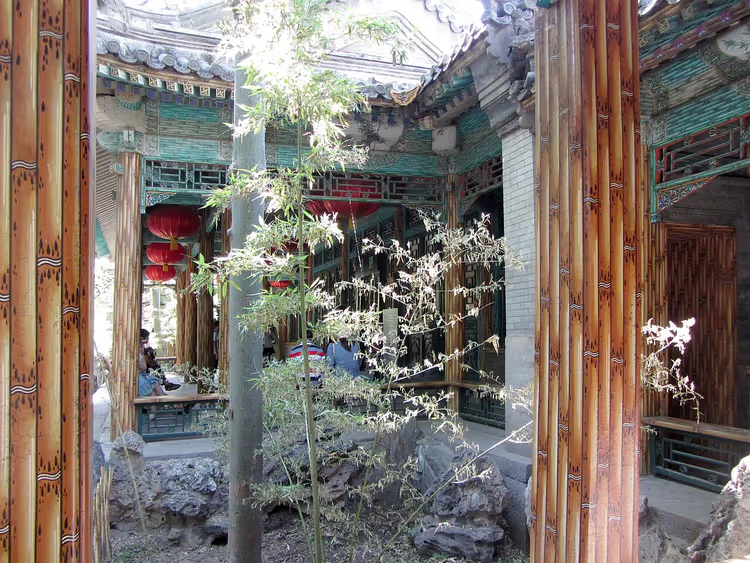
Prince Gong's Mansion is the palace and park complex of Prince Gong in the western part of Beijing. The palace was built in the late eighteenth century for an influential official and later passed to the emperor's brother, who held the title "Gong."
By the twentieth century the estate had fallen into disrepair, but after it was designated a monument, restoration began and looted property was recovered. Today you walk among restored halls and a well-kept garden.
This is a compact alternative to the Forbidden City: the same imperial style, but without the crowds of thousands. A visit takes about two hours.
- How to get there: Shichahai subway station, then walk along Houhai.
- The catch: on weekends tour groups come here; it's quietest in the mornings.
13. National Stadium
 © N509FZ · CC BY-SAPhoto: N509FZ, CC BY-SA (https://creativecommons.org/licenses/by-sa/4.0), Wikimedia Commons
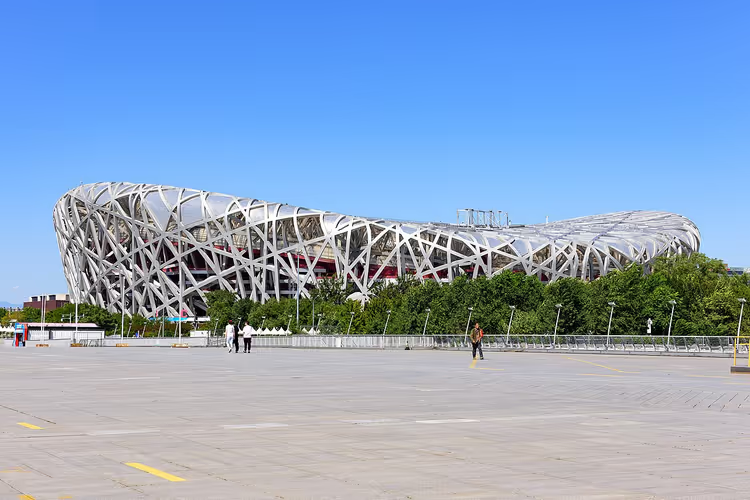
The National Stadium was built for the Olympics and immediately nicknamed the "Bird's Nest" for its interwoven metal beams. The design was created by Swiss architects Herzog & de Meuron. The arena required forty-five thousand tons of steel.
The stadium seats 91,000 spectators (as of 09/2026, Beijing city portal). A swimming complex stands nearby, and together they resemble a giant ship by the lake.
In the evening the arena is lit from within, and that's the best time for photos. You can get inside on a tour or for an event, so check the schedule in advance.
- How to get there: Olympic Sports Center subway station, follow signs to the Olympic Park.
- The catch: there's little shade around; in summer it's better to walk here after five in the evening.
14. Summer Palace
 © xiquinhosilva · CC BYPhoto: xiquinhosilva, CC BY (https://creativecommons.org/licenses/by/2.0), Wikimedia Commons
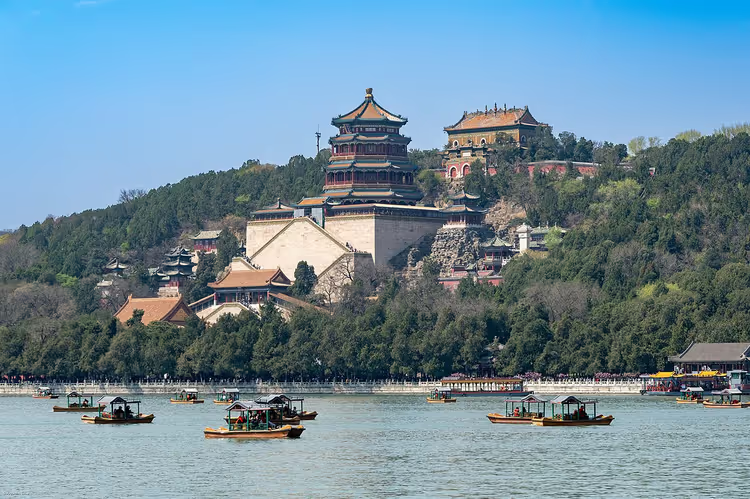
The Summer Palace, or Yiheyuan, is a vast imperial residence with palaces, bridges, and temples on the shore of Kunming Lake. The grounds contain about three thousand structures. Just the main sights will take half a day.
The most visited site stands on the slope of Longevity Hill: the Temple of Longevity. Along the lake stretches a gallery with thousands of paintings, by the water stands the Marble Boat, and in summer lotuses bloom on the lake.
It's better to buy tickets online; visitors are admitted in time slots and with a passport (as of 09/2026, Beijing city portal). The park opens early in the morning, and the main pavilions close an hour earlier than the park itself.
- How to get there: Beigongmen subway station, north entrance.
- The catch: the grounds are huge; in one visit you'll see either the eastern or the western part.
15. Yuanmingyuan Park
 © 一懒众山小 · CC BY-SAPhoto: 一懒众山小, CC BY-SA (https://creativecommons.org/licenses/by-sa/4.0), Wikimedia Commons
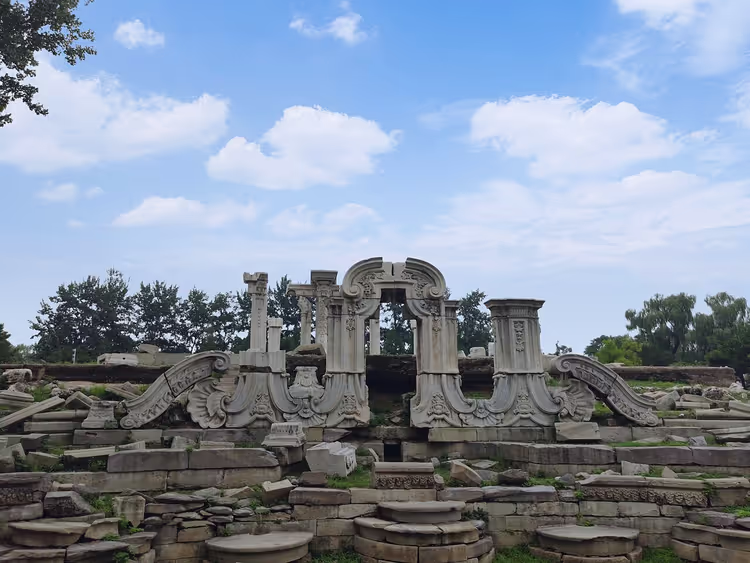
Yuanmingyuan, or the Garden of Perfect Brightness, lies east of the Summer Palace. Emperor Kangxi turned it into a lavish park with palaces, ponds, alleys, and sculptures. In scale it surpassed even the Forbidden City.
In the second half of the nineteenth century the park was looted and burned by foreign troops, and only ruins remain of its riches. Today it's an open-air museum: you walk along paths among the ruins of columns and stone structures.
The atmosphere here is quiet and melancholic, quite unlike the busy parks of the center. A visit takes about two hours.
- How to get there: Yuanmingyuan Park subway station, entrance next to the park of the same name.
- The catch: mostly ruins remain; you won't see lavish interiors here.
16. Beihai Park
 © EditQ · CC BY-SAPhoto: EditQ, CC BY-SA (https://creativecommons.org/licenses/by-sa/4.0), Wikimedia Commons
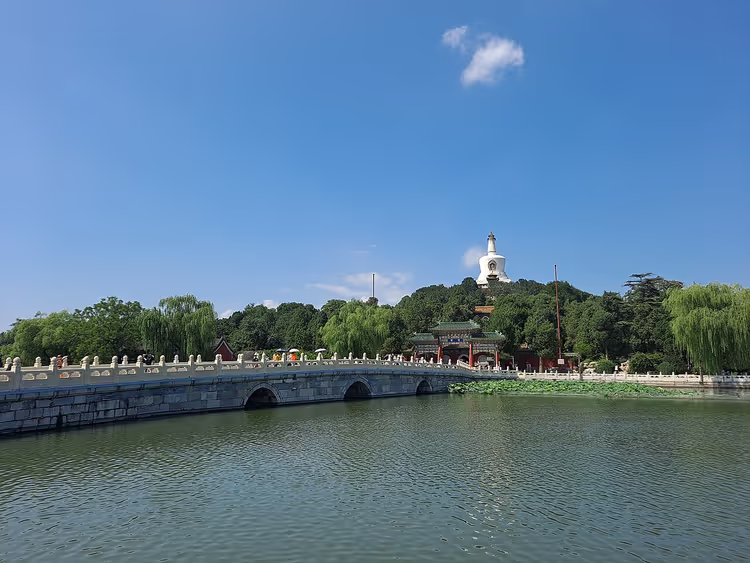
Beihai grew up around a lake northwest of the Forbidden City. Here emperors created gardens where they could rest from palace ceremonies. The park was opened to the public in the 1920s after restoration.
The most popular spots are Jade Island with its religious structures, the Zhishan Bridge, and the White Dagoba, a Buddhist stupa with relics. Nearby stand pavilions and the Temple of Eternal Peace.
A walk along the shore and a climb to the island take two to three hours. In summer people go boating here, and in winter, ice skating.
- How to get there: Beihai North subway station, north entrance of the park.
- The catch: on weekends the paths are packed with locals; come right at opening time.
17. World Park
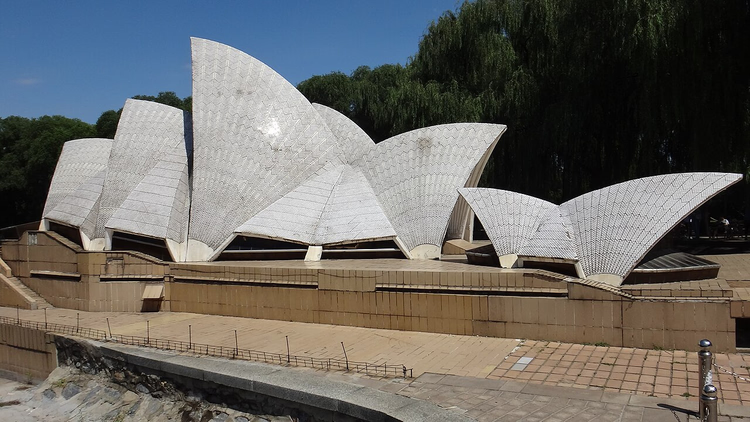 © Techyan · CC BY-SAPhoto: Techyan, CC BY-SA (https://creativecommons.org/licenses/by-sa/4.0), Wikimedia Commons
World Park is an entertainment and educational spot with miniature replicas of world landmarks. You will find Red Square, the Eiffel Tower, the pyramids, Niagara Falls, and a section of the Great Wall of China.
Besides the mini city, there are rides, boat trips on the pond, and animal encounters. The grounds are decorated with landscaped lawns, fountains, and themed sculptures.
Kids enjoy it more than adults, so plan for half a day. The park is large and involves a lot of walking.
- How to get there: World Park subway station, entrance at the main gate.
- The catch: the replicas look like stage sets, so do not come here expecting historical accuracy.
18. Botanical garden
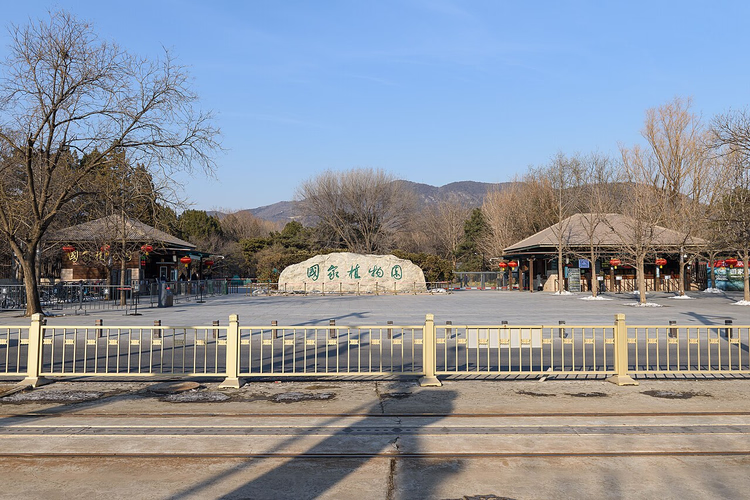 © N509FZ · CC BY-SAPhoto: N509FZ, CC BY-SA (https://creativecommons.org/licenses/by-sa/4.0), Wikimedia Commons
The Beijing Botanical Garden spreads across the foothills of the Xiangshan Mountains, next to the Summer Palace. It covers more than one hundred thirty hectares and includes both slopes and flat areas. Tens of thousands of trees and shrubs grow here.
The main highlights are the rose garden, the magnolia collection, the peony lawns, and the bonsai garden with miniature trees. The oldest dwarf trees are over a thousand years old. There are also themed gardens and suiseki stone compositions.
Walking paths wind through the grounds, and cafes and restaurants are available. In spring the peach orchards bloom, and that is the best season to visit.
- How to get there: by bus to the stop at the main entrance, or by taxi from the subway.
- The catch: the garden is far from the center, so allow time for the trip along the Xiangshan line.
19. Beijing TV tower
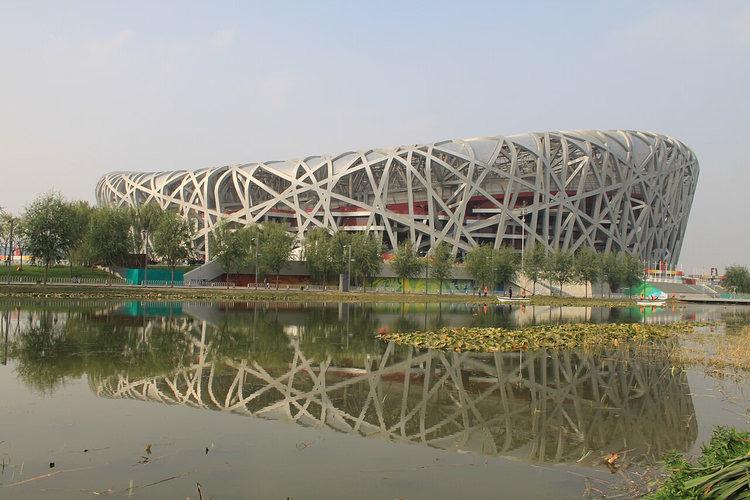
The Beijing TV Tower rises over four hundred meters and serves both broadcasting and tourism. Inside, there are museums on the history of Chinese television. You can sit in an anchor chair in front of a camera.
From the observation deck, more than two hundred meters up, you get a panoramic view of the city. Underground, there is an aquarium with a transparent tunnel where fish, rays, and jellyfish swim above you.
Access to the observation deck depends on the weather: in fog you will not see the panorama. Check the opening hours before visiting; there are more visitors in the evening.
- How to get there: Gongzhufen subway station, then walk.
- The catch: on cloudy days the view is blocked by clouds, so buying a ticket to the top is not worth it.
20. Marco Polo Bridge
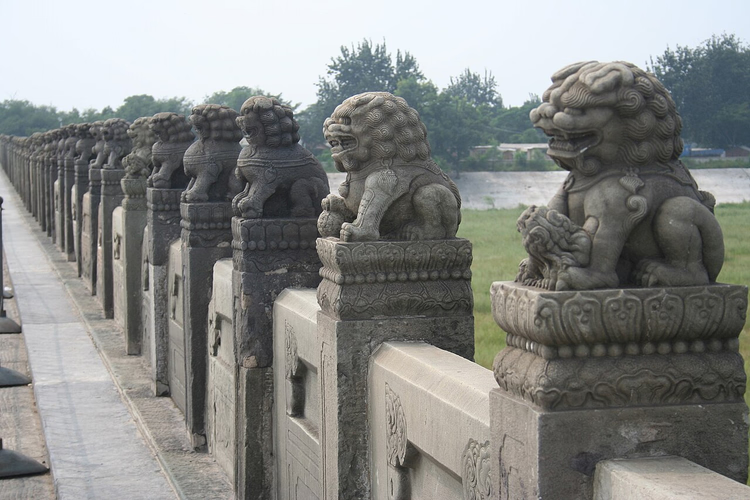 © Flickr user: 陈鹰 Beijing https://www.flickr.com/photos/40713859@N00/ · CC BYPhoto: Flickr user: 陈鹰 Beijing https://www.flickr.com/photos/40713859@N00/, CC BY (https://creativecommons.org/licenses/by/2.0), Wikimedia Commons
The Marco Polo Bridge, or Lugouqiao, spans the Yongding River. In the late seventeenth century, the crossing was rebuilt after a flood. Europeans named it after the traveler who described the bridge in his writings.
The bridge is supported by numerous stone lions, and it is said that no two figures are alike. The paving slabs bear the marks of centuries, and at the western end stands a stele erected by the Kangxi Emperor.
Sometimes the riverbed dries up and there is no water under the bridge. That does not spoil the walk: the view of the river and the old piers is still worth your attention.
- Getting there: take a bus to the Lugou Qiao stop, then walk.
- The catch: the bridge is far from the center, so a separate trip takes half a day.
21. National centre for the performing arts
 © xiquinhosilva · CC BYPhoto: xiquinhosilva, CC BY (https://creativecommons.org/licenses/by/2.0), Wikimedia Commons
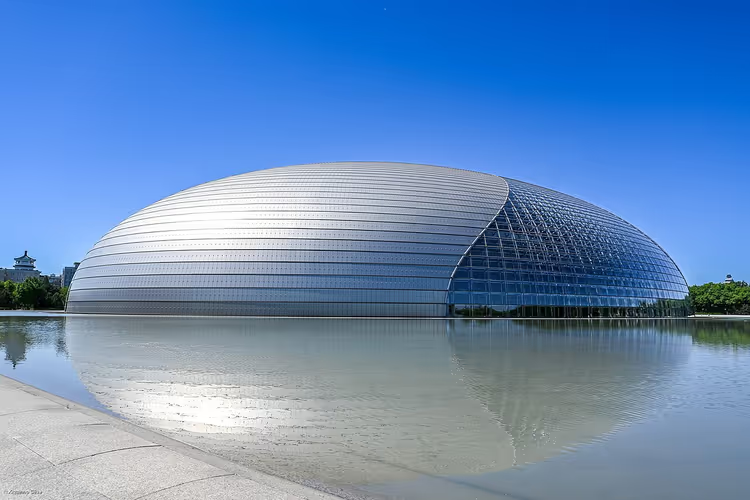
The National Centre for the Performing Arts stands in the middle of an artificial lake. The droplet-shaped building was designed by French architect Paul Andreu. Inside are an opera hall and concert halls.
The elliptical shell is made of titanium panels and glass, and underground corridors run beneath the water. The opening was marked by a production of Borodin's opera Prince Igor.
You can get inside for a performance or a guided tour; there is no free admission. In the evening, the lake is lit up, and the building's reflection becomes the highlight of your stroll.
- Getting there: Tian'anmen West metro station, south of the square.
- The catch: during the day the hall is closed for casual visits; you need a ticket to an event.
22. Beijing Zoo
 © N509FZ · CC BY-SAPhoto: N509FZ, CC BY-SA (https://creativecommons.org/licenses/by-sa/4.0), Wikimedia Commons
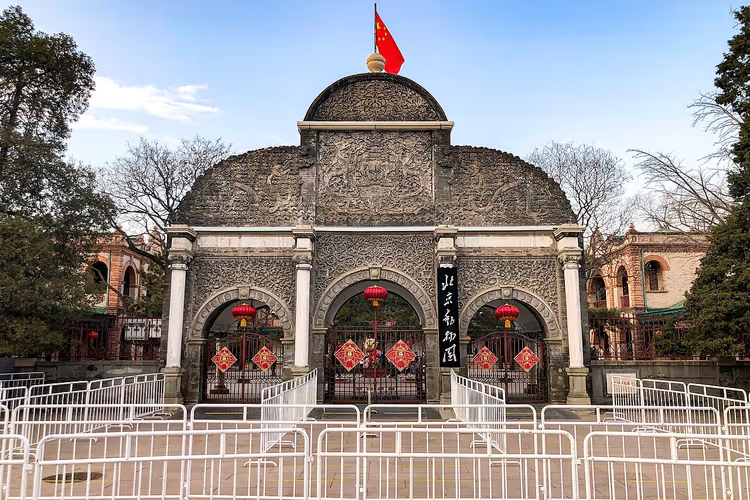
Beijing Zoo is famous above all for its giant pandas. The grounds are divided into themed zones that are home to several thousand animals. The layout resembles a Chinese garden with ponds, bridges, and willows bending over the water.
The most popular attraction is the Giant Panda Pavilion, where a line forms in the morning. Nearby stand sculptures of a bear family, and the predators live in spacious enclosures among the greenery.
Foreign visitors book tickets with a passport through the zoo's official WeChat account (as of 09/2026, Beijing city portal). A combined ticket covers both the zoo itself and the Panda Pavilion.
- Getting there: Beijing Zoo metro station, south entrance.
- The catch: pandas are active in the morning; by afternoon they are usually asleep, and a line has already formed at the enclosure.
23. Shijingshan Amusement Park
 © N509FZ · CC BY-SAPhoto: N509FZ, CC BY-SA (https://creativecommons.org/licenses/by-sa/4.0), Wikimedia Commons
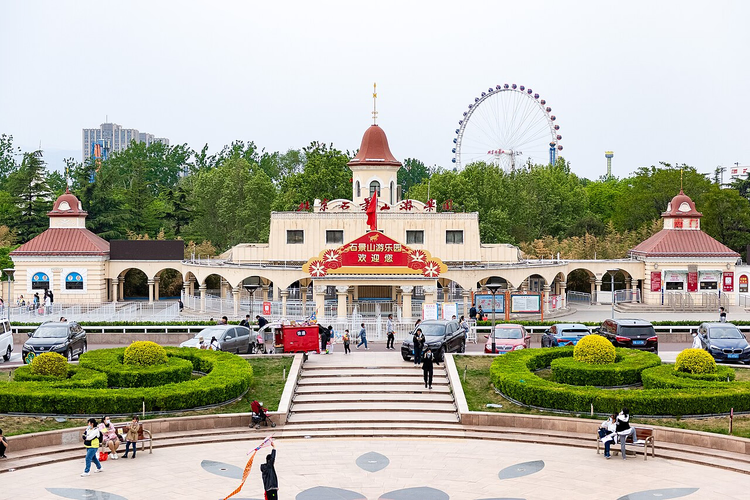
Shijingshan is a large amusement park in the west of the city, opened in the late eighties. The rides are spread across sectors: an eastern one with artificial canyons and rafting, an adventure land with Mayan mazes and a pirate ship, and a fantasy world for little ones.
There is a Gothic castle, a 4D cinema, a roller coaster, and a Ferris wheel. The atmosphere is carnival-like, and children recognize the characters from the very first steps.
The park suits families with children and ride enthusiasts. Tickets are sold at the entrance and for individual zones, so decide in advance what you want to fit in.
- Getting there: Bajiao Amusement Park metro station, exit to the park.
- The catch: some rides are closed in the off-season, and fewer zones operate in winter.
24. Happy Valley
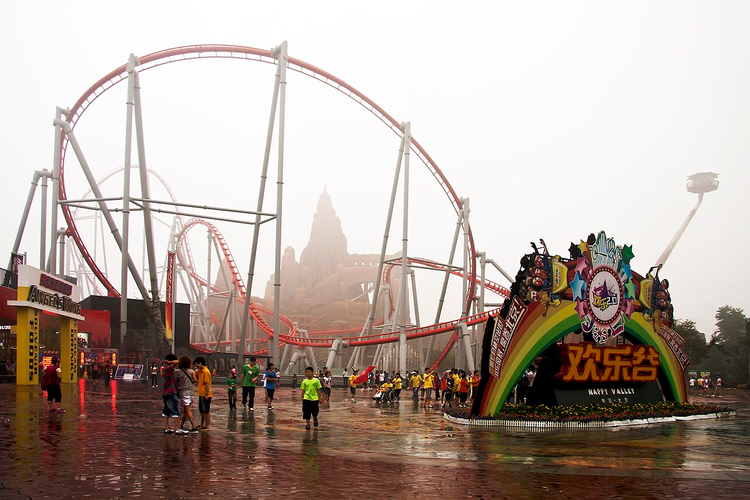
Happy Valley is China's answer to Disneyland, only with Eastern motifs. The park has more than a hundred rides divided into several themed zones. The central zone is called Atlantis.
Children can look forward to meeting cartoon characters and gentle carousels, while adults get extreme coasters, giant swings, and water slides. During the day there are costumed parades and theatrical shows.
A full tour takes an entire day, so buy your ticket in advance and arrive at opening time. Summer weekends are the busiest here.
- Getting there: Happy Valley metro station, then walk to the entrance.
- The catch: on weekends, lines for the main coasters can eat up half a day.
25. Houhai Lake
 © Anagoria · CC BYPhoto: Anagoria, CC BY (https://creativecommons.org/licenses/by/3.0), Wikimedia Commons
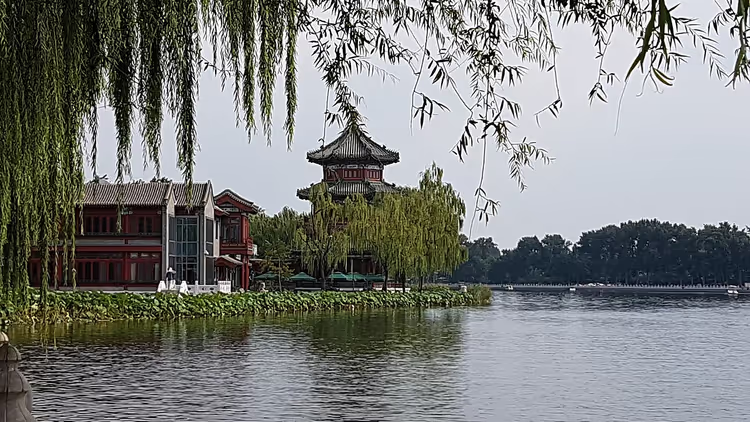
Houhai Lake in the Shichahai area was once an imperial pond. Today it is a favorite spot for Beijingers to stroll in any season. In summer people go boating here, and in winter they skate and sled on the frozen ice.
Cafes, restaurants, and souvenir shops line the banks. Visitors walk along the waterfront, and children feed the ducks.
In the evening, lights come on over the lake, and people come for the view of the old hutong courtyards. It is a calm way to end your long day in Beijing.
- Getting there: Shichahai metro station, exit to the waterfront.
- The catch: in the evening the area is full of bars and noisy; choose the morning for a quiet walk.
Tickets to Beijing's main museums and parks are best checked in advance: below is a selection of cards with photos and prices.
Tours and tickets in Beijing
Guided tours, skip-the-line tickets and activities — most offers can be cancelled free of charge.
See offers on TiqetsThe widget loads once you give your consent.
⁉️🤔 Frequently asked questions
How many days do you need for Beijing?
For a first visit, three to four days are enough. Spend the first day on the imperial center: the Forbidden City, Tiananmen Square, and the Mausoleum. Leave the second for the Temple of Heaven and Beihai Park. Use the third for the Summer Palace and Yuanmingyuan, and set aside the fourth for the Olympic Park and the TV tower.
Which Beijing attractions can you visit for free?
You can walk around Tiananmen Square, the Houhai waterfront, and the area around the National Stadium for free. The Temple of Heaven park is open with a park ticket, but a separate ticket is needed to enter the halls. The Botanical Garden and the Summer Palace charge admission, so plan your budget in advance. The National Museum of China is free; entry is by passport.
Do you need to book tickets in advance?
Yes, you will not get into popular museums without a reservation. Book tickets a few days ahead and arrive at opening time, when the lines are shorter.
Are Beijing museums open on Mondays?
Major sites are closed on Mondays. Parks and city squares remain open, so build your Monday plan around them.
What to see in Beijing with children?
Children usually enjoy the zoo with the Panda Pavilion, Happy Valley, and Shijingshan Amusement Park. At the World Park, a child can see miniature replicas of world landmarks, and at Houhai they can ride a boat. For a calm day, the Beijing Botanical Garden works well.
In short: what to book
If time is short, build your route around the imperial center: the Forbidden City, Tiananmen Square, and the Temple of Heaven cover the main interest of the trip. Buy museum tickets in advance, or you will be left without a slot.
- If you have two days: the imperial axis and the Temple of Heaven.
- If you have four days: add the Summer Palace, the parks in the west, and the Olympic Park.
- If you are traveling with children: choose the zoo, Happy Valley, and Shijingshan.

A small editorial team writing guides for independent travel. We travel ourselves, but we haven’t been everywhere, so we check prices, opening hours and how to get there against official sources.