
















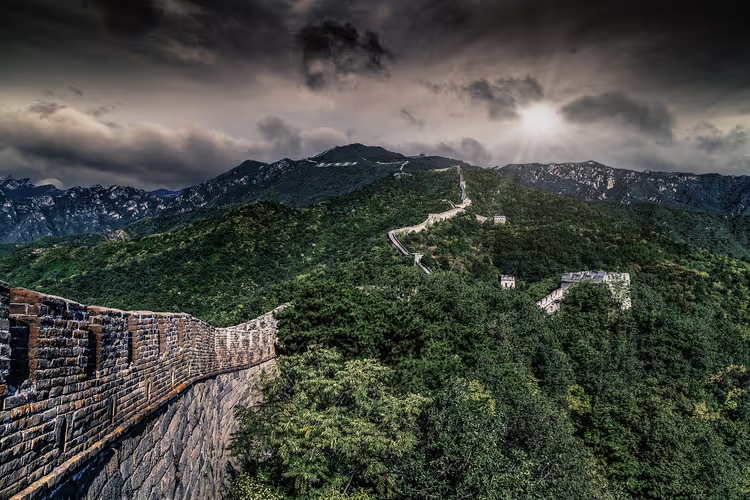
What to see in China: 15 places from the Great Wall to Yunnan
China fits walls, skyscrapers, deserts, and rice terraces into a single country. Picking the first fifteen places out of a hundred is genuinely hard.
Ad: this article contains affiliate links, we earn a commission if you book through them, at no extra cost to you.
Overview: what to see in China
💡 In short:
- Split your route into clusters: between Beijing, Xi'an, and Guilin, flying is faster than taking the train.
- Buy tickets to the Forbidden City online in advance; they are not sold at the ticket office.
- Tickets and opening hours: 09/2026, verified on the official Forbidden City website.
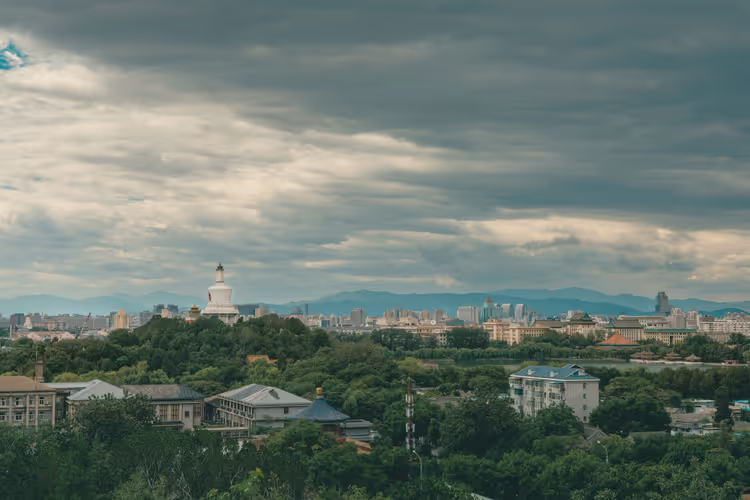
China covers almost ten million square kilometers, and distances between regions are measured in thousands of kilometers. The capital's north holds the Great Wall and the Forbidden City in Beijing. Central Xi'an is home to the Terracotta Army, while the southwest brings together the karst of Guilin, the lakes of Jiuzhaigou, the terraces of Guangxi, and the jungles of Yunnan.
We have put together fifteen places that most often make it into a first trip. For each one we added practical details: where it is, when to go, and what to expect. The table below will help you pick a destination in a minute. Detailed sections on each place follow.
Place | Region | Best time |
|---|---|---|
Great Wall of China | north of Beijing | April, May, September-November |
Beijing and the Forbidden City | Beijing | May, June, September |
Zhangjiajie | Hunan | spring and fall |
Dunhuang and the Mogao Caves | Gansu | April and May |
Red Beach of Dawa | near Panjin | late summer |
Zhujiajiao | Shanghai | April, May, October, November |
Huashan | Shaanxi | April-October |
Jiuzhaigou | Sichuan | September and October |
Yungang Grottoes | Shanxi | April-October |
Li River | Guangxi | all year except holidays |
Zhangye Danxia | Gansu | June-September |
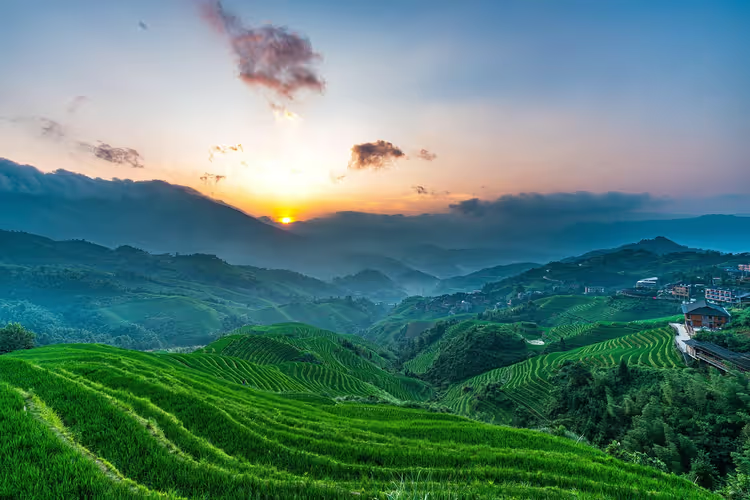
Longji Terraces | Guangxi | July and August |
Terracotta Army | Shaanxi | March-November |
Kanas Lake | Xinjiang | spring through fall |
Yunnan | Xishuangbanna | November through April |
1. The Great Wall of China: the empire's greatest construction project
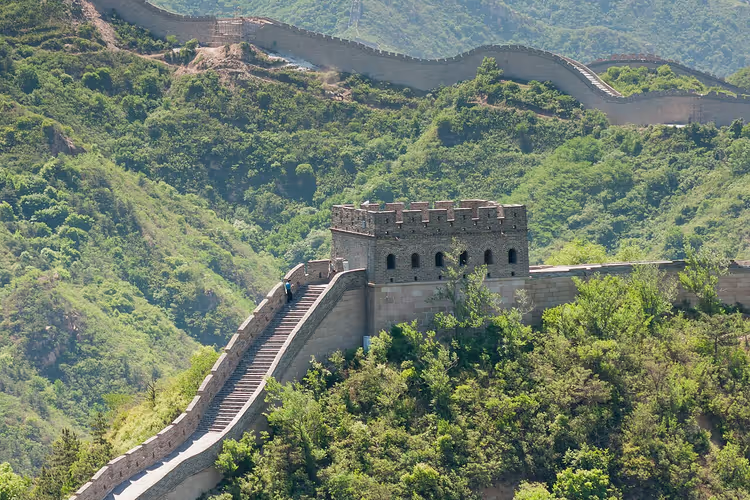
The wall was built on and off for more than two thousand years, and its sections run along the ridges north of Beijing. Watchtowers stand at regular intervals, and the masonry follows the terrain: where the hills are steeper, the wall climbs in steps. Genghis Khan's Mongol cavalry still broke through these fortifications, but for travelers the wall remains the country's main symbol.
 © CEphoto, Uwe Aranas · CC BY-SAPhoto: CEphoto, Uwe Aranas, CC BY-SA (https://creativecommons.org/licenses/by-sa/3.0), Wikimedia Commons
Closest to the capital lies the restored Badaling. It is the easiest to reach, and in season it is always crowded. At Gubeikou the wall runs right through an old village, while at Jiankou and Jinshanling you walk over crumbling stones with almost no one around. Wear closed shoes and bring water: the climb is steep in places, and the steps are high.
- Where: north of Beijing
- What to see: Badaling for a first visit, Jinshanling for quiet
- Best time: April, May, September-November
- The catch: Badaling is crowded with tourists in season
2. Beijing: the Forbidden City and old hutongs
The Forbidden City ranks first among the world's palace complexes: twenty-four emperors and their retinues lived behind its walls and moat. Entry is by online tickets only; they are not sold at the ticket office, and the museum is closed on Mondays (as of 09/2026, official website).
A second Beijing opens up in the hutongs, old neighborhoods of single-story houses built around a courtyard. In the morning, head to the Temple of Heaven park, where locals do exercises and play cards. Outside the city lie the Summer Palace of Yiheyuan by Kunming Lake and Xiangshan Park. Allow at least three days for the capital.
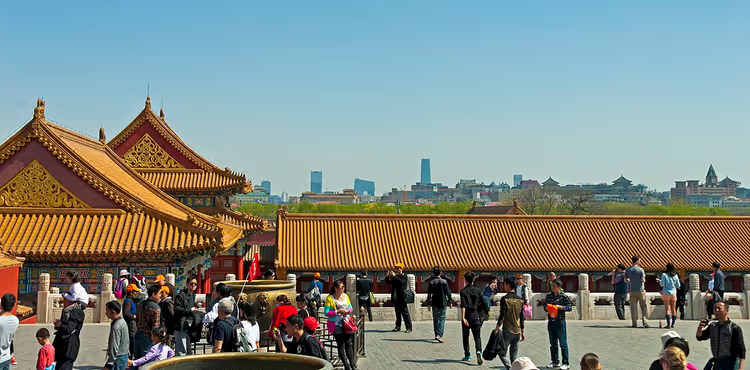 © Daniel Case · CC BY-SAPhoto: Daniel Case, CC BY-SA (https://creativecommons.org/licenses/by-sa/3.0), Wikimedia Commons
- Where: Beijing, Inner City
- What to see: the Forbidden City, Temple of Heaven park, hutongs
- Best time: May, June, September
- The catch: the Forbidden City is closed on Mondays
3. Zhangjiajie: the stone peaks of "Avatar"
In Hunan Province, hundreds of sandstone peaks rise almost vertically above the forest. Rain and wind carved them over thousands of years, and UNESCO listed the area as a World Natural Heritage site. A natural bridge over the gorge connects two ridges, and the park has cableways and an elevator up to the viewing platforms.
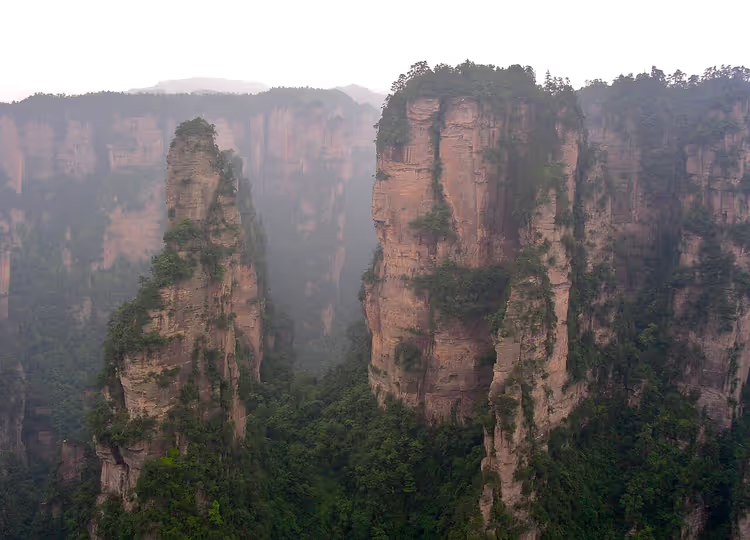 © Yoo Chung · CC BY-SAPhoto: Yoo Chung, CC BY-SA (https://creativecommons.org/licenses/by-sa/2.5), Wikimedia Commons
The clouds here sit right in the gorge, and then the peaks disappear from view. Come in the morning: by midday a line forms at the lift. It is better to get around the area by shuttle, otherwise you will spend the whole day just walking between sites.
- Where: Hunan Province, Wulingyuan area
- What to see: the Avatar peaks, the natural bridge, viewing platforms
- Best time: spring and autumn
- The catch: in fog the peaks disappear, so leave yourself a spare day
4. Dunhuang: the oasis and the Mogao Caves
The city sits among the dunes of the Gobi Desert. You can climb the neighboring Mingsha dune on foot in half an hour, and at its foot lies Crescent Lake, which the sand has not buried yet. In summer the sand is scorching, so go up closer to sunset.
Half an hour away are the Mogao Caves, with more than a thousand years of Buddhist painting. The frescoes and statues here are protected especially carefully, and only a limited number of visitors are allowed inside each day. Some of the grottoes are closed to visitors, so buy your ticket in advance.
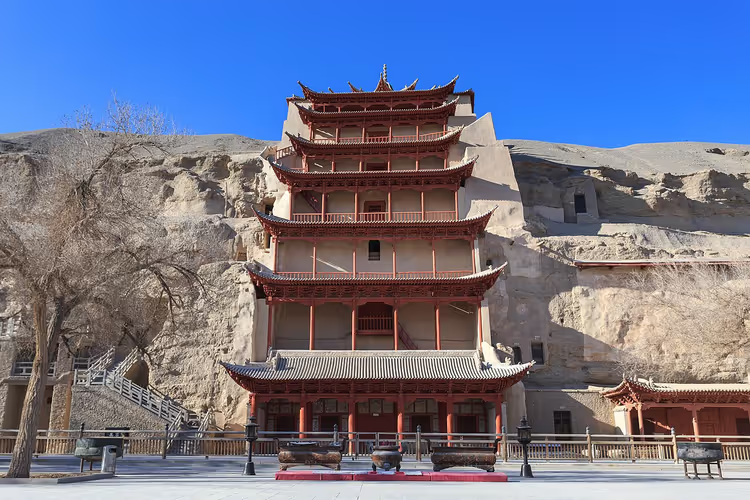 © Zhangzhugang · CC BY-SAPhoto: Zhangzhugang, CC BY-SA (https://creativecommons.org/licenses/by-sa/4.0), Wikimedia Commons
- Where: Gansu Province, northwest China
- What to see: the Mingsha dunes, Crescent Lake, the Mogao Caves
- Best time: April and May
- The catch: at Mogao you can only enter with a ticket and in small groups
5. The red beach of Dawa near Panjin
There is no sandy beach here, although the name is misleading. In the Liao River delta grows a salt-tolerant grass that is green in spring and turns bright red by late summer. Dozens of kilometers of coastline are covered in a red carpet, but you can only walk on the wooden boardwalks of Liaohekou Honghaitan National Park.
 © 归零者 · CC BY-SAPhoto: 归零者, CC BY-SA (https://creativecommons.org/licenses/by-sa/4.0), Wikimedia Commons
Photos come out best at sunset, when the light falls on the grass at an angle. In the morning there is haze over the delta, and the color seems muted. Bring a windbreaker: it is constantly windy on the open shore. You will also want extra water.
- Where: northeast of Panjin
- What to see: the red carpet of grass, the wooden boardwalks
- Best time: late summer
- The catch: there is no sandy beach, and you can only walk on the boardwalks
6. Zhujiajiao: canals and bridges near Shanghai
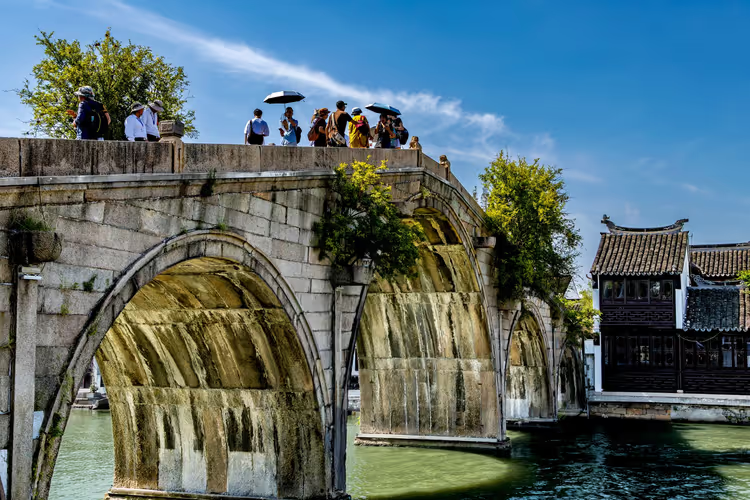
Shanghai shows the future in the skyscrapers of Pudong, while old Zhujiajiao lies west of the center. Canals divide the town into blocks, stone bridges cross the water, and boats with rowers pass along the residential houses.
The most famous bridge, Fangsheng Bridge, was built in the sixteenth century and resembles the Rialto Bridge in Venice. Come in the morning on a weekday: by lunchtime the embankments get crowded, and the best light for photos is before ten o'clock.
- Where: west of Shanghai, Qingpu District
- What to see: the canals, Fangsheng Bridge, teahouses on the embankment
- Best time: April, May, October, November
- The catch: on weekends the embankments are full of tourists
7. Huashan: trails and plank walkways
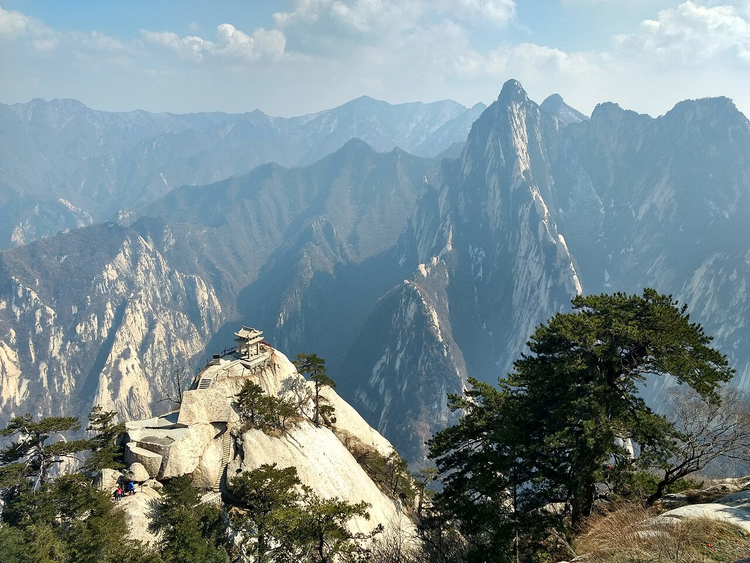
Huashan is one of the five sacred mountains of Taoism and consists of several peaks. Trails connect them via steep stone steps cut directly into the slope. In places the ascent goes along metal staples, so gloves are not a bad idea here.
 © May Wung · CC BY-SAPhoto: May Wung, CC BY-SA (https://creativecommons.org/licenses/by-sa/4.0), Wikimedia Commons
The most famous section is the Black Dragon Ridge and the plank walkway on a sheer cliff. You walk along the planks in a safety harness above the abyss, while cable cars lead to the summits. Bring trekking shoes: in places the steps are higher than your knee.
- Where: Shaanxi Province
- What to see: the Black Dragon Ridge, the plank walkway, Dongdao Temple
- Best time: April to October
- The catch: you need to be comfortable with heights and have sturdy footwear
8. Jiuzhaigou: colorful lakes and waterfalls
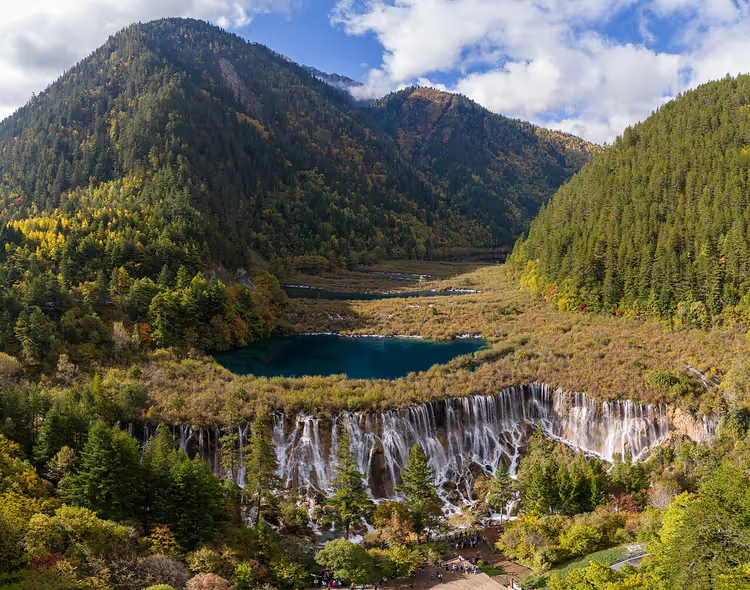
The park's name translates as "valley of nine villages." Neon-turquoise lakes lie in the gorges, and the water is so clear you can see submerged tree trunks. Wooden walkways and bus routes connect the lakes, so in one day you can see both Five-Color Lake and Pearl Shoal Waterfall.
Long Lake sits highest of all, and the trail descends from it to the main viewpoints. The place names are poetic: Bamboo Arrow Lake, Tiger Mouth, Five-Color Lake. Pandas live in the surrounding mountain forests, but encountering them on the trail is nearly impossible.
 © Chensiyuan · CC BY-SAPhoto: Chensiyuan, CC BY-SA (https://creativecommons.org/licenses/by-sa/4.0), Wikimedia Commons
- Where: Sichuan Province, Tibetan Plateau
- What to see: Five-Color Lake, Pearl Shoal Waterfall, Long Lake
- Best time: September and October
- The catch: long lines form at the park entrance in autumn
9. Yungang grottoes and the hanging temple
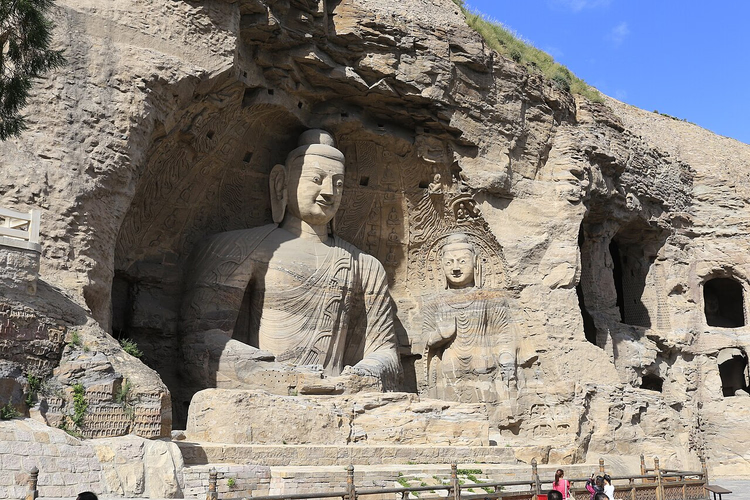
Thousands of Buddhist statues are carved into the cliffs near the city of Datong. They were made over a thousand years ago, and some figures reach the height of a multi-story building. Many grotto walls are painted with frescoes that were damaged during the Cultural Revolution. Only some of the caves are open to visitors, so buy your ticket in advance.
Further south, the Xuankong Temple hangs from a sheer cliff. It rests on wooden supports driven into the rock, and narrow galleries connect halls at different levels. Go up in the morning while the galleries are still uncrowded. It's easier to arrive at opening time.
 © Zhangzhugang · CC BY-SAPhoto: Zhangzhugang, CC BY-SA (https://creativecommons.org/licenses/by-sa/3.0), Wikimedia Commons
- Where: Shanxi Province, near Datong
- What to see: Yungang Grottoes, Xuankong Hanging Temple
- Best time: April to October
- The catch: some frescoes were damaged during the Cultural Revolution
10. Li River and Guilin karst
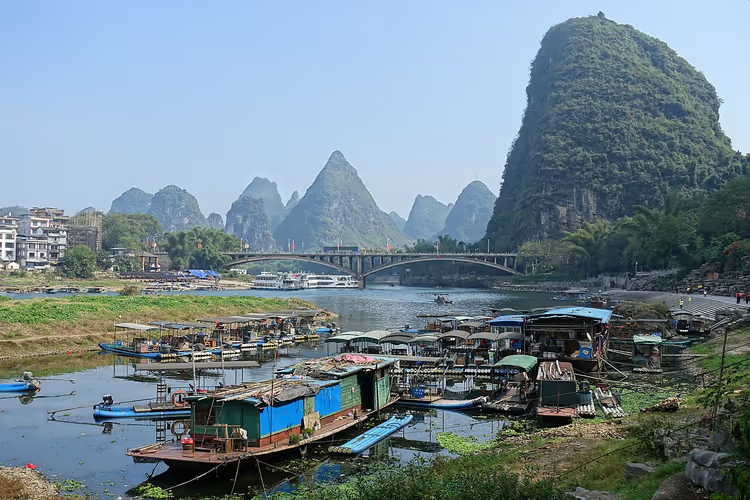
The karst hills around Guilin look like a landscape from a Chinese screen painting. The Li River winds between them, and the best postcard views are shot from a boat deck on the stretch between Guilin and Yangshuo. Along the way, boats stop at village docks where locals sell fish and fruit.
A separate stop is Reed Flute Cave with its illuminated stalactites. You'll be walking on deck in rain and wind, so bring a raincoat and non-slip shoes. During Chinese national holidays the docks are packed, so choose weekdays.
 © Luka Peternel · CC BY-SAPhoto: Luka Peternel, CC BY-SA (https://creativecommons.org/licenses/by-sa/4.0), Wikimedia Commons
- Where: Guangxi Province
- What to see: Li River cruise, Reed Flute Cave
- Best time: all year except national holidays
- The catch: the river and docks are packed during holidays
11. Zhangye Danxia: rainbow mountains
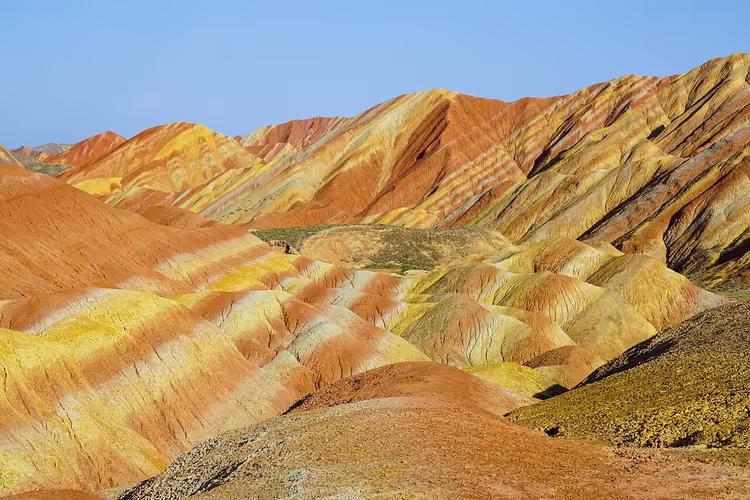
The striped slopes near Zhangye are made of layers of different minerals that wind has sculpted into strange ridges. The geopark has walkways and viewing platforms, so you don't need to climb the rocks. The colors are brightest at dawn and sunset: yellow, orange, and brown layers become almost luminous.
During the day, most tourists head to the first platform, while at the far viewpoints you'll stand almost alone. Bring water and sun protection: there is no shade on the slopes. Arrive at opening time, otherwise you'll be shooting some of your frames against the light.
 © Raul-David Serban ( https://imaggeo.egu.eu/user/Raul/ ) · CC BYPhoto: Raul-David Serban ( https://imaggeo.egu.eu/user/Raul/ ), CC BY (https://creativecommons.org/licenses/by/3.0), Wikimedia Commons
- Where: Gansu Province, near the city of Zhangye
- What to see: viewing platforms above the colored layers
- Best time: June to September
- The catch: colors fade during the day, arrive at dawn
12. Longji terraces in Guangxi
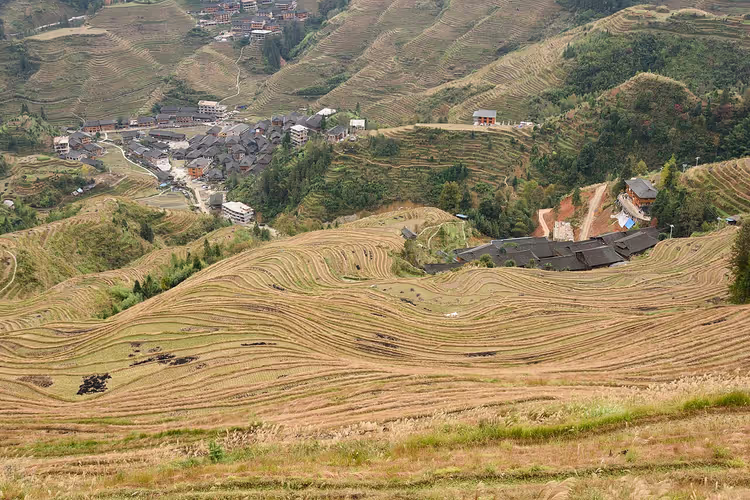
Farmers carved the Longji terraces into the slopes several generations ago, and some fields are still worked by hand. Ribbons of fields descend, following the curves of the hills. In spring the flooded fields gleam in the sun, before harvest they turn golden, and in winter snow lies in places.
There are many trails between the villages, and without a guide you can easily go the wrong way. A cable car leads to the top, but the most beautiful views open up from the regular trail. Bring a raincoat: the weather changes quickly at altitude.
 © King of Hearts · CC BY-SAPhoto: King of Hearts, CC BY-SA (https://creativecommons.org/licenses/by-sa/4.0), Wikimedia Commons
- Where: Guangxi Province, Longsheng area
- What to see: rice fields, villages on the slopes
- Best time: July and August
- The catch: the trail network is confusing, a guide saves time
13. Terracotta Army in Xi'an
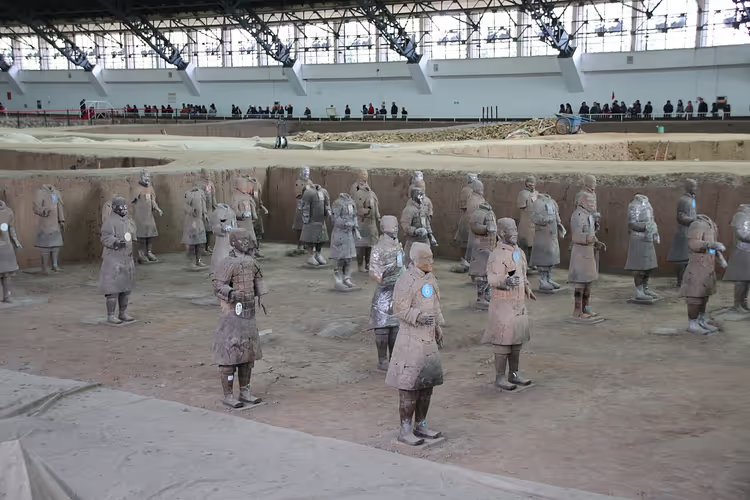
Xi'an has a preserved city wall fourteen kilometers long, and you can bike along it. The main reason to come here is the clay army found while digging a well. Thousands of warriors and horses stand in battle formation, and each figure has its own face, hairstyle, and armor.
The Museum of the Mausoleum of Qin Shi Huang is open every day, but winter hours are shorter than summer hours. Arrive at the first pits at opening time; by lunchtime it gets noisy here. The city wall and the army are about 40 km apart. Plan them for different halves of the day.
- Where: Xi'an, Shaanxi Province
- What to see: Terracotta Army, city wall
- Best time: March to November
- The catch: large tour groups gather at the main pit by lunchtime
14. Kanas Lake in Altai
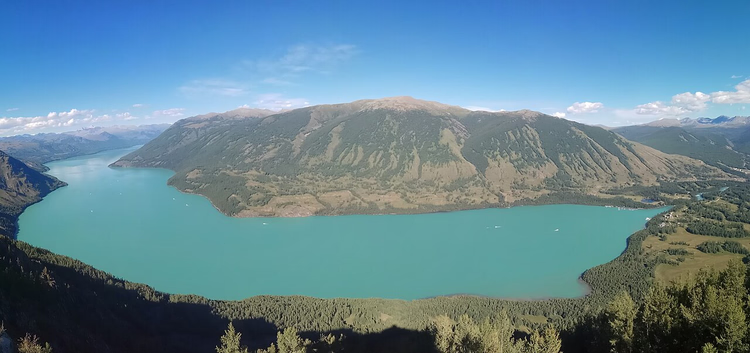
In northern Xinjiang, near the border with Russia and Kazakhstan, lies the narrow Kanas Lake. Local legends tell of a monster that supposedly lives in the depths, but expeditions have never found it. From spring to autumn, trails run around the lake through the taiga and steppes of the Altai Mountains.
From the Guangyu observation pavilion at two thousand meters, you can see the entire lake and snowy peaks on the horizon. The road here is long, so plan to stay overnight nearby. In summer, bring repellent: there are many midges near the water.
 © Newbamboo · CC BY-SAPhoto: Newbamboo, CC BY-SA (https://creativecommons.org/licenses/by-sa/4.0), Wikimedia Commons
- Where: Xinjiang, Altai Mountains
- What to see: Kanas Lake, Guangyu observation platform
- Best time: spring to autumn
- The catch: you can only get there by a long road, an overnight stay is needed
15. Yunnan: tropical forest and peoples
Xishuangbanna borders Laos and Myanmar, so the climate and nature here are closer to Southeast Asia. The Mekong flows through the prefecture, and the Dai, Yao, and Lisu peoples live in the villages, partly preserving their traditional clothing. Trekking routes run through the jungle, but it's better not to go without a guide: wild elephants are found in remote areas.
 © Yumeto · CC BY-SAPhoto: Yumeto, CC BY-SA (https://creativecommons.org/licenses/by-sa/4.0), Wikimedia Commons
During the rainy season, leeches appear, so wear closed shoes and thick socks. The dry season lasts from November to April, and that is the best time for hiking. Here you see a piece of Southeast Asia inside China.
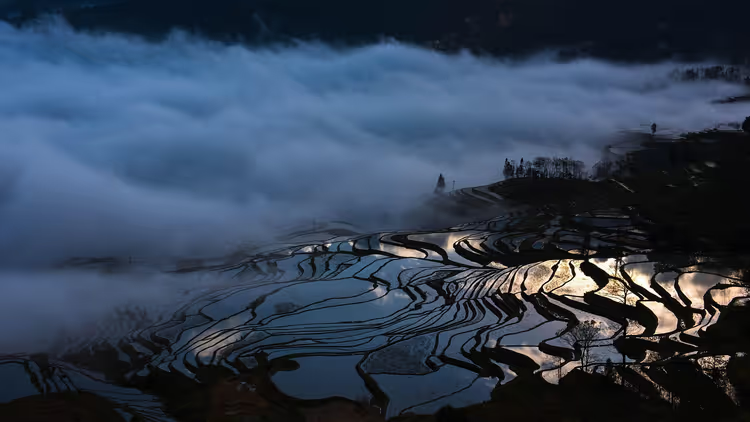
- Where: southern Yunnan Province, Xishuangbanna
- What to see: jungle along the Mekong, villages of local peoples
- Best time: dry season from November to April
- The catch: many leeches in the rainy season, closed shoes are needed
Tours and tickets
Guided tours, skip-the-line tickets and activities — most offers can be cancelled free of charge.
See offers on GetYourGuideThe widget loads once you give your consent.
What to know: visa, transport, and money
You don't need a visa for a short trip: citizens of Germany and forty-four other countries can enter for up to 30 days, and the rule is in effect until the end of December 2026 (as of 09/2026, entry reference). Your passport must be valid, and you fill out the digital arrival card in advance in the app. For travel to Tibet, you need a separate Tibet Travel Permit, which is arranged through an agency.
Between major cities, the most convenient option is high-speed trains: they arrive exactly on schedule. High-speed rail stations are often far from the city center, so allow time to get to them. For long distances, such as to Kanas Lake or Yunnan, take a domestic flight. Buy train tickets in the carrier's app a few days ahead; seats sell out quickly for weekends.
 AIIllustrative image: AI-generated
Cash is not accepted everywhere in China, and cards don't work in all cafes and shops. Set up mobile payment in advance and keep a small amount of cash for the first day. Tipping is not customary here.
We recommend avoiding major public holidays: in early October and during Chinese New Year, transport and hotels are overloaded, and tickets to attractions sell out weeks in advance. On weekdays, lines are noticeably shorter.
Zhangjiajie: Tianmen and the glass bridge
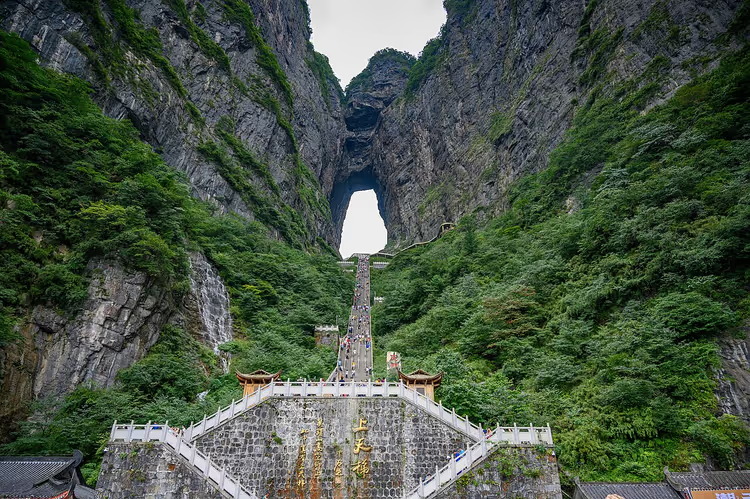
Tianmen Mountain stands apart from the national park, and a long cable car takes you to the top. Tianmen Gate is carved into the cliff by nature, a wide staircase leads down to it, and a glass viewing path runs along the edge of the precipice. Here you stand above the abyss and look at the winding road far below.
 © xiquinhosilva · CC BYPhoto: xiquinhosilva, CC BY (https://creativecommons.org/licenses/by/2.0), Wikimedia Commons
A glass bridge spans the canyon: the floor is transparent, there is a drop beneath it, and the first steps are hard to take. Tickets for the bridge and the mountain are sold separately from the park entrance, so plan your budget in advance. The bridge gets strong winds, so do not bring hats or loose items.
⁉️🤔 Frequently asked questions
Do I need a visa for China in 2026?
Citizens of Germany and forty-four other countries do not need a visa for trips of up to 30 days; the rule has been extended until the end of December 2026 (as of 09/2026, official clarifications). Bring a valid passport and fill out the digital arrival card. For trips longer than thirty days, apply for a visa in advance.
How much time should I allow for a first trip?
One cluster takes three to five days. In two weeks you can cover Beijing, Xi'an, and Guilin with the Li River. One city will not connect all fifteen places: distances within the country are comparable to a flight across Europe, so pick two or three destinations and do not try to see everything at once.
When is the best time to visit China?
Spring and autumn are the most comfortable: April and May are warm, September and October are dry. In summer, cities are hot and humid, and in winter the north is freezing. Holiday dates worth avoiding are described in the "What to know" section.
How do I get between cities?
Between major cities, high-speed trains are the most convenient option; for long distances, flying is better. Read more about trains and tickets in the "What to know" section.
Is it worth going to Zhangjiajie and Dunhuang in winter?
Winter is not the best option for Dunhuang: the Mogao Caves are open, but a trip to the dunes loses its appeal because of the wind. In Zhangjiajie there are fewer tourists in winter, but some viewing platforms close due to ice. Plan these places for spring or early autumn.
In short: what to book
If you have one week, choose Beijing: the Forbidden City, a section of the wall, and the Temple of Heaven park. If you have two weeks, add Xi'an with the Terracotta Army and Guilin with the Li River. Save nature for a separate trip: Jiuzhaigou, Zhangjiajie, and Yunnan require time for flights.
Buy museum tickets online a few days in advance: slots sell out in high season. In major cities, it is more convenient to book hotels near the metro, and in the south choose accommodation with air conditioning.

A small editorial team writing guides for independent travel. We travel ourselves, but we haven’t been everywhere, so we check prices, opening hours and how to get there against official sources.