
















25 Sri Lanka resorts: where to swim, catch a wave and watch whales
Sri Lanka packs four types of vacation onto one island. The western beaches follow one season, the eastern ones another, and evenings in the hills are cool. Picking the wrong resort costs you extra hours on the road and a day without sun, so choose the coast before the hotel.
Below are 25 Sri Lanka resorts: from the fishing town of Negombo near the airport to the tea hills of Nuwara Eliya. For each place you'll find the season, activities, distance on the map, and an honest catch. Prices and opening hours were checked in September 2026.
Ad: this article contains affiliate links: we earn a commission if you book through them, at no extra cost to you.
How to choose a resort in Sri Lanka
💡 In short:
- The west and south coasts (Negombo, Bentota, Hikkaduwa, Mirissa) are open for swimming from November through April.
- The east coast (Trincomalee, Batticaloa) welcomes visitors from May through September.
- Beach access on the island is free; your money goes to sun loungers, transfers, and excursions.
- Tickets and opening hours: 09/2026, verified on the official website of the Central Cultural Fund.
The main choice here isn't between hotels, it's between coasts. The west and south of the island are dry from November through April, while the east gets drenched by the monsoon during those months. In summer the picture flips. If your vacation dates are fixed, first match the coast to your travel month, and only then look for a hotel.
The road between coasts takes almost a full day. Don't book a western hotel just to spend two days in the east, or you'll burn them on a bus. Hill towns sit away from the sea and need their own leg of the route.
Region | Best season | Resorts | Who it's for |
|---|---|---|---|
West coast | November-April | Negombo, Wadduwa, Marawila, Bentota, Kalpitiya, Mount Lavinia | first night near the airport, flat beach |
South and southwest | November-April | Hikkaduwa, Ahangama, Unawatuna, Beruwala, Galle, Weligama, Mirissa, Dickwella, Tangalle, Induruwa, Koggala | surfing, diving, whales |
East coast | May-September | Trincomalee, Batticaloa | summer vacation, reefs, quiet |
Hill country | drier from January to March | Nuwara Eliya | tea plantations, cool weather |
Cultural triangle | drier from January to March | Anuradhapura, Dambulla, Sigiriya, Polonnaruwa | culture, ancient cities |
Paperwork is also worth sorting out in advance. The ETA visa is arranged ahead of time and only through the official portal: rules and fees change, so check the price on the website. General seasons and travel rules are compiled by Sri Lanka Tourism. Tickets and opening hours for cultural sites are handled by the Central Cultural Fund; we take its data from the official website.
1. Negombo
 © Steffen Schmitz ( more photos ) · CC BY-SAPhoto: Steffen Schmitz ( more photos ), CC BY-SA (https://creativecommons.org/licenses/by-sa/4.0), Wikimedia Commons
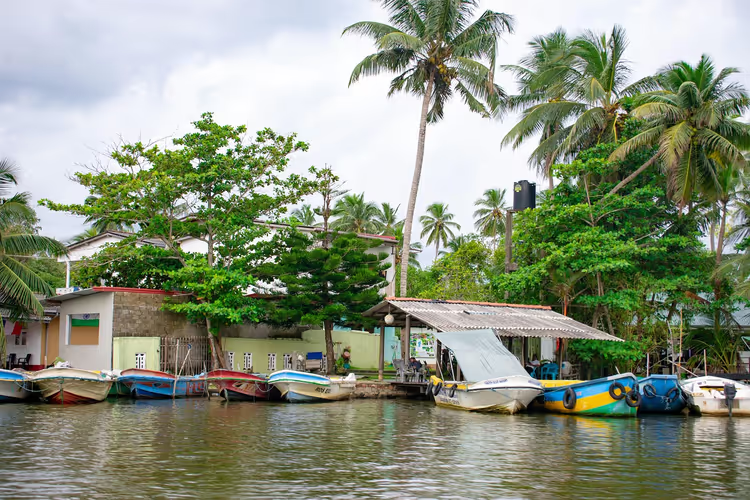
Negombo sits twenty minutes from Bandaranaike Airport, which is why most travelers spend their first night here. It's not a quiet beach village but a lively city with a fishing port, a spice market, and dozens of churches. Locals nicknamed it "Little Rome" because of St. Mary's Cathedral.
Arab merchants traded the island's cinnamon, and trade brought the Portuguese and Dutch after them. They left behind the ruins of a Dutch fort and a seventeenth-century canal. The beach strip is wide and well kept, with a mangrove lagoon and bird sanctuary behind it. For calm swimming, go in the morning; by midday the sand gets crowded.
- The catch: a city and a port, not a secluded, quiet resort.
- Getting there: about 10 km from Bandaranaike Airport (on the map).
2. Hikkaduwa
 © LittleT889 · CC BYPhoto: LittleT889, CC BY (https://creativecommons.org/licenses/by/4.0), Wikimedia Commons
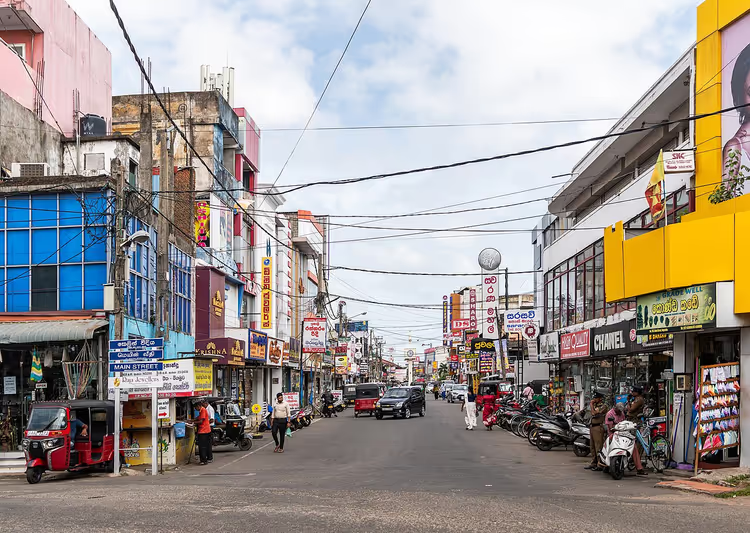
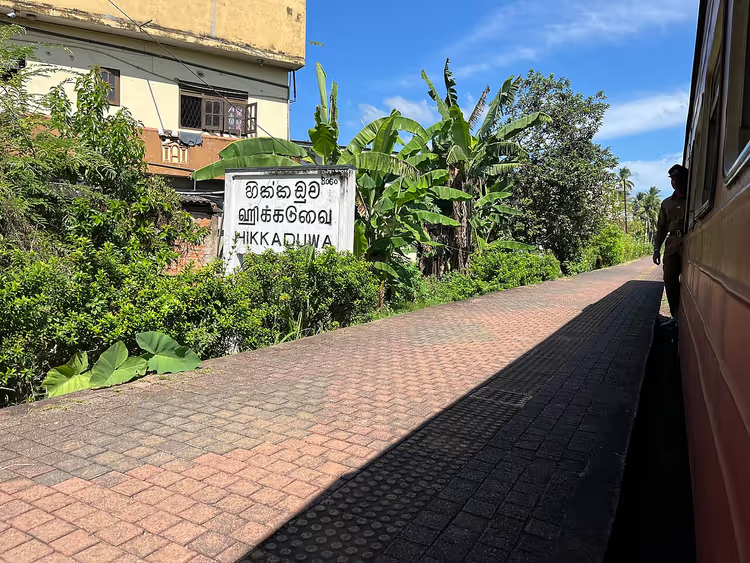
Hikkaduwa stretches in a strip along the south coast and holds a reputation as a diving hub. Right off the shore lies Hikkaduwa National Park with a coral reef: green turtles swim up here, and dozens of fish species stay close. Stay near the water with a mask, turtles come right up to the sand.
The resort's second profile is bodysurfing. Even beginners pick up the gentle wave in half an hour, so board rentals are everywhere. A fishing harbor operates nearby, where boats head out for tuna and barracuda. In the evening, the main street turns into a strip of cafes and bars.
- Who it's for: divers and first-time board riders.
- Getting there: about two hours by train from Colombo.
Hotels in Hikkaduwa on Trip.com
3. Wadduwa
 © Kesara Rathnayake · CC BY-SAPhoto: Kesara Rathnayake, CC BY-SA (https://creativecommons.org/licenses/by-sa/2.0), Wikimedia Commons
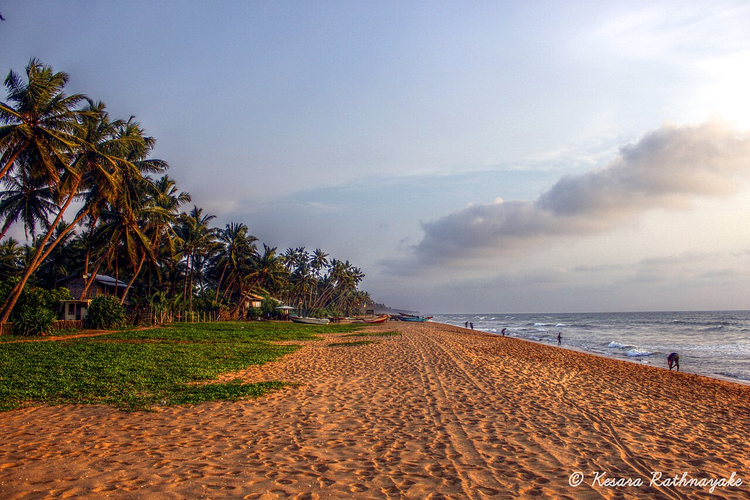
Wadduwa greets you with silence and a green river. About fifty temples are packed into a compact area: Buddhist stupas sit next to mosques and Hindu shrines. Not far from the resort stands Richmond Castle, an English-style mansion with Indian details.
Wadduwa beach looks like a postcard: turquoise water, coconut palms, and boats near the shore. The waves are gentle, so beginner surfers and windsurfing fans come here. Catamarans, water skiing, and snorkeling are offered right at the hotels, with no long trip to the starting point.
- Who it's for: beginners on the water and fans of calm swimming.
- How to get there: about 40 km from Colombo along the coastal highway (see map).
4. Bentota
 © Pavan Lulla · CC BYPhoto: Pavan Lulla, CC BY (https://creativecommons.org/licenses/by/3.0), Wikimedia Commons
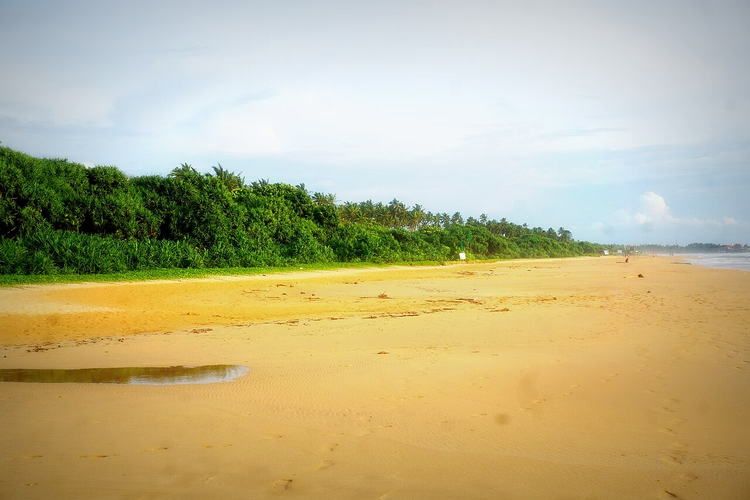
Bentota ranks among the top five resorts on the southwest coast. A wide river splits the town in half and flows into the ocean, which is why the island's largest water sports center operates here. Water skiing, jet skis, canoes, banana boats, and catamarans are available right from the beach.
The river shapes the area's character: it still carries visitors on water safaris past mangroves and bird colonies. A short distance away stand the ruins of a twelfth-century Buddhist complex with preserved Buddha statues and wall paintings. Since the nineteenth century, Bentota has also been prized for its local oysters.
- Who it's for: families and those who want to combine the beach with water activities.
5. Unawatuna
 © Bernard Gagnon · CC BY-SAPhoto: Bernard Gagnon, CC BY-SA (https://creativecommons.org/licenses/by-sa/3.0), Wikimedia Commons
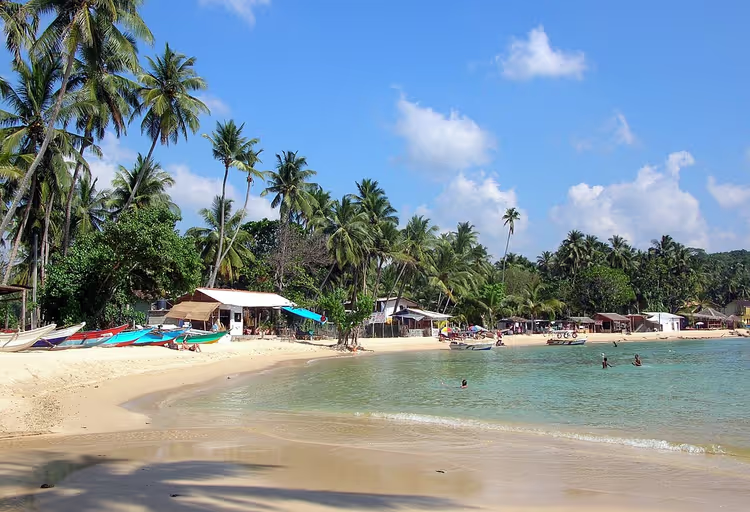
Unawatuna remains a fishing village in the best sense of the word: no glass high-rises or concrete facades. Many people come here for several weeks and live by the sea independently, without tours. The beach lies in a bay surrounded by jungle and hides behind a wall of coral reef.
A gentle slope and calm water make Unawatuna convenient for snorkeling and first swims with children. Several temples stand around the area: on a rocky headland sits the Unawatuna temple, where a single monk has served for decades. The Niladhari temple preserves vivid wall paintings and a sacred tree, while the Japanese Peace Pagoda remains the resort's youngest monument.
- Who it's for: snorkeling and calm swimming with children.
- How to get there: about 5 km from Galle (see map).
Hotels in Unawatuna on Trip.com
6. Trincomalee
 © Shamli071 · CC BY-SAPhoto: Shamli071, CC BY-SA (https://creativecommons.org/licenses/by-sa/3.0), Wikimedia Commons
Trincomalee graces the northeast coast and sits in a deep bay that blocks the winds. As a result, it stays dry and warm here even when the west of the island is drenched in rain. The bay is considered one of the deepest natural harbors in the world, and its discovery is linked to Admiral Nelson.
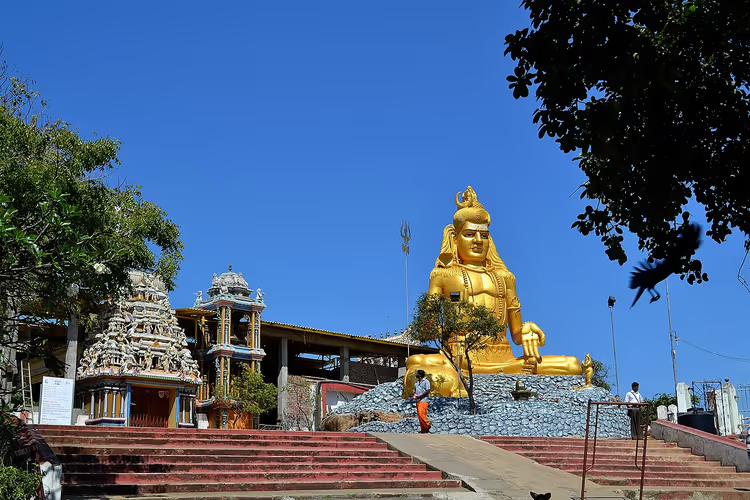
The city's cultural character is shaped by four traditions at once: Buddhist, Hindu, Muslim, and Christian temples stand side by side. The Koneswaram temple operates on the slopes, and thermal springs with open bathing pools flow near the water. Diving and snorkeling are available right in the city, but the best reefs lie off Pigeon Island.
- The catch: there is almost no nightlife here, evenings are quiet.
- Who it's for: those traveling in summer who want dry weather.
Hotels in Trincomalee on Trip.com
7. Colombo
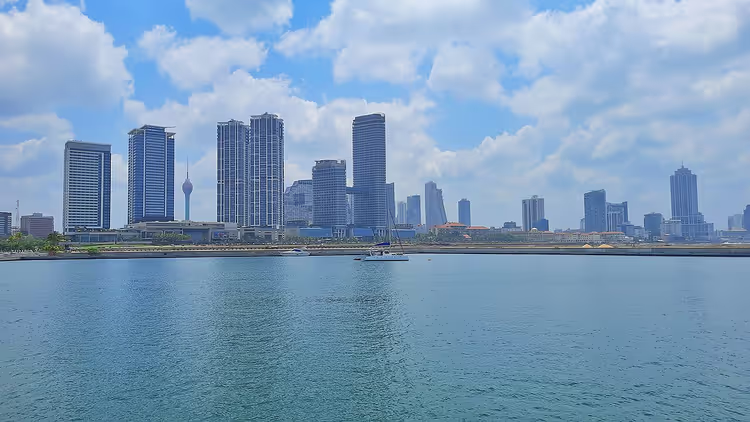
Colombo long ago gave up its capital status, but it remains the island's main metropolis. The city is stitched together from several independent districts, each living at its own pace. The port, skyscrapers, and colonial quarters sit side by side within a single route.
Getting to know old-school Colombo starts with the Fort district. No walls remain from the massive fort, but the colonial architecture has survived. To the south, near the waterfront, stands the Galle Face Hotel, one of the city's oldest hotels.
- The catch: it's a large port city, with no beach vacation within its limits.
- How to get there: about 35 km from Bandaranaike Airport (see map).
8. Beruwala
 © yimhafiz · CC BYPhoto: yimhafiz, CC BY (https://creativecommons.org/licenses/by/2.0), Wikimedia Commons
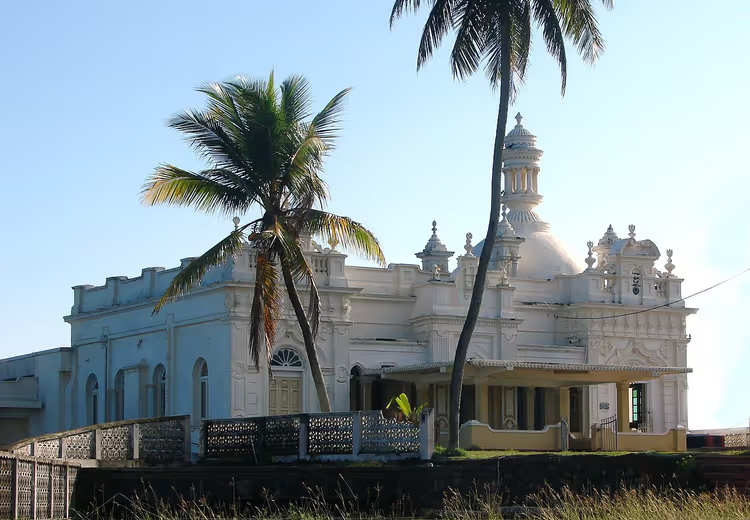
Beruwala was hit hard by the tsunami and rebuilt from scratch. The town was founded by Arab merchants, so the Muslim culture is immediately noticeable here. The old Masjid-ul-Abrar mosque stands in the center, surrounded by natural and religious landmarks.
Beruwala is a convenient base for routes deeper into the island. For Kandy with the Temple of the Tooth, a spice garden, and a market, allow at least two days. A separate day is worth setting aside for the climb up Adam's Peak to catch the sunrise over the mountains.
- Who it's for: those who want to combine the sea with history and nature.
- How to get there: about 60 km south of Colombo (on the map).
Hotels in Beruwala on Trip.com
9. Galle
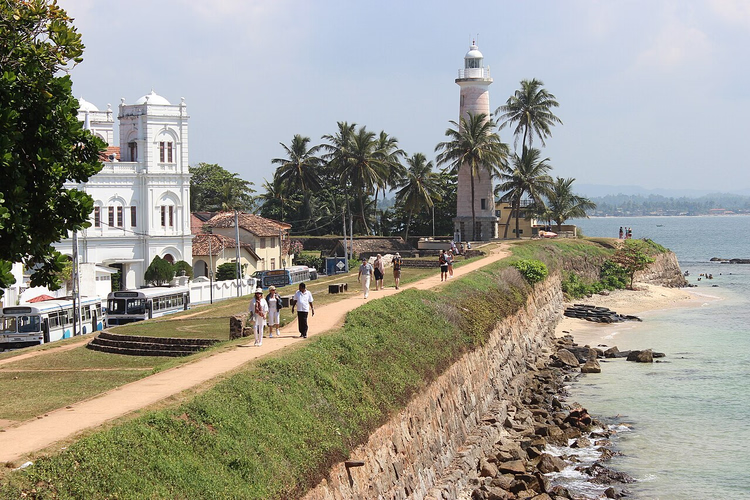
Galle is known as a port city famous not for its beaches but for its architecture. The fort was founded by the Portuguese in the sixteenth century and later rebuilt by the Dutch. Today it is one of the best-preserved forts in Asia and a UNESCO World Heritage Site.
 © Grayswoodsurrey · CC BY-SAPhoto: Grayswoodsurrey, CC BY-SA (https://creativecommons.org/licenses/by-sa/4.0), Wikimedia Commons
Inside the walls, Buddhist shrines, Christian churches, and mosques coexist, and the emblem of the East India Company with its lion can still be seen on the old buildings. Nearby, a small patch of rainforest has survived in its original state. Galle is also a convenient starting point for trips to the beaches of Unawatuna and Hikkaduwa.
- Who it's for: history lovers and those who enjoy strolling through old streets.
- How to get there: about 120 km from Colombo (on the map).
10. Ahangama
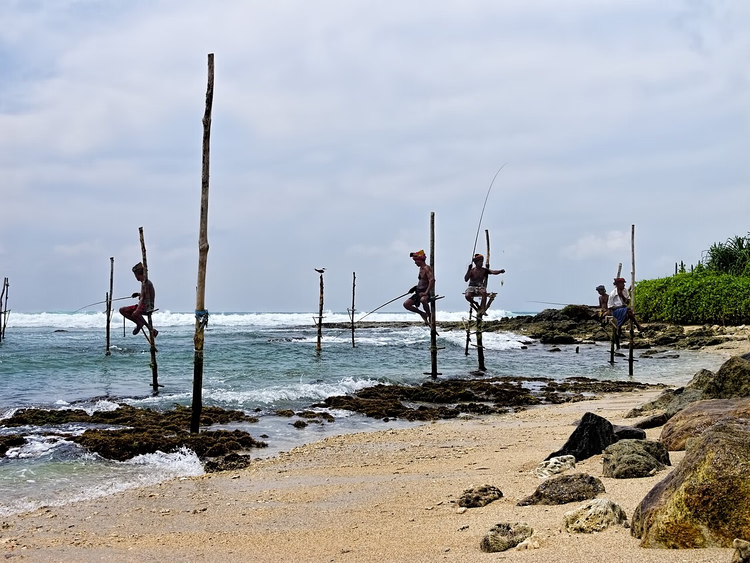
Ahangama is a quiet fishing village a few minutes from Unawatuna. There are no large hotels here, but there are long empty beaches and gentle waves for beginners. The official season runs from November to April, but the place never gets a real influx of tourists.
 © Dan Lundberg · CC BY-SAPhoto: Dan Lundberg, CC BY-SA (https://creativecommons.org/licenses/by-sa/2.0), Wikimedia Commons
The village is a convenient base for reaching two neighboring surf spots. Toward Weligama lies a bay with a sandy bottom and safe waves, while Ahangama's own beach suits those who already ride a board confidently. Local cafes with ocean views operate year-round.
- Who it's for: surfers and those looking for quiet near Unawatuna.
- How to get there: about 20 minutes from Unawatuna (on the map).
Hotels in Ahangama on Trip.com
11. Kalpitiya
 AIIllustrative image: AI-generated
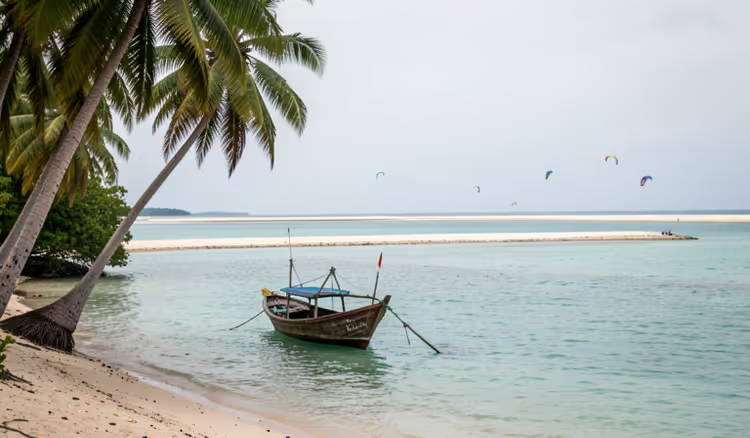
Kalpitiya lies north of Colombo and is considered one of the country's diving centers. A small fort here was built first by the Portuguese and later by the Dutch, and it has survived fairly well to this day. Nearby begins Sri Lanka's largest coral reef.
The reef attracts fish, turtles, and reef sharks, so people come here with masks and scuba gear. Evenings at the resort are unhurried: oil lamps, fresh fish grilled over coals, and torches by the water. Local hotels are set among greenery and are designed for a peaceful getaway far from the noise.
- How to get there: about 140 km from Colombo (on the map).
Hotels in Kalpitiya on Trip.com
12. Mount Lavinia
Mount Lavinia grew up in the shadow of Colombo and turned into a resort with ready-made infrastructure. The town emerged during British colonization, and its calling card is the Mount Lavinia Hotel. According to legend, the building belonged to a British governor who fell in love with a dancer named Lavinia and met her in secret.
 © Hansueli Krapf · CC BY-SAPhoto: Hansueli Krapf, CC BY-SA (https://creativecommons.org/licenses/by-sa/3.0), Wikimedia Commons
The beach here is the most controversial on the island. Sunsets over the ocean are considered some of the most colorful in Sri Lanka, but a railway runs along the shore. Mount Lavinia is convenient as a base near the capital: you can reach central Colombo in twenty minutes.
- The catch: the railway line runs right along the beach.
- How to get there: about 12 km from central Colombo (on the map).
Hotels in Mount Lavinia on Trip.com
13. Mirissa
 © Ji-Elle · CC BY-SAPhoto: Ji-Elle, CC BY-SA (https://creativecommons.org/licenses/by-sa/3.0), Wikimedia Commons
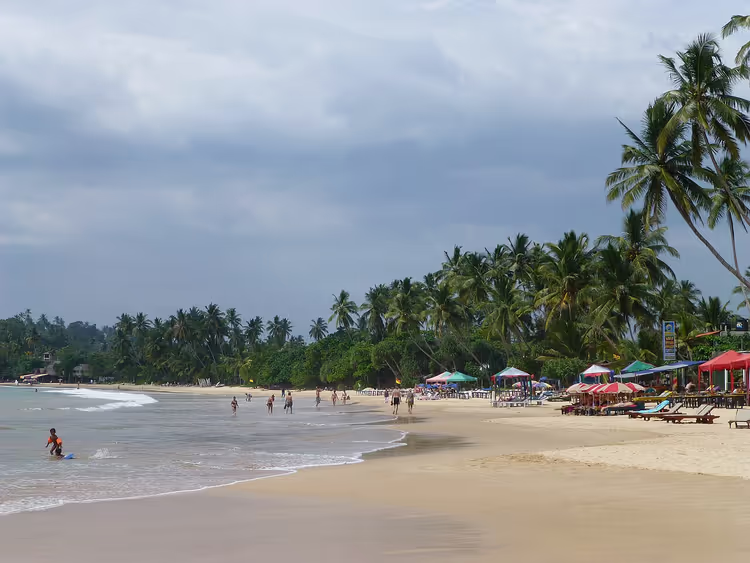
Mirissa is squeezed between Matara and Weligama and was once nearly deserted. The village was revived by surfers who found a perfect stretch of ocean here. Today people come for two things: the beach and whales.
Every morning boats leave the pier in search of blue whales. The chance of spotting a giant is high from December to April, while in the off-season you can spend a whole day at sea with no result. The largest beach is called Mirissa Beach, and after sunset tables with lanterns are set up along the shore.
- The catch: even in the bay the sea is often rough, so swimming with children is inconvenient.
- Who it's for: whale lovers, surfers, and fans of evening dinners by the water.
14. Weligama
 © Honeplus · CC BY-SAPhoto: Honeplus, CC BY-SA (https://creativecommons.org/licenses/by-sa/3.0), Wikimedia Commons
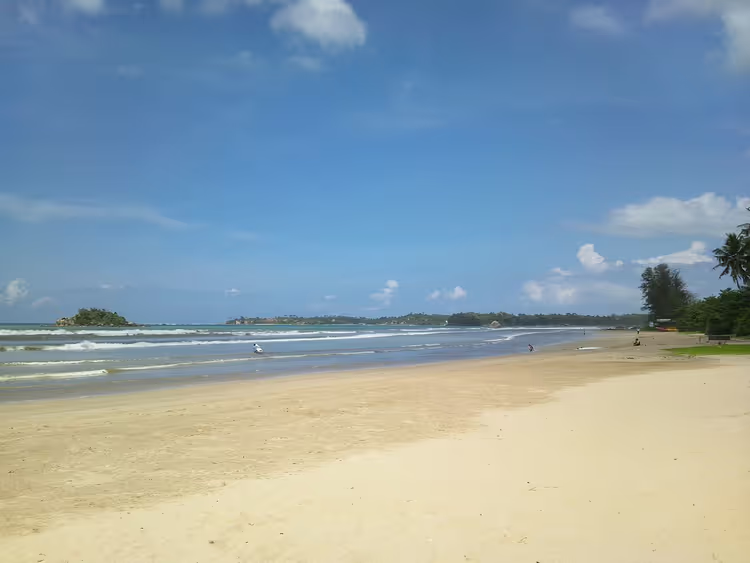
Weligama sits on the south coast right by the bay of the same name. The town is surrounded by coconut and rubber plantations, and colonial-era landmarks remain in the center. It is also home to the Agrabodhi Temple, which was built as far back as the third century.
The bay is divided into two parts by wave character. The eastern side suits surfers, while the western side appeals more to snorkelers: the water is calmer and the reefs lie close to shore. Nearby, a statue of an ancient king (Kustarajagala) is carved into the rock, which locals consider a portrait of a ruler from that era.
- Who it's for: beginner surfers and snorkeling enthusiasts.
- How to get there: about 30 km from Galle (on the map).
Hotels in Weligama on Trip.com
15. Marawila
 © IWantToWrite123 · CC BY-SAPhoto: IWantToWrite123, CC BY-SA (https://creativecommons.org/licenses/by-sa/4.0), Wikimedia Commons
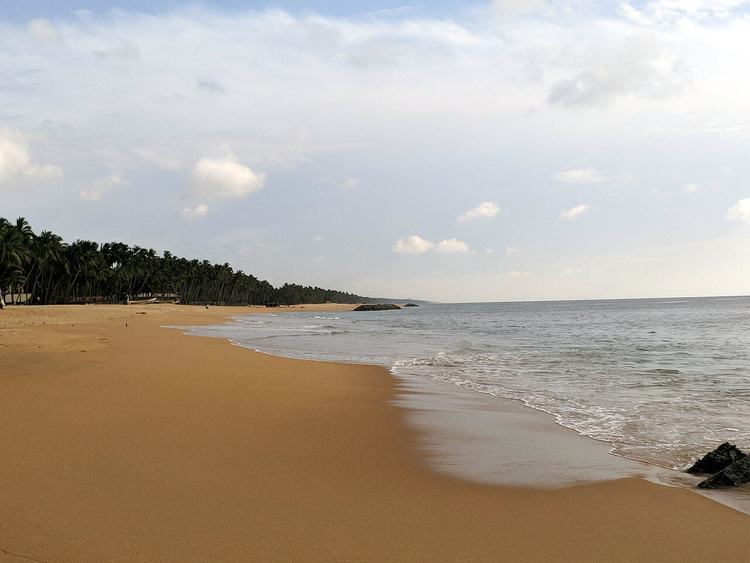
Marawila hides in a lagoon among dense mangrove thickets. Hotels stand surrounded by greenery, so you wake up to birdsong rather than road noise. The town lives at a measured pace: colonial architecture, family-run shops, restaurants with local character, and tuk-tuks in the shade of hotels.
Marawila's beaches are almost empty and suit a secluded getaway. Swimming here is calm, but the path down to the water is steep in places, so watch your step. The airport and Colombo are not far away, which is convenient at the start or end of a trip.
- The catch: the path down to the water is steep in places, so going with a child in a stroller is inconvenient.
Hotels in Marawila on Trip.com
16. Dikwella
 © Weranga Rajapaksha · CC BY-SAPhoto: Weranga Rajapaksha, CC BY-SA (https://creativecommons.org/licenses/by-sa/4.0), Wikimedia Commons
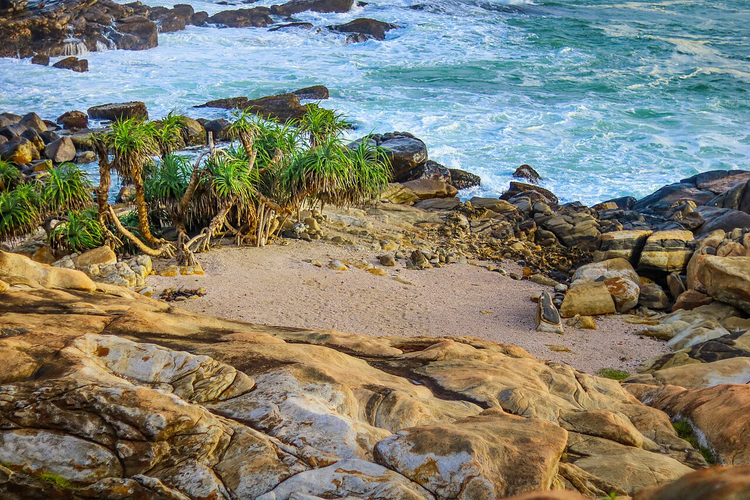
Dikwella remains a little-known corner of the south coast. A charming beach lies in a large, picturesque bay, and the fishing village has barely been touched by mass tourism. People come here for a quiet holiday, fruit, fresh seafood, and slow days by the ocean.
The resort is chosen by families with children: the shore is gently sloping and the waves are soft. Nearby stands the Mulkirigala Temple, carved directly into the rock, and you will find one of the largest Buddha statues on the island. Small guesthouses nearby serve home-style cooking.
- Who it's for: families with children and lovers of peace and quiet.
Hotels in Dikwella on Trip.com
17. Tangalle
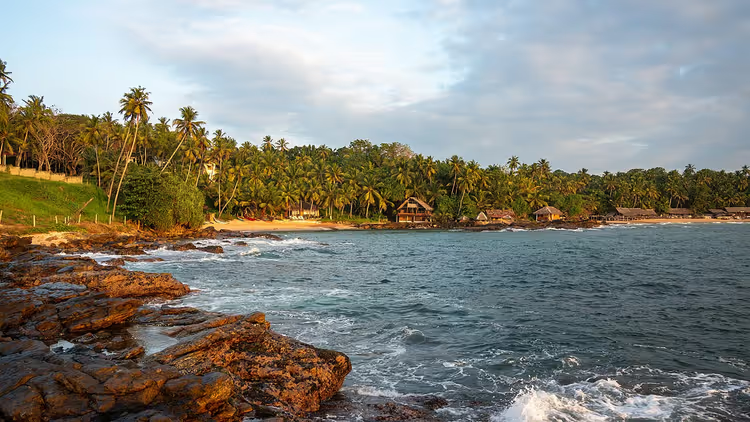 © Satdeep Gill · CC BYPhoto: Satdeep Gill, CC BY (https://creativecommons.org/licenses/by/4.0), Wikimedia Commons
Tangalle sits in the bay of the same name, whose coastline is cut by tiny lagoons behind coconut palms. The fishing port is known across the island for first-class cuisine. Coral reefs stretch along the shore, so the number of snorkeling and diving fans grows here every year.
The water near the shore is clear, so you don't need to swim far for snorkeling. National parks are scattered around the area, and an ancient fort and old Buddhist temples have been preserved.
- How to get there: about 40 km from Matara (on the map).
Hotels in Tangalle on Trip.com
18. Induruwa
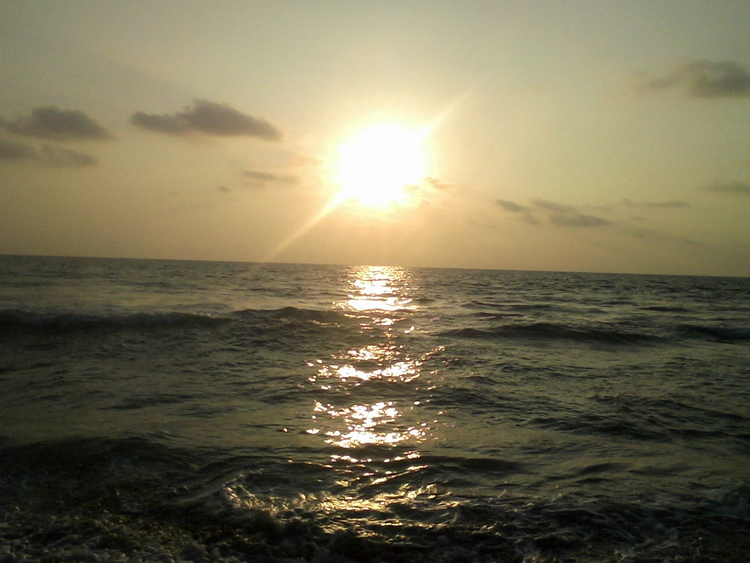 © KanchanaThilini · CC BY-SAPhoto: KanchanaThilini, CC BY-SA (https://creativecommons.org/licenses/by-sa/4.0), Wikimedia Commons
Induruwa is spread across hills covered with coconut groves. The beaches here are beautiful and uncrowded, surrounded by dense tropical vegetation. At low tide the ocean recedes by dozens of meters, and you can collect beautiful shells on the wet sand.
Locals gather shellfish and crabs, which are cooked right away in the beachside restaurants. Two turtle centers operate nearby, where you can see nests and baby turtles. Boat tours run along the rivers through mangrove trees that grow right in the water.
- Who it's for: families and anyone who wants a quiet beach without crowds.
Hotels in Induruwa on Trip.com
19. Koggala
Koggala became famous thanks to Martin Wickramasinghe's novel "Madol Duwa," which describes a remote settlement on the coast. Nearby lies a large lake with scenic views and ancient hermit caves. These shrines of the island's first Buddhists are scattered right across the water.
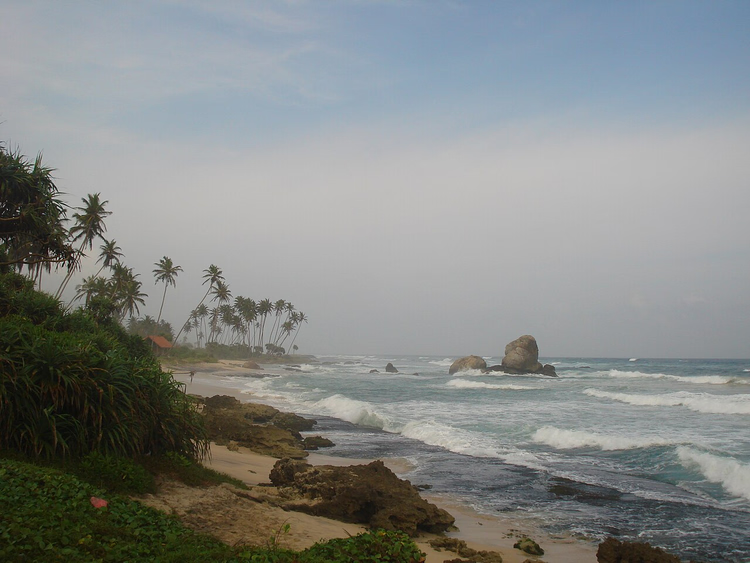 © Astronomyinertia · CC BY-SAPhoto: Astronomyinertia, CC BY-SA (https://creativecommons.org/licenses/by-sa/3.0), Wikimedia Commons
Sinhalese villages with an old way of life remain nearby. A five-kilometer beach draws tourists to the water, and dive centers for beginners and professionals operate along the coast.
- How to get there: about 15 km from Galle (by map).
20. Nuwara Eliya
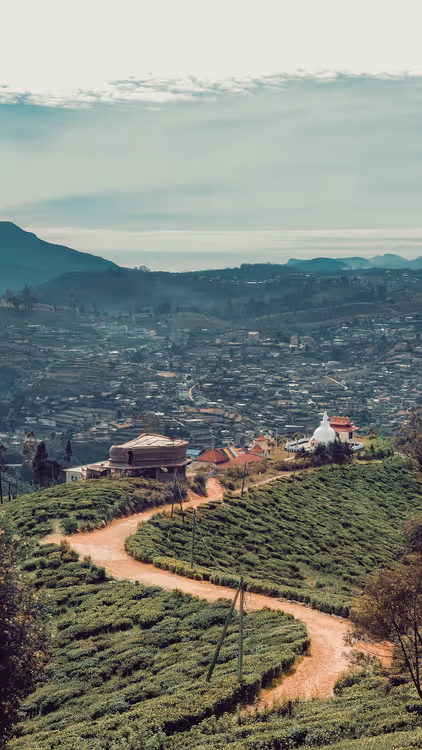 © Shenal Sadurshan · CC BY-SAPhoto: Shenal Sadurshan, CC BY-SA (https://creativecommons.org/licenses/by-sa/4.0), Wikimedia Commons
Nuwara Eliya lies high in the mountains, and its name translates as "city of light." The town sits at the foot of the island's highest peak among meadows, tea plantations, and waterfalls. The climate here is cool, so bring a jacket for the evening.
The tradition of coming here in April began in the nineteenth century, when wealthy English families escaped the stuffiness of Colombo. That's why the town was nicknamed "Little England": pointed roofs, an old racecourse, and one of the best golf courses in Asia. Plan at least one night to see the plantations in the morning mist.
- The catch: evenings are cool and it often rains, warm clothing is essential.
- Who it's for: for those who want to mix up beaches with mountains and tea.
Hotels in Nuwara Eliya on Trip.com
21. Anuradhapura
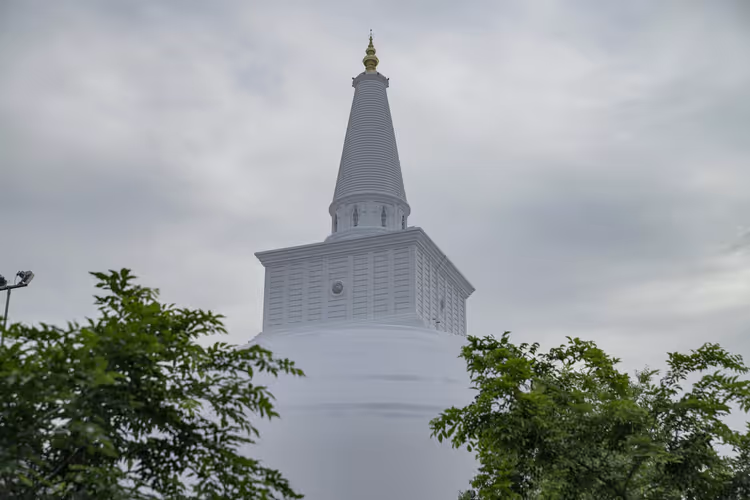
Anuradhapura was the island's capital until the eleventh century. After an invasion, the city was abandoned, and for almost a thousand years it stood forgotten in the jungle until an English hunter stumbled upon it. Today the ancient capital has been restored and is divided into the Old and New Town.
The Old Town monuments attract hundreds of tourists: stone Buddha statues, the Jetavanaramaya stupa, and the sacred Bodhi tree with a temple around it. Cultural heritage sites are open from 7:00 to 17:00 (as of 09/2026, Central Cultural Fund). Set aside half a day for the visit and take a bicycle or tuk-tuk.
- The catch: the monuments are spread over a large area, you can't cover them on foot.
- How to get there: about 200 km from Colombo (by map).
Hotels in Anuradhapura on Trip.com
22. Dambulla
 © Dulakshi · CC BY-SAPhoto: Dulakshi, CC BY-SA (https://creativecommons.org/licenses/by-sa/4.0), Wikimedia Commons
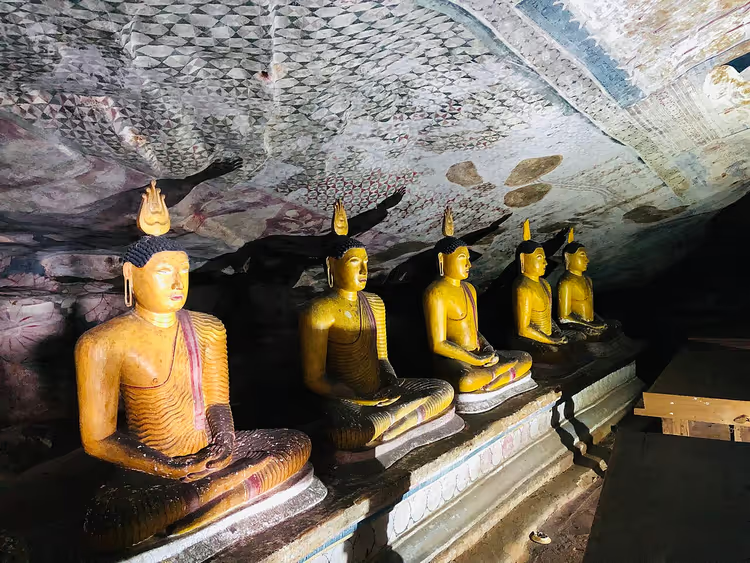
Dambulla is a good fit for a quiet getaway far from the big city. Infrastructure here is limited: you can find a quiet family hotel, but restaurants barely operate after sunset. The main attraction remains the Golden Cave Temple on top of a mountain.
The complex consists of five caves housing one of the world's largest collections of Buddha statues. The frescoes depict scenes from the life of Buddha and the gods. The temple is open from 7:00 to 17:00 (as of 09/2026, official fund website).
- The catch: after sunset there is almost nowhere to have dinner, plan your meals in advance.
- How to get there: about 70 km from Kandy (by map).
Hotels in Dambulla on Trip.com
23. Sigiriya
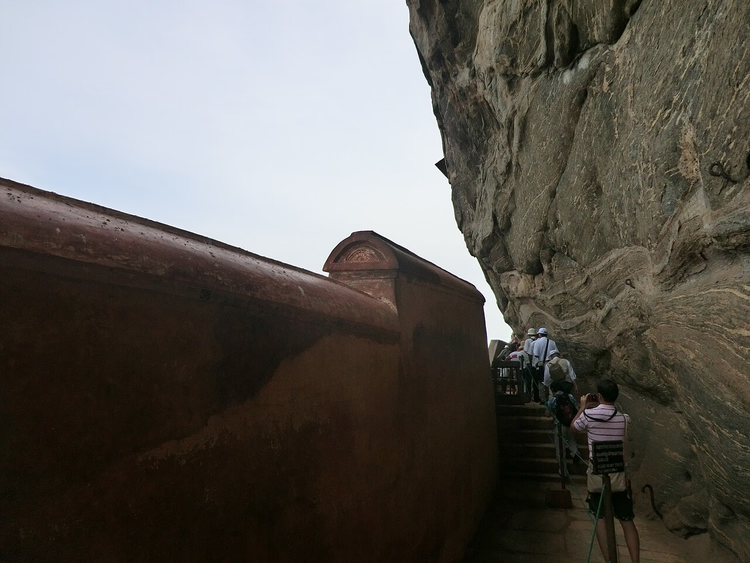
Sigiriya rises as a lone rock in the middle of a green plain, and it is called "Lion Rock". A royal city with staircases, walkways, and a giant throne once stood on its summit. The ruins can only be reached by stairs, so bring water and comfortable shoes.
 © Daibo Taku · CC BYPhoto: Daibo Taku, CC BY (https://creativecommons.org/licenses/by/3.0), Wikimedia Commons
People also climb up here for the fresco gallery. Only a handful of the hundreds of paintings have survived, and they depict court ladies with their beauty and grace. Below, water gardens are laid out and a museum operates, and the ticket covers entry to the entire complex. The site is open from 7:00 to 17:00 (as of 09/2026, CCF ticket portal).
- The catch: the climb follows open staircases under the sun, and it gets hot by midday.
- Who it's for: for those ready to climb for the view and the frescoes.
Hotels in Sigiriya on Trip.com
24. Polonnaruwa
 © Mlechanteur · CC BYPhoto: Mlechanteur, CC BY (https://creativecommons.org/licenses/by/3.0), Wikimedia Commons
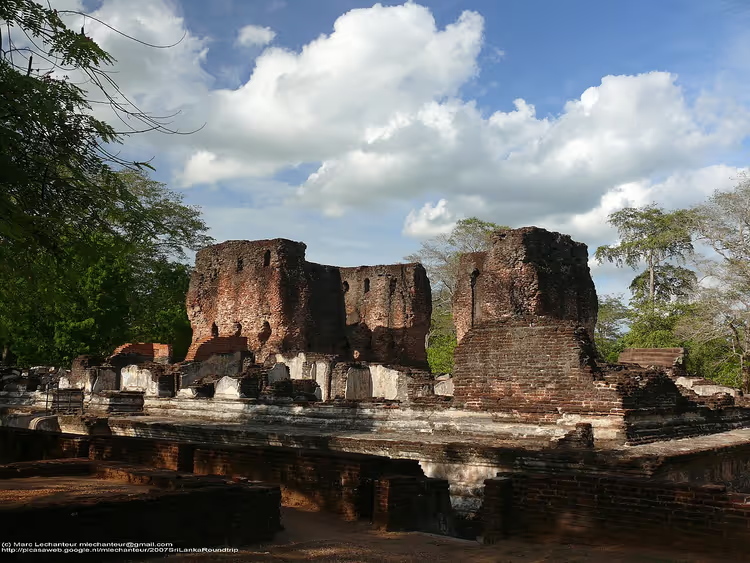
Polonnaruwa serves as an open-air museum city. Many of its structures are protected by international organizations as world heritage sites. Palace and temple complexes have survived in the city, and the columns of the Council Chamber are inscribed in detail with the entire system of state governance.
Among the ruins of the royal palace, a former pool has survived: water was piped into it from a reservoir and scented with jasmine. The gardens were divided into separate sectors and were considered a distinct natural monument. The most impressive temple, Hatadage, was built in the twelfth century. The site is open from 7:00 to 17:00 (as of 09/2026, Central Cultural Fund website).
- The catch: the area is large and open, with almost no shade at midday.
- How to get there: about 55 km from Sigiriya (by map).
Hotels in Polonnaruwa on Trip.com
25. Batticaloa
 © Kondephy · CC BY-SAPhoto: Kondephy, CC BY-SA (https://creativecommons.org/licenses/by-sa/4.0), Wikimedia Commons
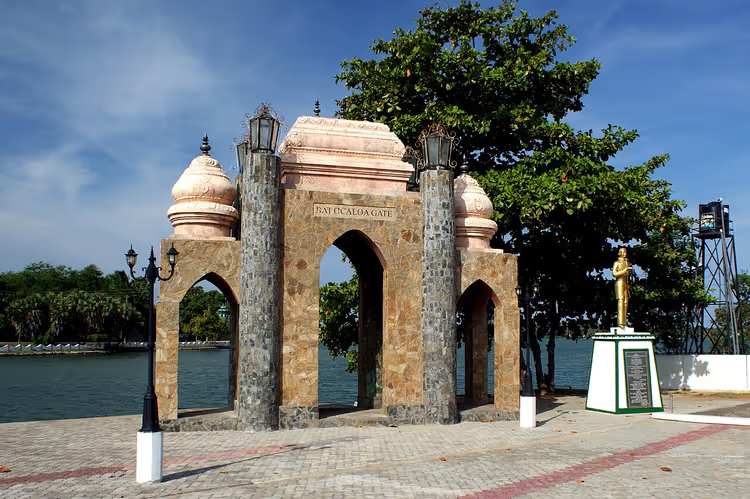
Batticaloa stands on a narrow spit of land that separates the ocean from a lagoon. The city got its modern name from the British, and before that the Dutch renamed it. The spit rises only slightly above the ocean, and this is especially noticeable at high tide.
Batticaloa does have its own Kallady Beach, but it is not the best choice for a beach holiday; however, it is quiet here and there are almost no tourists. Hotels stand at the mouth of the lagoon, with a lighthouse and a seventeenth-century Dutch fort nearby. The season on the east coast runs from May to September, when the west of the island is drenched in rain.
- The catch: Kallady Beach is not the best option for swimming and sunbathing.
- Who it's for: for those heading east for peace and quiet in summer.
Hotels in Batticaloa on Trip.com
⁉️🤔 Frequently asked questions
Which Sri Lanka resort should I choose for a first trip?
For a first trip, it is convenient to combine Negombo near the airport with the south coast. Negombo gives you a calm first night, while Unawatuna or Hikkaduwa open up beaches, diving, and turtles. Set aside separate days for the hill country towns.
When is the best time to go to Sri Lanka?
The island operates on two seasons. The west and south coasts are dry from November through April, and the east coast from May through September. If you want to combine the beach and the cultural triangle, plan your trip for January to March. The seasonal calendar is easy to check on the tourism office website.
Do you need a visa for a trip to Sri Lanka?
Yes, most tourists need an ETA electronic visa. Apply only on the official government website and check the fee there as well, since rules and rates have changed from time to time. Third-party sites charge a markup for the same permit.
How much does entry to the main attractions cost?
The island's beaches are free, but cultural sites are paid separately. Sigiriya, Anuradhapura, Polonnaruwa, and Dambulla are managed by the Central Cultural Fund; check prices and opening hours on the official website. A combined "Cultural Triangle" ticket is available for several sites at once.
Where can you see whales and when is the best time to do it?
Whales are spotted in Mirissa and further south. Boats leave the pier early in the morning, and the chance of seeing a blue whale is high from December through April. Get a spot on the deck and bring motion sickness tablets.
Can you swim in Sri Lanka year-round?
Yes, but with a caveat. You should swim on the leeward coast: in winter that means the west and south, in summer the east. The waves are gentler in bays, but the sea in Mirissa Bay can be rough. If you're going in summer, choose Trincomalee or Batticaloa.
Sri Lanka resorts on the map
All 25 resorts are marked on one map, which makes it easier to plan a route along the coasts.
The best resorts of Sri Lanka
Places on the map
- 1Negombo 'Little Rome,' 20 minutes from Bandaranaike Airport
- 2Hikkaduwa Diving hub, coral reef with turtles
- 3Wadduwa About fifty temples and the Richmond Castle mansion
- 4Bentota The island's largest water sports center
- 5Unawatuna Bay amid the jungle behind a coral reef
- 6Trincomalee Deep-water bay in the northeast, dry in summer
- 7Colombo The island's main metropolis, the Fort district
- 8Beruwala Muslim culture, Masjid-ul-Abrar mosque
- 9Galle 16th-century fort, a UNESCO heritage site
- 10Ahangama Quiet fishing village near Unawatuna, surf spots
- 11Kalpitiya Diving hub north of Colombo, the island's largest reef
- 12Mount Lavinia Resort in the shadow of Colombo, the Mount Lavinia Hotel
- 13Mirissa Blue whale watching from December to April
- 14Weligama Bay for surfers and snorkelers, the Agrabodhi temple
- 15Marawila Lagoon amid mangrove thickets, deserted beaches
- 16Dickwella A little-known corner of the south, the rock temple of Mulkirigala
- 17Tangalle Bay with lagoons and coral reefs
- 18Induruwa Deserted beaches amid coconut groves, turtle hatcheries
- 19Koggala Lake with hermit retreats, a five-kilometer beach
- 20Nuwara Eliya 'Little England' in the mountains, tea plantations
- 21Anuradhapura Ancient capital, the Jetavanaramaya stupa
- 22Dambulla Golden cave temple with a collection of Buddha statues
- 23Sigiriya 'Lion Rock' with the ruins of a royal city
- 24Polonnaruwa Open-air museum city, the Hatadage temple
- 25Batticaloa A spit between the ocean and the lagoon, season from May to September
In short: what's worth booking
If you're flying in winter and want the beach, choose Unawatuna or Hikkaduwa. Surfers will like Weligama and Ahangama, and whale watchers should head straight to Mirissa. For a summer vacation, choose Trincomalee; for culture and cooler weather, Nuwara Eliya and Sigiriya.
A quick selection matrix:
- Want to go straight from the plane to the beach: Negombo.
- Want diving and turtles: Hikkaduwa.
- Want a quiet vacation with kids: Dickwella or Induruwa.
- Want mountains, tea, and cool weather: Nuwara Eliya.
Compare hotels for your travel dates on Trip.com.

A small editorial team writing guides for independent travel. We travel ourselves, but we haven’t been everywhere, so we check prices, opening hours and how to get there against official sources.