
















Sable Island: how to get to the graveyard of the Atlantic and see wild horses
Sable Island has earned the nickname "Graveyard of the Atlantic." This sand spit in the open ocean has swallowed hundreds of ships, yet it remains home to wild horses and huge seal colonies (as of 09/2026, according to Parks Canada).
Sable stretches as a narrow strip of sand on the edge of the continental shelf, southeast of Halifax. The island is part of Canada's national park system, so landing here is possible only with permission from Parks Canada and only with a licensed operator. Visits typically run from June through October (as of 09/2026, island visit plan).
To see Sable with your own eyes, you'll need to plan the trip well in advance: the island is moving east, lives by the rules of two currents, and welcomes guests under strict conditions.
Ad: this article contains affiliate links, we earn a commission if you book through them, at no extra cost to you.
What Sable Island is like
💡 In short:
- The island lies 290 km from Halifax; the nearest land, Canso, is 161 km away (as of 09/2026, distance from Halifax).
- Landing is possible only with permission from Parks Canada and with a licensed operator.
- Visiting season: June through October, with limited windows in January and February; visits are day trips only.
- Prices, dates, and rules: as of 09/2026, verified on the official Parks Canada website.
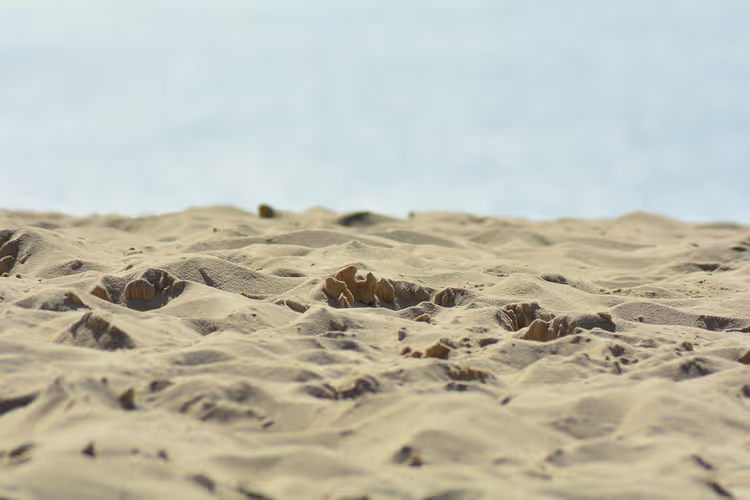
Sable looks like a long sandy crescent in the open ocean. There are no cliffs or forest here: just sand, dunes, tough grass, and constant wind.
Waves erode the island's western edge while the eastern edge builds up, so the sand spit slowly shifts eastward. The island's outline changes from year to year. Sable is considered one of Canada's most remote islands from the mainland (as of 09/2026, Parks Canada).
 © Paul Gierszewski · CC BY-SAPhoto: Paul Gierszewski, CC BY-SA (https://creativecommons.org/licenses/by-sa/4.0), Wikimedia Commons
As recently as the last century, a rescue crew was permanently stationed on Sable. Today, Parks Canada staff and researchers work here year-round. You won't find any shops, hotels, or cafes here.
Why Sable is called the ship eater
The island earned its grim nickname not for its atmosphere but for its statistics: more than 350 shipwrecks have been recorded off its shores (as of 09/2026, Parks Canada).
Sandbanks lie just below the water's surface, and the island itself is barely visible above the waves, so ships run aground. Getting off the shifting shoals is impossible: the vessel is gradually swallowed by the sand.
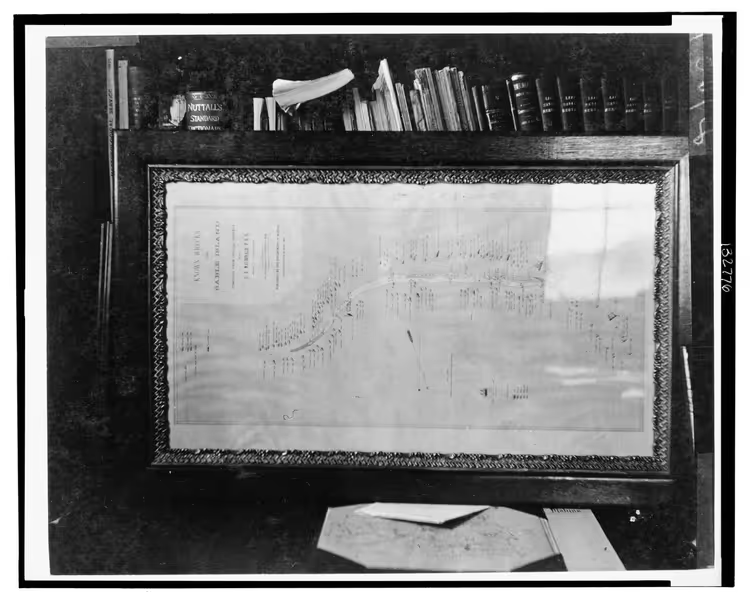
The first documented shipwreck dates back to the 16th century, when the English ship Delight was lost off Sable. The last major victim was the cargo ship Manhasset, which ran aground in 1947. The entire crew was brought ashore by the island's rescue team.
In the early 19th century, after a series of disasters, a lighthouse was built on the island and a permanent rescue team was stationed there. From that point on, Sable became inhabited. Modern researchers study old wrecks: Parks Canada has excavated the remains of a vessel about two hundred years old, which probably belonged to the ship "Swift" (As of: 09/2026, excavations on the island).
Today you face no danger on this route: ships are monitored by the lighthouse and a radio beacon, and the coordinates of the shoals are constantly updated.
Where the Gulf Stream and the Labrador Current meet
The warm Gulf Stream rises from the Gulf of Mexico, while the cold Labrador Current descends along the coast of Labrador. Sable sits exactly where they meet, and this clash of two forces shapes all life on the island.
At the boundary of warm and cold water, it is almost always stormy. The morning may start with sunshine, and an hour later the island is covered by clouds and strong wind. It is because of this constant turbulence that the sandbars shift and the island itself slowly moves eastward.
Parks Canada warns visitors: on Sable you will find strong winds, mild temperatures, and almost no shelter (As of: 09/2026, weather warnings). The island holds fresh water in a groundwater lens: there are small ponds in the west, and in the east the horses dig wells in the sand (As of: 09/2026, Parks Canada).
Wild horses, seals, and birds of Sable Island
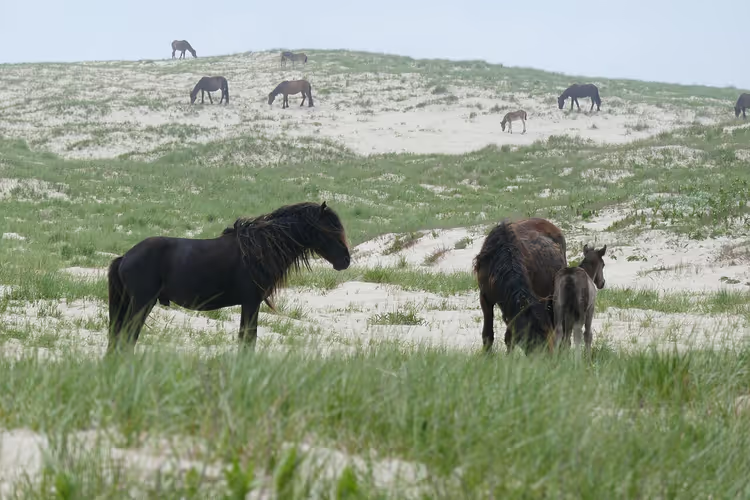
Wild horses have become the symbol of Sable. They are descendants of horses brought here in the 1730s. Census figures are collected in the table below (As of: 09/2026, horse census).
Indicator | Value |
|---|---|
Horses in the latest census | about 420 |
Range in recent years | 374-590 |
First horses on the island | 1730s |
Horses live in small groups: each has a dominant stallion, several mares, and young stock. The horses eat tough lyme grass, which also holds the dunes together. In winter the animals move to the center of the island and shelter from the wind behind sand ridges.
Gray seals use Sable's beaches as a nursery: during the breeding season, hundreds of thousands of animals gather here (As of: 09/2026, seal rookeries). Near the shore you will also see harbor seals. The island serves as a stopover for migratory birds, some of which stay to raise their young (As of: 09/2026, nature of the reserve).
National park and visiting rules
Sable has the status of a national park reserve managed by Parks Canada. There is no open access here: visit applications are reviewed in advance and approved on a first-come, first-served basis (As of: 09/2026, permits and passes).
Here is what you need to know before applying:
- Only day visits are allowed: camping and overnight stays on the island are prohibited.
- Facilities include toilets and drinking water; there are no shops or cafes.
- Private vessels must register in advance: landing is impossible without written consent.
- Filming and professional photography require a separate permit.
You can reach Sable by plane, helicopter, or boat. Operators are approved by Parks Canada (As of: 09/2026, list of operators):
Method | Operator | Format |
|---|---|---|
Plane | Sable Aviation | partially guided |
Plane | Kattuk Expeditions, Picture Perfect Tours | fully guided |
Helicopter | Vision Air | partially guided |
Cruise ship | Hurtigruten Expeditions, Kattuk Expeditions | fully guided |
How to get to Sable Island
Almost any trip to Sable starts in Halifax. Halifax Stanfield International Airport receives flights from Europe and North America; a bus runs from the terminal to the city center, and the trip takes about half an hour. Look for tickets in advance: in summer, prices on this route are noticeably higher. You can compare flight options on Kiwi.com.
 © Dennis G. Jarvis · CC BY-SAPhoto: Dennis G. Jarvis, CC BY-SA (https://creativecommons.org/licenses/by-sa/2.0), Wikimedia Commons
After that, you have 290 km over the ocean ahead of you (as of 09/2026, reserve data). You can fly there with a licensed operator by plane or helicopter, and in summer add a sea crossing on a cruise ship. The landing date is always confirmed in advance, and weather can shift it by a day or two.
The cost of the trip is made up of several parts: the flight to Halifax, a night in a hotel before departure, Parks Canada fees for landing and support, and operator services. Check current fee amounts on the visit planning page before submitting your application.
When to visit Sable
Officially, the island is open to visitors in January, February, and from June through October (as of 09/2026, season dates). In practice, operators run trips from June through October, when the ocean is calmer and the days are longer.
In winter, Sable gets little snow but a lot of wind: temperatures here are milder than on the mainland, but there are almost no places to take shelter. In summer, fog becomes a factor, and flights get postponed more often than you would like.
Plan your trip with a buffer of two to three days for bad weather. If you have already been dropped off on the island, you can cover the main points of the spit in one day.
Sable Island on the map
The map shows how far the island sits from the mainland and from Halifax (as of 09/2026, coordinates and distance).
Sable Island
Places on the map
- Sable Island Sandy-spit national park 290 km from Halifax, wild horses and seals
- Halifax Starting point of the trip, international airport and transfer to the island
- Canso Closest mainland point to the island, 161 km away
⁉️🤔 Frequently asked questions
Can you visit Sable Island on your own?
No. Every visit requires advance permission from Parks Canada, and independent trips without written consent are prohibited. In practice, visitors arrive with a licensed operator by plane, helicopter, or vessel, and applications are approved on a first-come, first-served basis (as of 09/2026, permit requirements). You should start planning several months ahead.
How many horses live on Sable Island now?
According to the latest census, there are about 420 wild horses on the island (as of 09/2026, Parks Canada census). The animals stay in small groups and graze on the dunes, so you will see them across most of the island.
Why is the island called the Graveyard of the Atlantic?
The island earned the nickname Graveyard of the Atlantic because of hundreds of shipwrecks off its shores. Sandbars sit just below the water's surface and are invisible from the deck, so a ship runs aground and gets stuck in the quicksand (as of 09/2026, shipwreck history).
Can you stay overnight on Sable Island?
No. Camping and overnight stays on the island are prohibited. Visitor facilities include toilets and drinking water; there are no shops or cafes, so you bring your own water, food, and warm clothing (as of 09/2026, visitor rules).
When is the best season to visit Sable Island?
The main window is June through October, when operators are running and the ocean is calmer. Visits are also possible in January and February, but winds are stronger and there is almost no shelter on the island. Build extra days into your schedule: flights are often postponed due to fog and storms.
In short: what to book for a trip to Sable Island
A trip to Sable Island is put together in advance and in several parts: Parks Canada permit, operator, flight to Halifax, and an overnight stay before departure.
- If you are flying in from far away: book flights to Halifax first, then apply for your visit permit.
- If you are short on time: take a fully guided tour.
- If you also want to see mainland Nova Scotia: add a car to your trip.
- If you are going for the horses and seals: choose June through October and allow extra days for weather.
For an overnight stay in Halifax, compare options on Trip.com, and for exploring the province, check out car rental in Nova Scotia on DiscoverCars. Submit your visit application on the Parks Canada permits page at least a couple of months in advance.

A small editorial team writing guides for independent travel. We travel ourselves, but we haven’t been everywhere, so we check prices, opening hours and how to get there against official sources.