
















Canyonlands: what to see, entry fees and when to go
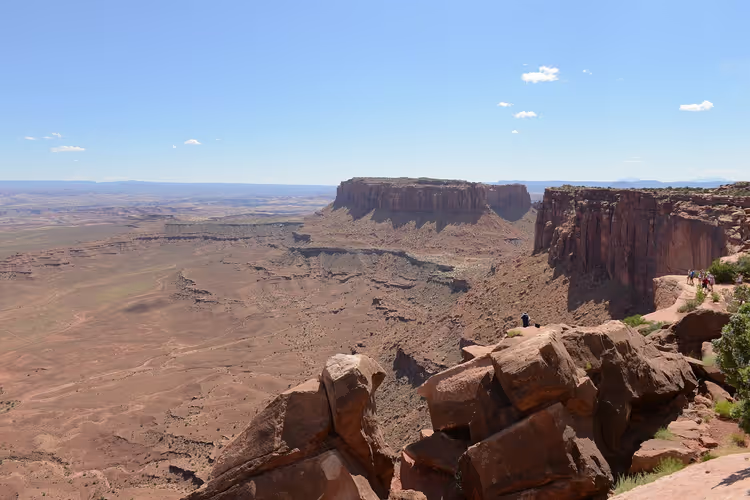
Canyonlands is the largest national park in Utah. It covers 337,598 acres of land and water (according to the US National Park Service). The Green and Colorado Rivers have cut the local plateau into isolated districts. There are no roads connecting them within the park. Driving between districts takes from two to six hours (according to the park's official website).
Without a plan, you'll spend the day on the road and see only one part of the park. Below we'll break down what to see in each district, how much entry costs, where to find petroglyphs, and when to go.
Ad: this article contains affiliate links, we earn a commission if you book through them, at no extra cost to you.
What you need to know before the trip
💡 In short:
- Entry costs $30 per car, the ticket is valid for 7 days (as of 09/2026, park rates).
- The park is open 24/7 year-round, no entry reservation needed (as of 09/2026, official website).
- Allow a full day for each district: driving between parts of the park takes several hours.
- Prices and hours: 09/2026, verified on the official website
History of the national park
People have been coming to this plateau for more than 10,000 years (according to the National Park Service). At first, hunters and gatherers lived here. Later, Pueblo Indians took up farming, wove baskets, and made pottery. For rituals, they built underground kivas. By the end of the 13th century, people left the plateau for unknown reasons.
 © Yourcelf · CC BY-SAPhoto: Yourcelf, CC BY-SA (https://creativecommons.org/licenses/by-sa/3.0), Wikimedia Commons
Later, American settlers came across this territory by chance while exploring the Wild West. What drew them was not the scenery but practical gain. Criminals and smugglers hid in the canyons, and later people searched for uranium here. These visits helped geologists and archaeologists study the area. You can still find traces of the ancient inhabitants in the park today.
In the mid-20th century, archaeologists and the recreation service took a serious interest in the Colorado River basin's legacy. In 1964, the US president signed the law creating the national park (according to the park's history).
Surreal landforms
On Canyonlands' terrain, geologists study processes that took place on Earth millions of years ago. The Colorado Plateau is part of the continental crust. Sediments from weathering and ocean incursions accumulated on its surface. A thick layer of ocean deposits pressed down on the lower strata and gradually turned them into hard rock.
 © Thomas Wolf , www.foto-tw.de · CC BY-SAPhoto: Thomas Wolf , www.foto-tw.de, CC BY-SA (https://creativecommons.org/licenses/by-sa/3.0), Wikimedia Commons
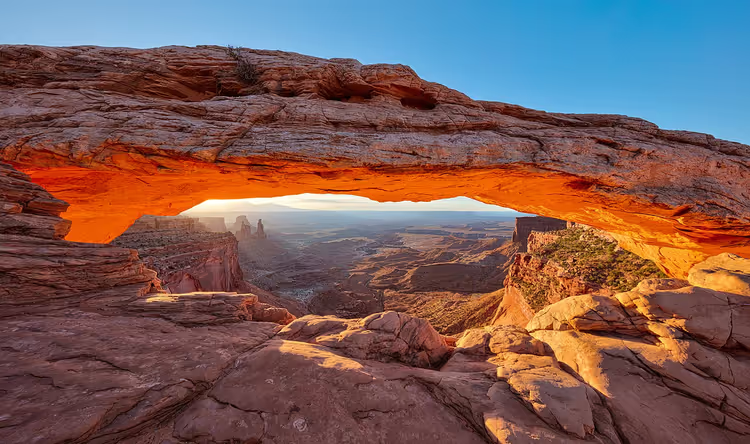
Then the western part of North America began to rise slowly. The Colorado and Green rivers cut into the rock layers and carved deep canyons. Wind, water, and temperature swings finished the job. On the canyon walls you can make out colored sandstone layers. That's how canyons, arches, spires, and surreal figures appeared on the plateau.
Park districts and what to see in them
The park covers a huge area, so it's divided into separate districts. Each has its own name. You drive to Island in the Sky and The Needles by car. To get into The Maze, you need a high-clearance four-wheel-drive vehicle. A dirt road leads to the trailhead at Horseshoe Canyon.
 © G. Edward Johnson · CC BYPhoto: G. Edward Johnson, CC BY (https://creativecommons.org/licenses/by/4.0), Wikimedia Commons
Island in the Sky
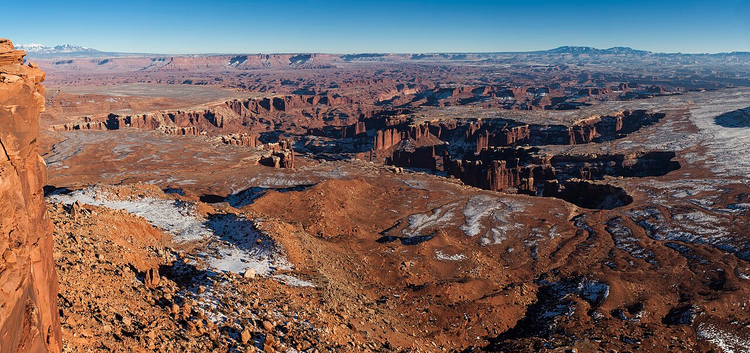
The district sits on the watershed between the Green and Colorado rivers and rises more than 300 meters above the surrounding area (according to the park's official website). The cliffs offer a sweeping view of the entire park. It's the easiest district to reach: from Moab to the visitor center is about 40 minutes on paved roads (according to NPS). The overlooks are just steps from the parking lot, so the district works well for a short trip. Most park visitors come here. Among the scenery, one standout is a crater whose origin geologists still debate.
The Needles
The Needles district is named for its cluster of pointed rock formations. Erosion carved them. Canyons, arches, and caves alternate with red-and-white sandstone spires. You can get around here by car, on foot, or by bike. Well-known spots include Angel Arch and Elephant Hill. The Indian Creek cliffs lie just outside the park boundary. The sheer walls of Indian Creek draw climbers from around the world.
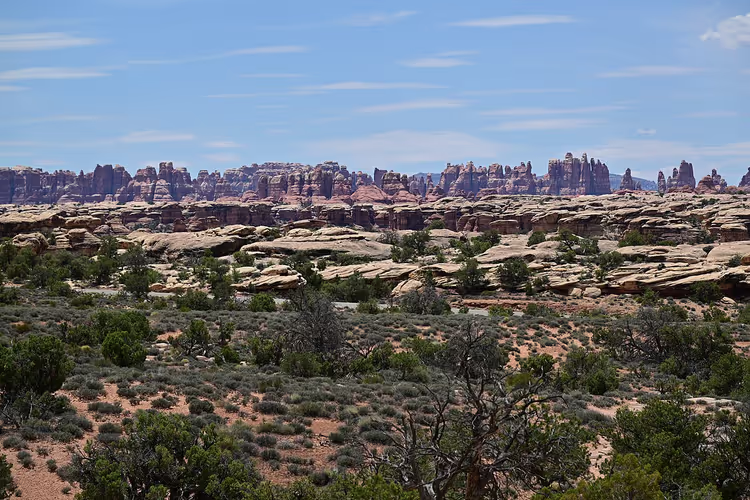 © G. Edward Johnson · CC BYPhoto: G. Edward Johnson, CC BY (https://creativecommons.org/licenses/by/4.0), Wikimedia Commons
Horseshoe canyon and the maze
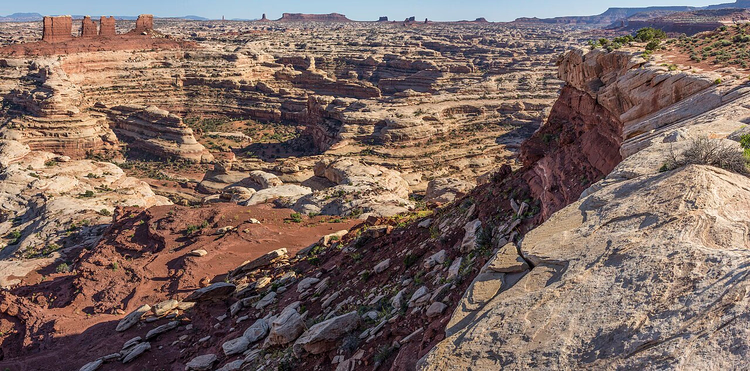
Horseshoe Canyon attracts lovers of antiquities. Native American rock art survives here: signs, symbols, and human figures. The petroglyphs stretch in a long gallery along the canyon wall. The hardest district to reach is The Maze. Only a high-clearance four-wheel-drive vehicle can make it here. The route demands good physical condition. You'll have to carry all your water and food with you. In return, you'll be alone with silence and wild nature.
What to do in Canyonlands
The park's terrain suits different kinds of recreation. You'll meet climbers, hikers, and cyclists here. On calm stretches of the Colorado and Green rivers, people paddle canoes; on the rapids, they raft or kayak. Or you can simply watch the light change on the rocks at sunrise and sunset.
The park has kept its wild character. There's no running water, the roads are mostly dirt, and hiking routes follow primitive trails. Bring a supply of water and fill up on gas in advance: the nearest gas stations are back in Moab.
- Who it's for: road-trippers ready for long distances and minimal amenities.
- The catch: there is almost no running water or services in the park, bring all your supplies with you (according to the park website).
We covered a similar park in Colorado in the article Mesa Verde in the USA.
Cost, hours, and when to go
Park entry is paid, and the ticket is valid for 7 days. See the rates and pass options below (as of 09/2026, park pricing).
Option | Price | What it covers |
|---|---|---|
Passenger car | $30 | vehicle up to 15 seats, 7 days |
Motorcycle | $25 | up to two motorcycles, 7 days |
On foot or bicycle | $15 | per person aged 16 and older |
Island in the Sky Campground | $15 | per night, first-come, first-served sites |
The Needles Campground | $20 | per night, first-come, first-served sites |
Annual park pass | $55 | Canyonlands, Arches, Natural Bridges, and Hovenweep for one year |
America the Beautiful | $80 or $250 | all US federal parks, one year |
Table data as of 09/2026, entry pricing. The park is open 24 hours a day, year-round, but some facilities close in winter (according to the park page). Campgrounds fill on a first-come, first-served basis; only group sites need to be reserved in advance.
The best months to visit are April, May, September, and October. In summer the plateau gets hot, and nights are cold. In winter it gets dark early, and some roads close because of snow. Go in the morning: by midday more cars gather at the overlooks.
Tours and tickets
Guided tours, skip-the-line tickets and activities — most offers can be cancelled free of charge.
See offers on GetYourGuideThe widget loads once you give your consent.
Canyonlands on the map
The park lies in southeastern Utah, west of the town of Moab. Use the map below to plan your approach and estimate distances between districts.
⁉️🤔 Frequently asked questions
How much does it cost to enter Canyonlands?
Entry costs $30 per car, $25 per motorcycle, and $15 per person without a vehicle. The pass is valid for 7 days. If you plan to visit several federal parks, the America the Beautiful annual pass for $80 is a better deal for US residents (as of 09/2026, entry fees).
Do I need to reserve entry in advance?
No, timed entry slots are not required for Canyonlands. The park is open 24/7 year-round, and you buy the pass at the entrance station (according to the official source). You only need to book ahead for river trips, backcountry camping, and group campsites: those require a permit.
Can you see two districts in one day?
Practically no. There are no direct roads between the districts, and driving from one to another takes two to six hours. Most travelers do one district per day (according to the park guide). If you're short on time, choose Island in the Sky: it's about 40 minutes from Moab.
When is the best time to visit Canyonlands?
Spring and fall are the most comfortable; summer on the plateau is hot. The park is open 24/7, so arrive early in the morning. By midday, popular overlooks get crowded with cars (according to the current guide).
Is there water and camping in the park?
There is no running water in the park. Drinking water is available at the Island in the Sky visitor center, which is open year-round (according to the official website). For Island in the Sky and The Needles camping fees, see the table above (as of 09/2026, park fee schedule).
In short: what's worth booking
If you're going for one day, choose Island in the Sky: it has the most overlooks right by the road. For desert landscapes and rock climbing, head to The Needles. For a real backpacking trip, plan for The Maze and get your permit well in advance. The entrance pass is the same for all districts, so don't overpay for separate permits.
If you don't have your own car, check out Canyonlands tours on GetYourGuide.

A small editorial team writing guides for independent travel. We travel ourselves, but we haven’t been everywhere, so we check prices, opening hours and how to get there against official sources.