
















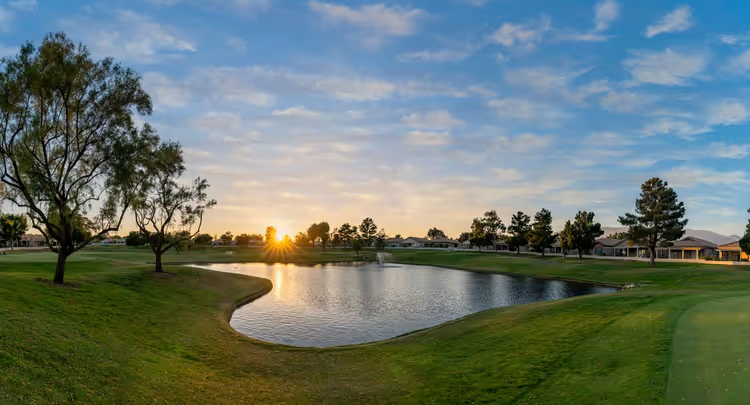
Where they play golf among dunes and ski from a factory roof
A sports venue can be more powerful than any museum. In Aqaba, a concrete golf club blends into the desert dunes, and in Copenhagen, skiers descend from the roof of a power plant. Travelers reroute entire trips for places like these.
Here are eight arenas and courses from around the world that look like movie sets. Many of them welcome visitors beyond match days. Below, we break down what exactly is worth seeing at each venue and how to get there.
Every venue is open to tourists, but check schedules and tickets on official websites. They change by season.
What these eight venues have in common
💡 In short:
- The venues are spread across Europe, Asia, and North America: from the Jordanian desert to a Danish power plant.
- Book tickets and time slots for paid venues online in advance. Weekend slots fill up faster.
The table below will help you pick a venue for your trip.
Venue | Where | What makes it unusual |
|---|---|---|
Ayla Golf Club | Aqaba, Jordan | A concrete clubhouse shaped like dunes |
Bamboo basketball court | Changqi, China | Stands and canopies woven from bamboo |
Estádio de Aveiro | Aveiro, Portugal | Stands and columns in every color of the rainbow |
Estádio Municipal de Braga | Braga, Portugal | The arena is carved into a granite slope |
Floating green | Idaho, USA | One hole sits on a movable island |
Sapporo Dome | Sapporo, Japan | The field rolls out, the stands slide apart |
Ski Dubai | Dubai, UAE | A ski slope inside a shopping mall |
CopenHill | Copenhagen, Denmark | A ski slope on the roof of a plant |
1. A golf club among the dunes in Jordan
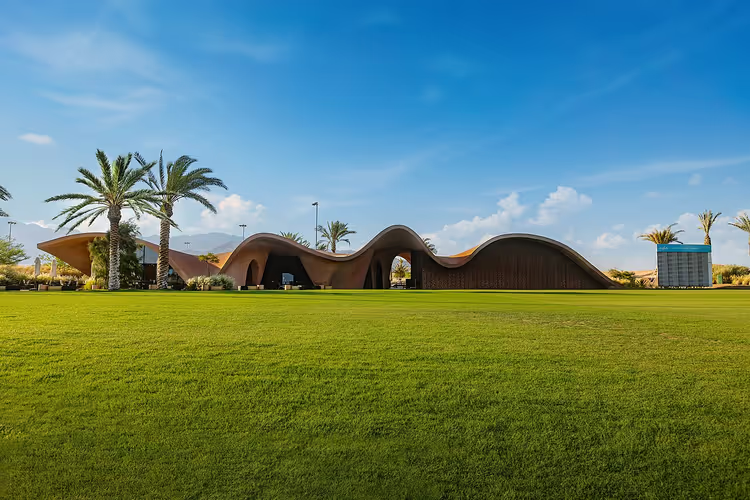
Ayla Golf Club sits in Aqaba, in southern Jordan, and its building echoes the shape of sand dunes. Oppenheim Architecture sculpted the clubhouse from concrete, so the structure almost dissolves into the desert. The facade has no typical grilles or exterior light fixtures: all engineering details were hidden for the sake of a clean silhouette. The shades were chosen to match the surrounding mountains, so the rust and sand tones here are not decoration but part of the concept.
 © Ghaydaa.s · CC BYPhoto: Ghaydaa.s, CC BY (https://creativecommons.org/licenses/by/4.0), Wikimedia Commons
The course has 18 holes, and nine additional academy practice holes are floodlit (as of 09/2026, official Ayla website). A spa, restaurant, lounge bar, and shops operate nearby, so you can spend a whole day here. The clubhouse project was completed in 2018 (ArchDaily).
2. A bamboo stadium in China
In the village of Changqi in Guangdong Province, a basketball court was built from bamboo. Local residents, together with a student team, restored an abandoned playing area that had been in disrepair for years. The canopies over the stands were woven from bamboo, inspired by a local tradition: in this region, bamboo is used to make fabric and household items.
This material withstands the humid climate and looks natural next to the groves. The court is active, and local teams still play on it. It is worth a stop if you are traveling through Guangdong and want to see how sports can be woven into a village landscape.
3. Portugal's most colorful stadium
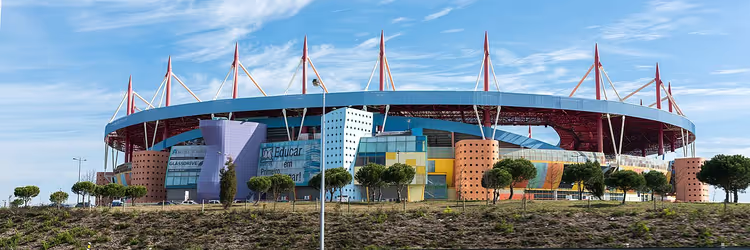
The stadium in Aveiro is painted in the colors of the rainbow. Beams, columns, walls, and seats all differ in color, so the arena looks more like an entertainment center or a child's drawing than a football ground. Beira-Mar plays its home matches here.
 © Bengt Nyman · CC BY-SAPhoto: Bengt Nyman, CC BY-SA (https://creativecommons.org/licenses/by-sa/4.0), Wikimedia Commons
The venue was built for Euro 2004, hosted by Portugal, and has since become one of the city's landmarks. The stands hold about 30,000 spectators, so the stadium is visible in the Aveiro skyline. If modern sports architecture appeals to you, put Aveiro on your route between Porto and Lisbon.
4. A football arena in the rocks
The stadium in Braga is cut into a granite slope on the site of a former quarry. Eduardo Souto de Moura's design connected the stands on both sides of the pitch with the bare rock, so the arena looks like a natural bowl. Souto de Moura received the Pritzker Prize, the highest award in architecture, in 2011. It was awarded for his entire body of work, not for one stadium.
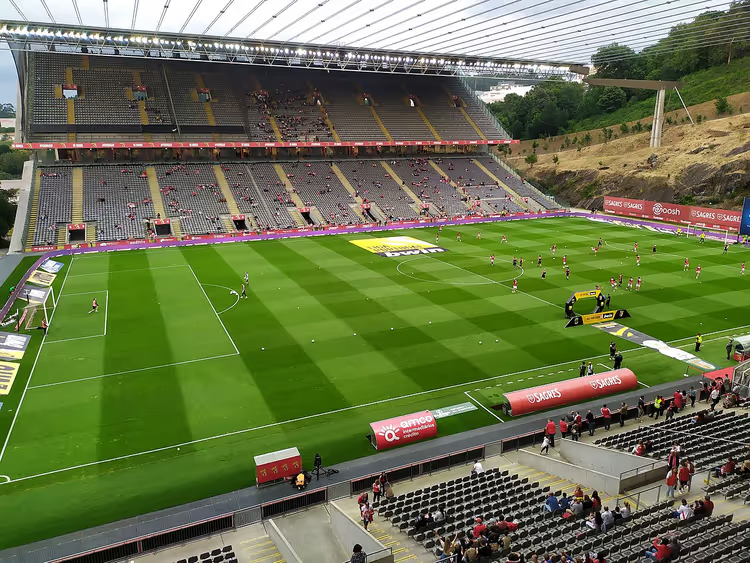
The construction budget grew several times over, and together with annual maintenance the venue cost the country a very large sum. The designers drew inspiration from the stone architecture of ancient South American civilizations. Come here for the view of the rocks, not just for football: parts of the venue are open for tours on non-match days.
5. A floating green in Idaho
At the Coeur d'Alene Resort course in Idaho, one of the holes sits not on land but on a separate island. This patch of ground is mounted on a barge moved by cables, so the green's position changes daily. Golfers never get used to one distance and have to recalibrate their swing each time.
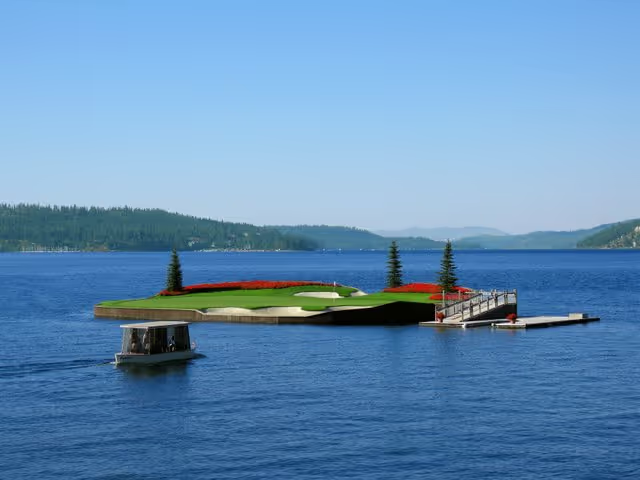
A small water taxi ferries players to the island; without it, the hole is unreachable. If you play golf even occasionally, seeing this setup is worth it for the idea alone. Here, a sports field becomes an attraction.
6. A transformer stadium in Sapporo
From the outside, Sapporo Dome looks like an ordinary dome, but inside it is a construction kit. The natural grass football pitch sits on a movable platform and rolls outside entirely, while a baseball surface takes its place (according to Kawasaki). The stands slide apart, so the arena's configuration changes completely within a few hours. This stadium was built in Hokkaido to allow year-round play despite snowy winters.
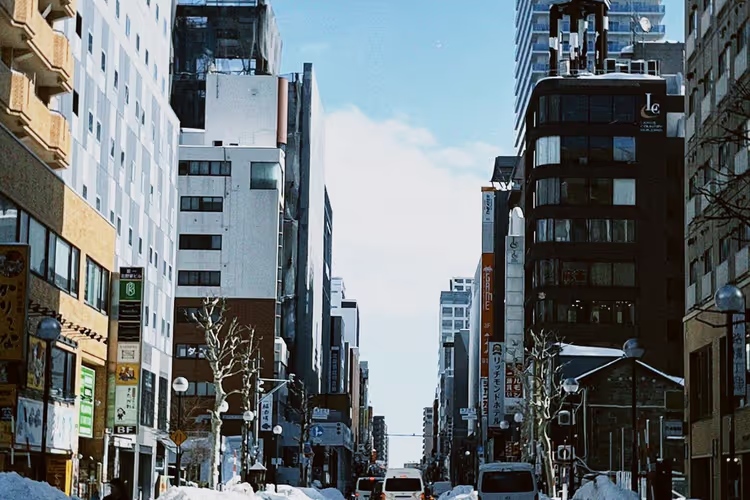
The roof remains fixed, unlike similar dual-purpose arenas in Germany, the Netherlands, and the USA. The engineers bet on moving parts rather than a retractable roof. If you are into engineering, a tour of the arena will tell you more than any match.
7. A ski resort in Dubai
Ski Dubai operates inside Mall of the Emirates, in the middle of a hot city. Sub-zero temperatures are maintained indoors year-round, so you can ski and snowboard even when it is scorching outside. The complex includes five slopes of varying difficulty and a snow park covering 3,000 square meters (as of 09/2026, official Mall of the Emirates website).
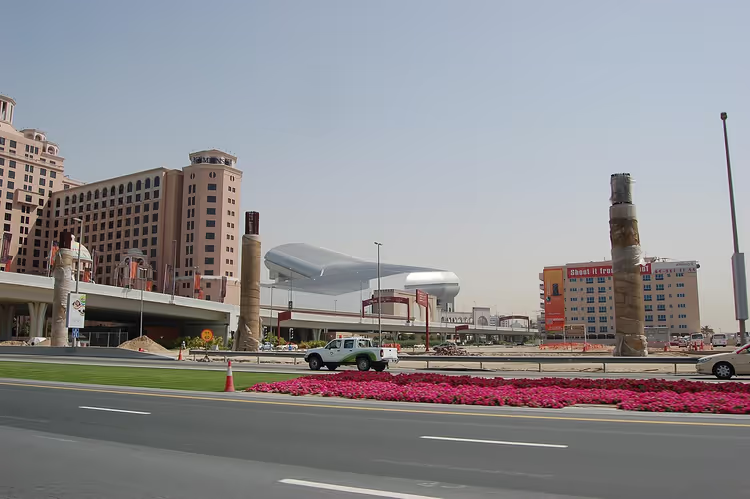 © Frédéric VINEE · CC BY-SAPhoto: Frédéric VINEE, CC BY-SA (http://creativecommons.org/licenses/by-sa/3.0/), Wikimedia Commons
A separate reason to come here: the complex is home to gentoo and king penguins, which appear for visitors on a schedule. Penguin encounters must be booked in advance (penguin encounter schedule). For you, this is a rare chance to see snow and penguins on the same day as the beach.
8. A ski slope on the roof of a plant
In Copenhagen, a ski slope was opened on the roof of the Amager Bakke waste-to-energy plant. In winter and summer, visitors ride a lift to the top and slide down on an artificial surface, and a sledding hill operates nearby. Access to the viewing platform and walking trail is free, so you can go up without skis.
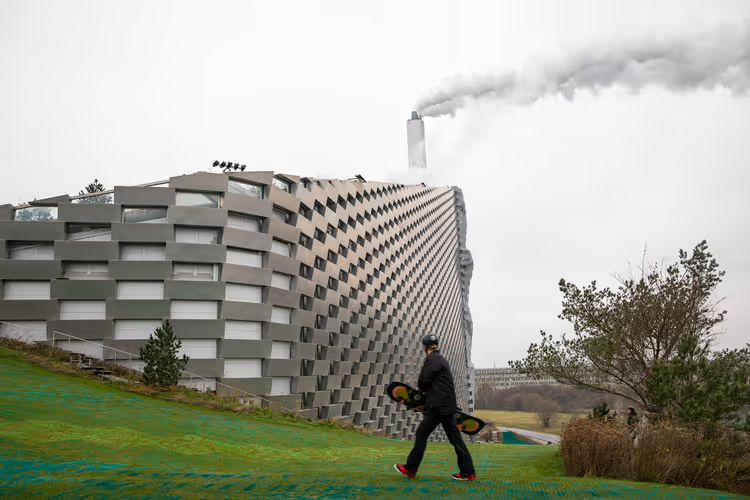 © News Oresund · CC BYPhoto: News Oresund, CC BY (https://creativecommons.org/licenses/by/2.0), Wikimedia Commons
The site also has Europe's tallest climbing wall at 85 meters (as of 09/2026, CopenHill). The CopenHill project became an example of how an industrial facility can be turned into a draw for residents and tourists (VisitCopenhagen). If you are planning a trip to Copenhagen, set aside half a day for this.
⁉️🤔 Frequently asked questions
Can you ski in Dubai year-round?
Yes. Ski Dubai maintains sub-zero temperatures inside the complex at any time of year, so the season does not depend on the weather. Equipment is available from the rental shop, and slopes of varying difficulty suit beginners too.
What is unusual about the stadium in Braga?
The arena was cut directly into the granite slope of a former quarry, and part of the pitch is bounded by bare rock. In 2011, Eduardo Souto de Moura received the Pritzker Prize for his entire body of work. Parts of the venue are open for tours on non-match days, so the stadium is worth seeing as an architectural object.
Do you need to buy a ticket to see these venues?
Not always. Copenhagen's CopenHill offers free access to the roof and viewing platform; you only pay for the ski slope or climbing wall. At the stadium in Braga, parts of the venue are open for tours on non-match days, and the golf club in Aqaba is usually open for tours on days without tournaments.
When is the best time to visit these venues?
A weekday morning is almost always calmer than the weekend. In Dubai and Aqaba, the period from autumn to spring is more comfortable because summer is too hot. In Copenhagen, the ski slope operates year-round, but the viewing platform is best visited in clear weather.
Does it make sense to travel just for one venue?
It does if you combine the venue with a trip around the region. The stadiums in Aveiro and Braga in Portugal are easy to see on one route, while Ski Dubai and CopenHill are integrated into their cities and do not require a separate day.
One venue on the list is best appreciated in motion: under the roof of Ski Dubai, snow falls year-round, and beginners and experienced skiers share the slopes at the same time.
In short: what to book
If you want to see snow in the middle of the desert, start with Ski Dubai. If architecture is more your thing, combine the stadiums in Aveiro and Braga into one route through Portugal. In Copenhagen, head up to the roof of CopenHill. Aqaba is worth a stop for the golf club, and Sapporo for the transformer stadium.

A small editorial team writing guides for independent travel. We travel ourselves, but we haven’t been everywhere, so we check prices, opening hours and how to get there against official sources.