
















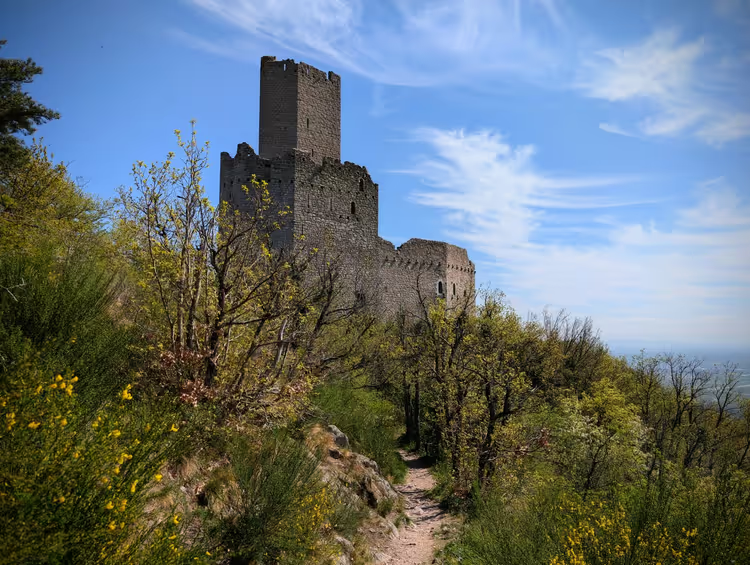
Monsanto: a village of granite boulders and a Templar fortress
Houses in Monsanto grow straight out of granite boulders.
The village hangs on the slope of a granite mountain 758 meters high (according to Wikipedia) about 300 km from Lisbon (according to the map).
In 1938, Monsanto won the title of "the most Portuguese village in Portugal" (as of 09/2026, Wikipedia article about Monsanto). Since then, people have come here for the Templar castle, granite alleys, and the legend of the seven-year siege.
Below we have gathered the history of the village, its main legend, and practical information: how to get to Monsanto and when it is best to go there.
Ad: this article contains affiliate links, we earn a commission if you book through them, at no extra cost to you.
History: Templars, Moors, and granite
💡 In short:
- What to see: Castelo de Monsanto castle, the Torre do Relógio tower with the silver rooster, and the alleys between the boulders.
- The main story of the village: seven years of siege, a fattened cow, and the lifting of the blockade.
- Transport and village status: 09/2026, verified on the official website of the Aldeias Históricas de Portugal network.
Monsanto is a village in the municipality of Idanha-a-Nova, in the Castelo Branco district, right on the border with Spain. The name comes from the Latin Mons Sanctus, meaning "Holy Mountain."
The granite rock rises above the plain, and the village occupies its slope. Traces of human presence here are older than the Roman roads: the earliest finds date back to the early Stone Age.
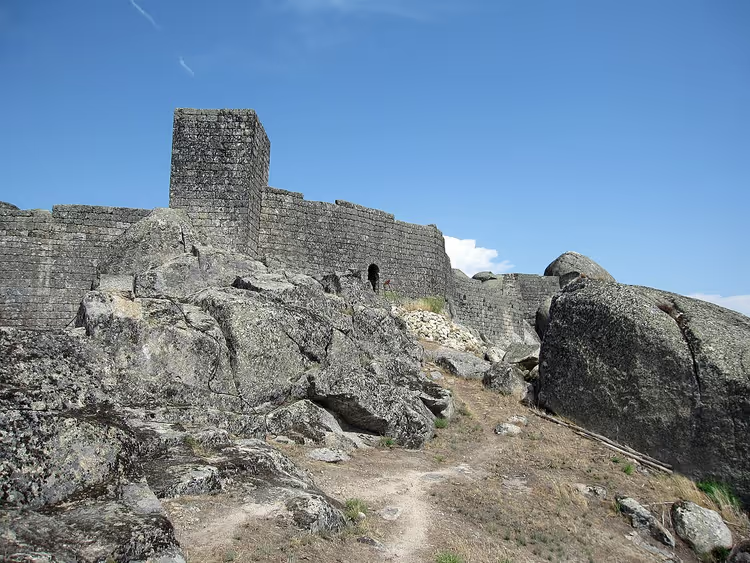 © Nmmacedo · CC BY-SAPhoto: Nmmacedo, CC BY-SA (https://creativecommons.org/licenses/by-sa/3.0), Wikimedia Commons
The locals did not go around the boulders; they built them into their houses. Stone served as walls, roofs, and foundations, so the boundary between rock and dwelling is impossible to make out here. Around the village, everyday objects of Romans, Lusitanians, and Arabs who lived here in different eras have been found.
The written history of the village begins in the twelfth century. King Afonso I recaptured the settlement from the Moors, and in 1165 handed it over to military religious orders: first to the Templars, later to the Order of Santiago (according to the article on the history of Monsanto).
The construction of the castle on the hilltop was led by the Grand Master of the Templars, Gualdim Pais. King Sancho I later restored and repopulated the town after the wars with León.
The castle survived changes of dynasties but did not survive gunpowder. In the nineteenth century, an explosion at an ammunition depot destroyed most of the walls, and the cause of the explosion was never determined (according to the encyclopedic reference).
The climb to the walls from the lower streets takes about twenty minutes at a leisurely pace (according to the map). The chapels, houses, and castle stand on the same hill, so you will walk through the history of the village from beginning to end.
The most Portuguese village in Portugal
Monsanto won the title of "the most Portuguese village in Portugal" in 1938 in a competition held by the government propaganda office (as of 09/2026, Wikipedia article about the village). The prize was a silver rooster, Galo de Prata, made by Abel Pereira da Silva, and a copy of it was placed on the Torre do Relógio tower (according to English Wikipedia).
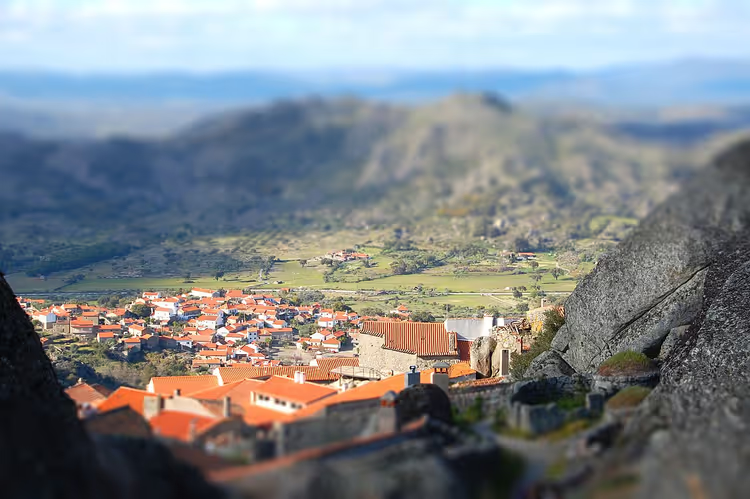 © Nadiajmonteiro · CC BY-SAPhoto: Nadiajmonteiro, CC BY-SA (https://creativecommons.org/licenses/by-sa/3.0), Wikimedia Commons
The rooster is visible from the road at the entrance to the village, so it is convenient to start your walk right from the tower.
The Portuguese consider Monsanto unlike other villages in the region. Locals are proud of their home and readily retell the history of the village to visitors.
Granite alleys and viewpoints
Monsanto is first and foremost a landscape. The boulders here are the size of a two-story house, and the alleys are cut right between them.
From the upper part of the village you can see the entire plain all the way to the Spanish border. In summer it is hot on the granite mountain, so bring water with you and go up in the morning, before the tour buses arrive.
Some of the alleys resemble tunnels: stone hangs overhead, and polished slabs lie underfoot. Shoes with good tread are more important here than in the city.
The best light at the viewpoints comes in the morning and at sunset. In the evening, the stone releases the heat accumulated during the day, and the village empties: only locals and those staying nearby remain.
The legend of the cow and the seven-year siege
The most famous story of Monsanto is the legend of a siege that lasted seven years (according to the collection of Portuguese legends on Infopédia, as of 09/2026).
Roman troops kept the village encircled, and the besieged had only a cow and a sack of grain left.
One of the women proposed a risky plan: feed the cow the last of the grain and give it to the enemy. According to another version of the legend, the animal was simply thrown from the wall onto the heads of the besiegers.
The calculation proved correct. The enemy decided that the fortress was full of supplies and lifted the siege, and the village remained undefeated. History has not preserved the woman's name, but in Monsanto every child knows this story.
The legend is retold in different ways, but all versions agree on the main point: the village won not by force, but by cunning. Next, we will tell you how to get there and when to go.
How to get to Monsanto
The village stands away from major roads, so the most convenient way is to drive. From Lisbon to Castelo Branco, the A23 motorway leads the way, then regional roads begin, and the whole journey takes about three hours (according to the map).
Buses of Rede Nacional de Expressos and other intercity carriers will only take you to the neighboring towns of Castelo Branco or Idanha-a-Nova (as of 09/2026, Aldeias Históricas de Portugal). From the stop to Monsanto you will have to take a taxi.
If you plan to travel around the area, compare car rental prices on DiscoverCars: without a car, the trip turns into a series of transfers.
How to get there | Travel time | What to keep in mind |
|---|---|---|
By car from Lisbon | about three hours (according to the map) | A23 motorway to Castelo Branco, then regional roads |
By bus | according to the carrier's schedule | to Castelo Branco or Idanha-a-Nova, then a taxi |
The catch: there is no direct bus to the village itself, so without a car you will have to combine bus and taxi.
When to go and how much time you need
Monsanto is a living village, not a museum, so you can visit it any day and without a schedule. It is most comfortable in spring and autumn: in summer the granite heats up, and in winter it can be windy at altitude.
One day is easily enough for the village itself, the castle, and the chapels. With an overnight stay, you get empty alleys at dawn and a sunset from the walls, when the tour groups have already left.
Come in the morning. In July and August there is little shade on the open viewpoints during the day, so plan the climb to the castle for the early hours and leave the alleys for the evening.
⁉️🤔 Frequently asked questions
What makes Monsanto different from other villages in Portugal?
The village is built right among granite boulders. In 1938, Monsanto received the title of "the most Portuguese village in Portugal," so it is often put first on the route through the historic villages of the region.
How do I get to Monsanto without a car?
There is no direct bus to the village. First take a Rede Nacional de Expressos bus to Castelo Branco or Idanha-a-Nova, then cover the last stretch by taxi.
How much time do I need for Monsanto?
One day is enough: the climb to Castelo de Monsanto castle, a walk through the alleys between the boulders, and stops at the chapels.
When is the best time to visit Monsanto?
Spring and autumn offer mild weather; in summer it is hot on the granite mountain from early morning. In winter the village is almost empty, but it can be windy at altitude. In any season, wear shoes with tread: the slabs in the alleys are polished to a shine.
Is it true that the houses here are built from boulders?
Yes, that is the main feature of the village. The granite boulders were not broken apart but used as ready-made walls and foundations, so in the alleys it is hard to tell where the rock ends and the house begins.
In short: what to book
Monsanto is a village, not a resort, so you should book accommodation and a car in advance; there are no tickets here. Come in the morning, while the streets are free.
- If you have one day: Castelo de Monsanto castle, the Torre do Relógio tower, and the upper alleys.
- If you have two days: add other villages from the Aldeias Históricas de Portugal network and an overnight stay in the region.
It is better to look for accommodation in the region in advance: see hotels in the Idanha-a-Nova area on Trip.com.

A small editorial team writing guides for independent travel. We travel ourselves, but we haven’t been everywhere, so we check prices, opening hours and how to get there against official sources.