
















Alentejo coast: three towns by the ocean and a day in Evora
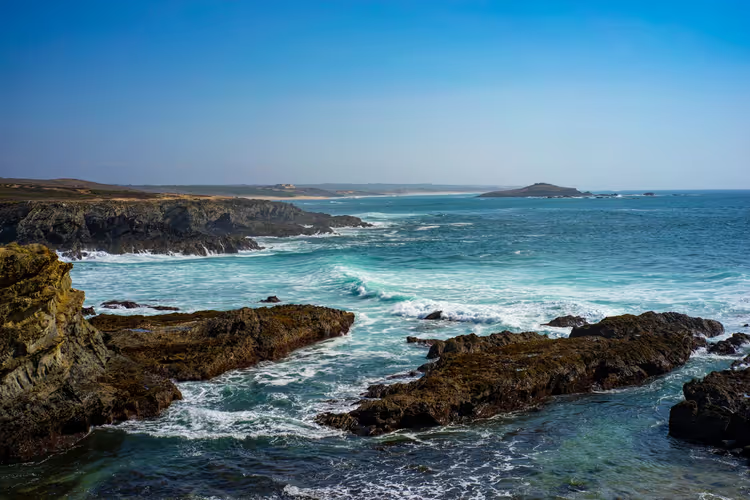
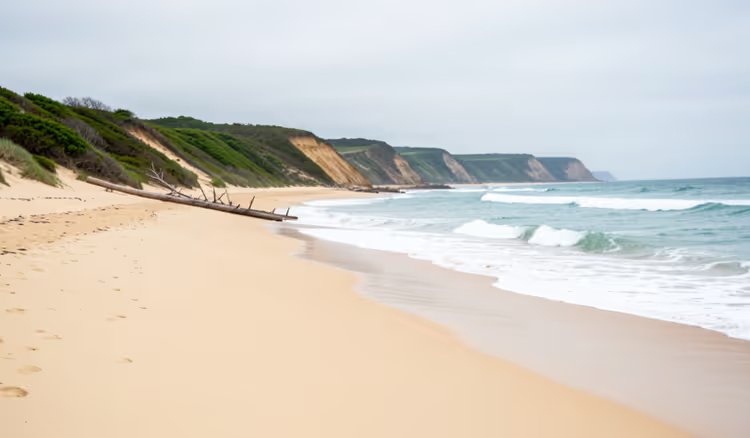
The Tagus River cuts Portugal almost in half. South of its course begins Alentejo, the country's largest region. It stretches from Lisbon to the Algarve. The ocean here is colder than in the south, but the beaches are nearly empty, and instead of hotel districts, fishing towns line the coast.
A route through this part of Portugal is easy to plan without rushing. First, three coastal towns with wild beaches, then a separate day in Évora. Sines is the birthplace of Vasco da Gama, and in Évora's chapel of human bones you'll see walls built from remains. In summer, rain is almost nonexistent here.
Ad: this article contains affiliate links, we earn a commission if you book through them, at no extra cost to you.
 AIIllustrative image: AI-generated
Weather and season in Alentejo
💡 In short:
- Best time for Alentejo beaches: July and August, with almost no rain in these months.
- Basic plan: Sines, Porto Covo, Vila Nova de Milfontes, and one full day in Évora.
- Small beaches lack infrastructure, so bring water and cash.
- Prices and hours: 09/2026, verified on the official website of the bone chapel.
In July and August, Alentejo can go weeks without rain. Daytime temperatures hover around thirty degrees, and only the Atlantic wind saves you from the heat. That same wind keeps the water cool, so swimming in sheltered bays is more comfortable than in the open ocean. In the evening, bring a light jacket: the coast is chilly even at the height of summer. In Évora on the same days it's noticeably hotter than by the water, so it's better to leave the city for the morning.
Where to go and where to stay?
All three towns sit on one line along the coast, and you can easily cover them in two or three days. They have few sights, but plenty of restaurants, shops, and hotels. Keep in mind: Portuguese beaches don't always have loungers, umbrellas, restrooms, or cafés. Bring water, a towel, and cash. If you plan to swim every day, choose accommodation near the water and check whether the nearby restaurant is open in the evenings.
Sines
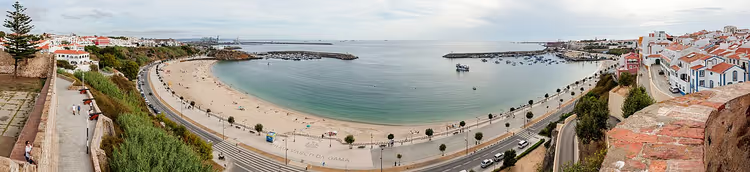
Sines is a port town where Vasco da Gama was born. An avenue here is named after the navigator, and it leads to the town's main beach, Praia Vasco da Gama. The bay is sheltered from ocean swell, the water is almost calm, and the beach itself is accessible for people with disabilities. The national tourism office recommends this spot for windsurfing and sailing (Visit Portugal). From the hill above the bay, a monument to Vasco da Gama (Estátua de Vasco da Gama) watches over swimmers, placed next to the church where the navigator was baptized.
 © Diego Delso · CC BY-SAPhoto: Diego Delso, CC BY-SA (https://creativecommons.org/licenses/by-sa/4.0), Wikimedia Commons
Climb the wall of Castelo de Sines. From the cliff you get the best view of the bay, the port, and the town's rooftops, and it's one of Sines' main lookout points. Bring water and come before noon, before the sun bakes the stone.
The town itself is small: just over ten thousand residents, so a walk through the historic center (Centro Histórico) will take you less than an hour. Cobblestone streets and white houses with blue or yellow trim set the tone for the whole region. Stop by the Garden of Discoveries (Jardim das Descobertas) and walk over to the former train station, Cais da Estação.
The station warehouse at Cais da Estação has long since been turned into a restaurant that has appeared in Michelin guides. It serves regional dishes, prices are typical for a resort establishment, and the interior is industrial. If you want dinner by the water, book a table in advance.
Porto Covo
Porto Covo's beaches hide behind rocky cliffs, which makes them feel secluded. Porto Covo itself is a fishing village of about a thousand residents. You'll find old churches, well-kept houses, and restaurants with small shops along its cobblestone streets.
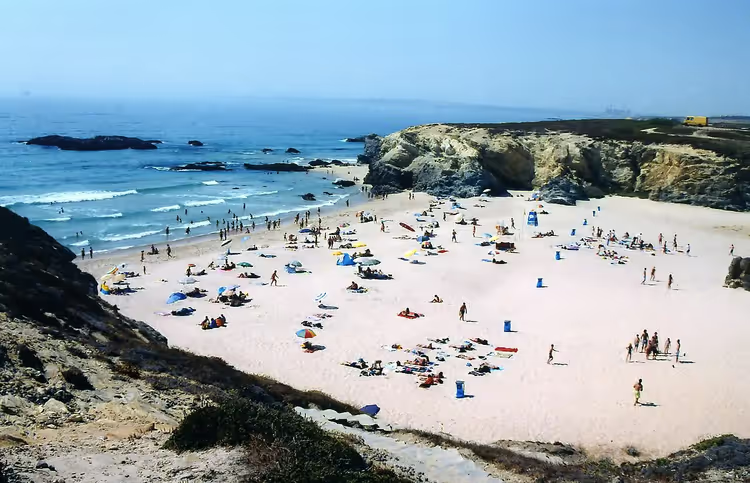 © Filipe Rocha,user:sacavem (pt) http://pt.wikipedia.org/wiki/Usu%C3%A1rio:Sacavem · CC BY-SAPhoto: Filipe Rocha,user:sacavem (pt) http://pt.wikipedia.org/wiki/Usu%C3%A1rio:Sacavem, CC BY-SA (https://creativecommons.org/licenses/by-sa/2.5), Wikimedia Commons
Three kilometers from the village lies the island of Ilha do Pessegueiro. The peach trees are long gone, but the ruins of Fort Santo Alberto remain. The current in this area is strong, so swimming to the island is not advisable.
Across from the island, right on the shore, stands the abandoned Fort of Nossa Senhora da Queimada (Forte de Nossa Senhora da Queimada). Both fortifications were built to defend the coast from pirates. The island outpost was planned in 1588, designed by architect Filippo Terzi, according to the cultural heritage authority (DGPC). A cozy restaurant operates near the shore, so you will find a place to eat.
Vila Nova de Milfontes
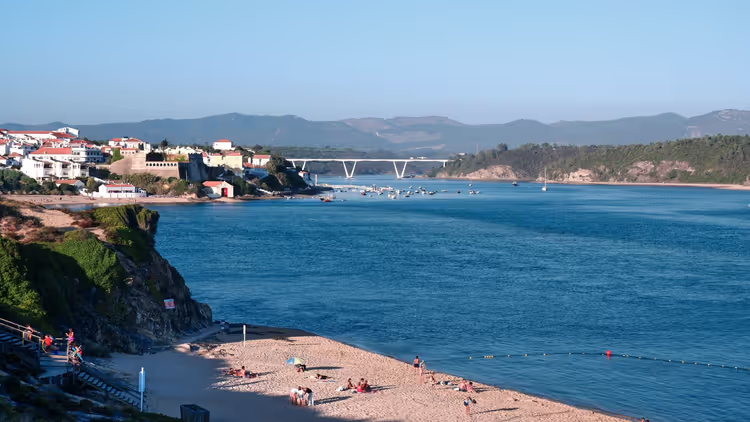
Vila Nova de Milfontes sits at the mouth of the River Mira. In season, the cafes are full of people, and the houses with azulejo numbers look like they belong on a postcard. Around four thousand people normally live here, but in summer the town's population grows noticeably.
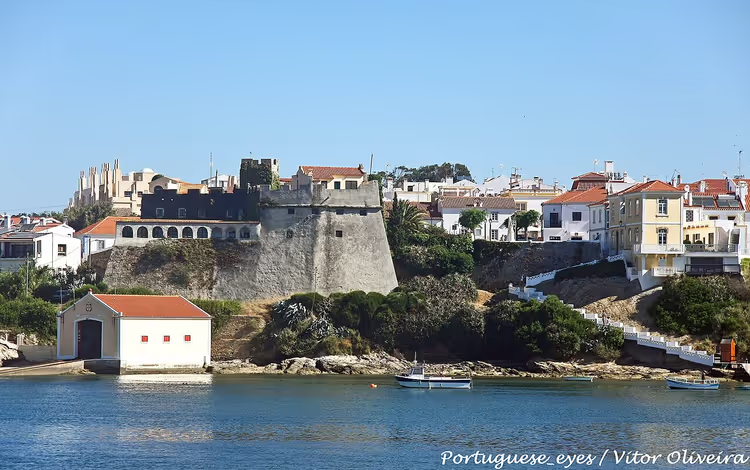 © Vitor Oliveira from Torres Vedras, PORTUGAL · CC BY-SAPhoto: Vitor Oliveira from Torres Vedras, PORTUGAL, CC BY-SA (https://creativecommons.org/licenses/by-sa/2.0), Wikimedia Commons
The new town church is the Church of Nossa Senhora de Fátima (Igreja de Nossa Senhora de Fátima). The old 15th-century church is named after Our Lady of Grace (Igreja de Nossa Senhora da Graça), and the river procession starts from it in August. Check the exact dates with the local tourist office before your trip. On the banks of the Mira stands the 16th-century Fort of São Clemente (Forte de São Clemente), and next to it is a monument to the aviators (Aos Aviadores) who set off from here to Macau (Wikipedia).
Milfontes' main beaches are on the river, not the ocean. The waves here are much smaller, and the water is a couple of degrees warmer than the ocean, although the salinity stays the same. A beautiful view of the estuary opens up from the lookout near the statue of the Archangel (Arcanjo). The sculptor said the work conveys pain and the desire to save a planet disfigured by human hands.
A short path leads from the statue to the fort along the water, and it is especially pleasant here in the evening. If you want to swim without waves, go in the morning: by midday the riverbank gets crowded, and finding a free spot for your umbrella becomes harder.
Évora
Set aside a separate day for Évora, otherwise the city won't reveal itself. In summer it gets very hot here, so plan your walk for the morning. A cap, sunscreen, and a bottle of water are essential: there is almost no shade in the squares.
 © Ingo Mehling · CC BY-SAPhoto: Ingo Mehling, CC BY-SA (https://creativecommons.org/licenses/by-sa/4.0), Wikimedia Commons
Évora is called a museum city. Roman buildings from the turn of the millennium sit side by side with a dozen ancient churches, and the white houses with yellow portals create a very sunny mood. We put together a three-kilometer route through the main sights, and it's easy to walk. The gaps between stops are short, and an extra kilometer is easy to cut through the side streets.
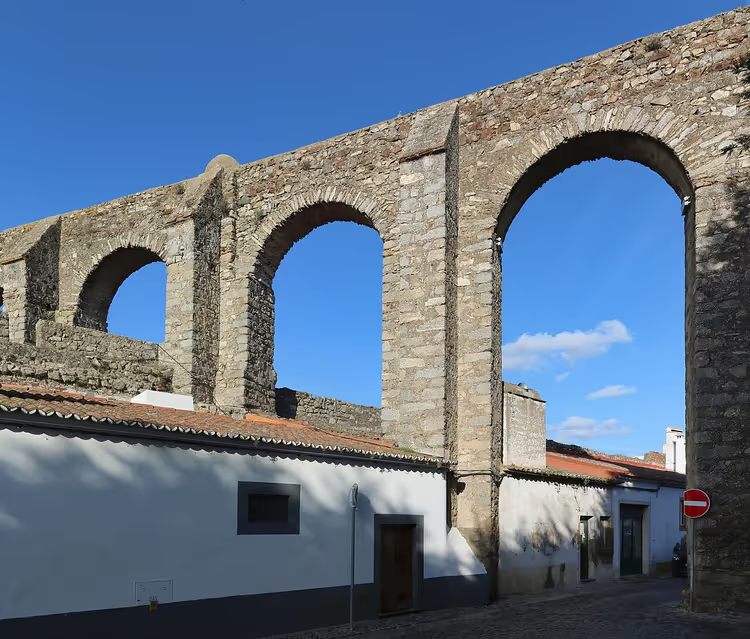
A. Aqueduto de Água de Prata
The aqueduct, about eighteen kilometers long, was built in the 16th century to bring water into the city. About half of the old water system has survived to this day. At its highest point, the arches rise to twenty-six meters. It's a convenient spot to study the masonry and take your first photos.
 © Ingo Mehling · CC BY-SAPhoto: Ingo Mehling, CC BY-SA (https://creativecommons.org/licenses/by-sa/4.0), Wikimedia Commons
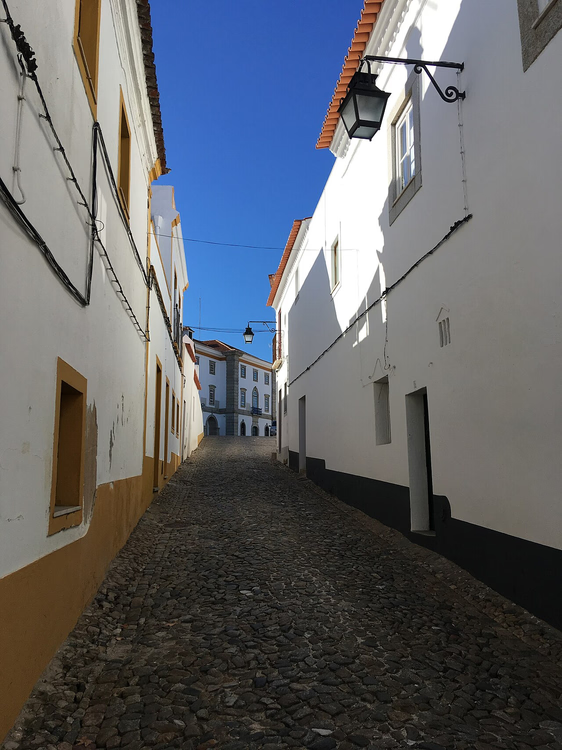
B. Travessa das Casas Pintadas
On this street you'll see large panels with animals and mystical figures. The frescoes date back to the early 16th century, and the street itself has remained narrow and quiet. Pause here for a couple of minutes and study the details: noisy groups usually just pass by.
 © Sergei Gussev · CC BYPhoto: Sergei Gussev, CC BY (https://creativecommons.org/licenses/by/2.0), Wikimedia Commons
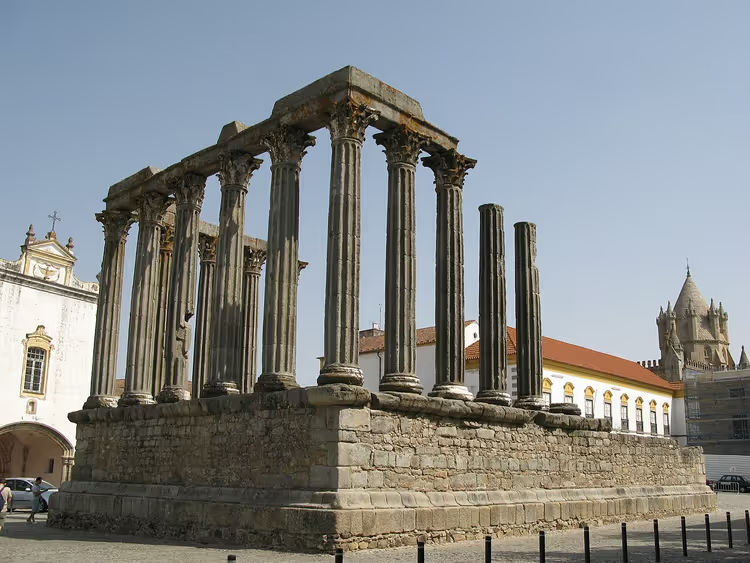
C. Roman temple (Templo romano de Évora)
The city's main ancient monument. The temple was built in the 1st century AD and is considered one of the best-preserved Roman structures on the Iberian Peninsula. Locals call it the Temple of Diana, although the sanctuary was most likely dedicated to an emperor. In the 5th century the building was badly damaged in wars with Germanic tribes, and in the 14th century the ruins were incorporated into a castle. That is what helped them survive until the 19th century, when the medieval additions were dismantled.
 © ho visto nina volare from Italy · CC BY-SAPhoto: ho visto nina volare from Italy, CC BY-SA (https://creativecommons.org/licenses/by-sa/2.0), Wikimedia Commons
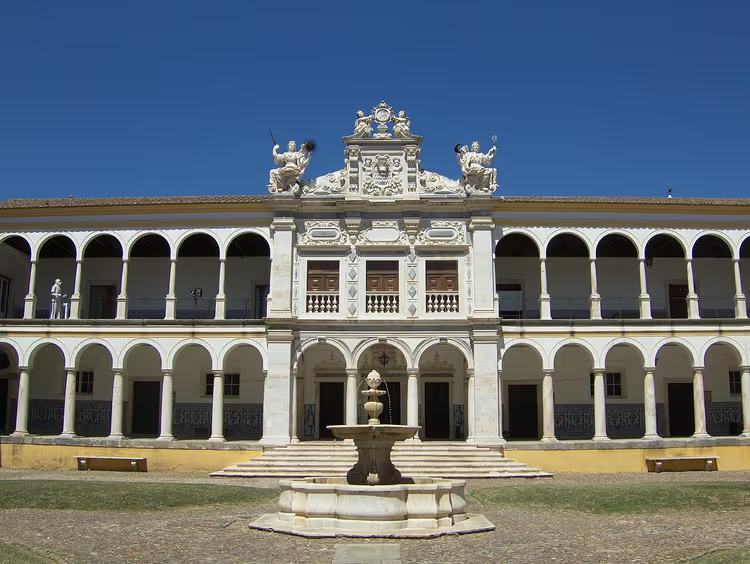
D. Universidade de Évora
This is Portugal's second-oldest university, founded in the 16th century. Not only the facade with its courtyard has survived, but also the interiors with azulejo panels. The most famous part, the College of the Holy Spirit (Colégio do Espírito Santo), is shown with a separate ticket. Check the price and hours on site: the schedule changes by semester.
 © Nuno Curado from Belfast · CC BYPhoto: Nuno Curado from Belfast, CC BY (https://creativecommons.org/licenses/by/2.0), Wikimedia Commons
E. Largo da Porta de Moura
The square of Largo da Porta de Moura dates back to Roman times. For a long time it served as the exit toward Beja and lay outside the city limits, but in the 14th century noble families began settling here, and Évora expanded. The fountain was commissioned by the king, and water reached the marble sphere via the Água de Prata aqueduct. Pause at the sphere: it's a convenient point to get your bearings.
 © Vitor Oliveira from Torres Vedras, PORTUGAL · CC BY-SAPhoto: Vitor Oliveira from Torres Vedras, PORTUGAL, CC BY-SA (https://creativecommons.org/licenses/by-sa/2.0), Wikimedia Commons
F. Évora cathedral (Sé catedral de Évora)
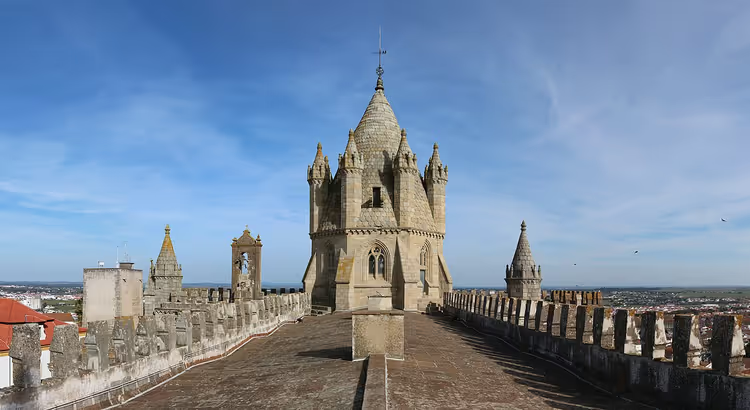
From the square you can see a fortress at the highest point of the city, and you'll likely mistake it for a castle. In fact, it's Évora's main cathedral, the largest church in Portugal. It was built in the 12th and 13th centuries, and it was here that Vasco da Gama received a blessing before sailing to India. A full ticket costs €5 and includes the cathedral, cloister, museum, and the climb to the viewing terrace (as of 09/2026, cathedral chapter). Children under 12 enter free with their parents.
 © Ingo Mehling · CC BY-SAPhoto: Ingo Mehling, CC BY-SA (https://creativecommons.org/licenses/by-sa/4.0), Wikimedia Commons
Inside there is a sculpture of a pregnant Virgin Mary, and you're unlikely to see another one like it anywhere. A spiral staircase leads to the roof of the church, where a panorama of the city and surroundings opens up. The cathedral is open daily from 9:00 to 17:00, but you need to enter no later than 16:30 (as of 09/2026, official website). Closed on December 25 and January 1.
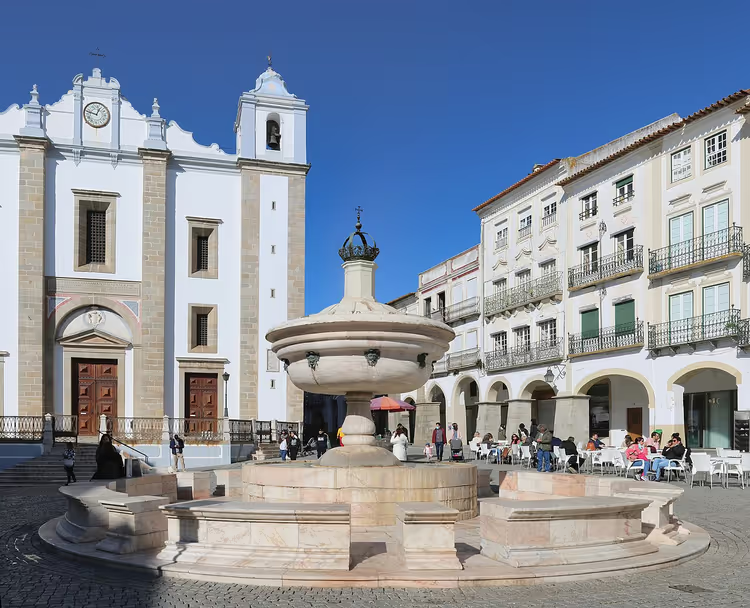
G. Praça do Giraldo
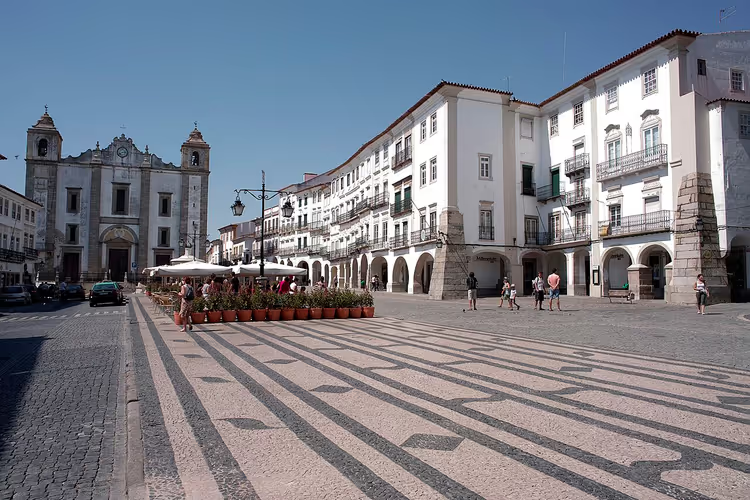
Évora's central square buzzes with life from morning to night. Restaurants and pastry shops line the perimeter, setting tables right out on the cobblestone pavement. The square is framed by the city hall and the 16th-century Church of St. Anthony (Igreja de Santo Antão). Nearby stands the Giraldo fountain from the same century: its eight jets symbolize the eight streets that converge on the square.
 © FDV · CC BY-SAPhoto: FDV, CC BY-SA (https://creativecommons.org/licenses/by-sa/3.0), Wikimedia Commons
This is a good place to have lunch and rest during the heat. Grab a table in the shade and order local wine: the Alentejo region is famous for its vineyards. In the evening the square is lit up, and it looks completely different.
H. Igreja de Nossa Senhora da Graça
This was originally a monastery built in the 16th century. In the 19th century the monastery buildings were nationalized and converted into a residential quarter, but the church itself was preserved. Today it stands off the main route, and there are noticeably fewer tourists here. Step inside if you want to see a church without the crowds.
I. Chapel of bones (Capela dos ossos)
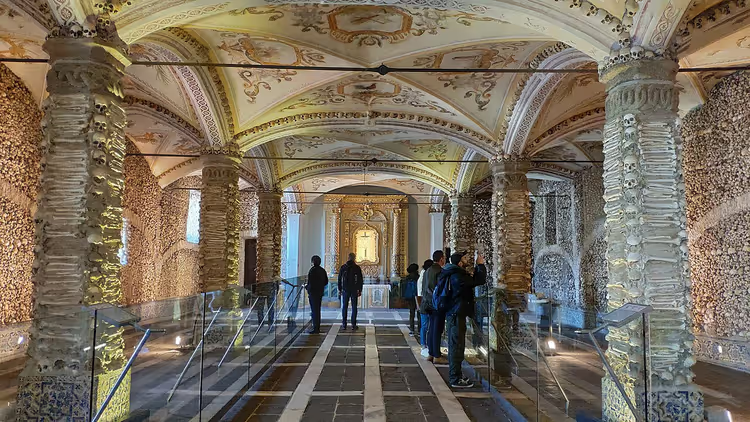
The chapel belongs to the Church of St. Francis (Igreja de São Francisco). You can enter the church for free, but you will have to pay for the chapel and the museum halls. A combined ticket for an adult costs 7 €, for visitors under 25 and over 65 it is 5 €, and a family ticket for two adults with children costs 15 € (as of: 09/2026, official website).
 © Alonso de Mendoza · CC BY-SAPhoto: Alonso de Mendoza, CC BY-SA (https://creativecommons.org/licenses/by-sa/4.0), Wikimedia Commons
The inscription at the entrance reads: "Nos ossos que aqui estamos, pelos vossos esperamos." It translates as "Our bones that lie here await your bones." The remains of more than five thousand people are woven into the walls, with bones and skulls arranged in patterns. The impression is heavy, but that is exactly what people come here for. In summer the chapel is open until 6:30 PM, in winter until 5:00 PM, and it is closed on January 1 and December 25 (as of: 09/2026, official website).
In the 16th century, Franciscan monks moved these remains from the city cemeteries. In doing so, they also solved the problem of a shortage of burial space. The Church of St. Francis has a terrace with a view of the white-and-yellow city. Go up there before you leave.
J. Jardim Público de Évora
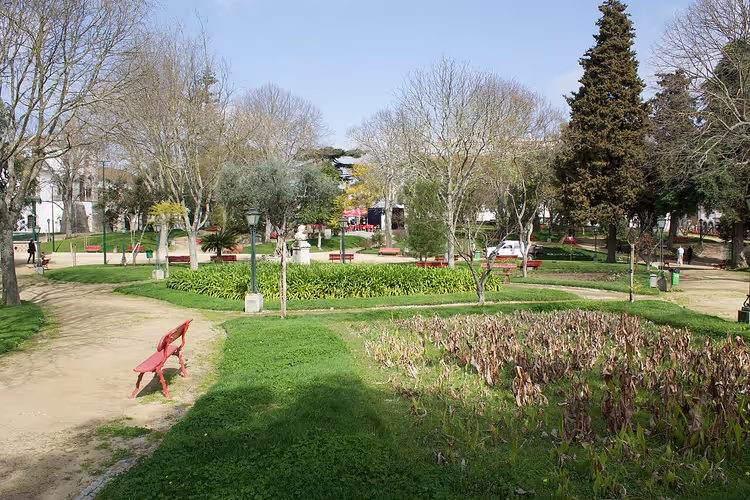
After the chapel, it is nice to catch your breath in the city park. Well-kept paths, flower beds, ponds, and benches in the shade of trees quickly restore your energy. Peacocks roam freely on the lawns, which adds character to the place. Admission is free, so you can stop by at any time.
 © Patrick Nouhailler from Genève, Suisse · CC BY-SAPhoto: Patrick Nouhailler from Genève, Suisse, CC BY-SA (https://creativecommons.org/licenses/by-sa/2.0), Wikimedia Commons
On the park grounds you will see a restored part of the royal residence. The palace was built in the 15th century in the Manueline style, when that style was just emerging. It was within these walls that King Manuel I appointed Vasco da Gama commander of the Indian fleet. The palace is a convenient place to end the route.
Tickets and opening hours in Évora
Before your trip, check the table: prices and hours change, especially in the low season. We verified the data in September 2026 on official websites.
Site | Admission | Opening hours | Closed |
|---|---|---|---|
Roman Temple | free, open-air | accessible at any time | none |
Évora Cathedral | 9:00 AM-5:00 PM, entry until 4:30 PM | December 25, January 1 | |
Chapel of Bones and Church of St. Francis | 9:00 AM-6:30 PM in summer, 9:00 AM-5:00 PM in winter | January 1, December 25 | |
Universidade de Évora | paid, check the price | according to the university schedule | check on site |
The Chapel of Bones gets many visitors in summer, so come at opening time or closer to the evening. You can check entry options and time slots on Tiqets: tickets and time slots on Tiqets.
Tours and tickets in Evora
Guided tours, skip-the-line tickets and activities — most offers can be cancelled free of charge.
See offers on TiqetsThe widget loads once you give your consent.
What to bring back from Évora
Portugal is considered the world's largest exporter of cork, and a major cork processing plant operates in Évora. Forests with cork oaks grow nearby, so in local shops you will find keychains, bookmarks, bags, and even shoes made from this material. Prices vary, and there is something for every budget. Besides cork, bring home local wine and Alentejo olive oil.
⁉️🤔 Frequently asked questions
When is the best time to go to the Alentejo coast?
July and August offer the most stable weather: there is almost no rain in these months, and the water in the bays warms up best. In June and September there are fewer tourists, but the ocean remains cool. If empty beaches matter to you, come in the first half of June.
How much does admission to the Chapel of Bones in Évora cost?
A single adult ticket costs 7 €, for visitors under 25 and over 65 it is 5 €, and a family ticket costs 15 € (as of 09/2026, official church website). This price includes all museum rooms and the terrace, while the Church of St. Francis itself is open free of charge.
Can you swim in the ocean in Alentejo?
Yes, but the water is cool even in summer, and the swell on the open coast can be strong. For swimming, choose sheltered bays, such as Praia Vasco da Gama in Sines, or the river beaches of Vila Nova de Milfontes. Lifeguards and sun loungers are usually absent on wild beaches, so keep an eye on the waves yourself.
How to get to Évora without a car?
Buses and trains run from Lisbon to Évora, and the journey takes about an hour and a half. It is best to check the schedule with the carrier the day before your trip. Once there, the city is compact: you can walk the entire central route on foot, and you will not need transport.
Do you need a car for a trip along the coast?
For the three towns on the route, a car is the most convenient option: public transport between Sines, Porto Covo, and Milfontes runs infrequently. Without a car you will have to rely on buses and taxis, and some wild beaches will remain inaccessible. You can rent a car on DiscoverCars in advance: compare rental options.
In short: what is worth booking
This route makes it easy to put together a four- to five-day trip: three towns by the ocean and one full day for Évora. If you are short on time, start with Sines and Évora, and leave the wild beaches of Porto Covo for your next trip. If you plan to swim every day, choose accommodation in Vila Nova de Milfontes: the water is warmer there. For Évora, get your Chapel of Bones ticket in advance: tickets and time slots on Tiqets.

A small editorial team writing guides for independent travel. We travel ourselves, but we haven’t been everywhere, so we check prices, opening hours and how to get there against official sources.