
















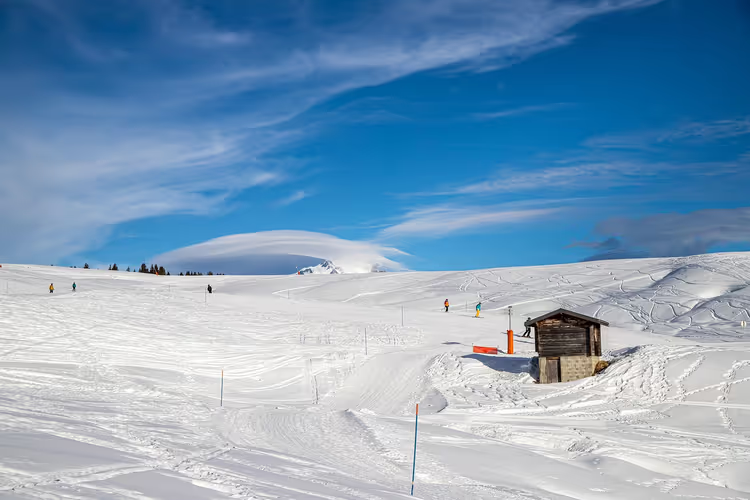
Where to ski in winter: 11 resorts from budget Bansko to luxury Courchevel
Choosing a resort rarely comes down to the slopes alone. The price is affected by the mountain's altitude, the length of the season, the trip to the lift, and what you'll do in the evening. This list includes eleven resorts in Europe and North America: from budget-friendly Bansko to Courchevel, where prices are several times higher.
Below you'll find altitudes, slope lengths, the features of each resort, and honest drawbacks. We checked season dates against the resorts' official websites.
Ad: this article contains affiliate links, we earn a commission if you book through them, at no extra cost to you.
How to choose a ski resort
💡 In short:
- Consider the journey, not just the ski pass: flights and transfers are often more expensive than the lift ticket.
- Check the resort's altitude: low mountains in warm winters close their slopes earlier.
- Book accommodation near the lift, then you won't need a car.
- Look at the season length: high-altitude areas run until May, while low ones close in March.
The resorts in this list differ in more than just ticket price. In Courchevel you pay for restaurants, spas, and status, while in Bansko you pay several times less for the same day of skiing. Below is a comparison by price level and who each resort suits.
Resort | Price level | Who it suits |
|---|---|---|
Courchevel | highest | those who combine skiing with fine dining |
Zermatt | high | those who want to ski year-round |
Ischgl | above average | those who want nightlife |
Cervinia | above average | those who value a long season |
Whistler Blackcomb | high | those who go for several weeks |
Sundance | average | experienced skiers |
Bansko | low | a first ski trip |
Poiana Brasov | low | families with children |
Jasna | low | those who combine skiing with thermal spas |
Kopaonik | low | ski school groups |
Gudauri | low | freeriding and local cuisine |
1. Courchevel, France
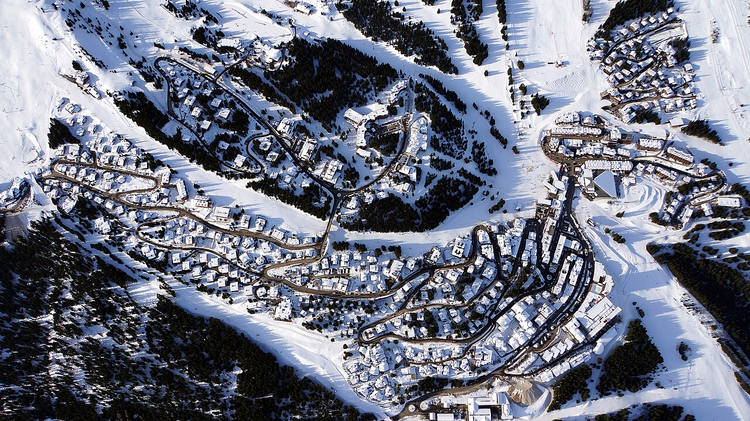
Courchevel is the oldest ski resort in France and part of the huge Les Trois Vallées area, which has about 600 km of slopes (as of 09/2026, official Les 3 Vallées website). Courchevel itself accounts for more than 150 km of runs: from green slopes for beginners to black ones where athletes train. Skiing here is combined with restaurants, spas, and helicopter tours over Savoie.
 © Nikgrech · CC BY-SAPhoto: Nikgrech, CC BY-SA (https://creativecommons.org/licenses/by-sa/3.0), Wikimedia Commons
You should book accommodation several months in advance, otherwise you'll be left with only options in neighboring villages, and the trip to the lift will take half an hour.
- Who it's for: those who want to combine skiing with fine dining and spas.
- Not for: those who count every hundred euros.
- Hotels: Hotels in Courchevel on Trip.com
2. Zermatt, Switzerland
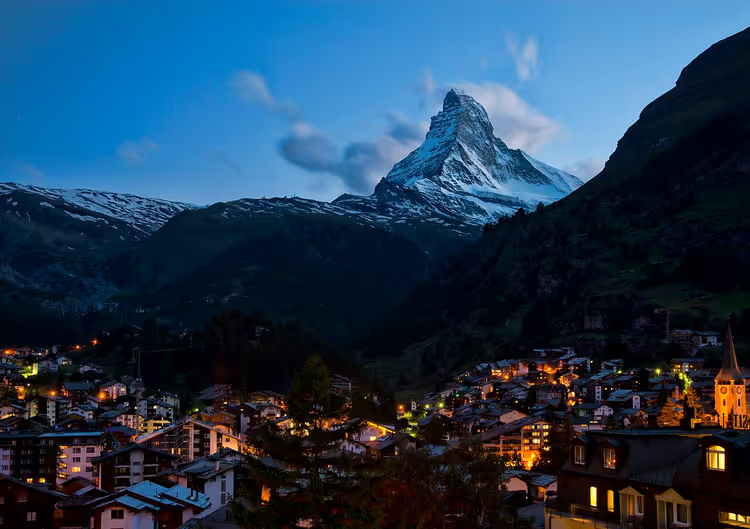
Zermatt lies at the foot of the Matterhorn, and the village center is closed to private cars: you leave your car at the entrance and then walk or take an electric bus. Together with Italy's Cervinia, the ski area offers more than 300 km of slopes, and the glacier allows year-round skiing (as of 09/2026, official Matterhorn Paradise website).
 © chensiyuan · CC BY-SAPhoto: chensiyuan, CC BY-SA (https://creativecommons.org/licenses/by-sa/4.0), Wikimedia Commons
The lifts connect the Swiss and Italian sides, so you can ski in two countries in a single day. The Matterhorn is visible from almost every slope, and the village is so compact that you won't need a car.
- Who it's for: those who want to ski year-round and see the Matterhorn from their window.
- Not for: those who plan to drive up to their hotel in their own car.
- The catch: accommodation and dinner prices here are above the Swiss average.
- Hotels: Hotels in Zermatt on Trip.com
3. Ischgl, Austria
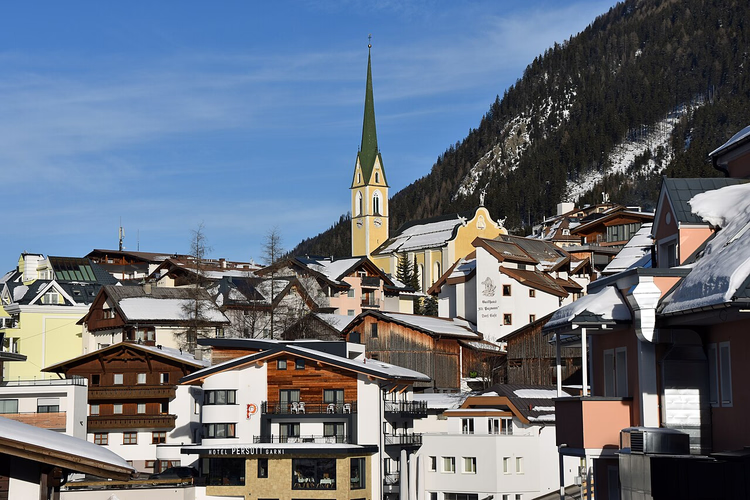
Ischgl sits in Tyrol's Paznaun Valley and, together with Switzerland's Samnaun, forms the Silvretta Arena area. There are more than 200 km of slopes here, and the ticket is valid in two countries at once (as of 09/2026, official Silvrettaseilbahn website). In the evening the resort turns into one of the Alps' main party spots: bars and clubs stay open until morning, and concerts take place at altitude.
 © Thomas Dahlstrøm Nielsen · CC BY-SAPhoto: Thomas Dahlstrøm Nielsen, CC BY-SA (https://creativecommons.org/licenses/by-sa/4.0), Wikimedia Commons
Most slopes are wide and well groomed, so you'll be comfortable even after a long break from skiing.
- Who it's for: those who want to combine big mileage with nightlife.
- How to get there: the nearest major airport is in Innsbruck, then a bus along the valley.
- Hotels: Hotels in Ischgl on Trip.com
4. Cervinia, Italy
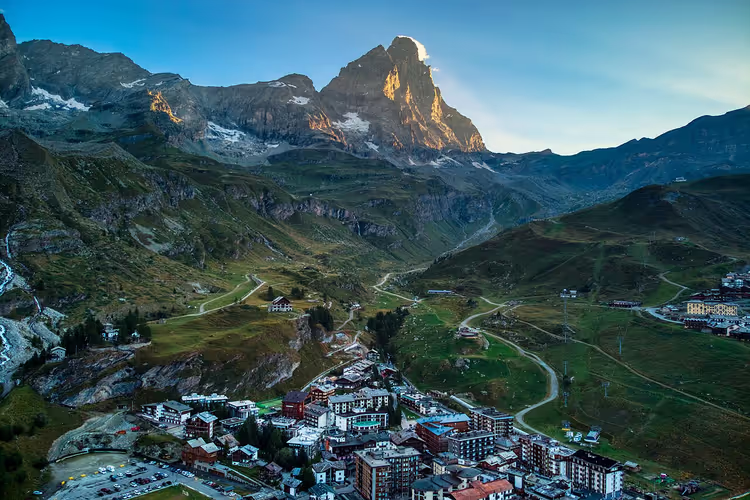
Cervinia sits above 2,000 m, and the lifts take you up to 3,480 m, where the Matterhorn opens up from the Italian side (as of 09/2026, official Cervino website). The 26/27 season opens on October 24, 2026 and runs until May 2, 2027, so you can get on skis here earlier than in the valleys. The slopes are linked to Zermatt, and the Indian Park snowpark operates nearby.
 © Hagai Agmon-Snir حچاي اچمون-سنير חגי אגמון-שניר · CC BY-SAPhoto: Hagai Agmon-Snir حچاي اچمون-سنير חגי אגמון-שניר, CC BY-SA (https://creativecommons.org/licenses/by-sa/4.0), Wikimedia Commons
The village is compact: you can walk from your hotel to the lift in a few minutes. In the evening, skiing gives way to dinners in local trattorias and sunset views over the glacier.
- Who it's for: those who value high-altitude skiing and a long season.
- How to get there: the nearest airports are in Turin and Milan, then a bus through the Aosta Valley.
- Hotels: Hotels in Cervinia on Trip.com
5. Whistler Blackcomb, Canada
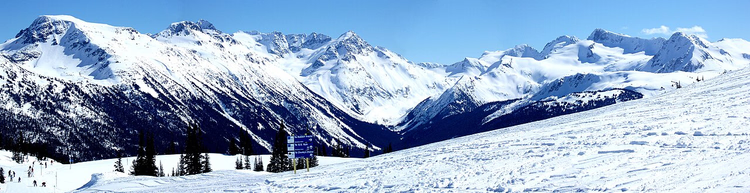
Whistler and Blackcomb are two mountains in British Columbia connected by a single ski area. A gondola carries you from one peak to the other over a gorge, and the lifts run in both winter and summer. Even if you don't ski, go up for the panorama of glaciers and conifer-covered slopes.
 © Unknown author · CC BYPhoto: Unknown author, CC BY (https://creativecommons.org/licenses/by/2.0), Wikimedia Commons
The slopes here are long and varied: there are groomed runs for relaxed skiing and large freeride zones beyond them.
- Who it's for: those looking for a large ski area and coming for several weeks.
- Not for: those not ready for a transatlantic flight.
- How to get there: from Vancouver along a scenic highway by the bay.
- Hotels: Hotels in Whistler on Trip.com
6. Sundance Mountain, USA
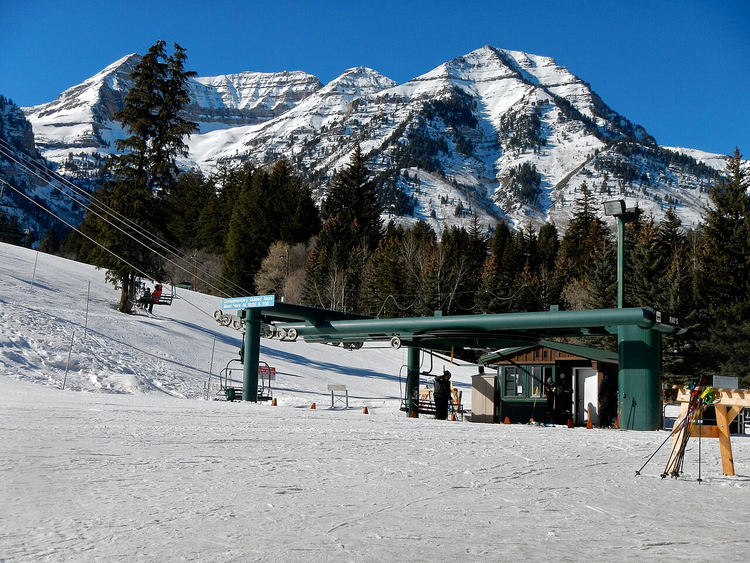
Sundance Mountain operates in the mountains of Utah, less than an hour's drive from Salt Lake City and Park City. Most of the slopes are aimed at experienced skiers, with beginners getting roughly every fifth run. At the top, a restaurant with a viewing deck and valley views awaits you.
 © PunkToad from oakland, us · CC BYPhoto: PunkToad from oakland, us, CC BY (https://creativecommons.org/licenses/by/2.0), Wikimedia Commons
In summer, the resort thrives on festivals, workshops, and concerts, so people come here even without skis.
- Who it's for: experienced skiers who want challenging terrain.
- Not for: beginners: there are few learning runs here.
- The catch: the resort is far from Europe, and the visa and flight take time.
- Hotels: Hotels in Sundance on Trip.com
7. Bansko, Bulgaria
Bansko is the most budget-friendly resort in this selection: a ski pass here costs several times less than in Courchevel, and the descent starts right at the town. The lower lift station sits at 925 m, and Vihren Peak rises above the resort at 2,914 m (as of 09/2026, official Bansko website). Most of the runs here are red, and there is only one difficult run.
 © Ненко Лазаров · CC BYPhoto: Ненко Лазаров, CC BY (https://creativecommons.org/licenses/by/3.0), Wikimedia Commons
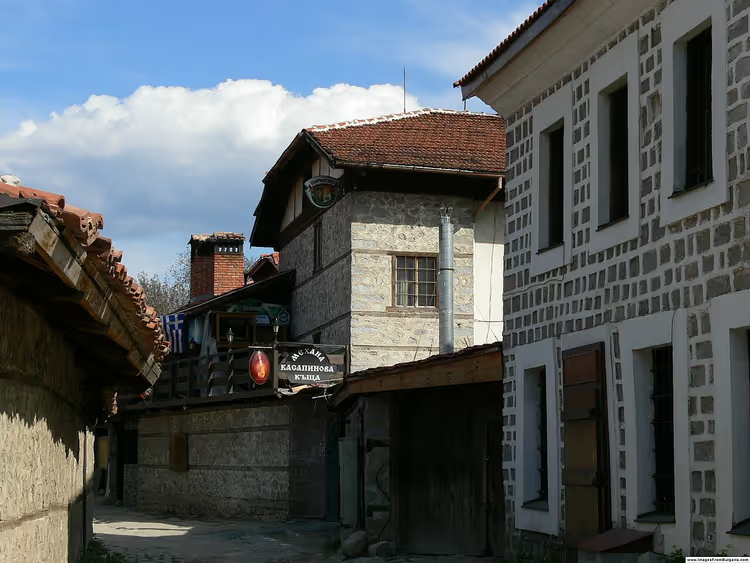
The old town has preserved its stone architecture, so after skiing you have somewhere to go.
- Who it's for: first-time skiers on a budget.
- How to get there: Sofia airport, then a bus or transfer to the resort.
- The catch: there are few difficult runs, so experienced skiers quickly get bored here.
- Hotels: Hotels in Bansko on Trip.com
8. Poiana Brasov, Romania
Poiana Brasov is located in the Carpathians near the city of Brasov and is considered one of the most affordable destinations in Europe. The ski area here is compact: several runs of varying difficulty descend through coniferous forest, and the lifts offer views of the Carpathians.
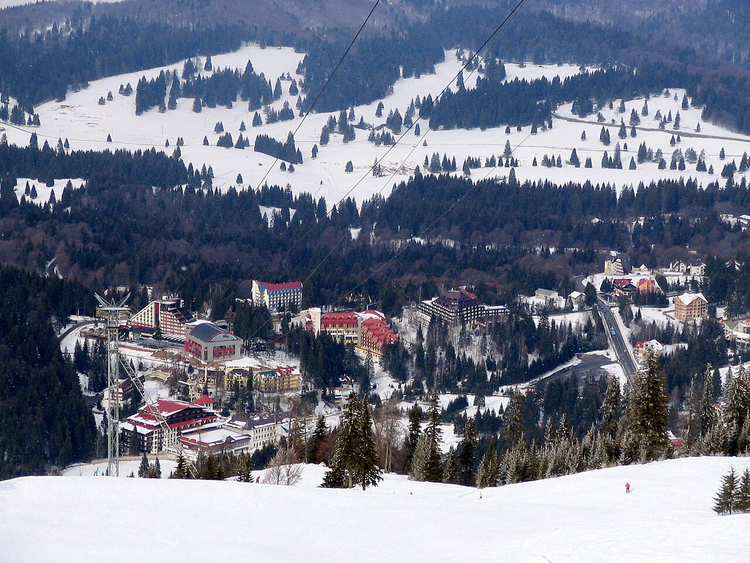 © Kdanv · CC BYPhoto: Kdanv, CC BY (https://creativecommons.org/licenses/by/3.0/ro/deed.en), Wikimedia Commons
For a first introduction to skiing, that's enough, and in the evening you head down to Brasov, which has an old center and restaurants.
- Who it's for: families with children and anyone looking for an affordable first season.
- How to get there: by train or bus from Bucharest to Brasov.
- Hotels: Hotels in Poiana Brasov on Trip.com
9. Jasná, Slovakia
Jasná operates in the Low Tatras and remains Slovakia's largest ski area: in midwinter, more than a dozen lifts run on the slopes (as of 09/2026, official Jasná website). The resort is also convenient for non-skiers: thermal pools and a large water park are nearby.
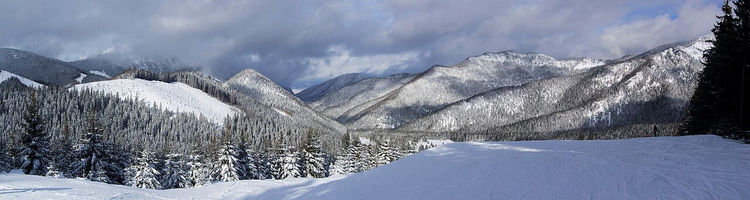 © Pudelek (Marcin Szala) · CC BY-SAPhoto: Pudelek (Marcin Szala), CC BY-SA (https://creativecommons.org/licenses/by-sa/3.0), Wikimedia Commons
Low prices combined with good service make Jasná popular, so book accommodation early: otherwise you'll have to stay in a neighboring town.
- Who it's for: those who want to combine skiing with thermal resorts.
- How to get there: Poprad-Tatry airport, then bus or taxi.
- Hotels: Hotels in Jasná on Trip.com
10. Kopaonik, Serbia
Kopaonik is considered Serbia's main resort: around 60 km of slopes, dedicated children's runs, and almost full artificial snow coverage (as of 09/2026, official Ski Resorts of Serbia website). The season here lasts longer than you'd expect from the low Balkans.
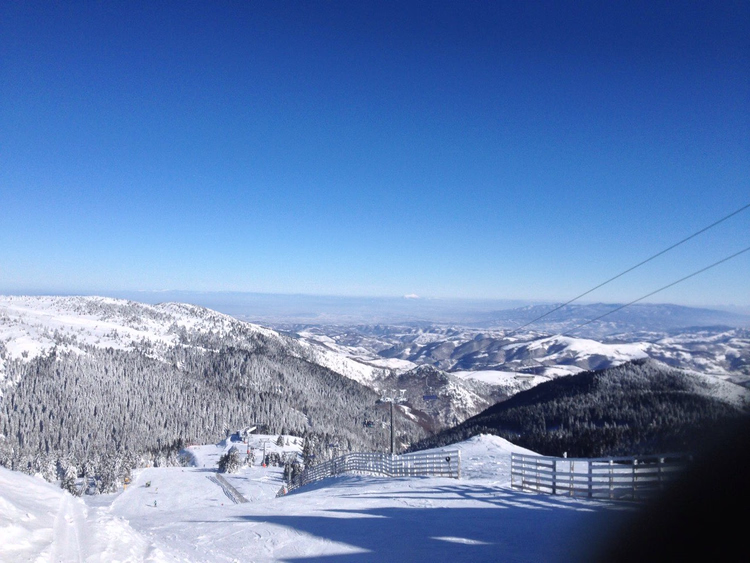 © Joxy 1993 · CC BY-SAPhoto: Joxy 1993, CC BY-SA (https://creativecommons.org/licenses/by-sa/4.0), Wikimedia Commons
If you don't ski, the gondola works as a viewing platform, and a snow park for walking is nearby.
- Who it's for: ski schools and families who want snow without big expenses.
- How to get there: from Belgrade by bus or car on the highway.
- Hotels: Hotels in Kopaonik on Trip.com
11. Gudauri, Georgia
Gudauri sits on the Georgian Military Road in the Greater Caucasus. The lifts here were installed by Austrian companies, so the equipment is on par with Alpine resorts, while ticket prices are noticeably lower.
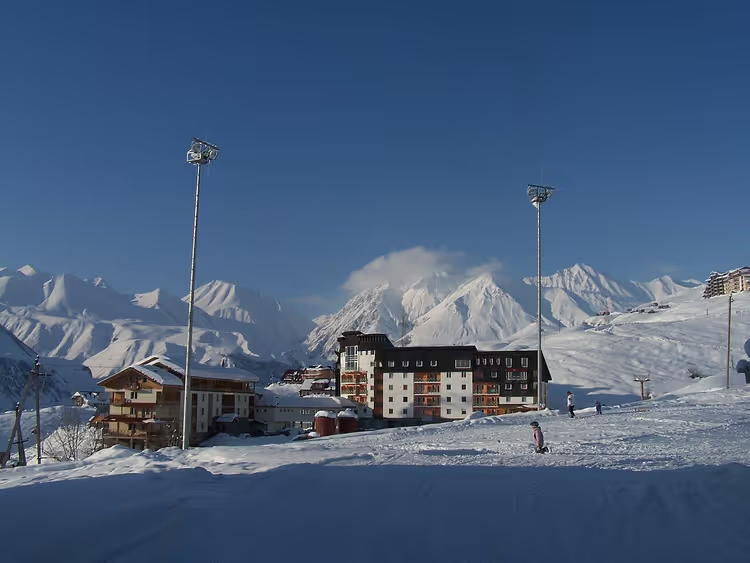 © rugbyxm · CC BYPhoto: rugbyxm, CC BY (https://creativecommons.org/licenses/by/2.0), Wikimedia Commons
The slopes suit both beginners and freeriders: beyond the ski area boundary, long ungroomed runs begin. After skiing, you'll find homemade wine, hot food, and views of snow-covered peaks.
- Who it's for: those who want freeriding, Caucasian cuisine, and low prices.
- Not for: those who need a wide choice of hotels right at the lift.
- How to get there: from Tbilisi along a mountain road, about two hours.
- Hotels: Hotels in Gudauri on Trip.com
⁉️🤔 Frequently asked questions
When does the ski season start in Europe?
High-altitude resorts like Cervinia open in late October and run until early May. Low-altitude resorts wait for snow until December, but close as early as March. Plan your trip for February: there's enough snow everywhere, and daylight hours are already long.
Where is the cheapest skiing?
The most affordable options in this selection are Bansko, Poiana Brașov, Jasná, Kopaonik, and Gudauri. Lift tickets and accommodation there cost several times less than in Courchevel or Zermatt, and the infrastructure is designed for families and beginners. You'll feel the budget difference on your very first trip.
What if you don't ski?
In Zermatt and Courchevel, spas, restaurants, and helicopter tours are available, while in Whistler the lifts take you to the top for the views. In Kopaonik, the gondola serves as a viewing platform, and in Gudauri you can enjoy walks and local cuisine. You won't be bored at any of these resorts.
Do you need a car at a ski resort?
In Zermatt, the center is closed to private cars, and at most resorts it's more convenient to stay near the lift. A rental car is useful if you plan to move between valleys or ski in different areas. Otherwise, an airport transfer works out cheaper than parking.
When is the best time to book accommodation?
Hotels near the lifts get booked up by early fall, especially in Courchevel, Zermatt, and Ischgl. High season falls on the Christmas holidays and February school breaks, and prices are at their highest during those weeks. Book in summer or choose January after the holidays.
In short: what's worth booking
If you want an affordable first season, go for Bansko or Kopaonik: you'll get snow and lifts without big expenses. For a long season and high altitude, head to Cervinia; for the Matterhorn, to Zermatt; and for gastronomy and status, to Courchevel. Families come to Jasná and Poiana Brașov, freeriders to Gudauri, and those seeking terrain to Whistler and Sundance.
Main tip: accommodation near the lift saves you time and money on transfers. Find a hotel on Trip.com, where you can see prices and the distance to the lift.

A small editorial team writing guides for independent travel. We travel ourselves, but we haven’t been everywhere, so we check prices, opening hours and how to get there against official sources.