













Costa Brava: best beaches, hidden coves and the Camí de Ronda trail
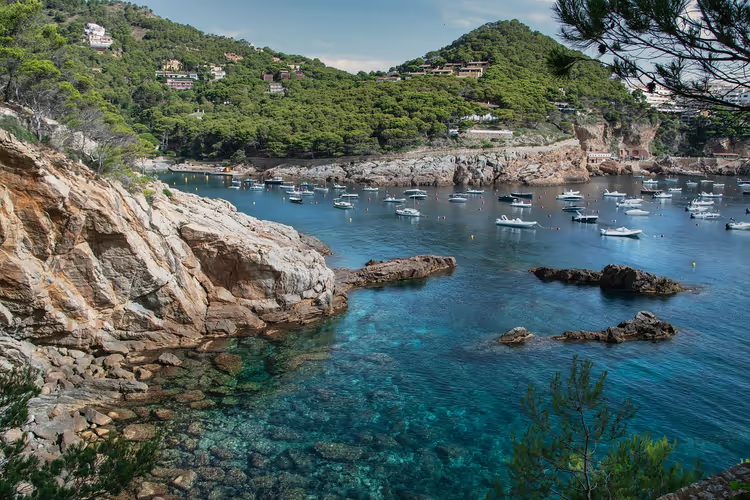
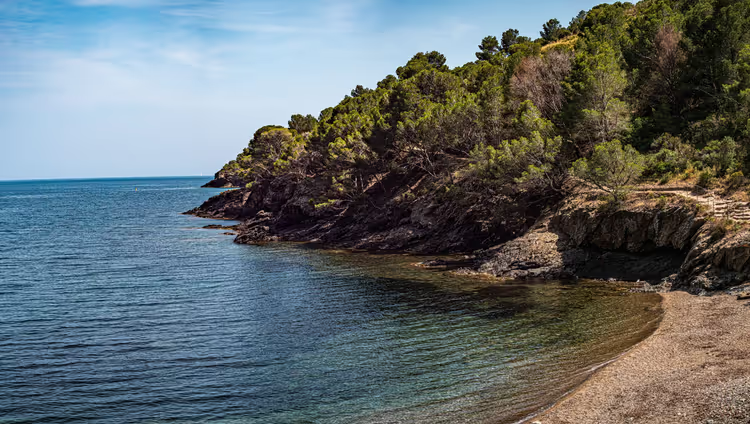
The Costa Brava starts right after Barcelona and stretches to the French border. It is the northernmost stretch of the Mediterranean coast of Spain: cliffs, pine-covered slopes, and dozens of coves reached by hiking trails.
Dozens of local beaches earn the Blue Flag every year for clean water. The resorts, however, are completely different: the south lives on clubs and music, while the north hides away in quiet bays near Cadaqués.
We have broken the coast down into clear sections: beaches, hidden coves, hiking routes, parks, and evening entertainment. You will immediately see where to stay and what to see first.
Ad: this article contains affiliate links, we earn a commission if you book through them, at no extra cost to you.
What makes the Costa Brava interesting
💡 In short:
- The northern coast near Cadaqués is best for nature and hiking trails, while the south around Lloret de Mar is best for beaches and nightlife.
- The best time to visit starts in late May and returns in September, when the sea is warm and there are fewer people.
- The essential minimum: a section of the Camí de Ronda trail, the Platja Sa Tuna cove, and the Dalí house museum in Portlligat.
- Prices and opening hours: 09/2026, verified on the official Dalí house museum website.
The Costa Brava lies in Catalonia and is considered the northernmost stretch of the Spanish Mediterranean, so even at the height of summer the air here is fresher than in the south of the country. The mountains come right down to the water, and the beaches hide in small bays, with pine-covered slopes running between them.
The water is cleaner where the shore is rocky and the sand is light. The "wild" coast has long been known for loud parties, but right next to the clubs you will find quiet spots for relaxing with children.
When to visit the Costa Brava
The climate here is Mediterranean, so the swimming season lasts from May to October. In spring and autumn there can be strong winds, but the water stays warm until the end of October.
The peak heat falls in July and August, and in those months the beaches of Lloret de Mar and Blanes are packed, while accommodation prices rise to their maximum. If you want a quiet vacation, choose late May, June, or September, when the sea has already warmed up but the crowds have not yet arrived.
In winter the coast almost empties out, and many cafés close, but the hiking trails, viewpoints, and old towns remain accessible all year round.
How to get from Girona airport
The coast's main airport is called Girona-Costa Brava and lies just outside Girona. From here it takes less than an hour to reach Lloret de Mar, and the airport is served mainly by budget airlines from Germany and neighboring EU countries.
Sagalés buses run to the southern resorts: they stop at the terminal and go to Lloret de Mar and Blanes. Public transport barely reaches the northern coves, so a car is more convenient for trips to the north. Compare car rental prices in advance.
From France, you reach the coast by car via the AP-7 motorway. Tolls on it were abolished in 2021.
Tours and tickets in Lloret de Mar
Guided tours, skip-the-line tickets and activities — most offers can be cancelled free of charge.
See offers on KiwitaxiThe widget loads once you give your consent.
The best beaches on the Costa Brava
The beaches here are very different. There are wide sandy stretches with loungers and bars, and there are tiny coves you reach by climbing down stairs. Below are eight spots you can actually get to by car or bus. All the points are collected on a map, open it in OpenStreetMap.
 © Unknown author · CC BY-SAPhoto: Unknown author, CC BY-SA (http://creativecommons.org/licenses/by-sa/3.0/), Wikimedia Commons
Beach | Who it's for | How to get there |
|---|---|---|
Sant Pol de Mar | families, snorkeling | bus, car |
Cala Sant Francesc | calm swimming | on foot from Blanes |
Sa Caleta | snorkeling, views | car |
Tossa de Mar | town and beach | bus, car |
Platja Sa Tuna | quiet and views | car |
Platja de Canyelles | families, boat rental | car |
Sa Riera | families with toddlers | car |
Platja de Sant Pere Pescador | surfing, camping | car |
 © Txllxt TxllxT · CC BY-SAPhoto: Txllxt TxllxT, CC BY-SA (https://creativecommons.org/licenses/by-sa/4.0), Wikimedia Commons
Sant Pol de Mar
A beach with dunes and clear water, and the bottom slopes gently, so it is easy to enter the sea with children. There is plenty to see underwater, so bring a mask and snorkel. Technically, Sant Pol de Mar already belongs to the Maresme coast rather than the Costa Brava.
 © Unknown author · CC BY-SAPhoto: Unknown author, CC BY-SA (http://creativecommons.org/licenses/by-sa/3.0/), Wikimedia Commons
- Who it's for: families with kids and snorkeling fans.
- Not for: anyone looking for solitude.
- The catch: in July and August the parking near the shore fills up by noon.
Cala Sant Francesc
A small cove in Blanes is tucked among pine trees, so it stays quiet even at the height of the season, and the water near the shore is calm and clear.
 © Jorge Franganillo · CC BYPhoto: Jorge Franganillo, CC BY (https://creativecommons.org/licenses/by/3.0), Wikimedia Commons
- Who it's for: relaxed swimming and a family picnic.
- The catch: in high season there is little space on the sand.
Sa Caleta
The cove lies east of Lloret de Mar, right by the medieval fortress Castell d'en Plaja, and the rocky bottom makes the water especially clear. Bring a mask: snorkeling here is some of the best on this whole stretch.
 © sito.rm · CC BY-SAPhoto: sito.rm, CC BY-SA (https://creativecommons.org/licenses/by-sa/3.0), Wikimedia Commons
- Who it's for: snorkeling and anyone who loves rocky scenery.
- The catch: the beach is small, and on holidays spots fill up fast.
Tossa de Mar
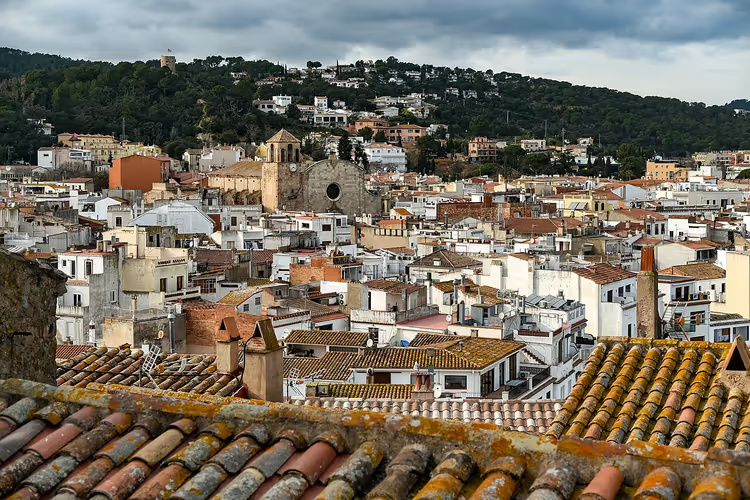
A town with several beaches and old fortress walls sits right above the sea, and for calm swimming choose Cala Giverola or Cala Bona: both coves are sheltered from the waves, and the water in them is clear.
- Who it's for: anyone who wants to combine the beach with a walk through a medieval town.
- The catch: the center is crowded in summer, and parking is paid.
 © Jorge Franganillo · CC BYPhoto: Jorge Franganillo, CC BY (https://creativecommons.org/licenses/by/2.0), Wikimedia Commons
Platja Sa Tuna
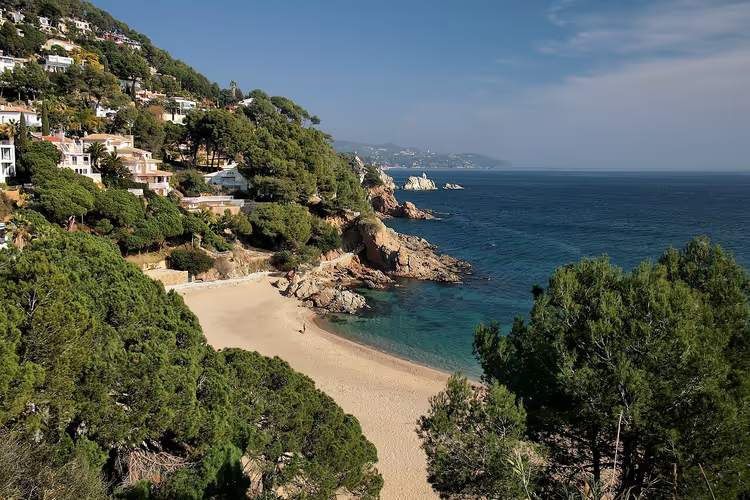
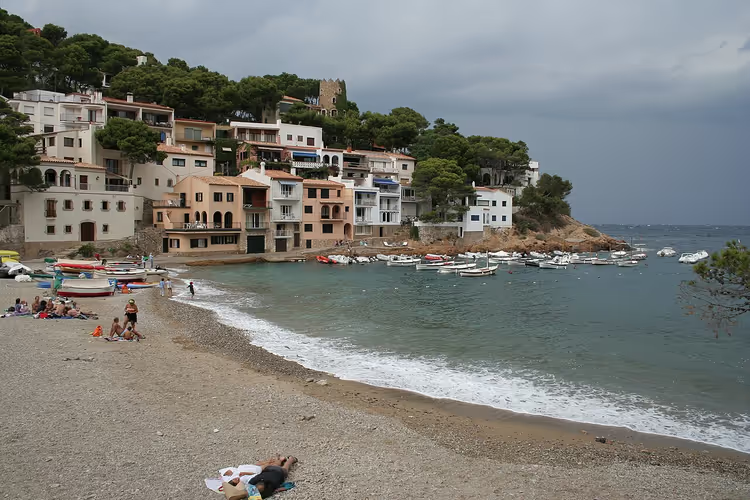
One of the most beautiful coves on the coast lies near Begur, with turquoise water, white fishermen's houses on the slopes, and almost complete silence. People come here for peace and sea views.
 © Josemanuel · CC BY-SAPhoto: Josemanuel, CC BY-SA (https://creativecommons.org/licenses/by-sa/2.5), Wikimedia Commons
- Who it's for: couples and anyone tired of crowds.
- The catch: it is easier by car, and the parking by the cove is small.
Platja de Canyelles
A long strip of golden sand framed by pine trees runs along the road. There is a bar, a volleyball court, and boat rentals, and the entrance is equipped for people with reduced mobility.
- Who it's for: families and groups with kids.
- The catch: the shore gets crowded in season.
Sa Riera
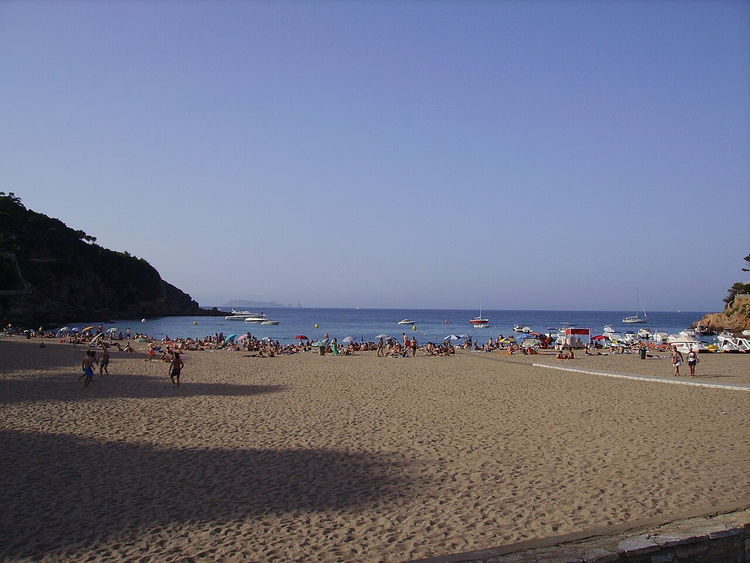
A round cove near Begur is popular with families because of its calm water. A little farther along the path lies the wild Platja de l'Illa Roja, where nudists relax.
 © 1997 · CC BY-SAPhoto: 1997, CC BY-SA (http://creativecommons.org/licenses/by-sa/3.0/), Wikimedia Commons
- Who it's for: families and anyone looking for calm water.
- The catch: parking is scarce, and the way down to the shore goes along a narrow street.
Platja de Sant Pere Pescador
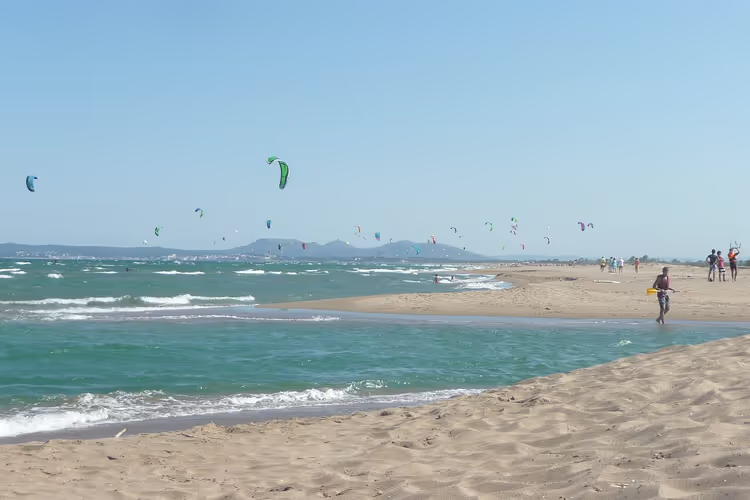
A multi-kilometer sandy beach near Empuriabrava is open to strong wind, so windsurfers and kitesurfers come here, and campsites stand nearby.
- Who it's for: surfers and anyone traveling with a tent.
- The catch: there is no natural shade, so an umbrella and sunscreen are essential.
 © Olga Gairin · CC BY-SAPhoto: Olga Gairin, CC BY-SA (https://creativecommons.org/licenses/by-sa/3.0), Wikimedia Commons
Hidden coves without the crowds
From here on, the places are for those willing to walk or take a boat. Buses do not go there, so it stays quiet even at the height of the season.
Cala del Pi
The northernmost cove of Platja d'Aro, reached by a road along the edge of town, where you leave the car higher up and walk down.
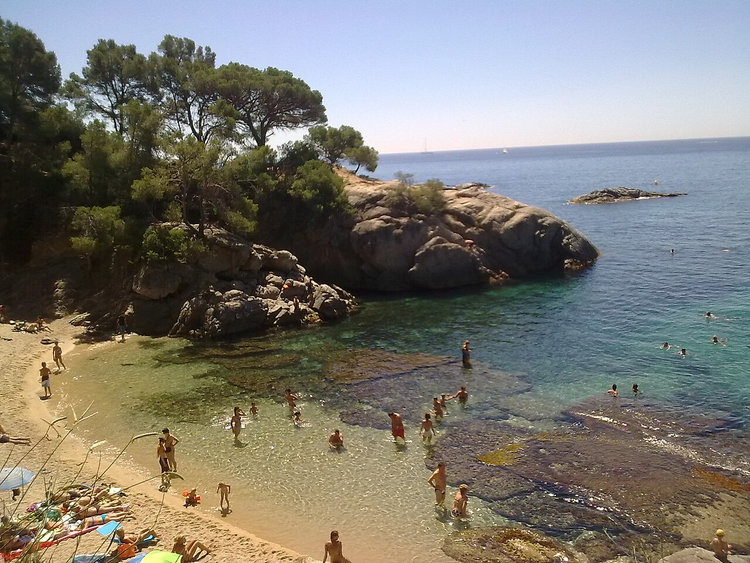 © Xgrau · CC BY-SAPhoto: Xgrau, CC BY-SA (https://creativecommons.org/licenses/by-sa/3.0), Wikimedia Commons
- How to get there: by car, then on foot.
- The catch: no facilities, so bring water with you.
Cala Marquesa
A solitary cove near Tamariu, and you can only get here from the water, by boat or kayak.
- Who it's for: anyone who wants complete silence.
- The catch: no cafes or lifeguards, and the bottom is rocky.
Cala Pedrosa
A stone beach lies at the end of a walking trail along the Camí de Ronda route; follow the red-and-white markings, and it is better to bring shoes with good tread.
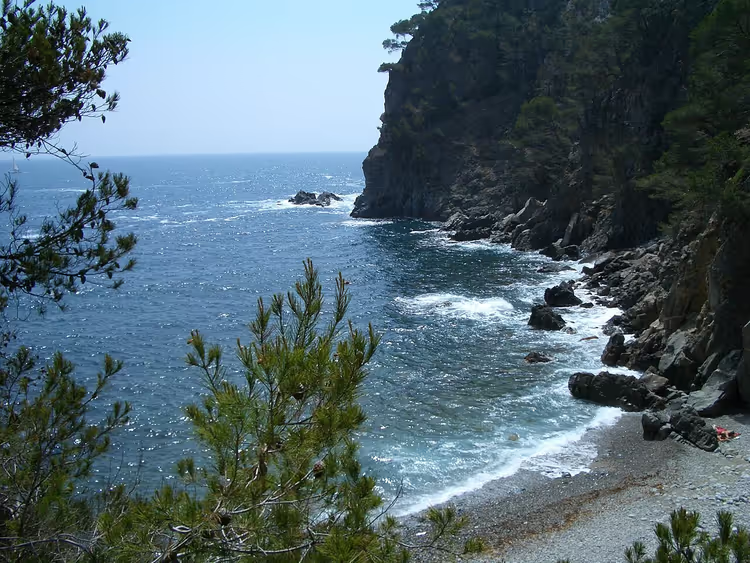 © EliziR · CC BY-SAPhoto: EliziR, CC BY-SA (https://creativecommons.org/licenses/by-sa/3.0), Wikimedia Commons
- How to get there: on foot along a marked route.
- The catch: without proper footwear you will not get into the water comfortably.
El Cau and Cala de Gens
The cove hides on a hidden trail from the Sant Sebastià lighthouse near Llafranc, and the spot is almost deserted, but there are no facilities at all.
- The catch: the trail is narrow and in places slippery after rain.
Hiking routes on the Costa Brava
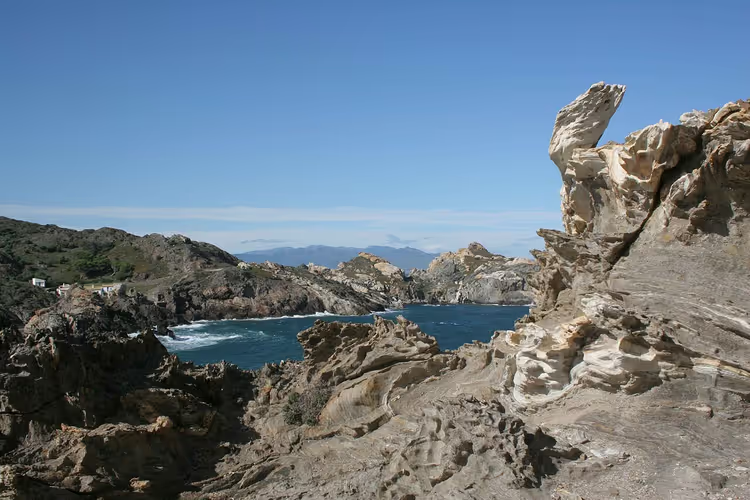
The best views of the coast open up from the trails above the water. The main one, Camí de Ronda, runs along the entire shore from Portbou near the French border to Blanes.
The route is easy to recognize by its red and white markers, and you don't have to walk the whole thing. Pick sections between neighboring towns where it's convenient to get to a bus stop.
One of the most scenic stretches lies between El Port de la Selva and Roses. That's where the Pyrenees end and marked trails of varying difficulty begin.
 © Txllxt TxllxT · CC BY-SAPhoto: Txllxt TxllxT, CC BY-SA (https://creativecommons.org/licenses/by-sa/4.0), Wikimedia Commons
If you don't feel like walking, take the Roses Express tourist train around the Bay of Roses. From there you can climb Puig Rom with the remains of an old castel: the top offers a panoramic view of the coast.
- Who it's for: those willing to walk for half a day.
- The catch: in summer there's no shade on open sections.
Water parks and water activities
In the heat, families usually head to water parks, and there's plenty to choose from: the largest ones are in Roses and Lloret de Mar.
Aquabrava operates in Roses: it has more than ten slides and an artificial river for descending, plus a separate area with relaxation pools. In Lloret de Mar, Water World is bigger, with more than thirty water attractions for all ages listed on its official website.
If parks aren't your thing, try Aquadiver in Platja d'Aro: it has a wave pool, a hydrotherapy pool, a kids' area, and a picnic area. On the beach in Empuriabrava, an inflatable park with a trampoline and obstacle course is set up in summer.
- Who it's for: families with kids and teenagers.
- The catch: in August the lines for slides are long, so arrive at opening time.
Natural parks and botanical gardens
Half of a Costa Brava vacation happens not on the beach but in the parks inland from the coast. Expect walks, cycling, and birdwatching.
Empuriabrava has a butterfly park with a tropical garden: turtles, parrots, iguanas, and dozens of butterfly species live there. Nearby lies the Aiguamolls de l'Empordà natural park between the Muga and Fluvià rivers: bring binoculars, this is a birdwatching spot.
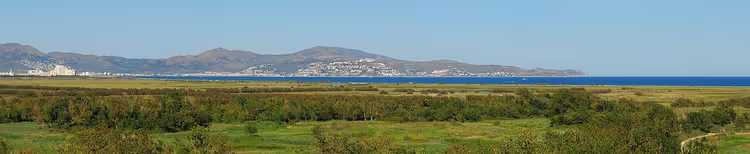 © DXR · CC BY-SAPhoto: DXR, CC BY-SA (https://creativecommons.org/licenses/by-sa/4.0), Wikimedia Commons
Blanes has two botanical gardens. Jardí Botànic Marimurtra is considered one of the best in Europe: thousands of tropical plants on a slope above the sea. The second garden, Pinya de Rosa, is quieter and almost tourist-free.
For active recreation, the rope parks Parc d'Aventura Costa Brava in Pals and Platja d'Aro fit the bill. The routes there vary in difficulty, so there's an option for beginners too.
- Who it's for: families, cyclists, and bird lovers.
- The catch: in summer there are lots of insects in the parks, so bring repellent.
What to see on the Costa Brava
The coast is interesting beyond the sea. Inland stand medieval villages where history is visible in every stone wall.
The village of Pals is known for its rice fields: rice has been grown here for centuries. In summer you can take a tour that ends at the Molí de Pals rice mill.
Archaeology lovers should stop by Ullastret: the Iberian settlement is considered one of the oldest in Catalonia. Another place, Peratallada, still looks like a medieval town because every stone has been left in its original place.
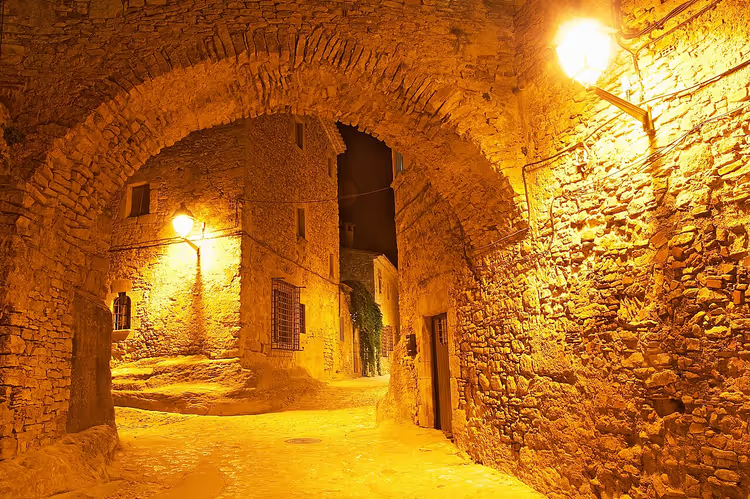 © Felipe Gabaldón · CC BYPhoto: Felipe Gabaldón, CC BY (https://creativecommons.org/licenses/by/2.0), Wikimedia Commons
Cadaqués deserves a day of its own. Here you should see Portlligat bay, the Salvador Dalí house-museum, and the lighthouse at Cap de Creus.
The Dalí house-museum admits visitors by timed entry, so it's best to book tickets in advance: €15.50 online and €17 at the ticket office (as of 09/2026, Gala-Salvador Dalí Foundation). In winter the museum closes for several weeks, so check the date on the website in advance. Find a Cadaqués tour.
The big cities are nearby too. Girona and Barcelona are also worth setting aside time for. In Barcelona, stroll along the boulevard from Plaça de Catalunya to the Columbus Monument: under the plane trees, vendors sell flowers and artists draw portraits. Besides the Sagrada Família cathedral, the city has plenty to see, and we have a separate guide about that.
Nightlife on the Costa Brava
By day you lie on the beach, and in the evening the coast turns into bars and clubs. The most action is in the southern resorts and in Barcelona.
 © János Korom Dr. >17 Million views from Wien, Austria · CC BY-SAPhoto: János Korom Dr. >17 Million views from Wien, Austria, CC BY-SA (https://creativecommons.org/licenses/by-sa/2.0), Wikimedia Commons
Begur has trendy bars, and in summer tents with music are set up on the coves. The town sits at elevation, so you can see Roses from there.
In L'Escala, the south of town is loud: discos and bars stand one after another, while the old center buzzes until late at night.
In Barcelona you can dance any day of the week, but the trip from the resorts takes over an hour.
In Platja d'Aro, clubs run all night along Passeig Marítim and in the alleys behind it.
Lloret de Mar has the most clubs, and in the alleys behind the town hall there are bars and pubs.
Events and festivals
May brings two events to the coast: Lloret Formula Weekend in Lloret de Mar and the Temps de Flors flower week in Girona.
In July, Blanes hosts the international fireworks festival and Festa Major with street parades and giant figures. In summer, music festivals take place in Lloret de Mar.
Carnival is celebrated in almost all major towns, especially vividly in Girona. Exact dates change every year, so it's worth checking the tourist office website.
⁉️🤔 Frequently asked questions
When is the best time to go to the Costa Brava?
The best time starts in late May: the sea is already warm, and the beaches are less crowded than in July and August. In September the water stays comfortable, but the heat eases off. July and August work if you're ready for crowds and high accommodation prices. In winter the coast empties out, and some cafes close.
How do you get to the coast without a car?
Sagalés buses run from Girona airport to Lloret de Mar and Blanes, and the trip takes under an hour. Public transport barely reaches the northern coves, so in the north a car or transfer is more convenient. Taxis and transfers cost more than the bus, but they'll take you straight to a hotel near the cove you want.
Where are the best beaches for families with kids?
Choose beaches with a gentle slope and calm water. Sant Pol de Mar works because of its shallow bottom and lack of waves. Sa Riera is convenient for families with toddlers, the water there is calm. Platja de Canyelles offers sand, a bar, and boat rental nearby. In high season, arrive before noon, otherwise the parking lot will be full.
What is there to see on the Costa Brava besides beaches?
The coast's main hiking route, Camí de Ronda, runs from the French border to Blanes. In Cadaqués, the Dalí house-museum is worth a visit, and it's best to book tickets in advance. The village of Pals is interesting for its rice fields, and Ullastret is considered one of the oldest Iberian settlements in Catalonia.
How many days do you need on the Costa Brava?
For a first visit, three or four days are enough: in that time you can cover the southern beaches and one walk in Cadaqués. If you want to see all the coves and parks, plan a week and get a car. The north and south of the coast are far apart, so don't try to cover everything in one day.
In short: what to book
The choice depends on why you're coming to the coast.
- If you want beaches and clubs, book accommodation in Lloret de Mar or Blanes.
- If you want quiet and nature, look at Begur, Cadaqués, and Empuriabrava.
- For trips between coves, rent a car.
- For tours of Cadaqués and Pals, book spots in advance.
The easiest way to find a hotel that fits your plan is to book ahead: check prices on Trip.com.

A small editorial team writing guides for independent travel. We travel ourselves, but we haven’t been everywhere, so we check prices, opening hours and how to get there against official sources.