
















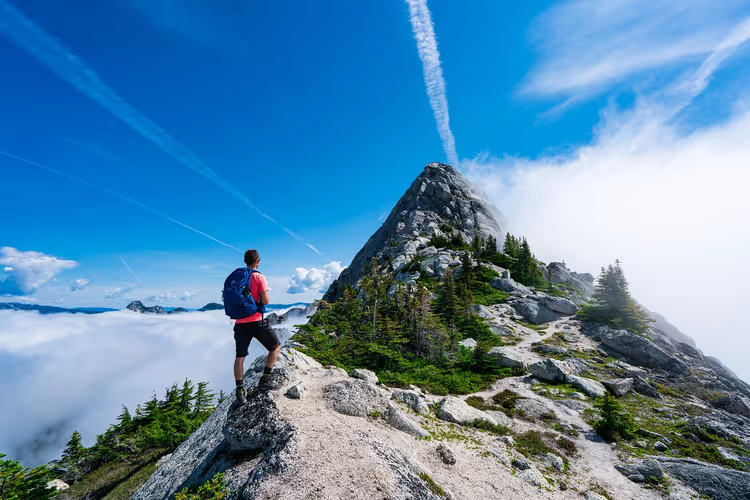
6 Mountain routes for summer: from trekking to climbing
Summer in the mountains starts not with a ticket, but with choosing a peak. One route forgives a beginner, another demands an ice axe and experience. We've put together six mountain destinations and broken each one down by the facts: elevation, season, timing, and the honest catch. You'll see where you can go with basic fitness and where you'd better not venture without proper training.
The easiest place to start is Montenegro. The climb up Bobotov Kuk takes 5-6 hours and requires no mountaineering gear (according to the Bobotov Kuk trail guide, 09/2026). The highest is Ararat: 5,137 m and about a week for the whole program including the permit (as of 09/2026, Ararat Peak). Between these two extremes, it's easy to find an option that matches your experience.
The elevations, countries, and key features of all six peaks are summarized in the table below. We double-checked every figure against mountain databases and park websites.
Ad: this article contains affiliate links, we earn a commission if you book through them, at no extra cost to you.
What to know before heading to the mountains
💡 In short:
- The main season for most destinations runs from May to October, but each mountain has its own exact window.
- Elevations differ by nearly a factor of two: from 2,523 m on Bobotov Kuk to 5,137 m on Ararat (as of 09/2026, Durmitor NP, Ararat description).
- Timing also varies: Olympus takes two to three days with an overnight in a hut, while Ararat takes about a week (as of 09/2026, trail to Mytikas, Ararat climbing regulations).
- Season and route difficulty for Bobotov Kuk: 09/2026, verified on the official Durmitor National Park website.
Mountain | Elevation | Country | Main highlight | Source |
|---|---|---|---|---|
1. Ararat | 5,137 m | Turkey | A five-thousander for beginners | |
2. Bobotov Kuk | 2,523 m | Montenegro | Highest point of Durmitor | |
3. Olympus | 2,917 m | Greece | Mountain hut at 2,030 m | |
4. Red Mountains | mid-mountain terrain | Kyrgyzstan | Canyons without major elevation gain | |
5. Triglav | 2,864 m | Slovenia | Overnight at Kredarica, 2,515 m | |
6. Gran Paradiso | 4,061 m | Italy | One of the most accessible four-thousanders in the Alps |
Below we break down each route individually. For each one we list the season, timing, and the catch you should know about in advance.
1. Ararat
Ararat rises to 5,137 m and remains one of the most accessible five-thousanders in the region (as of 09/2026, route description). The summit is formally in Turkey, although it is considered a natural symbol of Armenia. Locals call the mountain Ağrı Dağı, meaning "mountain of pain," but the southern route is manageable for someone with solid fitness.
In May the surrounding plateau is covered in poppies, and the first flowers push through the thawed patches. But the slopes still hold winter snow at that time, so May is not the easiest month for a summit attempt.
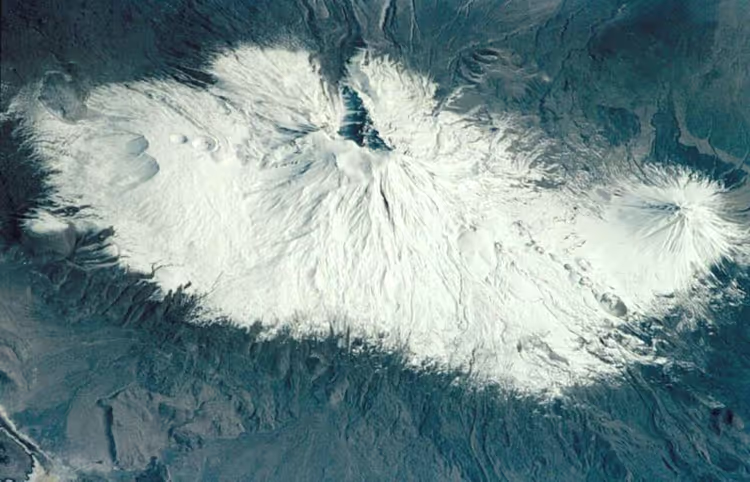
From the Turkey side, the climb often follows an all-inclusive format. A cook prepares the food, a support team sets up camp, and mules carry your gear. If you want to save money, take the regular trekking route without these services.
An official permit is mandatory: climbing is prohibited without one (as of 09/2026, Ararat Peak). Groups usually start in Dogubayazit right at the base, and the whole program takes about a week. In clear weather, you can see three countries from the summit: Turkey, Armenia, and Iran. If you need a guide and ready-made logistics, book a tour on GetYourGuide.
- Who it's for: beginners with good physical fitness.
- Not for: those who aren't ready to sleep in a tent at altitude.
- The catch: climbing is prohibited without a permit arranged in advance.
2. Bobotov Kuk
Montenegro lets you combine sea and mountains in a single vacation. Mountain ranges cover most of the country, and Durmitor is the most popular with tourists. Its highest point rises to 2,523 m and is called Bobotov Kuk (as of 09/2026, Durmitor park rules).
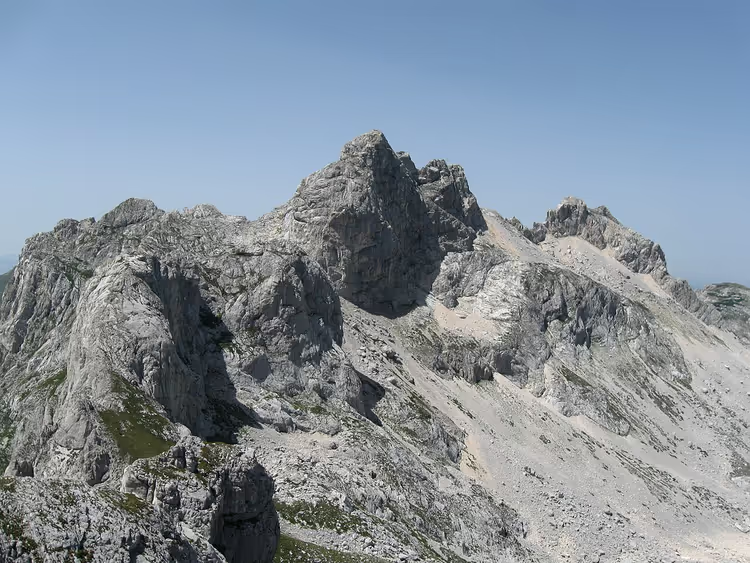 © Goran.Smith2 · CC BY-SAPhoto: Goran.Smith2, CC BY-SA (https://creativecommons.org/licenses/by-sa/3.0), Wikimedia Commons
A professional climber would find it boring here, but the route suits a traveler without a heavy backpack. Basic skills for walking on snow and scree will still come in handy. The classic ascent starts from the Sedlo pass: about 10.5 km round trip and roughly 850 m of elevation gain (according to HikeList, 09/2026).
There are several time options. The shortest loop takes 3.5 hours, the longest about nine. Most often tourists choose the 5-6 hour route, but photos constantly slow the group down (according to HikeList: time on the route, 09/2026). Every pass opens up a new landscape, which is why Durmitor is compared to the Alps in miniature.
The hardest part starts a few hundred meters before the summit. Here you'll have to scramble along narrow ledges, so you need a steady foot. In return, the peak offers views of almost all of Montenegro, if the weather cooperates. At the top, don't forget to sign the summit log: it's kept in a metal box. If you plan to stay overnight nearby, hotels near Durmitor on Trip.com will help you compare prices.
- Who it's for: travelers without mountaineering gear but with basic fitness.
- The catch: the last few hundred meters before the peak follow narrow ledges and require a steady foot and full attention.
3. Olympus
You can climb Olympus in the literal sense: it is the highest mountain in Greece (as of 09/2026, official website of the Olympus mountain huts). The ancient Greeks considered the massif the home of Zeus, and today thousands of people hike to Mytikas peak every year. Self-guided hikes are open from the second half of May through October.
In early spring it's better not to risk it: in winter, a lot of snow accumulates in the mountains of Greece, and avalanches are possible. A road takes you up to 1,080 m, and after that the ascent on foot begins (according to the route description, 09/2026).
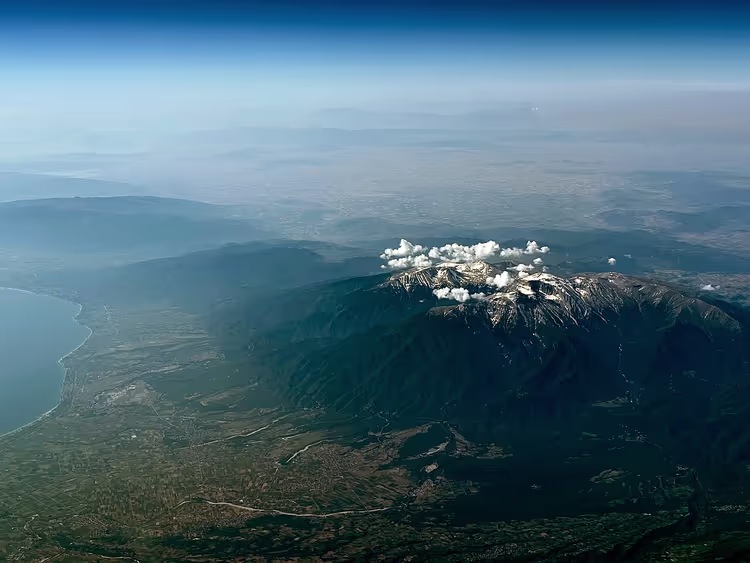 © kallerna · CC BY-SAPhoto: kallerna, CC BY-SA (https://creativecommons.org/licenses/by-sa/4.0), Wikimedia Commons
After a few hours you reach the Spilios Agapitos refuge at 2,030 m (as of 09/2026, Mount Olympus Refuge A). Here you can spend the night and eat, and in the morning head for the summit with a light pack.
Plan your start so that you reach the peak before noon. In the afternoon, clouds almost always cover the summit, and then you won't see the panorama. An early start from the refuge saves half a day and a lot of stress. For ready-made programs, check out hikes on GetYourGuide.
- Who it's for: those who want their first summit without mountaineering.
- The catch: after noon the peak is almost always covered by clouds, and in spring there is still snow on the slopes.
4. The Red Mountains
The Red Mountains of Kyrgyzstan are different from all the peaks above. Guidebooks call them the Konirchek canyons: here you don't need to gain elevation, but the landscape resembles Mars. A hike among red clays and sandstones suits those who are tired of climbing upward (according to the Kyrgyzstan tourism office, 09/2026).
May changes these places the most. Meltwater rushes through the canyons, the first plants push through the red rock, and birds sing all around. In summer the picture fades, so take your vacation in late spring.
The trail itself is also a feast for the eyes. You pass scenic valleys with shepherd's huts and rocks of whimsical shapes that water and wind have carved over millions of years.
Watch your step carefully. These places are home to venomous vipers, pit vipers, and even Central Asian scorpions. In terms of cost, the trip falls into the budget category, and you choose the length of the route yourself: from one day to several days.
- Who it's for: trekking enthusiasts without serious elevation gain.
- The catch: venomous snakes and scorpions require closed shoes and attention on the trail.
5. Triglav
Triglav, at 2,864 m, is the highest point in Slovenia and a symbol of the country. It stands in the center of Triglav National Park in the Julian Alps (as of 09/2026, description of a two-day ascent). The most popular route goes via the Triglavski dom na Kredarici hut at 2,515 m, the largest and highest in Slovenia (according to SummitPost, 09/2026).
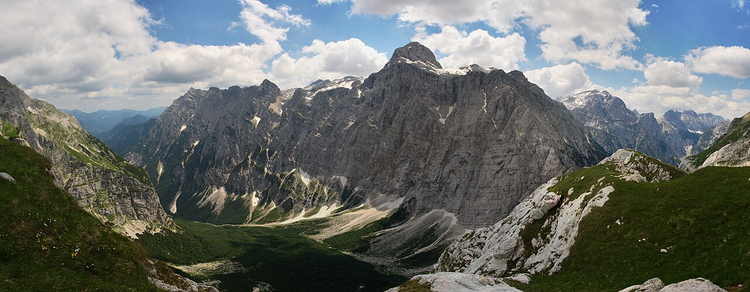 © Javier Sanchez Portero from Santa Cruz de Tenerife, España · CC BY-SAPhoto: Javier Sanchez Portero from Santa Cruz de Tenerife, España, CC BY-SA (https://creativecommons.org/licenses/by-sa/2.0), Wikimedia Commons
The ascent is usually spread over two days. On the first day, it takes 5-7 hours from the Krma Valley to the hut; on the second day, it takes just over an hour from the hut to the summit: about 40 minutes to Mali Triglav (2,726 m) and another 35 minutes to the peak (according to Explore-Share and Altitude Activities, 09/2026). The final section on all routes is equipped with metal rungs and a cable, so every climb to the summit is essentially a via ferrata (as of 09/2026, Triglav Tours).
- Who it's for: for those who are confident in the mountains and not afraid of heights on a protected route.
- The catch: the final ridge follows a via ferrata, so nobody goes up there without a helmet and a via ferrata kit.
6. Gran Paradiso
Gran Paradiso rises to 4,061 m and remains the highest mountain entirely within Italy. It is usually called one of the most accessible 4,000-meter peaks in the Alps (as of 09/2026, Blackbird Mountain Guides).
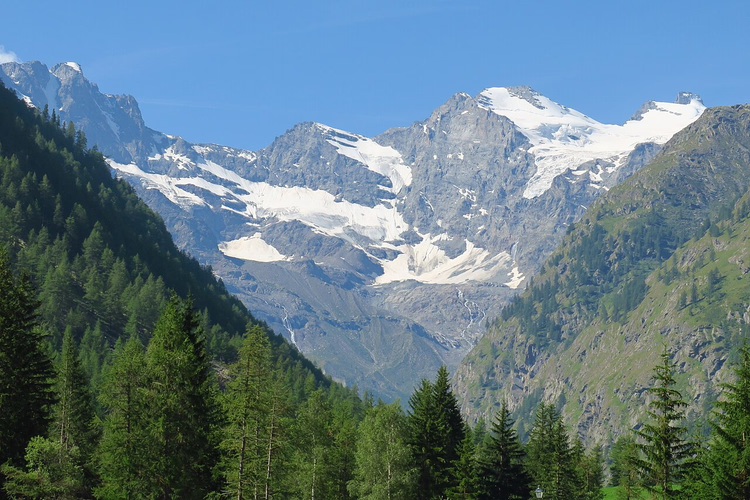 © Bramfab · CC BY-SAPhoto: Bramfab, CC BY-SA (https://creativecommons.org/licenses/by-sa/4.0), Wikimedia Commons
The popular normal route starts in the Valsavarenche valley, from Pont (1,960 m) to the Vittorio Emanuele II hut at 2,735 m, where climbers spend the night before heading to the summit. The season runs from June to September; in August the route is crowded, so hut places should be booked in advance (as of 09/2026, Virtual Mountains). The circular glacier route from the hut itself takes about 10.5 hours (according to Outdooractive, 09/2026).
- Who it's for: for those who want their first 4,000-meter peak and are ready to go roped up with a guide.
- The catch: the glacier has hidden crevasses, so you need crampons, an ice axe, and rope team skills; without mountaineering experience, the route cannot be done.
⁉️🤔 Frequently asked questions
When is the best time to go to the mountains for the first time?
Go by the season of the specific mountain. Olympus is open for independent hikes from the second half of May, and Gran Paradiso from June. On Ararat, there is still snow in May. Skip early spring: in the mountains of Greece and in the Alps, the avalanche risk is high at that time.
Do you need mountaineering skills for these routes?
For some routes, no. Bobotov Kuk, Olympus, and the Red Mountains in Kyrgyzstan can be done without special equipment, although basic skills for walking on snow and rock will help. Gran Paradiso already requires mountaineering experience and an experienced guide, and on Triglav you will need via ferrata equipment. Honestly assess your fitness before the trip.
Which route should you choose if you only have a weekend?
Take Durmitor or Olympus. In Montenegro, the ascent of Bobotov Kuk takes one long day, while Olympus usually takes two days with an overnight stay at the Spilios Agapitos hut. Both options suit active people without mountaineering experience and do not require long acclimatization.
Do you need a permit for the climb?
An official permit is mandatory for Ararat, and it is arranged in advance through an operator (as of 09/2026, permit application rules). Check current national park rules on official websites before your trip, they change more often than you would expect.
What should you take on a mountain trek?
From our travel experience: pack layered clothing, extra water, and a headlamp. In high mountains the weather can change within an hour, so a shell layer and a warm layer are necessary even in May. For routes with overnight stays, add a sleeping bag and a first aid kit with blister plasters. There is almost no signal on the trail, so download maps in advance.
In short: what is worth booking
If you only have a weekend: choose Durmitor or Olympus. If you want a classic five-thousander without mountaineering: pick Ararat. If you are ready for a glacier and your first four-thousander: plan Gran Paradiso. If you need budget trekking without gaining altitude: head to the Red Mountains.
Whatever you choose, build in extra days and keep an eye on the forecast. Compare mountain trekking insurance options so your coverage is active from the first day of the route.

A small editorial team writing guides for independent travel. We travel ourselves, but we haven’t been everywhere, so we check prices, opening hours and how to get there against official sources.