















Vacation in Turkey 2026: what fines tourists get and how to avoid them
Beach, lounger, and all inclusive: that is how a vacation in Turkey looks in ads. In reality, a set of rules gets added to that picture, and you pay for some of them out of your own pocket.
Alcohol on the street, a photo of a military site, an old coin in your suitcase: these can get you fined and prosecuted in Turkey (according to Auswärtiges Amt, as of 09/12/2026).
Turkey remains a top destination for German tourists: in 2025 it was among the most popular destinations from Nuremberg Airport (nordbayern). Popularity, however, does not cancel a single restriction.
Below are the rules for a trip in 2026: documents, alcohol, photos, souvenirs, and the road. Each figure is given with a link to an official source.
Ad: this article contains affiliate links, we earn a commission if you book through them, at no extra cost to you.
Documents and entry: what to check in advance
💡 In short:
- What to bring: a passport or ID card, no visa needed for a tourist trip.
- What to check: remaining validity, a blank page in your passport, documents for each child.
- Documents, deadlines, and rules: 09/2026, verified against Reise- und Sicherheitshinweise Auswärtiges Amt
For a tourist trip of up to 90 days within 180, an ID card or passport is enough, no visa required (according to ADAC, 09/2026). Short trips add up: within 180 days you may spend no more than 90 days in the country, so a weekend in Istanbul uses up part of the limit.
Document validity is calculated more strictly than you might expect. Auswärtiges Amt reminds you to have 60 days of validity beyond the permitted stay, meaning 150 days from the date of entry (Reise- und Sicherheitshinweise Türkei, 09/2026). A blank page in your passport also matters: without one, entry may be refused (entry document requirements).
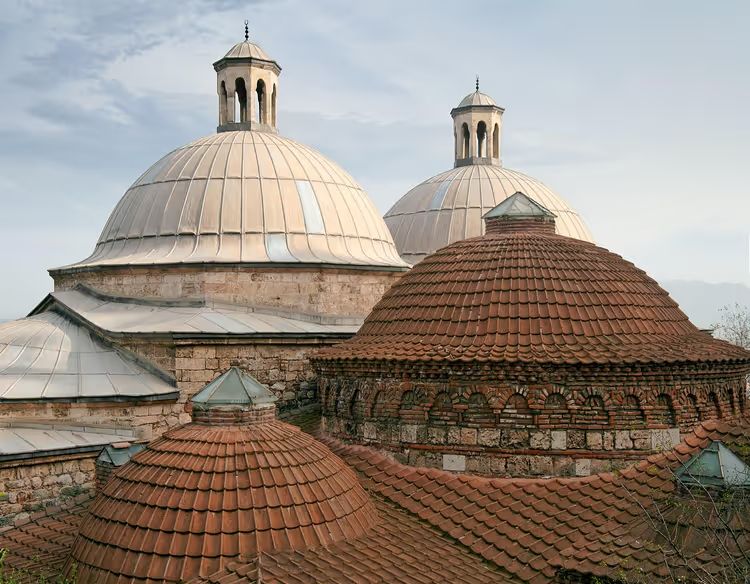
 © Arne Müseler · CC BY-SAPhoto: Arne Müseler, CC BY-SA (https://creativecommons.org/licenses/by-sa/4.0), Wikimedia Commons
Keep the document with you, not in the hotel safe. Checks on the street and in public transport do happen, and the hotel is required to enter guest data into the system (document recommendations, 09/2026). A child needs their own document, and if traveling with one parent, bring the birth certificate and proof of the other parent's consent (ADAC notes on documents).
Alcohol: where you can drink and where you can't
Drinking alcohol on the streets, in parks, and in public gardens in Turkey has been prohibited since September 9, 2013 (nordbayern report on the ban). An open bottle in a public place gets you a fine, so leave the glass of wine to a bar, restaurant, or hotel: alcohol is sold legally there.
Buying alcohol also has a nuance. The Auswärtiges Amt advises buying spirits only from licensed stores. A random seller carries a high risk of methanol poisoning, and in past years the country has recorded deaths from counterfeit alcohol (alcohol warning, 09/2026). A suspiciously cheap bottle should put you on alert, not make you happy.
During Ramadan, restrictions are more noticeable outside tourist areas: during the day, eating, drinking, and smoking near people who are fasting are not welcomed there (nordbayern report on the rules). In resort areas, Ramadan is felt less. The ban on alcohol in public places still applies everywhere, so don't put a bottle on a bench.
A cigarette in a cafe: what has changed since 2009
Turkey regulates smoking strictly. Since 2009, cigarettes have been banned in restaurants, cafes, tea houses, covered terraces, and playgrounds (according to a nordbayern overview). Hookah indoors is also prohibited, so in resort towns it is moved outside.
The plan gets even stricter. A draft law envisions an almost complete phase-out of tobacco by 2040: restrictions will cover open terraces, public places, schools, hospitals, and places of worship, and along with cigarettes, vapes will also be banned (as of 09/2026, FR.de). This matters to you for a simple reason: smoking in a prohibited place gets you a fine, and staff have the right to ask you to go outside.
Photos: where to put the camera away
Photography in Turkey is more restricted than in Europe. Photographing military and other security facilities, border structures, and law enforcement personnel is prohibited (photography rules, 09/2026). If you see a fence, barbed wire, or a person in uniform, put the camera away in your bag.
Cemeteries, religious sites, and private homes are also on the risk list: photography triggers a sharp reaction from locals and police (according to the Auswärtiges Amt). Photograph people on the street only with permission, and don't photograph children without their parents' consent.
Mosque and clothing: how to avoid mistakes
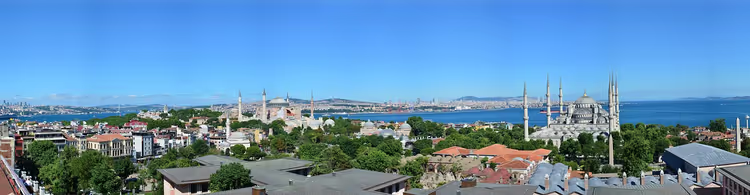
Outside the beach, behavior and clothing should be adjusted to local customs, recommends Auswärtiges Amt (clothing tips). This is especially true for mosques: shoulders, arms, and legs must be covered, and the rule applies to both women and men.
In practice, this means shorts and a tank top are fine for the waterfront but not for entering a mosque. Bring a scarf in case you are asked to cover your head at the entrance. Check the requirements at the door: the sign at a specific mosque is always clearer than any general advice.
Souvenirs: coins, stones, fossils
Cultural and natural treasures in Turkey are considered state property. Acquiring, possessing, and exporting them can lead to up to 10 years in prison, and a tourist can realistically face several months of pretrial detention and a large bail (warning about exporting valuables, 09/2026).
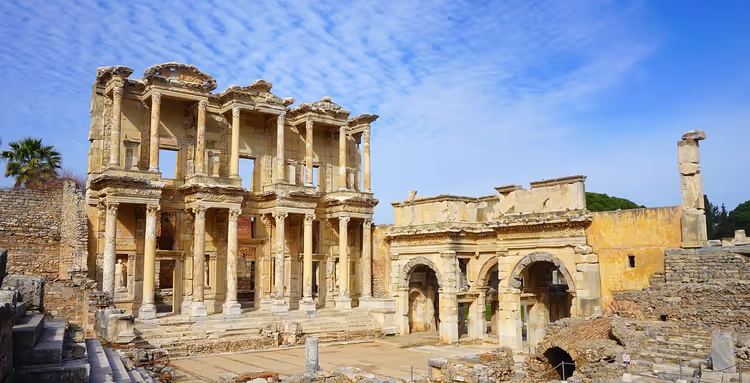
Police and customs interpret the word "antiquities" broadly. Any worked stone can fall under it, so a tourist practically cannot determine on their own whether an item is protected or not (according to Auswärtiges Amt). The rule is simple: do not buy old coins, fossils, or items "with a history" from dealers, and do not carry them in your luggage. You will never be certain that your find is harmless.
Behind the wheel: speed, fines, documents
You can explore the country in a rental car, but follow the rules. In built-up areas the limit is 50 km/h, outside built-up areas 90 km/h (speed limits in Turkey, 09/2026).
Speeding is recorded by cameras and patrols, the fine is issued to the driver, and dealing with it in Turkey costs more than paying on time. The general principle from Auswärtiges Amt is this: in Turkey you can be punished for things that are allowed in Germany (according to Auswärtiges Amt). So leave alcohol for the evening after driving, and keep your documents in the passenger compartment.
It is better to choose a car in advance: in season, price and availability depend on your travel dates, and comparing car rental prices is easier before you fly. Check whether the deductible is included in the policy and whether driving into neighboring regions is allowed.
What to keep in mind in 2026
The situation changes quickly. In early September 2026, most of Turkey is under very high fire danger: due to wind, fire spreads quickly, and road closures and site closures are possible (current Auswärtiges Amt warnings, as of 09/12/2026). Keep your phone charged and bring a power bank.
In large cities, the terrorist threat remains, so avoid large crowds and demonstrations (according to Auswärtiges Amt). A separate topic concerns social media: posts and even likes that are considered personal opinion in Germany can lead to legal proceedings in Turkey, and there are known cases of exit bans (about legal risks in Turkey, 09/2026). Check your health insurance before the trip: compare insurance options.
⁉️🤔 Frequently asked questions
Can you drink alcohol on the beach in Turkey?
Alcohol is prohibited in public places, and the beach and promenade count as public places. Drinking on the street, in a park, or on the waterfront will get you a fine. Drink at a bar, restaurant, or on hotel grounds: sales are licensed there. A bottle in your room is not a problem.
What language should you speak with the police and what should you show?
Keep your passport or ID with you: checks on the streets and in transport are common practice. A photo of the document on your phone does not replace the original. Do not argue if an officer asks for your document: they are not required to explain the reason for the check, and your objections will only prolong the conversation.
Can you photograph a mosque and police officers?
Photographing a mosque from the outside is usually allowed, but inside, follow the signs at the entrance. Photographing police officers, military facilities, the border, and security installations is prohibited. It is better to leave cemeteries, private homes, and religious ceremonies without a camera, otherwise you may get a sharp reaction from locals.
In short: what to book
Turkey in 2026 remains an easy destination for entry: no visa is required, but a document with 150 days of validity is mandatory. The complications start with the details: alcohol on the street, photos of security installations, and old coins in your luggage. These rules are cheaper to learn before you fly.
If you are on a beach vacation: choose a hotel by the sea and do not plan long transfers. If you are driving around the country: book a rental in advance and check the deductible. If you are traveling with a child: check their documents and the other parent's consent.
One step will solve the most common problem on the road: find a car on DiscoverCars.

A small editorial team writing guides for independent travel. We travel ourselves, but we haven’t been everywhere, so we check prices, opening hours and how to get there against official sources.