












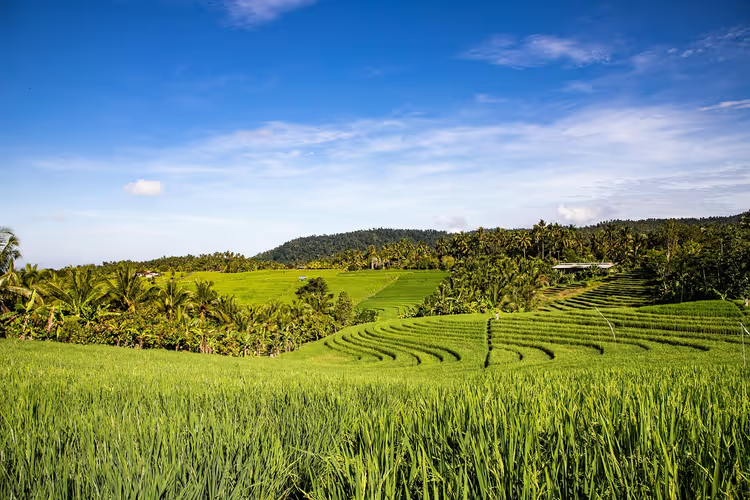
When is the best time to go to Bali: month by month overview and an honest look at the rainy season
Planning a trip to Bali and not sure which month to pick? Worried your vacation will get washed out by a tropical downpour? Then you're in the right place. Below we'll break down the island's climate, go through all twelve months honestly, and tell you whether it's worth going during the rainy season. In short: the dry season runs from April through October, and the most comfortable months for weather, prices, and crowds are May, June, and September.
Ad: this article contains affiliate links, we earn a commission if you book through them, at no extra cost to you.
Bali's climate: the essentials about the island's weather
💡 In short:
- The climate is tropical: hot and humid all year round.
- The dry season runs from April through October, with little rain.
- The rainy season lasts from November through March, with peak rainfall from December through February.
- Daytime temperatures are around 29-33 °C, and coastal water is around 28 °C.
- Humidity stays at 90-95%. The air feels heavy.
- The best months to visit: May, June, and September.
- Holiday dates: 09/2026, according to Time Out.
Bali has a tropical climate. Average air temperatures stay in the 29-33 °C range all year round. In the highlands and at night it's noticeably cooler, so in Ubud or Munduk you'll want a light sweater in the evening. Coastal water is warm, around 28 °C. Swimming is comfortable in any month.
Humidity on the island is high, and the air is almost always moist and heavy. That makes the heat harder to handle than dry heat somewhere in Europe, and you'll feel it on your very first day. Air conditioning in your room and water with you are not a luxury, they're a necessity. The midday sun is especially tough.
The year is divided into two seasons: dry and rainy. The dry season lasts from April through October. The rainy season starts in November and ends in March, with the most rainfall from December through February. Rain rarely lasts all day. It's usually a short but intense downpour in the afternoon.
During the rainy season, the sky is often overcast.
Technically, you can go to Bali any time of year: the island is always a summer destination. But the difference between the dry season and the rainy season is significant. The dry season is more popular. The weather is more stable, and plans don't get washed out by rain.
Important: Bali's climate has been noticeably erratic in recent years. Some regions get rain even in the dry season, and it's becoming increasingly unpredictable. A lot depends on exactly where you are. The coast is usually warmer than the mountains, and some areas sheltered by mountains stay drier. Treat this overview as a planning guide, not a weather guarantee for a specific date.
When is the best time to go to Bali?
The best time to visit Bali is from April through October. That's when the chance of rain is lowest, because the island is in its dry season. The sky is clear, the sea is calm, and plans don't get derailed by downpours.
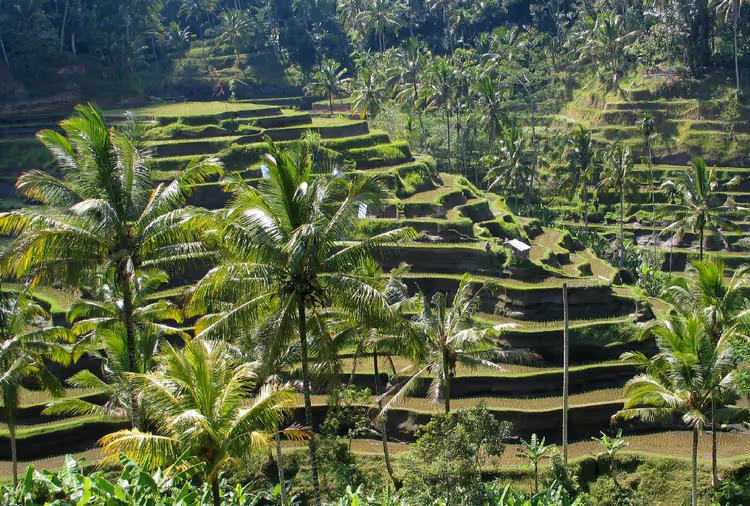 © Unknown author · CC BY-SAPhoto: Unknown author, CC BY-SA (http://creativecommons.org/licenses/by-sa/3.0/), Wikimedia Commons
But there's a catch. From July through September, be prepared for crowds of tourists and high prices: that's peak season. On the plus side, August and September are less muggy, and in the evening a refreshing breeze comes in off the coast.
May and June are very pleasant. You're in the dry season, but still in the low season and shoulder season. Nature at this time is lush and green after the recent rains. The crowds haven't arrived yet, and locals aren't tired of visitors. Flights from Europe in these months are also noticeably cheaper than in the height of summer.
October can also work out well. There are fewer tourists, and the rainy season is only just starting to get going. Based on our experience traveling in the shoulder season, the best months on the island are May and June. We'll go into detail on exactly why below, in the month-by-month overview.
Bali by month: a detailed overview
Below we break down each month: weather, crowds, prices, what to do, and where to go. This way you can pick the time that fits your needs.
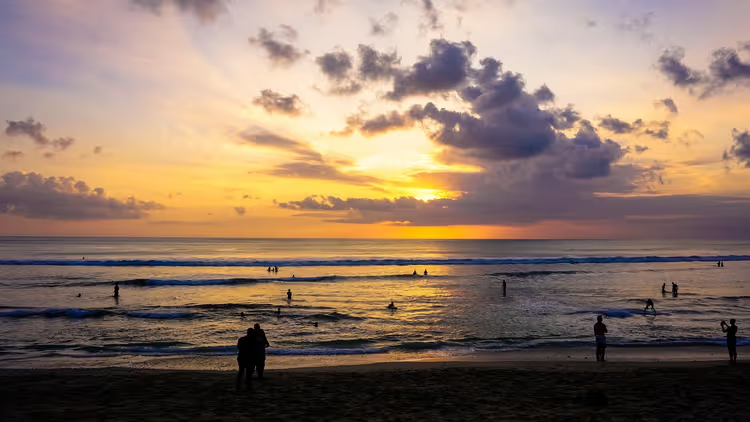
Keep one general rule in mind. The south of the island (Kuta, Seminyak, Canggu, Ubud) gets more rain during the wet season than the north and east. So in borderline months, the areas around Amed and Pemuteran often save the day: the nearby mountains block some of the clouds. Also, the weather on the coast and in the mountains can feel noticeably different on the same day.
Bali in January
January is the peak of the rainy season in Bali. The chance of rain is high, and it is one of the wettest months of the year. Technically it is low season, but international New Year tourism makes the beginning of January busy.
The upside is that flights in January are noticeably cheaper than in December. Many surf camps and dive centers offer solid discounts in January and February. Some activities are even more interesting at this time than in the dry months. Rafting and waterfalls are great: the rivers have more water. Nature is lush and green.
But there are catches. Volcanoes are often closed due to landslide risk, and rough seas prevent trips to nearby islands (Nusa Penida, the Gilis).
If you go at this time, choose the east and north. Surfers will like the east coast (Sanur, Keramas), but divers will have to put up with poor visibility.
Balinese ceremonies take place on the island all year round, and January is no exception. If you are lucky, you will catch a temple festival with a procession in traditional dress. The roads in the interior are especially scenic at this time: the rice terraces are bright green from the frequent rains.
Bali in February
The rainy season continues in February. There are slightly fewer rainy days than in January, but the weather is still unstable. The island remains in low season.
Chinese New Year usually falls in mid-February. Many tourists from China come to Bali during these days. But they mostly stick to the main attractions, so quiet areas are barely affected.
Otherwise, February is similar to January: lush greenery, cheap flights, discounts at dive centers and surf camps. The nearby islands and volcanoes still depend on the weather. If you want to catch dry windows, again look to the east and north of the island.
Another plus of February is the waterfalls. After weeks of rain, they are especially full and dramatic, and the trekking trails to them are almost empty in the off-season. Just keep in mind: the trails can be slippery, so bring shoes with good tread.
Bali in March
March in Bali is unpredictable: you may get lucky with the weather, or you may not. There are fewer and fewer rainy days, but the rainy season is not over yet. Low season continues, and there are not many tourists.
The main event in March is Nyepi, the Balinese New Year and Day of Silence. In 2026 it falls on March 19 (according to the Time Out holiday calendar). The day before, spectacular ogoh-ogoh parades with huge demon figures pass through the streets.
Plan your arrival and departure so you do not get caught on the Day of Silence itself. During Nyepi everything is closed, including the airport, and you cannot go outside for a full day. In feel and weather, March is close to January and February, but milder. Nature is especially green at this time.
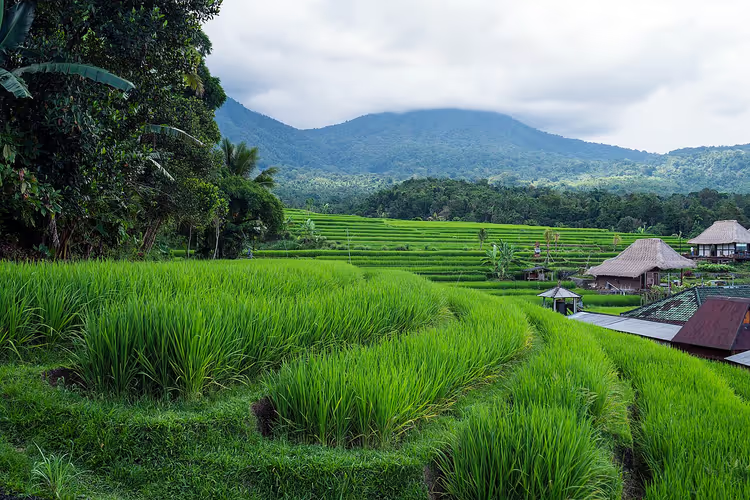 © Christopher Michel · CC BY-SAPhoto: Christopher Michel, CC BY-SA (https://creativecommons.org/licenses/by-sa/4.0), Wikimedia Commons
Bali in April
April is a transition month from the rainy season to the dry season. The weather is a toss-up, but rain becomes consistently less frequent. The drier it gets, the less trash gets washed into the sea.
April is considered the hottest month in Bali. During the day, temperatures approach 33 °C. The island is still in low season, but Easter holidays often fall in April, so flight prices from Europe can rise.
The wind gradually shifts, and surfing conditions on the west coast improve. You can already book a surf camp on the west and south of the island in April. The same goes for underwater visibility: diving becomes comfortable again. If you want warmth and fewer crowds, April is a good compromise.
Bali in May
In May you hit the dry post-monsoon period, and it is one of the best months to visit. The Easter holidays are over, shoulder season has begun, and the island is already dry.
Flights from Europe in May are relatively cheap because there are no official holidays. Based on our travel experience, May and June are our favorite months on the island. The reason is simple. You get all the benefits of the dry season, but nature is still lush and green after the rains.
The high-season crowds have not arrived yet. Locals are not tired of the flow of visitors, and the island has a relaxed atmosphere. The sea is calm, the sky is clear, and the evenings are warm. If you are visiting Bali for the first time, May is one of the best options.
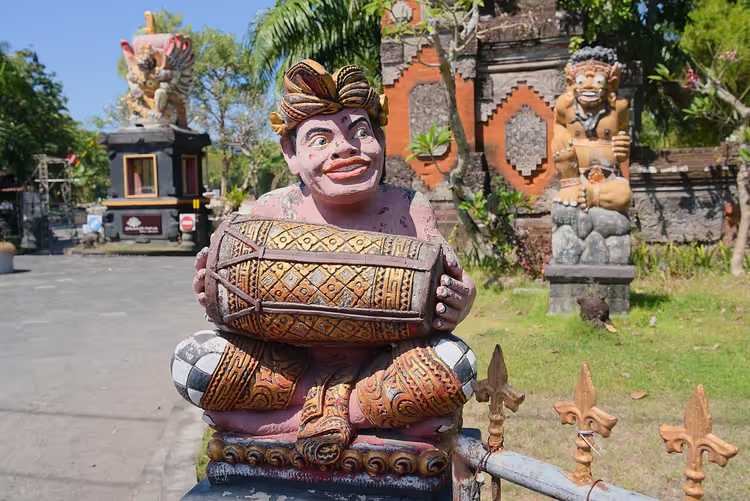 © Satdeep Gill · CC BY-SAPhoto: Satdeep Gill, CC BY-SA (https://creativecommons.org/licenses/by-sa/4.0), Wikimedia Commons
Bali in June
June also belongs to the dry post-monsoon period. High season is just starting to pick up, but the crowds are still pleasant. You can travel flexibly: not everything is booked in advance.
Flight prices rise in June, but they are still about half as expensive as in July. Of all the months, June has the lowest humidity, so the heat is easiest to handle. This is our second favorite month, tied with May.
In 2026, a major holiday falls in June: Galungan and Kuningan, from June 17 to 27 (according to Time Out). Streets are decorated with tall bamboo poles called penjor, and Balinese people come out in traditional dress. The exact dates of Galungan shift every year because the holiday is calculated according to the Balinese 210-day calendar.
Bali in July
July marks the start of the hot dry season and the official high season, including for Australians and Indonesians. The island becomes very (even too) crowded. If you have your eye on a specific hotel, you should book accommodation in advance on Trip.com, otherwise it will be gone by July.
Weather-wise, July is close to ideal. But high season comes at a price. Flights cost twice as much as in previous months. Many hotels are full, roads are congested, and getting from point A to point B takes noticeably longer.
In July, it is best to avoid the touristy south (Kuta, Seminyak, Canggu) and Ubud. It is calmer in the north, in the interior, and in the east: in Sidemen, Munduk, or Amed. There are fewer people there, and prices are more reasonable.
Another way to save time in July is early starts. Popular temples and waterfalls are much emptier before nine in the morning, while tour buses gather at them during the day. Plan active sights for the morning, and leave the beach and relaxation for the afternoon.
Bali in August
August is still the hot dry season. Weather-wise, it is one of the best months: temperatures are the most comfortable of the year, and a pleasant breeze blows in the evenings. But it is also the peak of the international high season.
Many hotels are already full, so spontaneous planning is harder than in the shoulder season. If you go in August, book accommodation in popular areas in advance. Flights are still expensive at the beginning of the month, but gradually get cheaper toward the end of August.
Galungan sometimes falls in August, but in 2026 the holiday is in June, so you will not catch it in August.
If vivid sunset colors and a clear sea for photos matter to you, August is almost ideal. Rain is minimal, and the air is transparent. The only compromise is the price and the crowds, which are at their peak this month.
 © Stefan Fussan · CC BY-SAPhoto: Stefan Fussan, CC BY-SA (https://creativecommons.org/licenses/by-sa/4.0), Wikimedia Commons
Bali in September
September is the last month of the hot dry season, and weather-wise it is just as good as July and August. There is one nuance. Nature looks a bit dry by September: it has not rained for a long time, and waterfalls carry less water.
September is a transition month from high season to a calmer shoulder season. Flight prices from Europe drop by about half compared with July and August. There are fewer tourists with each passing week.
At the same time, traces of the past peak are still visible: some popular spots remain busy. But overall, September is one of the most balanced months: excellent weather, moderate crowds, and already friendlier prices. We often recommend it to those who could not make it in May or June.
September is also convenient for those combining Bali with nearby islands. The sea is calm by this time, ferries run reliably, and underwater visibility is among the best of the year.
Bali in October
October is a double transition: from the dry season to the rainy season and from high season to low season. The weather is again a toss-up. There are more rainy days, but the increase is still slow.
There are noticeably fewer people than in previous months, and flight prices continue to fall. This is a plus for those who want warmth without crowds. The catch is something else. The landscape at the beginning of October is dry because there has been no rain for a long time, so waterfalls and jungles look less impressive.
If you catch the first half of October, you can get dry weather at low prices. Toward the end of the month, the rains start making themselves felt. October is a decent choice for a quiet trip if you are ready for changeable skies.
The regional advice remains the same. If you want to catch dry days, stick to the east and north of the island, where the mountains shield you from the first rains. The south and center are more often under clouds by late October.
Bali in November
The rainy season officially begins in Bali in November. Rainfall is two or even three times higher than in October. The sky is increasingly overcast, and downpours usually come in the afternoon.
The upside is that the island is in low season, and there are noticeably fewer tourists. Accommodation is cheaper, and booking in advance is no longer necessary: there are almost always rooms available. Nature starts to come alive toward the end of November and gradually turns green after the dry months. If rain does not scare you and you value quiet, November can pleasantly surprise you with its prices and calm.
Bali in December
December falls in the middle of the rainy season. Technically it is low season, but Christmas and New Year tourism begins toward the end of the month. Many people flee the cold of Europe for palm trees, and Bali fills with visitors again.
Flights from Europe become some of the most expensive of the entire year from mid-December. If you plan to celebrate New Year on the island, it is best to book tickets and accommodation well in advance. The weather is honestly rainy: frequent downpours, high humidity, murky water at the western beaches. But December also has its pluses: lush greenery, a festive atmosphere, and lively Balinese ceremonies.
Month | Day / night, °C | Water, °C | Rainy days | Season |
|---|---|---|---|---|
January | 32 / 24 | 28 | 15 | peak of the rainy season |
February | 32 / 23 | 28 | 12 | end of the rainy season |
March | 32 / 23 | 28 | 10 | end of the rainy season |
April | 33 / 23 | 28 | 5 | transition |
May | 32 / 23 | 28 | 5 | best time |
June | 31 / 22 | 28 | 4 | best time |
July | 31 / 21 | 27 | 4 | best time |
August | 31 / 22 | 27 | 3 | best time |
September | 32 / 23 | 27 | 2 | best time |
October | 32 / 23 | 27 | 5 | transition |
November | 31 / 24 | 28 | 8 | start of the rainy season |
December | 31 / 24 | 29 | 12 | peak of the rainy season |
The values in the table are approximate averages. The weather can change due to external factors, and a lot depends on where exactly on the island you are. The coast is usually warmer than the mountains.
The bottom line: the best months to visit Bali
If you put it all together, the ideal months for Bali are May and June. It is dry, green, the crowds have not arrived yet, and prices are moderate, so you get the best of the island without overpaying. Nature looks especially vivid after the rains, and the island is not yet tired of visitors.
Those who cannot get away in May or June are in luck. July, August, and September are also great weather-wise. You will just have to put up with crowds and high prices. More on the high season below.
Of course, nobody gives guarantees. Even in the dry season, rain happens. For example, in July 2016, the island saw several days of nonstop rain, which is highly unusual. With the changing climate, making a general forecast is getting harder. But the chance of frequent rain in the dry season remains low.
High season in Bali: July, August, and September
You will meet the most tourists in Bali from July through September. During these months, prices for accommodation and flights skyrocket. If you want a specific hotel in a popular area, check options and prices on Trip.com in advance.
Traffic is much heavier in high season, and you lose a lot of time in jams.
Bali, the Mallorca for Australians
Bali is often called the "Mallorca for Australians," so it helps to know when school holidays are in Australia. Generally, Australians come to the island all year round. But most of them land in June, July, September, and October.
It gets especially loud around Kuta with young school graduates. They enthusiastically work their way through alcohol that is cheap compared to Australia. If you want a quiet vacation, this corner of the island is best avoided in high season. Quiet beaches and villages in the north and east offer a completely different pace.
Rainy season in Bali: November through March
The rainy season in Bali starts in November, peaks from December through February, and ends in March. During this time, heavy downpours happen regularly. In the north and east of the island, sheltered by mountains, it rains less than in the south.
Traveling in the rainy season has both pros and cons. Let's go through them in order so you can decide whether it is worth going at this time.
Pros of the rainy season in Bali
The rainy season in Bali is calmer than the high season from July through September. Fewer tourists means less hustle. Flights, accommodation, and tours are noticeably cheaper at this time. You hardly need to book rooms in advance: there are usually vacancies on the spot. But if you want a specific hotel, it is still worth booking ahead.
Vegetation is much lusher during the rainy season and right after it. The landscapes look bright and richly green. Although at the very start of the season, in November, the greenery has not yet gained strength: nature needs time to come back to life after a long drought.
An overcast sky can also be pleasant. It softens the heat. But do not let your guard down: you can get sunburned even on a cloudy day, so sunscreen is a must.
Some activities are even more impressive in the rainy season. Rafting and trekking to waterfalls are especially good when rivers carry more water. You can pick tours and activities on GetYourGuide in advance so you do not waste time on the spot.
The savings in the rainy season are substantial. Accommodation that costs peak prices in August is often discounted in January, and haggling on the spot works better. Tours and transfers are also cheaper because demand is lower. For a flexible traveler, this is a chance to see the same island more calmly and for less money.
The weather in the rainy season delights with variety: storm, blue sky, rain, clouds, and then the cycle repeats. For some, this adds excitement and unpredictability to the trip. And some surf spots actually work better at this time than in the dry season. For example, the east coast with well-known spots like Sanur and Keramas. So even the rainy season can surprise you.
The catch of the rainy season in Bali
Humidity is higher in the rainy season. Before a storm or heavy downpour, the air becomes especially oppressive. Beach lovers have a harder time at this point. There are fewer tourists on the shore, but that does not save the beaches themselves: they get covered in trash. After heavy rain, rivers carry a lot of garbage into the sea, and it settles on the sand. The water off the west coast after a downpour turns into a murky brown suspension.
Mosquitoes are more active in the rainy season, and they carry dengue fever. It is best not to ignore bite protection. Bring a repellent containing DEET and, if possible, a mosquito net. If there is no net in your room, ask the hosts: they often provide one on request.
Roads are a separate topic. After a heavy downpour, some narrow streets flood, and traffic in popular areas comes to a standstill. Allow more time for travel than the navigation app shows. Walks through the jungle and rice terraces are also best planned for the morning: in the afternoon, the chance of getting caught in a downpour is higher.
Good to know: riding a scooter in the rain is more dangerous because of slippery roads, and a downpour can catch you mid-ride for a couple of hours. Always carry a raincoat and a waterproof backpack or dry bag. Cheap raincoats are easy to buy right on the spot.
If you are planning ferries to neighboring islands, keep in mind: in the rainy season, they run irregularly. Sometimes the waves are too high, the wind is strong, and the rain is too dense to head out into open sea. Volcano climbs (for example, Agung or Batur) are also banned on certain days due to the risk of landslides.
Visibility is worse at this time because the sky can stay overcast for weeks. Because of the cloudy sky, vacation photos sometimes come out gray, and you see sunsets less often in the rainy season than in the dry one. If perfect shots and evening colors matter to you, it is better to plan your trip for the dry season.
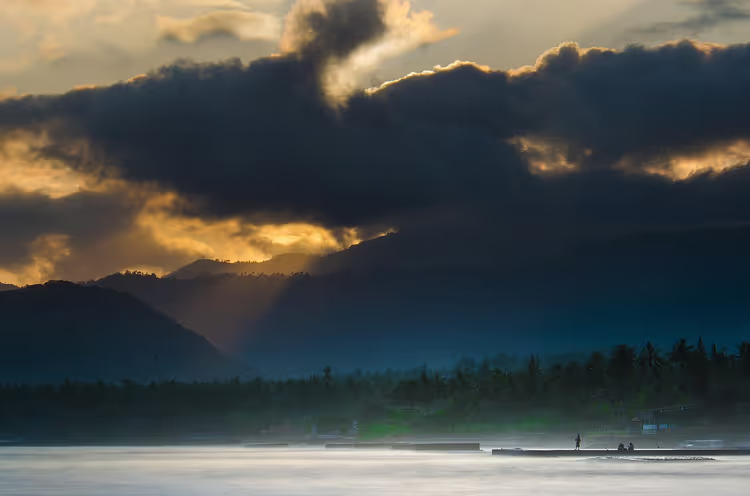 © Arnas Goldberg · CC BYPhoto: Arnas Goldberg, CC BY (https://creativecommons.org/licenses/by/3.0), Wikimedia Commons
The best time for diving in Bali
The water temperature in Bali barely changes all year, so the best time for diving is determined by three other factors: visibility, the chance to see certain marine life, and price.
The best visibility lasts from June through October. In the rainy season, the sea is often stirred up, and visibility drops. It is more convenient to look at diving tours and centers on GetYourGuide in advance, especially for popular dates.
The high season has a flip side. Underwater it gets crowded, and you have to share the spot with a crowd of divers. At the famous shipwreck in Tulamben, sometimes you cannot see the vessel itself behind the "bubbles" of other groups. Prices in high season are usually higher than in the shoulder season.
The catch of the low season is different. Dive centers only run trips to distant spots when enough people sign up, otherwise the trip is not profitable for them. But the best time to see mola mola, the huge ocean sunfish, is from July through October. So divers should match their travel dates to a specific goal.
Another reference point is the purpose of the dive itself. For relaxed dives and macro photography, people head to the shipwreck in Tulamben, while for big fish and currents they go east and to neighboring islands. In the shoulder season, check with the center in advance whether a group is heading to a distant spot on your date.
Best time for surfing in Bali
The dry season, from April to October, is considered the best time for surfing in Bali. That is when the famous spots on the west coast and the Bukit Peninsula produce the highest quality and biggest waves. For many surfers, this is the main reason to come during the dry season.
 © John Robert McPherson · CC BY-SAPhoto: John Robert McPherson, CC BY-SA (https://creativecommons.org/licenses/by-sa/4.0), Wikimedia Commons
But popularity comes at a price. In the high season, from July to September, most spots are packed. You can really only get a relaxed session early in the morning. The rest of the time you have to get lucky or look for quieter breaks. Surf camps noticeably raise their prices in the high season. Booking surf camps and lessons on GetYourGuide is cheaper in the shoulder season.
In the rainy season, the picture is different. Be prepared for rain, heat, trash, dirty water, rare sunsets, and high humidity. On the plus side, there are fewer tourists and surfers in the lineup. For many, the biggest problem of the rainy season is the trash. Floating garbage and driftwood in the water become dangerous obstacles. On bad days, the water is simply unsafe for your health.
Because the wind shifts direction in the rainy season, the east coast spots work best: Nusa Dua, Greenbowls, Pandawa, Serangan, Sanur, and Keramas. You can also surf in Kuta and around Canggu. But after heavy downpours the water there is heavily polluted, and on those days it is better not to risk Kuta and Canggu for sanitary reasons.
The strategy for the high season is simple: get up early. At dawn the wind is lighter, the water is cleaner, and the lineup is far less crowded. By midday, both tourists and experienced surfers converge on the top Bukit and west coast spots. If you surf at an intermediate level, look for breaks away from the most hyped ones.
The optimal window for surfing is probably April through June. There are still few tourists and surfers. There is less rain than in winter, so the sea is not as polluted. The wind gradually shifts, and the west coast becomes pleasant to surf. This time is especially good for beginners: the waves are already working, but there are not many people in the water.
⁉️🤔 Frequently asked questions
When is the best time to visit Bali?
The best time is the dry season from April to October. May, June, and September are optimal: dry, green, crowds are still or already smaller, and prices are moderate. July and August are also good weather-wise, but that is peak season with high prices and large numbers of tourists on the island.
Is it worth going to Bali in the rainy season?
You can go if you are not put off by changeable weather. The upsides: fewer tourists, cheaper flights and accommodation, lush greenery, full waterfalls. The catch: trash on the beaches, murky water on the west coast, more mosquitoes, and irregular ferries. Downpours are usually short and come in the afternoon.
Which months are the rainiest in Bali?
The most rainfall occurs from December to February, the peak of the rainy season. In January there are about fifteen rainy days. Officially, the rainy season runs from November to March. In the north and east of the island, around Amed and Pemuteran, it rains less thanks to the surrounding mountains.
When is high season in Bali?
High season falls in July, August, and September. During this time, accommodation and flight prices are noticeably higher, roads are jammed, and the popular southern areas and Ubud are overcrowded. If you are going in these months, book accommodation in advance and choose quieter areas: the north, east, or inland parts of the island.
When is the best time to go for surfing and diving?
For surfing, the best period is the dry season, especially from April to June, when the west coast and Bukit spots are working. For diving, the best visibility lasts from June to October, and mola-mola sunfish are more commonly seen from July to October. In the rainy season, the island's east coast spots come to the rescue.
In short: what to book
If you are choosing a month for weather and peace, aim for May, June, and September. If you want to save money and do not mind rain, look at the low season from November to March. If you are planning surfing or diving, keep the dry season and early mornings at the spots in mind.
- If you are going in high season (July, August, September): book accommodation in advance on Trip.com.
- If you want activities (rafting, waterfalls, diving, surfing): find tours on GetYourGuide.
Whatever month you choose, plan the essentials in advance and leave room for spontaneity. Bali is good at any time of year if you know what to expect from it.

A small editorial team writing guides for independent travel. We travel ourselves, but we haven’t been everywhere, so we check prices, opening hours and how to get there against official sources.