
















Vatican library: who gets into the reading room and what is inside
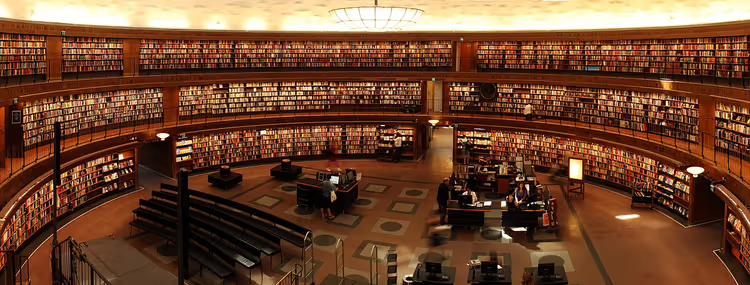
The Vatican Apostolic Library is open to scholars but closed to tourists. An ordinary traveler cannot get inside: you need academic credentials and a confirmed research topic. So in Rome, the library is seen differently, through the ceremonial halls of the museum complex.
This is one of the oldest public libraries in Europe. Popes built its collections over centuries, and the holdings survived relocations, looting, and Napoleon's removal of books.
Ad: this text contains affiliate links, we earn a commission from them, the price for you does not change.
The Vatican Library: key facts
The Vatican Apostolic Library was founded by Pope Sixtus IV in 1475 (according to the library's official website). The reading rooms are open only to researchers, while the library's historic halls can be seen as part of a visit to the Vatican Museums.
💡 In short:
- The library became public in 1475 and is considered one of the oldest in Europe.
- Only researchers can enter the reading rooms; tourists are not admitted.
- The reading rooms are open Monday through Friday, from 9:00 to 17:20 (as of 09/2026, official website).
History
The first book collection of the Roman church dates back to the 4th century, and the position of librarian appeared at the end of the 8th century (according to the library's website). In 784, Theophylact received the title of librarian under Pope Adrian I. The early papal collection was dispersed in the first half of the 13th century, and its remnants were moved from Perugia to Assisi and then to Avignon, losing manuscripts along the way.
The library's modern history begins after the popes returned to Rome in 1377. Pope Nicholas V decided to open the collected Latin, Greek, and Hebrew manuscripts to scholars. Under him, the collection grew from 350 to about 1,200 manuscripts (according to the official history page).
Nicholas V's idea was completed by Sixtus IV. The bull Ad decorem militantis Ecclesiae of June 15, 1475 officially established the library, and Bartolomeo Platina became its first librarian. The holdings grew quickly. In 1475 the collection had 2,527 manuscripts, and by 1481 already 3,498 (according to the Vatican Library website).
By the end of the 16th century, the previous premises were no longer sufficient. Between 1587 and 1589, Pope Sixtus V commissioned the architect Domenico Fontana to build a new structure (according to the BAV history page). The upper floor housed the Salone Sistino, 70 meters long and 15 meters wide, with two naves.
In the 17th century, entire private libraries entered the holdings: the Palatine Library from Heidelberg, the collection of the Dukes of Urbino, and the collection of Queen Christina of Sweden. In the 18th century, the numismatic department (Medagliere), Museo Sacro, Museo Profano, and Gabinetto delle Stampe were established. Papal expeditions and purchases continually expanded the collection.
During the Napoleonic years, the library was looted and thousands of books and documents were taken to France. After the Congress of Vienna in 1815, France returned what had been stolen (according to the Apostolic Library website). At the end of the 19th century under Leo XIII, a large reading room and a manuscript restoration laboratory were opened.
Description of the halls
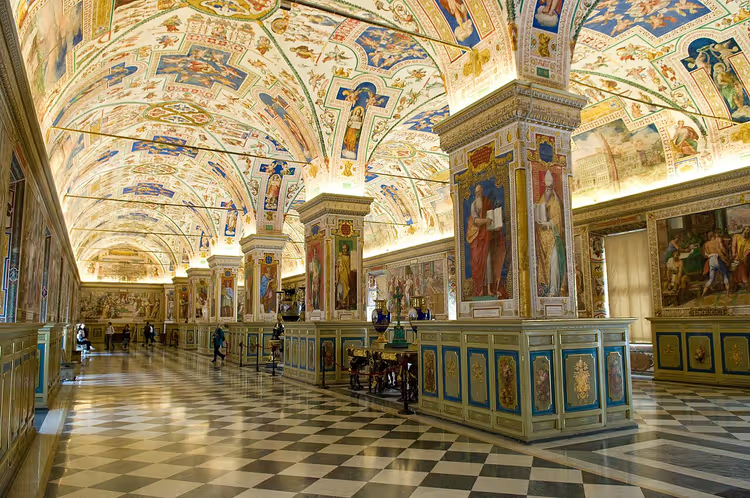
The library occupies part of the Vatican Palace, and its ceremonial halls face the Belvedere Courtyard (according to the history section on the library's website). The main historic hall is the Salone Sistino. Its ceiling was painted by Renaissance masters, and the tall windows let in plenty of light.
 © Michal Osmenda from Brussels, Belgium · CC BY-SAPhoto: Michal Osmenda from Brussels, Belgium, CC BY-SA (https://creativecommons.org/licenses/by-sa/2.0), Wikimedia Commons
The first four rooms divided the collections by language and access: Latin, Greek, secret, and papal. The secret room held manuscripts that were not issued to readers. Documents could only be read on site and under the supervision of a staff member.
Among the artistic treasures, the ancient fresco Nozze Aldobrandini stands out, with its scene of a wedding rite. Its subject is interpreted in different ways, and there is no single accepted version. Display cases here also hold the first printed Bibles and illuminated manuscripts from the 8th to 10th centuries.
The vaults of the Salone Sistino are supported by six massive columns that divide the hall into two naves. Cabinets along the perimeter are filled with old books. The walls and ceilings of the halls are decorated with panels depicting biblical scenes.
Secrets and the secret archive
Beneath the library's reading rooms lie closed storage vaults. Under Pope Paul V, the papal archive was separated into its own institution, the Vatican Secret Archive (according to the library's archive page). Since 2020 it has been called the Vatican Apostolic Archive. It holds the popes' correspondence with monarchs, court records, and documents concerning European states.
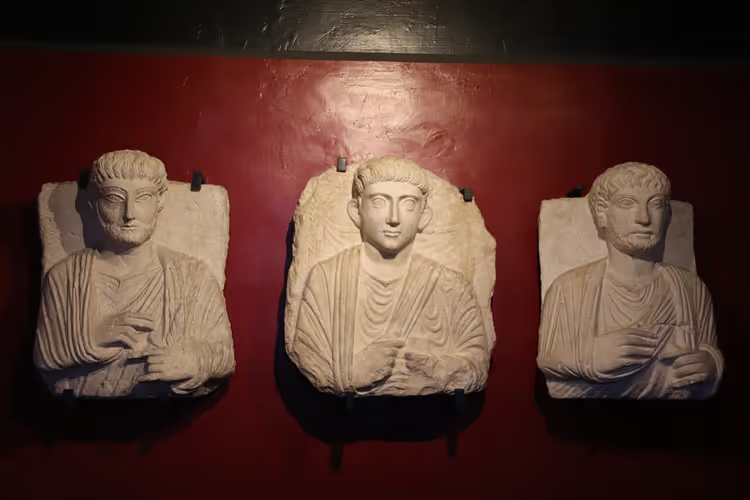
Many legends surround the archive: that it contains scrolls from the Library of Alexandria, a map of Inca gold, or traces of aliens. These stories have no official confirmation, and they cannot be presented as facts. The actual archive holds correspondence with royal courts, marriage documents, and materials from church proceedings.
What the collections hold today
Today the library holds more than a million printed works and tens of thousands of manuscripts (according to the collections page). Added to these are old maps, coins, medals, engravings, and works of art.
Much has been digitized and is available free of charge. On the DigiVatLib portal you can page through scanned manuscripts, incunabula, and early printed books without registering for the reading room.
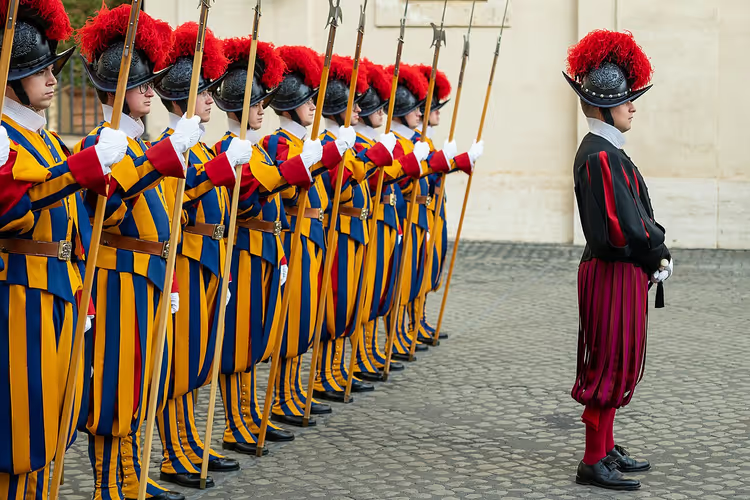
The territory of the Vatican is guarded by the Swiss Guard, and the reading rooms are monitored by automated security systems. Access to rare materials is granted according to regulations, not at the visitor's request.
Tickets, hours, and access
The library's reading rooms are open Monday through Friday, from 9:00 to 17:20 (according to the library's site for readers). Admission is free, but only for readers with verified qualifications: researchers, university faculty, and doctoral students.
There are no regular tours of the library. Access to the historic halls is granted only occasionally, for special events and institutional initiatives. So tourists are left with the Vatican Museums, the complex of which includes the library.
The Vatican Museums are open six days a week; get your ticket in advance with a fixed entry time (as of 09/2026, official museums site). Without a reserved time slot in summer, you will have to stand in line. Book Vatican Museums tickets with a fixed entry time online.
Tours and tickets in Vatican Museums
Guided tours, skip-the-line tickets and activities — most offers can be cancelled free of charge.
See offers on TiqetsThe widget loads once you give your consent.
Location and how to get there
The library is located in the Vatican, in the palace between the Belvedere Courtyard and the Biblioteca courtyard. Address: Cortile Belvedere, 00120 Città del Vaticano. It is inside the city walls, next to the entrances to the Vatican Museums.
The closest metro is line A. From Ottaviano station to the entrance is about 400 meters, a five-minute walk (on the map). Cipro station is slightly farther, but more convenient in the morning. Tram 19 and city buses go to Piazza Risorgimento.
Vatican Library on the map
Below is an interactive map with the library's location inside the Vatican. Open it to plan a route from your hotel. The pin places you in the museum complex, where the entrances to the museums and the library converge.
⁉️🤔 Frequently asked questions
Can a tourist visit the Vatican Library?
No. The reading rooms are open only to researchers, and there are no regular tours (according to the BAV visit page, 09/2026). More details in the "Tickets, hours, and access" section.
How much does it cost to enter the Vatican Library?
For readers, entry is free, but you need academic credentials and a recommendation. For tourists, there is no ticket because there is no access. If you want to see the complex from the inside, buy a Vatican Museums ticket with a fixed entry time.
What is held in the library's collections?
Printed publications, manuscripts, old maps, coins, medals, and engravings (according to the collections overview). The size of the collections is described in the "What is held in the collections today" section.
How do I get to the library?
The most convenient way is metro line A to Ottaviano station. Other options are in the "Location and how to get there" section.
When are the reading rooms open?
Monday through Friday, from 9:00 to 17:20, according to the library's official calendar. More details in the "Tickets, hours, and access" section.
In short: what is worth booking
The library serves specialists, so plan your trip around the museums. If you are a researcher, prepare your documents for a reader card in advance. If you are a tourist, take a morning slot at the Vatican Museums and leave St. Peter's Basilica for the evening.
If you have academic status: get free access to the reading room. If you want to see the halls of the complex: book your Vatican Museums entry online. If you are traveling with family: choose a morning slot and allow two to three hours.
Book your Vatican Museums entry in advance to avoid standing in line.

A small editorial team writing guides for independent travel. We travel ourselves, but we haven’t been everywhere, so we check prices, opening hours and how to get there against official sources.