
















St. Peter's Basilica in Rome: entry, opening hours and dome tickets
St. Peter's Basilica in the Vatican is open every day, and admission is free. It is the largest Christian church in the world: Mass is celebrated here right at the tomb of the Apostle Peter. In summer, the line for the metal detectors stretches across the entire square. Climbing the dome is paid, and the dress code means you will not be allowed in wearing shorts or with bare shoulders. We have gathered the essentials for your visit: opening hours, dome climb prices, how to get there from the metro, and the masterpieces inside.
Ad: this text contains affiliate links, we earn a commission from them, the price for you does not change.
History of the basilica's construction
💡 In short:
- The basilica is open daily; in summer from 7:00 AM to 8:00 PM (as of 09/2026, basilica opening hours).
- Climbing the dome costs €17 by stairs or €22 by elevator (as of 09/2026, dome climb prices).
- You can reach the basilica by metro to Ottaviano station on line A, then walk.
- Get your dome ticket in advance: without a time slot you will stand in line on the square.
- Prices and opening hours: 09/2026, verified on the official website
The history of the basilica begins with the execution of the Apostle Peter. In the 1st century, Rome was ruled by Emperor Nero, and condemned prisoners were executed on this hill. In the year 64, a fire swept through the city, and Nero blamed it on the Christians. The Apostle Peter, a disciple of Christ who received the nickname "rock" (petros in Greek), was crucified here. He was executed upside down and buried on the slope of the hill. Later, Christians erected a memorial wall at the burial site.
 © Alvesgaspar · CC BY-SAPhoto: Alvesgaspar, CC BY-SA (https://creativecommons.org/licenses/by-sa/4.0), Wikimedia Commons
In the 4th century, Emperor Constantine legalized Christianity. The first basilica was founded over Peter's grave. The old church stood for more than a thousand years and fell into disrepair. Around 1500 it was demolished, and Pope Julius II commissioned Donato Bramante to build a new one. The design called for a huge building under a massive dome. The architect's premature death halted the work: the architects who followed never agreed on its appearance.
In 1546, Michelangelo took charge of the construction. He returned to Bramante's idea and envisioned the church in the shape of a Greek equilateral cross. The dome rests on a tall drum with columns. The arrival of the Baroque style required a great deal of space for worshippers. The nave was lengthened and several chapels were added. In 1626, Pope Urban VIII solemnly consecrated St. Peter's Basilica.
Architecture and facade of the basilica
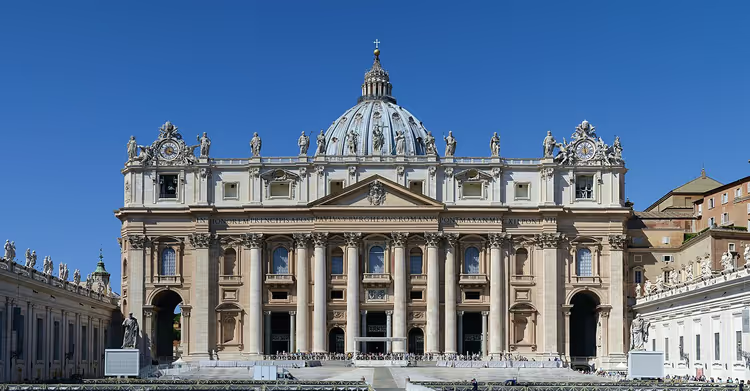
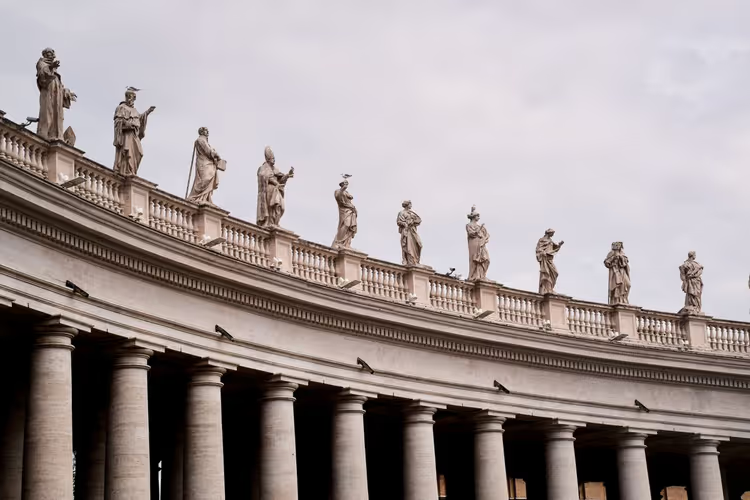
An elliptical square leads to the basilica, bordered by a four-row colonnade. An obelisk rises in the center of the square. The grandeur of the church is felt even from outside, and the facade opens before you across the full width of the square. The main dimensions of the basilica are listed in the table below.
Parameter | Value |
|---|---|
Length of the basilica | about 211 m |
Height of the dome with the cross | 136 m |
Capacity | about 60,000 people |
Columns of the colonnade on the square | 16 m |
The facade was built in the 17th century by the architect Carlo Maderno. It is decorated with pilasters and consists of two tiers with an attic. Five bronze doors are located at the bottom, their panels decorated with scenes from the Old Testament. Each door has its own name: the Door of Good and Evil, of Death, of the Sacraments, of Filarete, and the Holy Door. Above them nine windows are visible, three of them with balconies. The attic is edged with a balustrade and crowned with five-meter statues of Christ and the apostles. Statues of Saints Peter and Paul stand on either side of the facade.
Interior and main masterpieces
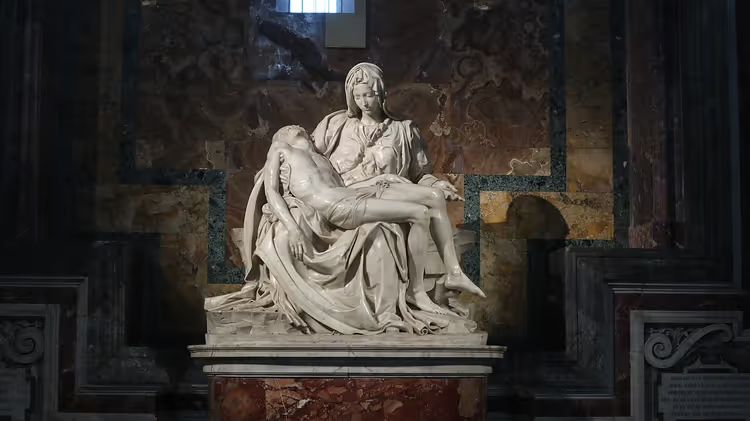
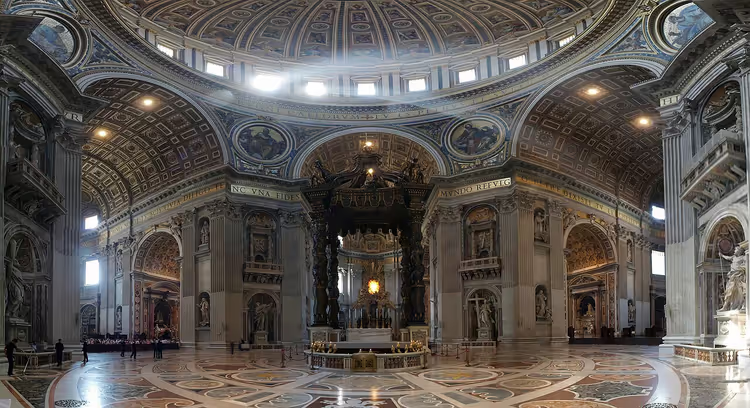
Inside, the basilica is striking in its scale and decoration. The walls and ceilings are covered with bas-reliefs and sculptures, and the high arched vaults lead to the chapels. Tombs of popes line the naves. The Pietà is also here, Michelangelo's only signed work: the Virgin Mary holds Christ taken down from the cross on her lap. The figures are carved from a single block of marble, and the sculpture is protected by bulletproof glass.
 © Maksim Sokolov (maxergon.com) · CC BY-SAPhoto: Maksim Sokolov (maxergon.com), CC BY-SA (https://creativecommons.org/licenses/by-sa/4.0), Wikimedia Commons
Statues recalling the Passion of Christ are installed in the niches of the pilasters under the dome. You will see Saint Longinus with the spear, Saint Veronica with the veil, and Saint Helena with the cross. The inner surface of the dome is decorated with mosaics of the evangelists with their symbols: Mark with a lion, John with an eagle, Matthew with an angel, Luke with an ox.
On the frieze, a Latin inscription in gold tells of Christ's charge to the Apostle Peter. The bronze statue of Peter enthroned remains the most venerated sculpture in the basilica. Pilgrims kiss the foot extended forward. The apostle holds a key, and his right hand is raised in a gesture of blessing.
Bernini created two magnificent tombs here. The monument to Urban VIII shows the pope with his hand raised. For Alexander VII, the master placed a praying figure surrounded by allegories of truth, justice, mercy, and prudence. The Altar of the Transfiguration of Christ repeats the composition of Raphael's painting.
In the depths of the apse stands the Chair of Saint Peter. It is a bronze throne, inside which an old wooden chair is preserved: according to tradition, the apostle sat on it while preaching. The throne is surrounded by statues of theologians of the Latin and Greek churches, and above it the dove of the Holy Spirit is visible surrounded by angels.
The relics of Pope Leo I rest in one of the chapels. Above the shrine, a white marble relief shows Leo putting the army of the Huns to flight with a single cross in his hands. The Chapel of Saint Sebastian deserves special attention, with Domenichino's painting of the martyrdom of the Roman legionary.
Tomb of Saint Peter and Bernini's baldachin
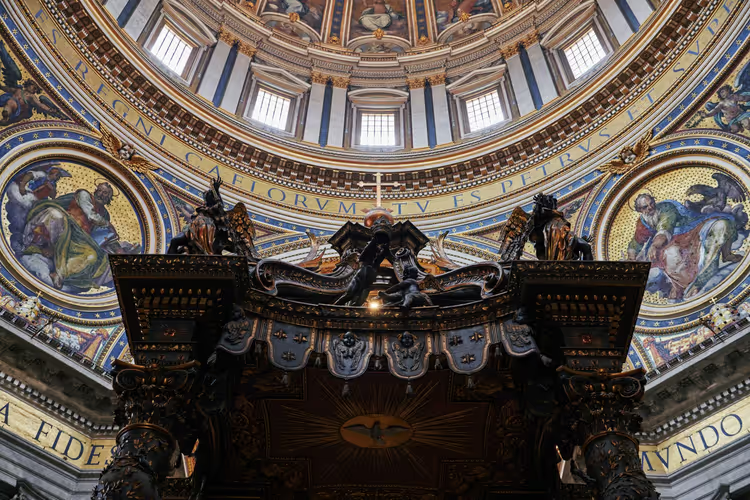
The basilica's greatest treasure is the tomb of the Apostle Peter. In the center of the church rises an altar with unquenchable lamps, and beneath it lies the apostle's grave. Two semicircular marble staircases lead down to it, descending to the level of the ancient Constantinian basilica. In 1939, excavations began here on the initiative of Pope Pius XII. Researchers found a necropolis with the apostle's remains. The altar is covered by Bernini's baldachin on four twisted bronze columns, built between 1624 and 1633. Sculptures of angels stand at the top of the structure.
 © Patrick Landy ( FSU Guy ( talk )) · CC BY-SAPhoto: Patrick Landy ( FSU Guy ( talk )), CC BY-SA (https://creativecommons.org/licenses/by-sa/3.0), Wikimedia Commons
Tickets, opening hours, and climbing the dome
Entry to St. Peter's Basilica is free. From June 1, the basilica is open from 07:00 to 20:00; in other months it closes earlier (as of 09/2026, hours page). Climbing the dome is paid: €17 by stairs or €22 by elevator (as of 09/2026, dome tickets). Dome hours are seasonal: in summer from 07:30 to 18:00, in winter from 07:30 to 17:00. Guided tours run on weekdays from 09:30 to 17:30, and on Sundays from 13:30 to 15:30 (as of 09/2026, tour schedule).
Come at opening time. By 11:00, the line for entry and for the dome is at its longest. The dress code is strict: shoulders and knees must be covered. In summer, bring a light wrap, otherwise you will be stopped at the security check.
- Who it's for: those who want to see the main church of the Catholic world and the panorama of Rome from the dome.
- Not for: those looking for museum-like quiet. It is always crowded here.
It is more convenient to book dome tickets and tours in advance.
Tours and tickets in St. Peters Basilica
Guided tours, skip-the-line tickets and activities — most offers can be cancelled free of charge.
See offers on TiqetsThe widget loads once you give your consent.
If you want a guided tour of the basilica and the Vatican, check out tours on GetYourGuide.
Where St. Peter's Basilica is located
The basilica stands on St. Peter's Square in the Vatican, on the right bank of the Tiber. The most convenient way to get there is by metro: line A, Ottaviano station. From the exit to the colonnade it is about 700 meters, a 10-minute walk (according to the map). From Termini station, a direct line runs here without transfers. Buses and a tram stop near the square, but at peak hours they get stuck in traffic. From the center you can walk here in half an hour across the bridge. Enter from the square and keep to the right side: that is where the security checkpoints are and there is less crowding.
St. Peter's Basilica on the map
The map below shows how the basilica, the square, and the Ottaviano metro station are connected. The dome entrance is on the north side of the basilica, by the colonnade on the right.
⁉️🤔 Frequently asked questions
How much does it cost to enter St. Peter's Basilica?
Entry to the basilica itself is free, no ticket needed. The only paid part is the dome climb: €17 by stairs or €22 by elevator (as of 09/2026, booking site). The line goes through metal detector gates, so allow extra time.
Do I need to book a dome ticket in advance?
In summer it's better to book online: you pick a specific time slot and skip the ticket office line at the colonnade. In winter lines are shorter, but weekend slots still sell out. Take an early time: by midday the viewing platform gets crowded.
How do I get to the basilica from Termini station?
Take metro line A and get off at Ottaviano station. It's a direct line with no transfers, and the ticket works for both the metro and city buses.
What is the dress code at St. Peter's Basilica?
Shoulders and knees must be covered. Shorts, tank tops, and short skirts won't get you past the entrance. Bring a scarf or light wrap: Rome is hot in summer, and inside you'll be asked to cover up. This is an active church, not a museum.
How long does a visit take?
Allow about two hours for the basilica itself: the cathedral is enormous, and without rushing you can see the chapels, the Pietà, and the apostle's tomb. The dome climb adds another hour. If you're going on to the Vatican Museums, leave the basilica for a separate day.
In short: what's worth booking
If you want to climb the dome without waiting in line, book a slot in advance. A guided tour of the basilica and the Vatican saves you from hunting for the entrance and tells the story behind every masterpiece. For a self-guided visit, free entry to the basilica is enough.
The rest is up to you: book a dome slot in advance on GetYourGuide, and arrive at the basilica entrance when it opens.

A small editorial team writing guides for independent travel. We travel ourselves, but we haven’t been everywhere, so we check prices, opening hours and how to get there against official sources.