

















Wadden Sea on foot: how to walk the seabed and return before the tide
At low tide, the bottom of the North Sea is exposed for kilometers. Wet sand opens up in front of you, and you really can walk on it. The German part of the Wadden Sea is divided into three national parks and is a UNESCO World Heritage Site. Walking on the seabed is good for your feet and free, but it does not forgive mistakes. Below are the rules that apply along the entire German coast from Cuxhaven to Sylt.
Ad: this article contains affiliate links, we earn a commission if you book through them, at no extra cost to you.
What the mudflats are and why people walk on them
💡 In short:
- Only do long mudflat crossings with a licensed guide: tidal creeks cut off your route faster than you think.
- Plan to set out 2 hours before low water, as recommended by the Wadden Sea National Park.
- Wear closed shoes with flexible soles and bring a rain jacket, spare clothes, and water.
- Safety rules and departure times: 09/2026, checked on the official park website.
The mudflats are a strip of seabed that is exposed at low tide. You can walk on them in any season, but you need to prepare even on a calm day. Soft sand massages your feet, and the North Sea air is full of salt. Guides lead groups year-round, but ground conditions and weather vary greatly from month to month.
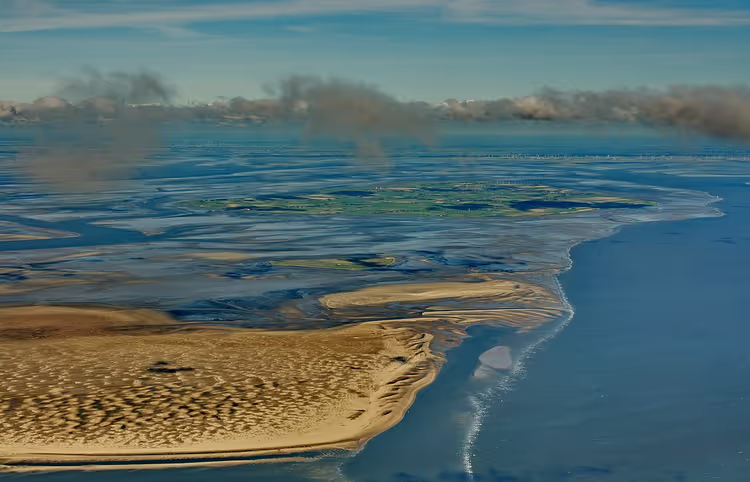 © Ralf Roletschek · CC BY-SAPhoto: Ralf Roletschek, CC BY-SA (https://creativecommons.org/licenses/by-sa/3.0), Wikimedia Commons
Germany's largest national park
There is one Wadden Sea, but it has three national parks: Schleswig-Holstein, Hamburg, and Lower Saxony. The Schleswig-Holstein section is the largest protected landscape between the North Cape and Sicily. The entire German coast is a UNESCO World Heritage Site (according to the Wadden Sea National Park). For families with children, the mudflats are almost ideal: you walk on the seabed and pay no entrance fee. But only if you respect the timing and the rules.
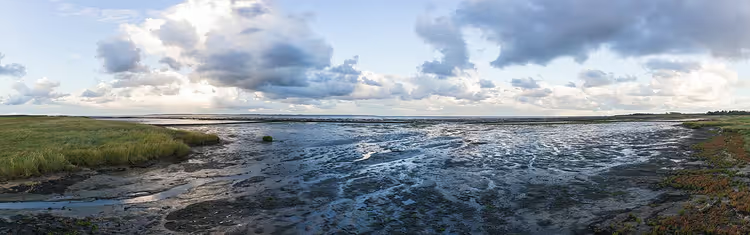 © Frank Schulenburg · CC BY-SAPhoto: Frank Schulenburg, CC BY-SA (https://creativecommons.org/licenses/by-sa/4.0), Wikimedia Commons
Main dangers: tidal creeks, fog, and thunderstorms
People are regularly rescued from the mudflats. Off the coast of Amrum, a group of tourists got into trouble when the incoming tide made a tidal creek impassable. An experienced guide called the rescuers, but part of the group had already become hypothermic.
Tidal creeks (Priele) are narrow water channels between sandbanks. They come up to your waist, and with the tide they become deep and fast. At low tide, not all creeks dry out completely. If such a creek lies between you and the shore, head back early.
In fog, the shore disappears from view within minutes, so walks in heavy fog are usually canceled. In a thunderstorm, in the dark, and in a storm, you have no business being on the mudflats. If you want to go without a guide, stick to a short walk along the shore: you will still feel the seabed there.
Book your guide and group in advance, especially in summer: Wadden Sea tours on GetYourGuide.
What to bring and what shoes work
Going barefoot on soft sand feels best, but closed shoes are mandatory. On creek crossings and sandbanks you will encounter sharp shells. A cut on your foot will ruin your whole trip.
Bring sturdy sneakers or old canvas shoes with flexible soles. You can wear them with socks. The national park specifically recommends lightweight canvas, and rubber boots are not suitable: they will fill with water. Cheap plastic sandals from souvenir shops offer almost no protection from shells.
Wear clothes you do not mind getting wet. Shorts and a T-shirt work, since creeks sometimes reach your waist. A rain jacket, spare clothes in a waterproof bag, and sunscreen will not hurt. Open areas are often cool and windy, so a warm sweater and a hat are also useful. Plus a full bottle of water and a small snack.
When to go out on the mudflats: tides and the calendar
Set out 2 hours before low water, as stated in the official national park recommendation. That way you can cover the whole route at low tide and get back to shore before the water rises. If a tidal creek remains between you and the shore, leave before the moment of low water, because after that it will become deep.
Check the schedule in the tide calendar. Local calendars are published by tourist offices, regional newspapers, and coastal town websites. The Federal Maritime and Hydrographic Agency (BSH) publishes a calendar that covers the entire coast: BSH tide tables.
Where to walk on the seabed: Cuxhaven, Neuwerk, Sylt, and Föhr
You can start from the mainland, from the Halligen, or from the islands. The classic route goes from Cuxhaven to the island of Neuwerk: 12 km across the seabed, from Lower Saxony into Hamburg (according to the Cuxhaven tourist office).
Crossings from Föhr and Sylt are also popular, and Denmark and the Netherlands have their own mudflat sections. One thing matters: it is always the North Sea, because on the Baltic the tides are too weak and the seabed there is almost never exposed.
Getting to the coast is easy by train, check tickets in advance: trains to the North Sea on Trip.com.
Who you will see in the Wadden Sea
The Wadden Sea is a huge feeding ground. Lugworms and mussels live in the sediment, and birds feed above the sandbanks. Sometimes gray seals lie on the sandbanks. Their colonies are found between Borkum and Baltrum, near Amrum, Helgoland, and Juist, and the largest is in the western part of the Dutch Wadden Sea.
In the latest 2025/2026 count, researchers recorded 12,497 gray seals and 3,385 pups in the Wadden Sea and at Helgoland (according to the Wadden Sea National Park).
⁉️🤔 Frequently asked questions
Can you walk on the mudflats without a guide?
A short walk on the seabed along the shore at low tide is allowed without a guide, as long as the shore is always visible. A real crossing of the seabed, for example to an island, must not be attempted without an experienced leader. Creeks and fog are dangerous even for people who know the area well.
What shoes work for a mudflat walk?
You need closed shoes with flexible soles. Details in the section "What to bring and what shoes work."
When is the best time to go out on the mudflats?
The departure rule is described in the section "When to go out on the mudflats: tides and the calendar." The exact time can be found in the tide calendar.
Is the walk suitable for children?
Yes, at low tide even small children can walk on the soft sand. Adults need to watch the time and keep the group together. Closed shoes and dry spare clothes are mandatory.
Are walks available in winter?
Yes, the mudflats are accessible at any time of year, but in winter it is colder and gets dark earlier. Bring a warm layer, a hat, and gloves. In fog, thunderstorms, and storms, experienced guides cancel outings, and that is not a formality.
In short: what to book
If you are walking on the mudflats for the first time, start with a short guided walk rather than a multi-kilometer crossing. Check the time in the tide calendar, pack your shoes and clothes, and leave a buffer for the route. After that, you can look forward to the route from Cuxhaven to Neuwerk and the crossings from Föhr. Book a guided walk.

A small editorial team writing guides for independent travel. We travel ourselves, but we haven’t been everywhere, so we check prices, opening hours and how to get there against official sources.