
















What to bring from Germany: 20 souvenirs instead of a fridge magnet
A gift from Germany isn't limited to a magnet with the Brandenburg Gate. German brands take pride in their history. Many good things are sold only at home: perfume, cosmetics, chocolate, toys. Some souvenirs are inexpensive, while others cost a serious amount. The question isn't the price, but what will make someone happy and won't end up gathering dust on a shelf. We've put together twenty ideas and noted where to buy them. You'll find a list by category: from drugstore small items to collectible porcelain. Each item has a short explanation and where to buy it.
Ad: this article contains affiliate links. We earn a commission if you book through them, at no extra cost to you.
How to choose a souvenir from Germany
💡 In short:
- Pick things you can't buy back home: drugstore cosmetics, chocolate from small factories, Meissen porcelain.
- Keep weight in mind: beer, liqueur, and cheese are heavier than they seem, and some items are easier to ship by mail.
- Check export rules: medications and animal products are restricted.
- Addresses and brand selection: 09/2026, as of the German National Tourist Board.
Most souvenirs are sold in brand stores and in the departments of large department stores. Shops near train stations keep prices higher and have a poorer selection. For rare items, it's worth going to outlets and fairs, where goods are sold individually.
The season matters too. In summer, the selection at outlets is wider, and around Christmas, cities fill up with fairs. Before your trip, check store hours: on Sundays in Germany almost everything is closed except fairs, pharmacies, and gas stations.
1. Perfume
 © Викидим · CC BY-SAPhoto: Викидим, CC BY-SA (https://creativecommons.org/licenses/by-sa/4.0), Wikimedia Commons
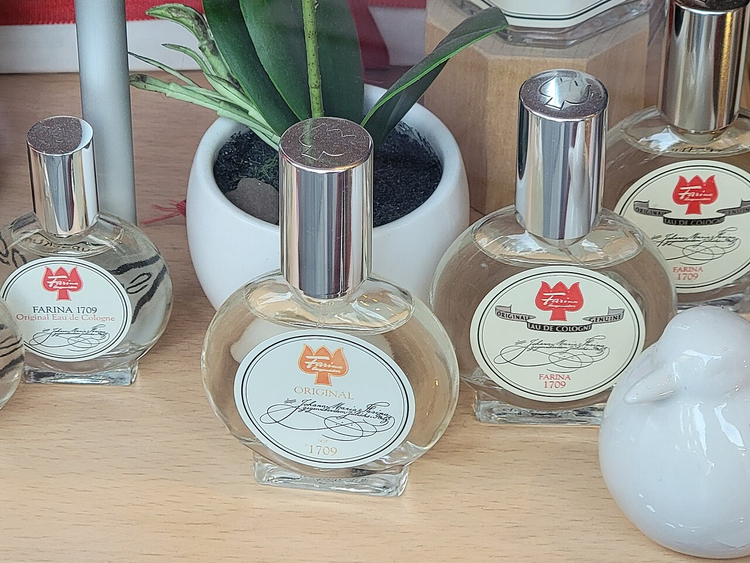
Germany is as well known in perfumery as France, although it developed later. This is where cologne got its name: water from Cologne, or Eau de Cologne, became the first fragrance of a new type. German chemists were also the first to master the synthesis of aromatic substances. That's why in one room you'll find both old houses and modern brands.
Most often people bring classics: Maurer & Wirtz from Cologne and the Berlin brand J.F. Schwarzlose Berlin. They keep recipes that are a century old, and a bottle for little money looks like a museum piece. The modern selection is wider: Hugo Boss, Joop, Escada, Baldessarini, Puma. Hugo Boss has separate lines for business men and for women, so a gift is easy to match to a personality.
It's convenient to buy in the perfume departments of department stores, in duty-free, and at outlets near Berlin or Munich. At an outlet, prices are lower, but the fragrance selection changes every week. If you're buying an expensive brand, compare the price in duty-free before your flight.
- Who it's for: a gift for a colleague, business partner, or relative.
- Not for: if someone doesn't wear perfume, the fragrance risks staying sealed.
- Price: from the budget segment in duty-free to collectible bottles (as of: 09/2026).
2. Medications
 © Steffen Zahn from Berlin, Germany · CC BYPhoto: Steffen Zahn from Berlin, Germany, CC BY (https://creativecommons.org/licenses/by/2.0), Wikimedia Commons
German pharmacies are known for the quality of their products, and relatives often ask you to bring something specific. But the rules for buying and exporting are strict here. You can freely buy over-the-counter small items, while strong medications are sold only with a prescription from a German doctor.
The easiest things to bring are vitamins, cold remedies, and sore throat remedies. For children, people buy cough syrup in sticks, echinacea preparations, and bilberry extract. Antibiotics, heart medications, and painkillers are dispensed by prescription: a prescription from a doctor outside the EU will not be accepted at the pharmacy.
A tourist is allowed to buy medications for the duration of the trip according to a doctor's indications, but not "in reserve." Before your flight, check the list of substances prohibited from import in your own country: it differs from the German one.
German laws protect both the buyer and the manufacturer. The pharmacist will check the prescription and dosage, so a rare medication won't be sold as an ordinary souvenir. If you need a medication regularly, take a supply for the entire trip and keep the packaging with the instructions.
Over-the-counter vitamins and cold remedies are bought most often: they're light and easy for the recipient to understand. Creams and ointments from the pharmacy also work as an inexpensive gift. Don't buy medications without a prescription: an unfamiliar product may not suit you or the person you're bringing it to.
- Where to buy: at an Apotheke pharmacy, not a supermarket.
- The catch: only a basic group of products is available without a prescription.
- Who it's for: for families with children and for those who already know the specific product they need.
3. Cosmetics
Cosmetics in Germany are sold on every corner, from pharmacy shelves to large department stores. The brand selection is its own, and some brands are almost never found where you live. That's why cosmetics rank among the top gift choices.
Pay attention to three brands. German Klapp makes professional skincare and has stayed in German top lists for decades. The creams of the American brand La Mer originally appeared as a burn treatment. Today it's one of the most recognizable luxury creams. The American brand Estée Lauder builds its range around the idea that skincare is accessible to every woman.
Brands like Chris Farrell, Phyris, Rosa Graf, Académie, and Arabesque help round out the set. They cover hair, face, and body care. Many manufacturers focus on natural extracts, so the ingredient list is clear even to a beginner.
Cosmetics work both as gifts and for yourself. Shower sets, hand creams, and masks are inexpensive, so they're easy to give to several people at once. Pharmacy brands are often cheaper than luxury ones, and their formulas are richer. Go for mini formats: the person can try the product and decide for themselves whether they want the full size.
- Who it's for: for women, teenagers, and anyone who takes care of their skin.
- Where to buy: cosmetics departments in department stores and large pharmacies.
- Price: the mid-range segment is affordable, luxury creams cost noticeably more (as of: 09/2026).
4. Clothing and shoes
 © Avda · CC BY-SAPhoto: Avda, CC BY-SA (https://creativecommons.org/licenses/by-sa/3.0), Wikimedia Commons
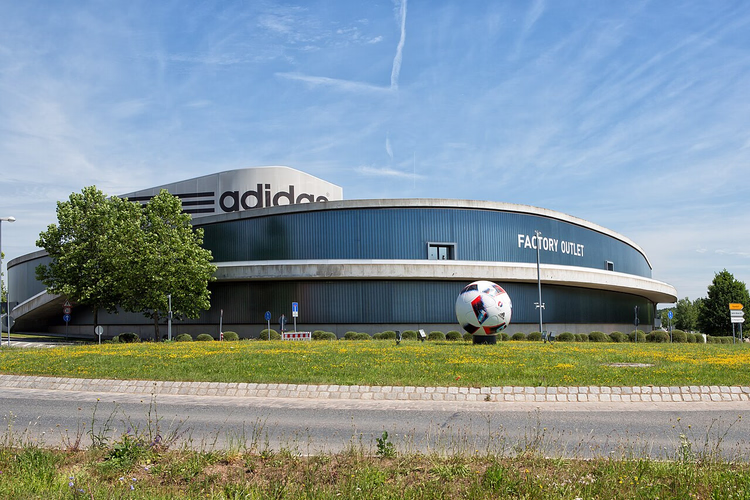
A sweater, dress, or boots from Germany is a nice gift, but buying without preparation is difficult. The German sales system differs from what you're used to: sizes and sales follow their own schedule. But during sale season, prices at outlets drop noticeably, and locals themselves go there for new clothes.
If you need classic-cut items, go to shopping centers and multi-brand stores. T-shirts, jeans, and sneakers from well-known brands cost less there than in boutiques. The quality of German fashion houses is consistent, so an item lasts for years.
Among the brands, three stand out. Hugo Boss has been making elite clothing for over a century and maintains a large catalog, from suits to accessories. Puma focuses on sports: soccer, tennis, cycling, golf. Tamaris makes women's shoes for every season, from classic pumps to sandals and sneakers. Small items like belts and scarves work as an inexpensive gift.
- Who it's for: for close ones, if you know their size and taste.
- The catch: without trying on, it's easy to get the size wrong, and returning from another country is inconvenient.
- Where to buy: outlets, shopping centers, multi-brand stock stores.
5. Horizn Studios bags
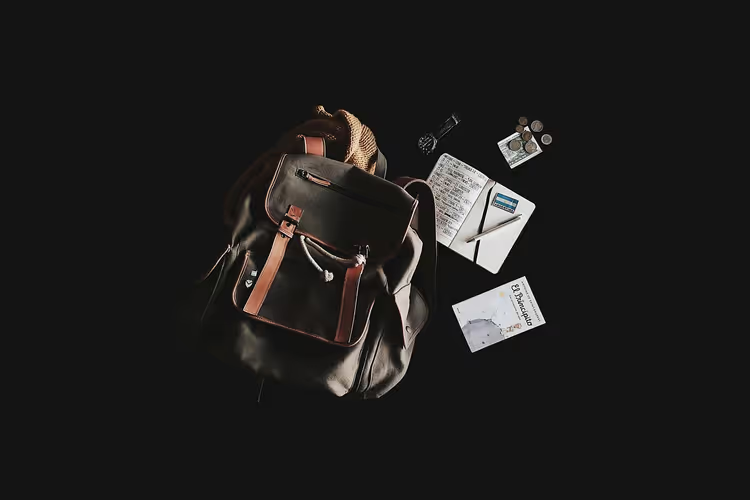
Accessories complete the look, and a bag from Germany takes first place here. The German brand Horizn Studios makes travel suitcases, backpacks, and everyday bags. An elegant look calls for a good bag, and you have plenty to choose from.
The brand is especially proud of its polycarbonate suitcase collection. The same material is used in aviation and aerospace engineering, so the shell withstands impacts in the baggage hold. Inside there is a padded laptop compartment and a built-in power bank with two USB ports. Four quiet Japanese-made wheels keep the suitcase easy to maneuver even on old-town cobblestones.
There are classics too: bags made of natural leather, including crocodile-embossed models. Colors and shapes help you find an option that fits your style. The interior lining is made of durable nylon to protect your tech on the road.
Besides suitcases, the lineup includes city backpacks and crossbody bags. Materials vary from natural leather to lightweight synthetic fabrics. The range of shapes makes it easy to pick a model for a business trip or a short vacation. Before buying, check the hardware and zippers, and keep the receipt: you will need it for returns.
- Who it's for: travelers and anyone who frequently flies with a laptop.
- Where to buy: brand stores and large department stores.
6. Frau Tonis fragrances
Frau Tonis Parfum started as a small Berlin manufactory and quickly became a brand in its own right. The store operates near Checkpoint Charlie, so it is worth stopping by even on a short trip (according to the official website).
The brand is known for unexpected combinations, as if assembled from different eras. Marlene Dietrich's favorite fragrance is built on gasoline and delicate violets. Other compositions combine iris and rose with cinnamon and citrus. There are options with saffron, leather, and night-blooming jasmine. The fragrances are unisex, so they work for both men and women.
There is also a separate "perfume food" collection with names like Grasse a toi and Bogota Berlin. The brand loves an unconventional approach, so a mini bottle as a gift almost always hits the mark. Each bottle comes with a full description of the composition, so choosing is easy even without a salesperson.
In the store you can first test a fragrance and then come back to buy the one you liked. Salespeople help you create your own blend from two compositions, and you get a scent nobody else has.
- Who it's for: those looking for a rare fragrance rather than mass-market.
- Where to buy: the flagship store in Berlin and the online boutique.
7. Meissen porcelain
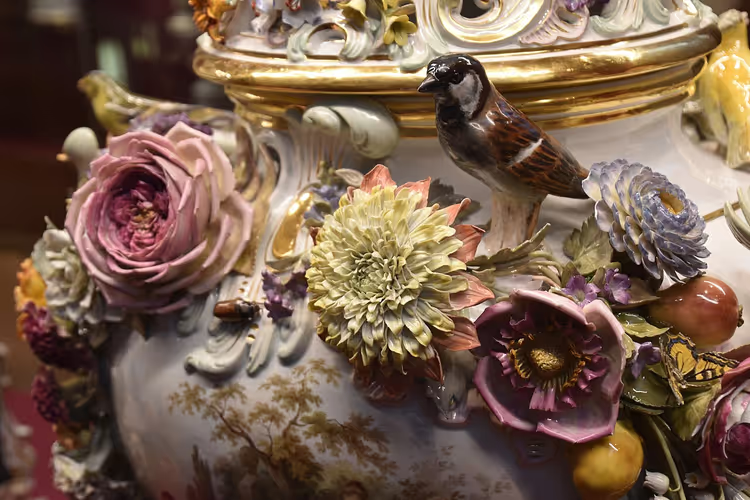
Meissen porcelain has been made in Saxony since the 18th century, and it is one of the most recognizable German brands. Pieces are marked with crossed blue swords, applied with cobalt paint and sealed under glaze. This mark is hard to counterfeit, which is why prices have held up for decades.
The manufactory still paints pieces by hand. Craftsmen guard palette recipes with thousands of shades and work with hundreds of shapes, from dinner services to animal figurines and flower vases. Every paint is prepared by hand, and the design is applied with a brush. Even a musical organ with porcelain pipes is assembled from Meissen parts.
It is best to buy at the brand stores in the town of Meissen near Dresden. While you are there, take a look at the manufactory museum displays: you can see how a design on a dinner service comes to life. You will see the whole process, from clay to finished vase.
- Who it's for: a gift for an anniversary, wedding, or housewarming.
- Price: hand-painted dinner services are expensive, with some reaching tens of thousands of euros (as of 09/2026).
- The catch: porcelain breaks, so carry it in your hand luggage.
8. Football merchandise
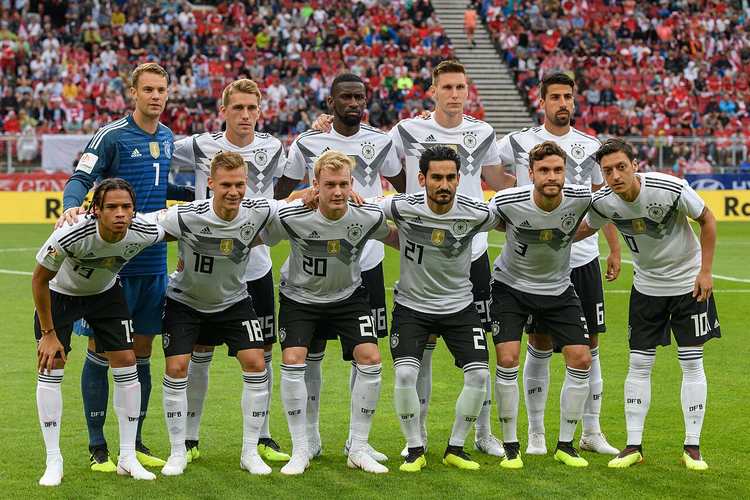 © Granada · CC BY-SAPhoto: Granada, CC BY-SA (https://creativecommons.org/licenses/by-sa/4.0), Wikimedia Commons
Football in Germany has long been part of national pride, and the national team kit sells year-round. Designers stick to tradition: the kit features references to the flag colors and stars for World Cup wins. The national team has played at a high level for over a century.
You can buy everything: jerseys, shorts, balls, caps, backpacks, and keychains. Jerseys often have a player's name and number printed on them, which makes the gift personal. A real ball with team branding means more to any young fan than any toy. The kit is updated every season, and past collections become rare.
Look for merchandise in club shops, sports retail chains, and fan shops near stadiums. Prices are higher on match days, so buy in advance.
- Who it's for: a fan or a child who plays football.
- Where to buy: club shops, sports retail chains, fan shops.
9. Wooden toys
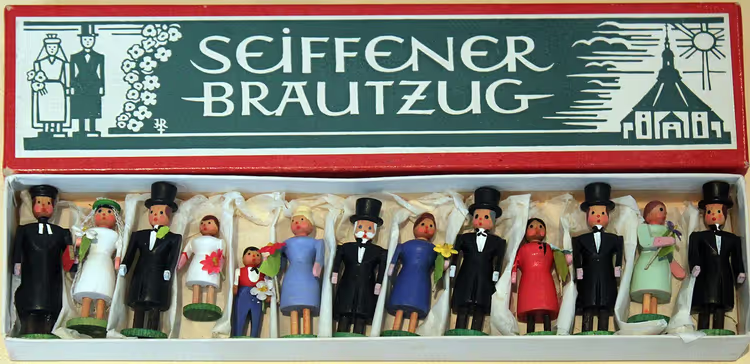 © Anagoria · CC BYPhoto: Anagoria, CC BY (https://creativecommons.org/licenses/by/3.0), Wikimedia Commons
Wooden toys in Germany are made by entire family dynasties, and the craft is still alive today. The classics include gnomes with long boots and pointed caps. Nutcrackers, angels, nativity scenes, and arched candle holders also come from this tradition.
You can see everything in one place at the Strackoland museum shop: the sales floor is packed with carved figures, from tiny gnomes to a life-size nutcracker. Each figure is painted by hand, so two identical gnomes are almost impossible to find. These pieces are passed down and kept as family heirlooms.
For children, go with lines from modern brands: HABA, Gollnest & Kiesel, GOKI, HEIMESS. The paints are safe, so a toy can be chewed on without worry. Wooden puzzles draw in adults too, so you will find a gift for any age.
Besides gnomes, Germany makes wooden blocks, houses, dolls, and Christmas figures. Workshops have preserved their designs for centuries, so recognizable fairy-tale characters pass from generation to generation. Wooden toy sections are found in almost any large shopping center, so you do not need to hunt for a specialty store.
Check the labeling on the packaging: children's lines state the age and material. For toddlers, choose large pieces without sharp corners, and for school-age children, construction sets and puzzles work well. Wooden toys have almost no smell and are easy to wash, so they suit even children with allergies.
- Who it's for: children and a family Christmas gift.
- Where to buy: museum shops, Christmas markets, large department stores.
10. Berlin bear
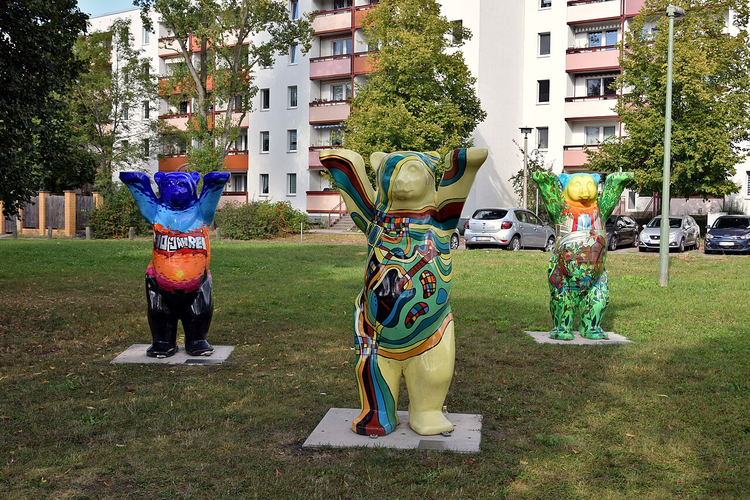
The bear has been a symbol of Berlin for centuries, and its figurines are sold in every souvenir shop. The bear image appears on medieval city documents, and it became fixed on the city coat of arms in the 19th century. The city's bear festival is celebrated in late March.
The best-known project is United Buddy Bears. Painted life-size figures stand in squares and travel around the world. Each one is painted by an artist from its own country, so the same bear looks completely different. During World Cup years, countries received their own bear and dressed it in national costume.
You can buy a figurine and paint it yourself. Part of the sales proceeds goes to children's projects. Some bears have become city ambassadors and decorate embassies, while all you need to do is place one of these little bears by your door at home.
- Who it's for: children and souvenir collectors.
- Where to buy: Berlin souvenir shops.
11. Jewelry
 © Verena Müller ? / F_FRINZEL · CC BY-SAPhoto: Verena Müller ? / F_FRINZEL, CC BY-SA (https://creativecommons.org/licenses/by-sa/4.0), Wikimedia Commons
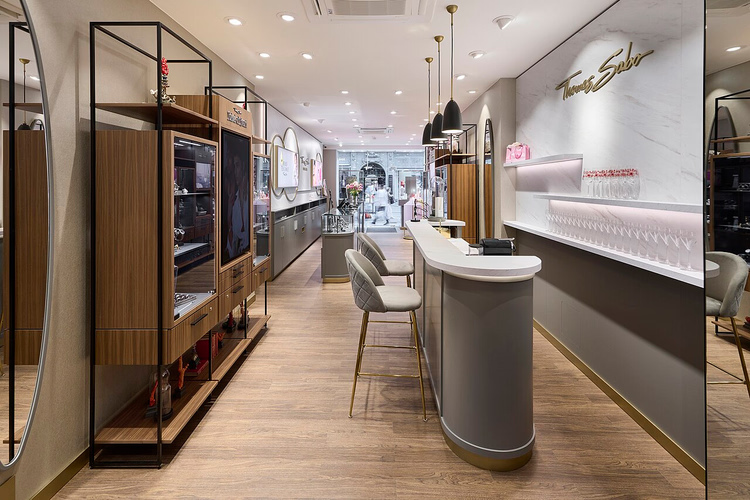
German jewelry and costume jewelry live in two eras. Old brooches and clip-on earrings were made for export with large cabochons and rhinestones, imitating amethyst, turquoise, and emerald. You can find hand-painted porcelain cabochons. Today these pieces are sold as vintage, and they get more expensive every year.
The frames were made of gold, silver, copper, and chrome alloys, and the rhinestones were set using a complex filigree technique. Artificial pearls and Swarovski crystals were used for decoration. Modern classics are defined by Coeur de Lion costume jewelry from Stuttgart: clean design and bold color combinations that are easy to wear every day.
For vintage pieces, head to antique galleries like Antik Bijou. For true craftsmanship, go to Pforzheim. It's the center of the German jewelry industry, home to both workshops and the Diemer store.
Vintage brooches and clip-on earrings aren't just for collectors. You can wear a piece like this every day, and it costs less than new jewelry. Before buying, check the clasp and stones: old pieces often have loose settings.
- Who it's for: lovers of unusual accessories and vintage collectors.
- Where to buy: galleries, jewelry stores, flea markets.
12. Ampelmann traffic light man
 © Berlinuno · CC BY-SAPhoto: Berlinuno, CC BY-SA (https://creativecommons.org/licenses/by-sa/4.0), Wikimedia Commons
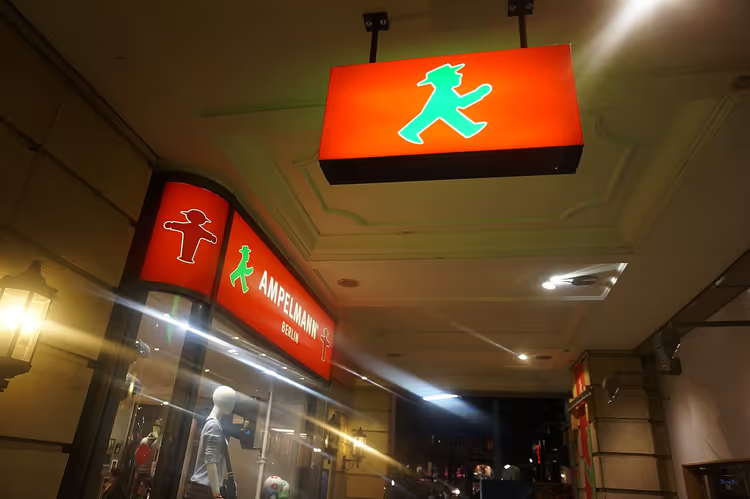
Ampelmann was born on an East German traffic light and became one of Berlin's most recognizable souvenirs. After reunification, he got a second life. Today the brand produces hundreds of products with his silhouette: T-shirts, postcards, toys, and books. Even people who have never been to Berlin recognize his silhouette.
Parents especially love him: the little man in a hat makes it easy to explain crossing rules to children. There are also relatives: pedestrian figures of women in Cologne and a girl with a braid in Dresden. The man in the hat has become the hero of books and cartoons.
In Berlin, you don't need to buy everything at once: magnets, mugs, and bags with Ampelmann are sold in branded stores (address and catalog are on the Ampelmann website). You can also take a photo at the monument to the green man.
- Who it's for: design collectors and families with children.
- Where to buy: Ampelmann branded stores in Berlin.
13. Mini barrel organ
The barrel organ was once an instrument of wandering musicians, and now it has become a souvenir with character. The first examples, resembling an organ, were used to train songbirds and were called "bird organs." Later the instrument was picked up by street performers and spread across Europe.
In Europe, the old instrument is still held in high regard. In July, organ grinders walk along Kurfürstendamm Boulevard in Berlin, and their melodies draw a crowd. In Vienna, similar sounds can be heard near St. Stephen's Cathedral, and in Prague, musicians are found on Charles Bridge. Poets dedicated verses to the barrel organ, and it remains a symbol of urban music.
As a gift, people bring a pocket barrel organ. The Lullaby Mozart J-BOX is considered a classic: wooden body, reliable mechanism, and soft sound. It doesn't collect dust; it's pleasant to wind up and listen to at home.
- Who it's for: those who love music and antique things.
- Where to buy: souvenir shops, fairs, music stores.
14. Chocolate
 © Donald Trung Quoc Don (Chữ Hán: 徵國單) - Wikimedia Commons - © CC BY-SA 4.0 International . ( Want to use this image? ) Or · CC BY-SAPhoto: Donald Trung Quoc Don (Chữ Hán: 徵國單) - Wikimedia Commons - © CC BY-SA 4.0 International . ( Want to use this image? ) Or, CC BY-SA (https://creativecommons.org/licenses/by-sa/4.0), Wikimedia Commons
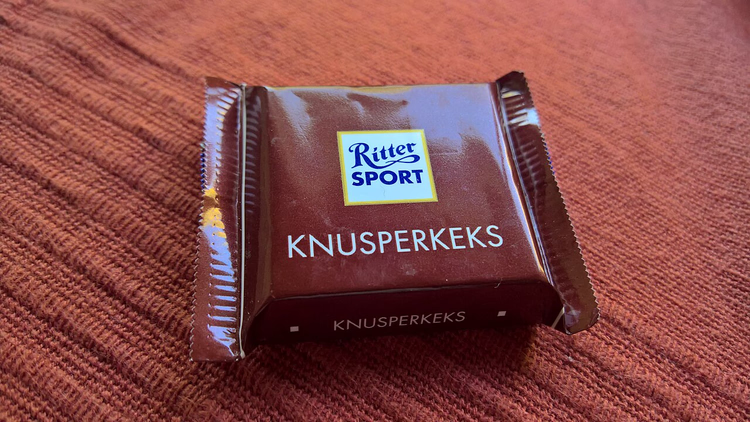
Chocolate from Germany is the most popular thing people bring back, and there's plenty to choose from. Bars are made by both large factories and small manufacturers. Fresh varieties change every season, so pick up what you can't find at home.
Ritter Sport makes that square bar originally designed to fit in a jacket pocket. The squares form a convenient grid, and the brand has been around since 1912 (as of 09/2026, company history). Fillings are constantly updated: from almond and honey to yogurt and coffee.
Hachez makes chocolate from rare cocoa varieties and adds juniper, green pepper, and salted peanuts. At Hussel, a bar becomes a gift: boxes shaped like flowers, chess pieces, and bottles, with flavors including chili pepper. Halloren has been operating since the 19th century and is known for round balls resembling the buttons of Prussian salt workers.
It's worth visiting the Chocolate Museum in Cologne. The building on the Rheinauhafen embankment looks like a ship, and inside they show the entire chain from cocoa bean to finished bar. You can also buy fresh chocolate and rare varieties there.
- Who it's for: a universal gift, especially for children and those with a sweet tooth.
- Where to buy: factory brand stores, supermarkets, the chocolate museum.
15. Beer
 © Trollhead · CC BYPhoto: Trollhead, CC BY (https://creativecommons.org/licenses/by/3.0), Wikimedia Commons
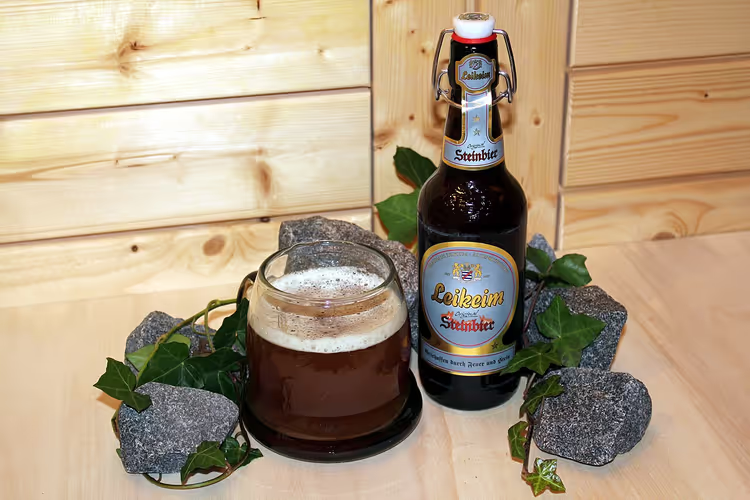
Almost everyone brings beer from Germany, and for good reason. The country leads its neighbors in the number of breweries, with most of them in Bavaria. The selection is huge: light, dark, wheat, smoked, pilsner, and strong Kulmbach beer.
Varieties differ by fermentation method. Top fermentation produces wheat beer and altbier, while bottom fermentation is responsible for lager styles. The recipe is protected by the ancient beer purity law: only water, barley, hops, and yeast are allowed in the drink. That's why the taste of German beer is hard to confuse with anything else.
As a gift, people usually choose recognizable brands. Köstritzer and Berliner Weisse cover the dark and sour profiles, while Paulaner and Löwenbräu hold down the classic Bavarian lager. Kölsch is drunk young: it's bitter and hoppy. Dark beer like Steiger was once brewed for miners as a restorative drink.
- Who it's for: beer lovers and gatherings with friends.
- The catch: glass is heavy and breaks, so bring one or two bottles and order the rest online.
- Where to buy: supermarkets, beer stores, brewery shops.
16. Liqueur
 © Bjørn Erik Pedersen · CC BY-SAPhoto: Bjørn Erik Pedersen, CC BY-SA (https://creativecommons.org/licenses/by-sa/4.0), Wikimedia Commons
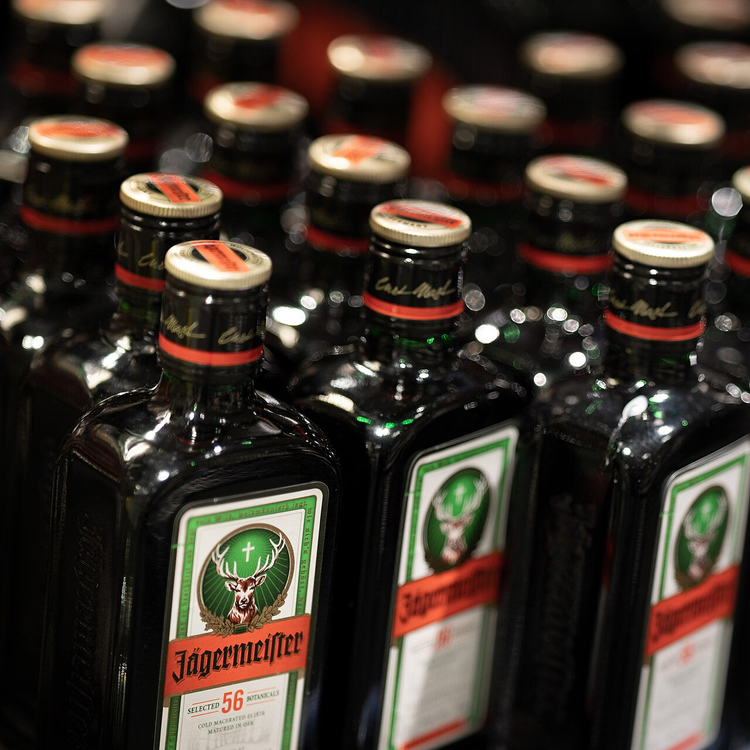
German liqueurs are a separate gift category for those who like herbal and bitter drinks. Many recipes came from pharmacies, where tinctures were first sold as medicine.
Wurzelpeter has been made in Berlin since the 19th century. The name comes from a gnome in a German legend who confused people lost in the forest. It's based on forest herbs, roots, and spices, so the taste is sweetish and strong.
Among bitter liqueurs, Löwenblut, Killepitsch, and Bärenfang are popular. People buy them in small bottles to try different ones without carrying extra weight. The most famous option is Jägermeister: its emblem with a stag and a cross is recognized without a label. The recipe is kept secret and blends dozens of herbs.
- Who it's for: those who drink digestifs and collectors of unusual bottles.
- The catch: the drink is strong and the bottles are heavy, so bring just one.
- Where to buy: supermarkets, duty-free, herbal tincture shops.
17. Cheese
German cheese is underrated, and that's a shame. There are several hundred varieties, and most are made by small private dairies in environmentally clean areas. They work with old recipes and add new technologies.
Start with Emmental. It's made according to a Swiss recipe, but it's also allowed in Bavaria since the name isn't protected by certification. This semi-hard cheese with large holes is good for sandwiches and fondue. Then look at the personalities.
Milbenkäse is made in only one village and aged in boxes with rye flour and mites. Over time it turns yellow, then darkens to brown and almost black. Cambozola combines the softness of Camembert with the blue mold of Gorgonzola. Tilsiter is served with dark beer.
You'll find a real souvenir at the market, where cheese is cut in front of you.
German cheese dairies often operate as family farms. They make small batches and sell their products directly on site, so this cheese won't end up in an outlet. At the market, you can try a slice before buying and take exactly as much as you can carry.
No beer gathering is complete without cheese. Tilsiter goes with dark beer, while a soft blue cheese pairs well with light beer. Ask about the ripening time: aged varieties have a stronger flavor and travel better. For flights, choose vacuum packaging, otherwise your neighbors will smell it.
- Who it's for: those who put together cheese boards.
- The catch: soft and ripening cheeses don't travel well, so choose vacuum packaging.
- Where to buy: cheese dairies, markets, delicatessen sections.
18. Lebkuchen gingerbread
 © Schlurcher · CC BYPhoto: Schlurcher, CC BY (https://creativecommons.org/licenses/by/4.0), Wikimedia Commons
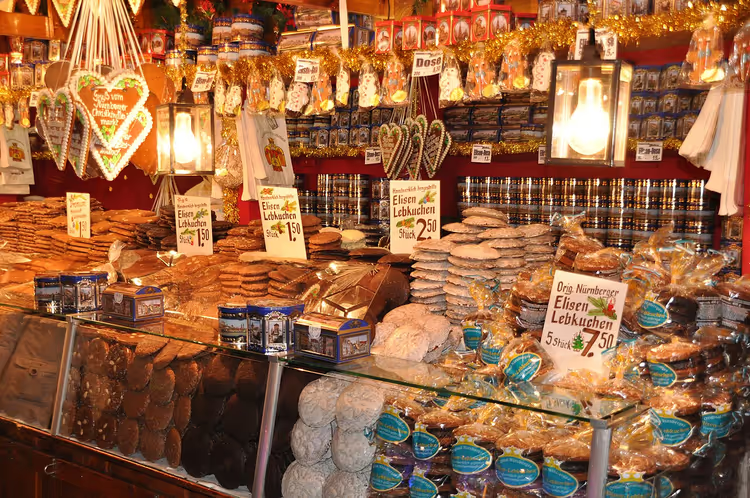
Lebkuchen are known as Nuremberg gingerbread, dark and honey-flavored. They were baked as far back as antiquity, and a written recipe has been preserved in the city museum. Nuremberg gingerbread is considered the gold standard, and it is made according to strict rules.
The dough is mixed with honey and spices, with nuts, candied fruit, and almonds added. Lebkuchen are topped with chocolate or glaze. Shapes can be simple, but figures of people and animals are more common. Sets are beautifully packaged, so it's easy to bring the gingerbread as a gift.
The selection is widest before Easter and Christmas. In December, gingerbread is sold not only in stores but also at fairs, where it is baked right in front of you.
- Who it's for: for a holiday gift and for those who love spices.
- Where to buy: specialty stores, Christmas markets.
19. Bavarian sausages
 © Burkhard Mücke · CC BY-SAPhoto: Burkhard Mücke, CC BY-SA (https://creativecommons.org/licenses/by-sa/4.0), Wikimedia Commons
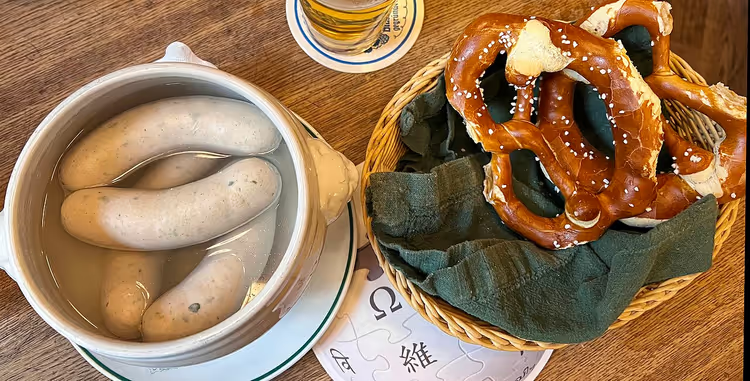
Weisswurst, or Bavarian sausages, appeared in a Munich beer hall by accident. They ran out of sheep casings, and the butcher stuffed the filling into pork casings, which were boiled rather than fried. That's how the white sausage was born, becoming Munich's signature item.
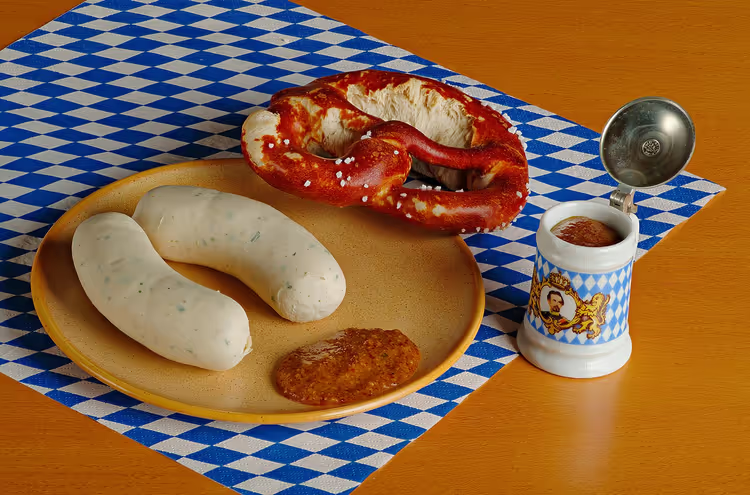
Inside is veal mince, bacon, and spices. The sausages are boiled in salted water without bringing it to a boil, otherwise the casing bursts. They are served with beer, a salted pretzel, and mustard in a three-legged pot. The casing is not eaten: at home the filling is squeezed out, and in a restaurant the sausage is cut and the skin removed.
The white color comes from the veal and bacon, and weisswurst was eaten in the morning back when there was no refrigeration. Today vacuum packaging lets you bring them home.
A weisswurst is small, about the size of a palm, so a portion consists of two. The sausages are served with braised cabbage, fried potatoes, and salad. Buy packages of different weights: that makes it easier to put together a set for several recipients.
Keep the vacuum packaging cold and eat it within the first days after returning. A salted pretzel to go with the sausages is sold in every bakery.
- Who it's for: for foodies and for a dinner with beer.
- The catch: without refrigeration the product spoils quickly, so get the vacuum packaging.
- Where to buy: butcher shops, markets, supermarkets.
20. Mustard
 © Jan Czeczotka · CC BY-SAPhoto: Jan Czeczotka, CC BY-SA (https://creativecommons.org/licenses/by-sa/4.0), Wikimedia Commons
Mustard is served with Bavarian sausages, and in Germany people eat it by the spoonful. German mustard is milder than French, so it doesn't burn but brings out the flavor of meat and bread.
The Bautz'ner brand has a whole lineup of varieties, from sweetish Bavarian to spicy Dijon. Each federal state has its own recipe, passed down as a family tradition. Bavarian mustard includes juniper, caramel syrup, ginger, and pepper.
If you want a souvenir with history, go to Monschau. The shop there makes "royal mustard" according to an old recipe and grinds the seeds on old millstones. The first mustard mills are also preserved in Cologne and Cochem. Mustard and horseradish once replaced expensive overseas spices and served as both seasoning and medicine.
Dijon mustard is considered the most popular in Europe, but German varieties are milder and sweeter. Small jars are easy to give one at a time: the price is low, and there is almost always a use for it. Get several different varieties to set up a home tasting.
Mustard keeps for a long time and takes up no space in a suitcase. Sweet Bavarian goes well with meat, spicy with sausages, and horseradish mustard with fish.
- Who it's for: for those who cook at home and for a gift to go with a cheese board.
- Where to buy: supermarkets, specialty stores, markets.
⁉️🤔 Frequently asked questions
What do people bring from Germany most often?
Most often people get chocolate, beer, cosmetics, and pharmacy products. They are light, inexpensive, and easy for the recipient to understand. For a more substantial gift, people go for Meissen porcelain, Horizn Studios bags, and Coeur de Lion jewelry. Sweets and cosmetics are convenient to pick up at the airport before departure.
Where can you buy souvenirs cheaper?
The biggest discounts on clothing, shoes, and perfume are at outlet centers near Berlin and Munich, where locals shop too. Cosmetics and chocolate are cheaper at supermarkets, while porcelain and jewelry should only be bought at brand stores, where the risk of counterfeits is lower.
What souvenir is good for a child?
Wooden toys, the Berlin bear, and Ampelmännchen figures are fun for kids and safe. A ball with club branding will delight a young fan. For the little ones, get Halloren chocolate or Lebkuchen gingerbread: they come in soft packaging and don't break.
How much money should you budget for gifts?
The range is wide. Gingerbread, mustard, and chocolate are inexpensive, pharmacy cosmetics and liqueurs are moderate, Meissen porcelain and leather bags are pricey. Budget for each recipient separately: that makes it easier to stay within limits and not forget anyone.
In short: what's worth booking
Souvenirs aren't booked, but the trip to get them is planned in advance. If you're doing a short weekend: get sweets and cosmetics, they're light and don't break. Looking for a gift for a colleague: perfume and mustard work well. Need a present for your boss: get Meissen porcelain. Traveling with kids: bring wooden toys and Ampelmännchen. Love vintage: look for brooches and clip-on earrings in antique galleries. A hotel in Berlin, Munich, or Cologne is best booked in advance: see hotels in Germany on Trip.com.

A small editorial team writing guides for independent travel. We travel ourselves, but we haven’t been everywhere, so we check prices, opening hours and how to get there against official sources.