
















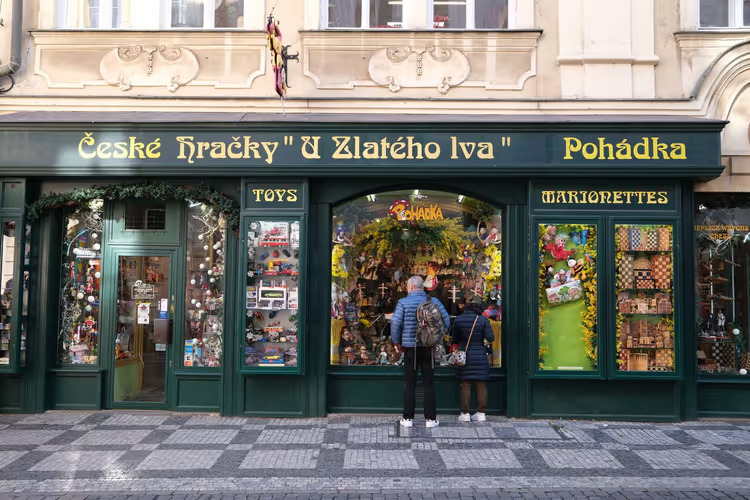
20 Souvenirs from Czechia: becherovka, garnet and bohemian crystal
Not every souvenir from Czechia makes it home. Wafers crumble, glass cracks in a suitcase, beer bottles shatter.
The good news is that Czech gifts rarely break the bank. The right items are sold in regular stores and small shops near the squares. There's just one catch: the selection is huge, and it's really worth deciding in advance.
Below you'll find 20 souvenirs: food, alcohol, cosmetics, jewelry, crystal, and porcelain. For each item, we've noted where to find it, who it suits, and what to consider when buying and transporting it. The selection and producers were checked against the official Czech tourism website (as of 09/2026).
Ad: this article contains affiliate links, we earn a commission if you book through them, at no extra cost to you.
What to bring from Czechia: in short
💡 In short:
- Buy what survives the trip: wafers, gingerbread, liqueur, cosmetics, Krtek textiles.
- Pack liquids in checked luggage, and check with your carrier about sharp objects.
- Carry fragile and heavy items (crystal, porcelain) in hand luggage, wrapped in bubble wrap.
- Selection and producers: 09/2026, verified on VisitCzechia.
This table helps you get oriented: it divides all Czech souvenirs into five groups and suggests where to go for each.
Category | What to buy | Where to look |
|---|---|---|
Sweets | Karlovy Vary wafers, Pardubice gingerbread, trdelník | Confectionery shops, fair stalls, kiosks near the springs |
Alcohol | Becherovka, slivovitz, beer | Supermarkets, brewery brand stores |
Beauty and health | Natural cosmetics, herbal teas, vitamins | Pharmacies, brand stores in Karlovy Vary |
Jewelry | Czech garnet, moldavite | Certified jewelry stores |
Home | Bohemian crystal, porcelain | Factory stores, Karlovy Vary studios |
1. Karlovy Vary wafers
 © VitVit · CC BY-SAPhoto: VitVit, CC BY-SA (https://creativecommons.org/licenses/by-sa/4.0), Wikimedia Commons
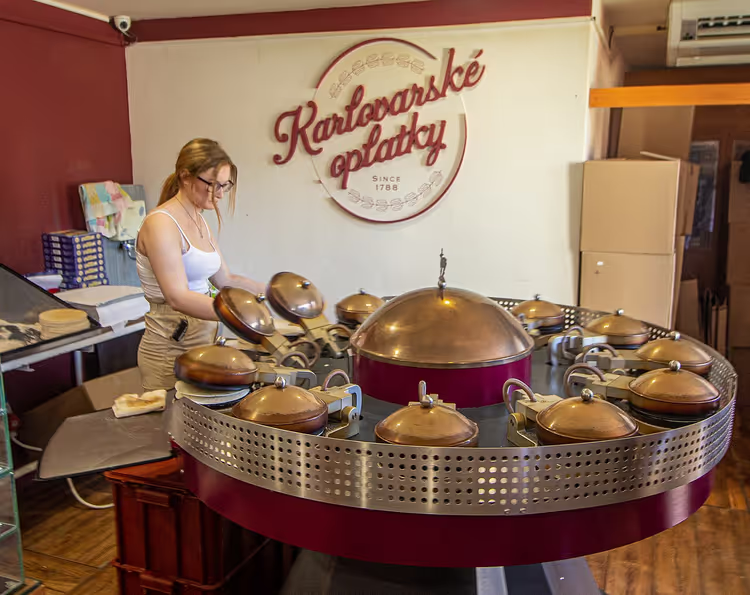
Karlovy Vary wafers (oplatky) have been baked in Karlovy Vary for centuries, and it's not just about the recipe. The dough is mixed with local mineral water, and inside there's a filling: banana, coffee, chocolate, liqueur. The construction is multi-layered, like a small cake, with the confectioner's stamp on top.
There are many fillings, so you can put together a box to match the recipient's taste. The exact recipe is kept secret, and Czechia once defended its right to be called the birthplace of this sweet in court against German producers. Outside Karlovy Vary, the wafers taste different.
- Who it's for: people with a sweet tooth and anyone bringing a gift for the whole office: a box is easy to share.
- Not for: situations where the gift has to survive heat: the filling melts.
- Where to look: central Karlovy Vary, kiosks near the springs, and brand confectionery shops such as Karlovarské oplatky.
2. Pardubice gingerbread
 © DXR · CC BY-SAPhoto: DXR, CC BY-SA (https://creativecommons.org/licenses/by-sa/4.0), Wikimedia Commons
In Pardubice, honey gingerbread and gingerbread houses are made according to a recipe that's about a hundred years old. The dough is mixed with syrup, sugar, and honey, while coriander, anise, and pepper give it the spicy flavor. The finished figures are coated in chocolate or icing and hand-decorated with confectionery pencils.
The gingerbread comes in all kinds of shapes: hearts, flowers, animals, and entire houses with tiled roofs. The ornaments and inscriptions are in Czech, so this gift immediately reveals its country of origin. They're sold at fairs, confectionery shops, and souvenir stores across the country, and gingerbread houses are especially popular with locals.
- Who it's for: those looking for a gift with national character and handmade work.
- The catch: the fragile icing doesn't like being jostled: get a figure in a rigid box.
- Where to look: fair stalls, Pardubice confectionery shops, Christmas markets in Prague.
3. Trdelník
 © Zlerman · CC BY-SAPhoto: Zlerman, CC BY-SA (https://creativecommons.org/licenses/by-sa/3.0), Wikimedia Commons
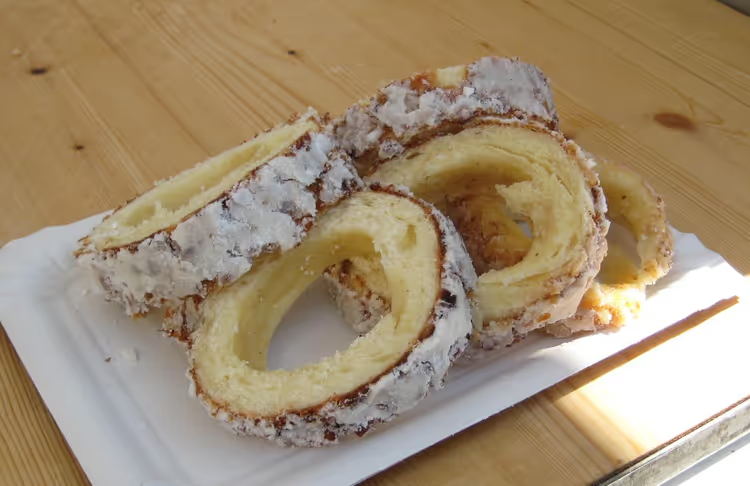
Trdelník (trdelník): yeast dough wrapped in a spiral around a spit and baked over coals. It's topped with nuts, powdered sugar, or vanilla, and filled with ice cream, whipped cream, jam, or chocolate spread.
Trdelníks are baked right on the streets, near central squares, and sold hot. For Czechs, it's also a holiday attribute: according to old tradition, sweet rolls decorate the Christmas table, and at festivals they're given to children and new mothers. Stalls with steaming pastries stand at every fair.
- Who it's for: those who want a snack while walking around, not a gift to take home.
- The catch: in tourist areas they often sell just the empty tube; order the filling separately.
- Where to look: street stalls on squares, confectionery shops, fairs.
4. Hermelín cheese
 © Richenza · CC BY-SAPhoto: Richenza, CC BY-SA (https://creativecommons.org/licenses/by-sa/3.0), Wikimedia Commons
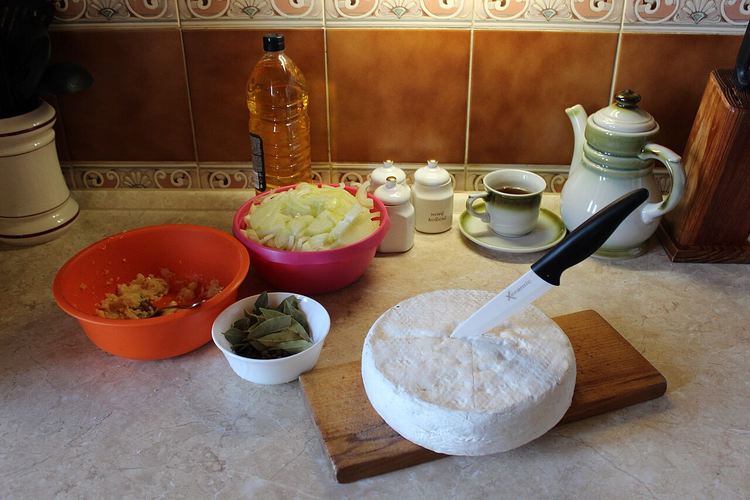
Hermelín: a soft, fatty cheese with white mold on the surface, a close relative of Camembert. During ripening, deep grooves appear inside the wheel, and the cheese becomes aromatic and firm. The name translates as "ermine": the delicacy was considered royal, like the white fur on a ruler's mantle.
At one time, hermelín was affordable only to wealthy Czechs, but now it is sold in many supermarkets and cheese sections. It is usually not eaten raw: the flavor and aroma come out when it is baked, fried, or grilled. Czech cuisine typically serves hermelín with onion and butter, accompanied by dry wine or beer.
- Who it's for: cheese lovers and those who cook at home.
- The catch: the flavor does not fully develop when eaten raw, so hermelín is usually baked.
- Where to find: supermarkets, cheese sections, specialty stores.
5. Beer
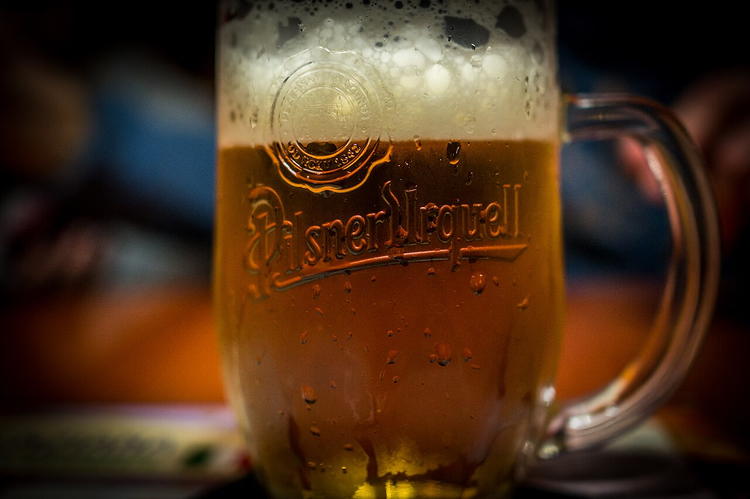
The Czech Republic has been brewing beer for centuries, and breweries remain among the most visited places in the country (as of 09/2026, CzechTourism). The "České pivo" label is granted only to producers within the republic, and using it abroad is prohibited by law.
 © https://www.flickr.com/photos/martavasco · CC BY-SAPhoto: https://www.flickr.com/photos/martavasco, CC BY-SA (https://creativecommons.org/licenses/by-sa/2.0), Wikimedia Commons
Authentic Czech beer is distinguished by a full-bodied flavor with a slight bitterness. Well-known brands include: Pilsner Urquell, Velkopopovický Kozel, Staropramen, Gambrinus, Radegast, Starobrno. At breweries like Krušovice, tours with tastings are offered for tourists, and branded mugs are sold.
Gift sets of several small bottles are convenient for presents, and they come with a booklet and a bottle opener. Keep in mind: each variety has its own shelf life, so not every bottle will make it home as a souvenir.
- Who it's for: those bringing a gift for a beer lover and who know their tastes.
- The catch: glass is heavy and breakable, and bottled beer has a short shelf life.
- Where to find: supermarkets, brewery brand stores, brewery tours.
6. Becherovka
 © Hilarmont · CC BY-SAPhoto: Hilarmont, CC BY-SA (https://creativecommons.org/licenses/by-sa/3.0/de/deed.en), Wikimedia Commons
Becherovka started as stomach drops: pharmacist Josef Becher brewed them in Karlovy Vary in 1807. Later, his son Jan turned the drops into a liqueur with an alcohol content of about 38%, made from roughly 20 medicinal herbs and spices (as of 09/2026, Becherovka Original).
The liqueur matures for several months and has a bittersweet flavor. Becherovka is drunk cold as an aperitif, added to tea and coffee, or mixed into cocktails. Czechs themselves call the factory in Karlovy Vary the town's thirteenth spring, and several varieties of the drink are available today.
- Who it's for: those who want to bring home a recognizable Czech spirit.
- Not for: if the recipient does not like herbal bitterness.
- Where to find: supermarkets, shops near the springs, the Becherovka museum in Karlovy Vary.
7. Slivovice
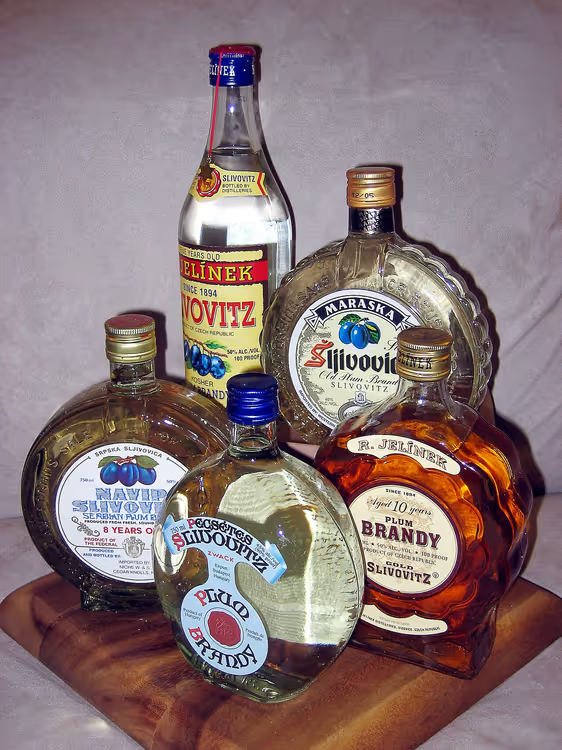
Slivovice: a strong plum spirit that tastes more like brandy than vodka. It is made from ripe plums: the fruit is covered with water, the mixture is left to ferment for about two months, and then it is distilled in two stages. Some producers remove the pits, but then the drink loses some of its aroma.
The alcohol content varies by brand, and aged versions have a golden or dark color. This hue comes from aging in oak barrels. You will find well-known brands on the shelf of any grocery store: Žufánek, Bozkov, R. Jelínek. Souvenir shops carry collectible bottles in gift packaging.
- Who it's for: those who like strong fruit spirits with a smooth aftertaste.
- Not for: if you need a light aperitif, slivovice is too strong for that.
- Where to find: grocery stores, souvenir shops, tasting rooms.
8. Medications
 © Martin.kasa · CC BY-SAPhoto: Martin.kasa, CC BY-SA (https://creativecommons.org/licenses/by-sa/4.0), Wikimedia Commons
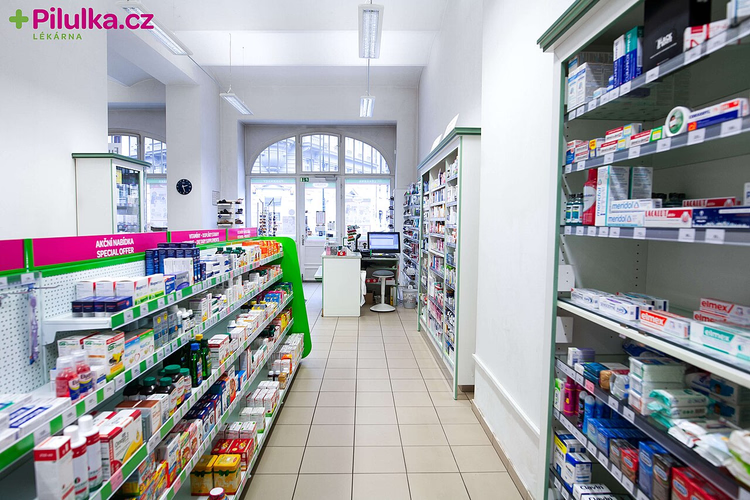
Czech pharmacies are often cheaper than the EU average, so many people buy vitamins and herbal blends here. Advertising prescription medications is prohibited by law in the country. These products are kept behind the counter, so it's best to know the names in advance.
Staff usually speak English. Many medications require a doctor's prescription, and asking a pharmacist for advice about your illnesses is not common practice here. Before your trip, check whether your insurance covers prescription medication purchases.
- Who it's for: those buying herbal blends, vitamins, and bandaging supplies.
- The catch: few 24-hour pharmacies, many are closed on weekends, and Friday hours are shortened.
- Where to look: pharmacies in city centers and large shopping malls.
9. Cosmetics
 © Bradley Weber · CC BYPhoto: Bradley Weber, CC BY (https://creativecommons.org/licenses/by/2.0), Wikimedia Commons
Czech cosmetics grew out of a spa tradition: the manufactory in Karlovy Vary was opened back under Empress Maria Theresa, and since then local producers have used mineral waters and salts. These products are well known in Western Europe.
Natural lines are made on different bases, so you can easily pick a gift for a specific skin type. Grape-based creams and gels moisturize, beer and hop-based products are used for hair care, and the hemp line suits sensitive skin. Prices stay below Western European levels because producers have raw materials, water, and salt close at hand.
- Who it's for: a gift that's easy to pack and pleasant to receive.
- The catch: some products come in large bottles that won't be allowed in carry-on luggage.
- Where to look: pharmacies, brand stores in Karlovy Vary, perfume departments in Prague.
10. Clothing and shoes
 © Muzeumzlin · CC BYPhoto: Muzeumzlin, CC BY (https://creativecommons.org/licenses/by/3.0), Wikimedia Commons
The best selection of clothing and shoes is in Prague. Besides shopping malls, the capital has entire streets with Dior, Hugo Boss, Armani, and Versace boutiques, with more affordable stores nearby: Benetton, H&M, Mango, Vero Moda. The range goes from children's clothing to sportswear, and the quality is high.
Czech footwear has been known in Central Europe for many decades. The CeBo factory and the Baťa company have long been synonymous with comfort for shoppers, and Czechs themselves wear their own shoes first and foremost. If you want to devote a whole day to shopping, head to the Palladium, Nový Smíchov, Palác Flóra, or Kotva megamalls.
- Who it's for: those ready to spend a whole day shopping and traveling with an empty suitcase.
- Not for: if your luggage is already packed with souvenirs from the first half of this list.
- Where to look: Pařížská Street and Prague shopping malls, CeBo and Baťa shoe stores.
11. Tonak hats
 © Jacek Halicki · CC BY-SAPhoto: Jacek Halicki, CC BY-SA (https://creativecommons.org/licenses/by-sa/3.0), Wikimedia Commons
Tonak has been making headwear since 1799 and remains one of Europe's largest hat manufacturers today (as of 09/2026, Tonak). A third of its range is exported, and it all began with a small hat workshop in Nový Jičín.
Tonak hats were worn by the wealthy, and they are made from natural materials: wool, rabbit fur, and felt. Besides classic models, the factory produces caps, berets, and fezzes. On Wenceslas Square in Prague you'll find a true hat paradise with dozens of shapes, sizes, and shades.
- Who it's for: those looking for an item with history and a long service life.
- The catch: you need to try the size on in person, it's hard to get it right from a photo.
- Where to look: Tonak brand stores, Wenceslas Square, large department stores.
12. Marionettes
 © Adam Jones, Ph.D. · CC BY-SAPhoto: Adam Jones, Ph.D., CC BY-SA (https://creativecommons.org/licenses/by-sa/3.0), Wikimedia Commons
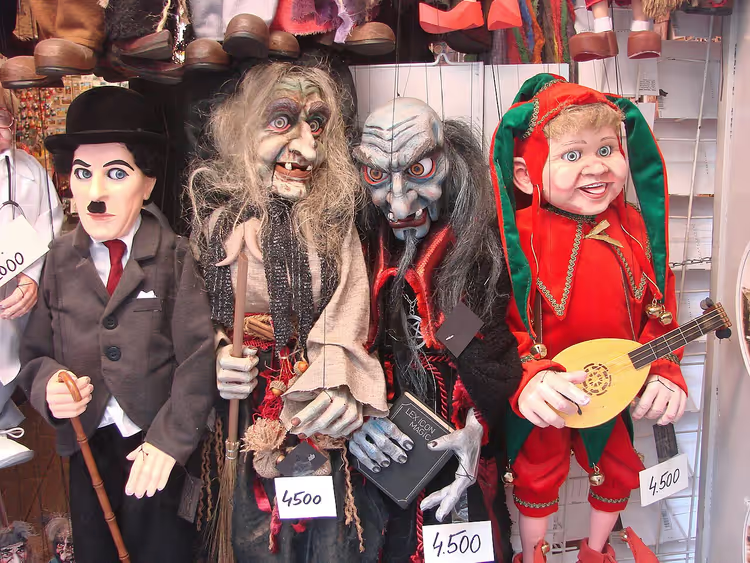
Marionettes were first made in Czechia for street performances several centuries ago, and later plaster and wooden puppets became an art form. For many craftsmen this is a family business, and fairy-tale characters come to life the moment you pull the strings.
Good-quality puppets cost over a hundred euros, with the price depending on size and costume complexity. Handmade toys appear in every tourist corner: clowns, witches, princesses, and dwarfs in colorful outfits. You can give such a puppet to a child or hang it at home as decor.
- Who it's for: lovers of handcrafted work and theatrical tradition.
- Not for: if the gift needs to be compact.
- Where to look: souvenir shops near Charles Bridge, workshops in Prague and Český Krumlov.
13. Krtek
 © BugWarp · CC BY-SAPhoto: BugWarp, CC BY-SA (https://creativecommons.org/licenses/by-sa/4.0), Wikimedia Commons
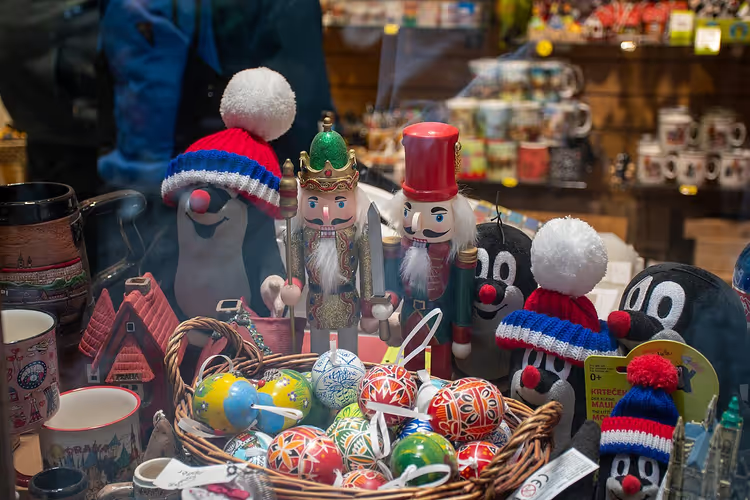
Krtek the Mole is familiar to several generations: children in many European and Asian countries watched the cartoon about him, and in Czechia he became one of the country's main symbols. The character was created by animator Zdeněk Miler, and today the big-eyed mole lives on every souvenir street.
Soft toys in knitted caps delight children and adults, and Krtek's face appears on caps, T-shirts, backpacks, mugs, postcards, and keychains. There are also wooden and plastic figurines. Such a souvenir costs noticeably less than the crystal or porcelain at the end of this list, so you can easily pick up several gifts at once.
- Who it's for: children and adults who grew up on this cartoon.
- Where to look: souvenir shops, bookstores, kiosks in tourist centers.
14. Wooden toys
 © Roberta. · CC BY-SAPhoto: Roberta., CC BY-SA (https://creativecommons.org/licenses/by-sa/3.0), Wikimedia Commons
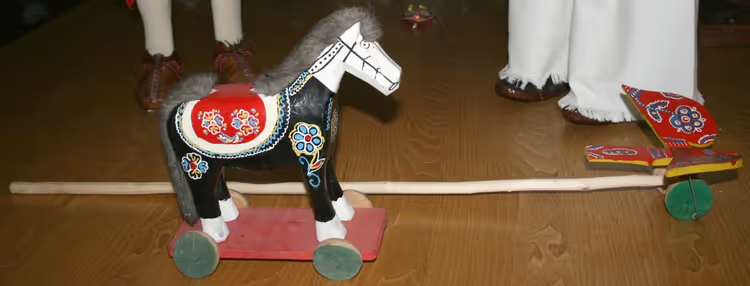
Czech wooden toys develop imagination and fine motor skills, which is why they're often brought home for children. The Detoa company carries on this tradition: its products are made of wood, safe, and built for long-term play. Blocks, animals, and character figurines appeal to toddlers, while wooden puzzles are made for adults.
Demand has spawned counterfeits: cheap Asian copies appear in the same shops as the original. Before buying, check the brand and the quality of the sanding. A genuine Czech toy costs more, but it will outlast more than one child.
- Who it's for: families with children and anyone looking for an eco-friendly gift.
- The catch: alongside Czech toys there are many counterfeits on sale, check for the Detoa brand.
- Where to look: souvenir shops, toy stores, Detoa factory stores.
15. Koh-i-Noor pencils
 © Ray Swi-hymn from Sijhih-Taipei, Taiwan · CC BY-SAPhoto: Ray Swi-hymn from Sijhih-Taipei, Taiwan, CC BY-SA (https://creativecommons.org/licenses/by-sa/2.0), Wikimedia Commons
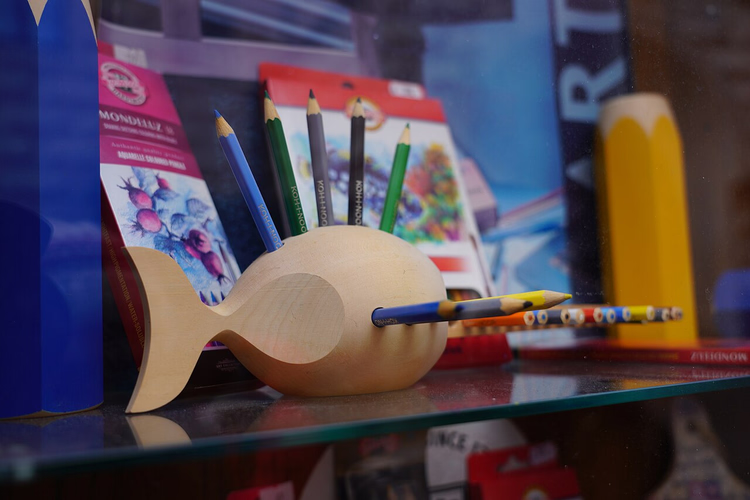
Koh-i-Noor: a Czech stationery brand known in dozens of countries. The company started with a simple pencil and today produces thousands of items: pencils, brushes, paints, and drafting supplies. A box like this suits children, artists, and anyone involved in creative work.
Koh-i-Noor pencils have been made in České Budějovice since the late 19th century, and sets of varying hardness are valued by artists and schoolchildren around the world. The lead doesn't crumble when sharpened, and these sets cost noticeably less than branded stationery from Western Europe.
- Who it's for: schoolchildren, students, and artists.
- Not for: if you're looking for a gift for someone with no creative interests.
- Where to look: stationery stores, department stores, Koh-i-Noor brand sections.
16. Czech garnet
 © Lech Darski · CC BYPhoto: Lech Darski, CC BY (https://creativecommons.org/licenses/by/4.0), Wikimedia Commons
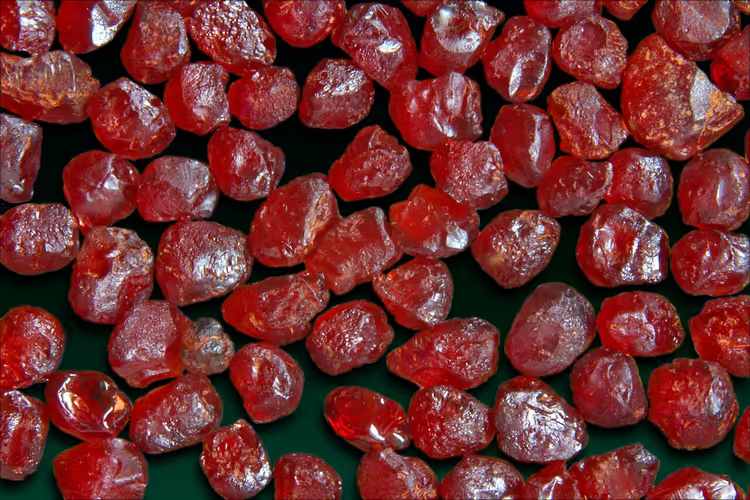
Czech garnet: a deep red stone that belongs to the Bohemian gemstones. Its shade resembles a pomegranate seed, and expensive stones have noticeably more facets than cheap ones. Garnet jewelry is worn both as a talisman and as a formal accessory.
The stone's authenticity can only be confirmed by a certificate, so it's best to buy from official Cesky granat stores or the jewelry shop in Turnov, where garnet is mined. There is also a small stone museum there. Experts advise against looking for garnet in antique shops.
- Who it's for: those who want to bring home jewelry with local history.
- The catch: authenticity can only be confirmed by a certificate, don't buy the stone from ordinary stalls.
- Where to look: Cesky granat stores, Turnov, certified jewelry salons.
17. Vltavín
 © AdamStejskal · CC BYPhoto: AdamStejskal, CC BY (https://creativecommons.org/licenses/by/4.0), Wikimedia Commons
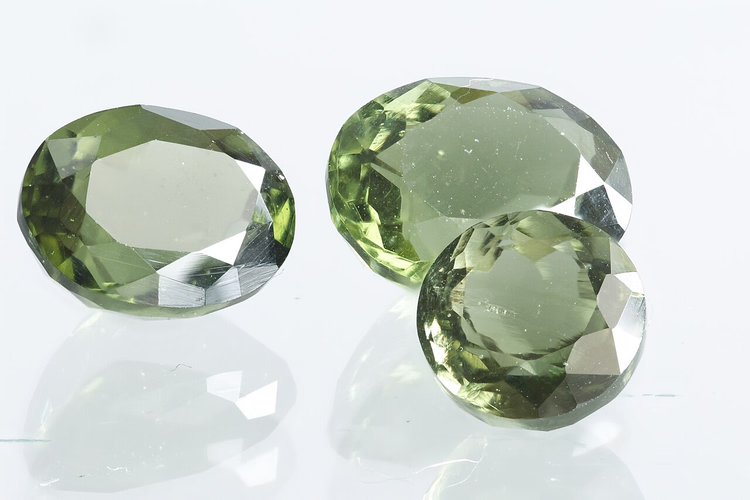
Vltavín (vltavín): a rare green stone mined only in southern Czechia. It is natural impact glass in a bottle-green color, formed by a meteorite strike. Jewelers often set it in silver. Certified pieces are a better buy in specialized shops than in souvenir stalls.
Many legends surround the stone: it is said to help with migraines, and you are not supposed to swim while wearing a vltavín pendant. The stone is rare, which is why the market is full of fakes. A fake cannot reproduce the natural green depth of the stone, and you will spot the difference by checking the certificate.
- Who it's for: those looking for an unusual stone and willing to check the paperwork.
- The catch: vltavín comes with many legends and fakes, so buy only with a certificate.
- Where to look: jewelry stores in South Bohemia, specialty shops in Prague.
18. Crystal and glass
 © Kritzolina · CC BY-SAPhoto: Kritzolina, CC BY-SA (https://creativecommons.org/licenses/by-sa/4.0), Wikimedia Commons
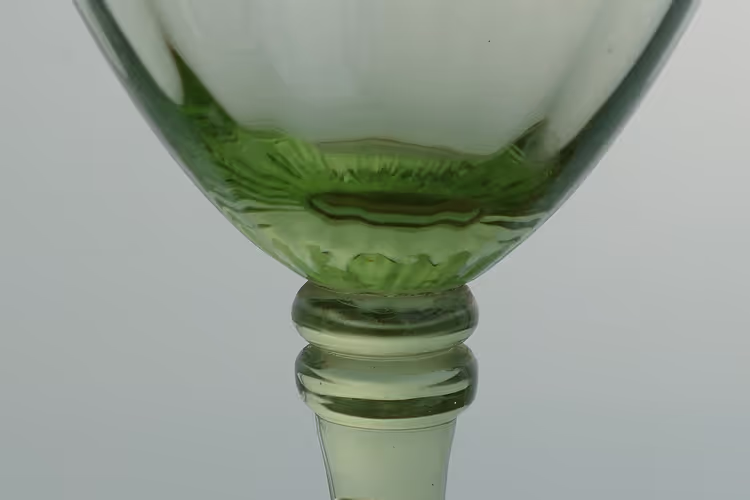
Bohemian glass became the calling card of Czechia: it was already known in the Middle Ages, and blown glass from Bohemia was sold in France, Flanders, and Saxony. The old technique is still used today. Artisans make smooth molded, cut, and colored crystal, and the finest pieces are decorated with gilding and applied ornament.
Crystal costs more than ordinary glass, so inspect the piece right before paying. Real crystal is not cloudy, has no bubbles or inclusions, feels heavy, and when tapped with a pen the ring lasts for several seconds. A simple test works for anyone: run a wet finger around the rim of a glass. A long, clear ring reveals crystal; a dull sound means cheap glass.
The famous brand Moser was founded in 1857 in Karlovy Vary (as of 09/2026, Moser). Its pieces are made by hand, and prices are noticeably above market. If you need a simpler gift, go for colored crystal with applied ornament.
- Who it's for: those bringing a gift to a wedding or anniversary.
- The catch: fragile and heavy cargo, such a gift may not survive the trip in a suitcase.
- Where to look: Moser factory stores, glass shops in Prague.
19. Porcelain
 © Giorgio Galeotti · CC BYPhoto: Giorgio Galeotti, CC BY (https://creativecommons.org/licenses/by/4.0), Wikimedia Commons
Czech porcelain is known for its quality and recognizable decoration. Pieces from the Karlovarsky Porcelan and Starorolsky Porzellan factories hold their own against English and Japanese porcelain, and usually cost less. Coffee pots, butter dishes, soup tureens, and dinner sets will last for many years and make a fine family gift.
Bohemian porcelain stands out from other producers thanks to the "onion pattern." The design is applied by hand with natural pigments, and the milky-white background is decorated with a bright blue ornament. The factory mark is usually visible under the glaze, and the lines and scrollwork match perfectly.
- Who it's for: those who love setting the table and collecting beautiful tableware.
- Not for: anyone who needs a compact gift: a full dinner set barely fits in a carry-on.
- Where to look: factory stores, antique shops, brand departments in Prague.
20. Mikov knives
 © VSchagow · CC BY-SAPhoto: VSchagow, CC BY-SA (https://creativecommons.org/licenses/by-sa/4.0), Wikimedia Commons
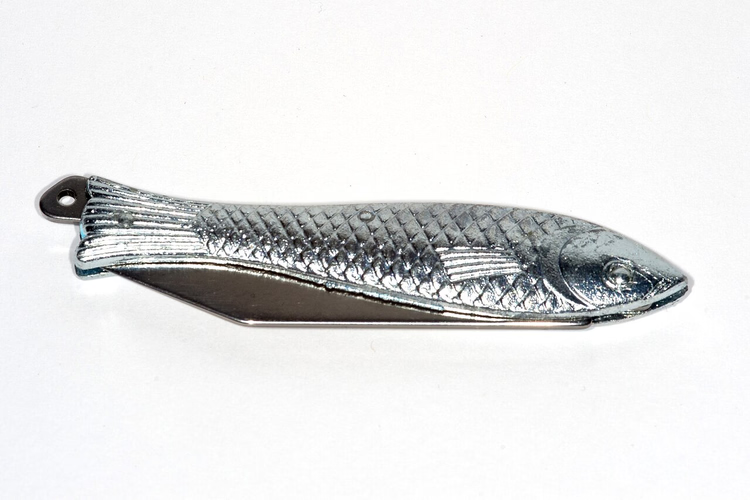
The first blades with the Mikov label appeared back in 1794, and their reputation had already spread across Europe by then (as of 09/2026, Mikov). During World War II production was cut back and shifted to military needs, and in 1955 the factory recovered and grew into a large concern.
Automatic and multi-tool models became especially famous. Handles use fine woods, horn, and bone, and a special flat spring makes the knife switchblade-style. A gift like this with a leather sheath suits those who value tools rather than souvenir trinkets.
- Who it's for: collectors, anglers, and knife enthusiasts.
- The catch: pointed objects cannot go in carry-on luggage, so check the rules with your carrier.
- Where to look: Mikov brand stores, knife shops, hunting stores.
⁉️🤔 Frequently asked questions
What to bring from Czechia as a gift on a small budget?
Pick up a Krtek plush toy, a box of Karlovy Vary wafers, or a set of Koh-i-Noor pencils. These things cost less than crystal and porcelain, fit easily in luggage, and suit almost any recipient, so with a few purchases you can cover gifts for the whole family.
Which Czech alcohol is worth bringing home?
Becherovka, slivovice, or bottled beer. Herbal Becherovka works as an aperitif, slivovice appeals to lovers of strong spirits, and for beer check the expiration date and buy with some margin. Put liquids in checked baggage, otherwise they will be taken at security.
How do you tell real Bohemian crystal from a fake?
Tap the rim of the piece with a pen: real crystal rings long and clear, while a fake answers with a dull sound. Check the weight and clarity, crystal has no bubbles or inclusions. Buy in brand stores, not in street souvenir stalls.
Where to look for souvenirs in Prague?
Souvenir shops line Charles Bridge and Wenceslas Square, and large stores are concentrated in the Palladium, Nový Smíchov, Palác Flóra, and Kotva malls. For hats go to Wenceslas Square, for cosmetics to pharmacies and brand stores.
What cannot go in carry-on luggage from Czechia?
Liquids above the allowed volume and pointed objects, including Mikov knives. Put such purchases in checked baggage ahead of time. Check the exact rules with your carrier: they vary by airline and airport.
In short: what to book
Czech souvenirs cost less than Western European ones, and almost all of them make it home if you choose the right place to buy. The table below will help you quickly pick a gift for a specific person.
If you have | Take |
|---|---|
A sweet tooth | Karlovy Vary wafers, Pardubice gingerbread |
A lover of strong drinks | Becherovka, slivovice, beer |
A child | Krtek, Detoa wooden toys, pencils |
A loved one | Natural cosmetics, garnet, vltavín |
An anniversary or wedding | Bohemian crystal, porcelain |
When packing your suitcase, leave room for fragile items: carry crystal, porcelain, and figurines in your hand luggage, wrapped in bubble wrap. Send liquids and knives in checked baggage so you don't lose your purchase at security. The trip from Prague airport is also worth planning ahead: booking a transfer from Prague airport is easier before your flight than looking for a car at the exit.

A small editorial team writing guides for independent travel. We travel ourselves, but we haven’t been everywhere, so we check prices, opening hours and how to get there against official sources.