
















15 Places in Antwerp you can actually see in one day
Antwerp in one day seems like an impossible task. The city is big, and the list of sights is long. But the historic center is compact, so you can walk to most of the points. The route starts at Central Station: the zoo is 100-200 m from the platforms (on the map). After that, the cathedral, the town hall, Het Steen castle, and the Scheldt embankment await you.
This route is designed for independent travelers without a car. We put together 15 places in a logical order and added prices, opening hours, and honest catches. You will see the skeleton of the city and understand where to come back.
Ad: this article contains affiliate links, we earn a commission if you book through them, at no extra cost to you.
How the one-day route works
💡 In short:
- Start at Central Station, the zoo, and the DIVA museum, then walk to the Rubens quarter.
- In the afternoon, go through the St. Anna tunnel and the historic center: the cathedral, the town hall, the Brabo fountain, Het Steen castle.
- End the day on the embankment at the MAS museum.
- Prices and opening hours: 09/2026, checked on the official MAS website.
Antwerp is easy to divide into five walking zones. Between zones you walk 15-25 minutes (on the map), so you hardly need public transport.
Zone | Stops |
|---|---|
Near the station | Central Station, zoo, DIVA |
Rubens quarter | Rubens House, Botanical Garden, MoMu, Plantin-Moretus Museum |
South of the center | Monument to Peter the Great |
Historic center | St. Anna tunnel, cathedral, town hall, Brabo fountain, Het Steen castle, St. Paul's Church |
Embankment | MAS museum |
Honestly: 15 points in one day is a tight schedule. If you want to visit all the museums, you need two days. For one day, pick two or three museums and see the rest of the sights from the outside. The center is compact, so getting around won't eat up your time.
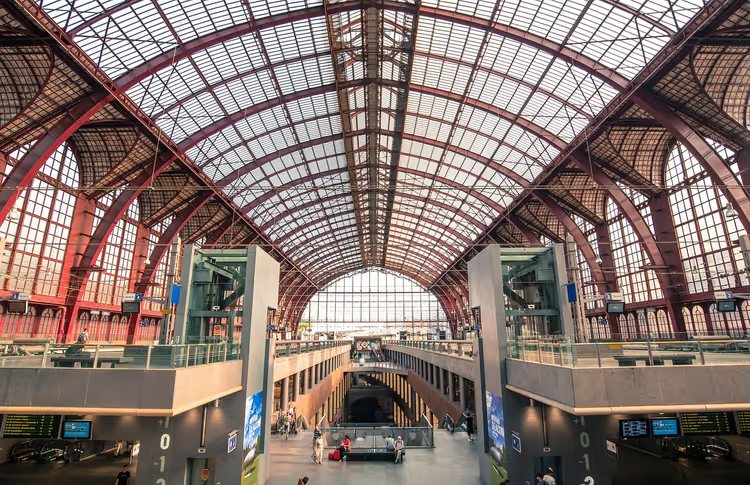
1. Antwerp Central Station
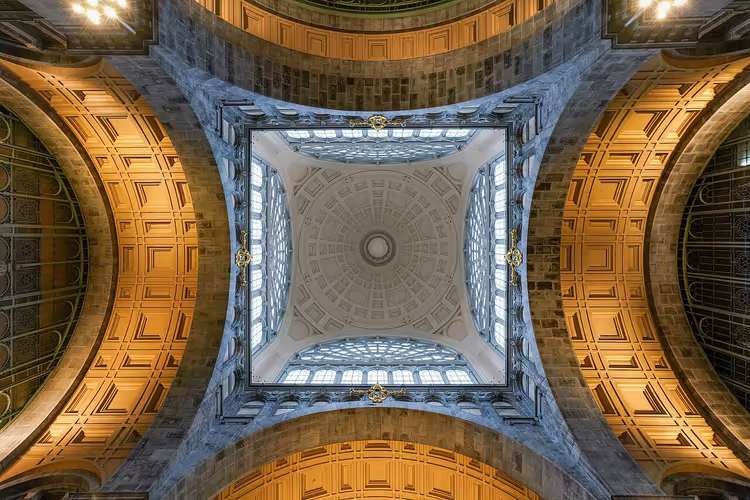
Central Station looks like a cathedral from the outside, not like a transport hub. The building was constructed at the end of the 19th century and ceremonially opened in 1905. Architect Louis Delacenserie chose eclecticism with neo-Gothic elements. He wanted to combine the austerity of the ancient Pantheon with the opulence of Swiss stations (according to Wikipedia).
 © Giles Laurent · CC BY-SAPhoto: Giles Laurent, CC BY-SA (https://creativecommons.org/licenses/by-sa/4.0), Wikimedia Commons
Money flowed into the country from the colonies, and the authorities decided that the building should be more lavish than the Brussels station. In the mid-20th century, the station fell into disrepair and required restoration. Full work was completed only by the end of the century, combining restoration with reconstruction.
Today it is both an architectural monument and the city's main transport hub. All platforms are protected from rain and snow, so waiting for a train here is comfortable. The building has appeared in films more than once, and you will easily recognize it at first glance.
- Cost: free entry, it is a working station.
2. The zoo right by the station
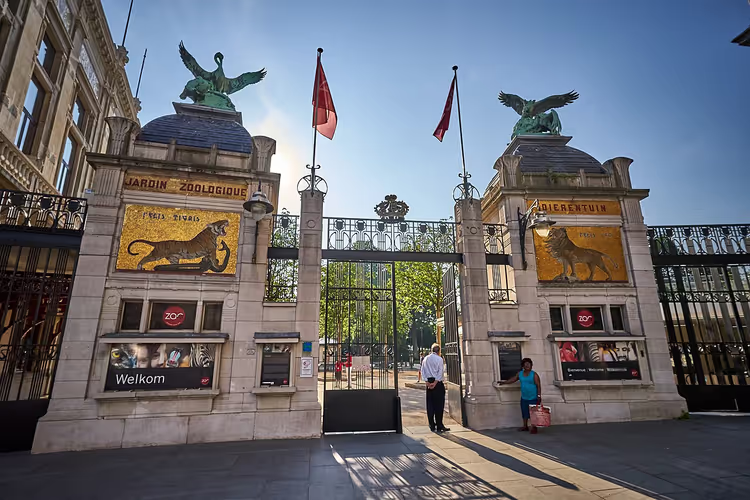
You don't need to walk far: the zoo starts 100-200 m from the platforms (on the map). It is one of the oldest zoos in Europe, and it still operates in the city center. The first exhibition was modest: a few goats, horses, and the director's taxidermy collection. Back then, a ticket cost more than a worker earned in a month, and the territory occupied only one and a half hectares.
 © DRG-fan · CC BY-SAPhoto: DRG-fan, CC BY-SA (https://creativecommons.org/licenses/by-sa/4.0), Wikimedia Commons
The zoo's history also knows dramas. A Bengal tiger escaped from its enclosure and died. A rhinoceros broke out and attacked a keeper. A monkey enclosure burned down due to negligence, and during World War II the entire reptile collection perished.
After the war, the zoo was slowly restored and the exhibition was expanded at the same time. Today it has excellent collections of reptiles, polar animals in the Vriesland park, and tropical butterflies. Check tickets and opening hours on the official zoo website (as of: 09/2026).
- Who it's for: for families with children, there is a Kinderzoo playground here.
3. DIVA diamond museum
Antwerp was a diamond-cutting center for centuries. For more than five centuries, local jewelers worked for nobles and royal families of Europe. That is why the city earned a reputation as the diamond capital.
 © Dosseman · CC BY-SAPhoto: Dosseman, CC BY-SA (https://creativecommons.org/licenses/by-sa/4.0), Wikimedia Commons
The old diamond museum on Koningin Astridplein closed. The DIVA museum now shows the collection of jewelry making, silver, and diamonds. The exhibition includes named diamonds, a Rubens brooch, and Marilyn Monroe's jewelry. The imitation of the Koh-i-Noor diamond is interesting on its own: the original belongs to the British crown.
You will see the tools that jewelers used to work with stones. There are also unconventional solutions like jeans made of diamonds. For those who like interactive experiences, the museum offers virtual journeys for the perfect diamond and a film about the history of the trade. See opening hours and tickets on the official DIVA website (as of: 09/2026).
- Who it's for: for those interested in jewelry making and the history of crafts.
4. Rubens House: what is open now
Rubens bought a plot of land in 1611, and by 1620 a house with a workshop already stood here. The hospitable home was visited by Marie de' Medici, Archduchess Isabella, and the English Duke of Buckingham. Rubens also gladly welcomed people of art (according to the official Rubenshuis website).
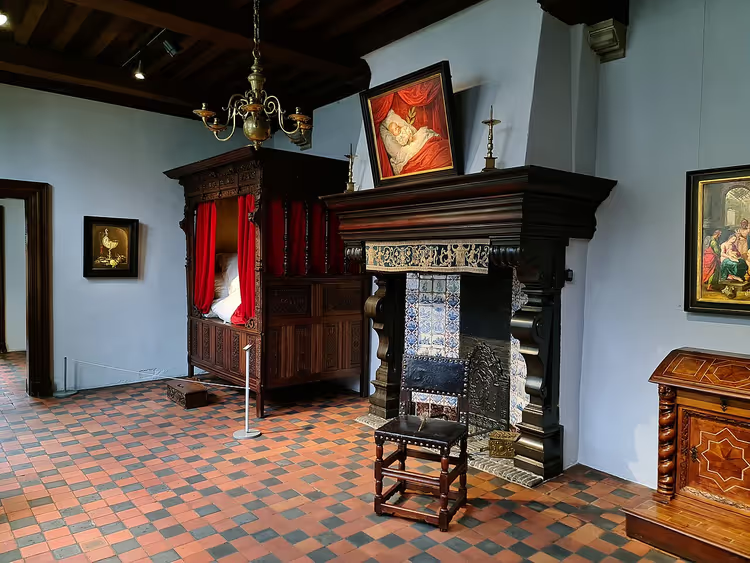 © Ricardalovesmonuments · CC BY-SAPhoto: Ricardalovesmonuments, CC BY-SA (https://creativecommons.org/licenses/by-sa/4.0), Wikimedia Commons
Important: the historic house itself is closed for restoration. The work is being done in stages and will continue until 2030. The Rubens Experience, the library, and the garden remain open (as of 09/2026, official Rubenshuis website).
The garden still has statues of Bacchus and Hercules and a fragment of the wall of the Arquebusiers' guild. The house became a museum only in 1936, after a long restoration. Inside are a black marble fireplace and a very tall door that made it easy to carry out large canvases.
- The catch: the artist's house itself is closed until 2030; only the garden and selected spaces are open.
5. Botanical garden with a greenhouse
The Botanical Garden is considered to have been founded in 1825, although medicinal plants had been grown here since 1804. The garden was laid out by a local pharmacist for medical students. Many herbs could not survive the winter, so they were dug up and kept in a basement (according to Wikipedia).
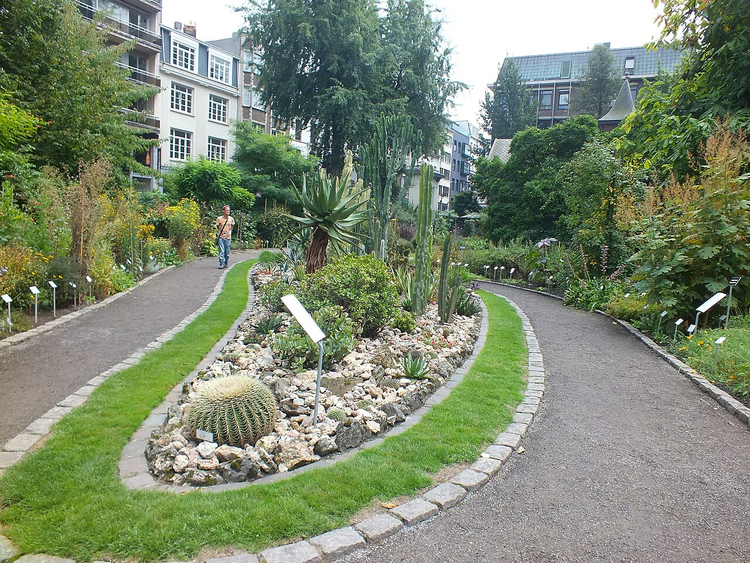 © Orrling · CC BY-SAPhoto: Orrling, CC BY-SA (https://creativecommons.org/licenses/by-sa/3.0), Wikimedia Commons
In 1826, a greenhouse and an alpine house were added to the garden; the alpine house now operates as a bar. The greenhouse with tropical plants still exists, but visitors are not allowed inside. The modern garden also includes a pond with fish.
One area is called the Poets' Garden: literary readings and meetings are held here. Admission is free, so locals relax here both on weekdays and weekends.
- Cost: free admission.
- The catch: visitors are not allowed into the tropical greenhouse.
6. Monument to Peter the Great in Antwerp
Peter I came to Antwerp to learn shipbuilding and called himself Peter Alekseev. The people of Antwerp were won over by the young tsar's diligence and modesty. At a reception held in his honor, he impressed everyone with his knowledge of court etiquette.
An exception was made for this foreigner: normally monuments here were erected only to local citizens. The monument was unveiled in 1998, during the Peter the Great Days (according to an article about the city). The project's author, sculptor Georgy Frangulyan, took the work seriously and even considered how sunlight reflects off the sculpture's boot.
The tsar stands on the edge of a disc, examining a geographical map held by angels. The sculpture is cast in bronze. St. Michael's Abbey is nearby, so seeing the monument is easy to combine with a walk through this part of the city.
- Cost: viewing from outside is free.
7. MoMu fashion museum
Antwerp did not get a fashion museum by chance. The city is home to one of the oldest fashion universities, whose graduates include famous couturiers. Fashion changes quickly, so MoMu refreshes its exhibitions twice a year.
The exhibitions show not only clothing and accessories, but also the tools used to create a collection. This lets you study the history of costume through original pieces. Once a year, the museum gives the best student of the Royal Academy the opportunity to show their collection. The winner's work remains in the galleries for four months, and for a young couturier that is excellent publicity.
MoMu's storage holds costumes from the 16th century and later periods. They are sometimes displayed for visitors. Check opening hours and tickets on the museum's page (as of 09/2026).
- Who it's for: anyone interested in fashion and the history of costume.
8. Plantin-Moretus Museum
In the 16th century, the Plantin-Moretus printing house was the largest in Europe. Enlightened publishers printed maps, atlases, the Bible, and scholarly works here. Authors could order a translation of their text into another language.
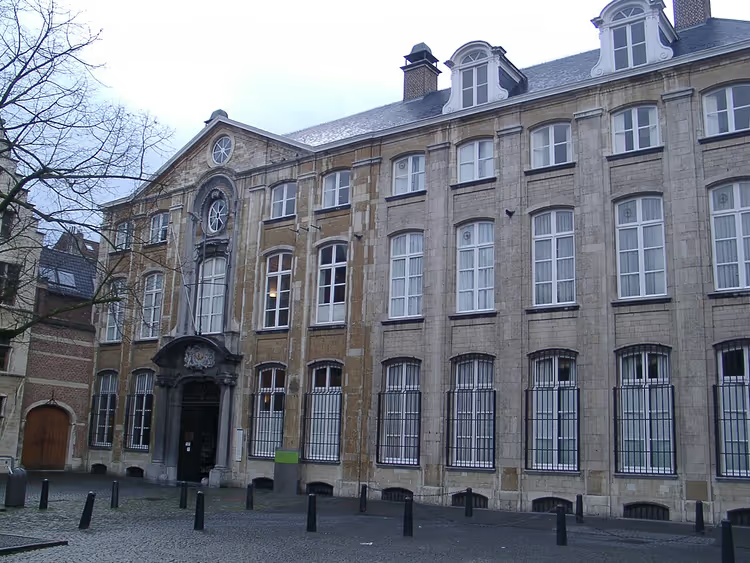 © Klaus Graf · CC BYPhoto: Klaus Graf, CC BY (https://creativecommons.org/licenses/by/2.5), Wikimedia Commons
The exhibition stands in the same rooms where books were produced four centuries ago. You will see 16th-century typefaces and printing presses, rare editions, and a collection of tapestries. The museum is a UNESCO World Heritage Site.
The section is small but dense, so don't rush through it. For opening hours and tickets, see the printing house guide (as of 09/2026).
- Who it's for: anyone interested in the history of printing.
9. St. Anna's Tunnel under the Scheldt
The tunnel was built for practical reasons. The Scheldt River is navigable along its entire length, so the crossing between the banks was made underground rather than above ground. That way ships don't interfere with pedestrians and cyclists.
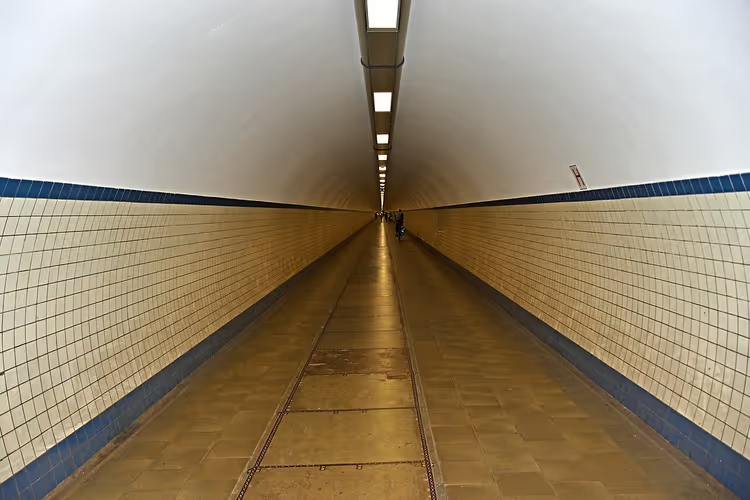 © Ludvig14 · CC BY-SAPhoto: Ludvig14, CC BY-SA (https://creativecommons.org/licenses/by-sa/4.0), Wikimedia Commons
The tunnel is 31 m deep, so you have to go down and up by elevator. The tunnel is narrow and located in the central part of the city, so traffic through it is heavy. Signs require you to get off your bike and remove roller skates, but few people follow this rule.
- The catch: the walls and ceiling are tiled, which amplifies sound. With heavy traffic, it puts pressure on your ears.
- Cost: free to cross.
After you exit, you get an excellent panorama of the Scheldt embankment. Don't miss this view.
10. Cathedral of our lady, Antwerp
The cathedral was built gradually over several decades. The nave and choir were built from 1352 to 1411, the west facade from 1422 to 1474. The north tower with 47 bells was completed in 1518, while the south tower was never built due to lack of funds (according to the cathedral article).
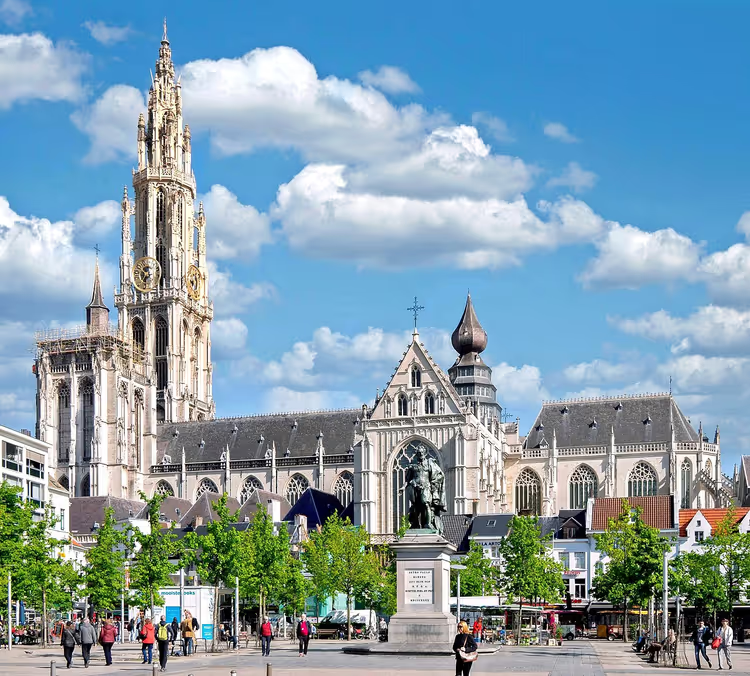 © Rolf Kranz · CC BY-SAPhoto: Rolf Kranz, CC BY-SA (https://creativecommons.org/licenses/by-sa/4.0), Wikimedia Commons
The design called for a tower much taller than the current one. But even today the cathedral remains the tallest structure in the city. The building is surrounded by later construction, so you won't be able to view it in full from the ground.
Inside, Rubens' paintings and stained glass windows are striking. Believers can pay their respects at the tomb of Isabella of Bourbon. On the square in front of the cathedral, actors put on performances involving tourists, and it's free for spectators.
- The catch: the cathedral is always crowded, so come on a weekday afternoon.
- Hours: admission is paid; rates and schedule are listed on the cathedral rates page (as of 09/2026).
11. Antwerp city hall on the grote markt
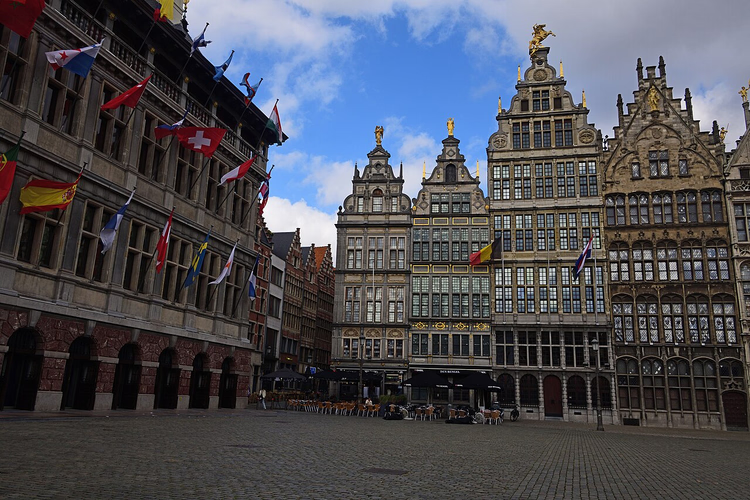
City authorities wanted a new large-scale building: the old city hall was plain, and money from the colonies made it possible. The first design in the Gothic style was done by Domien de Waghemakere.
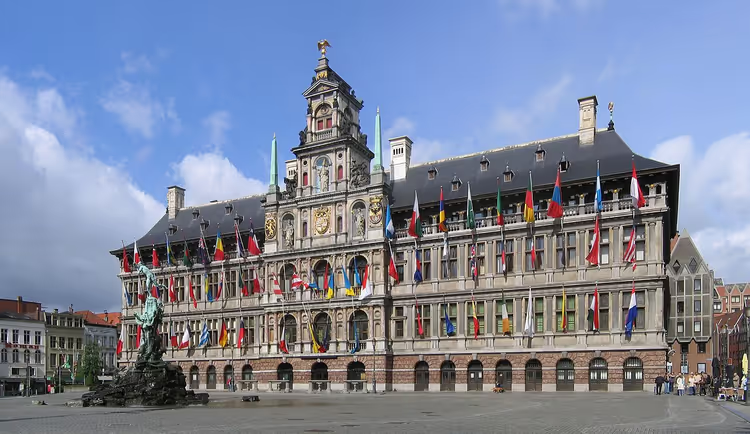 © Klaus with K · CC BY-SAPhoto: Klaus with K, CC BY-SA (http://creativecommons.org/licenses/by-sa/3.0/), Wikimedia Commons
In 1540, the political situation changed, and the funds set aside went to fortifying Antwerp. Construction resumed only twenty years later. The new architect was a fan of the Renaissance, and the city hall was built in four years.
It didn't stand for long: ten years later, a Spanish shell destroyed the building. The surviving walls were kept, and the interior floors were rebuilt from scratch in about three years. At the end of the 19th century, the city hall was renovated while preserving the main features of the original design.
The ground floor was long occupied by merchants trading in colonial goods. The facade is richly decorated with statues and coats of arms, and 87 flags rise above the building. The city hall is still in use: the mayor works here and marriages are registered. The city hall tower is a UNESCO World Heritage Site (according to the city hall article).
- Cost: viewing the facade from outside is free.
12. Brabo Fountain
A beautiful legend is associated with the fountain. Before the city existed, an evil giant lived on the banks of the Scheldt. He levied a huge tribute on passing ships and cut off the hands of those who refused to pay.
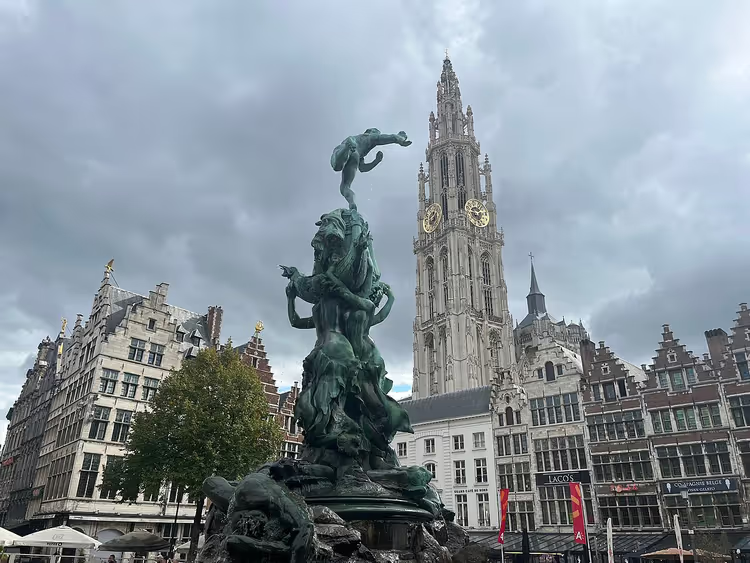 © Ankermast · CC BYPhoto: Ankermast, CC BY (https://creativecommons.org/licenses/by/4.0), Wikimedia Commons
One day, a strong sailor named Brabo fought the giant and won. He dealt with the defeated villain justly: he cut off both his hands and threw them into the river. Later, a city was built on that spot.
The fountain was unveiled at the end of the 19th century in gratitude to brave Brabo. It has no basin: water seeps between the stones and then pours down like a waterfall from the giant's severed hands. The severed hand has since become a symbol of Antwerp.
- Cost: free to view.
13. Het Steen Castle on the embankment
The castle was built in the 10th century for defense against enemies. You could say it appeared before Antwerp itself. Later, the fortress served a wide variety of functions.
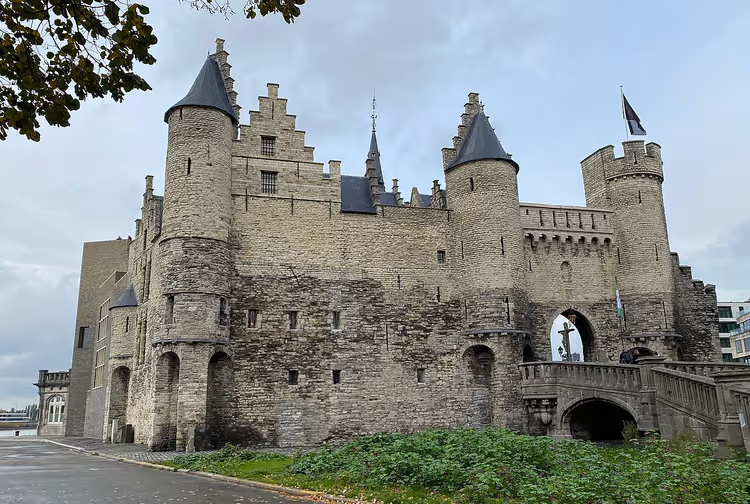 © -wuppertaler · CC BYPhoto: -wuppertaler, CC BY (https://creativecommons.org/licenses/by/4.0), Wikimedia Commons
At first, the castle was a residence for nobles, such as Godfrey of Bouillon. Then city authorities held sessions there. Charles Habsburg restored the castle's role as a fortress and rebuilt the walls with heavy cannons in mind. Over time, the mighty structure was used as a prison: those who could pay were held in the right wing, the rest in the left. The Inquisition also held court here and kept cells for those sentenced to death.
At the end of the 19th century, the castle became home to an archaeological museum. Twenty years later, the city decided to widen the Scheldt riverbed, and part of the complex was demolished. The surviving buildings were saved by concerned citizens. Today, the Steen has been restored: it houses exhibition halls, and craft workshops are open for children.
- Cost: viewing from the outside is free.
14. St. Paul's Church
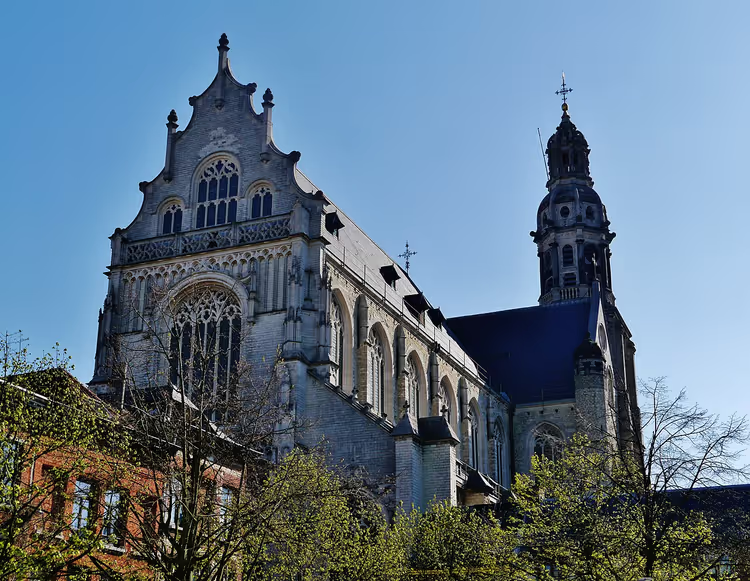
The church was founded by Dominican friars in the 16th century. They chose a former maritime settlement, and the first church was Gothic. A few years later, it was destroyed by the Scheldt when the river suddenly changed its course.
 © Zairon · CC BY-SAPhoto: Zairon, CC BY-SA (https://creativecommons.org/licenses/by-sa/4.0), Wikimedia Commons
The church was rebuilt further from the river, this time in the Baroque style. In 1571, it was looted during the religious war with the Protestants. The church was fully restored by the early 17th century.
The 17th-century interiors have been preserved in their entirety, and they are strikingly lavish. Gilding sits alongside marble finishes, and the walls are decorated with panels made of precious woods. The gallery displays paintings by eleven Flemish masters, including Rubens, Cornelis de Vos, and Baeyermans. Near the side exit stands a sculptural composition of Calvary, with 63 statues of saints and angels nearby (according to Wikipedia).
- Who it's for: those interested in Baroque interiors and Rubens' paintings.
15. MAS Museum on the waterfront
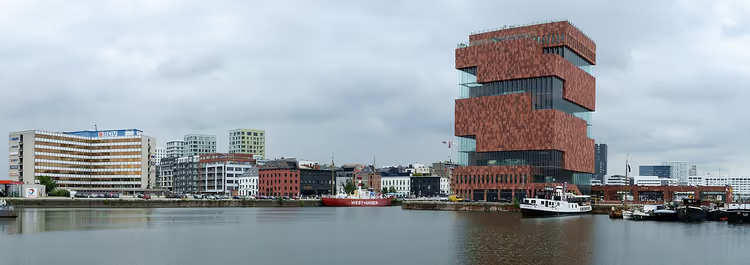
MAS stands for Museum aan de Stroom, museum on the river. The building opened in 2011 on the site of an abandoned house. The architecture and the waterfront location immediately draw attention.
 © Alvesgaspar · CC BY-SAPhoto: Alvesgaspar, CC BY-SA (https://creativecommons.org/licenses/by-sa/4.0), Wikimedia Commons
The permanent collection numbers 6,000 items, not counting temporary exhibitions. Each of the ten floors is interesting in its own way. The basement floor houses a cafe and meeting rooms. The lower ground floor hosts lectures and seminars, while the first floor contains service areas closed to tourists. The third floor shows temporary exhibitions, and the fourth through eighth floors house the permanent ones. The ninth floor has a conference hall and a restaurant, and the tenth offers a panoramic view of the Scheldt, the port, and the city.
The museum offers interactive tours and documentary films about the history of Antwerp. A standard ticket costs €12, for visitors aged 18 to 25 it's €8, and admission is free for those under 18 (as of 09/2026, MAS ticket prices page). The museum is open from 10:00 to 17:00, and you can visit the boulevard and the panoramic roof without a ticket.
- The catch: book your timed ticket in advance, otherwise you may not be admitted when the museum is at capacity.
- Who it's for: those who want to see the city from above.
If you prefer a guided experience, here is a selection of tours in Antwerp.
Tours and tickets in Antwerp
Guided tours, skip-the-line tickets and activities — most offers can be cancelled free of charge.
See offers on GetYourGuideThe widget loads once you give your consent.
⁉️🤔 Frequently asked questions
Can you see all 15 places in one day?
Formally yes, if you walk fast and don't go into museums. In practice, the zoo alone and the MAS museum each take two to three hours. For one day, pick two or three museums and view the rest of the sights from outside. The center is compact: from the station to the waterfront it's about three kilometers (on the map).
Rubens House is closed, is it worth going?
The historic house is closed for restoration, with work proceeding in phases until 2030. The Rubens Experience, library, and garden are open, so you can already see part of the artist's legacy. If the actual residence is what matters to you, plan your trip after the restoration is complete (as of 09/2026, Rubenshuis restoration page).
How much does the MAS museum cost and when is admission free?
A standard ticket costs 12 €, for visitors aged 18 to 25 it's 8 €. Children under 18 enter free. The boulevard and panoramic roof can be visited without a ticket. Book your time slot in advance (as of 09/2026, official MAS website).
Do you need to buy a cathedral ticket in advance?
Cathedral admission is paid, with rates listed on the official website. Lines are shorter in the afternoon on weekdays. On weekends both tourists and parishioners come, so it's better to book a time slot in advance (as of 09/2026, cathedral information).
What to see if you only have half a day?
Stick to the historic center: the cathedral, town hall, Brabo Fountain, and Het Steen castle. They're close together, on Grote Markt and the waterfront, so you can walk between them. Three hours is enough for this route (on the map). If you have time left, add the St. Anna Tunnel.
To avoid getting lost in the side streets, open the one-day route map.
A one-day route around Antwerp
Places on the map
- 1Central Station Neo-Gothic building, opened in 1905
- 2Antwerp Zoo One of the oldest zoos in Europe, 100-200 m from the station
- 3DIVA Diamond Museum Jewellery craft, diamonds, Rubens's brooch and Marilyn Monroe's jewellery
- 4Rubens House The historic house is closed for restoration until 2030, the garden and Rubens Experience are open
- 5Botanical Garden Founded in 1825, an orangery and the Poets' Garden
- 6Monument to Peter the Great The monument was unveiled in 1998, sculptor Georgy Frangulyan
- 7MoMu Fashion Museum Exhibitions are refreshed twice a year, costumes from the 16th century
- 8Plantin-Moretus Museum Europe's largest 16th-century printing house, a UNESCO site
- 9St Anna Tunnel An underground crossing beneath the Scheldt, 31 metres deep, descent by lift
- 10Cathedral of Our Lady of Antwerp Built from 1352 to 1518, Rubens's canvases and stained-glass windows
- 11Antwerp City Hall Building on the Grote Markt, 87 flags on the facade, a UNESCO site
- 12Brabo Fountain Opened in the late 19th century, the legend of the giant and the sailor Brabo
- 13Steen Castle A 10th-century fortress on the embankment, today exhibition halls
- 14St Paul's Church Baroque interior from the 17th century, canvases by Rubens and de Vos
- 15MAS Museum A museum on the river, opened in 2011, a panorama from the tenth floor
In short: what's worth booking
If you're visiting Antwerp for the first time, book three things in advance. A MAS museum ticket for a convenient time, a city center tour, and accommodation near Grote Markt. That way you won't lose half a day in lines.
- If you're short on time: take a city center sightseeing tour.
- If you love panoramas: head to MAS at sunset.
- If you're traveling with kids: set aside half a day for the zoo.
If you need a guide, check out Antwerp tours on GetYourGuide. For accommodation, compare hotels in Antwerp on Trip.com.
Book museum tickets in advance on Tiqets.

A small editorial team writing guides for independent travel. We travel ourselves, but we haven’t been everywhere, so we check prices, opening hours and how to get there against official sources.