
















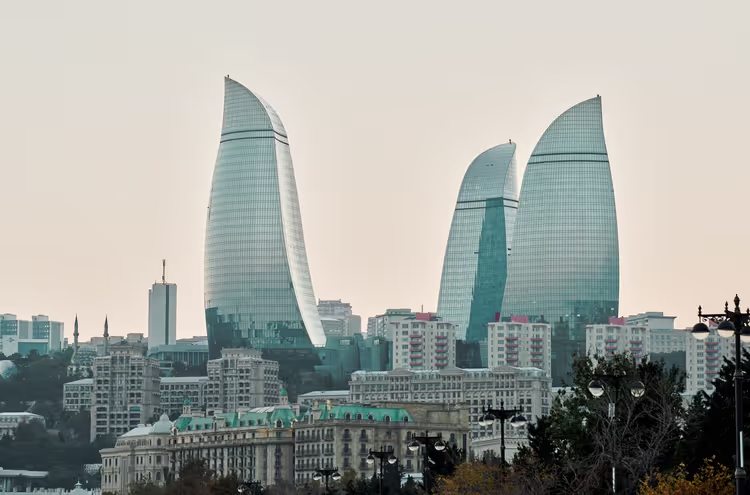
Baku in one day: Old City, promenade and the lights of the Flame Towers
Baku can genuinely be seen on foot in one day. Almost all the main sights of Azerbaijan's capital are concentrated in one area, around the Old City of Icherisheher. The 24-hour H1 express bus gets you from the airport to the center: the fare with a transport card is 1.30 AZN, and the trip takes about half an hour (as of 09/2026, airport transport guide).
Icherisheher remains a living neighborhood, not a museum under glass. People still live here, and workshops and small cafes operate. Since 2000, the Old City has been a UNESCO World Heritage Site (as of 09/2026, official reserve website). You'll cover half the route before lunch, and leave the second half for the evening.
Ad: this article contains affiliate links. We earn a commission if you book through them, at no extra cost to you.
Baku in one day: route overview
💡 In short:
- You'll walk through the Old City in three to four hours, without rushing.
- The Maiden Tower and the Palace of the Shirvanshahs require separate tickets.
- The airport express runs 24/7 with no transfers.
- Prices and opening hours: 09/2026, verified on the official reserve website
The logic from there is simple. In the morning you enter the Old City through the Shamakhi Gate and head deeper inside. In the afternoon you walk down to the Seaside Boulevard, and in the evening you take the funicular up to the Flame Towers. That way you don't cover the same route twice. Below are seventeen points and a map at the end.
Wear comfortable shoes: Icherisheher has plenty of slopes and stairs. In summer, plan your walk for the morning or after five in the evening, when the heat subsides. In winter, the Old City is empty, and you'll see it without the crowds.
Site | Admission | Hours | Closed |
|---|---|---|---|
Maiden Tower | 19 AZN (as of 09/2026, guide) | 10:00-19:00 | none |
Palace of the Shirvanshahs | 24 AZN (as of 09/2026, palace guide) | 10:00-19:00 | none |
Azerbaijan Carpet Museum | about 15 AZN (as of 09/2026, ticket overview) | 10:00-20:00 (as of 09/2026, city portal) | Monday |
Museum of Miniature Books | free (as of 09/2026, reserve) | daytime | Monday and Thursday |
Funicular | 1 AZN (as of 09/2026, funicular guide) | 10:00-22:00 | Monday |
How to get from the airport to the center
The H1 express bus runs from Heydar Aliyev Airport to the center. The bus operates 24/7, departs every 20-30 minutes, and goes to the 28 May metro station. The fare with a transport card is 1.30 AZN, and the trip takes about 40 minutes (as of 09/2026, express schedule and fares).
There are also regular city buses, but for your first time the express is more convenient. It runs with no transfers and starts right at the terminal exit. You buy the card from a machine in the arrivals hall.
Taxis and ride-hailing apps (Bolt, local services) take you straight to the hotel. There is no fixed fare; you see the price in the app before the trip (as of 09/2026, taxi and transfer options). During the morning rush hour, a car sits in traffic longer than the express bus.
At night or with suitcases, book a transfer in advance: you'll be met in the arrivals hall and driven to the hotel door.
Tours and tickets in Baku
Guided tours, skip-the-line tickets and activities — most offers can be cancelled free of charge.
See offers on KiwitaxiThe widget loads once you give your consent.
Ali Shamsi's workshop in the old city
On Kichik Gala Street (Kiçik Qala) stands a house you can't miss. The facade is covered with amulets, symbols, and installations: a lion with huge eyes, alien figures, and portraits of oil workers. Across from it grows a tree with three female faces on the trunk, and two artist's brushes "grow" out of the ground.
This is the workshop of Baku artist Ali Shamsi. The artist himself often works nearby and invites visitors inside. The house has two rooms. The first contains art objects from other countries and finds from excavations in the Old City; the second displays his paintings.
The canvases are dedicated to the nature of Azerbaijan, the sea, the mountains, and women. You can view the facade at any time, and the artist lets you inside if he's there. Address: Kichik Gala Street in Icherisheher, next to the tree with three faces on the trunk.
Museum of Miniature Books
 © Babək Akifoğlu · CC BY-SAPhoto: Babək Akifoğlu, CC BY-SA (https://creativecommons.org/licenses/by-sa/4.0), Wikimedia Commons
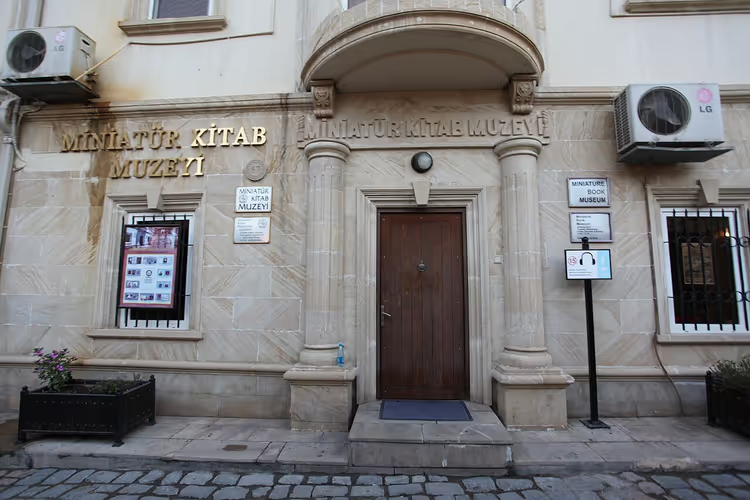
Next to the Maiden Tower there's a museum with no analogues anywhere. It houses the smallest books in the world: rare editions of Russian classics, Azerbaijani poets Nizami and Fuzuli, books from the Soviet era and Europe. The collection was started by Zarifa Salahova, sister of artist Tahir Salahov, back in Soviet times.
The exhibition goes beyond literature. There are miniature Bibles and Qurans, and next to them a collected works of Lenin. The most valuable exhibit is a book the size of a pinhead: it contains text and illustrations that can only be seen under a magnifying glass.
The museum is open during the day, closed on Mondays and Thursdays, admission is free (as of 09/2026, reserve administration). It was founded in the early 2000s. For a collector or book lover, this is a must-see stop.
Governor's Garden: Baku's oldest park
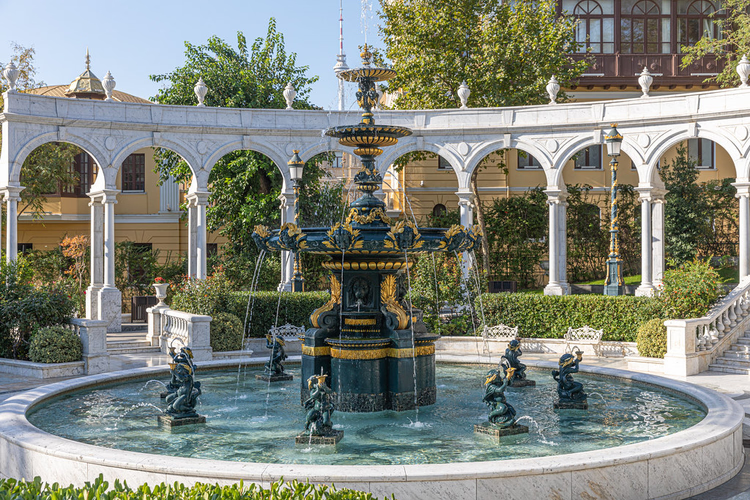
The Governor's Garden was laid out in the 1830s by order of the commandant of the Baku Fortress. Ship captains were required to bring sacks of black earth from the south so that acacia, mulberry, and coniferous trees could take root in the arid climate. For a long time it was the only garden in the city.
 © Dmitry Karyshev · CC BYPhoto: Dmitry Karyshev, CC BY (https://creativecommons.org/licenses/by/2.0/), Flickr
The garden expanded along with the city. When the outer fortress wall was dismantled in the 1860s, the green zone grew and reached its current boundaries. The names changed: Mikhailovsky, Revolution, Aliagha Vahid. The old name stuck.
Today the Muslim Magomayev Philharmonic Hall adjoins the garden, so it's often called the Philharmonic Garden. The garden stretches along the fortress wall from Azneft Avenue to the Icherisheher metro station. In the old days, ordinary citizens were allowed in only once a week. By the late 19th century, pavilions and terraces for relaxation appeared here. Admission is free, and it's open around the clock. It's a convenient starting point for the descent to the waterfront: the shade of the trees saves you from the heat even at noon.
The courtyard from "The diamond arm" in the old city
Soviet films were often shot in Icherisheher: "Amphibian Man," "Aybolit-66," "Tehran-43," and "The Diamond Arm." "The Diamond Arm" is a famous Soviet comedy about smugglers. For filming, the Old City was turned into Istanbul.
In the plot, the main character gets a cast on his arm with contraband jewels hidden inside. Tourists look for the courtyard where this scene was filmed. Today people live in the courtyard, and the pharmacy from the film is long gone. In the shots you can recognize the walls of the Shirvanshahs' Palace, which the tour passes by. Landmark: the Tander cafe at the intersection with Veli Mamedov Street, and the famous arch is right nearby.
Fans of the film take photos here, recreating the characters' poses. The spot is open and free, but the courtyard is residential: keep quiet and don't disturb the neighbors. It's best to come in the morning, when there are few tourists and the light is soft. If you're with a group, arrange a short stop rather than a full photo shoot.
Shamakhi Gates and the fortress entrance
 © Interfase · CC BY-SAPhoto: Interfase, CC BY-SA (https://creativecommons.org/licenses/by-sa/3.0), Wikimedia Commons
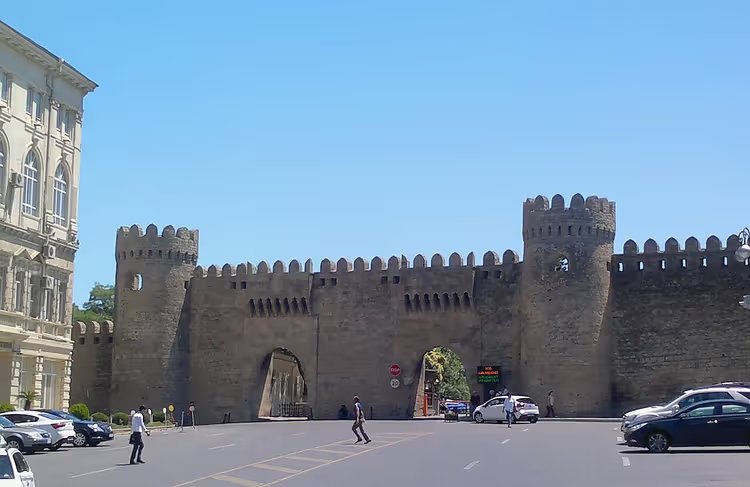
Icherisheher is not just one building but an entire architectural reserve under UNESCO protection. The fortress rises above the sea: it's surrounded by stone walls up to eight meters high and up to three meters thick. Along the perimeter there once stood twenty-five towers and five gates. Today pedestrians enter the Old City through the Shamakhi Gates, which were almost the only ones.
The gates have a complicated history. When the city grew and expanded beyond the walls, the inner line of defense was dismantled. The Zulfiqar Gates were moved next to the Shamakhi Gates, which is why they now have two arches and a second name: the Paired Gates. That's how the old fortifications were adapted to the growing city.
On foot, entry to the Old City is free and open around the clock. You can also drive inside, but you'll have to pay for entry and for each additional hour. The first stop on the route awaits you right behind the gates.
Maiden Tower: a symbol and observation deck
 © Robot8A · CC BY-SAPhoto: Robot8A, CC BY-SA (https://creativecommons.org/licenses/by-sa/4.0), Wikimedia Commons
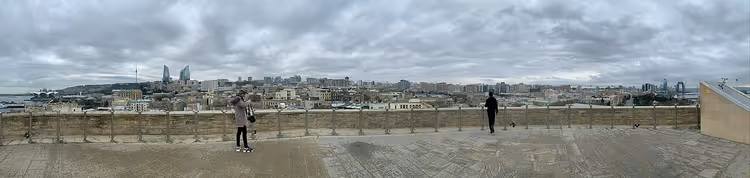
The Maiden Tower (Qız Qalası) stands in the southeast of Icherisheher and has long been a symbol of the city. The tower is open daily from 10:00 to 19:00, and an adult ticket for foreign tourists costs 19 AZN (as of 09/2026, Baku guide). The tower is 28 m high, the walls are 5 m thick at the base, and inside there are eight tiers and a spiral staircase to the top.
Historians still argue about why it was built. Many believe its function was not defensive but ritual, connected with sun worship. For a long time the tower served as a lighthouse: first a flag flew at the top, then a light was lit.
Legends about a girl who throws herself into the sea because of unhappy love are associated with the tower. The stone at its foot is still called the maiden stone. Today a museum operates inside, and at the very top there is an observation deck with views of the city and the bay.
How to get there: enter Icherisheher through the Shamakhi Gate and walk for about ten minutes.
Who it's for: for those who want a panorama of the city and don't mind climbing a spiral staircase.
Palace of the Shirvanshahs: residence of the shahs
 © Ludvig14 · CC BY-SAPhoto: Ludvig14, CC BY-SA (https://creativecommons.org/licenses/by-sa/4.0), Wikimedia Commons
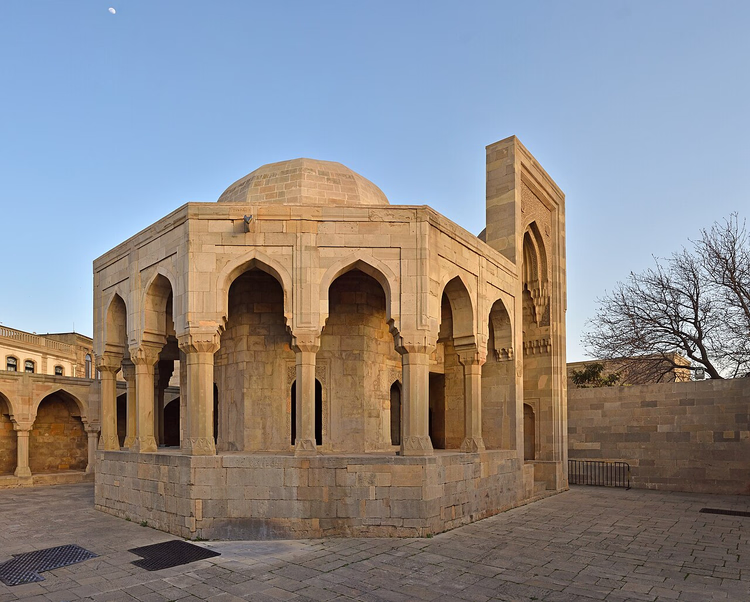
The Palace of the Shirvanshahs served as the residence of the rulers of Shirvan on a hilltop in the center of the fortress. The ensemble was built over several centuries, from the 13th to the 16th century, but it looks cohesive. Besides the palace itself, the complex includes a burial vault, a bathhouse, a 15th-century mosque, the mausoleum of the scholar Seyid Yahya Bakuvi, and the Divan-khane courtyard.
The palace is open daily from 10:00 to 19:00, and an adult ticket for foreign tourists costs 24 AZN (as of 09/2026, guide to the Palace of the Shirvanshahs). Inside, spiral staircases and a ceremonial hall with excavation finds have survived: pottery, jewelry, weapons, and Shamakhi carpets. Some household items are displayed in the preserved chambers.
In the inner courtyard stands an octagonal rotunda with columns. Its purpose is still unknown: some consider the rotunda a burial vault, others see it as a meeting place for the state council. The Bakuvi mausoleum was once connected by an arch to the old mosque, which burned down.
How to get there: from the Maiden Tower, walk about five minutes up Palace Lane.
Cost: tickets for schoolchildren and students are cheaper than for adults.
Monument to Aliagha Vahid
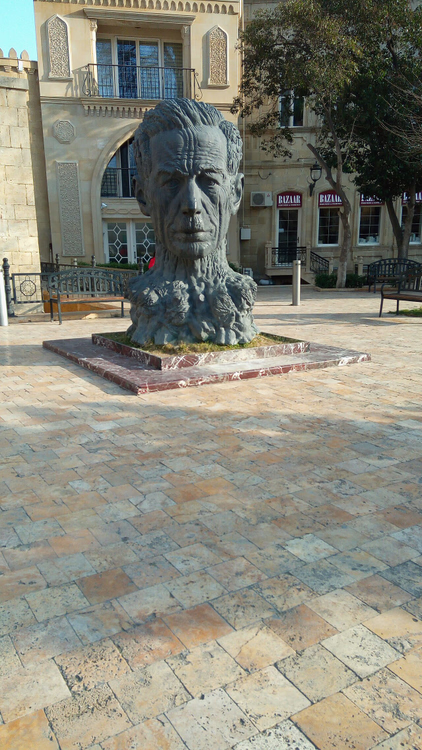
Aliagha Vahid, an Azerbaijani poet and satirist, was a friend of Sergei Yesenin. His satirical verses and lyrical ghazals were known by heart among the people. The monument to the poet was erected on Kichik Gala Street in the Old City.
 © Aabdullayev851 · CC BY-SAPhoto: Aabdullayev851, CC BY-SA (https://creativecommons.org/licenses/by-sa/4.0), Wikimedia Commons
The monument is unusual. A huge head seems to grow out of the ground: the neck, torso, and hair turn into a tree trunk and branches woven from human bodies. Sculptors Rahib Hasanov and Natik Aliyev depicted the cycles of life: birth, love, separation, wedding, and funeral. According to their concept, all ideas live in a person's head, so they brought the necessary images outside.
The monument was unveiled in the early nineties, funded almost entirely by ordinary people. The idea to immortalize the poet's image belonged to journalist and writer Arif Mansurov. Viewing is free: the monument stands right on the street.
Icherisheher Market Square
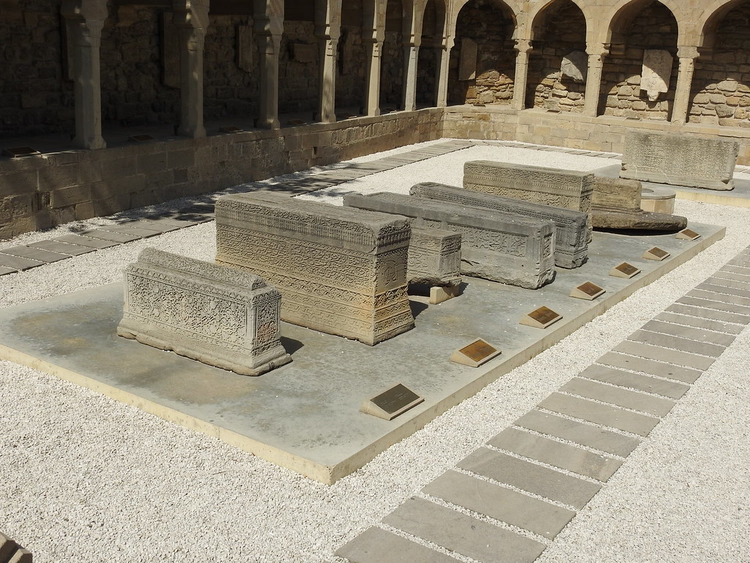
The Market Square remained a mystery for a long time: it appeared on old maps, but was only found during excavations in the 1960s. A large eastern bazaar once bustled here, and later the square became the center of city life.
 © shankar s. · CC BYPhoto: shankar s., CC BY (https://creativecommons.org/licenses/by/2.0/), Flickr
Rulers' decrees were read out here, court sessions were held, and decisions were announced. During one of the attacks the square was destroyed, and over time it was used as a cemetery. Archaeologists found dozens of graves here and fully cleared the area.
Today the square is landscaped, and the arcade on stone columns has been restored. Viewing is free. The place is quiet: tour groups rarely reach it, and you can examine the masonry without crowds.
Muhammad Mosque (Synyk-Kala)
 © Robot8A · CC BY-SAPhoto: Robot8A, CC BY-SA (https://creativecommons.org/licenses/by-sa/4.0), Wikimedia Commons
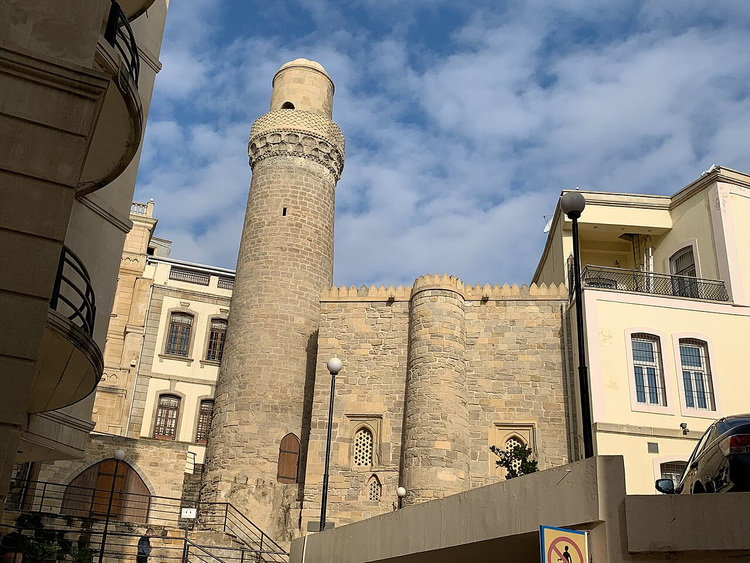
The Muhammad Mosque, or Synyk-Kala, translates as "broken fortress." It was built in the 11th century on the site of an older structure. An inscription on the wall gives the name of the builder: ustad-rais Muhammad, son of Abu-Bakr. That is where the mosque's name came from.
During the assault on the city by the Russian fleet in the first half of the 18th century, a shell damaged the minaret. At that same moment the wind rose and carried the ships back, and the defenders took it as a divine sign. The tower was not restored for a long time, which is why it received the name "broken."
The upper part of the minaret was restored only in the 19th century. The mosque stands in Icherisheher, and entry to the Old City is free, so it is convenient to see it on the way from the Maiden Tower to the Haji Gayib bathhouse.
Haji Gayib Bathhouse
 © Sefer azeri · CC BY-SAPhoto: Sefer azeri, CC BY-SA (https://creativecommons.org/licenses/by-sa/4.0), Wikimedia Commons
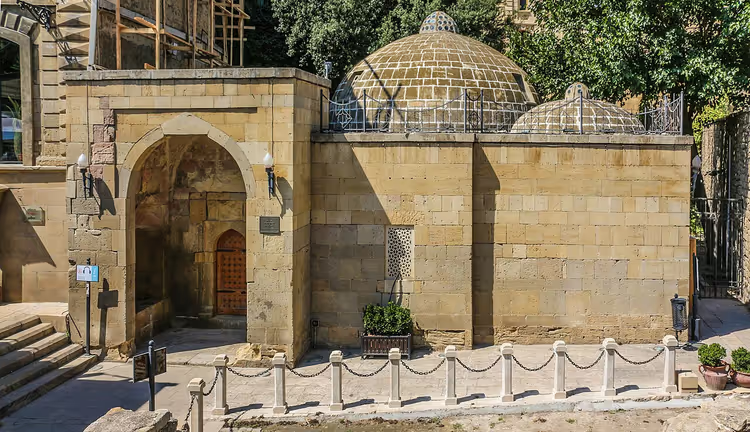
In the East, a hammam served not only for hygiene. Visiting the bathhouse was accompanied by a special ritual, and people also gathered here for negotiations and deals. The Haji Gayib bathhouse was built in the 15th century in a favorable location: trade routes intersected here, and merchants from different countries came together for washing and business meetings.
Archaeologists discovered the hammam only in the 1960s. The bathhouse no longer operates for its original purpose, but visitors can see what a traditional medieval hammam building looked like. Inside there are three rooms: a rectangular entrance hall, a large octagonal hall, and a changing room.
The hall had two pools with hot and cold water. Steam passed through channels under the stone floor, and ceramic pipes supplemented the heating. In the changing room, people drank tea and closed deals after washing. The Haji Gayib bathhouse stands next to the Maiden Tower, on Boyuk Gala Street.
Little Venice Park on the boulevard
 © Nigar2nigarnigar · CC BY-SAPhoto: Nigar2nigarnigar, CC BY-SA (https://creativecommons.org/licenses/by-sa/4.0), Wikimedia Commons
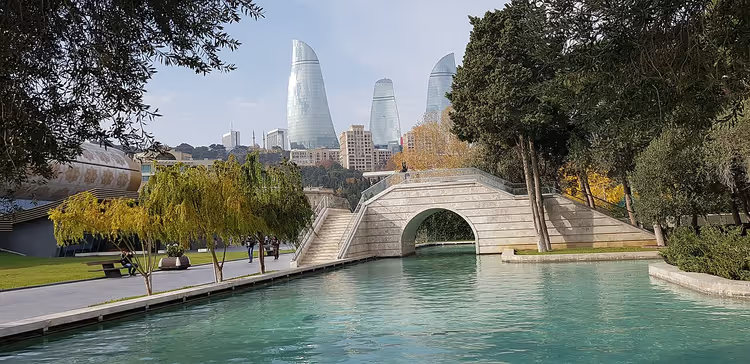
The seaside boulevard is loved by both tourists and Baku residents themselves. Back in the 1960s, a park of islands and connecting canals was created here. It was named Baku Venice, or Little Venice.
In the post-Soviet years the park fell into disrepair, and it was restored only in 2011. Cafes and restaurants returned, and green areas, fountains, and ornate bridges appeared. Tourists are taken along the canals on gondolas, with piers equipped for them.
The canals are more than a kilometer long, and the depth is shallow. Entry is free. Come in the evening, when the lighting is switched on and it gets cooler by the water.
Azerbaijan Carpet Museum
 © Marco Monelli · CC BY-SAPhoto: Marco Monelli, CC BY-SA (https://creativecommons.org/licenses/by-sa/3.0), Wikimedia Commons
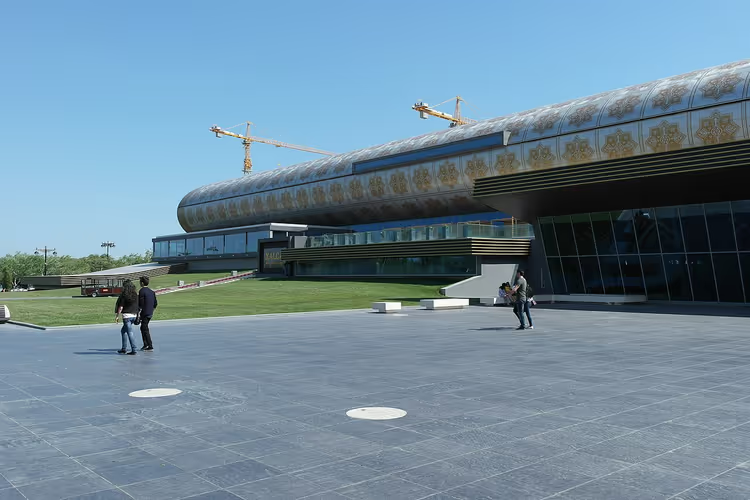
The world's first carpet museum opened in Baku back in the 1960s, in the building of the Juma Mosque. Later the mosque was returned to worshippers, and a new building was built for the museum, one that itself looks like a rolled-up carpet. It immediately became one of the boulevard's new landmarks.
The collection goes beyond a single theme: it includes carpets, ceramics, metalwork, jewelry, national clothing, and embroidery. The collection's main treasures are a fragment of a Tabriz carpet and the 18th-century "Khila Afshan" carpet. Carpets from all regions of the country are represented.
The new building opened in August 2014, and today the museum is open every day except Monday. An adult ticket for foreign tourists costs about 15 AZN (as of 09/2026, museum's official website, ticket overview). The museum has a training center for carpet-weaving schools.
Funicular to the Flame Towers
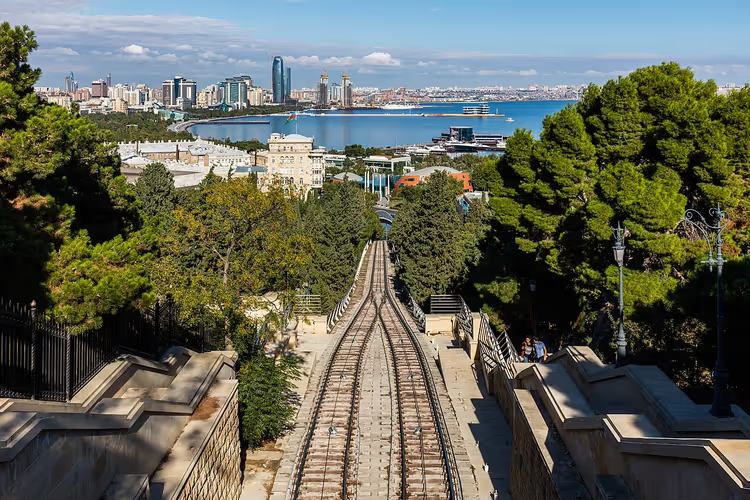 © Diego Delso · CC BY-SAPhoto: Diego Delso, CC BY-SA (https://creativecommons.org/licenses/by-sa/4.0), Wikimedia Commons
In a city built on hills, a funicular is a necessity. Baku's first cable railway started operating back in the 1960s, and ahead of Eurovision it was fully modernized: the old cabins were replaced with new, silent ones. From the car you get a view of the Caspian Sea, the towers, and the green slopes.
In the evening you can see the city flooded with lights, illuminated oil rigs, and lights out at sea. A staircase runs alongside the tracks, so you can walk back down to the promenade without buying a second ticket.
The funicular runs every day except Monday, from 10:00 to 22:00. A one-way ride costs 1 AZN, and cars depart every 10 minutes (as of 09/2026, funicular prices and hours).
The catch: you can only pay with a BakıKart transport card.
How to get there: the station is next to Icherisheher metro station.
Flame Towers
Azerbaijan has been called the Land of Fire since Zoroastrian times. The creators of the Flame Towers complex brought this image to life: three high-rises shaped like tongues of flame. The towers are among the tallest buildings in the country and can be seen from different parts of the capital.
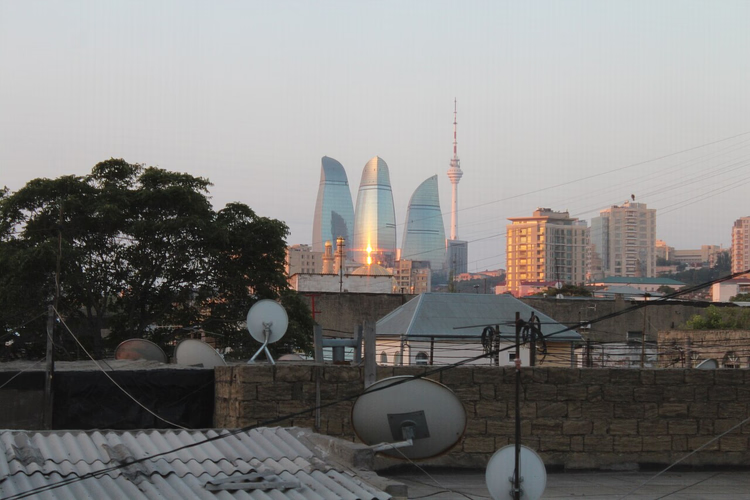 © Stomatoloq Fərid Zey… · CC BY-SAPhoto: Stomatoloq Fərid Zey…, CC BY-SA (https://creativecommons.org/licenses/by-sa/3.0), Wikimedia Commons
In the evening, the facades light up and the screens display moving fire. From a distance, it looks like a blaze raging in the distance. The tallest tower rises almost two hundred meters, the other two are lower. The complex took several years to build, and it changed the city's skyline immediately.
The towers house offices, apartments, and the Fairmont Baku hotel. The best view of them is from the waterfront, especially after sunset. The most convenient way to get there is by funicular from the Icherisheher metro station. The three high-rises stand on a hill and have long become Baku's main nighttime landmark: their illumination is visible from the other end of the boulevard.
Baku eye ferris wheel
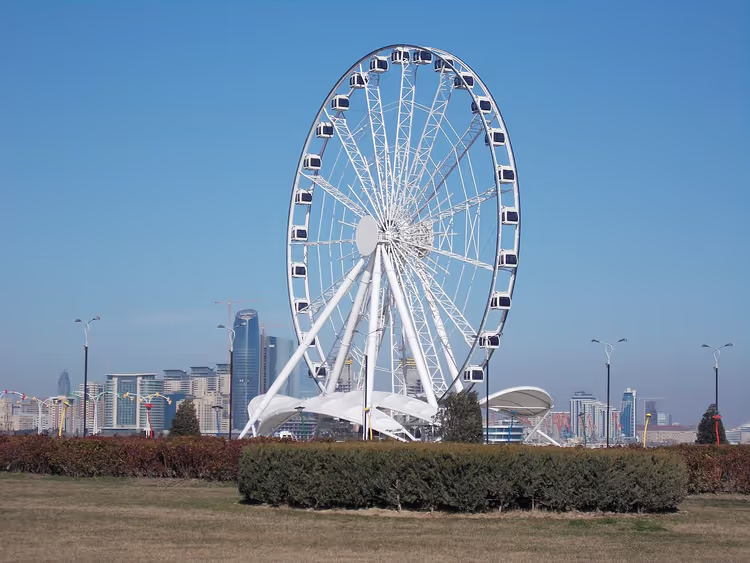 © Tofiq005(Tofiq Vəliyev) · CC BY-SAPhoto: Tofiq005(Tofiq Vəliyev), CC BY-SA (https://creativecommons.org/licenses/by-sa/4.0), Wikimedia Commons
Baku has its own Ferris wheel too: by analogy with the London one, it's called Baku Eye. The cabins rise to a height of about sixty meters, each seating several people. From the top you can see the new Yeni Hayat district, the foundation of the old Sabail fortress, the carpet museum, and a panorama of the bay.
Boarding happens in several cabins at once, so a full rotation takes varying amounts of time. Sometimes the wheel pauses mid-ride, and there's no need to worry: it resumes moving after a minute. The cabins are air-conditioned, and a monitor shows the altitude and outside temperature.
The wheel stands at the end of the Seaside Boulevard, next to the State Flag Square. It operates daily, from morning until late evening. Check the adult ticket price at the ticket office; children get a discount.
The catch: the wheel sometimes pauses while moving.
Who it's for: for those who want to see the city from above and aren't afraid of heights.
Baku Crystal Hall
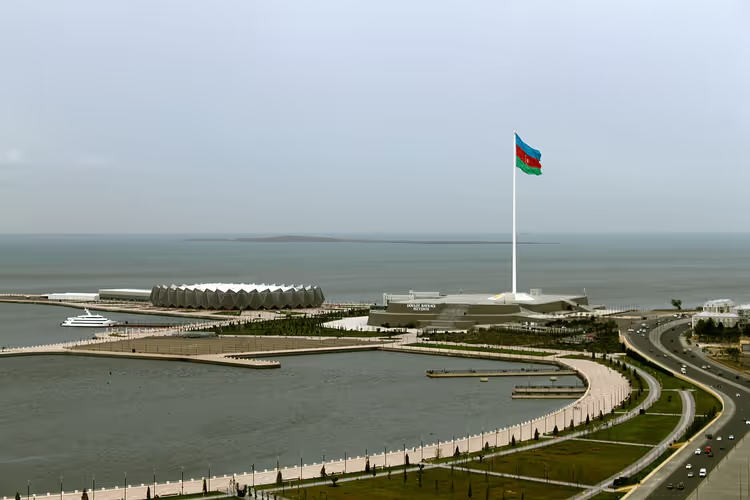 © Urek Meniashvili · CC BY-SAPhoto: Urek Meniashvili, CC BY-SA (https://creativecommons.org/licenses/by-sa/3.0), Wikimedia Commons
Crystal Hall was built for Eurovision, which Azerbaijan hosted after the victory of the duo Ell and Nikki. Because of its unusual shape, the concert venue was immediately nicknamed "Crystal Hall." The structure is assembled from lightweight metal components.
They have numerous LED bulbs built into them. At dusk, the hall glows with multicolored lights, and thin string-like beams stretch from the roof toward the sky. The hall seats tens of thousands of spectators, and the equipment makes it possible to realize any visual concept.
After Eurovision, the hall didn't close. World stars perform here, and major sporting events are held. The hall stands on State Flag Square. It's best to see it in the evening, when the illumination comes on.
Tours and tickets in Baku
Guided tours, skip-the-line tickets and activities — most offers can be cancelled free of charge.
See offers on GetYourGuideThe widget loads once you give your consent.
One-day Baku route on the map
The map shows all the points from this route. The order is simple: Shamakhi Gates, Maiden Tower, Palace of the Shirvanshahs, the waterfront, the funicular, and the Flame Towers. Mark the points in advance so you don't waste mobile data in the Old City.
What to See in Baku in 1 Day
Places on the map
- 1Ali Shamsi's Workshop Artist's house-workshop with art objects on the facade
- 2Museum of Miniature Books The world's smallest books, free entry
- 3Governor's Garden Baku's oldest park by the fortress wall, also known as Khagani Garden
- 4Shamakhi Gate Main pedestrian entrance to the Old City, two arches
- 5Maiden Tower Symbol of Baku, 28 m tall, viewing platform on top
- 6Palace of the Shirvanshahs Residence of the rulers of Shirvan, 13th-16th centuries
- 7Monument to Aliagha Vahid Monument to the poet on Kichik-Gala Street
- 8Muhammad Mosque Sınıq Qala, an 11th-century mosque with a damaged minaret
- 9Haji Gayib Bathhouse 15th-century hammam at the crossing of trade routes
- 10Little Venice Park with canals on the seaside boulevard, gondola rides
- 11Azerbaijan Carpet Museum Building shaped like a rolled-up carpet, collection of carpets and jewellery
- 12Baku Funicular Ascent to the Flame Towers, view of the Caspian Sea
- 13Flame Towers Three flame-shaped high-rises with evening illumination
- 14Baku Eye Ferris Wheel View from about 60 metres at the end of the boulevard
- 15Baku Crystal Hall Eurovision concert venue with LED illumination
⁉️🤔 Frequently asked questions
How much time do you need to explore the Old City?
Allow three to four hours for Icherisheher without rushing. In that time you'll see the Maiden Tower, the Palace of the Shirvanshahs, the Muhammad Mosque, and the workshops. If you walk at a fast pace without stopping, two hours is enough, but then you'll miss the museums.
How much does admission to Baku's main attractions cost?
The Maiden Tower costs 19 AZN, the Palace of the Shirvanshahs 24 AZN, the carpet museum about 15 AZN (as of 09/2026, ticket price summary). Entry to the Old City itself is free, as is viewing most outdoor sites.
How do I get from the airport to central Baku?
Express bus H1 runs around the clock and costs 1.30 AZN with a transport card (as of 09/2026, how to get from the airport). The bus takes you to the 28 May metro station in about 40 minutes. A taxi takes you door to door, but there's no fixed fare.
What to see in Baku in the evening?
Take the funicular up to the Flame Towers and watch the city lights from above. Then walk down to the Seaside Boulevard: in "Little Venice" the lights come on along the canals. Crystal Hall and Baku Eye are also illuminated after sunset.
Do you need cash in Baku?
Yes, cash will come in handy. The funicular requires a BakıKart transport card, and some ticket offices in the Old City don't accept bank cards. Keep some manats on you for tickets and water.
In short: what's worth booking
Baku in one day is a packed but realistic walk. Old City in the morning, the boulevard in the afternoon, lights and panoramic views from above in the evening.
If you're short on time: stick to Icherisheher and the waterfront.
If you love museums: add the carpet museum and the Palace of the Shirvanshahs.
If you're traveling with kids: start with the funicular and Baku Eye.
Before your trip, it's worth taking care of three things in advance. Look for flights through Kiwi.com, and search for hotels in the center on Trip.com.
Choose Baku tours and skip-the-line tickets on GetYourGuide.

A small editorial team writing guides for independent travel. We travel ourselves, but we haven’t been everywhere, so we check prices, opening hours and how to get there against official sources.