
















One day in Cologne: 15 places and a ready walking route
One day in Cologne comes up against a simple limit. There isn't much time, and the city has more than fifteen major sights.
The good news: almost everything important sits close together. From the cathedral to Rheinpark you can get there on foot and by tram, without long transfers. There's bad news too. Starting July 1, 2026, Cologne Cathedral will for the first time let tourists inside with a ticket, and that changes the usual flow of a visit (as of 09/2026, tickets.koelner-dom.de).
Below we've put together 15 places with map distances, current hours, and honest prices. In a full day of daylight you can realistically cover 8-10 central spots; pick the rest based on your interests. Some spots you'll reach on foot, and for two outlying ones you'll take the tram or the cable car.
Ad: this article contains affiliate links, we earn a commission if you book through them, at no extra cost to you.
One-day plan: 15 places in Cologne
💡 In short:
- Get to Cologne Cathedral by 9:00, before the tower line forms and before the museums open.
- Keep the center for the morning, the Romanesque churches and gates for the day, and save Rheinpark and the thermal baths for the evening.
- Prices and opening hours: 09/2026, verified on the Cologne Cathedral website.
The route is designed so you almost never backtrack. Cologne's center is compact: from the cathedral to the City Hall it's less than a kilometer, and most of the route runs along the Rhine. South of the center, add the Romanesque churches and the Severinstorburg, and save a boat ride or the thermal baths for the evening.
If you only have half a day, drop the palace in Brühl, Phantasialand, and the cable car. They sit off to the side and each requires a separate trip. The remaining spots fit into an easy walk.
Cologne Cathedral
 © CEphoto, Uwe Aranas · CC BY-SAPhoto: CEphoto, Uwe Aranas, CC BY-SA (https://creativecommons.org/licenses/by-sa/4.0), Wikimedia Commons
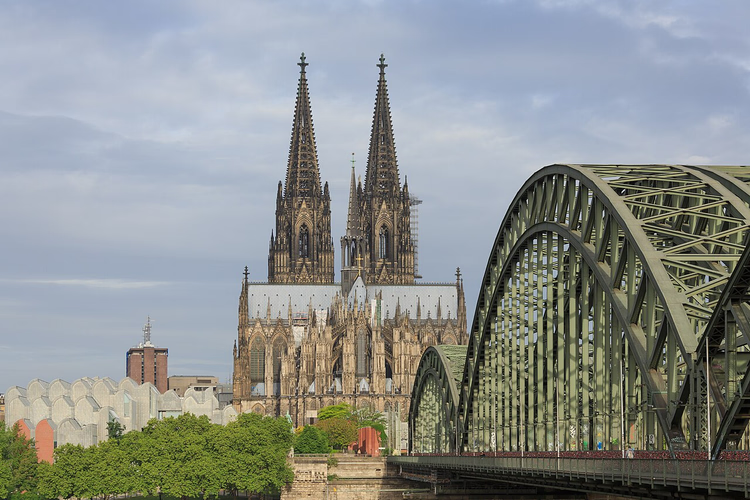
Cologne Cathedral stands right next to the main train station. You'll see its towers as soon as you step off the train. It's the second-tallest church in the world after Ulm Minster, with spires rising to 157 meters (according to the cathedral's official website). The foundation stone was laid in 1248, and construction was only finished in 1880.
The tower climb goes up 533 steps and takes most people 30-45 minutes (according to the tower climb page). The viewing platform at the top is narrow, and in rain and wind it's better not to go up. Get your ticket online in advance: starting July 1, 2026, cathedral entry is paid, and morning tower slots go first.
Inside is the Shrine of the Three Kings, and for centuries pilgrims walked to Cologne for it. During the day it's always crowded, and during services tourists are asked to wait at the entrance.
- Who it's for: anyone willing to climb 533 steps for a panorama of the old town.
- The catch: in summer a long line forms for the tower; without an online ticket you'll lose an hour at the entrance.
- Opening hours: daily from morning to evening, tourists are not admitted during services (according to the Kölner Dom website).
Augustusburg and Falkenlust Palaces
 © Thomas Wolf , www.foto-tw.de · CC BY-SAPhoto: Thomas Wolf , www.foto-tw.de, CC BY-SA (https://creativecommons.org/licenses/by-sa/3.0/de/deed.en), Wikimedia Commons
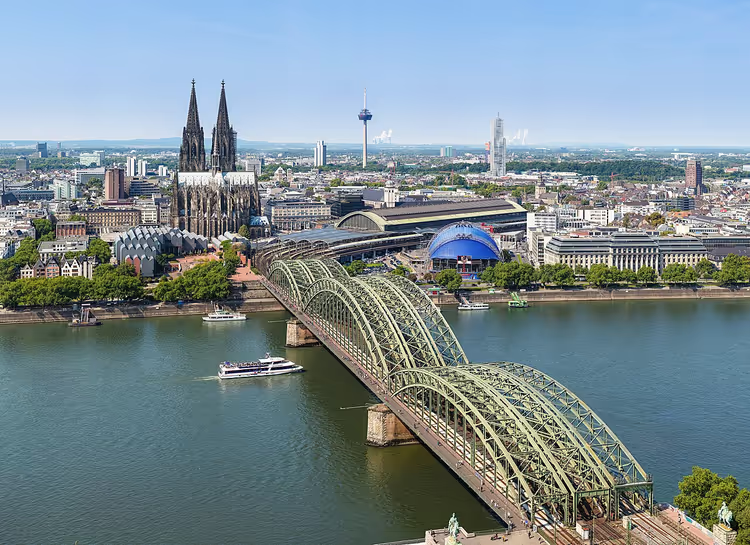
About 14 km from Cologne, in the town of Brühl, stands the summer residence of the Electors of Cologne. Augustusburg Palace was built in 1725 for Archbishop Clemens August, and the Falkenlust hunting lodge was added next to it over fifteen years (according to Schlösser Brühl). Both buildings are UNESCO World Heritage Sites.
Inside, the grand staircase of Augustusburg is stunning. At Falkenlust, look for the Indian lacquer cabinet with Asian motifs. Over the years, the palace has hosted Elizabeth II, Mikhail Gorbachev, Nelson Mandela, and Pope John Paul II.
You can reach Brühl by train from central Cologne. The palace park with its double flowerbeds was designed by French gardener Dominique Girard, who had previously worked on the gardens of Nymphenburg.
- Hours: seasonal; some rooms are closed in winter, check the official website for the schedule.
- Address: Schlossstraße 6, Brühl (according to the Brühl palaces page).
- The catch: the complex is 14 km from the center, so plan at least half a day for the visit.
Phantasialand
 © Wolkenkratzer · CC BY-SAPhoto: Wolkenkratzer, CC BY-SA (https://creativecommons.org/licenses/by-sa/3.0), Wikimedia Commons
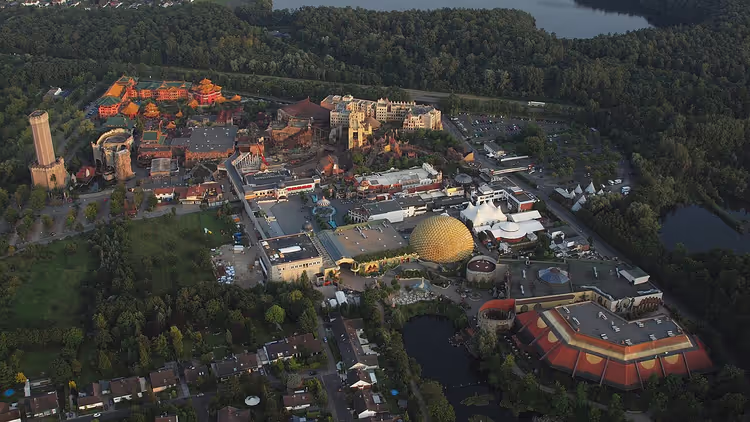
Phantasialand theme park is divided into 6 themed zones (according to Phantasialand). Visitors are greeted by settings from old Berlin, Mexico, medieval China, the Wild West, and Africa.
The main attraction for thrill-seekers is the Night Hawk coaster. The cars race through the dark along steep turns and climbs. If you prefer a more relaxed experience, try the hot air balloon rides, the suspended monorail, and the boats.
The park is open from March through January, and some zones are closed in the off-season. Arrive early: in one day you'll only cover half the grounds.
- Address: Berggeiststraße 31-41, Brühl (according to the park schedule).
- The catch: the park takes a full day, leaving no time for the rest of Cologne.
Museum Ludwig
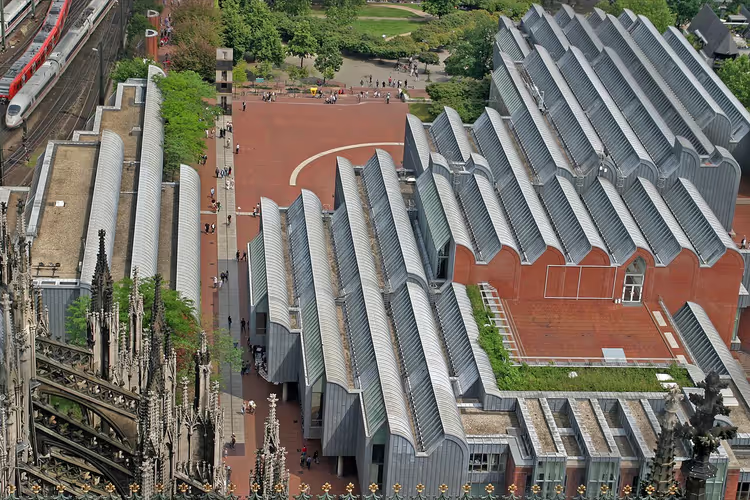 © Thomas Robbin · CC BY-SAPhoto: Thomas Robbin, CC BY-SA (http://creativecommons.org/licenses/by-sa/3.0/), Wikimedia Commons
Museum Ludwig stands right behind the cathedral, on Heinrich-Böll-Platz. It houses one of the largest collections of 20th-century art in Europe (according to the museum's official website).
The core of the collection came from the private holdings of patron Peter Ludwig. He gave the city several hundred works, and the museum continued to grow over the following decades. Today you'll see Picasso, Chagall, Malevich, and Rodchenko here, along with pop art and the Russian avant-garde.
The exhibition changes, and some galleries are occasionally closed for installation. Check ticket prices and opening hours on the official website before your visit (as of 09/2026, tickets and hours).
- Closed: Mondays, the museum is closed on this day (according to the visit page).
- The catch: the collection is enormous, and a quick hour will only give you a glimpse of a small part.
Hahnentorburg Gate
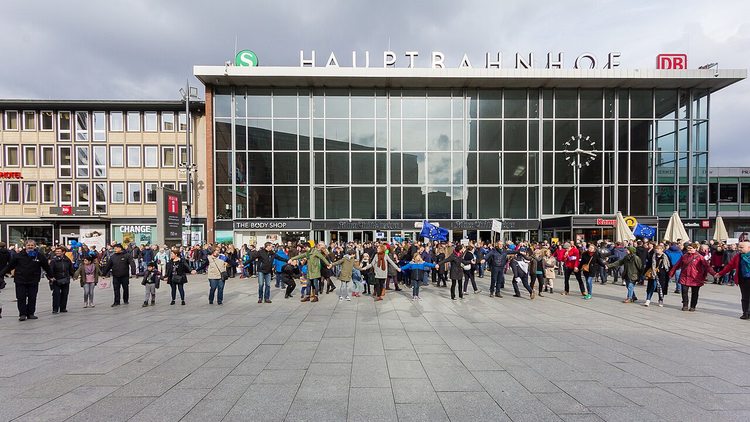 © Raimond Spekking · CC BY-SAPhoto: Raimond Spekking, CC BY-SA (https://creativecommons.org/licenses/by-sa/4.0), Wikimedia Commons
The Hahnentorburg gate on Rudolfplatz was once the western ceremonial entrance to the city. Emperors rode through it into Cologne to pay homage to the relics of the Magi (according to the City of Cologne portal).
Over time, the walls housed a prison, and in the late 19th century a history museum moved in. British bombs during World War II destroyed part of the complex. After restoration, the building served as a gallery, and today it houses the headquarters of the Cologne Carnival honor guard.
From here you can walk along the shopping street straight to the cathedral. It's a convenient spot to start your walk from the west.
- The catch: tourists are not allowed inside, you can only see the facade.
Cable car across the Rhine
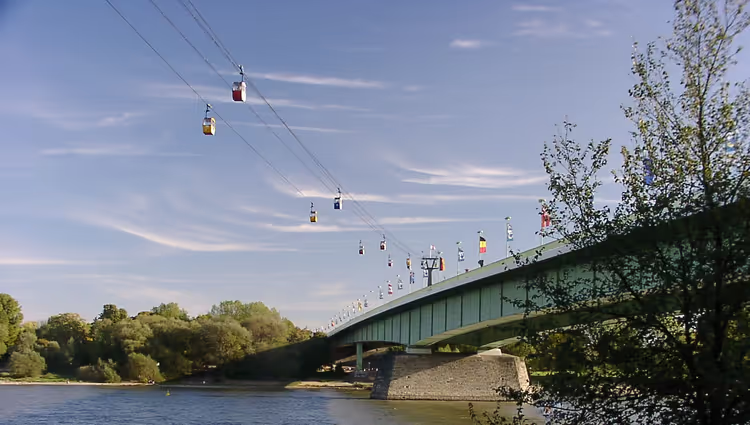 © Ebertplatz aka Gerd Franke, Cologne/Köln (www.ebertplatz.de) · CC BY-SAPhoto: Ebertplatz aka Gerd Franke, Cologne/Köln (www.ebertplatz.de), CC BY-SA (http://creativecommons.org/licenses/by-sa/3.0/), Wikimedia Commons
The cable car spans the Rhine between the zoo and Rheinpark. The gondolas travel at a height of 34 meters, giving you a bird's-eye view of the cathedral, the old town, and the green riverbank (according to koeln.de).
The cable car opened in 1957, and its first passenger was Chancellor Konrad Adenauer. The line is about 935 meters long, and each gondola seats four people.
The line runs daily from 10:00 to 18:00, with the last boarding at 17:45. The season runs from mid-March to early November; the cable car does not operate in winter (according to the cable car page).
- How to get there: take bus 140 to the Zoo/Flora stop or routes 150, 250, and 260 to Claudius-Therme (according to transit information).
- The catch: the cable car is closed in winter, so you'll have to find a panoramic view elsewhere.
Church of the Assumption of the Blessed Virgin Mary
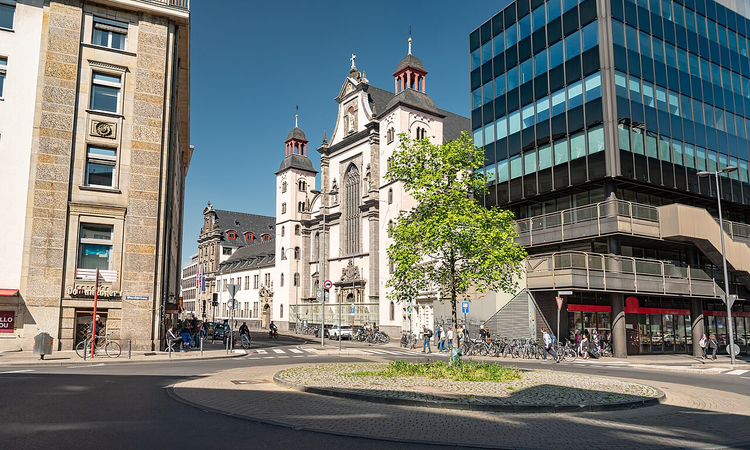 © Jorge Franganillo · CC BYPhoto: Jorge Franganillo, CC BY (https://creativecommons.org/licenses/by/4.0), Wikimedia Commons
The Church of the Assumption of the Blessed Virgin Mary stands on Marzellenstrasse near the train station. Construction began in 1618, and the church took almost seventy years to complete (according to St. Mariä Himmelfahrt).
Elector Ferdinand of Bavaria gave the church a gilded altar 22.5 meters high. Napoleonic troops looted and closed the church, and during World War II the building was completely destroyed. It was rebuilt only by the late 1970s.
Today it is the parish church of Cologne's Italian community. In the main nave you'll see a mechanical nativity scene, the only one in the city.
- Address: Marzellenstrasse 26 (according to church information).
- The catch: during services, visitors cannot tour the church.
St. Martin's Church
Cologne locals call St. Martin's Church "Big St. Martin." It is one of the city's 12 Romanesque basilicas (according to Groß St. Martin).
Construction began back in the 12th century on the foundation of a burned-down Benedictine monastery. One massive tower rises 70 meters above the old part of the city.
From the outside, the church looks ornate, but inside the decor is almost ascetic. Here you'll see a crucifix, a clover-leaf-shaped altar, and a fragment of an ancient column.
- Hours: weekdays from 9:30 to 19:30, weekends from 10:00 to 19:30 (according to the Romanesque basilicas guide).
- The catch: services are held on Sunday mornings, and tourists are asked to wait.
Hohenzollern Bridge
 © Raimond Spekking · CC BY-SAPhoto: Raimond Spekking, CC BY-SA (https://creativecommons.org/licenses/by-sa/4.0), Wikimedia Commons
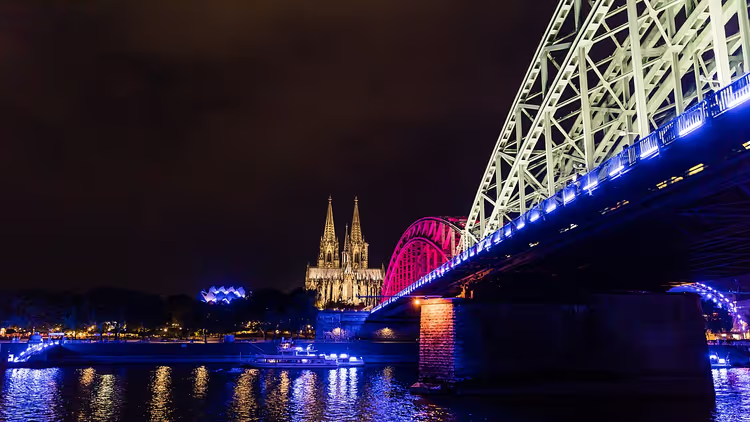
The Hohenzollern Bridge spans the Rhine and serves as the main rail gateway into the city. At night it's lit by floodlights, making it one of the best spots for evening photos (according to Hohenzollernbrücke).
The first crossing here opened in 1911, and after the destruction of World War II, traffic was restored in 1948. Arrivals were once greeted by equestrian statues of emperors.
The pedestrian section of the bridge is covered with love locks. The tradition started in the early 21st century, and city services remove the excess metal to lighten the structure. Walk across the bridge: from here you get the best view of the cathedral and the old town.
- The catch: the locks have completely covered the railings, leaving almost no clear space for a photo.
Tünnes and Schäl
 © Superbass · CC BY-SAPhoto: Superbass, CC BY-SA (https://creativecommons.org/licenses/by-sa/3.0), Wikimedia Commons
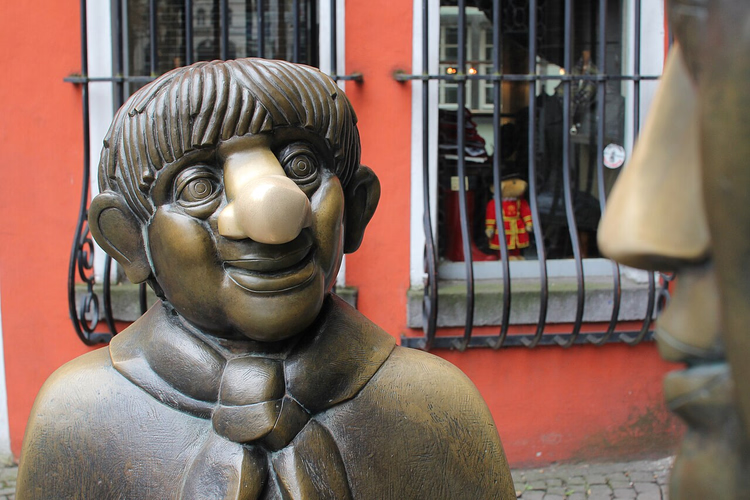
On Alter Markt square stand two bronze figures beloved by all of Cologne. The thin, sly Schäl in a tuxedo and bowler hat, next to the good-natured, chubby Tünnes in simple peasant clothing (according to Tünnes und Schäl).
These characters were created in the early 19th century by Johann Christoph Winters, founder of the Hänneschen puppet theater. The pair was cast in metal only in 1974.
Tourists have a tradition. Stand on the toes of both figures' shoes and rub Tünnes's nose. Then good luck in business is guaranteed.
- Getting there: the sculpture stands on Alter Markt, next to the City Hall.
- The catch: the figures are small and easy to miss among the cafes and stalls.
City Hall
 © Asif Masimov masimovasif.net · CC BY-SAPhoto: Asif Masimov masimovasif.net, CC BY-SA (https://creativecommons.org/licenses/by-sa/3.0), Wikimedia Commons
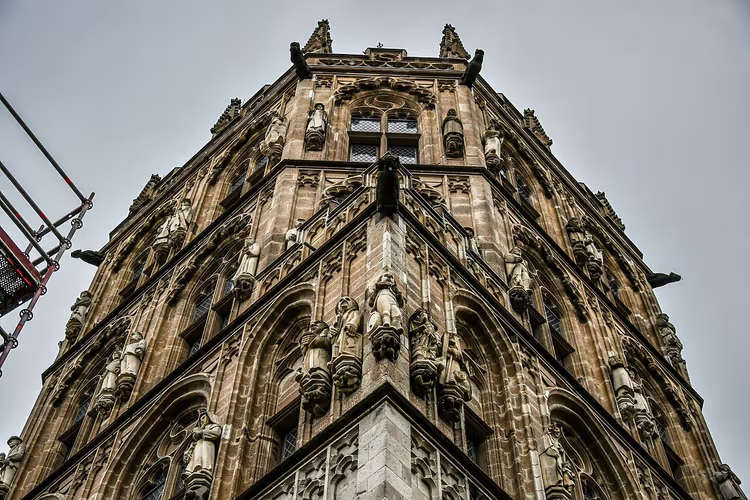
Cologne City Hall on Rathausplatz is considered the oldest in Germany. The city council met here as early as the 12th century, and the 61-meter Gothic tower was completed by 1414 (according to koeln.de).
The facade of the five-story building is decorated with 124 sandstone sculptures. The tower features a carillon of 45 bronze bells that plays one of its programmed melodies four times a day (according to the city portal).
Through the baroque entrance you enter a tall hall with a copy of the altar of the city's patron saints. The original altar is kept in Cologne Cathedral.
- The catch: the halls of the City Hall are open on a limited basis, usually only with a guided tour.
St. Severin's Gate
 © Raimond Spekking · CC BY-SAPhoto: Raimond Spekking, CC BY-SA (https://creativecommons.org/licenses/by-sa/4.0), Wikimedia Commons
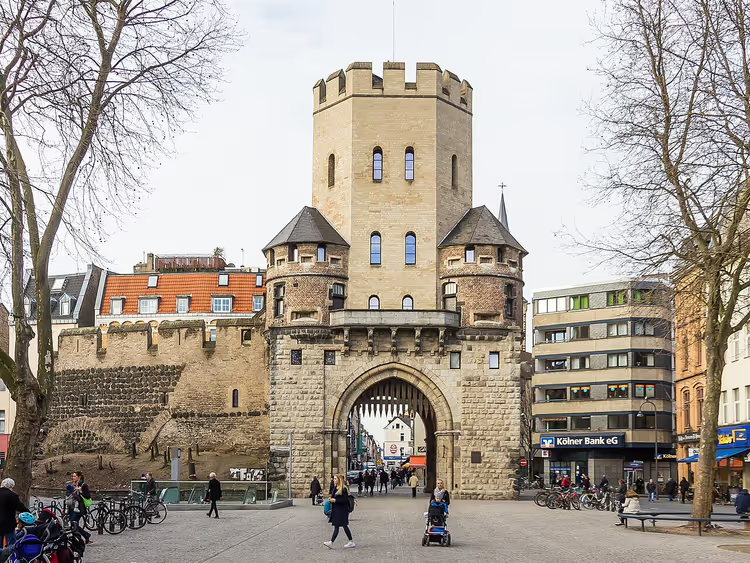
The Gate of St. Severin is what remains of the medieval city wall. The road to Bonn, about 30 km away, once passed through it (according to Severinstorburg).
The massive hexagonal tower with a crenellated top served as more than just a customs post. City officials welcomed Prussian kings and foreign monarchs here.
In more recent times, the building has housed a museum and a community center. From here you can easily get back to the center along a straight street.
- The catch: the tower is not open to the public, you can only view it from the outside.
Flora Botanical Garden
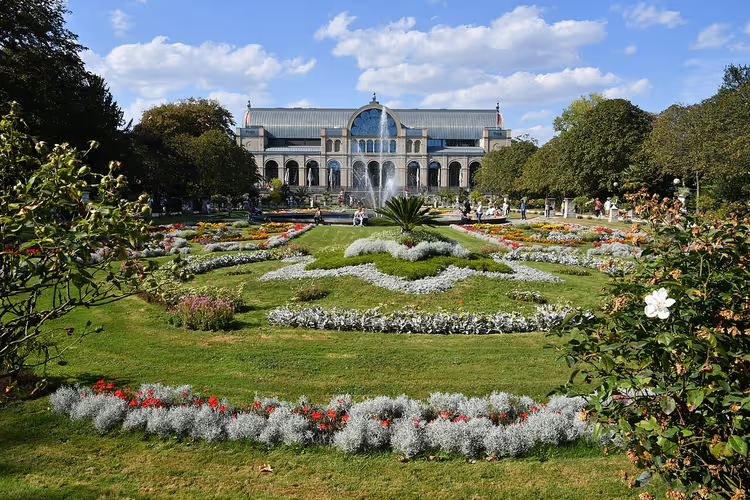 © Ladislaus Hoffner · CC BY-SAPhoto: Ladislaus Hoffner, CC BY-SA (https://creativecommons.org/licenses/by-sa/4.0), Wikimedia Commons
Flora Botanical Garden lies next to the zoo in the Riehl district on the left bank, and admission is free. Across more than 11 hectares you'll find sequoias, beeches and Asian laurels, with sculptures placed between fountains and ponds (according to Flora).
The garden's main pride is four connected greenhouses. They hold a collection of several thousand tropical and desert plants, so it stays warm inside all year round.
Next to the palm avenue there are benches overlooking a small waterfall. Getting there is easy: get off at the Zoo/Flora stop, right at the garden entrance.
- How to get there: take trams 16 and 18 or bus 140 to the Zoo/Flora stop (according to the transport guide).
- The catch: in the evening the greenhouses close earlier than the park.
A boat trip on the Rhine
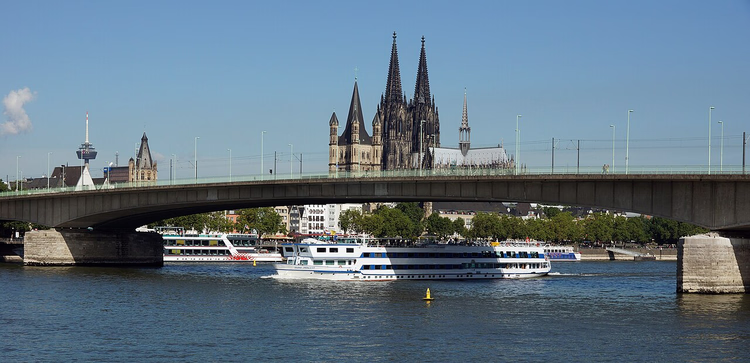 © Rolf Heinrich, Köln · CC BYPhoto: Rolf Heinrich, Köln, CC BY (https://creativecommons.org/licenses/by/3.0), Wikimedia Commons
The promenade south of the cathedral is considered the city's most recognizable spot. Open-air beer gardens line the waterfront, and KD sightseeing boats depart from the piers (according to KD Rheinschiffahrt).
A one-hour panoramic cruise on the Rhine costs from €20 per person (as of 09/2026, KD schedule and prices). On board there's an audio guide in German and English, so you'll know what you're passing.
Cruises run from late March to late October. Take a deck seat closer to evening: the illuminated bridge and cathedral look especially good.
Cruises and tours in Cologne on GetYourGuide
- The catch: there are no cruises out of season, and in winter there's nothing to replace the trip with.
Claudius Thermae
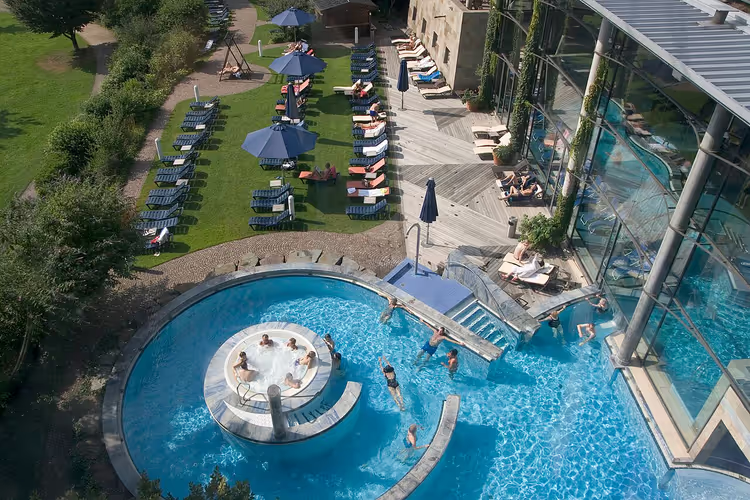 © Maksym Kozlenko · CC BY-SAPhoto: Maksym Kozlenko, CC BY-SA (https://creativecommons.org/licenses/by-sa/4.0), Wikimedia Commons
The Claudius Therme baths stand in Rheinpark and are styled after ancient Roman buildings. The complex is open daily from 9:00 AM to midnight, and the thermal pool stays at no lower than +23 °C (according to Claudius Therme).
Two hours at the baths cost from €19.50 on weekdays and from €22.50 on weekends (as of 08/2026, prices and hours for the baths). Besides the pools, there are several saunas: herbal, Finnish, Russian banya, and a panoramic one with a view of the cathedral.
Come here in the evening if your legs are aching after a long walk. The complex has a cafe where you can have a relaxed dinner.
Tours and tickets in Cologne
Guided tours, skip-the-line tickets and activities — most offers can be cancelled free of charge.
See offers on GetYourGuideThe widget loads once you give your consent.
- The catch: weekend rates are higher, and there can be a line to get in during the evening.
Cologne walking route on the map
Below is a map with our route: the cathedral, the old town, the Romanesque churches, and Rheinpark. Open it on your phone so you don't have to backtrack along the same streets.
What to see in Cologne in one day
Places on the map
- 1Cologne Cathedral The world's second-tallest church, the Shrine of the Three Kings
- 2Augustusburg and Falkenlust Palaces Summer residence of the electors in Brühl, a UNESCO site
- 3Phantasialand Theme park with the Night Hawk roller coaster
- 4Museum Ludwig One of the largest collections of 20th-century art in Europe
- 5Hahnentor Gate Former western city gate, headquarters of the carnival guard
- 6Cologne Cable Car Gondolas over the Rhine between the zoo and Rheinpark
- 7St. Mary's in the Capitol Basilica A gilded altar 22.5 metres high, a mechanical nativity scene
- 8Great St. Martin Church Great St. Martin, one of the city's 12 Romanesque basilicas
- 9Hohenzollern Bridge The city's main railway entrance, padlocks on the railings
- 10Cologne City Hall Germany's oldest city hall, a carillon of 45 bells
- 11Severinstor Gate A tower of the medieval city wall on the road to Bonn
- 12Flora Botanical Garden Greenhouses with tropical plants in Rheinpark
- 13Claudius Thermal Baths A thermal complex in Rheinpark with saunas and a view of the cathedral
⁉️🤔 Frequently asked questions
How much time do you need for Cologne Cathedral?
Allow about an hour to see the interior, plus another 30-45 minutes to climb the tower (according to the Turmbesteigung overview). It's best to buy your ticket online in advance.
What can you fit into one day in Cologne?
During daylight hours you can realistically cover 8-10 central sights: the cathedral, Museum Ludwig, Alter Markt, the City Hall, Hohenzollern Bridge, and the Romanesque churches. Brühl Palace and Phantasialand fall outside a one-day itinerary if you're traveling without a car.
When does the cable car run?
The line across the Rhine operates seasonally, from mid-March to early November. The cable car does not run in winter (according to the line schedule).
How much does a Rhine cruise in Cologne cost?
A one-hour KD panoramic cruise costs from €20 per person (as of 09/2026, KD panoramic cruise). Cruises run from late March to late October, with an audio guide on board in German and English.
Is it worth buying tickets in advance?
For the cathedral viewing platform and popular museums, yes, especially on weekends and during peak vacation season. For the cable car and sightseeing boats, you can buy tickets on site, but in good weather the lines grow by midday.
In short: what's worth booking
If you only have one day, start with Cologne Cathedral and finish with the thermal baths or a Rhine cruise. That way you'll fit in both the main sights and some relaxation.
If you're traveling with kids: get a Phantasialand ticket and don't plan anything else. If you love art: prioritize Museum Ludwig and the Romanesque churches. If you want panoramic views: the cable car and a boat trip will fully cover that.
It's worth buying tickets and checking prices online in advance so you don't lose your morning standing in lines.

A small editorial team writing guides for independent travel. We travel ourselves, but we haven’t been everywhere, so we check prices, opening hours and how to get there against official sources.