
















Valencia in one day: 15 places from the Old Town to the Oceanarium
Valencia fits into one day if you plan your route in advance. The old town is compact: you can walk from the Cathedral to the Silk Exchange in ten minutes. Beyond that, distances get long, and without a plan your day falls apart into taxis and lines.
Below are the places you can realistically see in 24 hours. We go from the museum in Turia Park through the medieval gates to the City of Arts and Sciences. The Museum of Fine Arts is free, while the bullring, Bioparc, and Oceanogràfic charge for tickets (checked on 09/14/2026 on the official pages of the museums and the tourist office).
Ad: this article contains affiliate links. We earn a commission if you book through them, at no extra cost to you.
How to see Valencia in one day
💡 In short:
- In the morning, take the old town: the Cathedral, Plaza de la Reina, the Silk Exchange, and the city hall are all close together.
- After lunch, pick one farther destination: Turia Park with the City of Arts and Sciences, Bioparc, or Albufera.
- Check prices and opening hours: 09/2026, verified on the official pages of the museums and the Valencia tourist office.
Compare admission and hours in advance so you don't lose the day at ticket counters:
Place | Admission | Hours | Source |
|---|---|---|---|
Museum of Fine Arts | free | Tue-Sun 10:00-20:00, Mon closed | |
Serranos Towers and Quart Gate | about €2, free on Sunday | Tue-Sun, Mon closed | |
La Lonja de la Seda | about €2, free on Sunday | check with the tourist office | |
Bioparc | from €24 | daily from 10:00 | |
Oceanogràfic | from €36 to €43 | daily from 10:00 |
1. Museum of Fine Arts
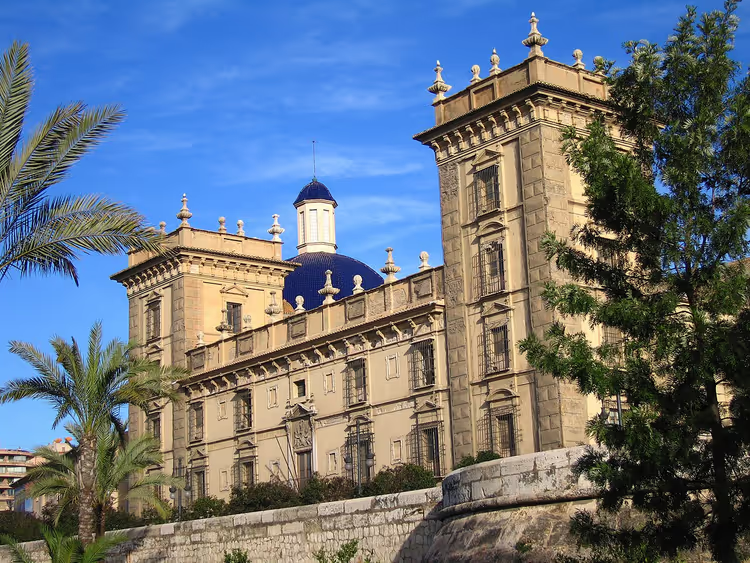
The Museum of Fine Arts (Museo de Bellas Artes) holds one of the best painting collections in the country. It occupies an old college building in Turia Park. During the civil war it served as a hospital; later the building and the neighboring church were handed over to the museum.
The building stands in Turia Park, on the site of a former riverbed. Admission is free, closed on Mondays, and on other days the doors are open from 10:00 to 20:00 (verified 09/14/2026 on the official tourist office website). You will see paintings by El Greco, Velázquez, and Goya, Gothic iconostases, and Piranesi etchings. The visit takes about two hours; set aside an additional hour for the Sorolla collection.
2. Palace of the Generalitat
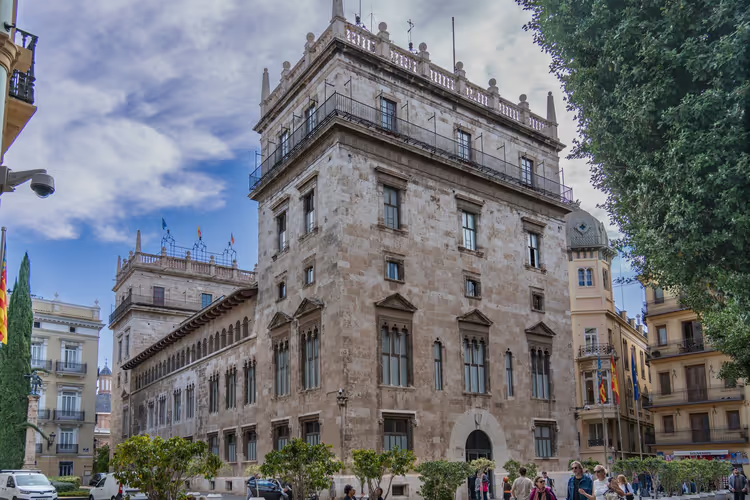
The Palace of the Generalitat (Palau de la Generalitat) was first built in the 15th century for meetings of the deputies of the Kingdom of Valencia. Today it houses the government of the autonomous community. Over the centuries the building was rebuilt more than once: first the eastern tower was added, then the western one.
Visitors are admitted in groups, so book your tour in advance. You will see the Royal Hall with portraits of rulers, the old chapel, and the Golden Hall with its richly decorated ceiling. The building's appearance blends Gothic, Renaissance, and Neoclassical styles. The palace walls remember sessions of the Cortes, and today official delegations are received here.
If you arrive in the morning, the easiest way to reach the center is with a transfer: book a car from Valencia airport.
3. Plaza de Toros bullring
 © Diego Delso · CC BY-SAPhoto: Diego Delso, CC BY-SA (https://creativecommons.org/licenses/by-sa/3.0), Wikimedia Commons
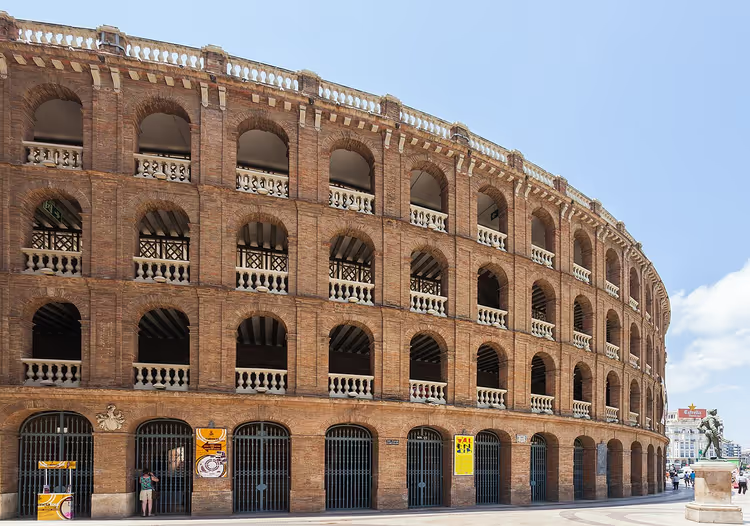
Plaza de Toros (Plaza de Toros de Valencia) is one of the largest arenas in the country, built in the 19th century. The arena seats about 14,000 spectators (as of 09/2026, arena website). The brick building is encircled by numerous arcaded galleries.
Not everyone approves of bullfighting, but the inside is worth visiting on a tour. You will be taken through the stands and shown the bullfighting museum: costumes, photographs, and a cape painted by Picasso. The tour ticket is paid; check the exact price on the arena's website.
4. Serranos Towers
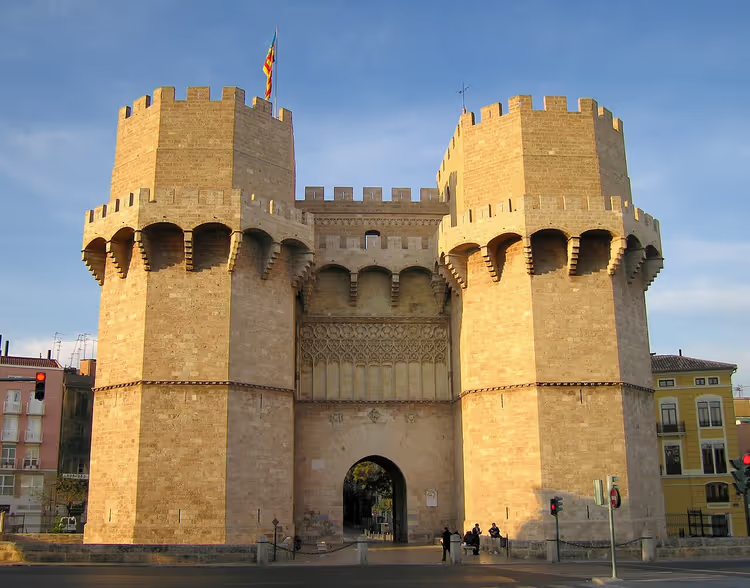
The Serranos Towers (Torres de Serranos) stood at the northern entrance to the city. Only two gates remain from Valencia's medieval wall: Serranos in the north and Quart in the west. Climbing to the viewing platform gives you the best view of the Old Town.
During the civil war, paintings from Madrid were brought here: the thick walls and concrete floor protected them from bombing. Admission costs about €2, free on Sundays and holidays (as of 09/2026, tourist office page).
5. Serranos Gate
The Serranos Gate was built in the late 14th century from gray limestone. The work was led by architect Pere Balaguer. Distinguished guests entered the city through this gate, and royal decrees were read to the townspeople here.
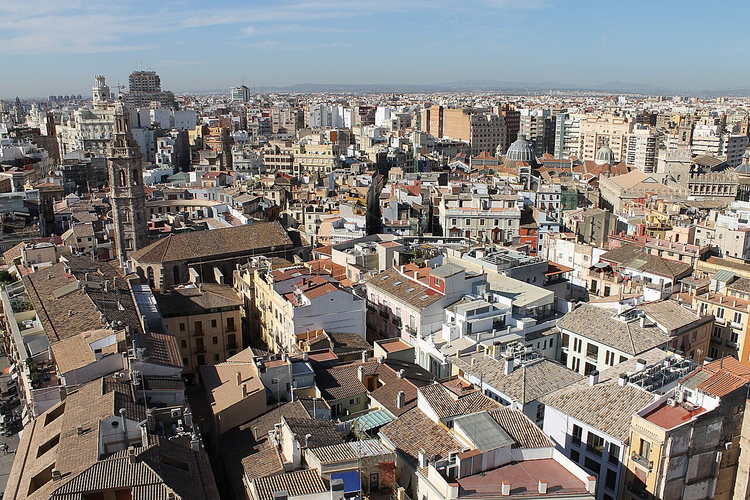 © Nicolas Vollmer from Munich [Allemagne] · CC BYPhoto: Nicolas Vollmer from Munich [Allemagne], CC BY (https://creativecommons.org/licenses/by/2.0), Wikimedia Commons
The gate was part of the fortress wall. After a fire in the late 16th century, prison cells were set up in the towers. Later the wall was demolished, but the gate survived. Today you enter the Old Town through it again from Turia Park, and city festivals start from here.
6. Bioparc
 © Googledance · CC BY-SAPhoto: Googledance, CC BY-SA (https://creativecommons.org/licenses/by-sa/1.0), Wikimedia Commons
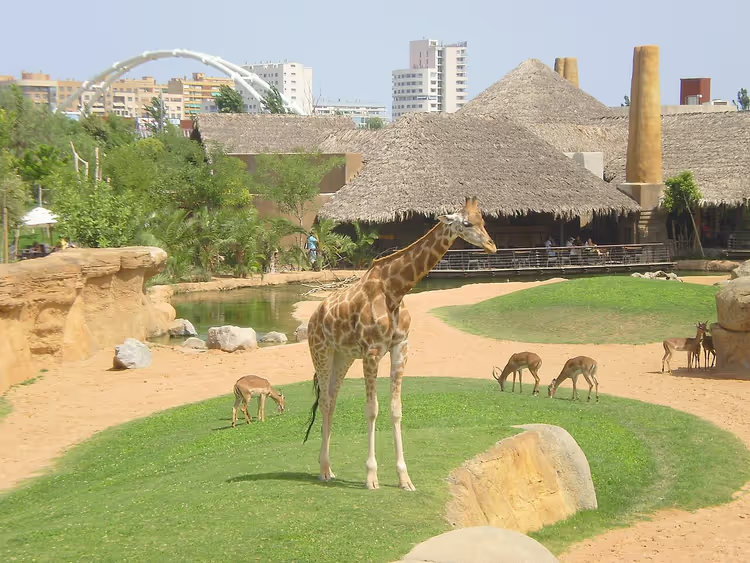
Bioparc (Bioparc Valencia) operates without bars: the animals live in the "Savanna", "Equatorial Africa", and "Madagascar" zones. Flash photography is not allowed, and neither is feeding the animals.
Half a day is enough. Besides lions, giraffes, and zebras, white rhinos, hippos, and elephants live here, and the "Baobab Forest" is made of artificial trees. Children usually linger at the lemurs from Madagascar: they are sociable and come up to meet you on their own. An adult ticket costs from €24, with the price depending on the date (as of 09/2026, park ticket office). Come at opening time, before it gets hot and crowded.
7. Cathedral
 © Diego Delso · CC BY-SAPhoto: Diego Delso, CC BY-SA (https://creativecommons.org/licenses/by-sa/3.0), Wikimedia Commons
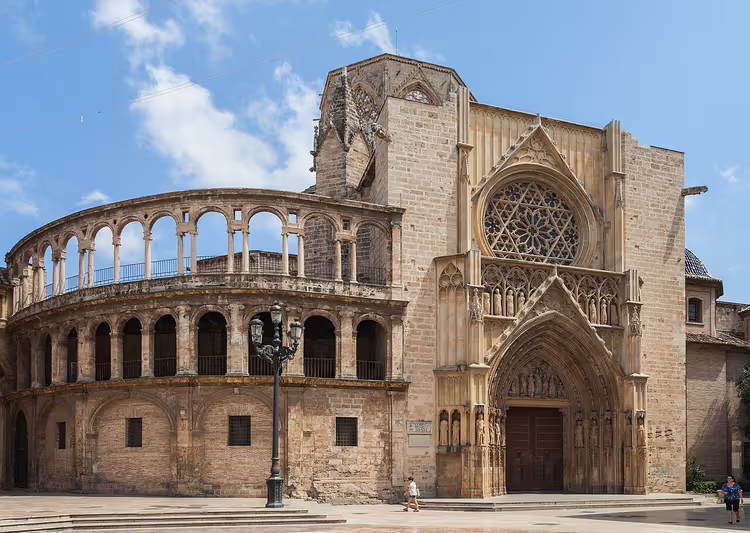
Valencia Cathedral is dedicated to the Assumption of the Virgin Mary. It was built from the 13th to the 15th century, so Romanesque, Gothic, and Baroque styles coexist in a single building.
Inside is a chalice believed to be the Holy Grail. The cathedral has a cruciform layout, is nearly 100 m long, and its walls are decorated with 15th-century frescoes by local and visiting Italian masters. During the civil war the cathedral suffered fire damage and was later restored. Admission is paid, and a separate ticket is required to climb the El Micalet bell tower. Come at opening time, when there is almost no one at the Grail. Check hours and prices on the Valencia tourism office page.
8. Plaza de la Reina
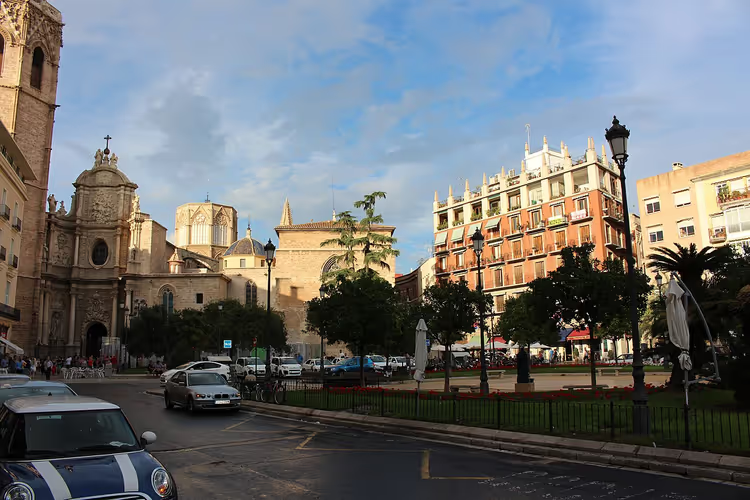 © tiger rus · CC BYPhoto: tiger rus, CC BY (https://creativecommons.org/licenses/by/3.0), Wikimedia Commons
Plaza de la Reina (Plaza de la Reina) adjoins the cathedral. It offers the best view of the El Micalet bell tower, considered a symbol of Valencia. On the square you can buy souvenirs and flowers, and in a small garden people rest in the shade.
City tours also start here. From the square depart both horse-drawn carriages styled like old coaches and air-conditioned tourist buses. You can compare Old Town tours in advance so you don't waste your morning.
9. Silk exchange, La Lonja de la Seda
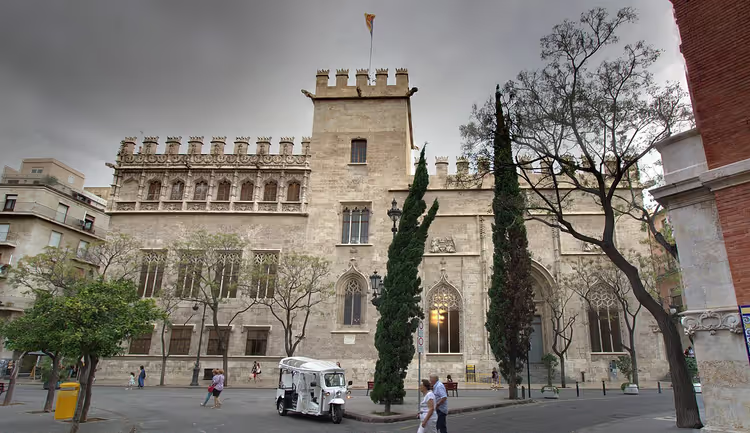 © Juan Mayordomo · CC BY-SAPhoto: Juan Mayordomo, CC BY-SA (https://creativecommons.org/licenses/by-sa/4.0), Wikimedia Commons
La Lonja de la Seda (Lonja de la Seda) is a reminder of how Valencia traded silk. Valencian silk was worn by noble ladies across Europe, and up to 25,000 residents were tied to the craft (as of 09/2026, tourism office information).
The building was constructed in the second half of the 15th century in Gothic and Renaissance styles. You will see the Columned Hall, the Orange Tree Courtyard, and the Hall of the Sea Consulate. The main hall is decorated as a garden of paradise: it was believed that a temple of commerce stood here. It also housed a prison for bankrupt merchants. Admission costs about €2, free on Sundays and holidays (as of 09/2026, tourism office page).
10. City Hall
City Hall (Ayuntamiento de Valencia) consists of two connected buildings: the old one was built in the 18th century, the new one in the 20th. The first building previously housed a college for poor girls.
Admission is free on weekdays. The facade is crowned by a clock tower and a balcony from which city officials address residents on holidays. A staircase of Italian marble leads to the Crystal Hall with stained glass and Bohemian crystal chandeliers. The Historical Museum inside holds old maps of Valencia, a 13th-century banner, and portraits of kings. If debates are taking place in the Assembly Hall, your visit will have to be postponed.
11. Quart Towers
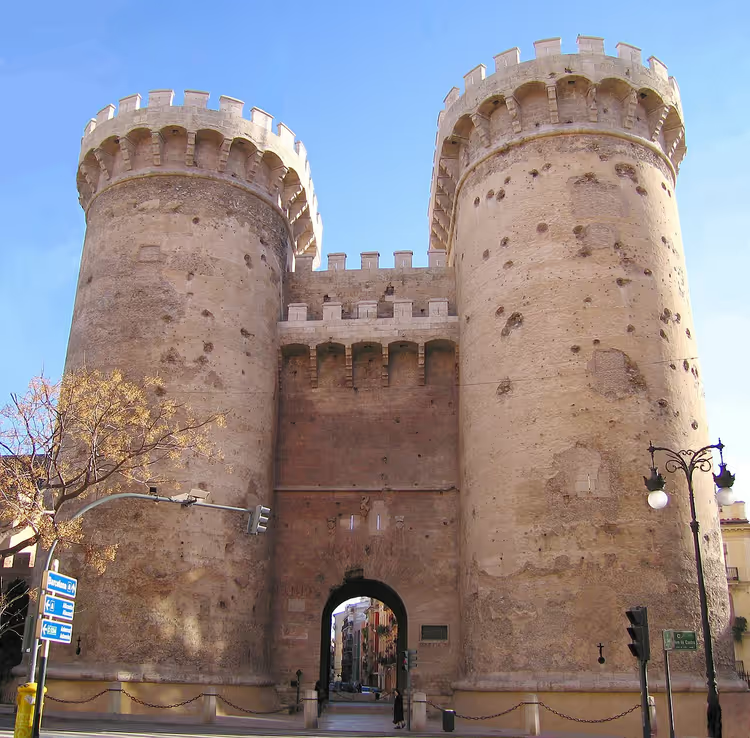
The Quart Towers (Torres de Quart) were also part of the city wall. They were built in the mid-15th century under the direction of Pere Bonfill. The twin Gothic-style towers resemble similar structures in Naples.
The stone walls still bear traces of cannonballs. Birds nest in them, including bright parrots. You can visit the towers every day except Monday. The ticket costs about €2, and entry is free on Sundays and public holidays (as of 09/2026, official tourist office page).
12. Palace of the marquises of dos aguas
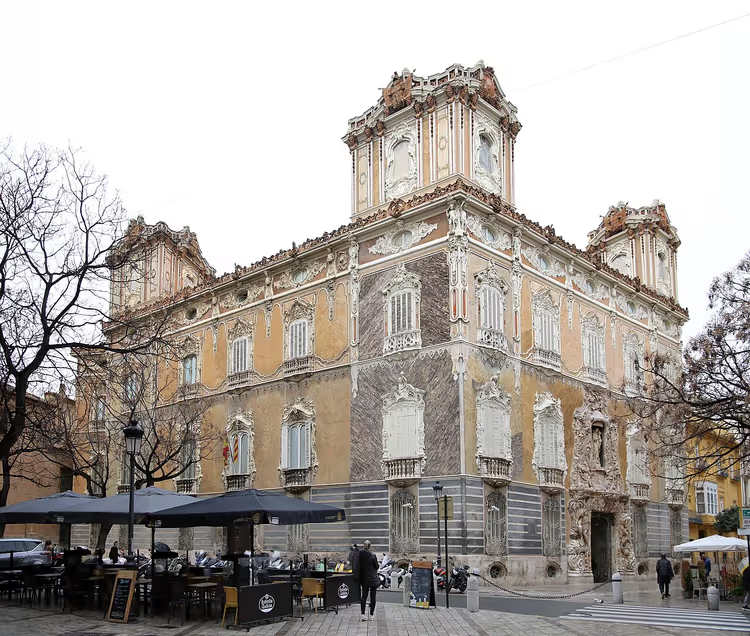 © Francesco Bini · CC BY-SAPhoto: Francesco Bini, CC BY-SA (https://creativecommons.org/licenses/by-sa/4.0), Wikimedia Commons
The Palace of the Marquises of Dos Aguas (Palacio del Marqués de Dos Aguas) is known for its ornate Rococo facade. Today it houses the Ceramics Museum.
The original 15th-century palace looked modest: a courtyard, three wings, and a crenellated tower. In the mid-18th century the complex was rebuilt, with new towers, a portal, and sculptures added. The interiors were redone under the new owner, when Italian, French, and Chinese motifs appeared. A new wing was added to the palace later.
Besides ceramics, you will see a collection of antique carriages, archaeological finds, and several works by Picasso. Admission is paid, and children enter free (check the tourist office page).
13. Albufera Natural Park
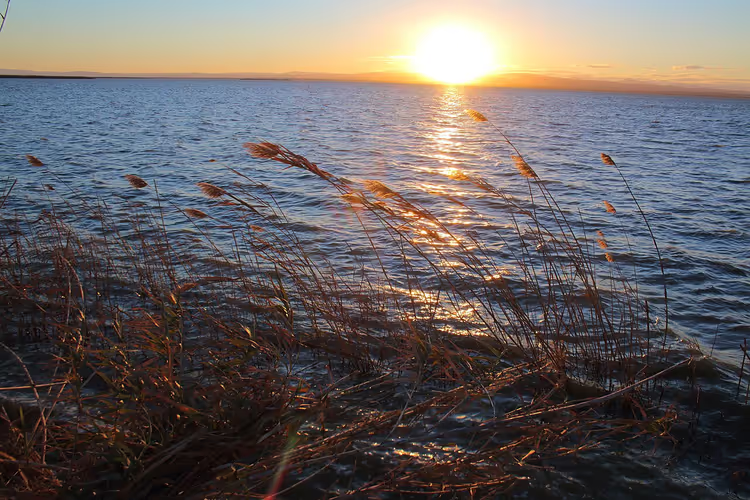 © FrDr · CC BY-SAPhoto: FrDr, CC BY-SA (https://creativecommons.org/licenses/by-sa/4.0), Wikimedia Commons
Albufera Natural Park (Parque Natural de la Albufera) stretches along the lagoon south of the city. It is a protected area, but trails and viewing platforms are open to tourists. The reserve zone is closed to visitors.
Albufera is considered one of the largest natural parks in the Mediterranean, and it also hosts a permanent exhibition about birds and the lagoon. Waterfowl live here: ducks, herons, cranes, and storks. Entry is free, you only need a pass. You can walk the trails on your own or take a guided tour. The guide will take you to a village deep inside the park where you can rest and grab a bite.
Rent a boat if you want to photograph birds up close. The best light for photos is at sunrise and sunset, when the sun sits low over the water.
14. Turia Gardens Park
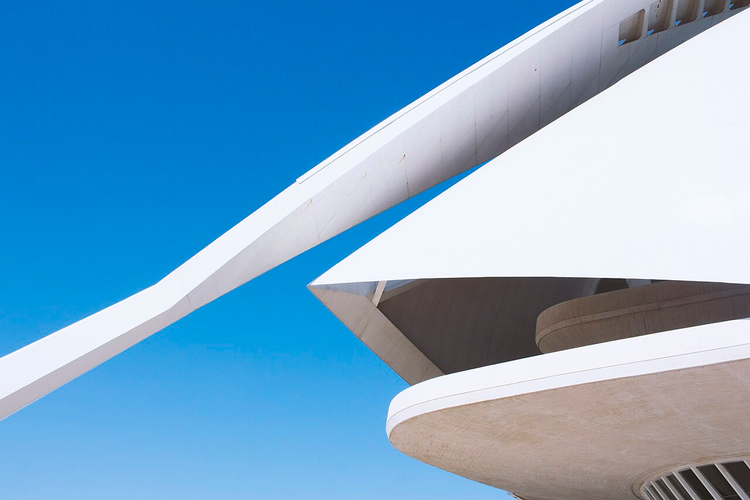
Turia Gardens Park (Jardines del Turia) was created on the site of the former riverbed. The Turia was diverted outside the city due to frequent flooding, and the freed-up land was turned into a green zone about 9 km long and covering about 100 hectares (as of 09/2026, park routes).
You can walk the entire route from end to end in a couple of hours. Along the way you will come across fountains, a lake with pedal boats, playgrounds, and attractions, including a figure of Gulliver lying down. Cars only cross on bridges, so it is calm here with children.
Rent a bike if you want to cover the whole park in one go. Valencia has a hot climate, so the park has managed to create a genuine tropical corner. The best shots come from the old bridges and from the Ferris wheel. The Botanical Garden with Mediterranean flora is worth a separate visit.
15. City of Arts and Sciences
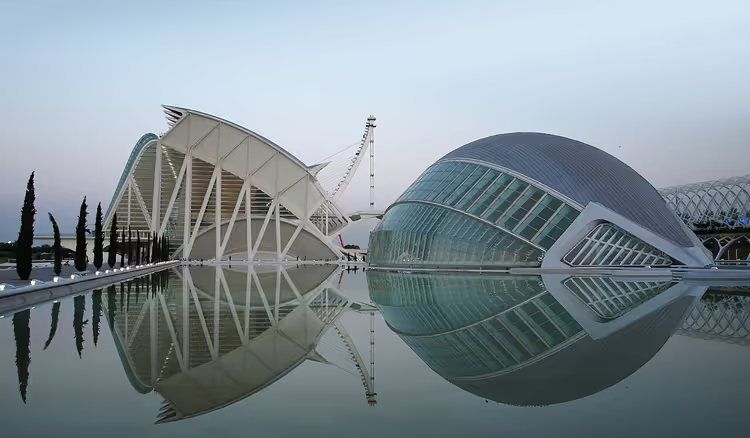 © Elemaki , modifications by Alvaro qc · CC BY-SAPhoto: Elemaki , modifications by Alvaro qc, CC BY-SA (https://creativecommons.org/licenses/by-sa/3.0), Wikimedia Commons
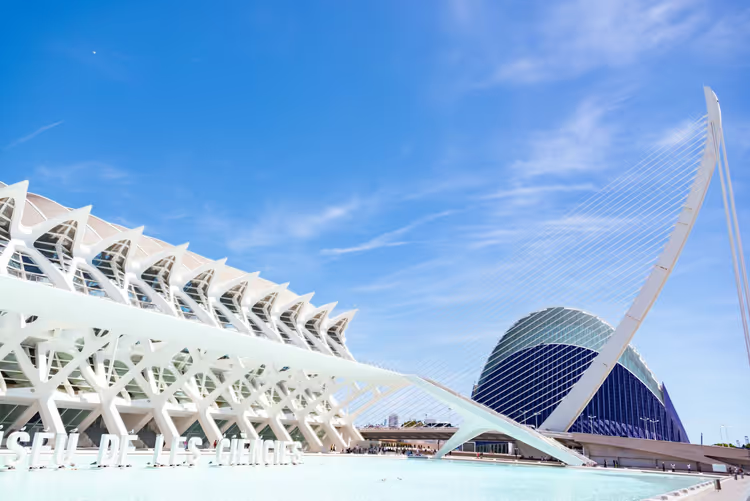
The City of Arts and Sciences (Ciudad de las Artes y las Ciencias) stands at the end of Turia Park. The white concrete and glass buildings look like a visitor from the future. The construction became one of the largest projects in Spain in recent years.
The complex includes the Oceanogràfic, the Science Museum, a planetarium with a laser theater, an opera house, and an open-air gallery. Tickets are sold for each venue separately or as combined passes. The Oceanogràfic costs from €36 to €43 depending on the season (as of 09/2026, official Oceanogràfic website).
With kids, plan for the whole afternoon at the complex, while the Science Museum and the Oceanogràfic will be enough for you. Get Oceanogràfic tickets in advance, in summer the ticket offices sell out by midday.
When to go and how many days you need
Valencia sits on the sea, and warm weather lasts almost all year round. Monuments, squares, and parks are easier to explore in the low season rather than in the summer heat. In July and August, open-air sites are tough, but in spring and fall the museum lines are shorter.
If you are staying longer, split your days like this. Give the first day to the Old Town, and after lunch head to Turia Park with the City of Arts and Sciences. The second day will be taken up by Bioparc or Albufera. Leave the third for the sea and beaches.
The center is easy to walk, and bike lanes run along Turia Park. In the off-season you can save on your hotel: in spring and fall, prices in the center are lower than during Fallas and at the height of summer. It is better to book accommodation in advance, as few rooms remain available during holidays. Even with one day you can cover the essentials if you start your morning in the Old Town.
One-day Valencia route on the map
The route is easy to open on a map and save to your phone:
What to see in Valencia in one day
Places on the map
- 1Museum of Fine Arts Paintings by El Greco, Velázquez and Goya in Turia Park
- 2Palace of the Generalitat Seat of the autonomous government since the 15th century
- 3Plaza de Toros An 18th-century bullring for 14,000 spectators, a bullfighting museum
- 4Serranos Towers Northern city gate, a viewing platform on the wall
- 5Bioparc Valencia A cage-free zoo with "Savannah" and "Madagascar" zones
- 6Valencia Cathedral Houses a chalice believed to be the Holy Grail
- 7Plaza de la Reina A square by the cathedral with a view of the El Micalet bell tower
- 8Lonja de la Seda A 15th-century Gothic silk exchange, a UNESCO site
- 9City Hall A crystal hall and a History Museum inside
- 10Quart Towers Twin Gothic towers from the mid-15th century with cannonball marks
- 11Albufera Natural Park The largest lagoon in the Mediterranean with waterfowl
- 12Turia Gardens A park on the site of a former riverbed about 9 km long
- 13City of Arts and Sciences A complex with an Oceanographic Park, a planetarium and an opera house
If you do not want to plan it yourself, take a ready-made tour of the main sights, and tour cards will be suggested below.
Tours and tickets in Valencia
Guided tours, skip-the-line tickets and activities — most offers can be cancelled free of charge.
See offers on GetYourGuideThe widget loads once you give your consent.
⁉️🤔 Frequently asked questions
How much time do you need for the Old Town?
If you skip museums, you can cover the cathedral, Plaza de la Reina, the Silk Exchange, and the city hall in half a day. With the Museum of Fine Arts, add another two hours. Arrive at opening time, and there will be almost no lines at the entrance.
What can you see in Valencia for free?
The Museum of Fine Arts, the city hall on weekdays, and Turia Park are free. The Serranos Towers and Quart Gate are free on Sundays and holidays, and so is the Silk Exchange. That way you cover half the list without spending a single euro.
Is it worth going to a bullfight?
Fights do not take place every day, more often on holidays. If the spectacle is not your thing, take a tour of the arena and the bullfighting museum: it has costumes, photographs, and a cape painted by Picasso. The tour ticket is paid, check the price on the arena's website.
How to get to the Oceanogràfic and the City of Arts and Sciences?
From the center you can walk through Turia Park in about an hour or take a bus for a couple of stops. The complex opens in the morning. An Oceanogràfic ticket costs several dozen euros, check the exact price on the official website. Buy online, as ticket offices close an hour earlier.
Is one day enough for Valencia and Albufera?
Yes, if Albufera is the only far point of the day. The park is outside the city, and it will take up the second half of the day. In the morning you can cover the Old Town, and leave the City of Arts and Sciences for another trip.
In short: what to book
If you have only one day, start with the Old Town on foot, and after lunch pick one far point. With kids, choose the Oceanogràfic or Bioparc; for a relaxed walk, Turia Park and Albufera work well.
It is more convenient to look for a hotel in the Old Town or near Turia Park, from where you can walk to the main sights. Find a hotel in Valencia on Trip.com.

A small editorial team writing guides for independent travel. We travel ourselves, but we haven’t been everywhere, so we check prices, opening hours and how to get there against official sources.