











When to go to Bangkok: seasons, rains and best months
Bangkok is never bad: it has three different personalities, and each one calls for its own trip plan.
Those who figure it out travel to the capital of Thailand year-round and come back happy, while those who ignore it end up standing in front of a temple at noon in April under the open sun, wondering why nobody warned them.
The short answer: the rainy season runs roughly from late May through October, with the wettest months being September and October (as of 09/2026, Tourism Authority of Thailand). Downpours usually arrive in the afternoon and clear within thirty to ninety minutes, while mornings tend to stay dry. It is worth going if you are ready to plan your day around the sky.
Three seasons in Bangkok
💡 In short:
- Dry season: November-February, comfortable heat and almost no rain.
- Hot season: March-May, daytime above thirty-five, fewer tourists and lower prices.
- Rainy season: June-October, short afternoon downpours, the lowest prices of the year.
- Climate and rainy season: verified 09/2026, Tourism Authority of Thailand.
Bangkok's tropical climate has no spring or fall, but it does have three distinct phases. Below is a cheat sheet, followed by a month-by-month breakdown.
Season | Months | Day | Night | Rain | Tourists |
|---|---|---|---|---|---|
Dry | November-February | 28-33 °C | 20-23 °C | almost none | high season |
Hot | March-May | 34-40 °C | 26-28 °C | little | medium |
Rainy | June-October | 30-34 °C | 24-26 °C | a lot | low season |
Southeast Asia's monsoon climate divides the year into three parts. Temperatures and rainfall: 09/2026, based on data from weather aggregator weather-and-climate.com and the Tourism Authority of Thailand.
Dry season
The most predictable period of the year. Daytime around thirty, dropping to twenty at night, with almost always clear skies. You can plan walks, temples, and markets without worrying about downpours. Book hotels in advance: this is high season, and in December available rooms disappear fast.
Hot season
From March, the air turns heavy. Daytime is consistently above thirty-five, and in April it climbs past forty, with nights barely any easier. The upside: fewer tourists and lower prices than in high season. Air-conditioned malls, the BTS Skytrain, and the MRT will be your friends.
Rainy season
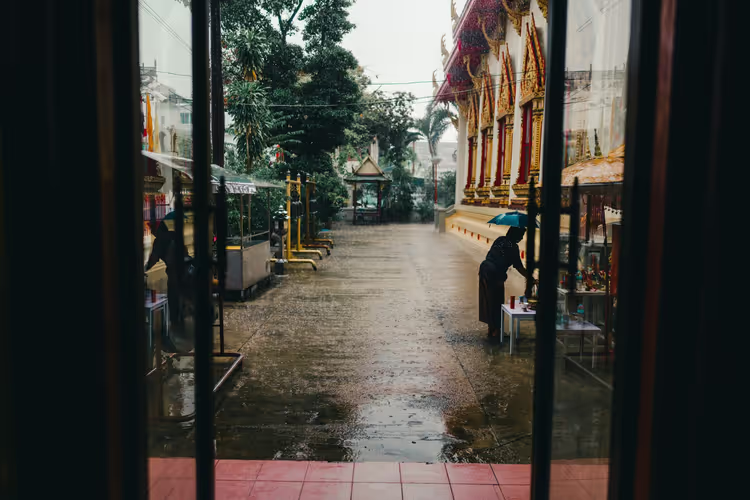
From June through October, rain becomes part of the day. But it does not pour around the clock: mornings are usually dry and sunny, the downpour arrives in the afternoon and clears within thirty to ninety minutes. Prices drop, temples empty out, and the city turns greener and calmer. If you are a flexible traveler, this is a great time to go.
The main thing to understand: Bangkok is warm year-round. Even in the mild dry season, daytime is above thirty. The difference is not whether it is warm, but how hot, humid, and wet it is.
Bangkok by month: what to expect
Below is a breakdown of each month so you can pick your window.
Bangkok in November
One of the best months. The rains end, the air turns clearer, and the first coolness arrives at night. High season begins, but the crowds are still lighter than in December. November hosts Loy Krathong, a quiet festival of lights on the water. You get a rare balance of good weather and freedom. One of the best months for a first trip.
Bangkok in December
The main tourist month, if your budget allows. Comfortable heat by day, cool at night, almost no rain. The city is decorated for the holidays, and on December thirty-first CentralWorld hosts a huge party. The catch: flights and hotels get noticeably more expensive. If you are going in December, book three to four months ahead.
Bangkok in January
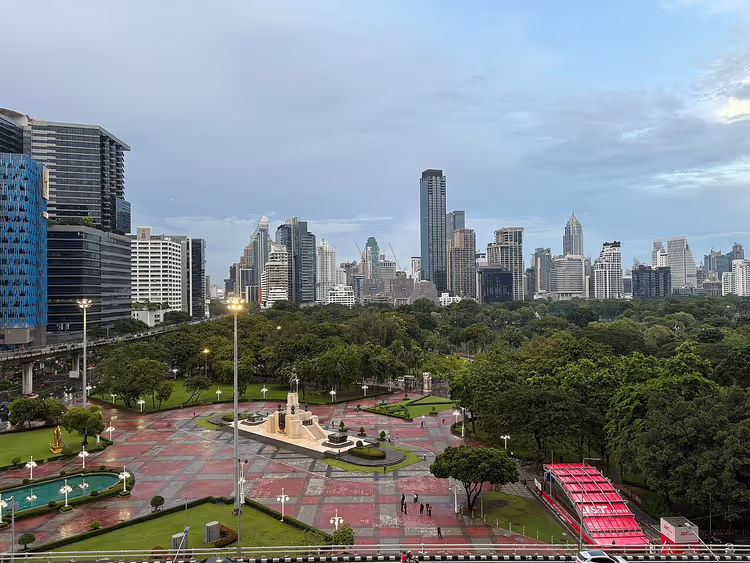
The coolest month of the year. Daytime around thirty, nights down to twenty, clear skies and almost no rain. The best time for long walks. In Lumphini Park, strong winds blow from January to June, and in the evening locals fly kites. You should head out early in the morning, before the sun starts burning, and catch the parks full of runners and aerobics groups.
 © Chainwit. · CC BYPhoto: Chainwit., CC BY (https://creativecommons.org/licenses/by/4.0), Wikimedia Commons
Bangkok in February
A drier and still pleasant month, but temperatures start to rise. Chinese New Year often falls in February, and then Chinatown turns into a sea of red lanterns. February also brings Magha Puja, a Buddhist holiday with candlelit processions in temples. If holidays matter to you, this is your month, and the city still has plenty of visitors.
Bangkok in March
The hot season begins. The thermometer climbs above thirty-five, and the air is humid and stuffy. There is still little rain, but standing in a square at noon is tough. The metro, BTS Skytrain, shopping malls, and cafes will save you: everything is air-conditioned. This month is not for you if you handle heat poorly.
Bangkok in April
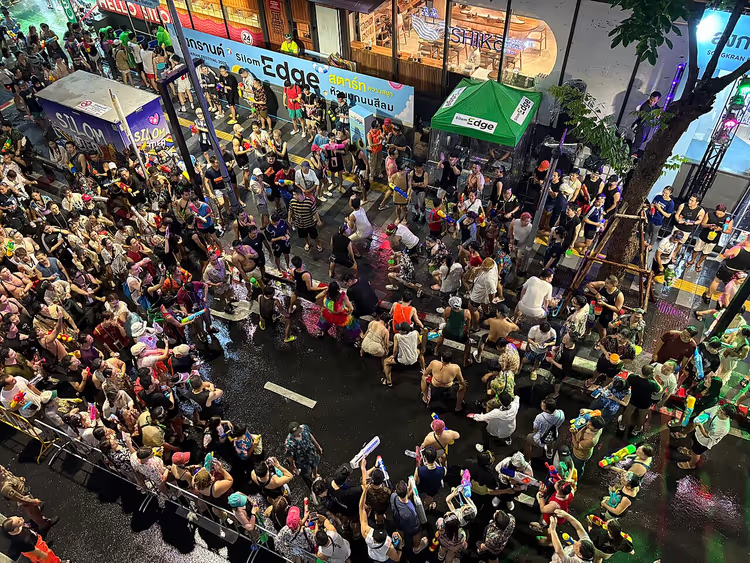
The hottest month of the year. Daytime temperatures consistently approach forty, nights barely cool down, and the city feels like a steam room. And it is in April that Songkran takes place, the Thai New Year that turns Bangkok into a citywide water festival. Those who take part do not stay dry for a single day. If you want a festival, April is the best choice, but for a quiet vacation, pick another time.
Bangkok in May
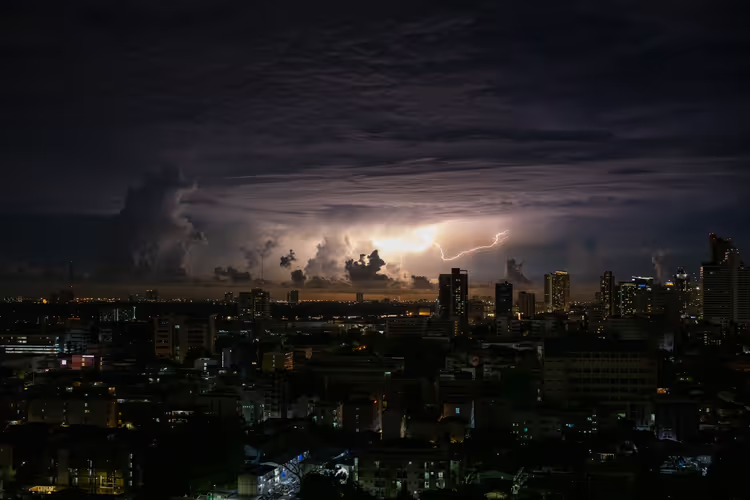
A transitional month. The heat persists, but the first thunderstorms arrive, short and intense, and after them breathing gets easier. Toward the end of the month, the real rainy season begins. The upside: prices drop. Hotels and tickets are cheaper than in high season, and attractions are less crowded. You will find good deals if you can handle the mugginess. A good time to save money.
Bangkok in June
The rainy season is in full swing. It rains almost every day, but usually as a short downpour in the afternoon, while mornings stay dry. Temperatures are slightly lower, but humidity is higher. The main argument for June: price. Tickets and hotels are among the cheapest of the year, and major attractions have almost no lines. You pay less for the same city.
Bangkok in July
Mid-rainy season, with the same weather pattern: sunny morning, heavy downpour in the afternoon, then clearing. What changes is something else: school holidays start in Europe, there are more tourists, and prices edge up slightly but remain below high season. Plan your day around the rain, and you will lose almost nothing.
Bangkok in August
Rainfall intensifies, downpours come more often and hit harder, but they stay confined to the afternoon. Prices remain low, and the city stays uncrowded. On August 12, Thailand celebrates the birthday of Queen Mother Sirikit, which coincides with Mother's Day and a public holiday. Banks and government offices are closed, and streets are decorated with flags and portraits. It will not get in your way, but the city will look more festive.
Bangkok in September
The rainiest month of the year: it rains about two days out of three, and humidity approaches eighty percent. Honestly: if you have only one week and need sunny weather, pick another month. A flexible traveler gets the lowest prices of the year in return.
Bangkok in October
Still very wet. In some years, low-lying areas flood: usually not the whole city, but some streets stand under water for several hours after heavy rain. On the plus side, October hosts the Vegetarian Festival (Tesagan Gin Je). Nine days of strict vegetarianism, yellow flags in Chinatown, packed temples. You will enjoy it if you are looking for unusual culture rather than a beach.
Rainy season: is it worth going
The short answer is yes, if you understand how rain works here. The rainy season in Bangkok does not mean a daily downpour from morning to evening. Mornings are usually dry and sunny, and a strong but short rain passes through in the afternoon, usually lasting thirty to ninety minutes. The season runs roughly from late May through October, with the wettest weeks falling in September and October (as of 09/2026, Tourism Authority of Thailand).
In return, you get low prices, empty temples, and a city living its own life rather than adjusting to tourists. Three rules help you get through the season calmly.
- Plan around the rain, don't fight it. In the morning, head to temples, markets, and parks. Wait out the afternoon downpour in a museum, shopping mall, cooking class, or massage. In the evening, go out again.
- A raincoat or compact umbrella always in your bag. You can buy them on every corner for little money if you forgot yours.
- After a heavy downpour, stick to the rails. Some streets may stay flooded for several hours, but the BTS and MRT run reliably.
Holidays: when Bangkok becomes a stage set
 © Chainwit. · CC BYPhoto: Chainwit., CC BY (https://creativecommons.org/licenses/by/4.0), Wikimedia Commons
Songkran
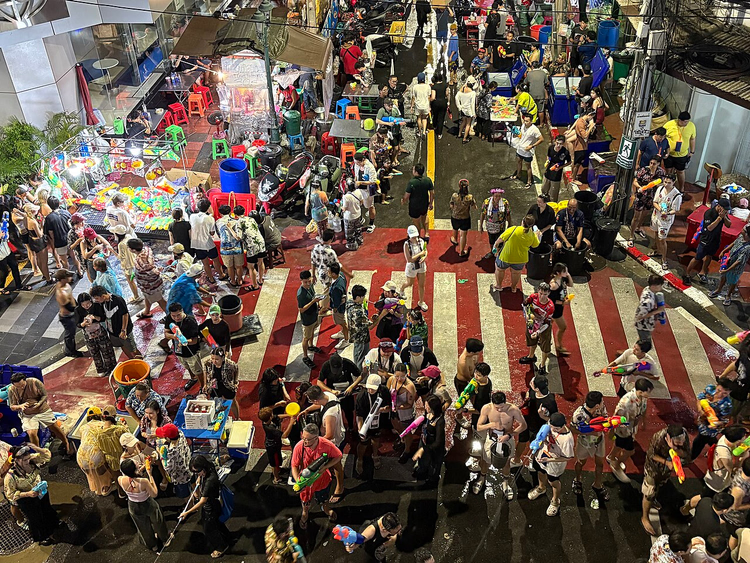
The official dates of the holiday are April thirteenth through fifteenth (as of 09/2026, Tourism Authority of Thailand). Songkran, the Thai New Year, is considered the country's main holiday. What began as a ritual water pouring has turned into a multi-day water battle. In Bangkok, the main venues are Silom Road and Khao San Road. Anyone who steps outside will definitely get soaked.
- Put your electronics in a waterproof case, this is not a joke.
- Don't wear clothes you want to keep dry.
- Bangkok celebrates longer than the official dates.
- Book hotels in the celebration areas in advance, a price markup is unavoidable.
- Government offices, banks, and some shops are closed.
- Kids love the holiday, while elderly people and those with limited mobility find it more of a burden.
 © Chainwit. · CC BYPhoto: Chainwit., CC BY (https://creativecommons.org/licenses/by/4.0), Wikimedia Commons
Loy Krathong
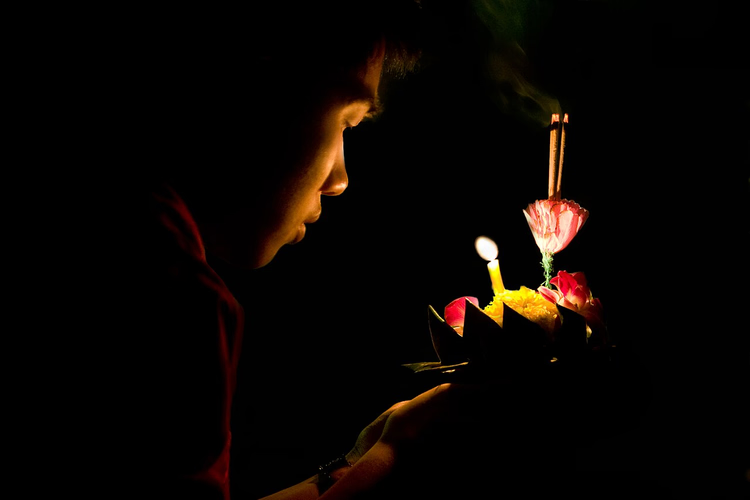
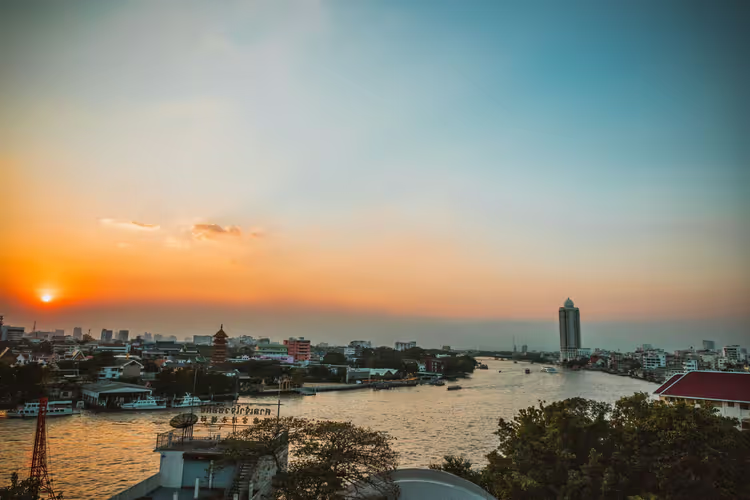
November, the night of the full moon, the exact date changes every year: in 2026 it falls on November twenty-fourth (as of 09/2026, Tourism Authority of Thailand). Loy Krathong is the opposite of Songkran: quiet, meditative, and very beautiful. On the full moon, Thais float wreaths of banana leaves with candles and flowers on rivers and canals as a sign of gratitude to the water goddess. On the Chao Phraya, the sight is impressive: thousands of glowing bowls on the dark water.
 © Robertpollai · CC BYPhoto: Robertpollai, CC BY (https://creativecommons.org/licenses/by/2.0/at/deed.en), Wikimedia Commons
- The date changes, check it before booking.
- Claim your spot on the riverbank early, there are many people who want one.
- The holiday is family-oriented and deeply rooted in the culture.
Chinese New Year
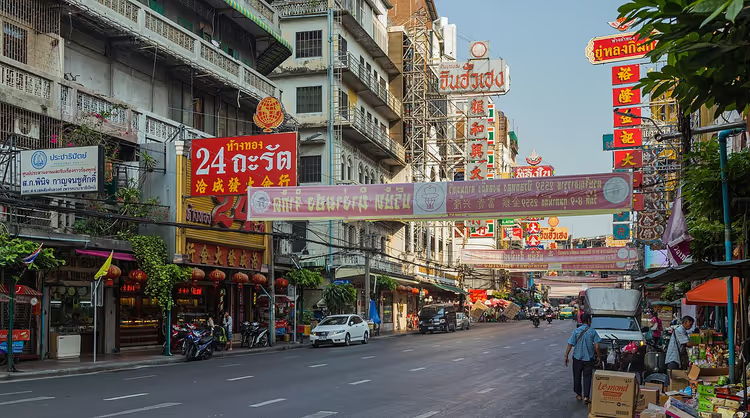
January or February, the date depends on the lunar calendar. Chinatown turns into a celebration of red lanterns, dragon dances, and fireworks. The center of events is Wat Mangkon Kamalawat temple and Yaowarat Road. If you want to catch the holiday, book early: demand for these dates is high.
 © Marcin Konsek · CC BY-SAPhoto: Marcin Konsek, CC BY-SA (https://creativecommons.org/licenses/by-sa/4.0), Wikimedia Commons
Vegetarian festival (Tesagan Gin Je)
October, nine days. During this time, Thais of Chinese descent in Bangkok observe a strict meat-free fast. Yellow flags are everywhere in Chinatown, temples are packed, and street stalls offer plant-based versions of classic dishes. For vegetarians and vegans, this is the best time of year in the city.
Magha Puja
February, the night of the full moon. A Buddhist holiday honoring the third full moon of the year. Tens of thousands of monks and laypeople come to the temples, and candlelit processions take place in the evening. For visitors, the holiday offers a quiet and powerful impression if you are willing to follow the rules and not disturb worshippers.
Who should go when: recommendation matrix
Profile | Best months | Why |
|---|---|---|
First trip | November-February | best weather, everything works, no weather risk |
Budget travel | May, June, September | lowest prices on flights and hotels |
I handle heat poorly | December, January | around twenty at night, maximum comfort |
Holidays | April (Songkran), November (Loy Krathong) | the two strongest cultural events |
Families with kids | November-February | mild heat, pools, plenty of indoor activities |
Return trip | June-August | lively city, few tourists, good prices |
Culture | October, February | Vegetarian Festival, Magha Puja, Chinese New Year |
Practical tips: how to survive Bangkok's climate
The air conditioning temperature swing
Almost all of Bangkok is air-conditioned. The difference between outside and indoors can reach twenty degrees, and that swing often ends in a sore throat. A light layer will save you: a scarf, a long-sleeved shirt, or a thin jacket.
Sun protection
In summer, the UV index climbs to eleven or twelve. You can get sunburned in twenty minutes. SPF 50 sunscreen is a must, especially for temples and boat rides on the Chao Phraya.
The city's rhythm
From six to ten in the morning, go to parks and markets while the sun isn't scorching. From eleven to three, take cover in cooled malls, cafes, and museums. After four, head back outside: night markets, dinner, walks.
Rainy season strategy
Treat the downpour as part of the plan, not as an obstacle. At lunchtime or after lunch, schedule a museum, shopping mall, cooking class, or massage. Downpours usually pass in under two hours. After they end, go out again: market, dinner, evening city.
SPF 50+ sunscreen
It's sold in Bangkok, but it costs more than in Europe. Better to bring it from home.
Temple clothing
Shoulders and knees must be covered. Sarongs are often handed out on site, but your own is more hygienic. Choose light, breathable fabrics: synthetics dry faster than cotton.
The packing list is simple. In the dry season, bring sunscreen, light clothing, a thin jacket for air conditioning, and a water bottle. In the rainy season, add a raincoat or compact umbrella: you can't do without them.
 © This Photo was taken by Supanut Arunoprayote . Feel free to use any of my images, but please mention me as the author an · CC BYPhoto: This Photo was taken by Supanut Arunoprayote . Feel free to use any of my images, but please mention me as the author an, CC BY (https://creativecommons.org/licenses/by/4.0), Wikimedia Commons
Prices and availability: what's important to know
High season
Flights and hotels get noticeably more expensive, and direct flights around New Year cost especially a lot. Book at least three to four months ahead.
Low season
Prices are attractive: flights are cheaper, and many hotels offer special rates. Bangkok costs a fraction of the high-season price.
Songkran markup
Careful: despite the low season, prices in April are higher than you might expect. The city draws visitors even without the international high season.
⁉️🤔 Frequently asked questions
When is the best time to go to Bangkok?
The best time to visit is November, December, January, and February. There is almost no rain, daytime temperatures are around thirty, and nights are cool. It's high season, so book hotels and flights three to four months ahead. If you want to save money, choose May, June, or September.
When is Bangkok cheapest?
The lowest prices fall in June and September. During the rainy season, flights and hotels get cheaper, and major attractions have almost no lines. The catch: short but heavy downpours in the afternoon. Plan your mornings for walking around.
Is it worth going to Bangkok in the rainy season?
Yes, if you're willing to plan your day around the rain. Mornings are usually dry, the downpour comes in the afternoon and ends in thirty to ninety minutes. In return, you get low prices, empty temples, and a green, calm city without tourist crowds.
When is Songkran and what should you expect?
Officially, Songkran runs from April thirteenth through fifteenth. During this time, the city turns into a water festival, and the streets of Silom Road and Khao San Road get completely soaked. Keep your electronics in a waterproof case and book your hotel in advance because of the markup.
What to bring in the rainy season?
A raincoat or compact umbrella, light breathable clothing, and a change of shoes. Bring SPF 50 sunscreen from home, it costs more here. For temples, you need clothing that covers your shoulders and knees. A thin jacket will come in handy because of the air conditioning.
In short: what to book
If you are visiting for the first time, book November, December, or January three to four months ahead. If price matters, go for June or September. For festivals, come in April or November.
- If your vacation is about the weather: go for November through February.
- If you are on a budget: go for May, June, or September.
- If you are traveling for a festival: go for April for Songkran or November for Loy Krathong.
Pick a month that fits your profile and book your hotel in advance.

A small editorial team writing guides for independent travel. We travel ourselves, but we haven’t been everywhere, so we check prices, opening hours and how to get there against official sources.