




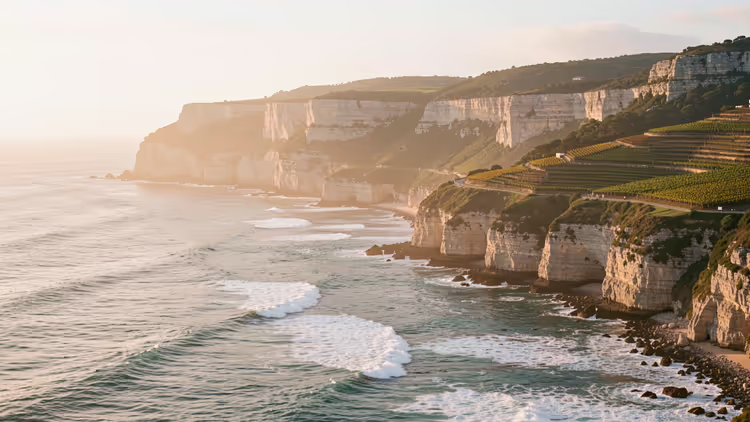
 AIIllustrative image: AI-generated
When to go to Portugal: seasons, weather and holidays
Portugal means four different trip scenarios.
In July you stand in line on an Algarve beach, while in January you walk the same cliffs completely alone. The difference in price, weather, and tourist numbers is huge. In 2025, the country's tourism revenue reached €29.1 billion, up 5% from the year before (as of: Turismo de Portugal, 2025).
Below is a season-by-season breakdown: when to go for beaches, when for wine, and when for empty trails. We checked weather, holiday dates, and routes against official sources, not last year's roundups.
Ad: this article contains affiliate links, we earn a commission if you book through them, at no extra cost to you.
When to go to Portugal: seasons and weather
💡 In short:
- For beaches, pick September and October: the water is still warm and the crowds thin out.
- For wine and hiking, come in April, May, and October: mild weather, blooming or grape harvest.
- For festivals and resorts, it's better to go from June through August, but book accommodation in advance.
- Weather, seasons, and holidays: 09/2026, according to Visit Portugal.
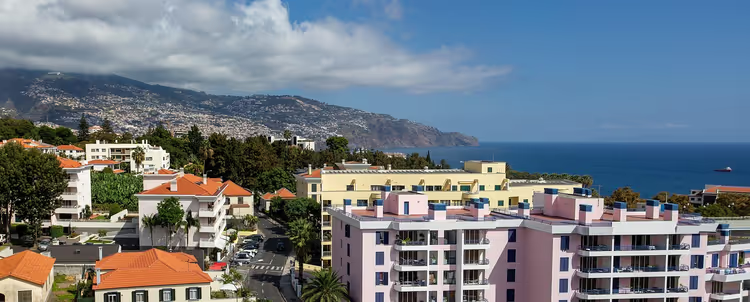
The season in Portugal is chosen not by the calendar but by the goal. For beaches it's autumn, for cities and wine it's spring and early autumn, for saving money it's winter.
Season | Months | Weather and crowds | Who it's for |
|---|---|---|---|
High | June, July, August | Warm and sunny, lots of tourists, higher prices | Beaches, festivals, evening terraces |
Shoulder | April, May, September, October | Mild and often sunny | Hiking, wine, cities without the heat |
Low | November, December, January, February, March | Dry in the south, rain in the north, few tourists | Long walks, saving money, surfing |
The division is approximate: weather varies from region to region, and rain falls from October through April.
Summer: June, July, and August
In summer, Portugal lives outdoors. Terraces, open-air concerts, park movie screenings, and street markets run late into the night. Days are warm and sunny, and the water in the Algarve warms up better than at any other time of year.
The peak falls in July and August. You share Algarve beaches with hundreds of thousands of people, and the water is at its warmest. Lisbon and Porto are also crowded, and accommodation prices rise with demand.
What you should book in advance: a terrace table with a sea view, tickets to an open-air concert, and a spot at a weekend street market.
- The catch: in August, the busiest month, it's better to book accommodation several months ahead.
- Who it's for: those going for festivals, beaches, and city nightlife.
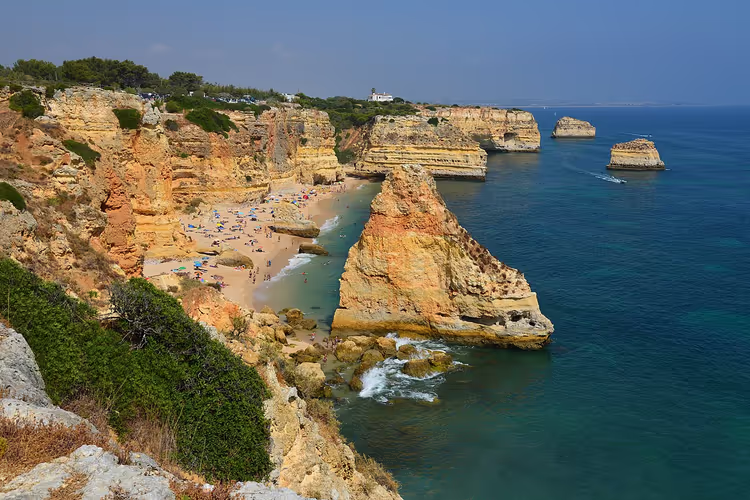 © Tobi 87 · CC BY-SAPhoto: Tobi 87, CC BY-SA (https://creativecommons.org/licenses/by-sa/3.0), Wikimedia Commons
June festivals in Lisbon and Porto
In June, Lisbon celebrates Festas de Lisboa, also known as Santos Populares, for almost a month. Streets and squares turn into one big party with street food, music, and garlands. The peak falls in the middle of the month, when the city celebrates the day of Saint Anthony.
 © Philip Mallis from Melbourne · CC BY-SAPhoto: Philip Mallis from Melbourne, CC BY-SA (https://creativecommons.org/licenses/by-sa/4.0), Wikimedia Commons
In Porto, Festa de São João takes place in late June with fireworks over the river. It's a separate festival and does not coincide with the Lisbon one.
- The catch: during festival weeks, hotels in central Lisbon get booked up earlier than usual.
- Who it's for: those who care about city festivals and atmosphere, not quiet.
If you want to stay in the center, check hotel prices in Lisbon a couple of months before your trip.
Low season: November through March
From November through March, Portugal becomes cheap and uncrowded. Accommodation prices drop and museum lines almost disappear. On the other hand, some museums run on reduced hours, and temperatures in the mountains can drop below freezing.
The south runs on a different schedule. In the Algarve in winter, it's dry and sunny, so walks along the cliffs and the coast are comfortable. A light jacket and an umbrella for a couple of days will be enough.
December is never gloomy: Christmas markets, roasted chestnuts, and decorated squares. Nights are cool, days in the south are pleasant. January is quiet, and after New Year's the holidays close with Three Kings' Day (Dia de Reis).
- The catch: short daylight hours and rain in the north of the country.
- Who it's for: those who want to see the country without tourists and save money.
Winter in the south: the Algarve without crowds
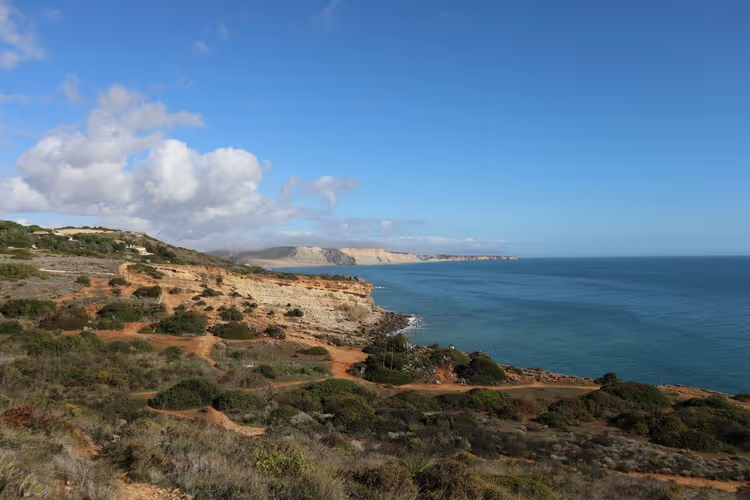
In November, the Algarve gives you its views with almost no witnesses. The coast stays mild, but few dare to swim: the ocean cools down and evenings get windy.
 © Kolforn ( Kolforn ) I'd appreciate if you could mail me (Kolforn@gmail.com) if you want to use this picture out of the W · CC BY-SAPhoto: Kolforn ( Kolforn ) I'd appreciate if you could mail me (Kolforn@gmail.com) if you want to use this picture out of the W, CC BY-SA (https://creativecommons.org/licenses/by-sa/4.0), Wikimedia Commons
The country's tourism office describes the winter Algarve as a season of long walks and birdwatching (according to Visit Portugal, 09/2026). In practice, this means you don't need heat to spend a day on the shore.
- The catch: it's cool by the ocean in the evening, bring a second jacket.
- Who it's for: a quiet getaway, cliff hikes, and photos without people.
Find a hotel in the Algarve on Trip.com.
Serra da Estrela: the ski resort
Portugal has one ski resort, Estância de Esqui da Serra da Estrela, in the Serra da Estrela region. The season is short and entirely dependent on snow: slopes open only when a stable cover settles on the mountain. Before your trip, check slope status on the resort's official website.
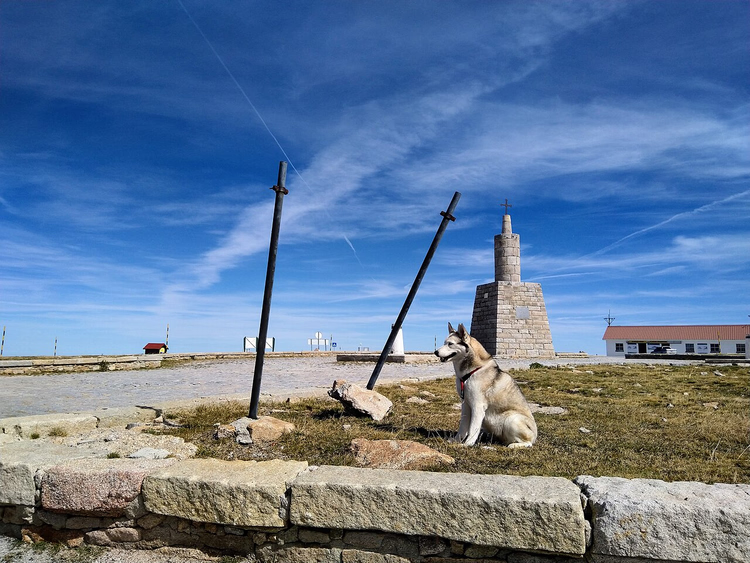 © Jelger · CC BYPhoto: Jelger, CC BY (https://creativecommons.org/licenses/by/2.0), Wikimedia Commons
February is considered one of the quietest months for foreign visitors: accommodation can be found without booking six months ahead.
- The catch: there may be no snow at all, in which case the lifts don't run.
- Who it's for: those going for a change of scenery, not guaranteed skiing.
Shoulder season: April and May
Spring arrives gently and almost immediately in both halves of the country. In April, wild grasses bloom in the south, and in late April Freedom Day (Dia da Liberdade) takes place with parades and fireworks in small towns.
Holy Week adds religious processions. In May, the best season for long routes opens: on the Rota Vicentina and Via Algarviana you walk along the ocean for hours with almost no heat.
Crowds in Lisbon, Porto, and the Algarve are already appearing, but the August peak is still far off, so you can find accommodation without stress.
- The catch: on holidays, some museums are closed and transport is packed.
- Who it's for: hiking, cycling days, and city walks.
Autumn: September and October
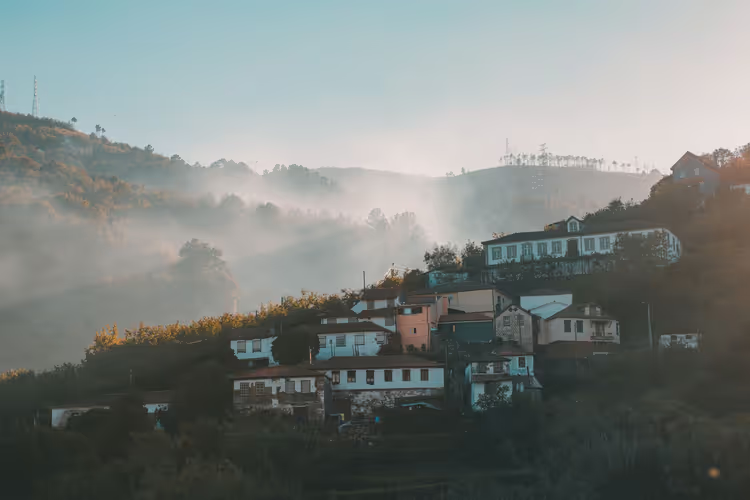
Autumn in Portugal means grape harvest and soft sun. In the northern regions, vineyards turn yellow, and in the Douro Valley the grape picking and pressing is underway, which visitors are sometimes invited to help with.
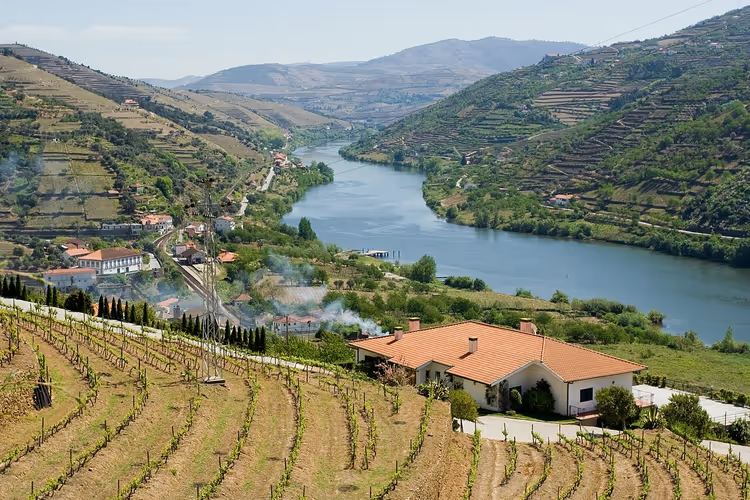 © Marco Varisco from Albany, New York, USA · CC BY-SAPhoto: Marco Varisco from Albany, New York, USA, CC BY-SA (https://creativecommons.org/licenses/by-sa/2.0), Wikimedia Commons
October is good for birdwatching: flocks pass through the country on their way to Africa. Temperatures drop, but on the central coast the water remains acceptable for swimming even in October.
If you want to join the harvest, book wine tours in the Douro Valley on GetYourGuide in advance.
- The catch: by late October, daylight hours are noticeably shorter.
- Who it's for: wine, photography, and birdwatching.
Surfing: when the waves are biggest
The biggest waves hit the coast from October through March. For surfers this is the best season, and spectators gather on headlands to watch the ocean.
- The catch: in winter you'll need a wetsuit, the water is cold.
- Who it's for: experienced surfers and photographers.
⁉️🤔 Frequently asked questions
Which month is good for a first trip to Portugal?
For a first trip, May and September work well. In these months it's warm but without the August crush, and accommodation costs noticeably less. You have time to see the cities, lie on the beach, and take a trip to the Douro Valley. Check the weather forecast a week before departure.
When are there the fewest tourists in Portugal?
From November through March. In winter you'll find available rooms even in central Lisbon, and museum lines are almost nonexistent. Keep in mind that some places run on reduced hours, and it often rains in the north. The south stays sunny and dry during this time.
Can you swim in the Atlantic in autumn?
Yes, but not everywhere equally. On the central coast, the water remains acceptable for swimming even in October, while in the north it's cold almost all year round. In the Algarve, the swimming season lasts longer than people tend to think. Plan swimming for daytime hours and bring a jacket for the evening.
What happens in Portugal in June?
In June, the country celebrates. Lisbon lives in the rhythm of Festas de Lisboa for almost the whole month, and Porto celebrates Festa de São João at the end of the month. It's the best month to catch street festivals, but book central hotels in advance, otherwise the selection will be slim.
Is it worth going to Portugal in winter?
Yes, if you like walking without crowds and are ready for cool weather. The south of the country stays dry and mild, and prices are noticeably lower than in summer. In the north it rains more often, and snow falls in the Serra da Estrela mountains. Winter is a good time for cities, wine, and long trails.
In short: what to book
If you have a week in September: take the Algarve beaches and one day for the Douro vineyards. If you're planning winter: stay in the south, where it's dry and uncrowded. If you're going for festivals: book Lisbon for June in advance. In any scenario, a hotel in high season is better booked several months ahead, and wine tours several weeks ahead.

A small editorial team writing guides for independent travel. We travel ourselves, but we haven’t been everywhere, so we check prices, opening hours and how to get there against official sources.