
















Train in Italy: how much a ticket costs and when it beats a plane
Italy fits Rome, Milan, Florence, Venice and Naples on a single peninsula. On a week-long vacation you want to see everything at once, and the road between cities feels endless. In practice this means one thing: within the country, the most convenient way to get around is by train.
From Rome to Milan the train takes about three hours, to Florence and Naples roughly 1.5 hours (as of 09/2026, Trenitalia schedule). A plane loses on these segments. Airports are located outside the city limits, and check-in and baggage claim eat up as much time as the trip itself.
Below we break down three types of Italian trains, fares, group discounts and the honest catches. A ticket on a high-speed train between major cities is cheaper than a flight if you buy it in advance (as of 09/2026, Trenitalia fares and tickets).
Ad: this article contains affiliate links, we earn a commission if you book through them, at no extra cost to you.
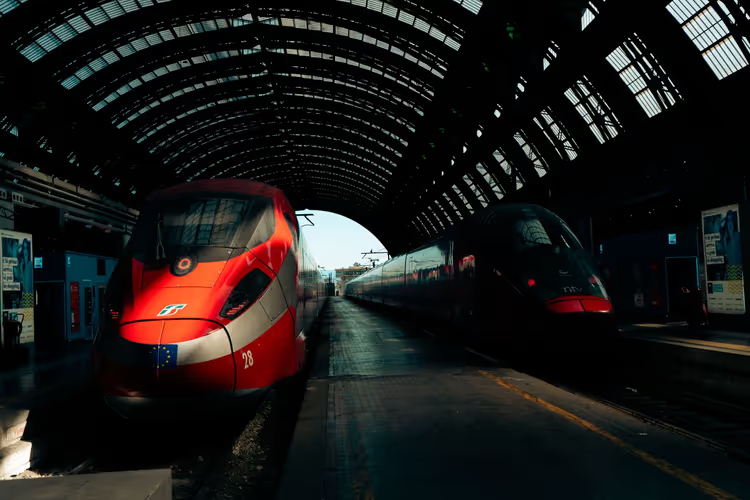
High-speed trains: Frecciarossa and Italo
💡 In short:
- High-speed Frecciarossa and Italo connect Italy's major cities.
- Intercity is cheaper and slower, regional Regionale trains are for short distances.
- Tickets are cheapest several weeks before the travel date, more expensive at the station ticket office.
- Schedule and fares: 09/13/2026, verified on the carrier's website.
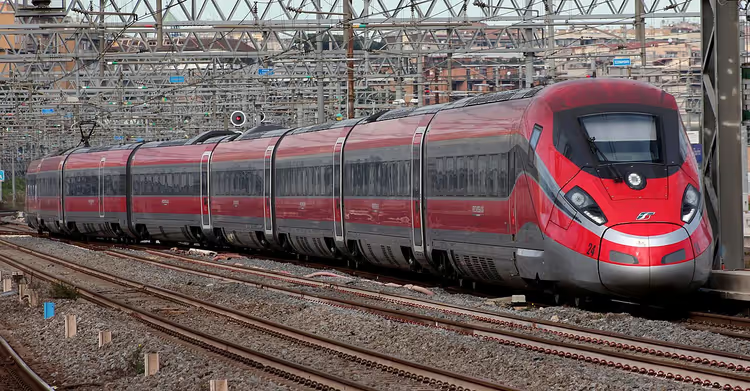
Frecciarossa, or the "Red Arrow", belongs to the state-owned company Trenitalia. The train reaches 300 km/h, and the journey from Milan to Naples (about 660 km on the map) takes roughly 4.5 hours (as of 09/2026, high-speed train schedule).
An economy-class fare on a long route starts in the upper part of the double-digit range. The price depends on demand: the earlier you pick a date, the cheaper the ticket, and close to departure the remaining seats are only available at the high fare. Buy tickets for Tuesday or Wednesday morning: demand is lower on these days than on Friday and Sunday.
The private carrier Italo also runs between Milan and Naples. Its tickets are usually cheaper, and the route takes almost the same time. Another plus for foreign travelers: Wi-Fi on Italo is activated via email, while on Trenitalia trains you need an Italian phone number for that (italotreno.com, 09/2026).
So why did we name Frecciarossa first? Trenitalia holds the larger share of the market and offers more routes. The most convenient stations in tourist cities mostly serve its trains, while Italo more often stops at secondary stations.
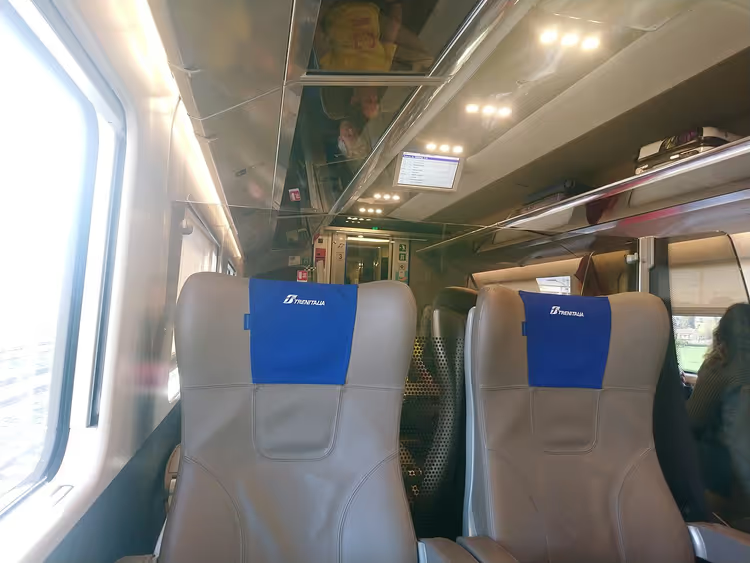
 © Rsa · CC BY-SAPhoto: Rsa, CC BY-SA (http://creativecommons.org/licenses/by-sa/3.0/), Wikimedia Commons
Intercity: day and night trains
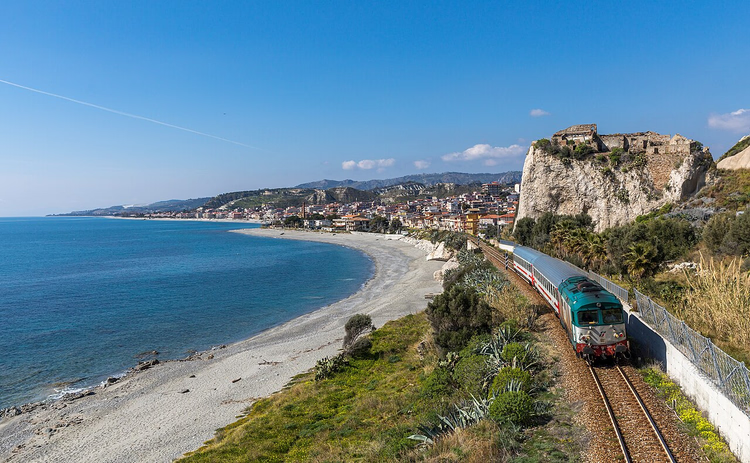
If your budget is tight, take a look at Intercity trains. They run day and night, are slower than high-speed trains, but often win on the time-to-price ratio (as of 09/2026, Intercity fares).
During the day you can see Tuscany, Umbria, and the coast from the window. Some travelers choose Intercity over high-speed trains just for these views. Night trains connect the north and south of the country and run across the whole of Italy, so you save an entire night on them.
Intercity has two classes and different types of seats, from a regular seat to a sleeper compartment. A ticket for such a spot is booked separately from the standard fare, so check the car layout when buying.
 © Kabelleger / David Gubler · CC BY-SAPhoto: Kabelleger / David Gubler, CC BY-SA (https://creativecommons.org/licenses/by-sa/4.0), Wikimedia Commons
Regionale regional trains
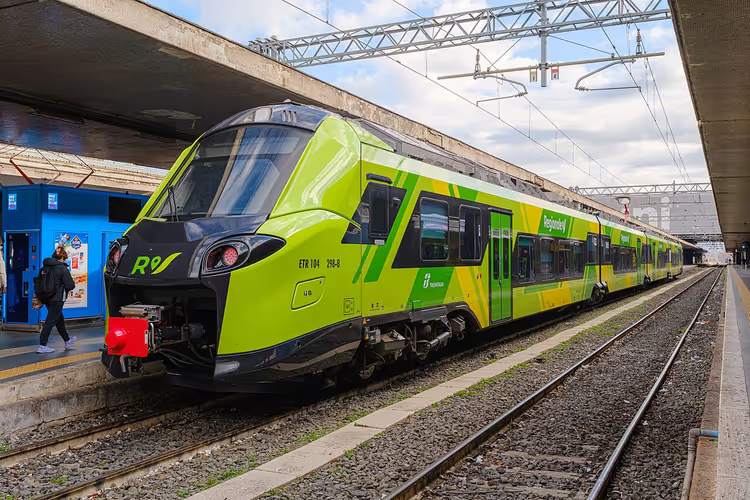
The cheapest option remains Regionale regional trains. They operate on short distances: between neighboring cities, to the coast, to the suburbs. Their speed is modest, but a ticket for a short stretch costs just a few euros (as of 09/2026, Regionale fares).
Seats on regional trains are not reserved: you take any free one. Air conditioning and Wi-Fi are not available on all trains, so for a long trip it is better to take Intercity or a high-speed train.
Regional tickets are often sold for a period and by zones. If you are going one way and back on the same day, check the fare conditions on the carrier's website in advance.
How to buy a cheaper ticket
Tickets are sold on carrier websites, at ticket machines, and at station counters. Online is cheaper: at the counter and right before departure the fare is higher than a few weeks before the trip. Fares for 09/13/2026 were checked on the official Trenitalia website.
Schedules and tickets across the country are convenient to view in one place: view train tickets in Italy.
You do not need to print a paper ticket. The QR code on your phone is enough both at the turnstile and during ticket inspection on the train. With an e-ticket you arrive at the station and go straight to the platform without looking for a ticket counter.
What is convenient about Italian trains
The main advantage of a train is that you are not tied to a baggage weight limit. Suitcases sit on the rack by the entrance or overhead, no check-in is needed, and during the trip you sit in your seat and look out the window.
Stations are located in the city center. From the airport to the center you get by separate transport, and that takes extra time. Even if taxi drivers are on strike, a direct train Leonardo Express will get you from Rome to Fiumicino Airport (Leonardo Express schedule).
You can also work on the way. High-speed trains and most Intercity trains have power outlets and tables, and Wi-Fi is free after registration. On a short stretch this does not matter, but on a five-hour route internet and a seat at a table change the trip.
How long the trip from Rome takes
Travel time depends on the route and the type of train. The table below is based on high-speed trains (as of 09/2026, schedule by route).
From Rome to | Train type | Travel time (as of 09/2026) |
|---|---|---|
Milan | Frecciarossa | about 3 hours |
Verona | Frecciarossa | about 3 hours |
Florence | Frecciarossa | about 1.5 hours |
Naples | Frecciarossa | about 1.5 hours |
Venice | Frecciarossa | about 3 h 45 min |
Source: full train schedule, 09/2026.
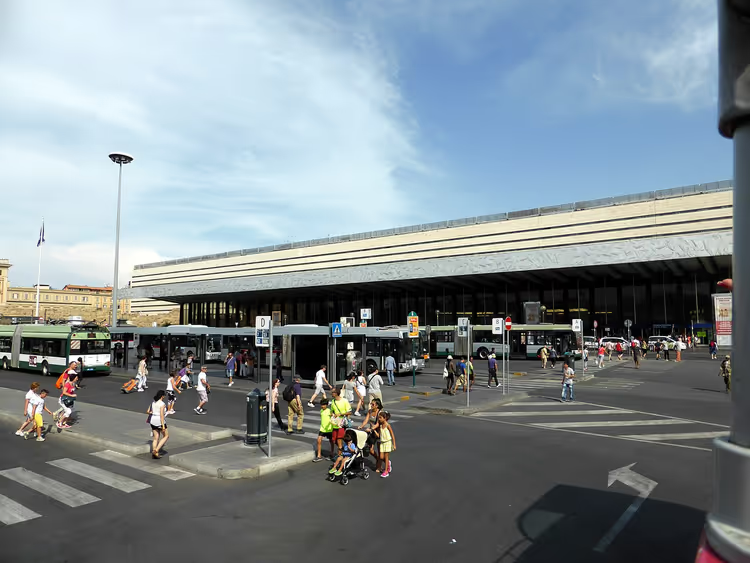 © Sean MacEntee from Monaghan, Ireland · CC BYPhoto: Sean MacEntee from Monaghan, Ireland, CC BY (https://creativecommons.org/licenses/by/2.0), Wikimedia Commons
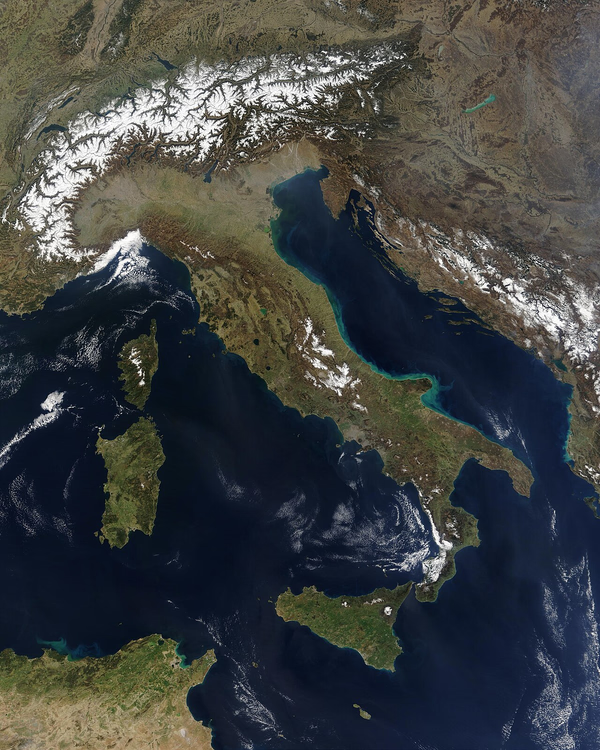
Heading south, the picture is different. Getting to Sicily by train takes a long time, with a ferry crossing over the Strait of Messina. There is no train to Sardinia; ferries go there from Civitavecchia and Livorno. People more often fly to the islands on Ryanair and Wizz Air low-cost carriers: they fly from Rome and Milan several times a day.
Discounts for couples and groups
Italian carriers have group fares. A group of three to five people pays less for tickets, and couples also get a discount off the full price (as of 09/2026, group fare terms).
The discount amount depends on the route and the date, so compare the final total before paying: compare train fares across Italy. Sometimes regular promotional tickets are cheaper than the group fare, so check both options.
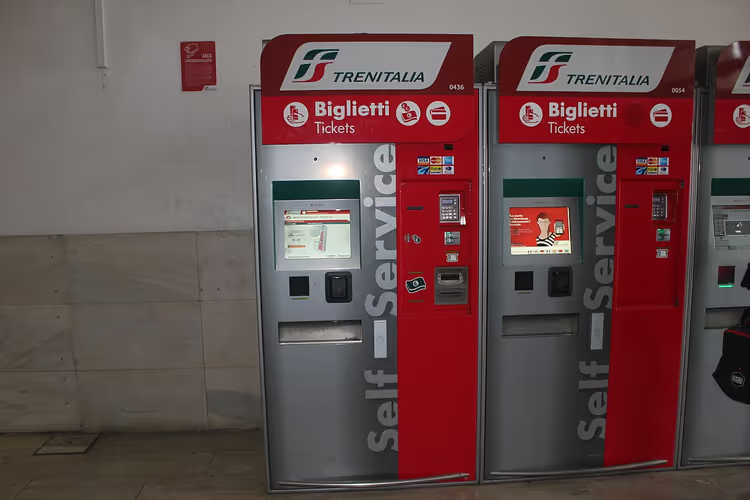 © CAPTAIN RAJU · CC BY-SAPhoto: CAPTAIN RAJU, CC BY-SA (https://creativecommons.org/licenses/by-sa/4.0), Wikimedia Commons
Delays and strikes
Italian trains do have their catches. A 10-20 minute delay is business as usual for the local railway (as of 09/2026, train punctuality). When making a connection, leave yourself a buffer, especially between a regional and a high-speed train.
Strikes happen regularly, but they are announced in advance: strike notices are posted at stations and on the Trenitalia website. The largest strike in recent years took place on September 9, 2022: Trenitalia, Italo, and Trenord trains came to a halt, and the unions demanded protection for conductors and engineers from passenger assaults.
Mini phrasebook for the station
It is worth knowing the names on the departure board in advance, otherwise you lose time at the platform entrance:
- Partenze: departures;
- Arrivi: arrivals;
- Bin: platform number;
- Carrozza: car number;
- Posto: seat number.
A nice bonus for your trip: at the stations they make pizza and coffee right in front of you, and trains run across the country from the Alps to Sicily.
⁉️🤔 Frequently asked questions
Do I need to buy tickets in advance?
Yes, it is cheaper in advance. At the station ticket office or right before departure, a ticket almost always costs more than on the carrier's website.
Are there discounts for groups of friends and for couples?
Yes, Italian carriers have group and couple fares. The conditions and price comparison tips are described in the discounts section above.
What should I do if the train is late?
Minor delays are common here, so leave a buffer when making a connection. This is especially important when you transfer from a regional train to a high-speed one. If the delay is significant, you are entitled to compensation under EU passenger rights rules: keep your ticket and take a photo of the arrivals board showing the arrival time.
How do I take luggage?
Trains have no suitcase weight limit like airplanes do. You put large bags on the rack near the carriage entrance or on the shelf at the end of the car, and stow carry-on luggage overhead. Regional trains have less luggage space than high-speed ones, so arrive at the platform early during rush hour.
How do I get to Sicily by train?
Intercity night trains run from Rome to Sicily, and the carriage is transported on a ferry across the Strait of Messina. Plan a full day for this trip.
In short: what to book
Train travel in Italy pays off if you buy tickets in advance and choose the right type of train. For a short route between major cities, take Frecciarossa or Italo. If you are counting every euro and are not in a hurry, look at Intercity. A regional Regionale will get you to nearby towns.
The decision matrix is simple. You have three hours and a Rome to Milan trip: take the high-speed train. Your budget is limited and you have time to spare: choose Intercity. You are traveling with a group: check the group fare before paying.
Book your train tickets for Italy in advance and a hotel near the station so you do not waste your morning getting across the city.

A small editorial team writing guides for independent travel. We travel ourselves, but we haven’t been everywhere, so we check prices, opening hours and how to get there against official sources.