










How to buy a Trenitalia ticket and not overpay for a seat
The carrier's website is translated into several languages, including German and English, but the translation is inaccurate in places. Station names remain Italian, and fares change every day. As a result, a first independent booking often ends with extra costs or a ticket for the wrong train.
Below, step by step: how to search for trains, what fare types exist, how much a seat costs, what to print before departure, and how to avoid losing money on non-refundable tickets.
Ad: this article contains affiliate links. We earn a commission if you book through them, at no extra cost to you.
What to know about Trenitalia trains
💡 In short:
- Early booking is cheaper: the price depends on train occupancy.
- High-speed Frecce and regional Regionali are searched in one window, but their rules differ.
- Seat selection costs extra.
- Fares, classes, and seat reservations: 09/2026, verified on the official Trenitalia website.
The Italian railway works similarly to the German one, except prices rise faster. The cost depends on train occupancy and how far in advance you book, so long-distance trips should be planned several weeks ahead. This matters most for high-speed routes between major cities.
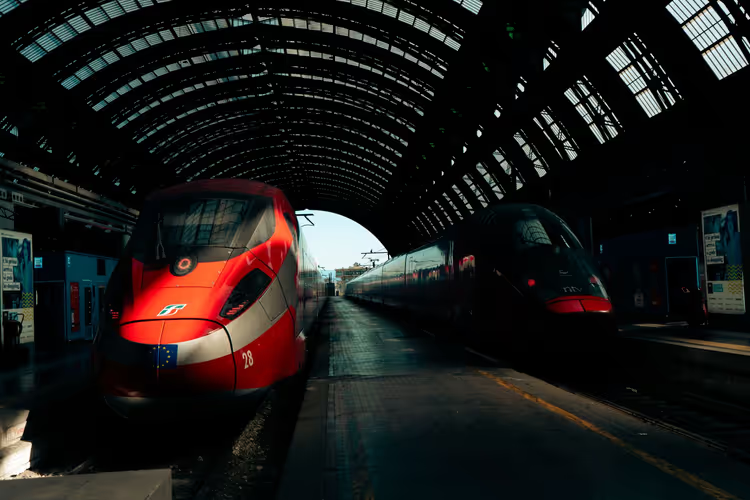
All high-speed trains have names starting with Freccia. Frecciabianca reaches up to 200 km/h, Frecciargento up to 280 km/h, Frecciarossa up to 300 km/h, and the Frecciarossa 1000 is rated for up to 360 km/h (as of 09/2026, Trenitalia). Regional trains run slower and stop noticeably more often.
Comfort on Italian trains is decent at every level. On a regional train you get a standard seat; on a high-speed train you also get a power outlet, a table, and a luggage shelf. The difference is mostly noticeable on long stretches, where quiet and the ability to work on the go matter.
Category | Feature | Seat selection |
|---|---|---|
Frecciarossa | fastest, main lines | yes |
Frecciargento | high-speed, some routes on older lines | yes |
Frecciabianca | high-speed at lower speed | yes |
Regionale | commuter, many stops | no |
How to buy a Trenitalia ticket step by step
First, open the carrier's website and select the language; the switch is at the top right next to the flag. The German version helps with navigation, but station and fare names remain Italian, and that is the main source of booking mistakes.
Next, enter the departure and arrival cities. In Italy, one city can have several stations, so check the exact Italian name, for example Milano Centrale or Torino Porta Nuova. Google Maps will show which station is closer to your accommodation and save you an hour in a taxi in an unfamiliar city.
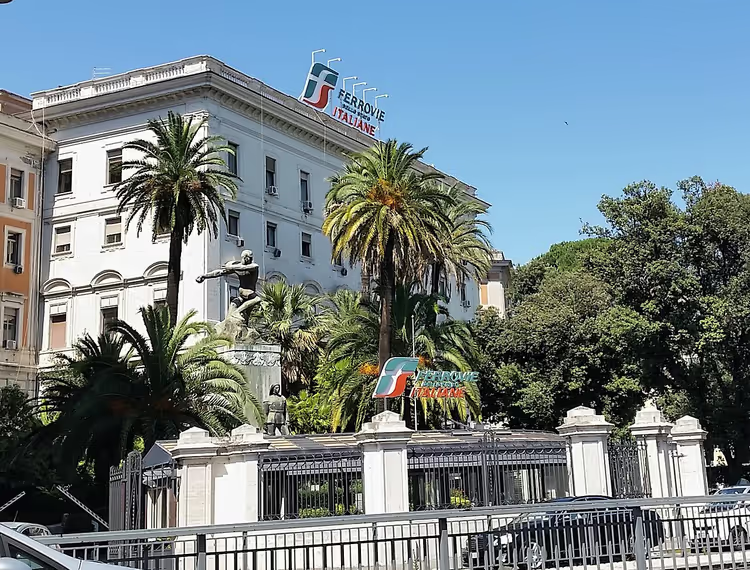
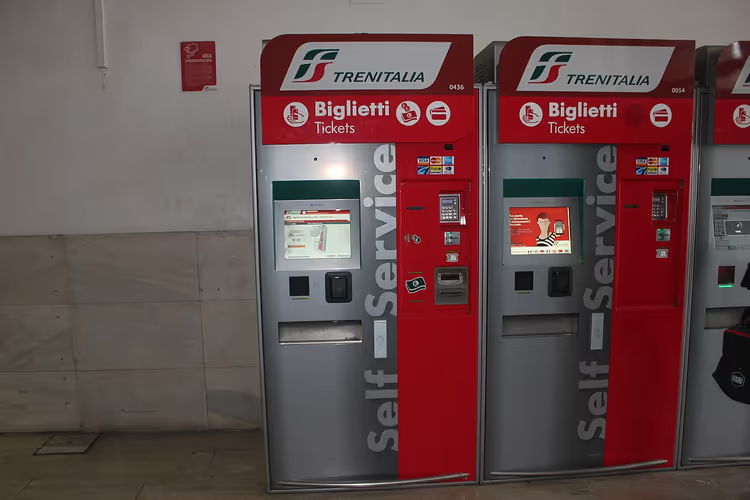 © CAPTAIN RAJU · CC BY-SAPhoto: CAPTAIN RAJU, CC BY-SA (https://creativecommons.org/licenses/by-sa/4.0), Wikimedia Commons
Below the search bar there is a filter: all trains, only Frecce, or only regional trains. It saves time when sorting through options with transfers in the suburbs. If you need a fast trip between cities, set the filter to Frecce.
On some browsers, the destination station field appears below the white block. If the cursor won't go into the field, click just below the frame: it's a layout quirk, not a block.
After confirming the search, you'll see a list of trains with departure time, duration, and price. Click on a suitable train, and the fares for that specific train will appear. Cheap options are marked as non-refundable, flexible ones cost more, and the difference is already visible on a medium-length route.
If you don't want to deal with the Italian layout and rules, the same routes are sold on international platforms: trains across Italy and prices on Trip.com. You choose the train and time yourself, and check the schedule against the carrier's website.
Base, economy, and super economy fares
A single train always has several fares, and availability changes every day. In search results you see Base, economy, and super economy fares. Base is more expensive but allows changing your plans. Economy and Super Economy are cheaper, but come with restrictions on refunds and exchanges (as of 09/2026, Trainline).
 © Carlo Dani · CC BY-SAPhoto: Carlo Dani, CC BY-SA (https://creativecommons.org/licenses/by-sa/4.0), Wikimedia Commons
We checked fares and classes on 12.09.2026 on the official Trenitalia website (as of 09/2026, Trenitalia). Click the gray "i" icon next to the price, and the system will explain what the fare includes and whether it is tied to a loyalty card. Some of the cheapest offers are only available to cardholders, so check the notes on each fare before buying.
The Carta Freccia loyalty card is free, and anyone over 18 can become a cardholder (as of 09/2026, official Trenitalia website). For travelers who have been to Italy before, it's a way to access discounted fares that aren't available in general sale.
The screenshot above shows how the card description and its terms look on the carrier's website. Look at the notes next to the fare: they show whether the card is required for a specific offer.
In the second screenshot, the three lowest fares are only available to cardholders, with an explanation next to each one. Check this before paying, because once confirmed, the fare conditions can no longer be changed.
How to choose a seat on the train
A seat on a high-speed train is selected at the payment stage, and the service costs €2 per person (as of 09/2026, Trainline). If you skip this step, the system assigns you a seat for free. With the Base fare, seat selection is also free.
Seat selection is available on Frecciarossa, Frecciargento, Frecciabianca, Intercity, and Eurocity. On a regional train you can't choose a seat; you sit in any free seat. Children under four travel free on an adult's lap, and no seat is reserved for them (as of 09/2026, Trainline).
The carriage map shows the car number, direction of travel, tables, toilets, and the bar car, so it's much easier to choose a seat using this diagram rather than guessing. If you want to look out the window, check the route in Google Maps and pick the side in advance. This is especially important on stretches along the Alps and along the coast, where the views open up on one side.
Payment, PDF, and ticket in the app
All that's left is to fill in the required fields and choose a payment method. The ticket downloads immediately after purchase, and a copy arrives by email as a PDF. Print the document in advance so you don't have to search for the file on your phone at the station or look for a free outlet.
If your route includes a transfer, each train comes with a separate ticket. Check the list before departure and put the printouts in one envelope: one lost page means an unpaid leg of the journey and a conversation with the conductor. This differs from Germany, where the whole trip often fits in a single document.
For regional trains, online check-in has not been mandatory since 2026; the digital ticket activates automatically at departure time (as of 09/2026, Trenitalia).
What to check before departure
Before leaving home, check three things: the time on the ticket, the station names, and the number of printouts. If you have a reserved seat, check the car number. Numbering starts from the front of the train, and you'll have to walk part of the platform.
Arrive at the station with time to spare. At major Italian stations, a long walkway sometimes leads from the entrance to your platform, and at transfer stations it helps to check the platform number in advance so you don't run around with a suitcase.
⁉️🤔 Frequently asked questions
Do I need to reserve a seat on a Trenitalia train?
No, seat reservation is not mandatory. If you skip this step, the system assigns you a seat for free. Paid seat selection is only needed when it matters to sit by the window, near an outlet, or on the right side in the direction of travel (as of 09/2026, Trainline).
How do Frecce differ from a regional train?
High-speed Frecce trains run between major cities without frequent stops, so Milan and Rome end up within a day's travel. Regional trains are cheaper, but they stop at almost every station, and on a long route you lose hours. Plus, Frecce offer seat selection and a power outlet at your seat.
When is the best time to buy train tickets in Italy?
Several weeks before the trip. High-speed routes get more expensive the fastest, because cheap fares sell out first. On regional routes the spread is smaller, but early purchase is still more reassuring there, because you know the exact time and don't stand in line at the ticket office.
What if my route includes a transfer?
Trenitalia issues each train as a separate ticket, so you'll need to print not one document but several. Check the transfer time: if there's less than half an hour between trains, any schedule disruption makes the rest of the journey problematic. A one-hour buffer removes most of the stress at an unfamiliar station.
Do I need to print the ticket?
Formally, a copy on your phone is enough. In practice, a printout is more convenient, especially on a route with transfers.
In short: what to book
If you're traveling between major cities: take a Frecce at the right time and a window seat. If the route is suburban and short: Regionali is enough, and you don't need to pay extra for a seat. If you're unsure about the date: look at Base, it's more expensive, but you can change your plans.
Check train schedules and prices and hotels near stations in advance.

A small editorial team writing guides for independent travel. We travel ourselves, but we haven’t been everywhere, so we check prices, opening hours and how to get there against official sources.