
















Five wine regions of Victoria: where to go for a tasting from Melbourne
Five Victorian wine regions lie within three hours' drive of Melbourne. Over one long weekend you can cover two or three of them, not all at once.
Closest to the city is the Yarra Valley: under an hour via Maroondah Highway (according to Visit Victoria, 09/2026). Farthest are King Valley and Rutherglen in the northeast of the state.
Below are five regions with wineries, cellar door hours, and honest catches. It's best to put a sober driver behind the wheel.
Ad: this article contains affiliate links, we earn a commission if you book through them, at no extra cost to you.
What to know before you go
💡 In short:
- Plan one region per day: distances between them are significant.
- Book tastings in advance, there are no open slots in season.
Victoria's wine regions differ by climate. Coastal zones around Melbourne are cool, while inland valleys to the northeast are warmer and drier. This determines the range of varieties and wine styles.
Region | Drive from Melbourne | Main varieties |
|---|---|---|
Yarra Valley | under an hour, Maroondah Highway | Chardonnay, Pinot Noir |
King Valley | northeast of the state, the longest drive | Prosecco, Nebbiolo, Pinot Grigio |
Central Victoria | 90 minutes via Hume Highway | Shiraz, Riesling |
Rutherglen | north of the state, near the New South Wales border | Muscat, Durif, Shiraz |
Pinot Coast | just over an hour to Mornington | Pinot Noir, Chardonnay |
For a first visit, the Yarra Valley is the most convenient: a short drive, dozens of cellar doors, and restaurants at the wineries. If you want to compare terroirs, pick two regions and stay overnight locally. Otherwise you'll spend half a day in the car and come back exhausted.
1. Yarra Valley
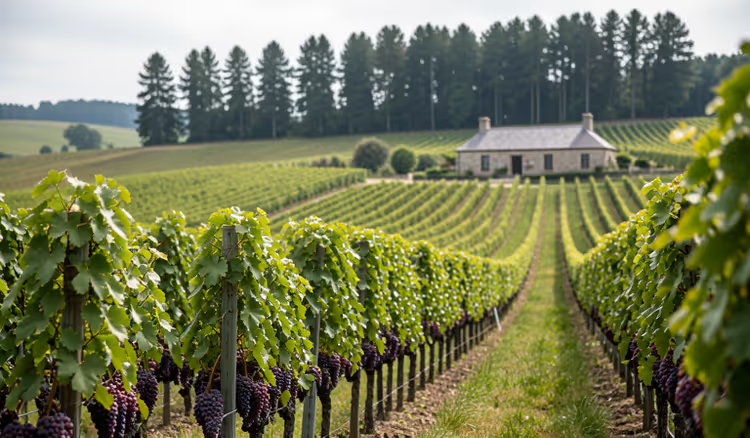
The Yarra Valley is under an hour from Melbourne and is considered one of the most visited wine regions in the world. The cool climate produces Chardonnay and Pinot Noir, poured at almost every cellar door.
Hubert Estate (also known as St Hubert's) is counted among the region's oldest producers. It operates a modern complex with a tasting room, restaurants, and exhibition spaces.
Tastings at St Hubert's run daily, and you book your slot online (according to the official Hubert Estate website, 09/2026). Check specific opening hours before your trip.
 AIIllustrative image: AI-generated
- Getting there: under an hour from central Melbourne via Maroondah Highway.
- Cost: check tasting conditions when booking.
- Who it's for: if you're passing through Melbourne for 1-2 days.
Yarra Valley hotels on Trip.com
2. King Valley
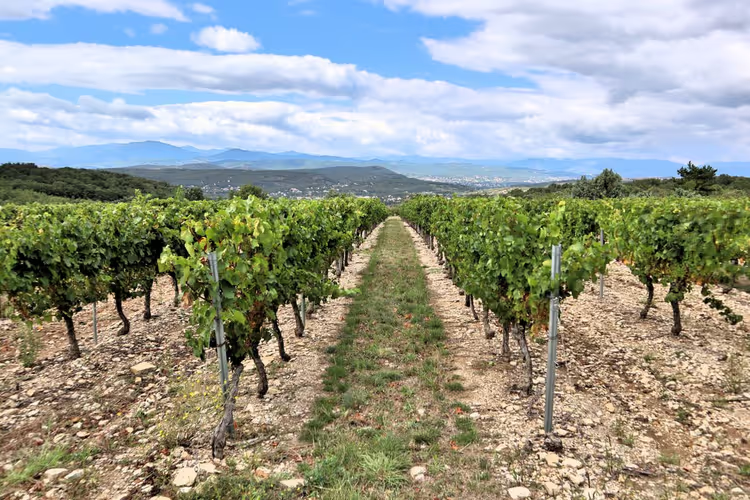
King Valley in northeast Victoria was built up by families of Italian migrants. Their descendants run the local wineries to this day, and the first vines here were planted in the 19th century.
The region's signature drink is Prosecco, which King Valley has been making since the last century (according to Visit Victoria, 09/2026). Alongside it, cellar doors pour Nebbiolo, Pinot Grigio, and Vermentino.
Politini Wines in Cheshunt is run by a family of Sicilian descent. Here you taste Prosecco and Vermentino alongside varieties rare for Australia: Grecanico and Nero d'Avola.
Tastings are by appointment only: Thursday-Saturday 11:00-17:00, Sunday 11:00-16:00 (as of 09/2026, official website). Call ahead, boutique wineries have few slots.
- Getting there: northeast Victoria, a long drive, best done with an overnight stay.
- Who it's for: those who love Italian varieties and family-run cellars.
Hotels in King Valley on Trip.com
3. Central Victoria
Central Victoria lies in the highlands of the southern part of the Great Dividing Range. The vineyards sit near the Goulburn River, and the climate here is warmer than on the coast.
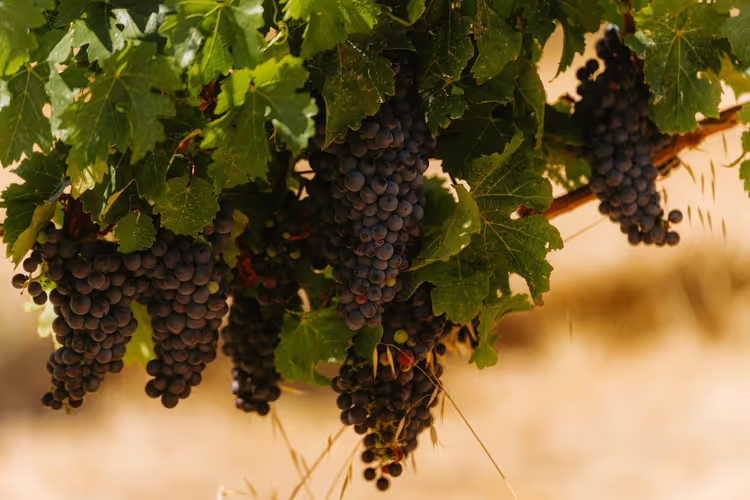
Mitchelton has been operating in Nagambie since 1969 (according to The Real Review, 09/2026). The winery stands on the banks of the Goulburn, and it has a lookout tower, a hotel, a spa, and The Muse restaurant.
Mitchelton is known for its Shiraz, Riesling, and Rhone blends (according to winery reviews, 09/2026). The tasting is done at the table, with wines poured as the story of the estate unfolds.
Nagambie is 90 minutes away via the Hume Highway and Goulburn Valley Highway (according to Nagambie Lakes Wineries, 09/2026). You'll drive back in regular traffic, so don't schedule your tasting for late evening.
- Getting there: 90 minutes via the Hume Highway, then exit toward Shepparton.
- Who it's for: if you're into Shiraz and a restaurant at the winery.
Hotels in Central Victoria on Trip.com
4. Rutherglen
Rutherglen, on the border with New South Wales, is known for fortified wines. They've been made here for over a century, and the varieties have barely changed: Muscat, Durif, Shiraz, and Cabernet Sauvignon.
The wineries in Rutherglen are small, some run by the same families for decades. Summers here are dry and hot, so tastings are best scheduled for the morning.
Lake Moodemere Estate sits on the shore of Lake Moodemere, where vines have been growing since 1886. The estate is considered carbon-neutral, and the vineyard is certified sustainable (as of Visit Victoria, 09/2026).
The winery has a Lakeside Restaurant with water views and guest apartments. If you're staying overnight, you'll have time to try the fortified wines without rushing.
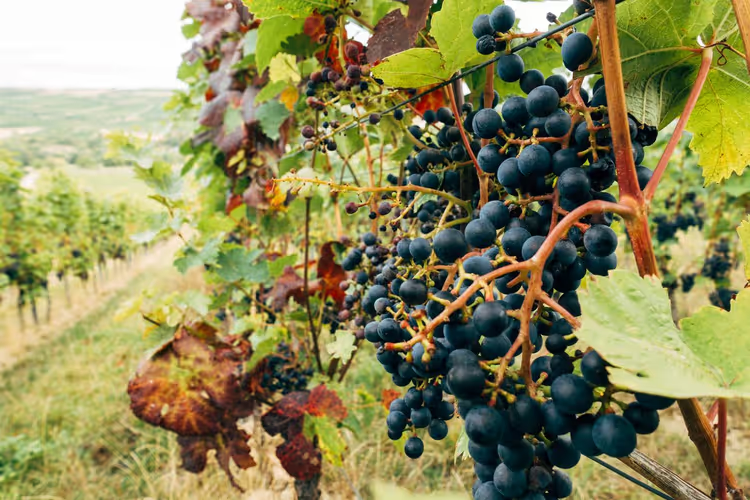
- Getting there: northern Victoria, the drive along the Hume Highway takes several hours.
- Cost: tastings by appointment, check conditions with the winery.
Hotels in Rutherglen on Trip.com
5. Pinot Coast
The Pinot Coast covers Victoria's coastline and brings together three regions: Geelong with the Bellarine Peninsula, the Mornington Peninsula, and Gippsland (as of Wine Geelong, 09/2026).
The main variety here is Pinot Noir. The maritime climate produces cool, aromatic wines, which is why the Pinot Coast is recommended for those who have already developed a taste for Shiraz.
In total, 146 cellar doors operate along the coast (as of Visit Victoria, 09/2026). From Melbourne to the Mornington Peninsula it's just over an hour (as of Wine Companion, 09/2026), so it's easy to do as a day trip.
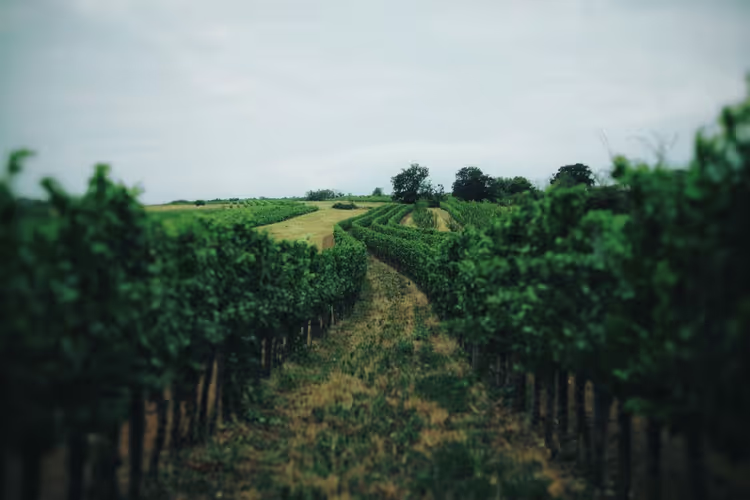
- Getting there: just over an hour to the Mornington Peninsula.
- Who it's for: if you want Pinot Noir and the ocean in one trip.
Hotels on the Mornington Peninsula on Trip.com
⁉️🤔 Frequently asked questions
What's the best month to go wine tasting in Victoria?
Grape harvest season in the southern hemisphere falls at the end of summer and the beginning of autumn. During these weeks, wineries show young wine, and harvest festivals take place in the cellars. In winter, Victoria is cooler and rainier, but there are few visitors and tastings go at a relaxed pace.
Do I need to book a tasting in advance?
Yes, in almost all the regions on this list. St Hubert's cellar door and Politini Wines take guests by appointment, and boutique wineries have few slots. Book by phone or through the winery's website: the earlier you do it, the more time options you'll have.
How many regions can you realistically cover in one day?
One, or two at most if they're on the way. Distances from Melbourne are significant: Nagambie is 90 minutes away, and the state's northeast takes several hours to reach. To fit in a second region, you'd have to cut tasting time. So it's better to stay overnight locally.
What if you're the one driving?
Take a guided tasting or a wine tour where the driver doesn't drink. Cellar doors have spittoons, but the smell and a small dose still linger. In Victoria, the blood alcohol limit is 0.05 for full license holders, and zero for P-plates. Road checks are frequent.
Is it worth going with kids?
At Hubert Estate, besides the cellar doors, there are restaurants and exhibition spaces, and Lake Moodemere Estate sits on a lake with a waterfront restaurant. You can combine lunch and a walk through the vineyards, but the tasting itself isn't interesting for children.
In short: what to book
If you're in Melbourne for the first time: go for the Yarra Valley, it's a short drive and has plenty of cellar doors. If you want Prosecco and Italian varieties: go for King Valley. People go to Nagambie for Shiraz, to Rutherglen for fortified wines, and to the coast for Pinot Noir.
If you don't want to get behind the wheel, book a guided wine tour with transfers.

A small editorial team writing guides for independent travel. We travel ourselves, but we haven’t been everywhere, so we check prices, opening hours and how to get there against official sources.