
















More sheep than people: 10 facts about New Zealand
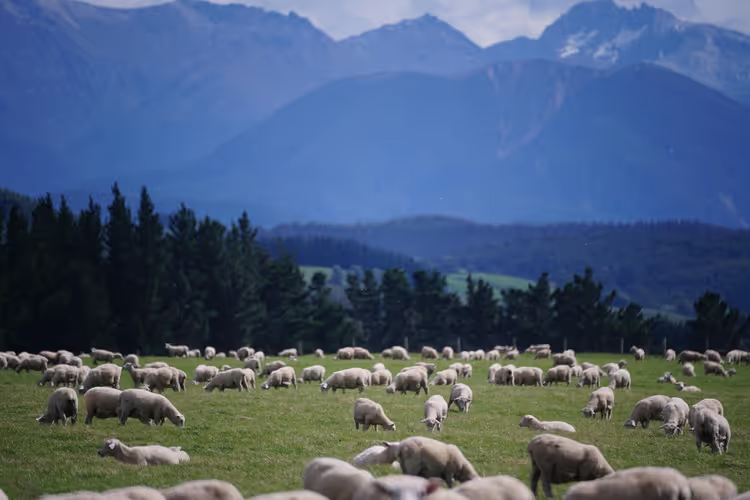
New Zealand begins where familiar landmarks end. It takes more than a day to fly to this country on the other side of the world, and everything works differently once you're there. According to Stats NZ, there are more sheep here than people. Yet there are plenty of reasons to visit: the country holds records for water purity, street steepness, and the length of its place names.
We've put together ten facts backed by official sources rather than tourist brochures. You'll find numbers, dates, and specific places worth seeing with your own eyes.
Ad: this article contains affiliate links, we earn a commission if you book through them, at no extra cost to you.
Protected nature covers a third of the country
💡 In short:
- A third of the country's territory is under state protection.
- There are 13 national parks here, covering about 11% of the area (according to Te Ara: protected areas).
- As of: 09/2026, verified against Te Ara.
A significant part of New Zealand is closed to development. Nearly a third of the territory is under state protection, including marine reserves, and 13 national parks cover about 11% of the country's area (as of: Te Ara).
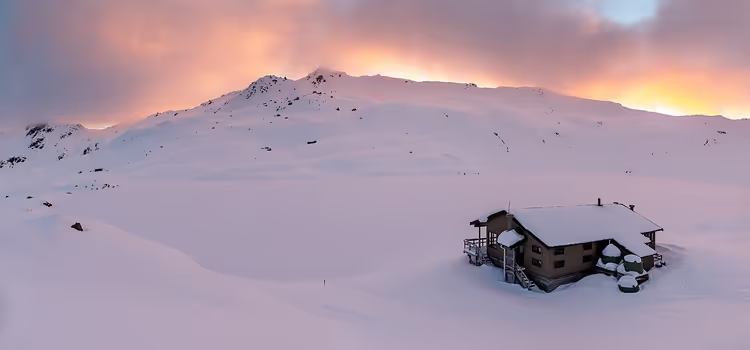
The country's highest peak, Aoraki / Mount Cook, rises to 3,724 meters and stays snow-covered year-round (according to Wikipedia). For good photos, you want to catch it on a clear morning, while the clouds stay below the peak.
If you're more drawn to water, head to Milford Sound fjord. Sheer walls drop straight into the water, with temperate rainforest growing on them. A boat trip reveals waterfalls, and sometimes dolphins and penguins.
- The catch: Milford Sound is far from major cities, so you need to set aside a full day for the trip.
 © Michal Klajban · CC BY-SAPhoto: Michal Klajban, CC BY-SA (https://creativecommons.org/licenses/by-sa/4.0), Wikimedia Commons
Kiwi means three different things
When you hear the word "kiwi," the first thing that comes to mind is the small green fruit. In fact, there are three meanings, and the fruit isn't the main one here.
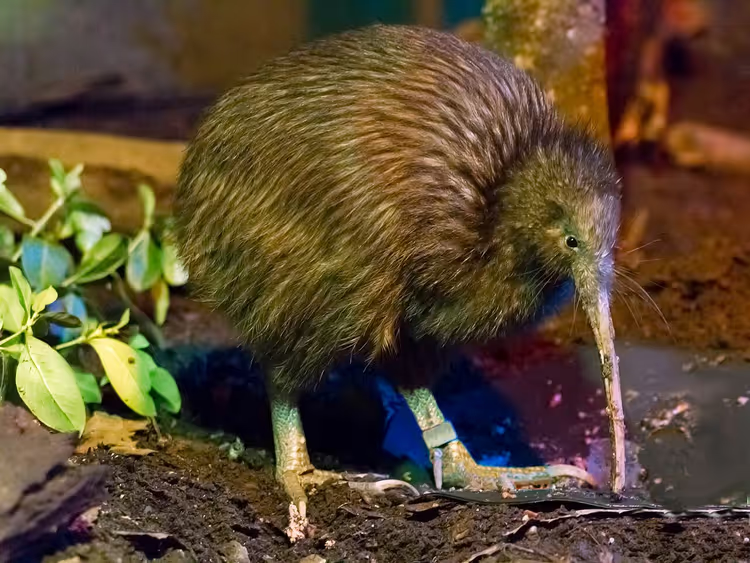
Kiwi is what locals are called; it's their national nickname. It's also the name of a flightless bird that lives only in New Zealand. The bird is what gave New Zealanders their nickname.
But here's what's more surprising: the kiwi fruit itself is not native to New Zealand, it comes from China. It became a popular brand here, when farmers started growing it for export.
 © The.Rohit · CC BYPhoto: The.Rohit, CC BY (https://creativecommons.org/licenses/by/2.0), Wikimedia Commons
The hill with the longest name in the world
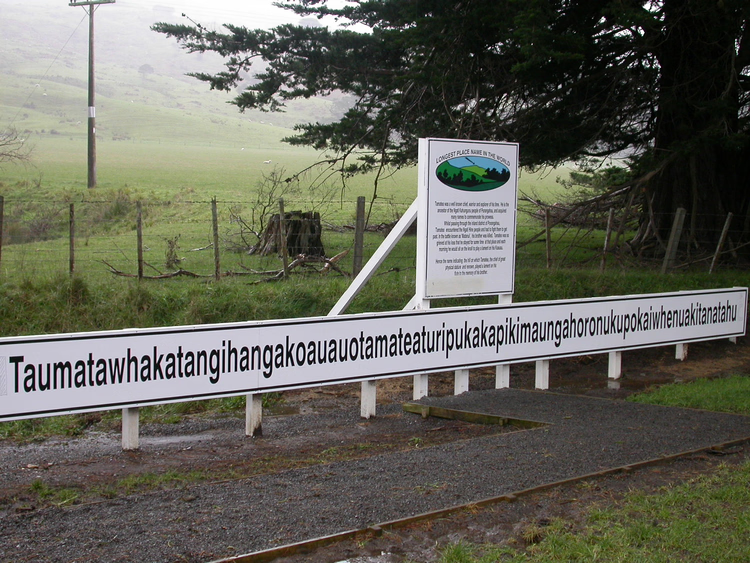
Near Porangahau stands a hill whose name is considered the longest place name on the planet. It is written as Taumatawhakatangihangakoauauotamateaturipukakapikimaungahoronukupokaiwhenuakitanatahu and contains 85 letters (according to Wikipedia).
In full, the name in the Maori language sounds like an entire story: "The summit of the hill, where Tamatea, the man with the big knees, played the flute for his beloved." The hill itself is not high, about 305 meters, but it offers a view of pastures all the way to the horizon (according to Wikipedia).
Pronouncing the whole name in one go is unlikely even for a local resident. If you decide to drive over, ask for directions to "Taumata": that is what people call this place in conversation.
 © foolfillment · CC BYPhoto: foolfillment, CC BY (https://creativecommons.org/licenses/by/2.0), Wikimedia Commons
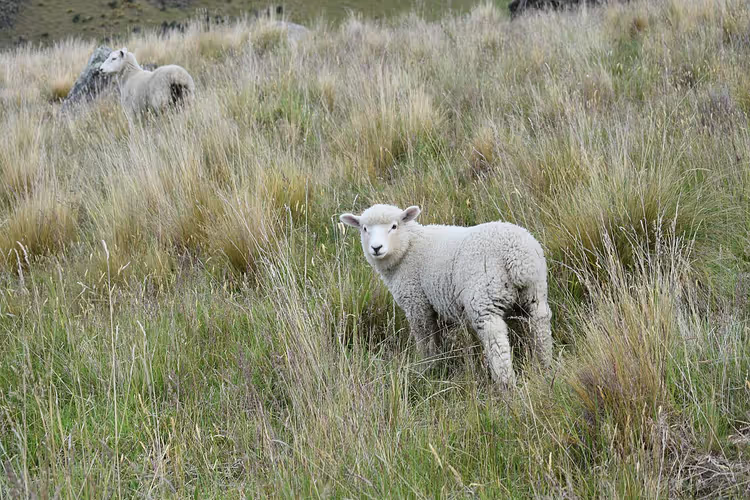
More sheep than people
Livestock farming remains one of the country's leading industries. As of June 30, 2024, there were 23.6 million sheep here, with a population of about 5.3 million people (as of 06/2024, Stats NZ report).
That works out to roughly 4.5 sheep for every New Zealander. The ratio used to be higher: the flock grew for decades, then began to decline (according to Stats NZ).
Sheep are not the only inhabitants. The country is known for its colonies of bats and birds, and people are far from dominant on that list. In spring, lambs join the adult sheep, and you will see them in every pasture.
 © Sky_xe · CC BY-SAPhoto: Sky_xe, CC BY-SA (https://creativecommons.org/licenses/by-sa/4.0), Wikimedia Commons
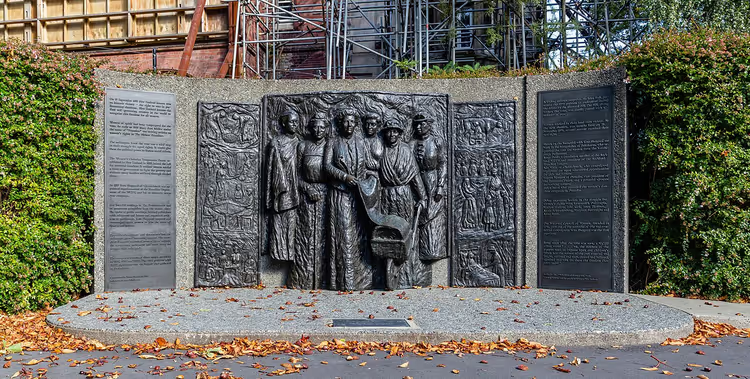
The first country with voting rights for women
On September 19, 1893, New Zealand became the first country in the world to give women the right to vote (as of: Wikipedia). This happened earlier than in most European countries.
Women sent petitions to parliament and campaigned for several years. The result was historic: the country even beat the United States.
Later, women rose to the highest offices. In 2006, all key government positions in the country were held by women at the same time, an extremely rare case in world history (according to Wikipedia).
 © Michal Klajban · CC BY-SAPhoto: Michal Klajban, CC BY-SA (https://creativecommons.org/licenses/by-sa/4.0), Wikimedia Commons
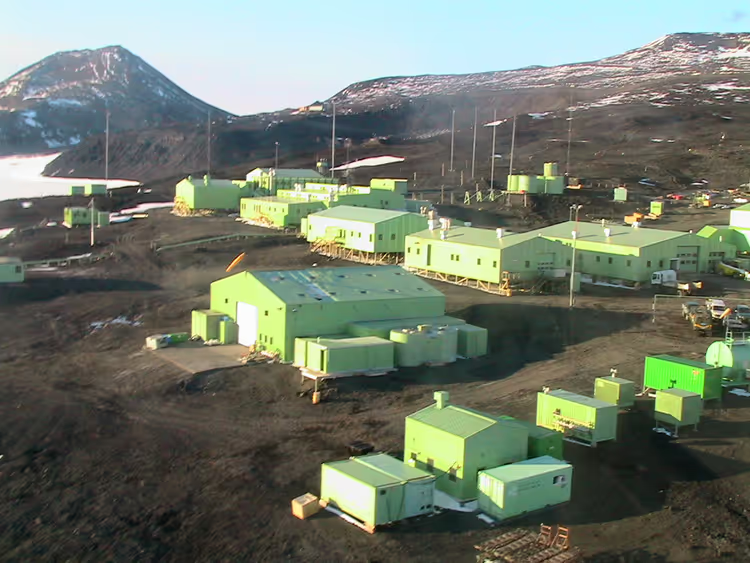
How new zealand is connected to antarctica
New Zealand is one of the countries closest to Antarctica and administers a small part of the continent. Scientific expeditions depart through its ports and airfields.
If you are interested in polar topics, stop by the International Antarctic Centre in Christchurch. There you can see how researchers live and experience Antarctic weather in a special chamber.
From Christchurch, it's also convenient to plan the trip south itself. Flight tickets to New Zealand are easy to search on Kiwi.com.
Three official languages
New Zealand has three official languages: English, Maori, and New Zealand Sign Language (as of Wikipedia). Maori gained official status in 1987, and Sign Language in 2006.
The Maori language is experiencing a revival. According to the 2023 census, 213,849 people spoke it, 15% more than in 2018 (as of Stats NZ).
More than 20,000 residents know Sign Language. It is closely related to British Sign Language and shares many signs with American Sign Language (as of Wikipedia). If you know English, you won't face a language barrier in the country.

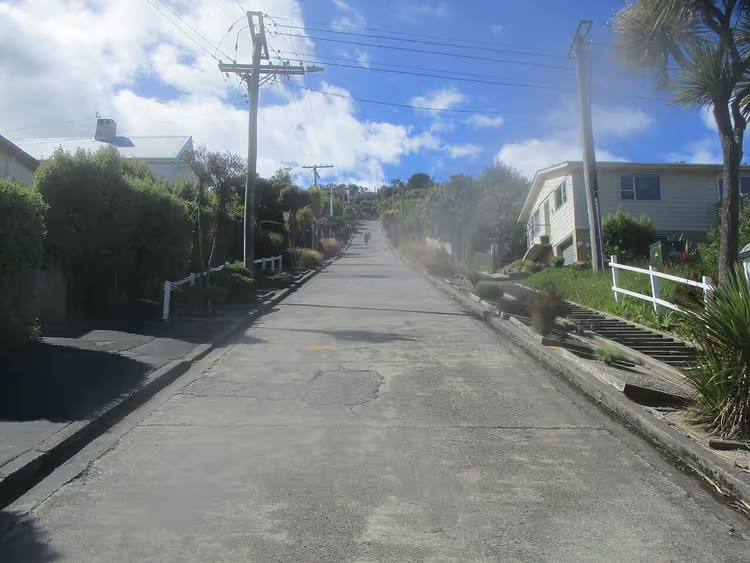
The steepest street in the world
Dunedin is home to Baldwin Street, which Guinness World Records calls the steepest street on the planet. Its gradient reaches 34.8%, and that's a confirmed record (as of Guinness World Records).
The street is about 350 meters long, but the climb is tough even for fit people. In 2019, the record briefly went to Ffordd Pen Llech in Wales. In 2020, after a recalculation, the title was returned to Dunedin (as of Guinness World Records).
- The catch: Baldwin Street is still a residential street, so tourists should keep quiet.
If you want to stay nearby, you can find hotels in Dunedin on Trip.com.
The clearest freshwater lake
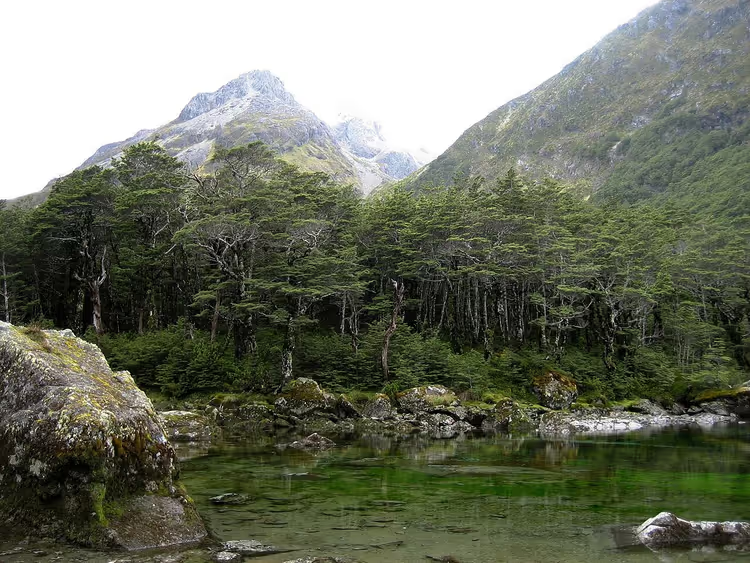
Blue Lake, or Rotomairewhenua, in Nelson Lakes National Park is recognized as the clearest freshwater body on the planet. Underwater visibility reaches 70-80 meters (as of: Wikipedia).
This clarity comes from spring-fed inflow from the neighboring lake. The water's hue shifts from turquoise to blue-violet, a color found only in the world's purest waters.
For the Māori, the lake is sacred, so swimming here is not customary. You reach it by trail and view it from the shore.
- The catch: there is no easy road to the shore; you can only get there on foot along a mountain trail.
 © Mergy at English Wikipedia · CC BY-SAPhoto: Mergy at English Wikipedia, CC BY-SA (https://creativecommons.org/licenses/by-sa/2.5), Wikimedia Commons
Volcanoes right in the city
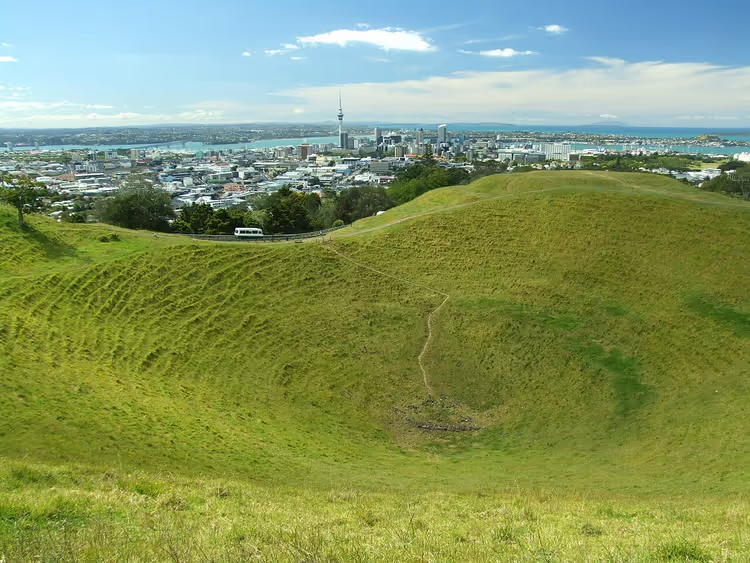
Auckland sits on a volcanic field of roughly 53 craters (as of: Wikipedia). Most of them are extinct, and the city owes its hills and lookout points to them.
The field's youngest volcano, Rangitoto Island, rises to 260 meters with a width of about 5.5 km (as of: Wikipedia). Most of the island is covered in solidified black lava.
For tourists, there are trails with lookout points and rest areas. You can get there by ferry directly from Auckland, and if you climb to the summit, you will see the entire Hauraki Gulf. Find Auckland tours and excursions on GetYourGuide.
 © Christian Mairoll · CC BY-SAPhoto: Christian Mairoll, CC BY-SA (https://creativecommons.org/licenses/by-sa/2.5), Wikimedia Commons
⁉️🤔 Frequently asked questions
How do you get to Milford Sound?
Only one road leads to the fjord, so set aside a full day for this trip. Along the way there are lookout points and short walks to waterfalls. Leave early in the morning: by midday there are more buses, and the viewpoints get crowded. In winter the road is sometimes closed due to snow, leaving only flights or cruises.
How many official languages does New Zealand have?
Three: English, Māori, and New Zealand Sign Language. Māori gained official status in 1987, and sign language in 2006. If you know English, you will not face a language barrier in the country.
Can you swim in Blue Lake?
For the Māori, the lake is sacred, so swimming here is not customary. There is no easy road to the shore: you reach it by mountain trail and look at the water from the shore.
In short: what to book
New Zealand stretches across two large islands, and getting between points takes hours. If you are combining several items from this list into one trip, plan your route in advance and do not try to cover the whole country in a week.
If you are going for the fjords: set aside a day for Milford Sound.
If volcanoes interest you: two or three days in Auckland and a trip to Rangitoto.
If you want to see the clearest lake: make Nelson Lakes a separate stop.

A small editorial team writing guides for independent travel. We travel ourselves, but we haven’t been everywhere, so we check prices, opening hours and how to get there against official sources.