
















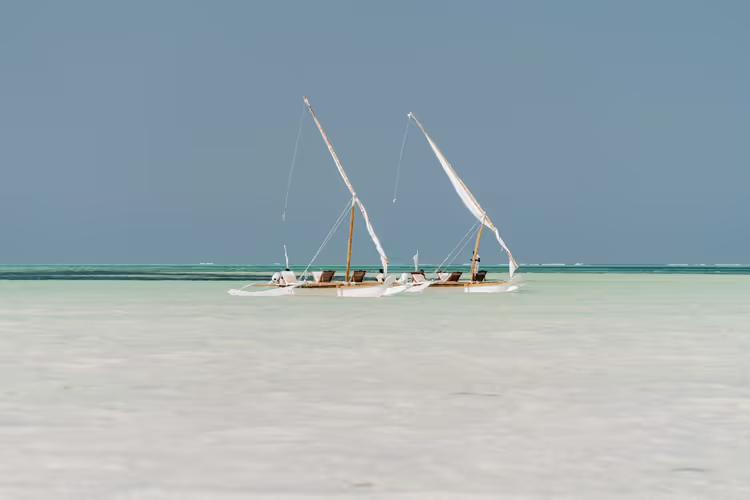
Zanzibar: when to go, what to see and how much entry costs
Zanzibar is no longer a closed-off exotic destination. Direct flights and a $50 visa (as of 09/2026, Tanzania visa fees) have made the island accessible for a regular vacation. But it has its own rules: two rainy seasons, mandatory insurance, and paid entry to almost every park. Here's everything in order: visa, seasons, five main places, food, money, and connectivity. You'll see what's worth booking in advance and what can be sorted out on the spot.
Ad: this article contains affiliate links, we earn a commission if you book through them, at no extra cost to you.
Visa and entry rules
A tourist visa for Tanzania costs $50 and allows a 90-day stay (as of 09/2026, current visa fees). You can apply online before your trip or get it on arrival at Zanzibar airport. Your passport must be valid for at least six months after your return date. Bring cash in dollars: card terminals at the border sometimes don't work, and ATMs charge fees.
One thing that's easy to forget. Since October 2024, all foreign nationals must purchase local insurance before entry (as of 09/2026, US embassy notice). The policy is issued by Zanzibar Insurance Corporation right on the island. Without it, you may run into issues at the border. Vaccinations are not required for Zanzibar, and a yellow fever certificate is only asked from travelers arriving from risk countries.
💡 In short:
- Get your visa in advance online through the e-Visa portal or on arrival at Zanzibar airport.
- Buy the mandatory local insurance immediately upon arrival.
When to go: the island's seasons
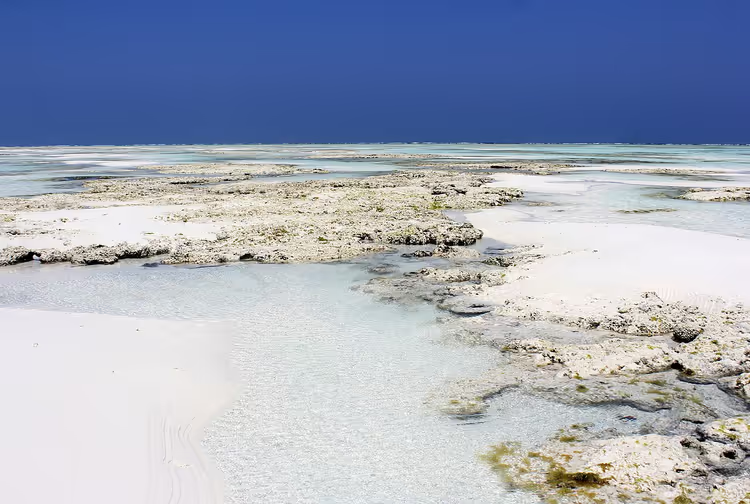
Zanzibar lies almost on the equator, so there's no real winter here. The air stays between +29...+35 °C year-round, and the ocean water is +25...+30 °C (as of 09/2026, Zanzibar climate). The difference between seasons isn't temperature, it's rainfall.
The dry season runs from June to October. This is the best window for the beach and the sea: almost no rain and milder heat. At the same time, it's high season, so book hotels in advance.
Two rainy seasons follow one after another. The long rains come from March to May, the short rains in November. During heavy downpours, roads get washed out and some excursions are canceled. On the plus side, accommodation prices drop noticeably and there are fewer tourists. The benefit for you is obvious.
The hottest months start in December. Daytime temperatures reach +33...+35 °C, and the sea stays warm. If you're escaping a European winter, this is a good option. Just keep in mind the windy weather.
 © Morten Idriss Nygaar… · CC BY-SAPhoto: Morten Idriss Nygaar…, CC BY-SA (https://creativecommons.org/licenses/by-sa/3.0), Wikimedia Commons
What to see and do
On a small island, it's easy to combine history, nature, and Eastern flavor. We picked five places that most often end up on itineraries. Stone Town and the Freddie Mercury house are in the city. Changuu Island and Jozani Forest cover nature. Spice farms show what the island lived on for centuries.
Freddie mercury house museum
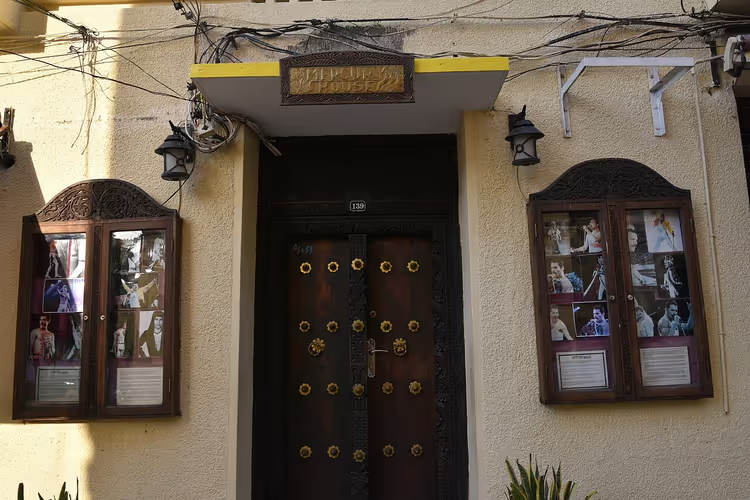
Freddie Mercury was born in Zanzibar and spent the first eight years of his life here. The family home stands in Stone Town and is split into two halves. One side houses a memorial museum, the other rents out apartments. The exhibition is small: archival photos, record covers, and drafts of song lyrics.
 © Richard Mortel from Riyadh, Saudi Arabia · CC BYPhoto: Richard Mortel from Riyadh, Saudi Arabia, CC BY (https://creativecommons.org/licenses/by/2.0), Wikimedia Commons
- Cost: museum entry is paid, check the price at the ticket desk.
- Who it's for: Queen fans and anyone who wants to see the inside of a Stone Town residential house.
- The catch: the exhibition is small, just a couple of rooms with photographs.
Apartments in the same building are rented out by the night, and dates get booked quickly. You can check availability and prices in advance: rates at Freddie Mercury Apartments.
Stone Town
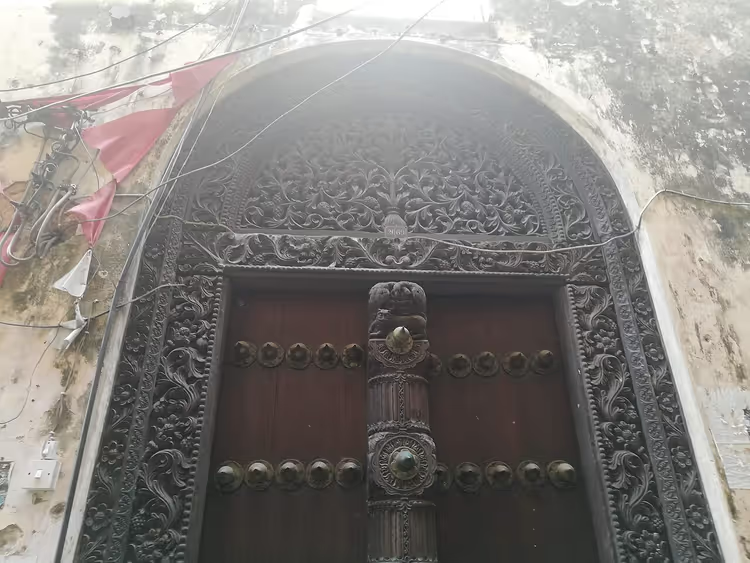
Stone Town is a UNESCO World Heritage Site. In the old town, narrow alleys, carved doors, mosques, and the old fort sit side by side with coffee shops and small stores. It's best to explore on foot, because some streets aren't built for cars. Set aside half a day for the walk: the area is compact but packed with things to see.
 © MMo · CC BY-SAPhoto: MMo, CC BY-SA (https://creativecommons.org/licenses/by-sa/4.0), Wikimedia Commons
- What to see: the Old Fort, the House of Wonders, the Anglican cathedral, and the David Livingstone house museum.
- How to get there: everything is within walking distance from the port and the waterfront.
- Who it's for: anyone who wants to see Arab, Indian, and European architecture in one neighborhood.
- The catch: the alleys get hot and humid during the day, so plan your walk for the morning.
A city guide adds context and short stories to your walk. Stone Town tours.
Changuu island (prison island)
Changuu is better known as Prison Island, even though the prison here never actually operated. The main reason to come here: giant Seychelles tortoises. Some of them are over a century old and weigh up to 200 kg (as of 09/2026, data on Changuu tortoises). You can feed the animals, pet them, and swim nearby. You can easily combine this trip with Stone Town in a single day.
 © Diego Delso · CC BY-SAPhoto: Diego Delso, CC BY-SA (https://creativecommons.org/licenses/by-sa/4.0), Wikimedia Commons
- Cost and getting there: entry is about $4, and the boat from Stone Town takes 20-30 minutes (as of 09/2026, Changuu guide).
- Who it's for: families with kids and anyone who wants to swim with tortoises.
- The catch: apart from the tortoises, there's almost nothing else to see on the island.
The easiest way to get there is with an organized group, since the boat and entry are already included. Changuu Island tour.
Jozani Forest
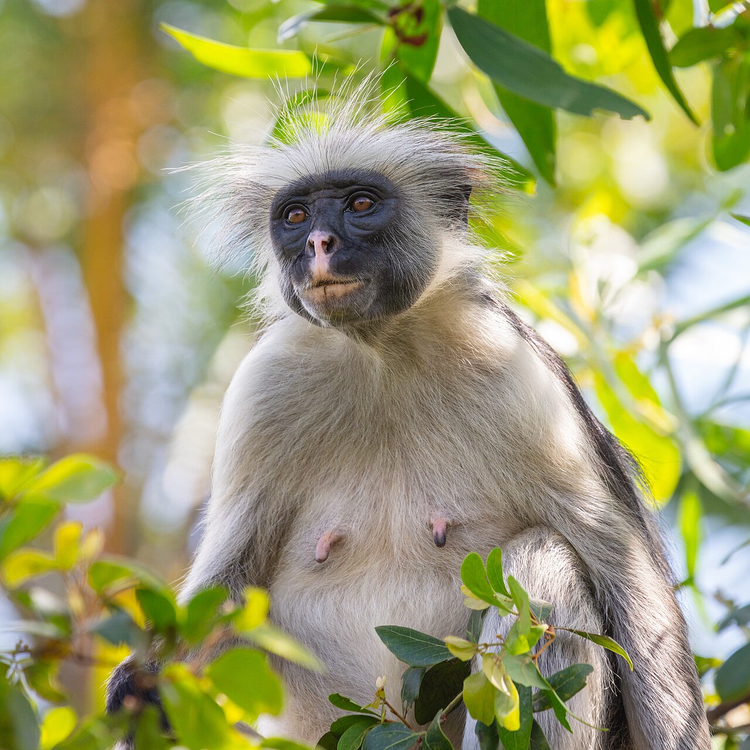
Jozani protects the remnants of the forest that once covered the entire island. It's Zanzibar's only national park and home to the red colobus monkey, a rare primate found nowhere else. The tourist trails are marked, but you're only allowed to walk them with a guide. A tortoise farm and a butterfly park operate nearby.
 © Diego Delso · CC BY-SAPhoto: Diego Delso, CC BY-SA (https://creativecommons.org/licenses/by-sa/4.0), Wikimedia Commons
- Hours and entry: daily 7:30-17:00, entry about 12,000 Tanzanian shillings (as of 09/2026, park page).
- Who it's for: nature lovers and photographers looking for rare animals.
- The catch: you can't go on the trail without a guide.
The trip takes half a day, so combining the park with the beach on the same day isn't practical. Jozani Forest tour.
Spice farms
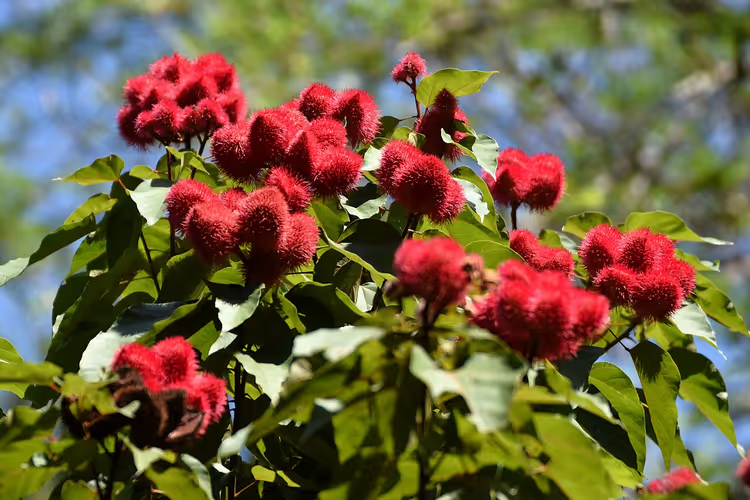
Cloves, vanilla, cardamom, cinnamon, and nutmeg grow right on the island's plantations. A few centuries ago, cloves from Zanzibar were the main export and supported the entire island. On the tour, you'll see how spices grow and get to taste them. The route takes half a day and usually starts from Stone Town.
 © Bärbel Miemietz · CC BY-SAPhoto: Bärbel Miemietz, CC BY-SA (https://creativecommons.org/licenses/by-sa/4.0), Wikimedia Commons
- Cost: the tour is bought on site or through the hotel, check the price with the organizer.
- Who it's for: families and anyone who wants to bring spices straight from the plantation.
- The catch: it's hot in the open sun, bring water and a hat.
A ready-made tour with a guide and tasting takes a few hours. spice farm tour.
Tours and tickets in Zanzibar
Guided tours, skip-the-line tickets and activities — most offers can be cancelled free of charge.
See offers on GetYourGuideThe widget loads once you give your consent.
What to try from the food
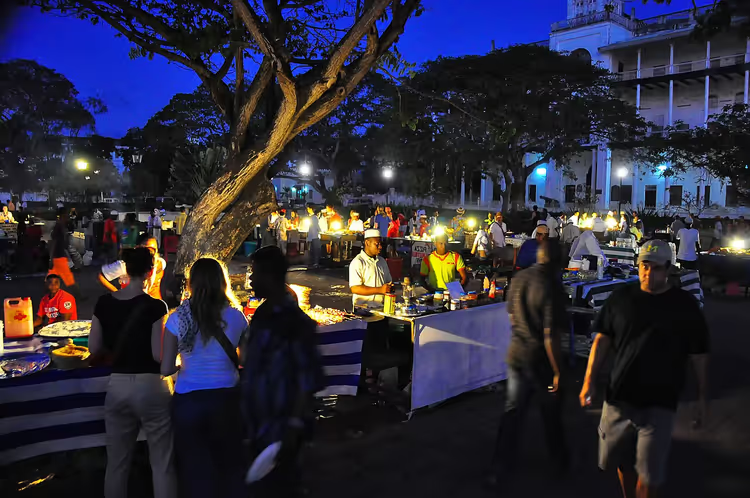
Zanzibar's cuisine blends African, Arab, and Persian traditions. Bananas are served with almost everything: fried, stewed, and baked. Try banana beer and banana wine, they capture the local flavor well. Seafood and fruit are sold on almost every corner, and in tourist areas it's easy to find familiar European food. If an ingredient doesn't work for you, ask them to leave it out in advance.
 © Rod Waddington from Kergunyah, Australia · CC BY-SAPhoto: Rod Waddington from Kergunyah, Australia, CC BY-SA (https://creativecommons.org/licenses/by-sa/2.0), Wikimedia Commons
Language and money
Tanzania's official language is Swahili, and most locals speak it. English is also one of the official languages, so you'll have no trouble communicating in hotels, restaurants, and on tours. Locals greet a few words of Swahili with a smile. Keep a short phrasebook handy:
- asante sana (thank you very much);
- jambo (hello);
- msaada (help);
- habari gani (how are you);
- kwa heri (goodbye);
- bei gani (how much is this);
- jina langu ni (my name is).
Payments on the island are made in Tanzanian shillings, but dollars are accepted almost everywhere. Cards also work, but banks charge a noticeable fee. Exchange money at the airport, banks, or exchange offices in towns. Take large-denomination bills: the rate is usually better for them. Before buying, confirm the price in both shillings and dollars, and pay in whichever currency gives you the better rate. Taking shillings out of the country is prohibited, keep that in mind on your last day.
Connectivity and internet
For internet access, buy a local SIM card. Four operators work in Tanzania: Halotel, Tigo, Vodacom, and Airtel. Plans start at around $4 (as of 09/2026, Vodacom Tanzania). For that amount you get data, minutes, and texts for a week or a month. To register a card, you need to have your fingerprints taken at the airport and show your passport. Without this, they won't sell you a SIM card.
Wi-Fi is available in hotels, cafes, and restaurants, but speeds are often limited and only good for short messages. Download maps and a translator app in advance, and you'll barely need connectivity. That way you can get from the airport to your hotel without internet, no problem.
⁉️🤔 Frequently asked questions
Do I need a visa to travel to Zanzibar?
Yes, EU citizens need a tourist visa for $50 (as of 09/2026, Tanzania visa guide).
Is insurance mandatory for entry?
Yes. Since October 2024, all foreign nationals must buy local insurance from Zanzibar Insurance Corporation (as of 09/2026, traveler warning).
What currency should I use on the island?
Payments are made in Tanzanian shillings, but dollars are accepted everywhere.
When is the best time to visit Zanzibar?
The most stable season runs from June to October. During this time there's almost no rain, the heat is milder, and the sea is calm. The two rainy seasons fall in March-May and November. December and January are the hottest, but they suit those escaping the European winter.
Do I need vaccinations for the trip?
There are no mandatory vaccinations for Zanzibar. Malaria tablets are optional, and the decision is worth discussing with a doctor. Repellents and covered clothing in the evening reduce the risk of bites.
How much time should I plan for the island?
A week is enough for the beach and a couple of excursions. Stone Town and Changuu Island are easy to see in one day, and Jozani Forest takes half a day. If you want to add spice farms and the northern beaches, plan for ten days or more. That way you'll have time to both relax and see the main sights.
In short: what to book
If you're on a short trip, book a hotel in the north and set aside one day for Stone Town. If you want to see more, add Jozani Forest, spice farms, and Changuu Island to the first half of your vacation. Beach time is best planned from June to October, when there's almost no rain. It's convenient to compare accommodation options in advance: Zanzibar hotels on Trip.com.

A small editorial team writing guides for independent travel. We travel ourselves, but we haven’t been everywhere, so we check prices, opening hours and how to get there against official sources.