




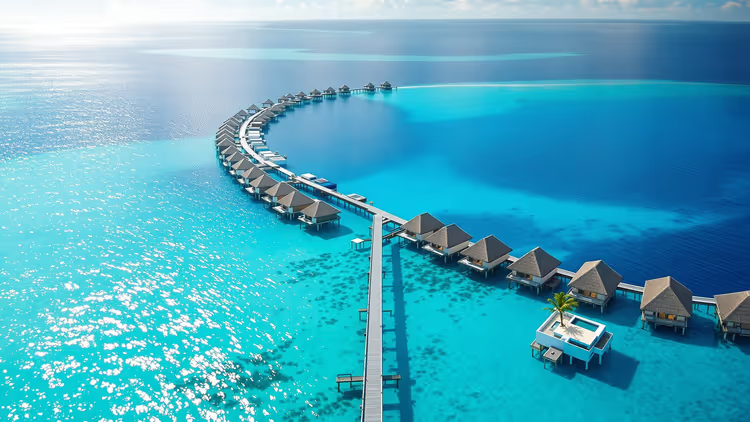
 AIIllustrative image: AI-generated
When to go to the Maldives: dry season, rains and monthly weather
Choosing a month for the Maldives is tricky. Get the dates wrong, and part of your vacation will be spent on downpours.
The Maldives are warm year-round, but the weather splits into two distinct seasons. The average temperature stays in the 25-32 °C range (as of 09/2026, Maldives Meteorological Service).
There is really one main question: when does the rainy season start and how much does it interfere with a beach day. Both prices and calm seas for snorkeling depend on this. Picking a date is easier than it seems once you know the two seasons.
Below we break down the weather by season and month. You will see when to go for guaranteed sun and when to go for low prices.
Ad: this article contains affiliate links, we earn a commission if you book through them, at no extra cost to you.
Weather in the Maldives: two seasons
💡 In short:
- The dry season (northeast monsoon) runs from January through March. December and April are considered transition months.
- The rainy season (southwest monsoon) runs from mid-May through November.
The Maldives lie on the equator, so there is no cold season here. The weather is driven by the monsoon: it changes the wind, waves, and amount of rain. Seasons and temperatures were verified on 08/09/2026 on the official meteorological service website.
Dry season: January-March
From January through March the weather is the most predictable. There is little rain, the sea is calm, and the sky is mostly clear.
March and April become the hottest months: this is the warm peak before the monsoon shift. By late April the air turns humid and muggy. In December the weather is still transitional, but prices already climb toward the Christmas holidays.
Rainy season: May-November
From mid-May through November the southwest monsoon arrives. There is more rain, but these are short downpours. They often pass in the evening, and the sun comes back out in between.
The rainiest months fall in the middle of the season. Even then, rain rarely sets in for the whole day. Wind and waves are stronger in this season, which surfers and kiters appreciate.
A separate comfort factor is humidity. In the dry season the air is drier, so the heat is easier to handle. In the rainy season humidity is higher, and at the same temperature it feels more oppressive. If you struggle with stuffy heat, go in January-March.
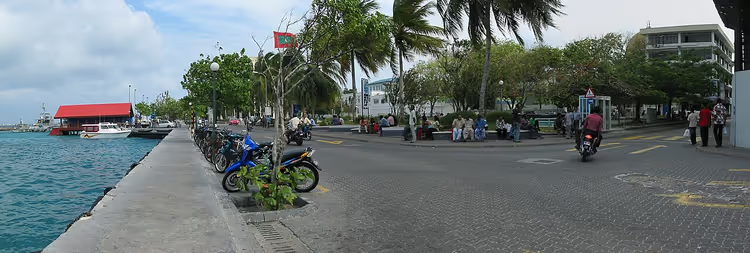 © Hansueli Krapf · CC BY-SAPhoto: Hansueli Krapf, CC BY-SA (https://creativecommons.org/licenses/by-sa/3.0), Wikimedia Commons
Best time for the beach and snorkeling
Snorkeling and diving
Underwater visibility is best from January through April. The sea is calmest during this period, with fewer currents. For classic snorkeling on the house reef, this is the best window. Many resorts have their own reef right off the beach, so no boat is needed. In the dry season the water is clearer, and you can see fish and coral already in the shallows.
Diving is possible year-round, but the dry season is more comfortable. A separate question: manta rays and whale sharks. Manta rays come to the reefs more often in the rainy season, when there is more plankton in the water. Whale sharks are seen year-round, but their season depends on the specific atoll. Check this with the resort before your trip.
Beach vacation
The water is warm all year, so you can swim in any month. Flat, mirror-like seas are more common from December through April. In summer, some atolls get waves, and this depends on the island. On the lagoon side of the reef, the water is usually calmer than on the outer side of the atoll.
High and low season: when it is cheaper
 © Hansueli Krapf · CC BY-SAPhoto: Hansueli Krapf, CC BY-SA (https://creativecommons.org/licenses/by-sa/3.0), Wikimedia Commons
High season
Most tourists arrive from January through March. The booking wave starts as early as the Christmas holidays. Prices are higher during this period, and rooms at popular resorts sell out in advance. If you want guaranteed weather, book the dry season several months ahead. This especially applies to water villas and resorts with a house reef: they go first.
Low season
The low season runs roughly from May through November. It works well for those traveling on a smaller budget and for those chasing wind for kiting and windsurfing.
The Maldives are considered an expensive destination, but prices depend heavily on the season. In the low season, rooms cost noticeably less and there are more resorts with availability. A package with flights and resort is often a better deal than booking separately. Also watch for deals on airport-to-island transfers: this is a significant expense.
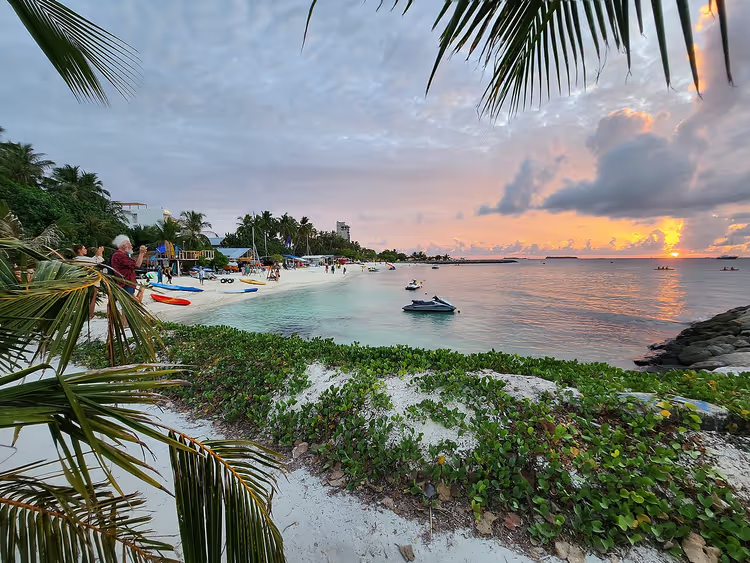 © Saaremees · CC BY-SAPhoto: Saaremees, CC BY-SA (https://creativecommons.org/licenses/by-sa/4.0), Wikimedia Commons
Last-minute deals are best hunted in these very months. In the high season and during school holidays, prices rise and options shrink. Be flexible with dates: that gets you the best price.
Weather by month
The climate differs slightly between the northern and southern atolls. The south gets more rainfall: about 2,218 mm per year. The central atolls get about 1,966 mm, and the north about 1,779 mm (as of 09/2026, Maldives Meteorological Service). In practice, the difference within a single day is usually small, but it is worth keeping in mind when choosing a resort.
The overall picture by month looks like this:
Month | Season | What to expect |
|---|---|---|
January | dry | little rain, calm sea, higher prices after New Year |
February | dry | the most reliable month, lots of sun |
March | dry | hot, quiet sea, good visibility |
April | transitional | hot, muggy by the end of the month, lower prices |
May | rainy | downpours begin, but the water is warm |
June | rainy | frequent evening rain, surf waves |
July | rainy | downpours, but the sun still appears |
August | rainy | rain and waves, lower prices |
September | rainy | rain, humid, low prices |
October | rainy | end of the rainy season, still waves |
November | rainy | less rain, drier by the end of the month |
December | transitional | start of the high season, prices rise toward the holidays |
The sun shines longest in January, February, and March: 10-11 hours a day. In other months, expect 7-9 hours (as of 09/2026, Maldives Meteorological Service).
A few notes on the table. In January, after the New Year holidays, prices cool off a bit. If you want a guaranteed minimum of rainfall, go in February. March is prized by snorkelers and divers for excellent underwater visibility. In April, prices start to drop and good deals appear.
In May there are noticeably fewer tourists, while the water stays comfortable. June is one of the rainiest months. July suits surfers rather than those who want calm seas. In August and September prices are among the lowest, and there are plenty of available rooms. In October the rain gradually thins out.
November is still rainy, but there is already less rain. Prices are still moderate, so the month is good for a budget trip. December is transitional: prices rise toward the Christmas holidays.
⁉️🤔 Frequently asked questions
When is the best time to go to the Maldives for ideal weather?
From January through March. This is the core of the dry season: calm sea, rare rain, mostly clear skies. December and April also work, but they are transition months and the weather can change more often. If you want a guaranteed minimum of rain, go in February.
Can you go to the Maldives in the rainy season?
Yes. Downpours are short and often pass in the evening, and warm sunny weather remains in between. Plus prices are lower and there is more availability at resorts during this period.
When is the cheapest time to fly to the Maldives?
In the low season, roughly from May through November. Rooms cost noticeably less than in January-March. The best approach is to look for flexible dates and watch for last-minute deals during this period. The closer to New Year, the higher the price.
When is the best time to go for snorkeling and diving?
From January through April. The sea is calmest at this time, with fewer currents, so underwater visibility is at its best. Warm water allows diving in other months too, but the dry season is more comfortable.
Is there a cold season in the Maldives?
No. Months differ only in rain, wind, and humidity, not cold. You will not need warm clothes.
In short: what to book
For ideal weather, go in January-March: calm sea and minimal rain. If you want to save money, choose May-November, but allow for the possibility of evening downpours. Plan snorkeling for January-April. For surfing, go in June-August, and check the manta ray and whale shark season for the specific atoll.
Book Maldives hotels in advance for the dry season: prices rise closer to the dates. See Maldives hotels on Trip.com

A small editorial team writing guides for independent travel. We travel ourselves, but we haven’t been everywhere, so we check prices, opening hours and how to get there against official sources.