
















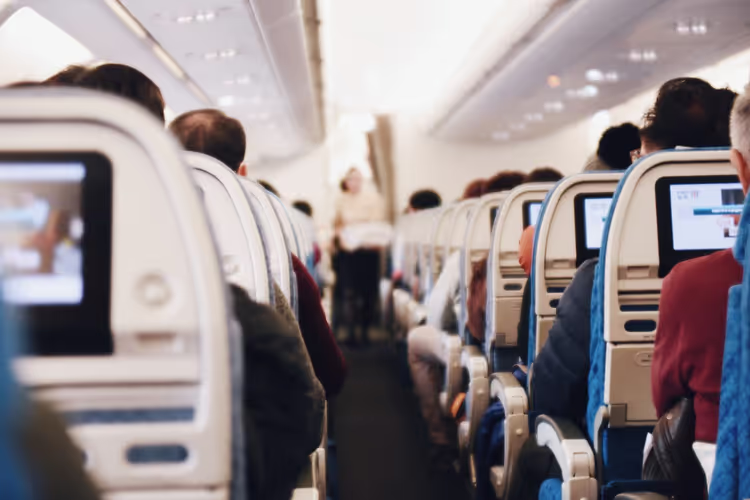
Airplane safety: what a passenger should do during takeoff and turbulence
Flying scares people more than driving, even though the statistics say the opposite. The reason is that on the ground you control the situation yourself, while in the air you have to trust the crew and the aircraft.
At the same time, part of your safety is in your own hands. A fastened seatbelt, an upright seatback, and airplane mode on your phone are not formalities. These are simple actions that help in an emergency and protect not only you but also your neighbors.
Below we break down what each flight attendant instruction means, what rules apply at security, and how to behave if your flight hits turbulence or an emergency.
Ad: this article contains affiliate links, we earn a commission if you book through them, at no extra cost to you.
What depends on you during the flight
💡 In short:
- Put your phone in airplane mode and turn off large electronics.
- Raise your seatback and open the window shade for takeoff and landing.
- Keep your seatbelt fastened for the entire flight.
- In an emergency, leave your carry-on and head for the exit.
- Carry-on and safety rules: 09/2026, verified on the official FAA website.
Pre-flight anxiety is familiar to almost everyone. According to a YouGov and The Points Guy survey, 74% of passengers admit to feeling at least mild nervousness (as of 2026, The Points Guy). Another 45% became more anxious after the high-profile aviation incidents of recent years.
But the airplane remains the safest form of transport on long-haul routes. The danger comes not from the technology but from its misuse. The rules below were not designed for crew convenience but for your protection. Here is how they break down by phase of flight.
Rule | When it applies | Why it matters |
|---|---|---|
Electronics in airplane mode | Takeoff and landing | Avoid interfering with avionics |
Seatback up, window shade open | Takeoff and landing | Fast evacuation and a view of the wing |
Seatbelt fastened | Entire flight | Protection from sudden turbulence |
Carry-on checked | Before check-in | Avoid losing items at security |
Medications in carry-on | Entire flight | The onboard first aid kit is nearly empty |
Baggage stays in the cabin | Emergency | Every second counts |
Put electronics in airplane mode for takeoff and landing
The requirement to switch devices to airplane mode is about interference with avionics. During takeoff and landing the aircraft is at its most vulnerable: the maximum number of onboard systems are active, and extra radio signals in the cabin are not welcome there. 5G networks are a particular concern. C-band signals can affect the radar altimeter, which pilots use to determine altitude during approaches in poor visibility.
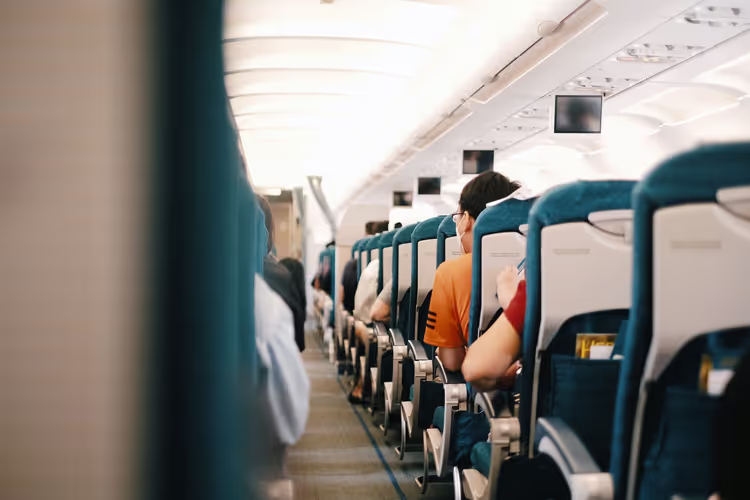
There has not yet been a crash proven to be caused by a passenger's phone. But the potential risk remains, so airlines ask for airplane mode without exceptions. During the takeoff roll, it is better to put your phone in your pocket: a device that falls to the floor can easily injure your neighbor or yourself.
In practice, this is a single gesture before departure. Turn on airplane mode and do not turn it off until the aircraft comes to a complete stop at the gate. An offline book, music, or movie works just fine. If you are flying for the first time, set your phone to airplane mode in advance, while still in the waiting area: that way you will not forget it in the rush of boarding.
Keep your seatback up and your window shade open
Flight attendants ask for this on every takeoff and landing, and it is not about ruining your rest. The seatback and tray table must return to their original position. Otherwise you and the passenger behind you will not be able to get up quickly and leave the cabin in an emergency.
An open window shade serves two purposes. First, it allows a view of the wing, engine, and fuselage from outside. Second, your eyes have time to adjust to natural light. At night the cabin lights are deliberately dimmed so that adaptation happens faster and you do not lose seconds in the dark.
If something about the aircraft looks odd to you, do not hesitate to call a flight attendant. They play the main role here, but an attentive passenger is never a bad thing. Anyone by the window can notice damage to the fuselage or a leak on the wing.
Check your seatback in advance, before taxiing. That way you will not hold up your neighbor in a rush and will not find yourself squeezed from the front. Raise your tray table and put away anything that could fall during sudden braking.
Stay buckled and do not get up without reason
Pilots do not always see turbulence zones. Sometimes it hits the aircraft suddenly, and a person walking down the aisle risks falling. Your seatbelt is the best protection against this, even when the sign does not require it.
The shaking itself is not dangerous for the airliner. The danger is injuries: hitting the ceiling, falling in the aisle, or items falling out of the overhead bins. According to the FAA, since 2008 every turbulence-related accident has resulted in at least one serious injury.
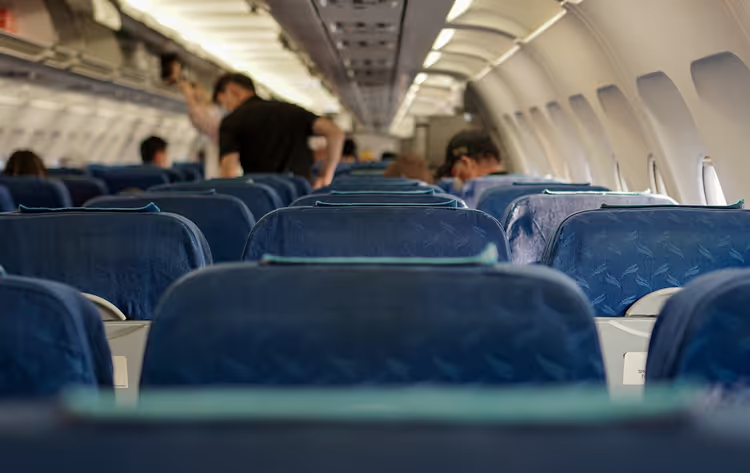
A fresh reason to keep your seatbelt fastened came from the Alaska Airlines Boeing 737 Max 9 incident on January 6, 2024 (as of 01/2024, BBC). In flight, part of the fuselage tore away and the cabin depressurized. Passengers were helped precisely by their fastened seatbelts.
The practical takeaway is simple. Buckle up for the entire flight, and when getting up, check whether someone is walking by with a hot drink. If you cover yourself with a blanket, fasten the seatbelt over it. That way the crew will see that you are buckled and will not wake you.
Check your carry-on before check-in
At security screening, prohibited items will be found and confiscated anyway. Your preparation will save you money and time: an item checked into baggage or left at home will not have to be thrown away at the checkpoint.
You cannot bring sharp or cutting objects, weapons, pyrotechnics, flammable, toxic, or radioactive substances into the cabin. A separate topic: lithium batteries. Power banks and spare batteries are allowed only in carry-on baggage; they cannot be checked. High-capacity models have a capacity limit, and a device without labeling may not be allowed through (as of 09/2026, FAA).
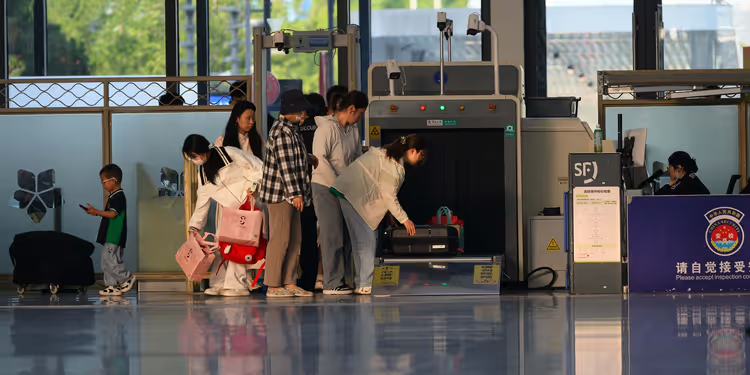
The liquids rule changes from year to year. Most EU airports apply a general limit of 100 ml per container, but where new CT scanners have been installed, the restriction is already being lifted (as of 01/2026, Euronews). Check the exact rules for your airport on its website before departure.
Practical advice: pack liquids and electronics in a separate bag. Then you can lay everything out in a couple of seconds and will not hold up the line behind you. Keep medications and documents in a light bag under the seat, not in a suitcase in the overhead bin.
Bring medications and water into the cabin
A common mistake: sending pills into checked baggage and counting on the flight attendants. In reality, even major carriers have a sparse first aid kit: usually aspirin, a bandage, and a minimum of dressings. Bring anything serious with you.
Water is needed not only by people with chronic conditions. Especially on low-cost carriers, where a bottle will not be offered for free. Small water containers can be brought into the airport, but the liquids restriction applies at screening, and you should not exceed it.
While you are at home, check your insurance too. The policy should cover flight delay, cancellation, or injury during the trip: compare insurance terms, because the difference between companies here is significant.
For people with chronic conditions there is a separate rule. Keep your medications in your carry-on and bring a couple of days' extra supply in case the flight is delayed. Bring your doctor's prescription as well: some medications need to be confirmed with a document at security.
In an emergency, leave your baggage
This is the most unpleasant topic, but it cannot be avoided. If an emergency happens on your flight, your only job is to do exactly what the crew asks. Flight attendants are trained not to panic and know the procedure for every scenario.
A common cause of evacuation delays is passengers trying to save their belongings. In a fire or smoke situation, every second counts, and the person behind you may not have enough of them. A passport can be replaced, a life cannot. So leave your carry-on in the bin and head for the exit.
Japan provided a good example. On January 2, 2024, a Japan Airlines Airbus A350 and a coast guard aircraft collided at Haneda Airport. All 379 people on board the A350 left the cabin before the fire engulfed the aircraft (as of 01/2024, Wikipedia).
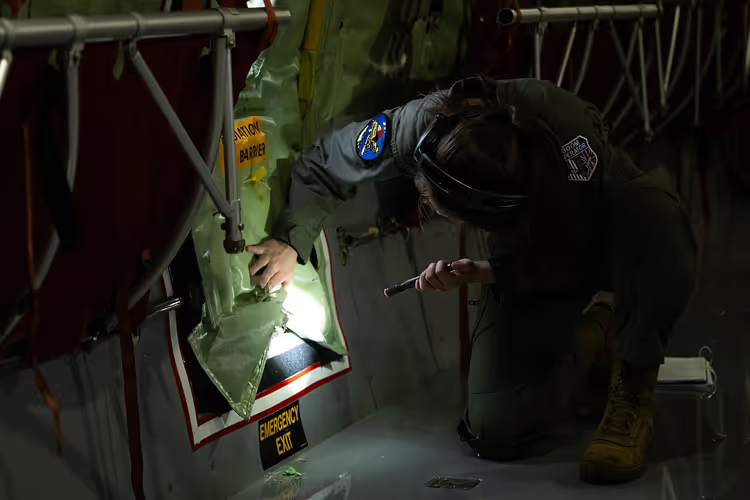
What helped was that passengers followed instructions and did not rush to the bins for their bags. Take this example to heart: first your life, and only then everything else. You do not listen to the pre-flight safety briefing for nothing.
If you are flying with a child
For a child, an airplane is like an amusement ride, and parents often relax: where is the child going to go from the plane. In reality, airlines give clear recommendations, and they are worth following.
- Do not let small children run around the cabin. A running child gets in the way of flight attendants and can easily be injured in sudden turbulence.
- Plan entertainment in advance. Bring favorite toys, coloring books, or a book: sitting still for a long time is genuinely hard.
- For an infant, ask for an extra restraint belt. That way the child will be safe in your arms.
- On flights with open seating, pay extra for adjacent seats. Nobody is obligated to give up their seat for you, and a conflict in the cabin only adds stress.
Separately, explain to your child that the airplane is not a playground. Simple rules repeated at home work better than persuasion in the air. That way the flight will be calmer for both the child and the neighbors.
⁉️🤔 Frequently asked questions
Do I need to turn my phone off completely?
No, airplane mode is enough. It disables signal transmission while the rest of the device's functions continue to work. During takeoff and landing, large gadgets are better stowed in a bag so they do not fly around the cabin. On some flights, flight attendants ask passengers not to use them for the entire flight.
Can I check a power bank in my baggage?
No. Lithium batteries and power banks are allowed only in carry-on baggage (as of 09/2026, FAA rules). In checked baggage they can ignite outside the crew's line of sight.
How dangerous is turbulence for the aircraft?
For the airliner itself, barely at all: the structure is designed for such loads. The danger is to passengers. Unsecured items and unbuckled people get injured during a sudden jolt.
How much time is there for evacuation?
A matter of seconds. In a smoke situation, the count is not in minutes but in tens of seconds, and the exit gets blocked instantly if someone reaches for the bin to grab a bag.
What should I do if my child is afraid of flying?
Explain in advance what will happen: security, takeoff, engine noise. Bring a familiar toy and water, offer a window seat or, conversely, an aisle seat. A calm adult nearby works better than any persuasion. If the fear is strong, tell the flight attendants.
In short: what is worth booking
Safety on an airplane comes down to simple habits. If you are flying for the first time, arrive at the airport early and pack your carry-on according to the rules. If you fly often, keep your seatbelt on and your phone in airplane mode.
If you have a short flight, take only carry-on. If you are flying with a child, choose seats together in advance and bring entertainment. If you are afraid of flying, knowledge helps: turbulence does not destroy the aircraft, and the crew practices emergency procedures constantly.
And one last thing. Flights on the dates you need are better booked in advance, when the seat selection is wider. You can find a flight on Trip.com a couple of months before your trip. Have a calm flight and a soft landing.

A small editorial team writing guides for independent travel. We travel ourselves, but we haven’t been everywhere, so we check prices, opening hours and how to get there against official sources.